
Reviewed · DAY TRIPS IN NARA
From Kyoto / Osaka: Kyoto Must-see Spots & Nara Park One Day Tour
Nara’s deer, Kyoto’s endless orange torii gates, and Arashiyama’s bamboo all fit into one long day on this $60 guided bus tour from Kyoto or Osaka. It is a smart way to cover ground when your Japan schedule is tight, especially if you want someone else handling the roads and meeting points.
I like the mix of wildlife, shrines, temples, and classic Kyoto scenery, and I like that the route includes both famous sights and smaller touches such as Nonomiya Shrine and the Kimono Forest. The trade-off is pace: you get a strong first look, not a leisurely study of each place, and the group can reach 45 people.
Key points to know before booking
- Three major sightseeing areas in one day: Nara Park, Fushimi Inari, and Arashiyama give you a broad taste of the region.
- The deer are the family favorite: You can buy special crackers and watch the famously polite deer bow for food.
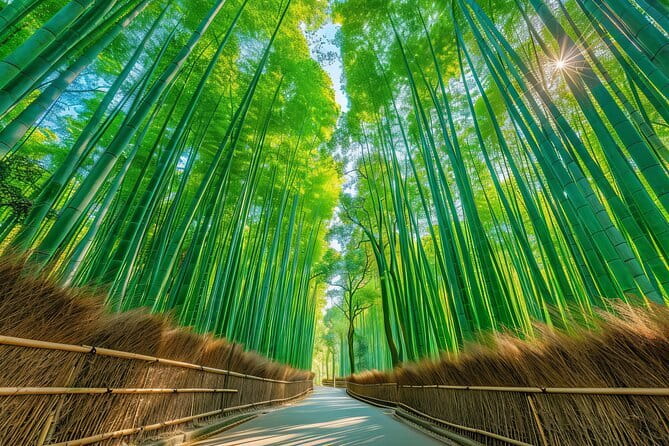
- Arashiyama gets the longest stretch: The Bamboo Forest and nearby sights are visited in one walking-heavy block.
- Tenryu-ji costs extra: Admission is 500 yen, and the schedule gives you about 20 minutes there.
- The tour is efficient rather than slow: Expect clear instructions, bus transfers, and free time at several stops.
- Guides can make a big difference: Mia, Fiona, Amy, Laura, Tina, Theodore, and others have been praised for energy, organization, and practical tips.
What this Kyoto and Nara day tour is really like
This experience is built for the first-time visitor who looks at a map of Kyoto and Nara and thinks, How can I possibly see all that? You ride in an air-conditioned vehicle, follow a fixed route, and let the guide keep an eye on the clock.
The route lasts about nine hours. That sounds generous until you account for driving between Osaka, Kyoto, Nara, Fushimi Inari, and Arashiyama. The advertised stops add up to less than the full tour length, so the remaining time goes to transport, loading the group, walking to and from the vehicle, and managing the schedule.
I see the main benefit as convenience. You do not need to figure out separate trains, buses, and walking routes for three major sightseeing zones. The cost is also reasonable for a full day with transport and a guide, though you should budget separately for lunch, deer crackers, shopping, and the 500 yen Tenryu-ji ticket.
More Day Trips in Nara
- Nara Half Day Trip Walking Tour (Private Option Available)
★ 5.0 · 937 reviews - Kyoto and Nara Day Trip from Kyoto
★ 4.5 · 445 reviews - Osaka: Nara and Uji Day Trip with Deer Park and Hot Spring
★ 4.4 · 302 reviews
Nara Park and the bowing deer
The day begins with about an hour in Nara Park, a large public park covering roughly 660 hectares. It is best known for its free-roaming deer, but the park also gives you access to some of Nara’s most important temple areas.
The deer are the immediate attraction. You can buy special crackers and offer them carefully. Some deer bow in expectation, which is charming until one decides you are hiding food. Hold the crackers out openly, feed them in small portions, and be ready to step away once the supply is gone.
This is a good stop for families. Children get an easy, memorable introduction to Japan, while adults can enjoy the open paths and old temple setting. The one-hour limit keeps the stop moving, but it may not be enough if you want to visit the Great Buddha or spend serious time inside Nara’s temple grounds.
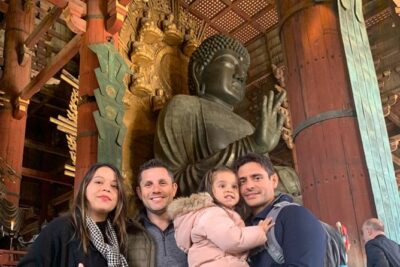
That limitation matters. The tour does not include the Great Buddha, and the schedule does not promise a temple visit inside Nara Park. If the Great Buddha is one of your main goals, plan a separate visit rather than assuming it is part of this day.
Fushimi Inari’s red torii gates
Next comes Fushimi Inari Taisha, the head shrine of the many Inari shrines found across Japan. The shrine honors Inari, a Shinto deity associated with rice, and its most famous feature is the Senbon Torii, a long series of vermilion gates climbing into the wooded hills.
You get about 1 hour and 10 minutes here. That is enough to enter the shrine, take in the lower torii paths, and walk uphill for a taste of the tunnel-like gates. It is not enough for a relaxed climb to the highest point and back.
I would use your first few minutes wisely. Stay with the guide long enough to understand the layout, then decide how far you want to walk. The lower section is the most accessible and usually the easiest place for photographs, while the upper paths become quieter as you climb. The trade-off is that the route can feel rushed if you want time for both pictures and a longer uphill walk.
One useful point from the feedback is that at least one person wanted more time at Fushimi Inari and less time in the Bamboo Forest. That is a fair criticism for anyone who values shrine architecture and the torii path more than quick scenic stops. The schedule favors variety, not personal preference.
A quick look at Arashiyama before the walking begins
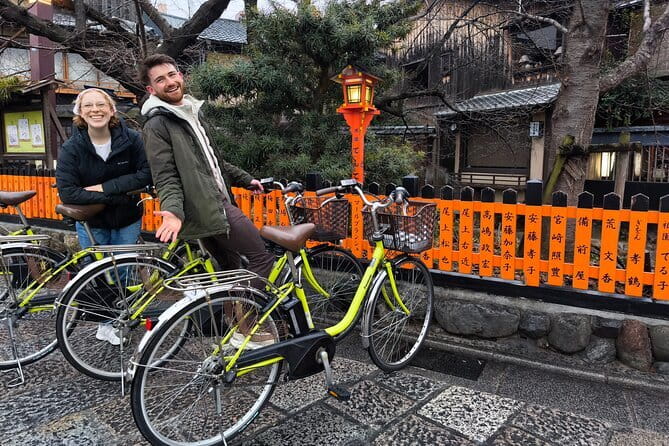
Arashiyama is treated as a cluster of connected stops rather than one single attraction. The area is famous for its wooded hills, old temples, river views, shops, and Heian-period associations.
The first Arashiyama stop is listed as about 10 minutes, so think of it as a brief orientation or transition rather than a full sightseeing visit. Your main time here comes through the following stops: the Bamboo Forest, Nonomiya Shrine, Kimono Forest, Tenryu-ji, the Rilakkuma Tea House, and Togetsukyo Bridge.
This arrangement gives you many photo opportunities, but it also means you need to watch the time. The guide may explain where to go and when to return, then allow you to explore parts of the area independently. That is practical for a large group, though it may feel less like a continuously guided walk.
Same trip, a completely different kind of day:
- World Heritage Kyoto & Nara Uji Authentic Matcha Experience
★ 5.0 · 1,573 reviews - Kyoto/Osaka: Nara, Fushimi Inari Taisha, Arashiyama Bus Tour
★ 4.7 · 1,275 reviews - Osaka/Kyoto: Arashiyama, Nara & Fushimi Inari Shrine w/Lunch
★ 4.4 · 754 reviews - Nara Early Morning Tour (Kyoto or Osaka Departure Available)
★ 5.0 · 676 reviews
Walking through the Arashiyama Bamboo Forest
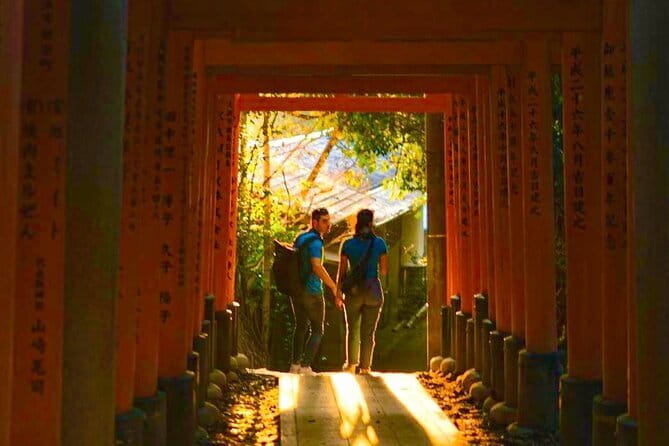
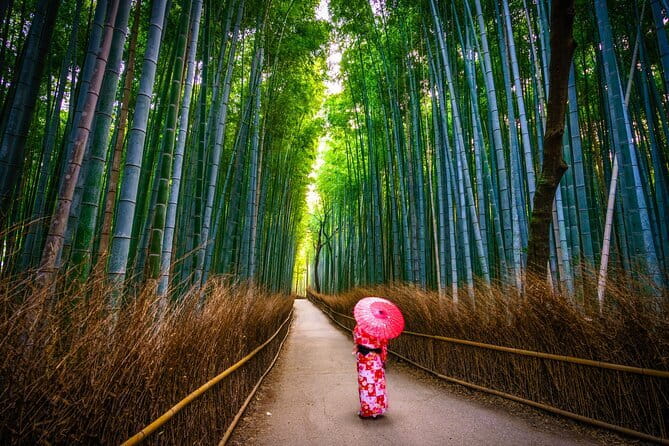
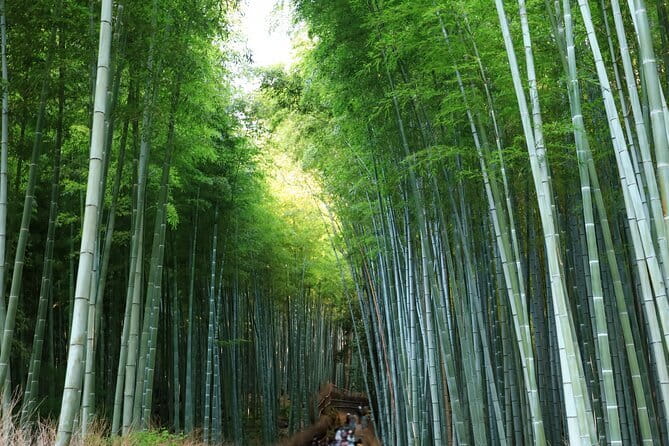
The Bamboo Forest receives about 50 minutes, making it one of the longer individual stops. Tall bamboo lines the narrow path, creating one of Kyoto’s most recognizable scenes.
The setting is beautiful, but it is not a private woodland escape. The path is a major attraction, and you might find plenty of people trying to take the same photograph. Go in expecting a short scenic walk rather than solitude.
I like the fact that the stop is long enough to slow down a little after the bus rides. You can look up through the bamboo, listen to the movement of the stalks, and take in the change from busy streets to a greener setting. Still, if you would rather spend that time at Fushimi Inari or inside Tenryu-ji, this portion may feel over-weighted.
Comfortable shoes matter. The day includes repeated walking, standing, and getting on and off the vehicle. Arashiyama’s attractions are close enough to connect on foot, but the schedule does not leave much room for wandering away from the main route.
Nonomiya Shrine and its black torii
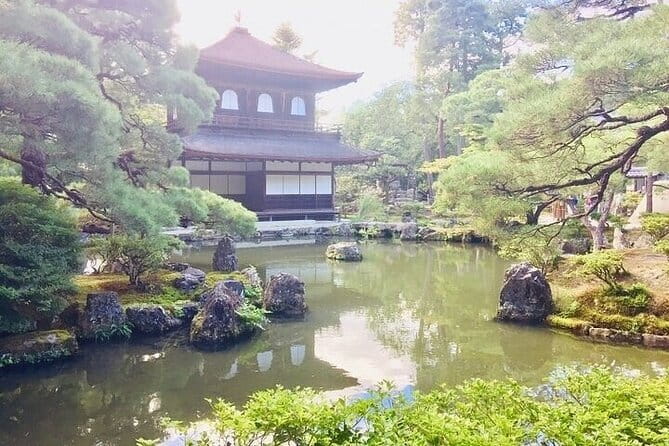
Nonomiya Shrine gets about 20 minutes. It is a small Shinto shrine in Arashiyama, known in part for its distinctive black torii gate, unlike the bright vermilion gates associated with Fushimi Inari.
This is a quieter, more intimate stop than the Bamboo Forest. The shrine adds variety to the day because you are not simply moving from one large photo site to another. It also gives you a chance to notice smaller details of Shinto worship, including the restrained design and compact grounds.
Twenty minutes is enough for a short look and a few photographs. It is not a long devotional visit. If your interests lean toward small sacred spaces rather than branded shops or installations, you may wish this stop had more time.
The Kimono Forest and Rilakkuma Tea House
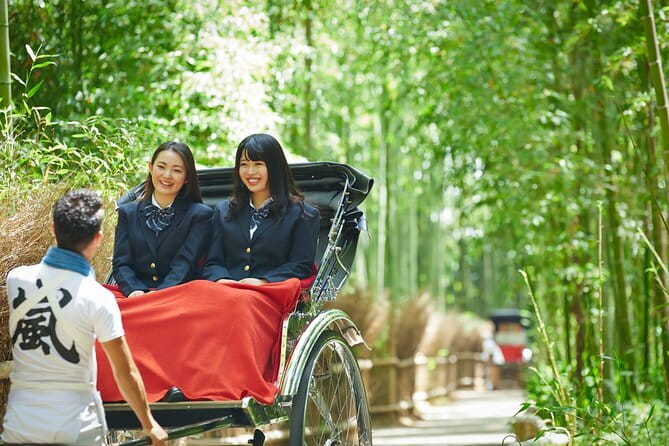
The Kimono Forest is a modern installation near the Arashiyama area. It consists of about 600 clear acrylic cylinders, each roughly two meters tall, decorated with kimono fabrics in different patterns.
The display is easy to visit and offers a change of mood after the natural scenery. It is colorful and photograph-friendly, but it is not a historic monument. I would treat it as a short visual stop, not a major cultural attraction.
That distinction helps set expectations. One person preferred more time at Tenryu-ji instead of the Kimono Forest, and I can understand that choice. If you have only one day in Kyoto and care most about temples, use your time carefully and do not confuse this installation with an essential historic site.
The Arashiyama Rilakkuma Tea House and shop receive about 15 minutes. Rilakkuma means a bear in a relaxed mood, and the cafe and shop are designed around that character. This is most appealing if you like Japanese character culture or want a small souvenir stop. If you are focused on temples and gardens, it may be the easiest part of the route to skip or pass through quickly.
Tenryu-ji, the temple that deserves more time
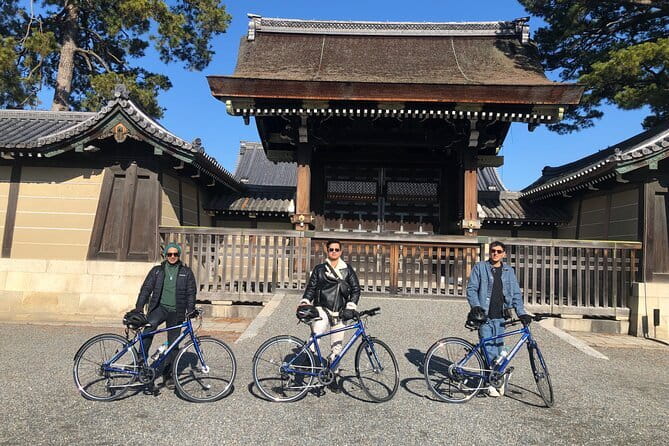
Tenryu-ji is a UNESCO World Heritage Site and one of Kyoto’s major Zen temples. It is also ranked first among Kyoto’s five great Zen temples.
The stop is listed at about 20 minutes, with a 500 yen admission fee not included in the tour price. That is a short visit for a temple complex with gardens and important buildings. You may get a quick look at the grounds, but you should not expect enough time for a calm exploration.
This is the clearest mismatch between the tour’s list of attractions and the time available. Tenryu-ji is more substantial than a photo stop, and the admission charge means you should decide in advance if it is worth using part of your free time there.
The schedule also appears to vary in practice. Some departures may give you the chance to enter, while one experience was described as not including the temple visit. I would confirm the day’s exact plan with the guide at the start and keep the extra 500 yen ready if entry is offered.
Togetsukyo Bridge and the end of the Arashiyama visit
Togetsukyo Bridge is Arashiyama’s best-known landmark. The bridge crosses the Katsura River and dates in origin to the Heian period, though the current structure was most recently rebuilt in the 1930s.
You get about 15 minutes here. That is enough to cross part of the bridge, see the river, and take photographs with the surrounding hills. It is not enough for a long riverside walk or a relaxed meal nearby.
I like this as the final visual note of the Arashiyama section. The Bamboo Forest gives you height and shade, while Togetsukyo gives you open space and a broad view. The short visit also explains why you should not plan an independent lunch far from the meeting point.
Guides, group size, and how personal the tour feels
The experience includes a guide, and guide quality appears to be one of its strongest features. Mia, Fiona, Amy, Laura, Tina, Theodore, Willa, Tracy, Frederick, and others have been associated with this route. Specific guides change, so you cannot book a particular person based on these names.
The praised traits are practical: clear meeting instructions, lively explanations, help for people who need assistance, and good control of the schedule. Tina, for example, was especially helpful with directions and maps, while Mia was praised for helping a family member with limited walking ability. Fiona and Amy were noted for keeping the mood upbeat and sharing useful local tips.
Do not expect a private tour. The maximum group size is 45 people, and the vehicle may feel tight, particularly for taller or broader passengers. One person found the seats narrow and uncomfortable. The tour also requires you to stay alert for meeting times because a guide cannot personally walk a large group through every path.
In practice, the guide may give you context and instructions, then send you off to explore independently before a set return time. That is a sensible way to handle crowded sites, but it is different from a small-group walking tour with constant commentary.
Food, luggage, and useful planning tips
Lunch is not included. Since the schedule moves between stops, I would carry a small snack and water rather than depend on finding a relaxed restaurant at the right moment. You can look for food in Arashiyama, but the short bridge and tea house stops are not designed around a long meal.
Tell the operator in advance if you have a stroller or large luggage. Some people have used the tour as a transfer between Kyoto and Osaka, but you should arrange that ahead of time rather than arriving with bulky bags and hoping there is room.
Dress for a long day. The route includes walking at shrines, parks, temple grounds, and outdoor viewpoints. One person also noted that higher areas can feel colder, so a light extra layer is useful outside the warmer months.
The tour offers a mobile ticket and free cancellation up to 24 hours before the start time. Changes or cancellations inside that window are not accepted for a refund. The experience is near public transportation, and most people can take part, though the amount of walking and the narrow vehicle seats deserve consideration.
Is this $60 tour worth booking?
I would book it if you have only one day for Kyoto and Nara, are staying in Osaka or Kyoto, and want a simple way to reach the headline sights. The deer, Fushimi Inari, Bamboo Forest, and Togetsukyo Bridge create a satisfying first taste of the region, and a strong guide can make the long day feel organized rather than chaotic.
I would not choose it if your priority is deep temple visits, quiet photography, or a flexible lunch. Tenryu-ji gets limited time, Fushimi Inari may feel short, and the large group means you will often explore on your own after receiving instructions.
For families and first-time visitors, the value is clear: transport, a guide, and several famous places for $60, with no need to plan complicated connections. For returning visitors, I would choose a smaller or more focused tour, or visit one area independently and give it the time it deserves.
FAQ
How long does the tour last?
The tour lasts approximately nine hours.
Where does the tour visit?
It visits Nara Park, Fushimi Inari Taisha, and several Arashiyama sights, including the Bamboo Forest, Nonomiya Shrine, Kimono Forest, Tenryu-ji, the Rilakkuma Tea House, and Togetsukyo Bridge.
Is transportation included?
Yes. The experience includes an air-conditioned vehicle and a guide.
Is lunch included?
No. Lunch is not included in the tour price.
Is admission to Tenryu-ji included?
No. The Tenryu-ji admission ticket costs 500 yen and is not included.
Can I feed the deer at Nara Park?
You can buy special deer crackers at Nara Park and feed the free-roaming deer.
How large can the group be?
The tour can have a maximum of 45 participants.
Can I cancel for a full refund?
Yes. You can cancel at least 24 hours before the experience start time for a full refund. Cancellations or changes made less than 24 hours before the start time are not accepted for a refund.
Just added around Nara
- Private Kyoto Tour by Car with Optional Nara or Osaka Add-Ons★ 5.0 · 36 reviews
- Kyoto, Osaka, Nara Private Tour by Car English Driver Guide★ 4.0 · 63 reviews
- Nara Todaiji Kasuga Taisha Private Full Day Tour From Kyoto★ 5.0 · 13 reviews
- From Kyoto: Nara History Guided Half Day Bus Tour with lunch★ 5.0 · 23 reviews
- Nara 8hr Private Tour – Kyoto DEP. with Licensed Guide★ 5.0 · 115 reviews
- Arashiyama & Nara Highlights: One-Day Private Tour Adventure★ 5.0 · 16 reviews
- Kyoto Private Car Tour – Full Day with Local Guide & Nara Option★ 5.0 · 169 reviews
- Kyoto & Nara Private Tour from Osaka Kyoto Hotel Pick-up★ 4.5 · 32 reviews
Day Trips in Nara, compared.
Nara Half Day Trip Walking Tour (Private Option Available)
Our verdict →
Nara and Uji Day Trip with Deer Park and Hot Spring
Our verdict →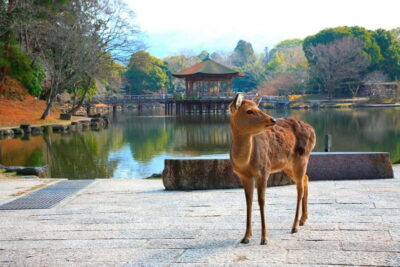
Browse the lists this tour appears in