
Reviewed · COOKING CLASSES
Kyoto Family Kitchen Cooking Class
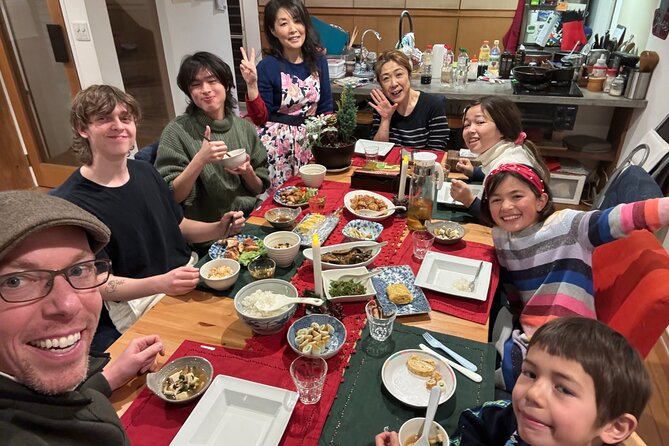
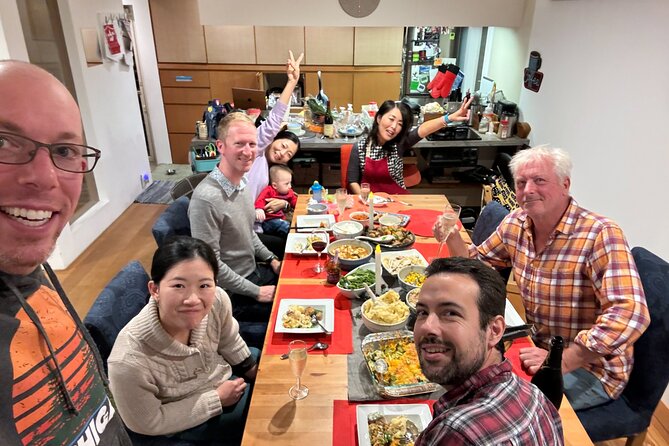
Kyoto Family Kitchen is less a formal cooking lesson than an invitation into Anthony and Naomi’s home. You arrive for tea, talk about your trip, help prepare dinner, and eat with the family, their children, cat, and dog. I like the genuine home setting and the chance to learn how everyday Japanese food is built from a few key staples.
I also like the relaxed pace. Children can join the cooking or play with the family’s kids and pets, and adults can focus on food and conversation. The trade-off is important: if you want a polished chef-led class with exact recipes and lots of individual instruction, this may feel informal.
Key points to know
- Dinner in a real Kyoto home: You cook and eat with Anthony, Naomi, their children, and household pets.
- Japanese pantry basics: Learn how dashi, soy sauce, mirin, and sake shape everyday cooking.
- Hands-on but relaxed: You slice, mix, and prepare dishes rather than simply watching a demonstration.
- Good for mixed-age groups: Children, older family members, couples, and small groups can all take part.
- Flexible food planning: Vegetarian needs and other food requirements can be discussed before the evening.
- Suburban location: The home is outside central Kyoto, with transportation to Kokusaikaikan subway station included.
A Kyoto dinner that begins at the family kitchen counter
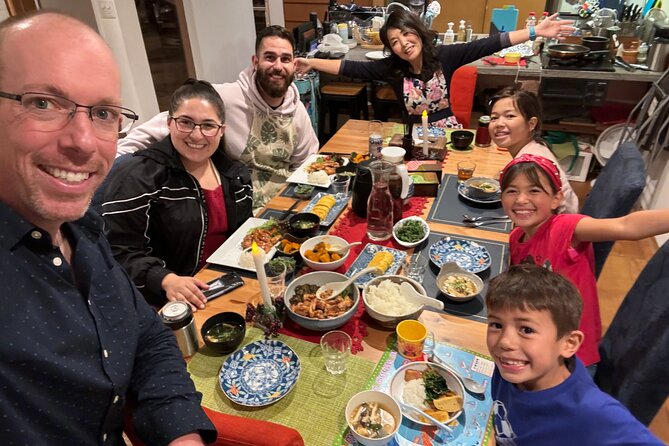
Many cooking classes put you in a bright studio with matching workstations and a chef at the front. This one takes a different route. You enter a family home in Sakyo Ward, remove yourself from the usual sightseeing rhythm, and spend the evening around a kitchen counter.
The experience begins with tea or coffee and a chat about your trip. That opening matters. It gives you time to settle in before knives, cutting boards, and hot pans appear. Food becomes the bridge into conversation, and the meal feels like a shared evening rather than a technical workshop.
Anthony and Naomi host with their children, and the family pets are part of the setting. That means you should expect a lived-in home, not a quiet restaurant or a professional culinary school. For many people, this is the main point. You get a glimpse of ordinary family life that is hard to arrange during a short visit to Japan.
The setting also explains the one clear limitation. The class may not follow a fixed menu every night, and the amount of cooking you do can vary. One guest found the experience closer to assisting with a family meal than taking a structured class. That is not a flaw for everyone, but it is a useful warning for anyone hoping to master several recipes in precise detail.
More Cooking Classes in Kyoto
- Ramen Cooking Class at Ramen Factory in Kyoto
★ 5.0 · 1,937 reviews - Kyoto: Ramen Cooking Class at a Ramen Factory with Souvenir
★ 4.9 · 532 reviews - Kyoto: Ramen, Gyoza, and Onigiri Cooking Class
★ 5.0 · 445 reviews
What you actually cook in two and a half hours
The evening lasts about two hours and 30 minutes, generally from 6:00 to 8:30 PM on Monday through Friday. The basic rhythm is simple:
- Arrive and have tea or coffee
- Talk about Japanese food and preview the meal
- Put on aprons and prepare the dishes
- Sit down together for dinner
- Continue the conversation before returning to the meeting point
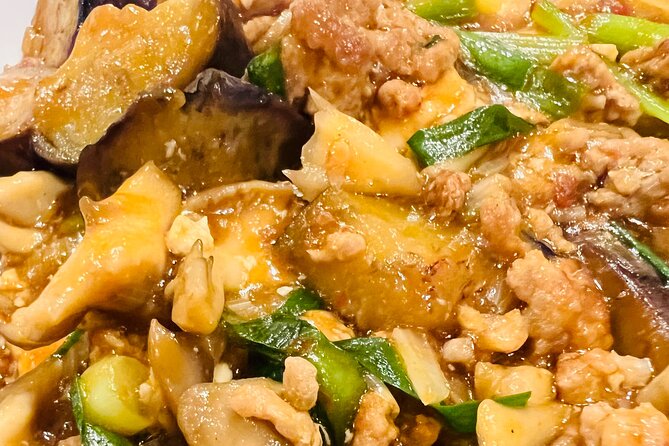
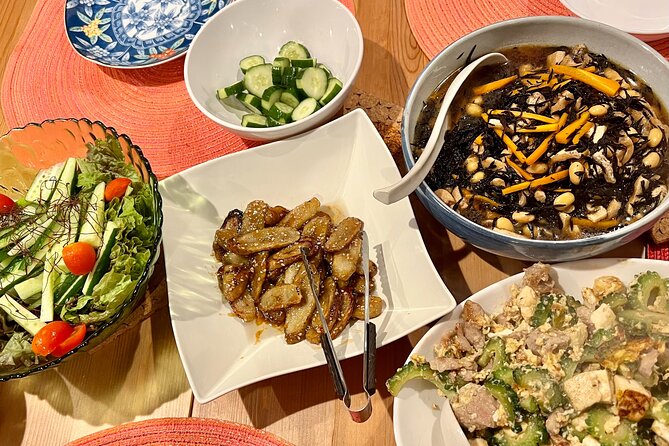
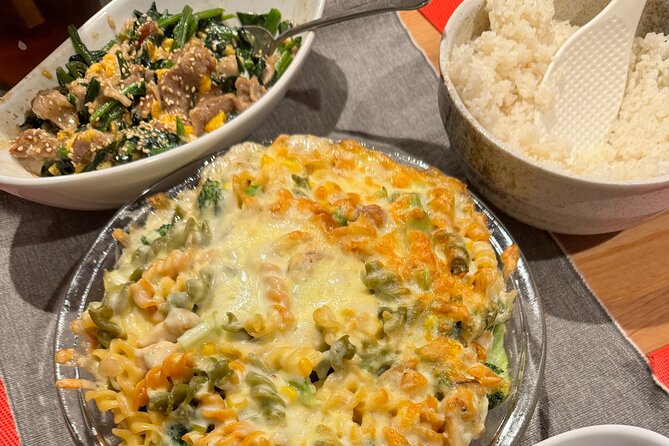
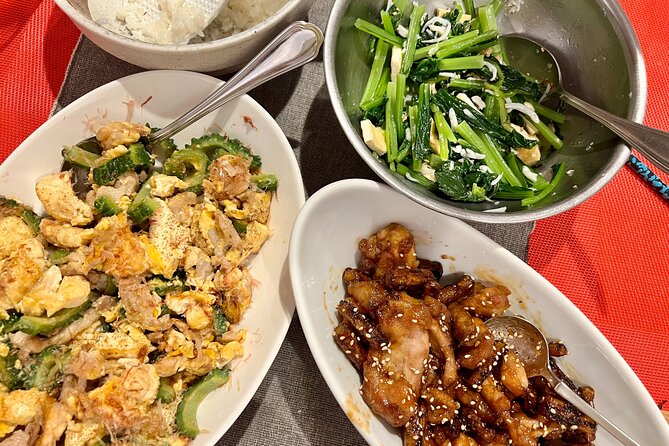
The menu can include familiar home dishes such as gyoza, tamago yaki, okonomiyaki, teriyaki chicken, sautéed vegetables, and other everyday Japanese food. The exact dishes are arranged with the host, so menu planning after booking is useful, especially if someone in your group is vegetarian or has food restrictions.
This is not a class built around rare ingredients or restaurant tricks. The focus is on the staples found in a Japanese kitchen. Dashi provides a savory base, while soy sauce, mirin, and sake bring salt, sweetness, depth, and aroma. You learn how these ingredients work together, which is more useful for your trip home than memorizing a complicated restaurant recipe.
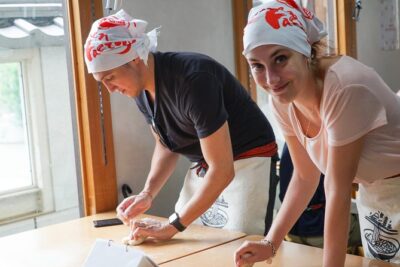
You may help slice vegetables, mix fillings, shape gyoza, prepare egg dishes, or work on a main course. Children can take part at a level that suits them. The class is designed to include the whole group, though very young children will still need the usual supervision around knives and heat.
The value of learning everyday Japanese cooking
The most useful lesson here is not a single finished dish. It is learning the pattern behind Japanese home cooking.
Dashi, soy sauce, mirin, and sake appear again and again in Japanese food, but visitors often meet them only as flavors in a finished bowl. Here, you see how they are handled in a home kitchen and how small changes affect the taste. That basic understanding can make restaurant menus easier to read and give you a starting point for cooking Japanese food later.
I also appreciate the distinction between traditional food and restaurant food. The dishes prepared here are meant to be practical meals for a busy household. That makes the lesson approachable. You are not expected to produce perfect sushi or a grand kaiseki presentation. You are learning food that families can make and eat on a normal evening.
Past menus have included gyoza and tamago yaki, the rolled Japanese omelet. Okonomiyaki has also been prepared, giving you a more casual dish to add to your home cooking list. These choices offer variety, but you should ask about the planned menu if one particular dish matters to you.
Meeting Anthony, Naomi, and the family
The hosts are Anthony and Naomi, and their children are part of the evening. That family presence shapes the experience more than any ingredient does.
You might find the children joining the cooking, chatting at the table, or playing with visiting children. A dog and a fluffy cat are also part of the home. For families, this can be a welcome break from attractions where children must remain quiet and still. One family with an 11-year-old daughter and a 78-year-old mother found that different generations could enjoy the evening together.
For couples and solo visitors, the family setting works differently. You are not simply being taught by an instructor. You are expected to talk, ask questions, and share some of your own stories. The hosts have even helped visitors with a few Japanese phrases for the rest of their trip.
This warmth is the experience’s strongest feature, but it also creates a practical consideration. You should be comfortable entering someone’s home and spending time in an informal social setting. If you prefer to keep conversation limited and concentrate only on technique, a conventional cooking school may suit you better.
More Family Tours in Kyoto
- Kyoto:Family-Friendly Kimono & Yukata Experience at WARGO
★ 5.0 · 147 reviews - Ninja Experience (Family Friendly) at Samurai Ninja Museum KYOTO
★ 4.5 · 132 reviews - Samurai Sword Experience (Family Friendly)at SAMURAI MUSEUM KYOTO
★ 4.5 · 63 reviews - Kyoto: Enjoy Sushi & Market Tour! Best for Family & Couple!
★ 4.8 · 20 reviews
Dinner is the main event

After the cooking, everyone sits down to eat what the group has helped prepare. This shared meal is where the evening comes together.
The food is served in a family setting rather than presented as a restaurant course. You can talk about the dishes, compare food traditions, and ask about life in Kyoto. The conversation is part of what you are paying for. You are not only buying ingredients and instruction, but also time in a local home.
Several strong details emerge from the experience. Food is prepared from scratch, vegetarian diners can receive a full meal, and the hosts make an effort to make visitors feel included. The meal may be simple by restaurant standards, but that is the charm. It shows you how food functions in a Japanese household: practical, shared, and tied to conversation.
Do not expect alcohol to be included. Dinner, coffee or tea, ingredients, seasonings, the English-speaking instructor, and taxes are covered. Alcoholic drinks and gratuity are not.
Why the suburban location matters
The meeting point is 33-50 Kamitakano Saimyojiyama in Sakyo Ward, outside central Kyoto. The area is described as a suburban home on a hill, so this is not a class you simply add between Nishiki Market and Gion without allowing extra time.
The distance is part of the appeal. You leave the main sightseeing circuit and see a quieter side of Kyoto. The trade-off is convenience. You need to plan your route carefully, especially for a 6:00 PM start. Transportation to Kokusaikaikan subway station is included, but confirm the exact arrangements and meeting instructions with Anthony after booking.
The activity begins and ends at the same home. Since the class finishes around 8:30 PM, it is sensible to know how you will continue from Kokusaikaikan or the meeting point before dinner begins. The listing states that the home is near public transportation, but the address and final directions still deserve attention.
Is $96.84 per person a fair price?
At $96.84 per person, this costs more than buying dinner at a casual Kyoto restaurant. The value depends on what you want from the evening.
If you measure the price by the amount of food alone, it is not a bargain. You are paying for a private activity, an English-speaking host, ingredients, cooking guidance, dinner, and the chance to spend time with a local family. Transportation to Kokusaikaikan subway station is also included.
The private format improves the value for families and small groups. Only your group participates, so the pace can adjust to children, older relatives, and food requirements. You are not trying to keep up with a large class or share a cramped workstation with strangers.
For a couple, the cost makes more sense if you care about personal contact and cultural exchange. If you mainly want to learn restaurant-quality technique, you can likely find a more specialized class for a similar or lower price. If you want a memorable evening in a real home, the price is easier to justify.
The activity is often booked about 43 days in advance. That suggests planning ahead, especially if you need a particular evening or are visiting during a busy period. The minimum booking is two guests, so solo visitors cannot reserve the experience alone.
Who will enjoy this evening most?
I would recommend Kyoto Family Kitchen to:
- Families who want their children included in a cultural activity
- Couples who prefer conversation and local contact to a formal lesson
- Small groups with vegetarian or other food requirements
- Visitors who want to see a residential side of Kyoto
- Cooks who want to understand Japanese pantry staples
- Anyone who enjoys relaxed meals and meeting people at home
I would be more cautious about recommending it to someone who wants a tightly scripted lesson. The class may be hands-on, but it is not presented as professional chef training. You may spend as much time talking, eating, and meeting the family as you spend learning knife skills.
The home includes a dog and cat, so this setting may not suit anyone who is uncomfortable around pets. Service animals are allowed, but you should still discuss any needs with the host in advance.
Practical details before you book
You receive confirmation at booking, and the host works with you afterward to settle the meeting time, plan the menu, and explain the directions. Use that contact. Tell Anthony and Naomi about vegetarian requirements, allergies, children’s ages, or any other concern before the evening.
The scheduled hours are Monday through Friday, 6:00 to 8:30 PM, for the stated operating period through June 7, 2026. The class is private, uses a mobile ticket, and ends back at the meeting point.
Cancellation is free up to 24 hours before the start time. A cancellation made less than 24 hours ahead is not refunded, and late changes are not accepted. The cutoff follows local Kyoto time.
Should you book Kyoto Family Kitchen?
Book it if you want a warm, personal evening and understand that the family connection matters as much as the recipes. This is a strong choice for families, mixed-age groups, and visitors who would rather share dinner in a home than sit through a formal demonstration.
Skip it if your main goal is exact culinary instruction, advanced technique, or a fixed menu. The best way to approach this experience is to arrive ready to help, talk, eat, and accept the rhythm of a busy Japanese household. For the right person, that informal quality is not a compromise. It is the whole reason to go.
FAQ
How long does the Kyoto Family Kitchen experience last?
The activity lasts approximately two hours and 30 minutes, from 6:00 PM to 8:30 PM on scheduled Monday through Friday evenings.
Where does the cooking class take place?
It takes place at 33-50 Kamitakano Saimyojiyama in Sakyo Ward, Kyoto, in the hosts’ suburban family home.
What food will I prepare?
The menu is arranged with the host after booking. Possible dishes include gyoza, tamago yaki, okonomiyaki, teriyaki chicken, sautéed vegetables, and other Japanese home-cooked dishes.
Are children welcome?
Yes. The experience is designed for all ages, and the hosts’ children and pets may be part of the evening.
Can vegetarian guests participate?
Yes. Vegetarian requirements can be discussed with the host, and a vegetarian guest in a larger group was provided with plenty to eat.
Is transportation included?
Transportation to Kokusaikaikan subway station is included. The experience begins and ends at the meeting point in Sakyo Ward.
What is included in the price?
The $96.84 price includes dinner, coffee or tea, an English-speaking instructor, ingredients, seasonings, fees, and taxes.
Can I cancel for a full refund?
Yes. You can cancel at least 24 hours before the experience start time for a full refund. Cancellations or changes made less than 24 hours before the start time are not accepted for a refund.
Just added around Kyoto
- Sekka Cotton Furoshiki Class★ 5.0 · 19 reviews
- Kyoto Sword Experience – includes Museum Ticket/Ninja Experience★ 4.5 · 149 reviews
- Scenic Green Tea Fields of Hidden Kyoto & Local Tea Exp (Private)★ 5.0 · 32 reviews
- Secret Eastern Kyoto Biking Adventure★ 5.0 · 44 reviews
- Private Sake Tasting in Central Kyoto with Sake Sommelier★ 5.0 · 32 reviews
- Samurai School in Kyoto: Samurai for a Day★ 5.0 · 202 reviews
- SHIRAKAWA Japanese Culture Experiences with private English staff★ 5.0 · 16 reviews
- A Privately Guided Photoshoot in Beautiful Kyoto by a Pro★ 5.0 · 18 reviews
Cooking Classes, compared.
Browse the lists this tour appears in