
Reviewed · PEACE MEMORIAL TOURS
Hiroshima Peace Memorial Park: A Guided Tour
Hiroshima Peace Memorial Park is not a sightseeing stop you simply check off. It is a place where the city’s past is presented through buildings, names, bells, water, and personal stories. This guided walk brings you from the Atomic Bomb Dome to the museum and memorials that explain what happened on August 6, 1945, and what followed.
I like two things here. First, the small group, capped at 10 people, gives Shera Alvi room to answer questions and adjust the pace. Second, the route includes several sites you could easily pass without understanding, including the Korean Atomic Bomb Victims Memorial and the Memorial Tower to the Mobilized Students. The main consideration is emotional: the museum and memorials can be difficult, and two hours gives you an introduction rather than time to examine every display at length.
Key points to know before you book
- A two-hour route through the heart of Hiroshima: The walk connects the Atomic Bomb Dome, central memorials, museum, and Gates of Peace without requiring local transport during the tour.
- Shera Alvi leads in English: The guide is described as attentive, welcoming, and good at explaining difficult subjects in clear terms.
- Small groups change the experience: With no more than 10 participants, you can ask questions and hear the guide without a large crowd around you.
- The route includes less obvious memorials: The Korean Atomic Bomb Victims Memorial, Clock Tower of Peace, Prayer Fountain, and Memorial Tower to the Mobilized Students add important context.
- The pace allows time to think: The walk is not just a rapid list of facts. The guide leaves moments to absorb what you have seen.
- Bring practical walking gear: Comfortable shoes and water matter. Photography is allowed, but food is not.
Why a guided walk matters in Hiroshima
You can walk through Peace Memorial Park on your own, and the park is open and easy to explore. The challenge is knowing what each monument means and how the sites connect. A guide gives you the thread that links the preserved industrial building, the names of the dead, the children’s memorial, and the city’s call for a world without nuclear weapons.
That context matters because many memorials are quiet and visually simple. A bell, a flame, or a fountain can look like a minor stop if you do not know its purpose. Shera’s role is to explain why each place was built and to place the events of August 6 within the wider story of Japan and the war.
The tone is serious, but this is not presented as a lecture with no room for conversation. Shera is described as asking questions about the group and showing interest in each person’s wider trip to Japan. That personal touch can make a difficult subject easier to approach without turning the visit into casual entertainment.
The group limit of 10 is useful here. You can stay close enough to hear, ask for clarification, and pause when a subject needs more thought. A large group would make this kind of visit feel rushed and impersonal.
More Peace Memorial Tours in Hiroshima:
- Hiroshima Historical Walking Tour – Why A-Bomb was Dropped
★ 4.8 · 893 reviews - Hiroshima: Miyajima Peace Memorial Icons of Peace and Beauty
★ 4.9 · 361 reviews - Hiroshima/Guided Virtual Tour of Peace Park/PEACE PARK TOUR VR
★ 5.0 · 157 reviews
Starting at the Atomic Bomb Dome
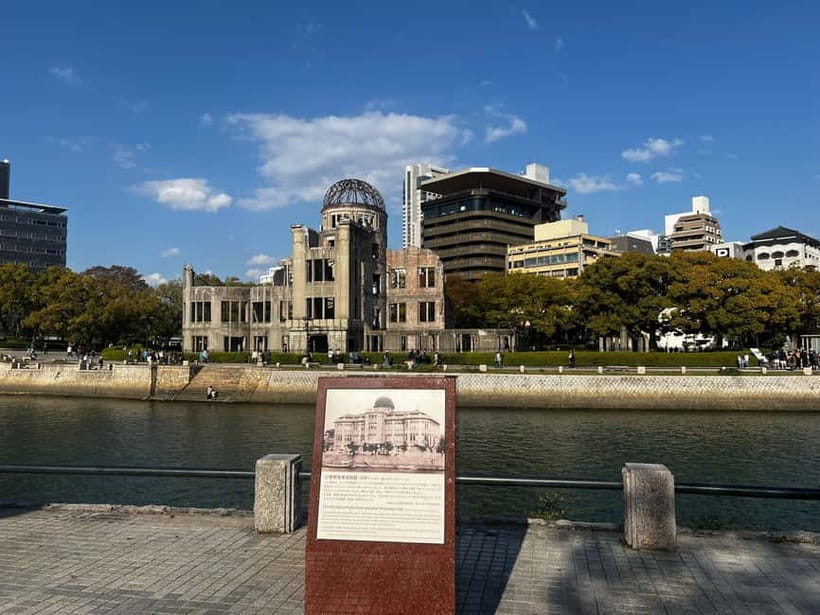
The meeting point is the Atomic Bomb Dome, at coordinates 34.395483, 132.453592. This is a practical place to begin because the building gives you an immediate physical connection to the story.
The former structure survived the blast in a damaged form, and its exposed frame has become one of Hiroshima’s best-known reminders of the destruction. The guide spends about 20 minutes here, explaining the building’s significance and helping you look beyond the familiar photograph.
I like beginning here instead of at the museum. The Dome makes the event feel connected to a real place, not only to dates and objects behind glass. You can see the building before hearing the wider explanation, then carry that first impression through the rest of the walk.
Photography is allowed, but the setting calls for care. You will have chances to take pictures, yet this is not a place for loud posing or a quick social media stop. Respectful behavior is expected at all memorial sites.
Clock Tower of Peace and Bell of Peace
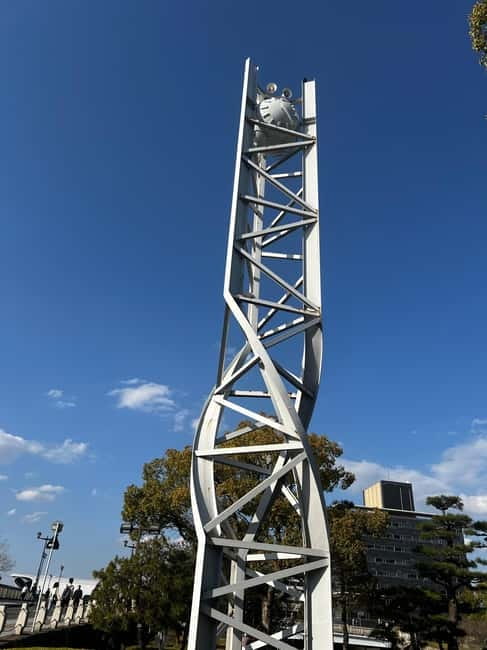
The route next moves to the Clock Tower of Peace, with about 10 minutes of guided explanation. Its presence adds another layer to the park’s message: time, remembrance, and the hope that the same destruction will not happen again.
The Bell of Peace follows, also with about 10 minutes. Bells can seem familiar in many memorial parks, but here the sound carries a direct appeal for peace. Listen to the explanation rather than treating it as a quick photo point. The value of this stop is less about architecture and more about the meaning attached to the object.
These two stops also show why a guide helps. The park has many monuments close together, and their names can blur during a self-guided walk. A clear sequence gives you a better sense of how the memorial area was planned and how different parts express grief, hope, and public remembrance.
The Korean Atomic Bomb Victims Memorial
The Korean Atomic Bomb Victims Memorial is one of the most important stops on the route because it broadens the story beyond Hiroshima’s Japanese victims. The tour gives this site about 10 minutes.
This is exactly the kind of place you might miss if you only follow the main path to the Dome and museum. Its inclusion reminds you that the atomic bombing affected people from different communities, including Koreans who were in Hiroshima at the time.
I value this stop because it asks you to see the bombing through more than one national story. Hiroshima’s memory is local, Japanese, and global at the same time. A brief explanation can help you understand why the memorial belongs in the park and why its presence matters.
A few more Hiroshima half-days worth comparing
- Peaceful Hiroshima & Miyajima UNESCO 1 Day Bus Tour
★ 5.0 · 5,309 reviews - Hiroshima: Hiroshima and Miyajima UNESCO Sites 1-Day Tour
★ 4.9 · 2,330 reviews - Hiroshima / Miyajima Full-day Private Tour with Government Licensed Guide
★ 5.0 · 1,298 reviews - Osaka/Kyoto: Hiroshima Miyajima Bus Tour & Shinkansen Ticket
★ 4.7 · 919 reviews
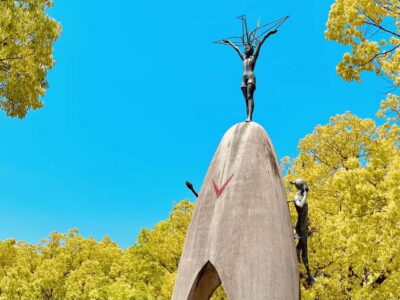
Children’s Peace Monument and the young victims
The Children’s Peace Monument is dedicated to the young people affected by the bombing. The tour allows about 10 minutes here, enough for an introduction and a quiet look.
This is often one of the most affecting parts of the visit because it connects a huge historical event with children and families. The monument’s story is tied to the enduring effects of radiation and to the way young lives became part of Hiroshima’s call for peace.
You may find this stop especially moving if you are visiting with older children or teenagers, though the activity is not suitable for children under 6. That age restriction is worth noting. The subject matter, walking, and solemn setting may be too much for very young children.
Hiroshima National Peace Memorial Hall
The Hiroshima National Peace Memorial Hall is given about 20 minutes, making it one of the longer stops on the route. That extra time reflects its importance as a place for remembrance and personal stories.
The Hall adds human scale to the broader account of the bombing. Instead of thinking only in terms of buildings and official dates, you are directed toward the people who died and the families who lived with the aftermath.
This is also a useful point to slow down. A guide can explain the purpose of the Hall, then give you time to take in the setting. The strongest part of a memorial tour is not always another fact. Sometimes it is having enough quiet space to understand the fact you have already heard.
The Cenotaph for the A-bomb Victims
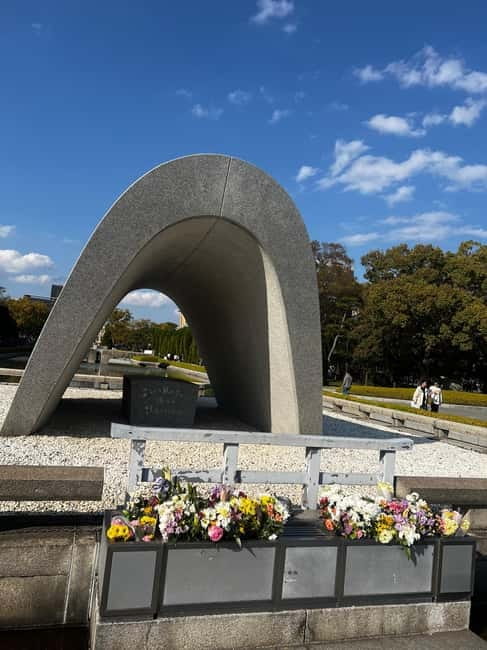
The Hiroshima Victims Memorial Cenotaph is another central stop, with about 10 minutes of guided time. It is a solemn tribute to those who lost their lives, and its position in the park links several major sites visually and symbolically.
The Cenotaph is a place for reflection rather than a long spoken presentation. You will hear about its role and the words associated with its memorial purpose, then have a chance to stand quietly.
The tour also refers to the Cenotaph as the Cenotaph for the A-bomb Victims. These names describe the same central memorial stop in the route. If you are planning your own visit later, recognizing both names can help you match signs and maps.
The Peace Memorial Museum
The Peace Memorial Museum appears later in the route and receives about 10 minutes of guided touring. That is enough for an introduction to the museum’s focus, but not enough to see every exhibit in detail.
The museum explains the events of August 6, 1945, and the effects of the bombing on Hiroshima. It gives you the historical and human material that the outdoor memorials cannot provide. Expect serious content, including the impact of war on civilians and the long aftermath of the attack.
I see the guided visit as a useful orientation rather than a full museum visit. If you want to read every display and spend time with the exhibits, you will need to return on your own or allow extra time before or after the walk. The tour helps you understand what you are seeing, but the listed two-hour format cannot cover the whole museum at length.
That limitation is important when you compare this activity with a longer museum tour. The $19 price is reasonable for a small-group introduction to the park and museum area, especially if you want a guide to connect the main sites. It is less suitable if your only goal is an extended, quiet museum visit.
Prayer Fountain, Peace Flame, and Gates of Peace
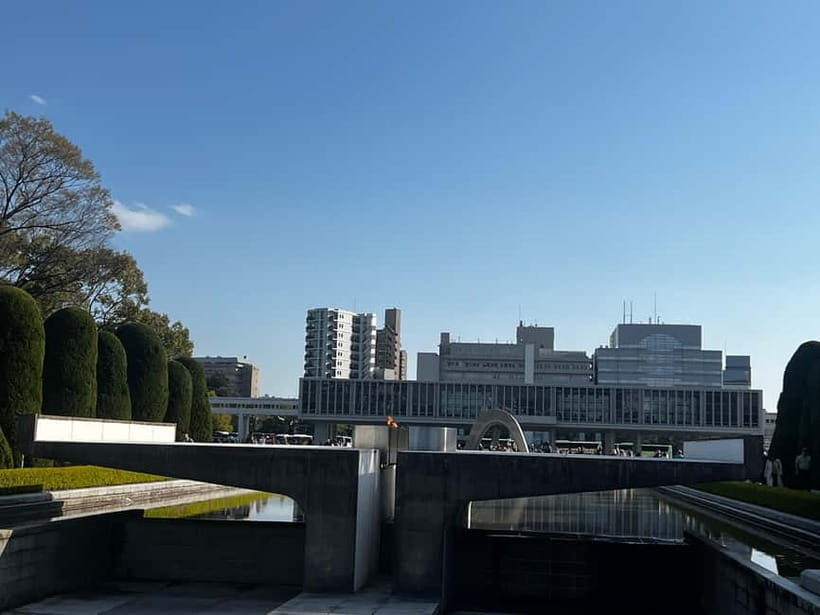
After the museum, the route continues to the Prayer Fountain for about 10 minutes. Water appears throughout the park as a symbol of the suffering caused by the bombing and the basic human needs that remained after it. The guide gives the stop context, so it feels connected to the wider memorial rather than simply decorative.
The Peace Flame is another important part of the visit. It symbolizes hope for a world without nuclear weapons and has remained lit as part of Hiroshima’s peace message. This is one of the clearest points on the route where remembrance turns toward a demand for change.
The final stop is the Gates of Peace, where the tour ends. The Gates provide a fitting close because they look ahead as well as back. After visiting memorials centered on death and loss, you finish with a public statement about peace.
The route does not return you to the Atomic Bomb Dome. Plan your next movement from the Gates of Peace, and keep that in mind if you have a timed reservation afterward.
How long the walk really feels
The advertised duration is two hours. That is a manageable length for most people who are comfortable walking through a city park, but the subject makes the time feel full.
The individual stop timings are best treated as approximate. The listed segments add up to longer than two hours, so the guide may adjust the time at each location depending on the group, walking speed, questions, and the amount of explanation needed. That flexibility is helpful, but you should not expect a full 10 or 20 minutes at every single stop on a strict schedule.
The route involves walking outdoors, so comfortable shoes are essential. Bring water, especially in warm weather. Heart problems are listed as a reason this activity may not be suitable, and you should take that seriously because the tour requires continuous movement through the park.
The activity is wheelchair accessible. If you use a wheelchair, it is still sensible to confirm the exact route details when booking, since the information provided does not specify every surface or access point.
What the guide adds
Shera Alvi’s strongest role is making the park understandable without overwhelming you. The feedback about the tour repeatedly points to an easy pace, clear explanations, and attentive help meeting at the starting point.
That matters at the Atomic Bomb Dome, where a short introduction can change the way you see the building. It matters even more at the lesser-known memorials, where you might otherwise walk past without stopping.
Shera is also described as interested in the group, asking questions and making the experience feel personal. You should expect an English-language tour that leaves room for conversation, not a silent walk behind a guide holding a flag.
The tone appears to balance information and reflection. Shera has been praised for enthusiasm and a good attitude, but the subject remains serious. That balance is important. Hiroshima needs careful explanation, not theatrical performance.
Who should book this Hiroshima tour
I would choose this tour if you are visiting Hiroshima for the first time and want a clear introduction to Peace Memorial Park. It suits solo visitors, couples, and small groups who prefer to ask questions rather than read every sign alone.
It is also a good fit if you want to see more than the famous Dome. The Korean Atomic Bomb Victims Memorial, Clock Tower of Peace, Prayer Fountain, and Gates of Peace give the walk more range than a basic highlight route.
The tour is less suitable if you need a long, private period in the museum or if you prefer to explore entirely at your own speed. You may also want a quieter, shorter visit if memorial sites are emotionally difficult for you.
At $19 per person, the value is strong for a live English guide, a small group, and a route covering the park’s central memorials. The best value comes from the interpretation, not from the amount of time inside the museum. If you want the museum in detail, pair this walk with extra independent time.
You can cancel up to 24 hours before the activity for a full refund, and reserve now while paying later. Those options are useful if your Japan schedule is still changing. Just remember that food is not allowed during the tour, even though photography is permitted.
Should you book it?
Book this tour if you want context, a thoughtful pace, and the lesser-known memorials explained in clear English. Shera Alvi’s attentive style and the 10-person group limit make it a practical way to begin your Hiroshima visit.
Skip it if you already know the park well or want to spend the entire day reading museum exhibits independently. For most first-time visitors, though, $19 is a fair price for a focused two-hour introduction to one of Japan’s most important places.
FAQ
Where does the Hiroshima Peace Memorial Park tour begin?
The tour begins at the Atomic Bomb Dome. The meeting coordinates are 34.395483, 132.453592.
Where does the tour finish?
The tour finishes at the Gates of Peace.
How long does the tour last?
The advertised duration is two hours. The guide may adjust time at each stop based on walking speed, questions, and the needs of the group.
What language is the tour offered in?
The tour is offered in English with a live guide.
How large is the tour group?
The group is limited to 10 participants.
Is the tour wheelchair accessible?
Yes, the activity is listed as wheelchair accessible.
Can I take photographs during the tour?
Yes, photography is allowed. Respectful behavior is expected at all memorial sites.
What should I bring?
Bring comfortable shoes, water, and a camera if you want to take photographs.
Is the tour suitable for young children?
The tour is not suitable for children under 6 years old. It is also listed as unsuitable for people with heart problems.
Just added around Hiroshima
- Full Day Hiroshima and Miyajima Tour by Bullet Train from Kyoto★ 4.5 · 120 reviews
- Hiroshima Saijo Sake Tasting Tour with visit to 7 Breweries★ 5.0 · 104 reviews
- The Peace Memorial to Miyajima : Icons of Peace and Beauty★ 4.5 · 31 reviews
- Shore Excursion from Hiroshima Port : Private Tour in Hiroshima★ 5.0 · 17 reviews
- Okunoshima Rabbit Island Cycling Tour with Local Guide★ 4.5 · 17 reviews
- Hiroshima & Miyajima All-Inclusive Tour w/Licensed guide Pancho★ 5.0 · 54 reviews
- Private Full Day Hiroshima Tour★ 4.5 · 29 reviews
- Hiroshima Country Cycling: Explore Rural Life 1 HR from City★ 5.0 · 22 reviews
Peace Memorial Tours, compared.
Hiroshima Historical Walking Tour – Why A-Bomb was Dropped
Our verdict →
Hiroshima: Miyajima Peace Memorial Icons of Peace and Beauty
Our verdict →Browse the lists this tour appears in