
Reviewed · BULLET TRAIN TRIPS
From Tokyo 1-Day Kyoto English-guided Tour by Bullet Train
Kyoto is about two hours from Tokyo by Shinkansen, but this tour packs the city into a single afternoon. You ride the famous bullet train, eat lunch near Kyoto Station, then visit Fushimi Inari, Sanjusangen-do, and Kiyomizu-dera before racing back south.
I like the careful handoffs, especially for first-time visitors who find Tokyo and Kyoto stations confusing. I also like the mix of red torii gates, a hall filled with 1,001 statues, and a hilltop temple with city views. The catch is simple: Kyoto gets only a few hours, and crowds or traffic can make those hours feel even shorter.
Key points to know before booking
- Round-trip Shinkansen travel: The train is a major part of the experience, with about 2 hours and 20 minutes each way.
- Three classic Kyoto sights: You visit Fushimi Inari Taisha, Sanjusangen-do Hall, and Kiyomizu-dera Temple.
- Several helpful escorts: Staff guide you from Tokyo City i to the platform, meet you in Kyoto, and help with the return train.
- Hotel lunch included: Lunch is served at Miyako Hotel Kyoto Hachijo. The 2025 meal is a semi-buffet, while the 2026 meal is a vegetarian-friendly Western-style set menu.
- A tight afternoon schedule: Expect roughly 30 minutes at Fushimi Inari, 30 minutes at Sanjusangen-do, and 1 hour 10 minutes at Kiyomizu-dera.
- Best for a first taste of Kyoto: It works well when your Japan trip is based in Tokyo and an overnight in Kyoto is not possible.
The Shinkansen makes this possible
The clever idea behind this tour is not just seeing Kyoto. It is seeing Kyoto without changing hotels.
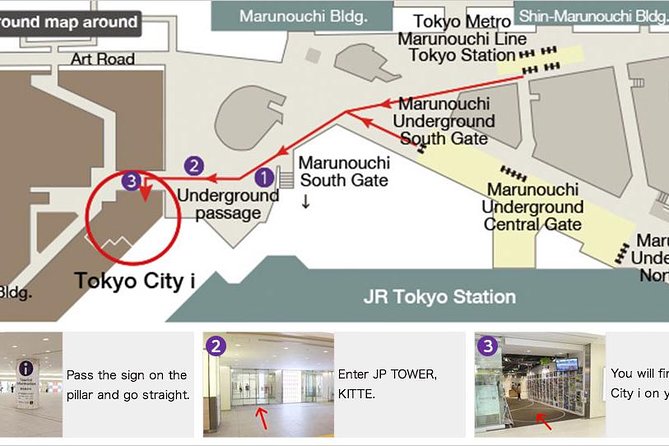
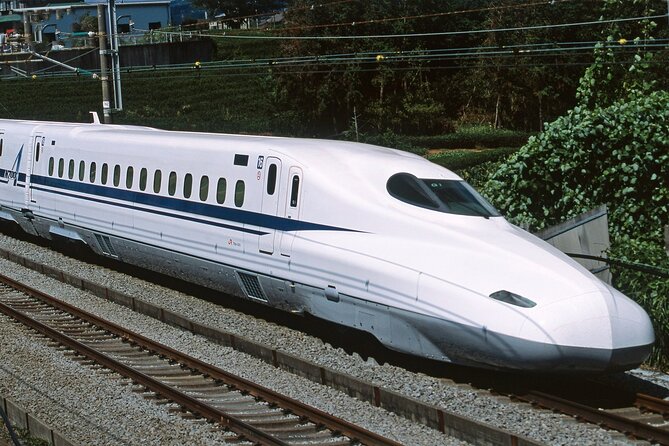
You meet at Tokyo City i in the basement of KITTE, near Tokyo Station, at 9:20 a.m. An English-speaking conductor takes you to the Shinkansen platform and helps you board. The staff do not ride with you, so you need to handle the train journey independently after boarding. That sounds minor, but it is worth understanding before you book.
The train ride lasts about 2 hours and 20 minutes. On a clear day, look out for Mt. Fuji. Seats may not be assigned, and the train schedule can change, so keep your ticket and instructions handy. You can choose a standard or first-class ticket, which may be worthwhile on a long day with two extended train rides.
This is also a good option if Tokyo Station feels intimidating. The station is large and busy, and the tour staff walk you to the train car rather than simply pointing you toward a platform. That support is one of the strongest parts of the arrangement.
Large luggage needs attention. Bags whose total height, width, and length exceed 160 centimeters cannot be brought onto the Shinkansen, so use a luggage delivery service if you are carrying something oversized. A day bag is the sensible choice.
More Day Trips in Tokyo
- 1-Day Tokyo Bus Tour
★ 5.0 · 14,250 reviews - Tokyo: DisneySea 1-Day Passport
★ 4.5 · 2,726 reviews - Tokyo Disneyland 1-Day Passport
★ 4.6 · 2,512 reviews
Lunch near Kyoto Station
At Kyoto Station, an English-speaking staff member meets you on the platform and escorts you to Miyako Hotel Kyoto Hachijo. The hotel is close to the station, so you do not waste time finding a restaurant or figuring out local transport immediately after arrival.
The lunch is Western-style rather than a traditional Kyoto meal. In 2025, it is served as a semi-buffet, with the main dish changed to a vegetarian option if requested at booking. Same-day changes are not accepted. For 2026, the meal is listed as a vegetarian-friendly Western-style set menu.
I see the lunch as practical rather than a cultural highlight. It gives you a dependable meal, a place to sit, and a clean transition from the train to the sightseeing portion. Some people may prefer a local noodle shop or a traditional Kyoto lunch, but that would take more time and require more planning.
After lunch, you walk to the JTB Sunrise Tours Desk at Kyoto Avanti. You may join people coming from other tours before boarding the coach. This creates one of the day’s less exciting stretches: some departures include waiting while the wider group gathers. If you value a smooth, pre-arranged day more than complete independence, that trade-off may be acceptable.
Fushimi Inari and the first splash of red
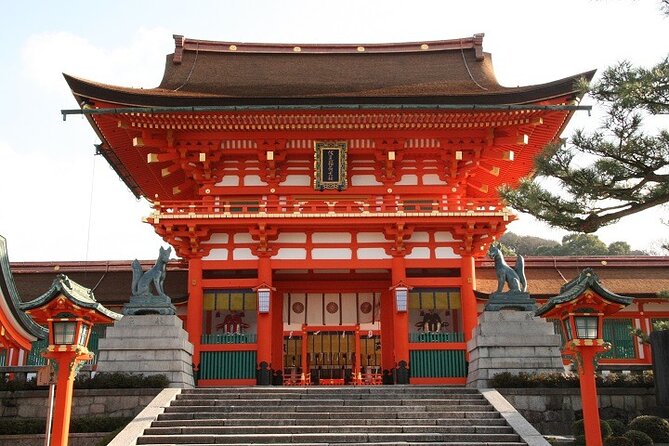
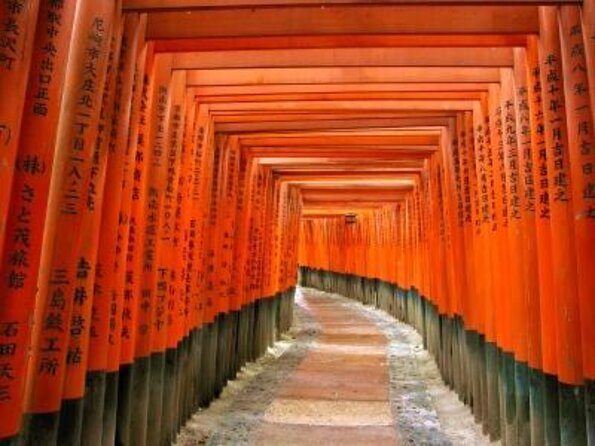
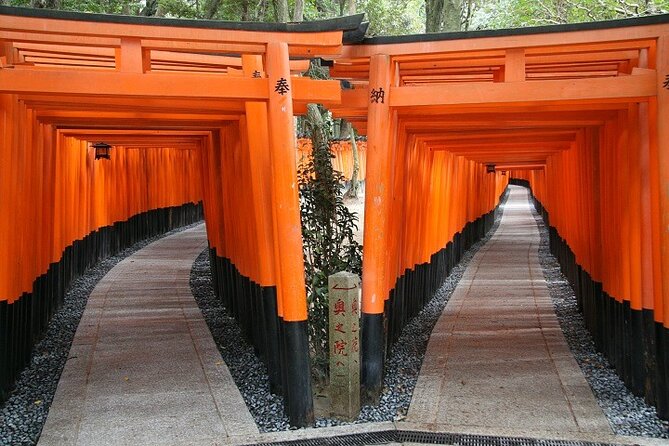
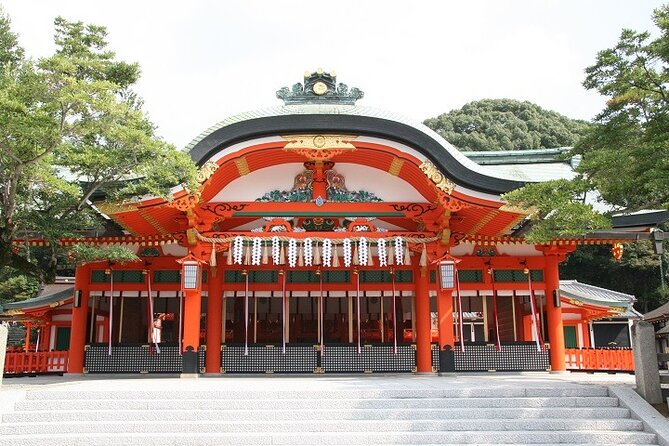
Fushimi Inari Taisha is the head shrine of roughly 40,000 Inari shrines across Japan. Its famous Senbon Torii, or thousands of red-orange gates, climb toward Mt. Inari and create one of Kyoto’s most recognizable scenes.
The tour allows about 30 minutes here, including the walk from the coach parking area. That is enough to see the main gate area and walk through part of the torii tunnel. It is not enough to climb far up Mt. Inari or explore the shrine grounds at a relaxed pace.
This is where you need to set your expectations. The lower gates are often packed, especially during popular seasons and busy parts of the day. You may have only a short time for photographs before returning to the coach. One practical tip is to move with purpose: take your first photos quickly, then enjoy the color, sound, and ritual details instead of trying to walk far uphill.
Fushimi Inari is free to enter, but the stop is valuable because it gives you a quick look at one of Kyoto’s most distinctive religious sites. The downside is that the tour’s schedule cannot wait for everyone to explore at their own speed.
Sanjusangen-do and its 1,001 statues
Sanjusangen-do offers a very different experience. The temple is a long wooden structure, described as the world’s longest wooden building, and its main hall contains 1,001 life-size statues of the Buddhist deity Kannon. The figures date from the 13th century.
The visit lasts about 30 minutes. That may sound brief, but this stop is compact and focused. Inside, the repeating rows of statues create a powerful sight, and your guide explains the Buddhist figures and the temple’s role. Photography is not allowed inside, so this is a place to pay attention rather than reach for your phone.
The hall also connects with Japanese archery traditions, which adds another useful detail to the visit. Sanjusangen-do may be less instantly familiar than Fushimi Inari or Kiyomizu-dera, but it can be the most memorable stop for people interested in Buddhist art and architecture.
There is a practical risk here: temple hours and operating conditions can affect the schedule. One poor experience occurred when a Buddhist temple was closed, so it is wise to recognize that no tightly scheduled day tour can fully control unexpected closures. The tour operator may adjust the order or timing because of conditions.
More Shinkansen Trips in Tokyo:
- Mt Fuji and Hakone 1-Day Bus Tour Return by Bullet Train
★ 5.0 · 26,383 reviews - Mt Fuji & Hakone Cruise, Drum Show Bullet Train 1 Day from Tokyo
★ 4.0 · 7,413 reviews - Tokyo Mt Fuji 5th St & Hakone Cruise Bus Tour w/Bullet Train
★ 4.4 · 5,024 reviews - From Tokyo: Mt. Fuji & Hakone Tour w/ Return by Bullet Train
★ 4.2 · 1,278 reviews
Kiyomizu-dera saves the best view for last
Kiyomizu-dera sits on a hill above Kyoto and is the final major stop. The temple is famous for its wooden stage and broad views over the city. The approach road is lined with shops, snacks, and souvenirs, giving you a taste of Kyoto’s commercial side as well as its religious sites.
You have about 1 hour and 10 minutes here, the longest stop of the day. That sounds generous until you account for the uphill approach, the temple grounds, the view, and the shopping lane. Crowds can make the walk slow, and traffic may delay the coach before you even arrive.
This is the place where the compressed schedule is most noticeable. You may have enough time to reach the temple, take in the view, and browse a few shops, but not enough to wander every lane or linger at each building. Some departures have reached the last temple around 5 p.m., when the light and remaining time were limited.
Still, Kiyomizu-dera gives the day a strong finish. The view over Kyoto helps you understand the city’s shape, and the hilltop setting feels different from the dense streets around the station. Stay close to your guide and watch the clock. Missing the return departure would be a serious problem.
Guide support is the tour’s quiet strength
The tour uses a series of handoffs rather than one guide for the entire day. An escort helps you from Tokyo City i to the Shinkansen, staff meet you in Kyoto, another guide leads the city tour, and staff assist with the return train.
That system can feel impersonal if you prefer one guide from morning to night. It can also feel reassuring when you are navigating two major stations and a group transfer. The team approach is especially useful for first-time visitors to Japan who are not comfortable reading station signs or managing a same-day return from another city.
English quality can vary by guide. Names praised in tour feedback include Yumi, Tammy, KC, and Momo, while another passenger found Nobu’s English harder to follow. That variation is normal on a group departure, and the quality of the tour depends heavily on who leads your particular afternoon.
The best guides add context about Buddhism, shrine customs, temple construction, and Kyoto’s past. They also help keep the group together in crowded areas. Do not expect a private tour or long, quiet explanations at every site. The format is group sightseeing at a brisk pace.
What the $452.45 price really covers
At $452.45 per person, this is an expensive day trip. The price includes round-trip bullet train fare, the Kyoto sightseeing tour, an English-speaking licensed guide interpreter, coach transportation during the city portion, and lunch.
The train tickets account for much of the cost. You are also paying for someone to coordinate the station transfers, reserve the broad structure of the day, and keep you moving through three major sites. For a first visit, that support can be worth real money.
The value is weaker if you already know Japanese rail travel, can manage Tokyo and Kyoto stations confidently, and are happy to plan your own temples. An independent day in Kyoto could give you more time at fewer sites, though the tour price comparison depends on your train ticket, meals, local transport, and entrance fees.
First class may make the long train rides more comfortable, but it does not solve the main problem: limited time in Kyoto. Spend extra for the train class only if the ride itself matters to you.
Who should book this Kyoto day trip
I would recommend this tour to you if your base is Tokyo, your schedule is tight, and you want to see Kyoto without arranging every detail yourself. It is also a strong fit if you want to experience the Shinkansen and prefer staff assistance at both ends.
It suits first-time visitors who want the classic sights. Fushimi Inari, Sanjusangen-do, and Kiyomizu-dera give you three different views of Kyoto: shrine gates and mountain worship, Buddhist sculpture, and a hilltop temple with city views.
I would hesitate if you have two or more nights available in Kyoto. An overnight stay would let you visit fewer sites at a slower pace, explore quieter streets, and avoid spending nearly five hours on trains in one day.
I would also hesitate if crowds frustrate you. The three stops are among Kyoto’s best-known attractions, and the schedule cannot move to a quiet corner when the main paths fill up. Rain can also reduce the pleasure of the outdoor stops, especially at Fushimi Inari and Kiyomizu-dera.
The tour has a maximum of 40 people, so expect a group setting. Children five and under may join free, but they do not receive a Shinkansen or coach seat or lunch unless booked at the child rate. Anyone under 18 needs written parental permission, and anyone under 15 or not yet in middle school must travel with a parent or guardian.
My recommendation for a one-day Kyoto visit
I would book this tour if Kyoto is important to you but an overnight stay is impossible. The bullet train is exciting, the station support removes much of the stress, and the three temples give you a solid first look at the city.
I would not call it a full Kyoto visit. It is a fast introduction, with waiting, traffic, crowds, and limited time at each stop. Bring comfortable shoes, carry only a small bag, watch the meeting times, and ask for a vegetarian meal when you book.
Free cancellation is available up to 24 hours before departure. That gives you a reasonable window to check your schedule and decide if a long day with only an afternoon in Kyoto matches your travel style.
FAQ
How long does the tour last?
The experience lasts about 12 hours. The listed start time is 9:20 a.m., and the approximate arrival back in Tokyo is between 8:30 and 9:30 p.m.
Where does the tour start?
You meet at Tokyo City i in the basement of KITTE, at 2 Chome 7, Marunouchi, Chiyoda City, near Tokyo Station.
Which Kyoto sights are included?
The tour visits Fushimi Inari Taisha, Sanjusangen-do Temple, and Kiyomizu-dera Temple.
Is lunch included?
Yes. Lunch is included at Miyako Hotel Kyoto Hachijo. The 2025 meal is a semi-buffet, and the 2026 meal is a vegetarian-friendly Western-style set menu.
Can I request a vegetarian meal?
For the 2025 menu, you must request a vegetarian option when booking. Only the main dish can be changed, and same-day requests are not accepted. The 2026 menu is listed as vegetarian-friendly.
Does the guide ride the Shinkansen with the group?
No. Staff escort you to the train in Tokyo and provide instructions, but guides and other staff do not ride the Shinkansen with tour participants.
Can I bring large luggage?
Luggage exceeding a combined height, width, and length of 160 centimeters cannot be brought onto the Shinkansen. You need to arrange luggage delivery independently if you have a large bag.
Can I cancel for a refund?
You can cancel up to 24 hours before the local start time for a full refund. Cancellations or changes made less than 24 hours before departure are not accepted for a refund.
More Train Trips in Tokyo
- Mt. Fuji and Hakone Day Trip From Tokyo with Bullet Train Option
★ 4.0 · 368 reviews - From Osaka: Sagano Train Ride and Kyoto Guided Day Tour
★ 4.3 · 180 reviews - Fukuoka: Takachiho Gorge & Scenic Railway One Day Tour
★ 4.8 · 178 reviews - Full Day Hiroshima and Miyajima Tour by Bullet Train from Kyoto
★ 4.5 · 120 reviews
Just added around Tokyo
- Kawagoe Japanese Food Tour : Unagi Kaiseki and Sake near Tokyo★ 5.0 · 30 reviews
- Kawagoe 4hr Private Tour with Licensed Guide (Kawagoe Dep)★ 5.0 · 13 reviews
- Little EDO Sushi Making workshop in Kawagoe★ 5.0 · 18 reviews
- 【R34】Tokyo:Private Daikoku tour in Modified R34★ 4.9 · 92 reviews
- :Tokyo,Shibuya/ Pro Photography in Kimono / English-Friendly★ 5.0 · 26 reviews
- Tokyo:Celebrate Unique Japanese New Year Tradition Festivity★ 3.9 · 20 reviews
- Tokyo: Allstar Food Tour★ 4.7 · 29 reviews
- Tokyo: West-Side Cycling and Food Tour with Guide★ 5.0 · 37 reviews
Bullet Train Trips, compared.

Mt Fuji and Hakone 1-Day Bus Tour Return by Bullet Train
Our verdict →
Osaka/Kyoto: Hiroshima Miyajima Bus Tour & Shinkansen Ticket
Our verdict →Browse the lists this tour appears in