
Reviewed · CYCLING TOURS
Discover Kyoto at Night by Bike
Kyoto changes after sunset. On this small-group bicycle ride, you pedal from Fushimi Inari’s torii gates to lantern-lit streets in Gion, then through the old lanes around Yasaka Pagoda and Ninenzaka. It is a fine way to see several famous sights without the daytime crowds.
I especially like the small maximum of nine people and the route’s mix of shrine, river, geisha district, and old-town scenery. I also like that a bilingual guide handles the local background while you ride, and that the bicycle, bottled water, and entrance fees are included.
The main caution is that this may be as much a walking and listening tour as a cycling tour. One account found only about 1 hour 45 minutes of actual riding and felt the guide talked too long, so you should book this only if you enjoy detailed explanations as well as pedaling.
Key points at a glance
- Fushimi Inari after dark: See the famous red torii gates in a quieter evening setting, with about 40 minutes at the shrine.
- A small group of up to nine: The size should make it easier to stay together and ask questions.
- A broad Kyoto route: The ride links Fushimi Inari, Miyagawa-cho, Gion, Yasui-Konpiragu, Yasaka Pagoda, Ninenzaka, and a Higashiyama park.
- Bilingual guiding: The guide shares local history, customs, and practical tips in two languages.
- Bikes and water included: The $80 price covers the bicycle, bottled water, and entrance fees, but not hotel transport or gratuity.
- Some cycling ability is needed: You should have moderate fitness and be comfortable riding a bicycle before signing up.
Why Kyoto works so well after sunset
Kyoto’s best-known old districts can feel crowded in daylight. At night, the same streets take on a quieter mood, with lanterns, shadowed wooden houses, and temple outlines replacing much of the daytime activity.
That makes a bicycle useful. You can cover more ground than on foot, but you still move slowly enough to notice the street fronts, bridges, riverbanks, and narrow lanes. This is not a high-speed ride. The value comes from linking several different parts of eastern Kyoto in one evening.
The tour begins at 5:00 pm from the 7-Eleven at 44-1 Higashikujō Kamitonodachō in Minami Ward. It lasts about 3 hours and 45 minutes and returns to the same meeting point. Since the route includes stops and talks, you are not cycling continuously for the full duration.
The group limit of nine is important here. Kyoto’s old streets are not built for large bike groups, and a compact party should be easier to manage around shrines, narrow lanes, and busy pedestrian areas. You still need to listen closely to the guide and ride with care.
More Bike Tours in Kyoto
- Hidden Kyoto E-Biking tour
★ 5.0 · 1,843 reviews - Bike Tour Exploring North Kyoto plus Lunch
★ 5.0 · 1,087 reviews - Arashiyama Bamboo Forest & Hidden Gems Bike Tour (Early Bird)
★ 5.0 · 613 reviews
Starting at Fushimi Inari’s red gates
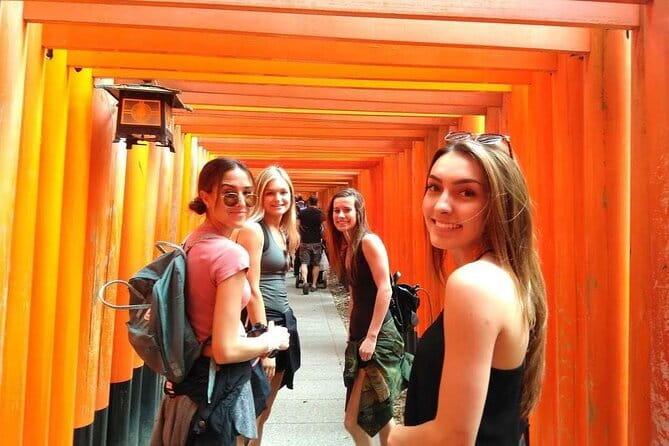
Fushimi Inari-taisha is the tour’s first major stop, with about 40 minutes set aside. The shrine is famous for its thousands of torii gates, which climb through the wooded hills behind the main shrine grounds.
At night, the gates offer a different view from the familiar daytime photographs. The warm color of the vermilion paint and the low light create a more subdued setting. You get a strong first impression without spending the evening in the busiest parts of the shrine complex.
The admission cost is free, and entrance fees are included in the tour price. Do not expect to cycle through every part of the torii-gate route. This is a sightseeing stop within a larger bicycle tour, not a full hike up Mount Inari.
Forty minutes gives you time to take photographs and hear the guide’s explanation, but it is not enough for a long climb through the gates. If Fushimi Inari is a personal priority, you may want to return during the day and explore farther on foot.
Pedaling beside Miyagawa-cho and the Kamogawa River
The route continues toward Miyakawa-cho Dori, also called Miyagawa-cho, with about 15 minutes at the stop. This old district lies just south of Gion and runs parallel to the Kamogawa River.
The area is known for its lantern-lit streets and traditional atmosphere. The brief visit is useful because it gives you a look at a quieter side of Kyoto’s entertainment districts without requiring a long stop.
The ride along the river is one of the most appealing parts of the evening. One highly positive account singled out the river riding and the sight of temples and shrines lit at night. The bicycle lets you move between districts in a way that feels more connected than taking a taxi from one attraction to the next.
The exact amount of riding depends on the group and the guide’s pace. If you are booking this because you want a long continuous bike workout, this is probably not the right choice. If you want transportation between atmospheric stops, the pace should make more sense.
Seeing Gion without treating it like a stage set
Gion is one of Kyoto’s best-known traditional districts, and the tour gives it about 10 minutes. Hanamikoji Street, lined with old tea houses, is the key sight here.
Night is the right time for the district’s visual appeal. Lanterns soften the streets, and the wooden buildings are more striking without the glare of midday. At the same time, Gion is not a theme park. You should keep your voice down, avoid blocking entrances, and never photograph people in private or working settings without permission.
The short stop means the guide is likely to focus on orientation and context rather than a long walk through the district. That is useful if you want a broad view of Kyoto’s traditional quarters, but less satisfying if you want to spend an hour exploring Gion on foot.
A bicycle also requires extra care here. Some lanes are narrow, and pedestrians may be present. Follow the guide’s instructions about when to ride and when to walk the bicycle.
More Night Tours in Kyoto
- Night Walk in Gion: Kyoto’s Geisha District
★ 4.5 · 2,003 reviews - Kyoto Gion Night Walk & Geisha District Guided Tour
★ 5.0 · 786 reviews - Kyoto Bar Hopping Night Tour
★ 5.0 · 613 reviews - Kyoto Nighttime All-Inclusive Eats and Streets, Gion and Beyond
★ 4.5 · 464 reviews
The unusual story at Yasui-Konpiragu
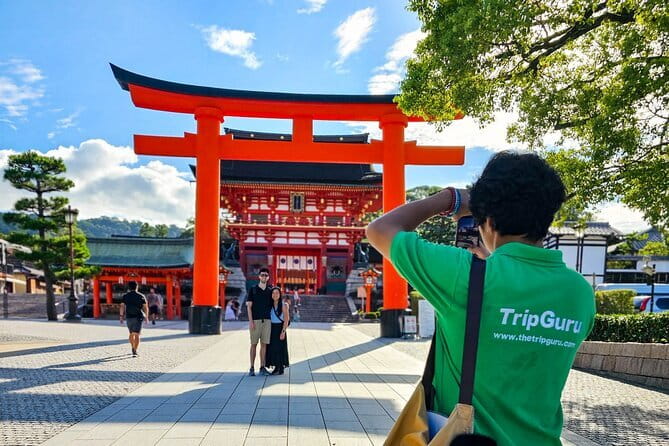
Yasui-Konpiragu receives about 10 minutes. This Shinto shrine is known for its large en-musubi and en-kiri stone, where people come to cut ties with harmful relationships or habits and form better connections.
It is one of the route’s more distinctive stops because it offers a glimpse of living religious practice rather than simply another famous photo point. The idea behind the shrine gives the guide something meaningful to explain, especially if you are curious about how people use Japanese shrines for personal hopes and rituals.
Ten minutes is enough for a quick look and an explanation. It is not enough to study every detail at length, so listen closely while the guide describes what people come here to do.
This stop also adds variety. The tour is not just a parade of scenic streets. You get Fushimi Inari’s gates, Gion’s traditional architecture, and a shrine with a specific purpose and local meaning.
Old lanes around Yasaka Pagoda
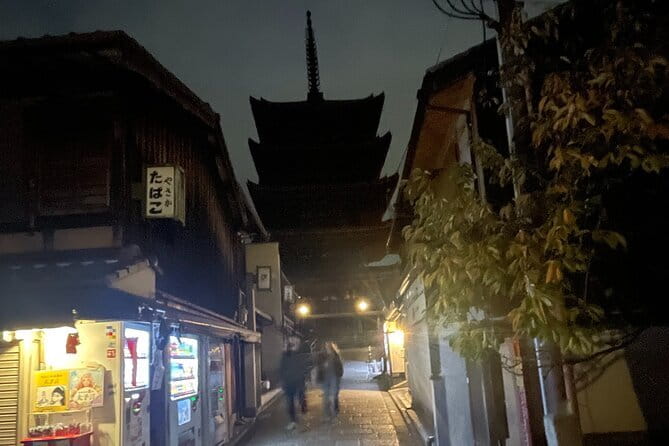
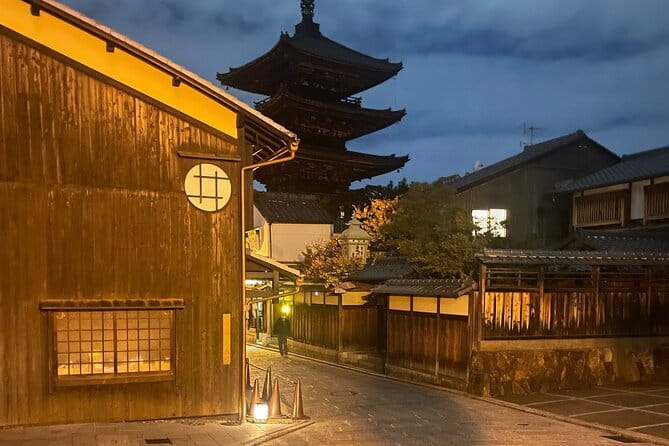
Hōkan-ji Temple, better known as Yasaka Pagoda, is allotted about 15 minutes. The pagoda rises among narrow cobbled streets and traditional machiya townhouses, making this one of Kyoto’s most recognizable evening views.
The surrounding Higashiyama area is especially good for photographs. At night, the streets can feel more atmospheric than during the day, when the area is often crowded with people stopping for the classic pagoda view.
The stop is mainly about the setting outside the temple. The information provided does not indicate a long interior visit or an extended climb into the pagoda, so think of this as a photo and orientation stop.
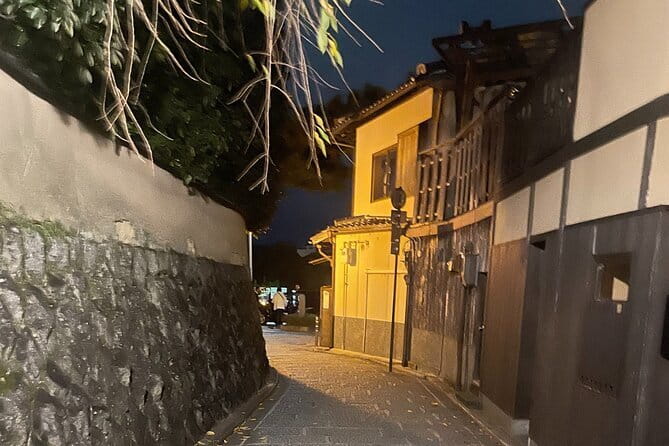
Take care with the pavement. Cobblestones and narrow lanes are not ideal for fast cycling, and you may need to walk the bicycle for part of this section. That is not a flaw in the route. It is simply the practical reality of seeing Kyoto’s oldest streets by bike.
Ninenzaka and the best evening photographs
Ninenzaka is another 15-minute stop and one of the tour’s strongest scenic sections. It is one of the two famous slopes in Higashiyama, surrounded by traditional buildings and views that many people associate with old Kyoto.
The evening light helps here. You can frame the slope, wooden facades, and nearby pagoda without the harsh brightness of afternoon. The guide can also help you understand how Ninenzaka fits into the wider Higashiyama district.
As at Yasaka Pagoda, this is a pedestrian-heavy area with uneven streets. Do not expect to race downhill. The bicycle is useful for reaching the area, but the best way to enjoy the lane itself may be on foot.
Fifteen minutes is enough for photographs and a short explanation. If you want time to browse shops or linger over every view, you will need to return independently on another evening.
A final Higashiyama park stop

The final stop is described as Kyoto’s most famous park in Higashiyama, with cherry trees, ponds, and wooden bridges. The supplied details do not name the park, so you should not book this tour expecting a specific park experience beyond those features.
This closing stop adds a calmer note after the old streets and shrine visits. Ponds and bridges often show well in low light, while the trees give the group a chance to pause before riding back.
Because the tour returns to the original meeting point, the final ride also matters. You finish where you began, rather than needing to arrange a separate ride across the city at the end of the evening.
How much riding should you expect?
The full activity lasts about 3 hours and 45 minutes, but the listed stops alone account for well over 1 hour. Add guide explanations, time spent securing or walking bicycles, and movement between locations, and the actual riding time may be closer to half the tour than to the full duration.
One published account described roughly 1 hour 45 minutes of riding and said the tour ended about 45 minutes late because of extended talking. That is useful planning information. You should leave some flexibility after the scheduled finish, especially if you have a dinner reservation or evening train.
The guide’s style matters a great deal. The tour is designed around stories about Kyoto’s history, customs, and traditions, and one especially praised guide, Juan, was careful about bicycle safety and made a solo participant feel comfortable. Another experience found the talking excessive and not always related to the route.
So ask yourself what you want. If you like stops with explanations and local background, the talks may be a major part of the appeal. If your ideal bicycle tour means steady movement and very few pauses, you may find the balance frustrating.
Is $80 a fair price?
At $80 per person, this is not the cheapest way to see Kyoto at night. You are paying for more than bicycle rental, though. The fee includes the bike, bottled water, all entrance fees, a bilingual guide, and nearly four hours of organized sightseeing.
Most listed stops are free, so the ticket price is mainly paying for the guide, route planning, equipment, and the convenience of joining several districts in one outing. The small maximum of nine also gives the experience more personal attention than a large coach excursion.
The value is strongest if you are short on time or want help finding your way through Kyoto after dark. It is weaker if you are already comfortable cycling around the city and would rather rent a bicycle independently.
Hotel transportation is not included, and gratuity is not included. You need to reach the starting point yourself, though it is near public transportation. The mobile ticket makes entry and check-in simple.
Who should book this evening ride?
I would recommend it to a reasonably fit cyclist who wants a guided introduction to eastern Kyoto at night. You should already be comfortable on a bicycle, since one account specifically warned that the tour is not suited to first-time riders.
It also suits solo participants. One person ended up alone on the tour, and the activity continued rather than being canceled. That suggests the small format can work well for someone who wants personal attention, though the minimum-number policy means cancellation is still possible if the required number is not reached.
The tour is a good match for people who enjoy cultural explanation, photography, and a varied route. It is less suitable for anyone seeking a fast ride, a long climb at Fushimi Inari, or extended free time at each sight.
Weather matters. The experience requires good weather, and poor conditions can lead to a new date or a full refund. You can cancel for a full refund up to 24 hours before the 5:00 pm start, but cancellations or changes within 24 hours are not refunded or accepted.
Should you book it?
Book this tour if you want to connect several classic Kyoto sights by bicycle, see Fushimi Inari and Higashiyama under evening light, and hear stories from a bilingual guide. The route is varied, the group is capped at nine, and the guide can add context that is easy to miss when you explore alone.
Skip it if you mainly want uninterrupted riding. The stops are short, and the guide may spend a large share of the evening talking. Also skip it if you are not a confident cyclist or dislike riding near pedestrians and on uneven old streets.
For the right person, the $80 cost is reasonable because it combines equipment, guidance, water, and a carefully linked evening route. Go in expecting a cultural bicycle outing, not a pure cycling workout, and you will have a much clearer idea of what you are buying.
FAQ
Where does the Kyoto night bicycle tour begin?
It begins at the 7-Eleven at 44-1 Higashikujō Kamitonodachō, Minami Ward, Kyoto, 601-8002, Japan.
What time does the tour start?
The tour starts at 5:00 pm.
How long does the activity last?
The scheduled duration is approximately 3 hours and 45 minutes. The actual finish can vary, so avoid booking a tight evening commitment afterward.
What is included in the price?
The price includes bicycle use, bottled water, and all entrance fees. Hotel transportation and guide gratuities are not included.
How many people can join?
The activity has a maximum of nine participants.
Can I cancel for a refund?
Yes. You can cancel at least 24 hours before the start time for a full refund. Cancellations or changes made within 24 hours are not accepted and are not refunded. If poor weather or an insufficient number of participants causes the tour to be canceled, you will be offered another date or experience, or a full refund.
Just added around Kyoto
- Sekka Cotton Furoshiki Class★ 5.0 · 19 reviews
- Kyoto Sword Experience – includes Museum Ticket/Ninja Experience★ 4.5 · 149 reviews
- Scenic Green Tea Fields of Hidden Kyoto & Local Tea Exp (Private)★ 5.0 · 32 reviews
- Secret Eastern Kyoto Biking Adventure★ 5.0 · 44 reviews
- Private Sake Tasting in Central Kyoto with Sake Sommelier★ 5.0 · 32 reviews
- Samurai School in Kyoto: Samurai for a Day★ 5.0 · 202 reviews
- Samurai Performance and Casual Experience: Kyoto Ticket★ 4.5 · 115 reviews
- SHIRAKAWA Japanese Culture Experiences with private English staff★ 5.0 · 16 reviews
Cycling Tours, compared.
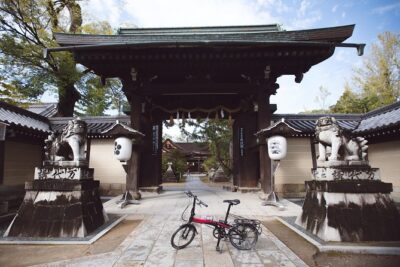
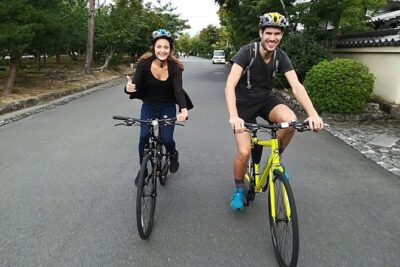
Arashiyama Bamboo Forest & Hidden Gems Bike Tour (Early Bird)
Our verdict →

Browse the lists this tour appears in