
Reviewed · RAMEN & NOODLE TOURS
Shibuya: Ramen Dojo Tokyo | Make All 3 (Tonkotsu/Shoyu/Miso)
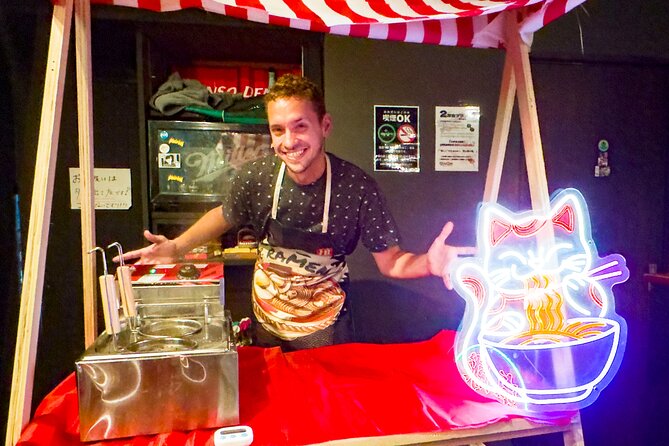
The main draw here is simple: in 90 minutes, you make three ramen styles and compare them side by side. You knead and cut fresh noodles, prepare chicken chashu, adjust the soup, and finish three small bowls rather than settling for just one recipe.
I like the small class size, capped at eight, because beginners get real help instead of watching from the back. I also like the balance of tasting and doing: you learn the noodle process, then sit down to eat tonkotsu, shoyu, and miso ramen. The main catch is that the broths are prepared in advance, so this is more a noodle and ramen assembly class than a full broth-making lesson.
Key points to know before booking
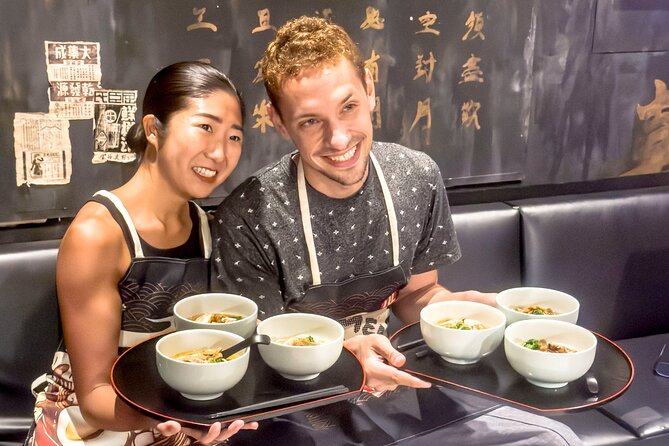
- Three ramen styles in one sitting: Taste tonkotsu, shoyu, and miso in three mini bowls.
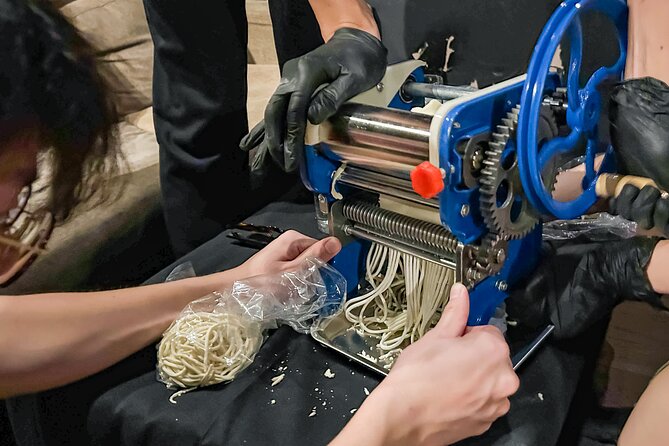
- Fresh noodles are the hands-on focus: Knead the dough and run it through a professional noodle cutter.
- Small English-speaking class: The maximum group size is eight, with attentive support for beginners.
- A useful home recipe: You receive a digital recipe after class, though the broth process is not taught in full.
- Convenient Shibuya location: Walk about 10 minutes from Shibuya Station, then continue exploring the area after the class.
- Check dietary limits carefully: The class is not suitable for severe wheat, egg, or soy allergies, celiac disease, severe airborne flour sensitivity, or strict vegan and religious diets.
Three ramen bowls, one compact Tokyo lesson
Tokyo gives you endless chances to eat ramen. This class gives you a reason to slow down and see how the bowl comes together. Instead of ordering one finished dish, you work through several stages and taste three familiar styles in the same session.
The format is especially useful if you are curious about the differences among ramen broths. Tonkotsu is the rich pork-style option, shoyu brings a soy sauce base, and miso adds a deeper fermented flavor. You are not making three large meals, thankfully. Each serving is a mini bowl, so you can compare them without leaving the studio uncomfortably full.
I would treat this as a cooking workshop with a generous tasting session, not as a professional chef course. The class gives you practical contact with the noodles, toppings, seasoning, and plating. It does not teach every stage of a long-simmered broth from raw ingredients.
That distinction matters. One person enjoyed learning the noodle process but wanted more instruction about the soup. If broth is the part of ramen that interests you most, keep your expectations in check. If you want to understand fresh noodles and build three attractive bowls, the lesson is a better match.
More Ramen Tours in Tokyo
- Eat and Drink Like a Local: Tokyo Ueno Food Tour-Taverns&Ramen
★ 5.0 · 957 reviews - Ramen & Gyoza Cooking Class in Tokyo with Local Supermarket Visit
★ 5.0 · 823 reviews - Tokyo: Ramen Tasting Tour with 6 Mini Bowls of Ramen
★ 4.9 · 432 reviews
Finding the studio near Shibuya Station
The meeting point is the Umekita Building at 7-11 Maruyamachō, roughly a 10-minute walk from Shibuya Station. The activity begins and ends there, with no hotel pick-up or drop-off.
That setup works well for a Tokyo day plan. You can schedule the class between shopping, cafés, and other sights in Shibuya without losing time to a long ride across town. Check the route before your start time, since Shibuya Station and its surrounding streets can take longer to navigate than a map suggests.
The location also keeps the experience practical. You do not need to arrange private transport, and the same studio is used for the return at the end. After eating, you can continue your day in Shibuya rather than making your way back to a distant neighborhood.
Plan to arrive ready to participate. The class includes an apron loan and kitchen equipment, so you do not need to bring cooking tools. A mobile ticket is accepted, and booking confirmation is provided at the time of reservation.
The first 15 minutes: briefing and chicken chashu
The 90-minute schedule begins with about 10 minutes for check-in and a briefing. This gives the instructor time to explain the flow, introduce the ingredients, and get you ready for the practical work.
Next comes about five minutes of chicken chashu preparation. Chashu is the tender meat topping placed on ramen, and using chicken keeps the process manageable within a short lesson. You prepare it before moving on to the noodles and later finish the topping as the bowls come together.
This part is brief, so do not expect a full lesson on every traditional chashu method. Its value is in showing you how the topping fits into the finished bowl. Ramen is not only broth and noodles. Meat, toppings, seasoning, and presentation all affect what you eat.
Families can find the pace approachable. An eight-year-old was accommodated successfully, and the instructor’s patient manner helped make the process work for a young participant. Still, children should be comfortable following kitchen instructions and using their hands during food preparation.
Kneading dough and cutting noodles
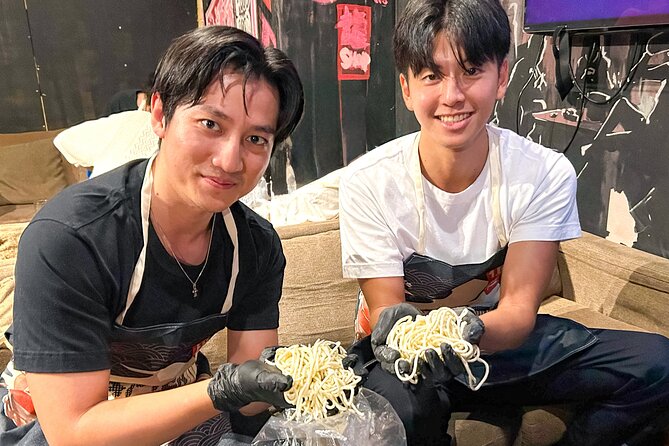
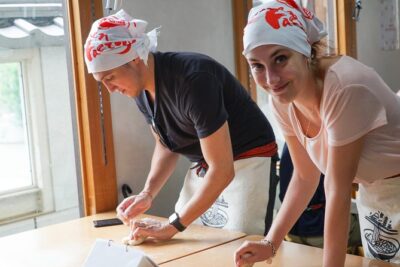
Noodle making takes about 20 minutes, and this is the most hands-on section of the class. You knead the dough, then push it through a professional cutter to create fresh noodles.
For many people, this is the part that makes the class worth booking. You get to feel the dough change under your hands and see how a plain mixture becomes something ready for the soup. The noodle machine also adds a practical touch that would be difficult to recreate with ordinary kitchen equipment.
The process is designed for beginners. You do not need previous cooking experience, and the instructor provides direction throughout. At first, kneading and handling the dough may feel awkward, but the class is paced so you can follow along rather than figure it out alone.
There is an important limit here. The ingredients for the dough are prepared in advance, according to the class details and participant feedback. You take part in kneading and cutting, but you are not starting with every ingredient measured from scratch. That saves time and keeps the lesson focused, yet it means the class is not a full food science lesson on noodle dough.
If you want to repeat the process at home, pay close attention to the texture at each stage. The digital recipe provided after class is useful, but the physical feel of dough is one of the harder parts to learn from a written recipe alone.
Same trip, a completely different kind of day:
- 1-Day Tokyo Bus Tour
★ 5.0 · 14,250 reviews - Tokyo: TOKYO SKYTREE® Admission ticket
★ 4.5 · 11,192 reviews - Tokyo: teamLab Planets TOKYO Digital Art Museum Entry Ticket
★ 4.6 · 9,779 reviews - Tokyo: Sumo Show Experience with Chicken Hot Pot and a Photo
★ 4.8 · 6,678 reviews
Finishing the chashu and preparing the bowls
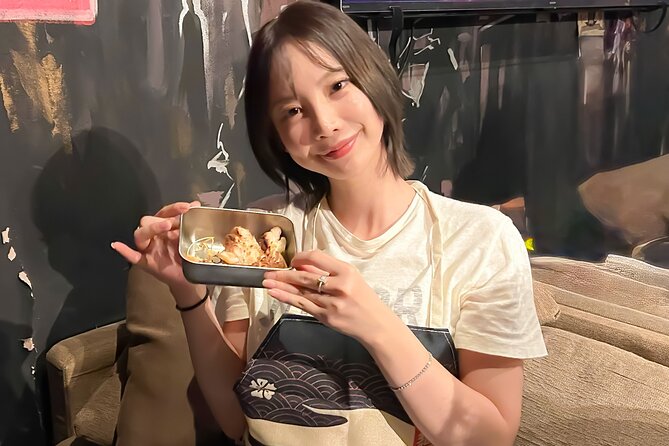
After noodle making, you spend about 10 minutes finishing the chicken chashu. Then the class moves into boiling the noodles and preparing the soups, which takes about another 10 minutes.
This is where the three styles begin to make sense. The noodle itself provides a common base, while the soup changes the character of each bowl. Tasting the same fresh noodles with tonkotsu, shoyu, and miso helps you notice how much the seasoning and broth influence the final dish.
The instructor also lets you adjust the soup to your preferred taste. That small choice is valuable because it turns the class from a fixed demonstration into a personal cooking exercise. You can pay attention to how stronger or milder seasoning changes the bowl.
Still, the class does not have you prepare the broths from the beginning. The three soup bases are presented for tasting and assembly rather than built through a long cooking process. I see this as a sensible tradeoff for a 90-minute activity, but it is the main limitation for anyone hoping to learn restaurant-style broth production.
Plating three mini bowls
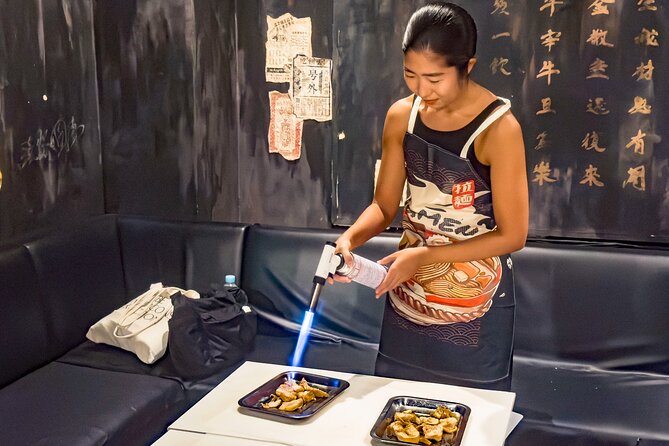
Plating takes about five minutes. You add the noodles, soup, chicken chashu, and toppings to create three small servings.
The compact portions are a smart choice. You can try all three styles, compare them while the differences are fresh, and still have room for the rest of your day in Tokyo. The final trio also makes a pleasing photo, especially if you enjoy recording food experiences.
Plating may sound like a small step, but it teaches useful habits. Ramen is served quickly, and the noodles, broth, toppings, and garnish need to reach the bowl in the right order. You get a short look at that timing without the pressure of a restaurant kitchen.
This is also a good point to ask the instructor practical questions. The group is limited to eight people, and the activity is conducted in English. That should give you better access to help than a large demonstration class, especially when you are handling dough or adjusting the soup.
Tasting tonkotsu, shoyu, and miso
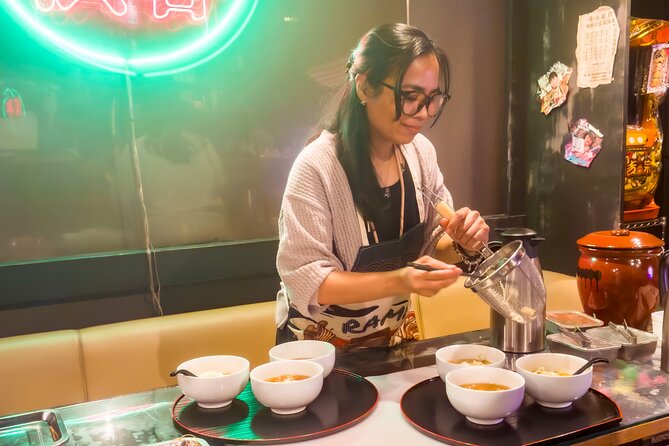
The final 30 minutes are set aside for tasting and photographs. You sit down with three mini bowls: tonkotsu, shoyu, and miso.
The side-by-side tasting is the strongest feature for anyone who wants more than a single recipe. A bowl of ramen in a restaurant can be delicious, but it does not always explain why one style tastes different from another. Here, you can move from one bowl to the next and compare the soup, noodles, toppings, and seasoning directly.
Tonkotsu gives you the richest profile of the three. Shoyu offers a more soy-based character, while miso brings another layer of savory depth. The class lets you adjust the flavor, so your finished bowls are not just samples placed in front of you. You have a hand in the final balance.
The tasting portion also keeps the class from feeling rushed. Thirty minutes is enough time to eat, take photos, and think about what you would repeat at home. If you are hungry when you arrive, the three mini bowls provide the promised meal tasting, though they are not three full restaurant portions.
What you can take home from the class
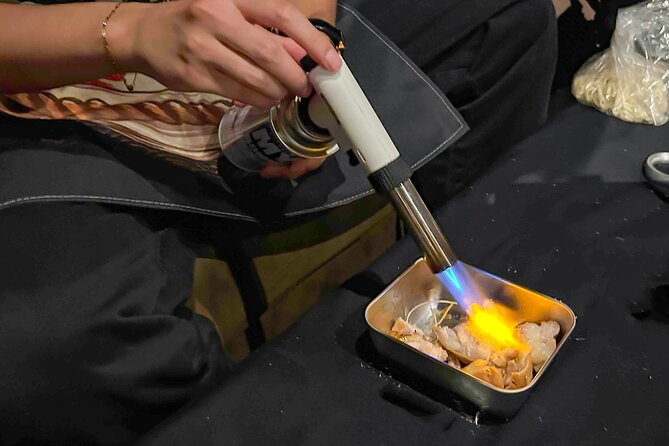
The most useful take-home item is the digital recipe supplied after the class. You can use it to revisit the noodle process and remember the order of preparation.
Do not expect the recipe alone to reproduce every part of the studio experience. The instructor’s guidance is important, particularly when kneading dough, using the cutter, and adjusting the soup. If you want to make the class valuable at home, take mental notes as you work and ask questions while the instructor is nearby.
The experience is also good for learning what you like. You may arrive thinking miso or tonkotsu is your favorite, then discover that shoyu suits your taste better when paired with fresh noodles. The three-bowl format gives you a clear comparison without requiring three separate restaurant meals.
That is a modest but genuine cultural benefit. Ramen is often treated as quick comfort food, yet this class shows the choices behind the bowl. You learn through your hands, not just through a speech about Japanese cuisine.
Price, group size, and who gets good value
At $86.22 per person, this is not the cheapest way to eat ramen in Tokyo. You are paying for instruction, ingredients, kitchen use, an apron, three tastings, and a digital recipe, not simply for lunch.
I think the price makes better sense for visitors who want an activity as well as a meal. The 90-minute format is compact, the group is limited to eight, and you receive personal guidance in English. A private class would likely cost more, while a large group could offer less hands-on time.
For a family, the price also buys a shared activity. The class can suit children who are interested in food and can follow basic kitchen directions. The young participant who was accommodated successfully suggests that the instructor can be patient with children, though the class remains a cooking lesson rather than a dedicated children’s program.
Solo visitors and couples can also get good value if they enjoy learning by doing. If you only want to eat excellent ramen, spend the money at a restaurant instead. If you want to make noodles, compare three styles, and leave with a recipe, the cost is easier to justify.
Dietary limits and physical considerations
This class is not suitable for severe wheat, egg, or soy allergies, celiac disease, or severe airborne flour sensitivity. Strict vegans and people who need fully compliant religious diets should also avoid booking unless the provider confirms a suitable arrangement, since special dietary substitutes beyond the stated offering are not included.
The activity requires kneading dough, handling ingredients, using kitchen equipment, and climbing stairs if the studio setup requires them. The supplied information specifically says it is not suitable for people unable to use stairs.
Alcoholic drinks, hotel transfers, personal expenses, and gratuities are not included. Cancellation is free up to 24 hours before the start time. A cancellation within 24 hours is not refunded, and changes in that period are not accepted.
Should you book Ramen Dojo Tokyo?
Book this class if you want a short, hands-on food activity near Shibuya and like the idea of tasting three ramen styles in one sitting. It is especially suitable for beginners, families with older children, couples, and anyone who wants a practical introduction to fresh noodle making.
I would not book it if your main goal is to learn how to make tonkotsu broth from bones or to follow a strict vegetarian, vegan, allergy-safe, or religious diet. The soup bases are prepared for the class, and the workshop focuses more on noodles, toppings, seasoning, and assembly.
For most people, the best reason to go is the comparison: three mini bowls, one fresh noodle process, and enough instructor support to keep a first attempt from becoming a floury mess. At 90 minutes, it fits neatly into a Shibuya day and gives you something you cannot get from simply ordering another bowl.
FAQ
How long does the ramen class last?
The activity lasts approximately 90 minutes. The schedule includes briefing, chicken chashu preparation, noodle making, finishing the chashu, soup and noodle preparation, plating, tasting, and photo time.
Where does the class start?
The class starts at the Umekita Building, 7-11 Maruyamachō, Shibuya, Tokyo 150-0044, Japan. The studio is about a 10-minute walk from Shibuya Station.
Where does the activity end?
The class ends at the same meeting point where it begins.
Which ramen styles will I taste?
You will make and taste three mini bowls: tonkotsu, shoyu, and miso ramen.
Is the class taught in English?
Yes. An English-speaking instructor leads the class and provides support during the activities.
What is included in the price?
The price includes tasting three mini bowls, all ingredients, kitchen equipment, an apron loan, English instruction, and a digital recipe provided after the class.
Is the class suitable for beginners?
Yes. Beginners are welcome, and the instructor guides you through kneading dough, cutting noodles, preparing chicken chashu, adjusting soup, and plating.
Can people with food allergies or strict dietary requirements join?
The class is not suitable for severe wheat, egg, or soy allergies, celiac disease, severe airborne flour sensitivity, or strict vegan and religious diets. Special dietary substitutes beyond the stated offering are not included.
Just added around Tokyo
- Kawagoe Japanese Food Tour : Unagi Kaiseki and Sake near Tokyo★ 5.0 · 30 reviews
- Kawagoe 4hr Private Tour with Licensed Guide (Kawagoe Dep)★ 5.0 · 13 reviews
- Little EDO Sushi Making workshop in Kawagoe★ 5.0 · 18 reviews
- 【R34】Tokyo:Private Daikoku tour in Modified R34★ 4.9 · 92 reviews
- :Tokyo,Shibuya/ Pro Photography in Kimono / English-Friendly★ 5.0 · 26 reviews
- Tokyo:Celebrate Unique Japanese New Year Tradition Festivity★ 3.9 · 20 reviews
- Tokyo: Allstar Food Tour★ 4.7 · 29 reviews
- Tokyo: West-Side Cycling and Food Tour with Guide★ 5.0 · 37 reviews
Ramen & Noodle Tours, compared.
Eat and Drink Like a Local: Tokyo Ueno Food Tour-Taverns&Ramen
Our verdict →

Five Must-See Highlights Walking Tour & Ramen Lunch
Our verdict →
Professional Ramen & Gyoza with Ramen Chef in a restaurant!
Our verdict →
Popular in SapporoExperience authentic hand-made soba at a real soba shop!
Our verdict →
Browse the lists this tour appears in