
Reviewed · PEACE MEMORIAL TOURS
Hiroshima:Guided Virtual Tour/PEACE PARK TOUR VR
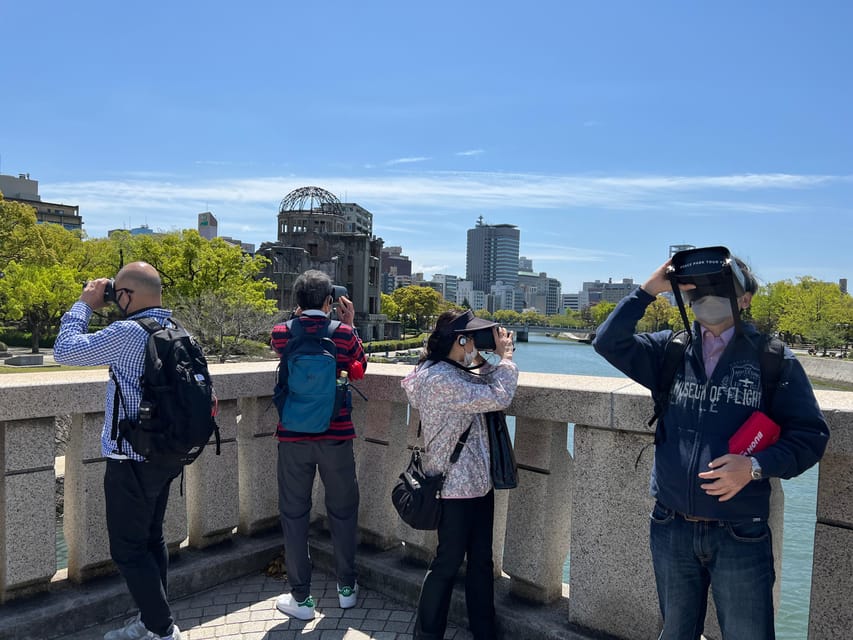
Hiroshima’s Peace Park is powerful on foot, but this tour adds a second layer: at several stops, VR places you inside the city before and after the atomic bombing. You stand in the real park while seeing the streets, buildings, and devastation that once occupied the same ground.
I like two things in particular. First, the tour is led by a local English-speaking guide who can answer questions as they come up. Second, the small group, limited to six people, gives the experience a quiet, personal feel. The main consideration is emotional weight: this is a serious memorial tour, not light sightseeing, and heavy rain can reduce the fieldwork to a shorter version.
Key points to know before booking
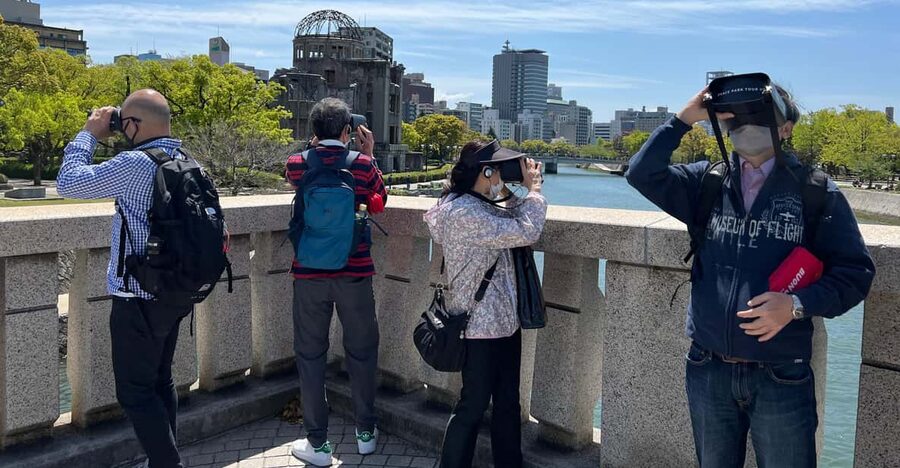
- VR is used at four Peace Park locations, including the Atomic Bomb Dome and two historic bridges.
- Local guides add human context, with guides such as Yoko, Kazuko, and Hiroshi sharing survivor accounts and family connections.
- Eizo Nomura’s experience anchors the VR story, linking the digital recreation to a hibakusha who was only 170 meters from the hypocenter.
- The six-person limit matters, since it leaves more room for questions and conversation.
- The tour lasts 80 minutes, with about 70 minutes of guided walking and fieldwork before returning to the Rest House.
- Rain does not automatically cancel the tour, but heavy rain may mean a five-minute VR presentation indoors after the outdoor portion.
Why this Peace Park tour feels different
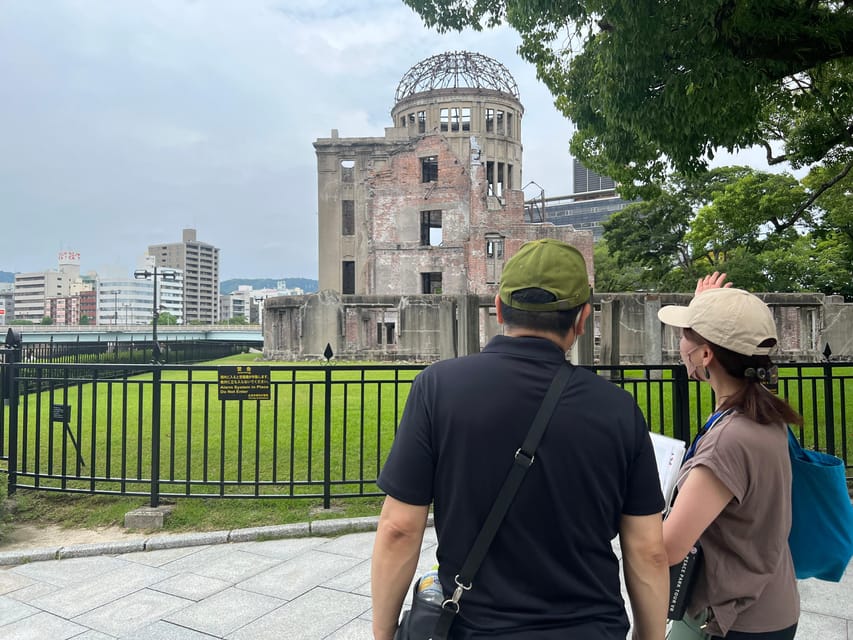
The Hiroshima Peace Memorial Park can be hard to understand at first. It is open, green, and carefully arranged, with monuments spread around the rivers and paths. That calm setting is part of its purpose, but it can also make the scale of what happened feel distant.
This experience uses VR to close that gap. You do not simply look at a monument and read a plaque. You stop, put on a headset, and see a reconstruction based on photographs and the testimonies of atomic bomb survivors. The sequence moves from Hiroshima before the bombing to the burned city of August 6, 1945, then to its recovery.
That approach is especially valuable because the number of hibakusha, the Japanese word for atomic bomb survivors, is gradually declining. Their first-person accounts are not replaced by the technology, but the VR gives those accounts a visual setting. You can connect a survivor’s story to the bridge, street, or park area where the events took place.
The experience is not designed to entertain in the usual tourist sense. The virtual scenes are a tool for understanding. You will still be walking through the actual Peace Park, listening to a guide, asking questions, and talking with the group at the end.
More Peace Memorial Tours in Hiroshima:
- Hiroshima Historical Walking Tour – Why A-Bomb was Dropped
★ 4.8 · 893 reviews - Hiroshima: Miyajima Peace Memorial Icons of Peace and Beauty
★ 4.9 · 361 reviews - Hiroshima/Guided Virtual Tour of Peace Park/PEACE PARK TOUR VR
★ 5.0 · 157 reviews
Starting at the Peace Memorial Park Rest House
Your meeting point is the tourist information counter on the first floor of the Hiroshima City Peace Memorial Park Rest House. Arrive at least five minutes before the booked start time. The guide will be waiting there, and this is also where the tour begins and ends.
The Rest House is a sensible meeting point because it puts you directly inside the memorial area. You do not need to arrange a separate transfer between the meeting place and the park. Transportation to the Rest House is not included, so plan that part yourself.
The timing rule is strict. If you have not arrived within 10 minutes of the start, you may not be allowed to join. If you are delayed, contact the tour provider. A late arrival may lead to a shortened tour, so allow extra time to reach the park.
Luggage is another practical point. The Rest House cannot store bags, so arrive with only what you can manage comfortably during the walk. You will be outdoors at several locations, and the group will be moving between stops rather than remaining in one room.
The first 20 minutes: building the story at the Rest House
The opening section takes about 20 minutes and combines a guided explanation with sightseeing and walking. This is where the guide can explain the basic setting before the VR begins.
The strongest version of the introduction links the technology to a particular person. Kazuko, for example, begins with the story of Eizo Nomura, a hibakusha who was inside a building only 170 meters from the atomic bomb’s hypocenter. The VR then follows the experience connected with his testimony.
That detail changes how you watch the scenes. Instead of seeing a general computer model of a destroyed city, you have a human point of reference. The account helps explain what the blast meant for people, buildings, and the wider community.
Guides bring different personal angles to this opening. Hiroshi has spoken about historical events as well as experiences connected with his own family and surroundings. Yoko Shimada is noted for taking time with questions and creating an open, friendly discussion. The guide you receive will vary, but the format gives the person leading the tour room to add local context.
The Atomic Bomb Dome: a real building beside a virtual city
The Atomic Bomb Dome is the most recognizable stop on the route. It is also one of the clearest places to see why this tour uses VR rather than relying only on photographs.
You will spend about 20 minutes here with the guide, including sightseeing and walking. The Dome is a physical reminder of the blast and the destruction around it. The VR can then show the surrounding city before the bombing, the immediate aftermath, and the changes that followed.
The contrast is hard to avoid. In front of you is the preserved ruin. Through the headset, you can see a reconstructed version of the city that once surrounded it. This combination gives the stop more meaning than either element would provide alone.
The Dome is also a place where the pace may feel especially serious. You are not being rushed through a list of facts. The guide can explain what you are seeing and respond to questions, although the small group format does not make this a private tour. Other participants may join your group, and the discussion will be shared.
A few more Hiroshima half-days worth comparing
- Peaceful Hiroshima & Miyajima UNESCO 1 Day Bus Tour
★ 5.0 · 5,309 reviews - Hiroshima: Hiroshima and Miyajima UNESCO Sites 1-Day Tour
★ 4.9 · 2,330 reviews - Hiroshima / Miyajima Full-day Private Tour with Government Licensed Guide
★ 5.0 · 1,298 reviews - Osaka/Kyoto: Hiroshima Miyajima Bus Tour & Shinkansen Ticket
★ 4.7 · 919 reviews
Aioi Bridge and the T-Bridge: connecting the geography to the event
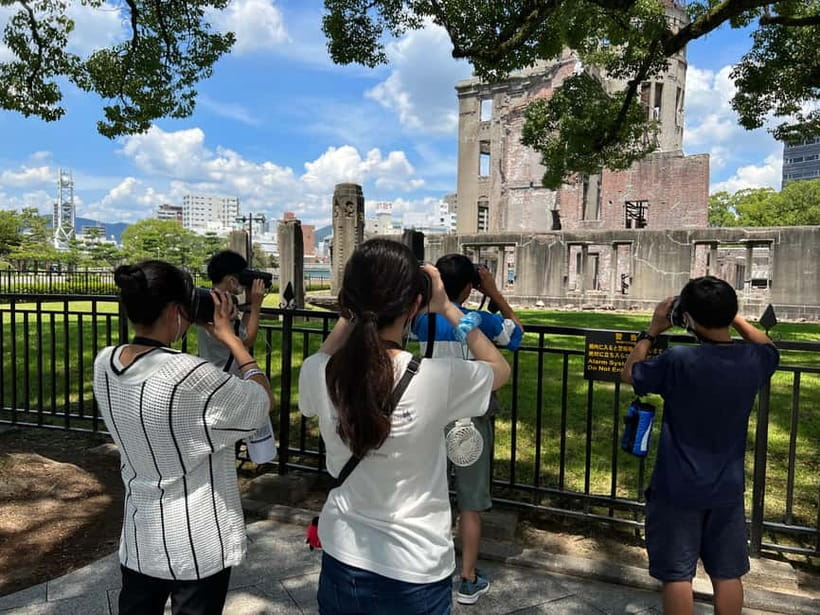
The walk continues to Aioi Bridge, also called the T-Bridge, for about 15 minutes of guided sightseeing and fieldwork. Its shape and position are important to understanding how the area functioned before the bombing.
Here, the tour shifts from a single preserved structure to the wider geography of Hiroshima. The route lets you see the river crossings and surrounding spaces while the VR supplies the missing cityscape. You are standing in the present, but the visual reconstruction helps you picture the streets and buildings that no longer exist.
This is one of the useful features of doing the tour on location. A headset alone could show a historical scene anywhere. Using it at the actual bridge gives the images a fixed point in the real world. You can look around, compare the current view with the reconstruction, and ask the guide to explain what has changed.
The stop also reinforces the scale of the event. Hiroshima was not only a collection of individual memorials. It was a functioning city, with bridges, businesses, homes, and daily routines. The VR scenes help return that ordinary life to the story before showing how suddenly it disappeared.
Motoyasu Bridge: the final outdoor stop
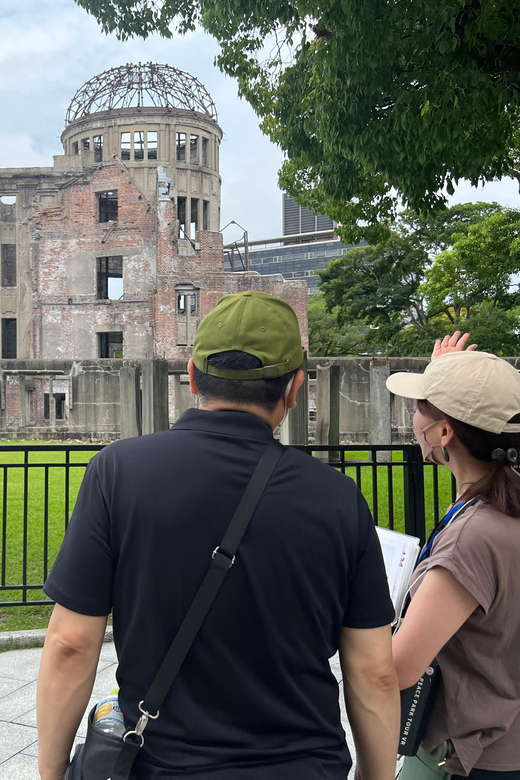
The next 15-minute section takes you to Motoyasu Bridge. Like Aioi Bridge, it is both a real location and a reference point for the VR scenes.
By this point, the tour has moved through several connected views of the Peace Park area. You have seen the memorial setting, the Atomic Bomb Dome, and the bridges that frame the rivers. Motoyasu Bridge helps complete that geographic picture before the group returns to the Rest House.
The value here is not simply another photo stop. The bridge gives the guide another place to explain the relationship between the river, the city, and the blast zone. The experience works best if you pay attention to the transition between locations rather than treating each headset session as a separate attraction.
The outdoor route is not described as strenuous, but you should expect to walk between the stops. Comfortable shoes and weather-appropriate clothing are sensible choices. The tour runs in rain or shine, so a wet-weather plan is worth having.
What the VR shows, and what it cannot do
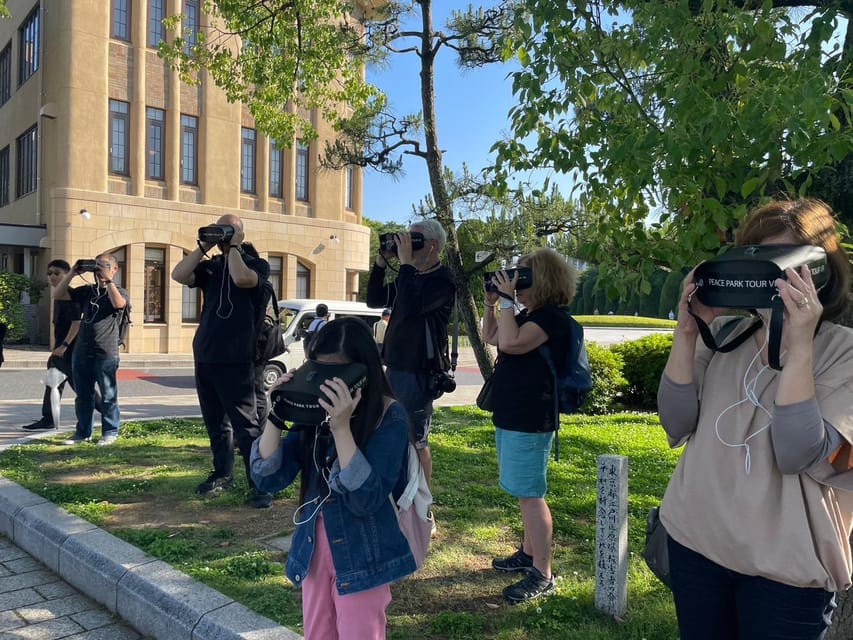
The VR scenes are based on survivor testimonies and photographs from the period. They show three broad stages: Hiroshima before the atomic bombing, the burned plain after August 6, and the city’s recovery.
That sequence is important. If you see only the destruction, you may understand the horror but not the life that existed before it. If you see only the rebuilt city, you may miss the scale of what was lost. Moving through all three periods gives the tour a clearer shape.
The technology also has limits. A digital recreation cannot reproduce the full personal reality of an atomic bombing, and it should not be mistaken for a substitute for survivor testimony. Its usefulness comes from helping you place those accounts in a visible setting.
The guide remains essential. The headset provides images, while the guide explains, answers questions, and keeps the focus on people rather than spectacle. This is why the tour should appeal to visitors who want historical context but prefer learning through a combination of walking, conversation, and visual material.
The human side: guides, questions, and conversation
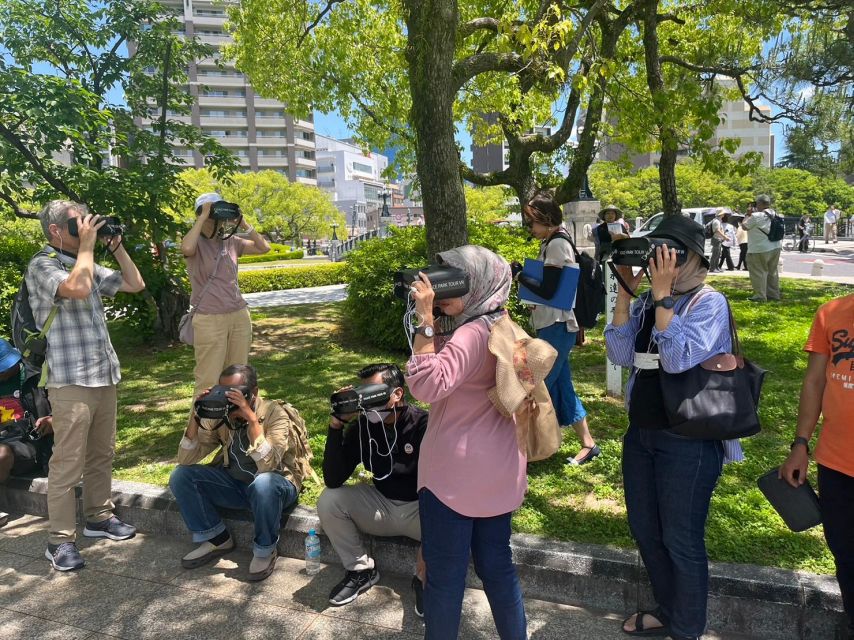
The guides are among the most important parts of the experience. Yoko Shimada has been praised for her warmth and for answering questions carefully. Kazuko’s introduction to Eizo Nomura gives the VR a strong personal foundation. Hiroshi brings historical information together with stories connected to his family and local surroundings.
Those details matter because Hiroshima’s history can become overly formal if you encounter it only through dates and monuments. A local guide can explain how the park is understood in the city today and can help you ask better questions about what you are seeing.
The tour ends back at the Rest House with a conversation about what the group thought. That closing discussion is a useful feature. It gives you time to process a difficult subject rather than simply removing the headset and moving on to the next attraction.
Since the tour is not private, you will share that conversation with other participants. The group may include people with different backgrounds and reactions. For some, that exchange will add value. If you prefer a completely personal experience with no group discussion, this is not the right format.
Price, group size, and overall value
The price is $32 per person, including the VR headset rental and English-speaking guide. Food, drinks, and transportation to the meeting point are not included.
I consider that a fair price for an 80-minute experience, particularly because the fee covers both the equipment and a local guide at four Peace Park locations. You are not paying only for a headset presentation. You are paying for the route, the historical interpretation, and the chance to ask questions while standing at the sites themselves.
The small group limit of six improves the value. With a large walking group, a question can easily get lost. Here, the guide has a better chance to notice when someone needs clarification, and the final conversation can be more personal.
Still, the price will feel less worthwhile if you want a long museum visit or a broad tour of Hiroshima. This route focuses on the Peace Park and lasts 80 minutes. It is best viewed as a focused introduction or a thoughtful supplement to visiting the Peace Memorial Museum and the surrounding memorials on your own.
Flexible booking also helps. You can cancel up to 24 hours in advance for a full refund, and you can reserve now and pay later. Those policies are useful when your Hiroshima plans depend on weather or a changing train schedule.
Rain, timing, and the practical details
The tour operates in all weather. Heavy rain may change the format: after the outdoor fieldwork, you may watch a shortened five-minute VR version at the Rest House. That means the full outdoor experience is not guaranteed on a very wet day.
The schedule is built around four sections:
- About 20 minutes at the Peace Park Rest House
- About 20 minutes at the Atomic Bomb Dome
- About 15 minutes at Aioi Bridge
- About 15 minutes at Motoyasu Bridge
The total duration is 80 minutes, so allow time for walking, explanations, headset use, and the closing conversation. The listed stop times do not mean every minute is spent looking through the headset. The guide-led discussion and movement between locations are part of the experience.
English is the stated tour language, with an English-speaking guide and English audio support. The tour is suitable for a small mixed group, but it is not private. You should also avoid bringing luggage that you cannot carry, since storage is unavailable at the Rest House.
Who should book this experience
I would recommend this tour to you if you want a guided introduction to Hiroshima’s Peace Park and find it easier to understand history through place and image. It is particularly useful if you have limited time and want a structured route connecting the Dome, bridges, and Rest House.
It also suits visitors who want to hear from a local guide rather than move through the memorial area alone. The stories connected with Eizo Nomura, family memories, and local experience give the subject a human scale.
Families and older children may find the VR format easier to follow than a long series of written displays, though the content is serious and parents should decide if it fits their children. The small group is helpful for questions, but participants should be prepared for a quiet and respectful atmosphere.
I would skip it if you are uncomfortable with VR headsets, want a private tour, or prefer to spend your time inside a museum. I would also think twice if your schedule is so tight that a delayed start or shortened version would cause problems.
Should you book the Peace Park VR tour?
Book it if you want to see Hiroshima’s memorial sites while also visualizing the city that existed before the bombing. The strongest reasons are the local English-speaking guide, the use of survivor testimony, and the way the VR is tied to actual places rather than shown in isolation.
The experience will not replace a longer visit to Hiroshima’s museums and memorials. It does something different. In 80 minutes, it gives you a guided path through the Peace Park and a clear visual connection between the city before August 6, the devastation, and the recovery that followed.
For $32, that is solid value, especially in a group of six or fewer. Go in ready for a serious subject, arrive early, and leave room afterward to think about what you have seen.
FAQ
How long does the Hiroshima Peace Park VR tour last?
The tour lasts 80 minutes.
Where does the tour begin?
It begins at the tourist information counter on the first floor of the Hiroshima City Peace Memorial Park Rest House.
Where does the tour finish?
The tour returns to the Hiroshima City Peace Memorial Park Rest House.
What locations are visited?
The route includes the Peace Park Rest House, the Atomic Bomb Dome, Aioi Bridge, also called T-Bridge, and Motoyasu Bridge.
Is the tour conducted in English?
Yes. The tour includes an English-speaking live guide and English audio support.
How many people can join the tour?
The group is limited to six participants, although the tour is not private and may be shared with other customers.
What is included in the price?
The price includes the VR goggles rental fee and an English-speaking guide.
Is transportation to the meeting point included?
No. Transportation to the Hiroshima City Peace Memorial Park Rest House is not included.
Can I join if it rains?
Yes. The event operates rain or shine. If there is heavy rain, a shortened five-minute VR version may be shown at the Rest House after the fieldwork.
How early should I arrive?
Arrive at the Rest House reception at least five minutes before your reservation time. If you arrive 10 minutes after the start, you may not be allowed to participate, and delays may result in a shortened tour.
Just added around Hiroshima
- Full Day Hiroshima and Miyajima Tour by Bullet Train from Kyoto★ 4.5 · 120 reviews
- Hiroshima Saijo Sake Tasting Tour with visit to 7 Breweries★ 5.0 · 104 reviews
- The Peace Memorial to Miyajima : Icons of Peace and Beauty★ 4.5 · 31 reviews
- Shore Excursion from Hiroshima Port : Private Tour in Hiroshima★ 5.0 · 17 reviews
- Okunoshima Rabbit Island Cycling Tour with Local Guide★ 4.5 · 17 reviews
- Hiroshima & Miyajima All-Inclusive Tour w/Licensed guide Pancho★ 5.0 · 54 reviews
- Private Full Day Hiroshima Tour★ 4.5 · 29 reviews
- Hiroshima Private Tour with a Local – Highlights & Hidden Gems★ 4.5 · 24 reviews
Peace Memorial Tours, compared.
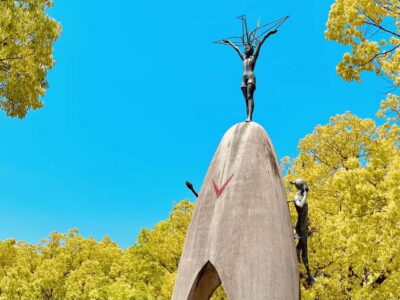
Hiroshima Historical Walking Tour – Why A-Bomb was Dropped
Our verdict →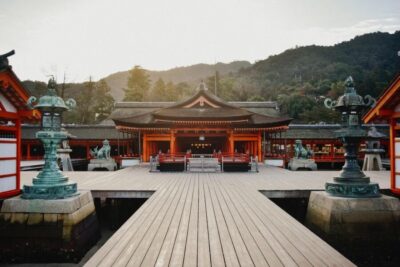
Hiroshima: Miyajima Peace Memorial Icons of Peace and Beauty
Our verdict →Browse the lists this tour appears in