
Reviewed · PEACE MEMORIAL TOURS
Hiroshima: Peace Memorial Park and Atomic Bomb Dome Tour
Hiroshima’s Peace Memorial Park is not a place to rush through with a camera and a checklist. This two-hour walk gives the monuments a human voice, explaining why the city was targeted, what happened in 1945, and how Hiroshima rebuilt itself as a symbol of peace. Syed, Hussain, Shah, Khan, and other guides lead tours depending on the date.
I like the route for two clear reasons: it links the major memorials in a sensible order, and it brings in individual stories such as Sadako Sasaki and the Korean victims of the bombing. I also like the price, $23 for a live guide, which is a strong deal if you want context before visiting the museum.
The main drawback is the walking. You will be outdoors in all weather, and the tour is not suitable for wheelchair users or people with mobility impairments. One booking lasted about 90 minutes rather than the advertised two hours, so allow flexibility if the exact duration matters to you.
What makes this Hiroshima walk worthwhile
- A human route through Peace Memorial Park: The tour connects the Cenotaph, Flame of Peace, Children’s Peace Monument, Peace Bell, and other memorials instead of treating them as isolated sights.
- Personal stories alongside major events: You hear about Sadako Sasaki, the man who survived near the blast’s center, and people who did not survive.
- The Atomic Bomb Dome in context: The UNESCO World Heritage Site becomes more meaningful when you understand its place in the city before and after the bombing.
- A guide who welcomes questions: Syed is noted for his warm, energetic presentation, while other guides such as Shah, Hussain, Khan, and Aaze have also led thoughtful walks.
- Useful local advice at the end: Guides have recommended places for okonomiyaki and lunch, giving you a practical next step after a serious morning.
- A modest price for a strong introduction: At $23, this is a low-cost way to understand the park before exploring the museum on your own.
Starting at the Gates of Peace
Meet at the Gates of Peace, on the front side of the Italian restaurant Mario. This is a useful starting point because the tour begins with the broader idea of Hiroshima as a city devoted to peace, rather than opening immediately with the most difficult details.
Your guide sets the tone here. The subject is painful, but the best guides handle it with calm respect. Syed, who is completing a PhD, has been praised for clear explanations, good pacing, and an ability to keep the group engaged without turning the subject into a performance.
The opening guided talk lasts about 20 minutes. It gives you a framework for the rest of the walk: the bombing, the people affected, the physical destruction, and the city’s post-war recovery. This matters because the park contains many monuments, and without guidance, it is easy to see stone, water, flame, and bronze without grasping what each represents.
More Peace Memorial Tours in Hiroshima:
- Hiroshima Historical Walking Tour – Why A-Bomb was Dropped
★ 4.8 · 893 reviews - Hiroshima: Miyajima Peace Memorial Icons of Peace and Beauty
★ 4.9 · 361 reviews - Hiroshima/Guided Virtual Tour of Peace Park/PEACE PARK TOUR VR
★ 5.0 · 157 reviews
Prayer Fountain and the meaning of water
The Prayer Fountain is a short stop, listed at about 10 minutes. It introduces the suffering of people who were desperate for water after the bombing and gives the park’s water features a solemn meaning.
This is one of the places where a guide adds real value. A plaque alone cannot easily explain why water appears so often in Hiroshima’s memorial spaces. Your guide can connect the site to the experience of victims and survivors, while leaving room for quiet reflection.
You will want to bring water for yourself, especially in summer. The tour runs in rain as well as fair weather, so a hat, sunscreen, and suitable clothing are sensible. There is no food included, and this is a walking tour rather than a refreshment stop.
Hiroshima Peace Memorial Park, taken one monument at a time
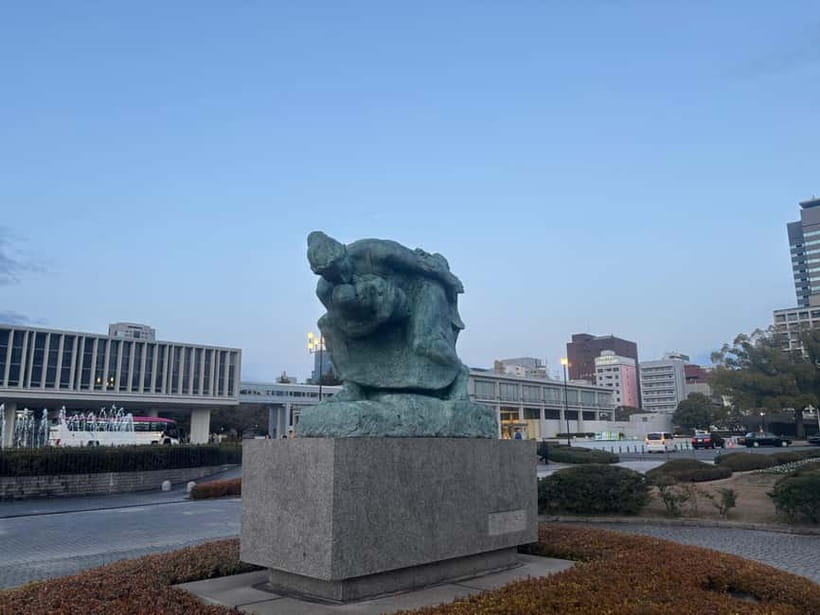
The main park section receives about 40 minutes, making it the longest single part of the route. You will cover the park’s key memorial areas while learning how the site was designed and how Hiroshima has chosen to remember the bombing.
The Cenotaph for the A-bomb Victims is the emotional center for many people. You can pay tribute to those who died, while the guide explains the purpose of the monument and its connection to the names recorded in Hiroshima’s memorial tradition.
The tour also includes the Hiroshima National Peace Memorial Hall. The supplied route does not give a separate time for this stop, so it may be discussed while moving through the park rather than visited as a long indoor session. If you plan to spend serious time inside the museum or memorial hall, schedule that separately.
The route includes the Dr. Marcel Junod Memorial and the Norman Cousins Memorial. These stops widen the story beyond the blast itself, showing the international and humanitarian response connected with Hiroshima. They are easy to miss if you explore alone, which is one reason the walk works well as an introduction.
The Flame of Peace and a city’s promise
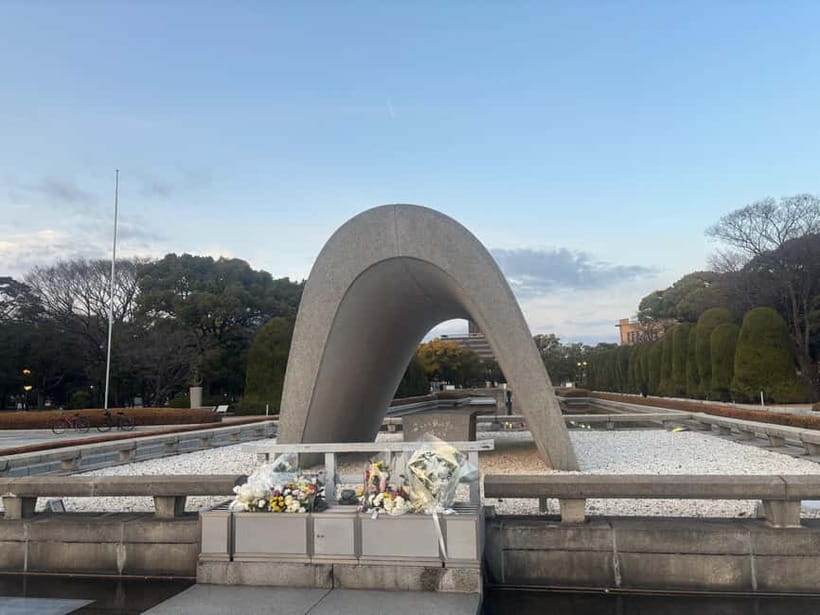
The Flame of Peace receives about 20 minutes. Its continuing flame is tied to the hope that the world will be free of nuclear weapons. Your guide explains the symbol and the way it fits Hiroshima’s public message.
This is also a good point to consider the city after 1945. The tour does not leave Hiroshima frozen in tragedy. It covers reconstruction and modernization, helping you see the present-day city as a living place rather than only a memorial to the past.
The balance is important. Hiroshima’s story includes terrible loss, but it also includes rebuilding, local traditions, food, and ordinary city life. The guide brings in contemporary Hiroshima and may offer suggestions for what to eat afterward. Several visitors valued recommendations for okonomiyaki, a useful local tip after a serious walk.
A few more Hiroshima half-days worth comparing
- Peaceful Hiroshima & Miyajima UNESCO 1 Day Bus Tour
★ 5.0 · 5,309 reviews - Hiroshima: Hiroshima and Miyajima UNESCO Sites 1-Day Tour
★ 4.9 · 2,330 reviews - Hiroshima / Miyajima Full-day Private Tour with Government Licensed Guide
★ 5.0 · 1,298 reviews - Osaka/Kyoto: Hiroshima Miyajima Bus Tour & Shinkansen Ticket
★ 4.7 · 919 reviews
Sadako Sasaki at the Children’s Peace Monument
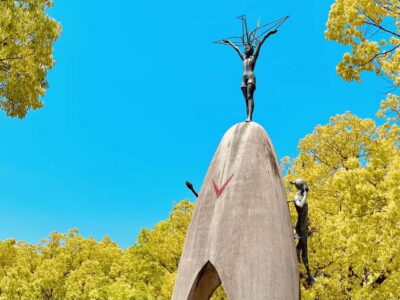
The Children’s Peace Monument is a 10-minute stop and one of the most memorable parts of the route. Here you learn about Sadako Sasaki and the thousand paper cranes associated with her story.
The monument helps younger visitors connect with the history, but it is not only for children. It shifts the focus from numbers and military decisions to one young person and the wider group of children affected by the bombing and its aftermath.
Expect the guide to explain the meaning of the cranes and the memorial rather than simply point at the statue. This is one of the tour’s strongest teaching moments because it gives a personal scale to an event that can otherwise feel too large to absorb.
Photography is allowed, but take care with your behavior in memorial spaces. This is a place for quiet attention, not a backdrop for noisy group photos.
The Korean Atomic Bomb Victims Cenotaph
The Korean Atomic Bomb Victims Cenotaph receives about 10 minutes. It is an important inclusion because the story of Hiroshima was not limited to Japanese citizens.
The stop reminds you that Koreans were among those affected by the bombing and that wartime history has several national and personal dimensions. It also helps correct an overly narrow view of Hiroshima. The tour presents the memorial as part of the larger human cost of the attack.
This is a good example of what a guide can add. You might walk past the cenotaph on your own without understanding its importance. With explanation, the park becomes less like a collection of monuments and more like a connected account of people, memory, and responsibility.
Ringing the Peace Bell
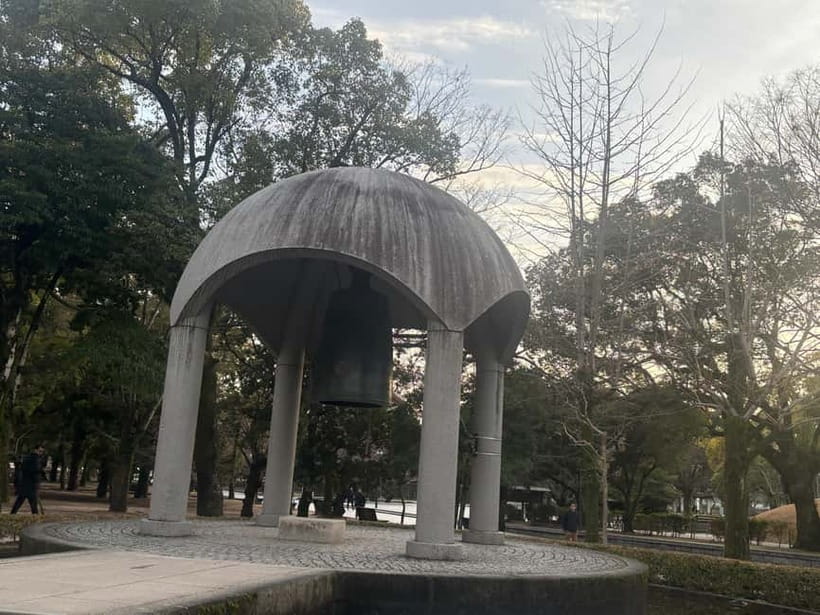
The Bell of Peace is another short stop, listed at about 10 minutes. You may have the chance to ring it as a symbol of hope and world peace.
The bell offers a small physical action in a tour that is otherwise built around listening and looking. It can also provide a pause between the memorials and the final section of the route.
Group size and exact timing may affect how long each person has at the bell. Do not expect a long private ceremony. Think of it as a brief, respectful part of a guided walk.
Aioi Bridge and the route toward the Dome
The tour then moves to Aioi Bridge, with about 10 minutes of guided explanation. The bridge is important in understanding the bombing’s target area and the city layout around the river.
This is where the guide can address why Hiroshima was chosen as a primary target and how the intended aim related to the city’s geography. The route makes the physical setting easier to understand because you are standing in the same central area rather than hearing about it from a distant classroom.
Walking between the stops is part of the experience. You are not being driven from monument to monument, so you can see how the memorial park sits within modern Hiroshima. That also means the pace may feel brisk for some people, especially in hot weather or rain.
The Atomic Bomb Dome and the Hypocenter Monument
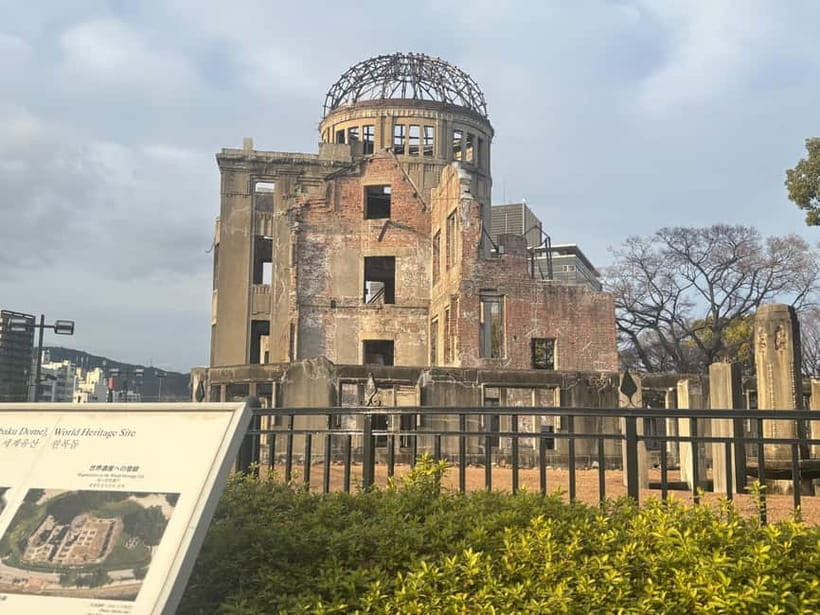
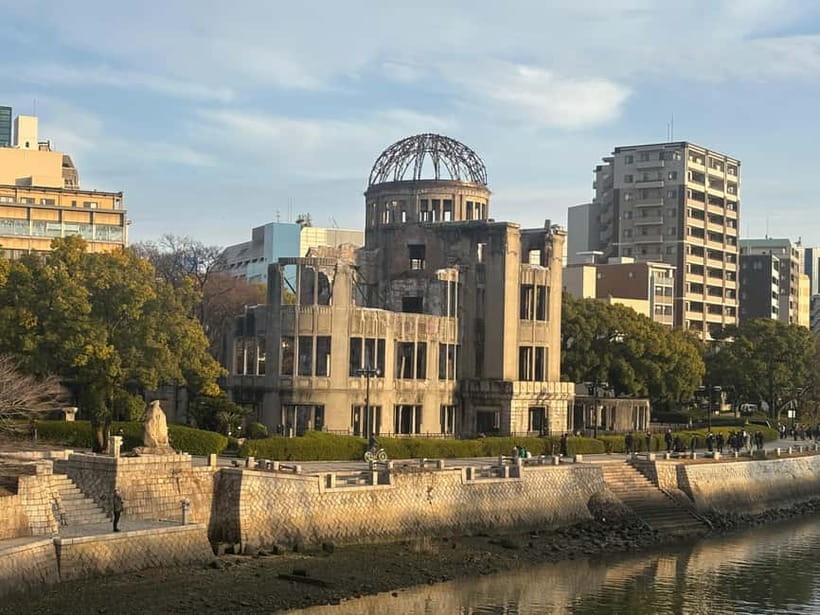
The Atomic Bomb Dome is the best-known sight on the route and a UNESCO World Heritage Site. The tour gives it about 10 minutes, followed by a finish at the Hiroshima Atomic Bomb Hypocenter Monument.
The Dome’s power comes from its physical presence. It is a surviving structure in a city rebuilt around it, and the contrast is hard to miss. Your guide explains what happened there and why the building has become an international symbol of the atomic bombing and the call for peace.
Ending at the Hypocenter Monument gives the walk a direct, serious finish. You are left near the point connected with the blast rather than drifting away from the subject at a random street corner.
Do not expect a full museum visit as part of this tour. The walk is an outdoor introduction, and you will get the most from it if you visit the Hiroshima Peace Memorial Museum separately, either before or after the tour. The guided route helps you recognize the meaning of what you see inside.
The guides and the tone of the experience
The guide can shape the entire experience. Syed receives especially strong praise for his enthusiasm, clear English, personal warmth, and ability to answer questions. Hussain is also described as articulate and engaging, and Shah, Khan, and Aaze have led tours that connected well with both adults and teenagers.
The best feedback centers on individual stories, careful pacing, and open questions. One guide continued despite rain, while another helped a family group by drawing both teenagers and adults into the conversation. That suggests a flexible approach rather than a fixed lecture.
There was one reported mix-up over the start time, though the guide recovered the situation well. Confirm your meeting time before setting out, and look for the guide at the Gates of Peace by Mario restaurant.
Is $23 good value?
At $23, this is good value if you want a guided introduction to Hiroshima’s memorial district. You are paying for two hours of explanation, not admission to a museum, transport, food, or hotel pickup.
I would especially recommend it for a first visit. The park is free to walk through, but the meaning of its monuments is not always obvious. A guide can save you from missing the Korean cenotaph, Junod Memorial, Cousins Memorial, or the story behind the Children’s Peace Monument.
The price also leaves room in your day for the museum, lunch, and further exploration. Guides have offered okonomiyaki suggestions, which is a welcome practical touch after the memorial walk.
What to bring and who should book
Wear comfortable shoes. The route covers a significant amount of ground, and there are several outdoor stops. Bring water, a hat, sunscreen, and a camera if you want one, but use it with care around the memorials.
The tour operates in all weather. Rain will not automatically cancel it, so dress for the forecast. Smoking is not allowed.
This experience suits you if:
- You want historical context before visiting the museum.
- You prefer personal stories to a list of dates.
- You are comfortable walking outdoors for up to two hours.
- You want an affordable guide in English, Urdu, or Hindi.
- You are interested in Hiroshima’s present-day life as well as the events of 1945.
It is a poor fit if you need a wheelchair-accessible route or cannot manage substantial walking. It may also feel too short if you want an extended museum-style lecture at every monument.
Should you book this Hiroshima tour?
Book it if you want the park to make sense. The strongest part is not simply seeing the Atomic Bomb Dome. It is understanding how the Dome, the Cenotaph, the Flame of Peace, Sadako’s monument, the Korean victims’ cenotaph, and the Hypocenter fit into one human story.
I would choose an earlier time if you want to continue directly to the museum afterward, or an evening departure if you prefer fewer crowds. One group found the evening especially pleasant once the busiest period had passed.
Allow extra time in your schedule in case the walk runs close to two hours, and plan your own museum visit separately. At $23, this is a thoughtful, practical first step into Hiroshima’s past and present, provided you are ready for the walking and the emotional weight of the subject.
FAQ
How long does the Hiroshima Peace Memorial Park tour last?
The advertised duration is two hours. One reported booking lasted about 90 minutes, so allow some flexibility around the stated time.
Where does the tour meet?
Meet at the Gates of Peace, on the front side of the Italian restaurant Mario.
Where does the tour finish?
The walk finishes at the Hiroshima Atomic Bomb Hypocenter Monument.
Which languages are available?
Live guided tours are available in English, Urdu, and Hindi.
Is food included?
No. Food is not served during the tour, and personal expenses are not included.
What should I bring?
Bring comfortable shoes, water, a hat, sunscreen, and a camera if desired. Dress for the weather because the tour runs in all conditions.
Is the tour suitable for wheelchair users?
No. The activity is not suitable for wheelchair users or people with mobility impairments.
Just added around Hiroshima
- Full Day Hiroshima and Miyajima Tour by Bullet Train from Kyoto★ 4.5 · 120 reviews
- Hiroshima Saijo Sake Tasting Tour with visit to 7 Breweries★ 5.0 · 104 reviews
- The Peace Memorial to Miyajima : Icons of Peace and Beauty★ 4.5 · 31 reviews
- Shore Excursion from Hiroshima Port : Private Tour in Hiroshima★ 5.0 · 17 reviews
- Okunoshima Rabbit Island Cycling Tour with Local Guide★ 4.5 · 17 reviews
- Hiroshima & Miyajima All-Inclusive Tour w/Licensed guide Pancho★ 5.0 · 54 reviews
- Private Full Day Hiroshima Tour★ 4.5 · 29 reviews
- Hiroshima Country Cycling: Explore Rural Life 1 HR from City★ 5.0 · 22 reviews
Peace Memorial Tours, compared.
Hiroshima Historical Walking Tour – Why A-Bomb was Dropped
Our verdict →
Hiroshima: Miyajima Peace Memorial Icons of Peace and Beauty
Our verdict →Browse the lists this tour appears in