
Reviewed · DINNER EXPERIENCES
Deep Backstreet Osaka Tours (Option to add Dinner)
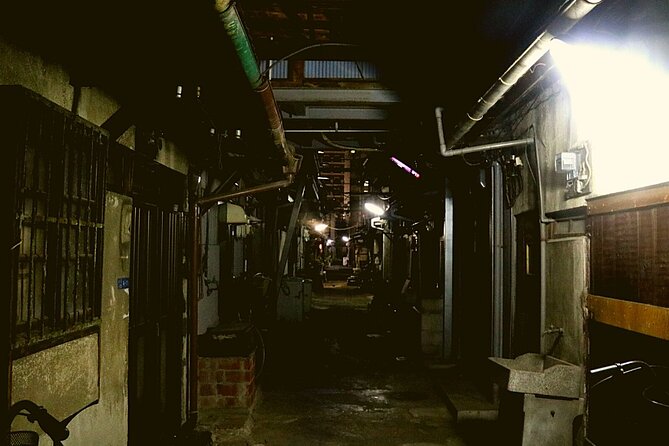
Osaka’s polished neon center is only part of the story. This evening walk takes you through narrow backstreets, an old ghetto area, abandoned homes, and a historic red light district, with a guide explaining the social forces behind what you see. It is not a standard food crawl or sightseeing loop.
I especially like the mix of local food and serious social history. You stop at family-run stalls, see a side of the city most visitors miss, and hear about religion, class, homelessness, sex work, gangs, and mental health. I also like the small-group format, capped at 15 people. The main consideration is the pace: three hours on foot, often stopping outside in the evening, with little appeal if you only want Osaka’s bright, cheerful highlights.
Key points to know before booking
- Former ghetto and red light district: Explore areas with difficult, often ignored chapters in Osaka’s past.
- Two family-run food stops: Taste local street food during the walk, with a dinner upgrade available afterward.
- Guides with different personalities: Mari, Knox, Josh, Rudy, Alex, and others have led the route, so storytelling style can vary.
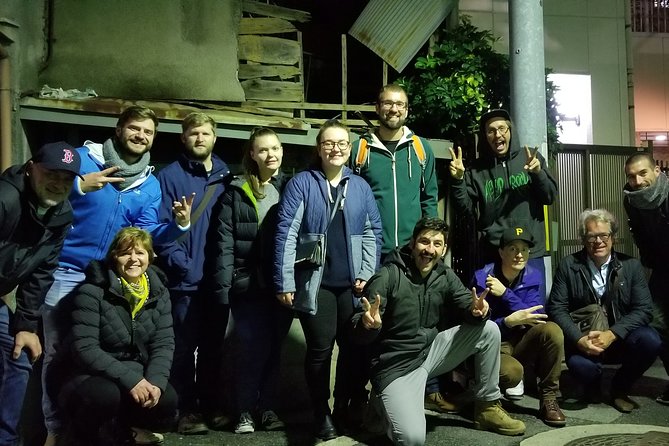
- Small group of up to 15: Large enough for conversation, but still manageable in tight lanes.
- About three hours of walking: Breaks are included, but comfortable shoes are essential.
- Dinner at a local izakaya: The optional meal includes Osaka soul food and dessert, while drinks cost extra.
Why this Osaka walk feels different
Many Osaka tours stay near Dotonbori, Osaka Castle, or the city’s famous food streets. Those places are worth seeing, but they show you the city’s public face. This tour asks you to look at the parts that are less polished and less often explained.
You will hear about social class, discrimination, family names, sex work, homelessness, religion, organized crime, and the reasons some houses sit empty. The tone is not simply gloomy. Guides also point out local traditions, food culture, places of worship, and the ways communities support one another.
That balance matters. A tour about Osaka’s darker side can easily become cheap shock value. Here, the useful part is the context. A vacant house is not just an abandoned building. A red light district is not merely a row of businesses. A homeless shelter, shrine, food stall, or old neighborhood can reveal how the city has changed and what it still keeps out of sight.
More Dinner Experiences in Osaka:
- Osaka: Deep Backstreets Walking Tour with Dinner Option
★ 4.9 · 902 reviews - Osaka Umeda: PICCADILLY DINNER SHOW & NIGHTCLUB with Tasting
★ 4.8 · 49 reviews - Eat Our Favorites! Osaka’s Backstreet Dining
★ 4.9 · 19 reviews
Starting at Daikokucho at 5:30 pm
The meeting point is the FamilyMart at 2-chōme-5-16 Shikitsuhigashi, near Daikokucho Station. The tour begins at 5:30 pm and finishes back at the same meeting point.
That timing works well for Osaka. You begin in daylight or fading light, depending on the season, then watch the streets change as shops and entertainment areas come alive. It also leaves the rest of your evening open, especially if you skip the dinner option.
I would arrive early and make sure your phone ticket is ready. The starting point is a convenience store, not a famous landmark, so do not treat it as a casual meet-up where you can wander in at the last minute. The tour runs through areas where a guide’s explanations are important, and missing the beginning would weaken the rest of the experience.
Back alleys, retro shops, and old Osaka
One of the first pleasures is simply walking away from the main roads. Osaka’s backstreets can be cramped, irregular, and full of details you would likely pass without understanding. The route includes a retro zone with odd and outlandish shops, along with old twisting lanes that retain a strong neighborhood feel.
This is a good match for you if you enjoy cities at street level. You are not being led from one grand monument to another. Instead, you are asked to notice shop fronts, building conditions, local businesses, and the way narrow lanes fit together.
The trade-off is that the sights are not always conventionally beautiful. Some areas feel rough. Some buildings are worn. The appeal comes from the stories and contrasts, not from a string of postcard views. If you want clean photo stops and famous landmarks, this is the wrong evening. If you want to understand how an old urban district actually functions, it is far more useful.
Food stalls bring the route to life
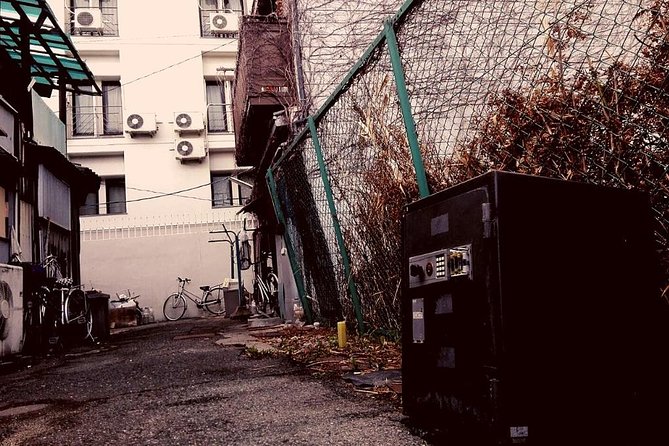
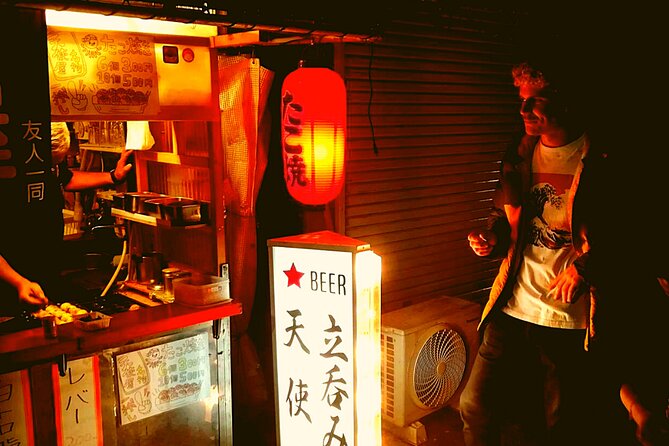
Food is not an afterthought. During the walk, you taste local dishes at two different family-run street stalls. The supplied details do not specify every item served, and the food can vary, but the point is clear: you eat in small local businesses rather than simply receiving a lecture about Osaka cuisine.
That changes the rhythm of the tour. A short food stop gives your feet a rest, lets you watch how the stall operates, and creates a natural chance to talk with the group. Osaka is famous for casual, affordable food, and this format shows that culture in a more direct way than a restaurant meal alone.
The food is also part of the social story. Small stalls, neighborhood cooking, and the culinary district all help explain how working areas of the city have operated over time. One stop may be quick, so do not assume the tasting replaces dinner unless you add the meal option.
A few more Osaka half-days worth comparing
- Osaka Go Karting Tour with Funny Costume
★ 5.0 · 2,658 reviews - Osaka Castle: Museum and Tower Entry Ticket
★ 4.5 · 2,380 reviews - Osaka: Shinsekai Food Tour with 13-15 Dishes at 5 Eateries
★ 4.8 · 2,204 reviews - Osaka Food Tour: 13 Dishes at 5 Local Eateries
★ 5.0 · 2,149 reviews
The important place of worship
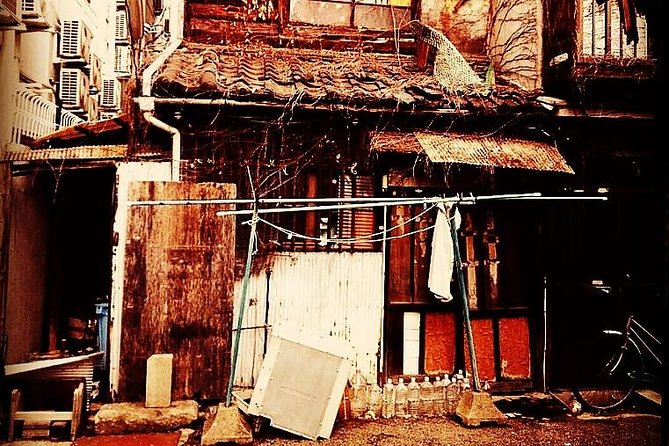
The walk includes Osaka’s most important but little-known place of worship. The information provided does not name it, so you should think of this as a cultural stop rather than a specific landmark visit.
The value here is the guide’s explanation. Religion in Japan is often woven into ordinary life through shrines, temples, rituals, family customs, and neighborhood events. Seeing a religious site in the middle of an otherwise gritty route helps prevent the tour from becoming a simple parade of social problems.
You will likely get more from this stop if you listen for connections between faith, community, and place. It is not presented as a grand sightseeing attraction. It is part of the city’s living structure.
Abandoned houses and the weight of a family name
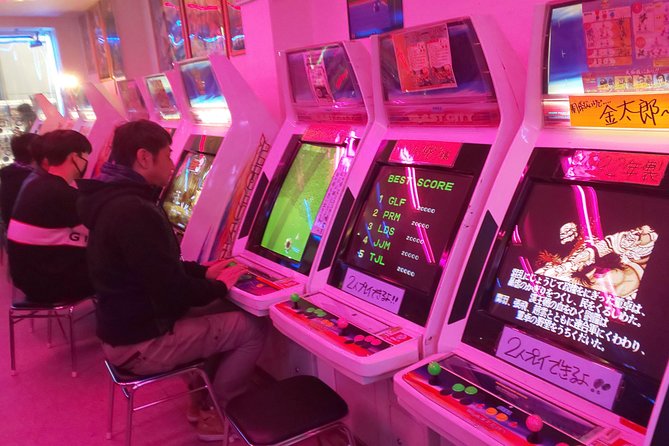
The abandoned houses section is one of the most striking parts of the route. The issue is not only age or neglect. Guides explain how family history, social class, and a household name can affect whether a property is passed on or left unused.
That is a difficult idea for many visitors to Japan, where homes may look well maintained in one neighborhood and suddenly appear empty in another. A guide can add the social context that architecture alone cannot provide. You begin to see an abandoned building as evidence of personal and community pressures, not just a property waiting for renovation.
This section may feel sad, and that is part of its value. The tour does not pretend that Osaka is tidy or that every social issue has a neat solution. I appreciate that directness, though you should know the subject matter can be heavier than a normal evening walk.
The red light district and its complicated past
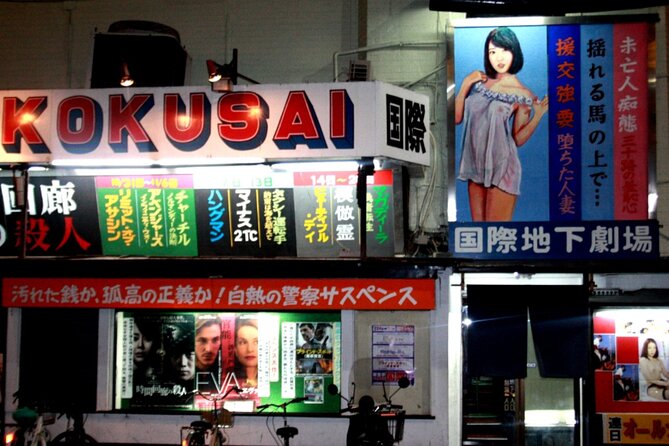
The historic red light district is another major stop. The route addresses sex work and the district’s links to the yakuza, while keeping the walk described as safe. You are not simply shown a provocative area and left to draw conclusions. The guide explains how the district developed and why it still exists.
This is where guide quality matters most. Mari, Knox, Josh, Rudy, Alex, Thomi, and others have all led versions of the experience, and the personal style may vary. Names frequently associated with strong sessions include Mari’s patient explanations, Knox’s humor, Josh’s lively storytelling, and Rudy and Alex’s detailed treatment of Osaka’s past.
Do not expect a sensational night out. The useful lesson is how entertainment districts connect with economics, law, social stigma, and organized crime. You also learn why some subjects remain rarely discussed in polite public conversation.
The former ghetto and Osaka’s social history
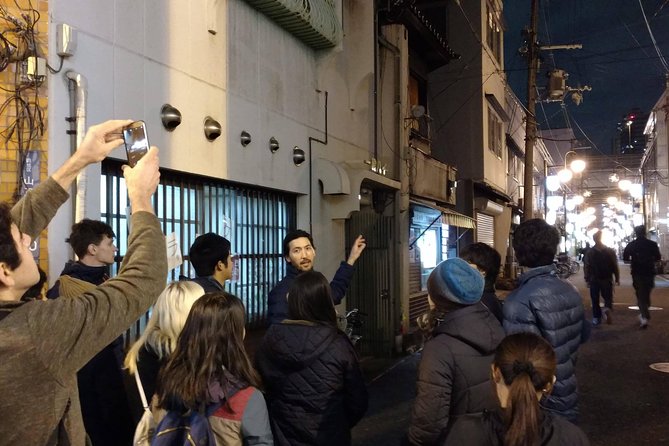
The former ghetto area gives the tour its strongest historical and social focus. Guides discuss a controversial past and the long effects of discrimination and class divisions. The route also touches on homelessness, mental health, politics, and the reasons some people remain outside Japan’s more familiar image of order and prosperity.
This is the portion that makes the tour more than an unusual walk. You are given a way to think about what you have seen earlier: the empty homes, the older streets, the working districts, and the entertainment area.
The language and presentation will matter. This is sensitive material, and a good guide needs to be honest without turning residents into exhibits. The most useful approach is to observe respectfully, avoid taking intrusive photographs, and listen carefully when the guide explains what is and is not appropriate.
Adding the izakaya dinner
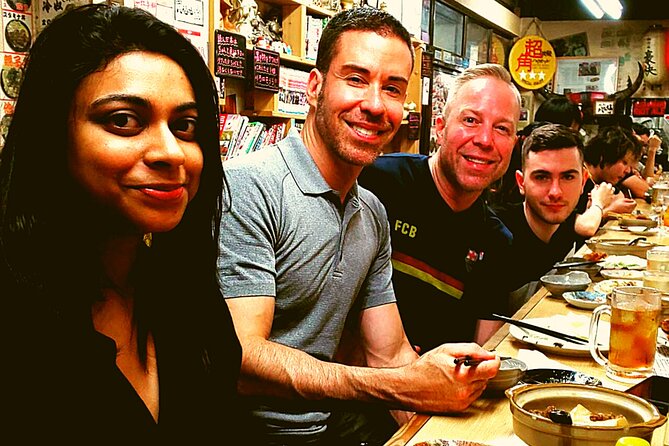
You can book the walk alone or add dinner. The meal takes place at an izakaya and includes local comfort food such as tonpeiyaki, karaage, nikudofu, yakitori, and dessert. The dinner is described as vegetarian-friendly, which makes it more flexible than many meat-heavy Japanese tasting plans, though you should still confirm your needs when booking if you have strict dietary restrictions.
This option makes sense if you want a complete evening and prefer not to search for dinner afterward. It also lets you eat in a place you might not find on your own. The menu has the relaxed, filling character associated with Osaka soul food rather than a formal dining experience.
Alcoholic drinks are not included, but the listed information says they are available at reasonable prices. Keep that extra cost in mind. If you want to control your spending, book the walking tour only and choose your own restaurant later.
The dinner can also help the group stay together after three hours of walking. On the other hand, it makes the evening longer and more structured. If you already have a restaurant reservation or want to explore Dotonbori afterward, skip the upgrade.
How much walking and how hard it feels
The experience lasts about three hours and includes breaks. It is described as an easy walk overall, but that does not mean it is effortless. You will spend much of the time on foot, with periods of standing while the guide speaks.
Wear comfortable shoes. The narrow lanes and uneven urban surfaces are more important than speed, but tired feet can still take the shine off the final hour. Bring water, especially in warm weather, and consider insect repellent for stops in parks or open areas. One reported weakness was standing for several minutes in a mosquito-prone park and parking area.
The tour requires decent weather. If poor weather causes cancellation, you are offered another date or a full refund. Otherwise, you can cancel for a full refund up to 24 hours before the start time. Changes or cancellations inside that window are not accepted.
Group size, guide style, and after-tour help
The maximum group size is 15 people. That is a sensible limit for back lanes, food stalls, and conversations about sensitive topics. You have a better chance of hearing the guide than you would in a large coach group, though the exact feel depends on how many spaces are filled.
The guide is the main variable. Some are funny and relaxed. Knox has been praised for humor, while Josh is known for combining warmth with detailed explanations. Mari is described as patient and engaging, and several guides bring an easy, personal style to the walk. Irish-rock singing has even been part of one guide’s personality, so expect character rather than a stiff scripted performance.
After the tour, the guide can assist if you want to continue to a bar, shopping area, or entertainment district. That help is useful because the route ends where it began, and you can decide whether to keep the night going or head back to your accommodation.
Is $53.06 a fair price?
At $53.06 per person, the basic tour costs more than a simple self-guided walk and less than many premium food experiences. You are paying for about three hours of guiding, two street-food tastings, access to places you might not locate alone, and interpretation of subjects that are difficult to research quickly while walking.
The value is strongest if you care about context. A person who only wants food may find a dedicated Osaka food tour more satisfying. A person who wants famous sights may prefer a standard city tour. But if you want a local perspective on neighborhoods, social divisions, religion, food, and Osaka’s less polished side, the price is reasonable.
The dinner upgrade improves the value for anyone who would otherwise spend the evening hunting for a restaurant. It is less useful if you already have dinner plans or avoid the listed foods. Drinks are extra, so budget separately.
Who should book this experience?
I would choose this tour for a repeat visitor who has already seen Osaka’s main sights, a curious first-time visitor who wants more than neon and shopping, or a solo visitor hoping to meet a small group. The reviews describe people from many countries mixing during the walk, which fits the social design of the experience.
It suits you if you can listen without expecting every subject to be comfortable. You should also be open to walking through ordinary or rough-looking areas without treating them as a theme park.
I would not choose it for young children, anyone seeking a relaxed scenic stroll, or a person who wants only upbeat food and entertainment. The route deals with homelessness, sex work, discrimination, gangs, mental health, and poverty. The tone can be respectful and even funny, but the material remains serious.
Should you book the Deep Backstreet Osaka Tour?
Yes, if you want Osaka explained from the inside rather than photographed from the main street. The combination of family food stalls, old lanes, worship, abandoned houses, a red light district, and social history gives you a fuller picture of the city than a standard highlights tour.
Book the dinner option if you want a ready-made local meal after the walk. Choose the basic tour if you prefer flexibility or already have plans. Arrive early at the Daikokucho meeting point, wear good shoes, carry insect repellent in warm months, and approach the sensitive areas with respect.
The tour has a 4.9 rating from 1,290 reviews and a 97 percent recommendation rate, but the important question is not the score. Ask yourself if you want to see the Osaka that is rarely placed on a postcard. If the answer is yes, this is one of the more worthwhile three-hour walks in the city.
FAQ
Where does the Deep Backstreet Osaka Tour start?
It starts at the FamilyMart near Daikokucho Station, at 2-chōme-5-16 Shikitsuhigashi, Naniwa Ward, Osaka.
What time does the tour begin?
The tour starts at 5:30 pm.
How long does the experience last?
The walking tour lasts about three hours.
Where does the tour finish?
It finishes back at the starting meeting point.
How many people can join the tour?
The group can have a maximum of 15 travelers.
Is dinner included?
Dinner is available as an option. It is not part of the basic walking tour unless you select the dinner upgrade.
Are alcoholic drinks included with dinner?
No. Alcoholic drinks are not included, though drinks are available at the restaurant.
Can I cancel for a full refund?
Yes. You can cancel at least 24 hours before the start time for a full refund. If poor weather cancels the tour, you are offered another date or a full refund.
Just added around Osaka
- Exclusive Sushi Making Experience with a Master Chef – Osaka Area★ 5.0 · 25 reviews
- Private Home-Style Cooking Class in Osaka with Local Mom Yoshiko★ 5.0 · 46 reviews
- Hidden Osaka – Yukaku Red Light Tour & Culinary Adventure★ 4.8 · 96 reviews
- Osaka: Walking Tour and Top Highlights★ 4.8 · 104 reviews
- Osaka: Private Ceramic Painting Workshop★ 5.0 · 13 reviews
- Pickleball in Osaka, Kobe & Kyoto with Locals!★ 4.7 · 80 reviews
- Eat Like a Local in Osaka – Private Custom Street Food Tour★ 4.3 · 33 reviews
- Osaka:SUMO BEATS SHOWCASE: Taiko Drum and Wagyu burger!★ 4.2 · 37 reviews
Dinner Experiences, compared.
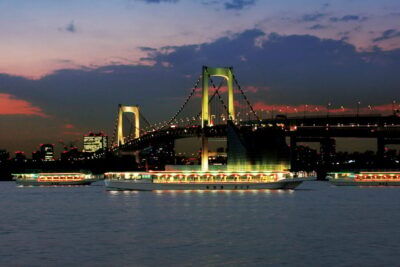
Sumida River: Japanese Traditional Yakatabune Dinner Cruise
Our verdict →
Shinjuku Bar Hopping with All-You-Can-Drink & Dinner
Our verdict →
Hiroshima: Food and Culture Guided Walking Tour with Dinner
Our verdict →
Osaka Umeda: PICCADILLY DINNER SHOW & NIGHTCLUB with Tasting
Our verdict →Browse the lists this tour appears in