
Reviewed · GO-KARTS
Tokyo: Premium Go-Kart Tour with Tower & Shibuya Crossing
Driving a go-kart through central Tokyo turns sightseeing into a low-slung street show. You pass Tokyo Tower, Roppongi, Omotesando, and Shibuya Crossing with the city crowd only a few feet away. The premium feel comes from the small groups and photo service, while guides such as Gus, Ren, Yumi, Andres, and Pancho are praised for clear instructions and steady traffic control.
I like two things in particular: the route gives you a genuine street-level view that buses cannot match, and the guide takes photos while you concentrate on driving. Costumes add a playful touch, too. The main drawback is practical rather than scenic: you need the correct hard-copy 1949 Geneva Convention International Driving Permit, and rain can force a change of plans.
Key points to know before booking
- Shibuya Crossing is a highlight: You drive through one of Tokyo’s most famous intersections rather than simply watching it from the pavement.
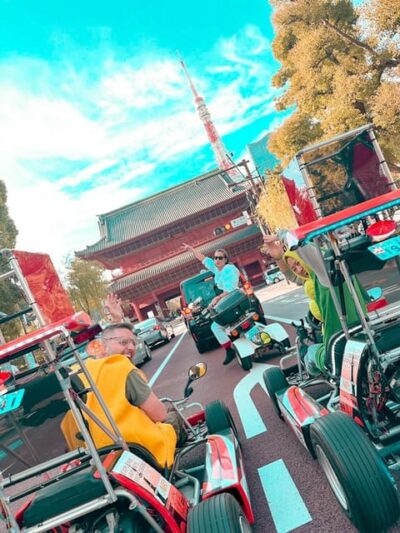
- Tokyo Tower adds the best photo backdrop: The route passes this unmistakable landmark with the city skyline around you.
- The guide matters: English-speaking leaders use safety briefings, hand signals, and traffic control to keep the group together.
- You get more than a kart: Petrol, costumes, photos, one hard-copy photo, and an action-camera or Insta360 mount are included.
- The ride can feel fast: The karts sit close to the road, and some riders report speeds of up to 50 kilometers per hour.
- Paperwork is the deal breaker: Online permits and 1968 Vienna Convention permits are not accepted in Japan.
Tokyo sightseeing with your seat inches above the road
A standard city tour keeps you behind glass or among a crowd on foot. Here, you sit low in a petrol go-kart and move through Tokyo under the direction of an English-speaking instructor. That changes the mood completely. Traffic, signs, buildings, and pedestrians feel closer, and even familiar places take on a new shape.
The experience lasts between 75 and 105 minutes, depending on the option you book. Groups are limited to eight participants, which matters in Tokyo traffic. A small group is easier for the lead guide to manage, and you are less likely to spend the whole ride watching a long line of karts disappear around a corner.
You begin at the meeting point assigned to your chosen option. Staff check the required documents, explain the kart, and give a safety briefing before you leave. Guides have been praised for explaining hand signals clearly and checking that new drivers remain comfortable. That is important here. You are not on a closed race track. You are driving on public roads, so following the guide is part of the activity.
The karts are described as easy to use and surprisingly powerful. Their low seating position makes ordinary road speed feel quicker than it would from a car. A few riders describe reaching around 50 kilometers per hour, while others point to fast straight sections and tunnel runs as the most exciting parts.
More Go-Kart Tours in Tokyo
- Flagship 2-Hours Official Street Go-Kart Tour – Tokyo Bay Shop
★ 5.0 · 4,974 reviews - Official Street Go-Kart in Shibuya
★ 5.0 · 3,435 reviews - Official Street Go-Kart Tour – Akihabara
★ 5.0 · 1,578 reviews
From Roppongi streets to Tokyo Tower
The exact meeting point and route vary by option, but the advertised ride includes several of central Tokyo’s best-known districts. Roppongi gives you a taste of the city’s after-dark energy, with broad roads, modern buildings, and plenty of traffic activity.
Riding through Roppongi is less about stopping for a long explanation and more about seeing Tokyo in motion. Your guide leads from the front and manages the pace, while the group follows in formation. At traffic lights, the guide may pause the group and share brief information about the area or line up a photo.
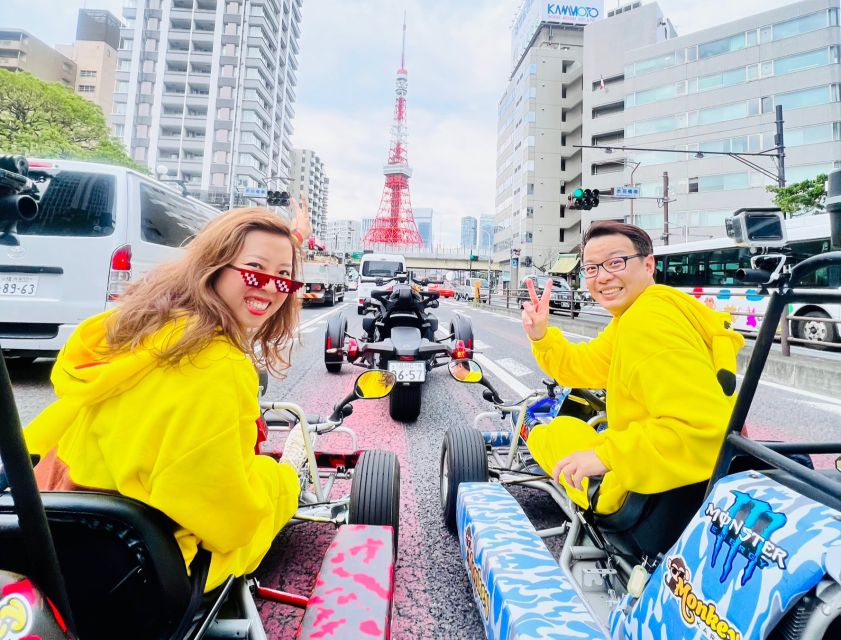
Tokyo Tower is the route’s clearest visual landmark. Its orange and white structure gives the guide an easy place to frame the group, and it provides a much stronger photo setting than a random stretch of road. You do not get a museum visit or an observation-deck stop here. The appeal is seeing the tower from the street, with your kart and the city around it.
That distinction is worth keeping in mind. This is an active sightseeing ride, not a traditional landmark tour. You will pass famous locations, but you will not have long periods to wander, read signs, or study architecture. If your priority is covering several central districts in a short time, the pace works well. If you want detailed commentary at every stop, choose a walking tour as well.
Shibuya Crossing from the driver’s seat
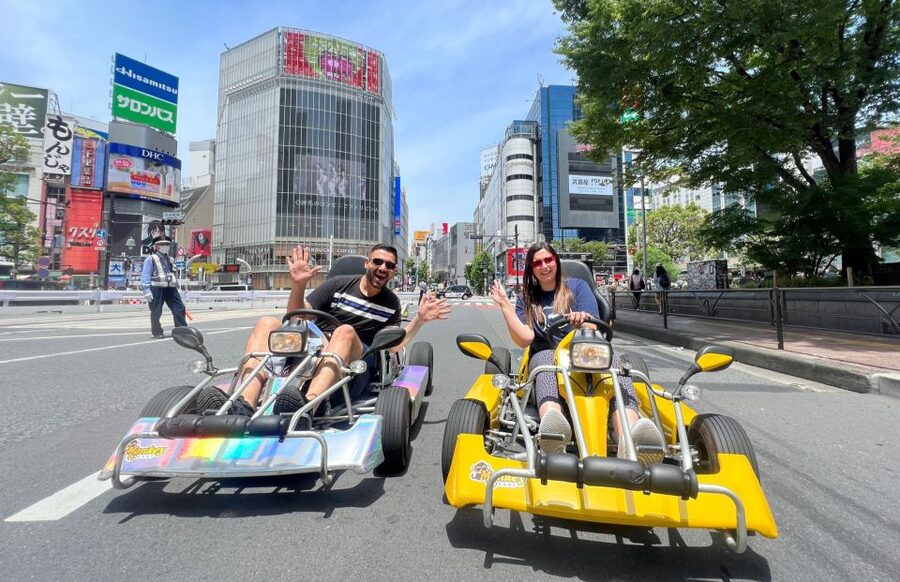
Shibuya Crossing is the moment most people picture when they consider this activity. The intersection is famous for its broad pedestrian scramble, giant screens, and constant movement. Driving through it puts you inside the scene rather than at one of the usual viewing points.
The crossing is also a useful reminder that this is not a private fantasy ride. You share the road with buses, taxis, cars, and other traffic. The guide’s job is to keep the group together and move everyone safely through the junction. Several guides, including Gus, Ren, and Shin, have been praised for checking on the group, timing traffic lights, and stopping at useful points for pictures.
At the crossing, people on the sidewalks may notice the costumed karts and take photos. That attention is part of the fun, but it can also make you feel exposed. If you prefer quiet sightseeing, this will not be your style. If you like being part of the city’s public spectacle, Shibuya is the strongest reason to book.
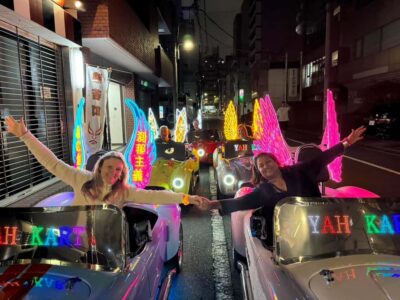
Night departures add a different mood. Tokyo’s signs and vehicle lights make the ride more theatrical, and the low viewpoint puts the illuminated streets close to eye level. Daytime rides give you clearer views of buildings and roads. The best time depends on your priorities, though the schedule options should be checked before booking.
Omotesando and the longer route
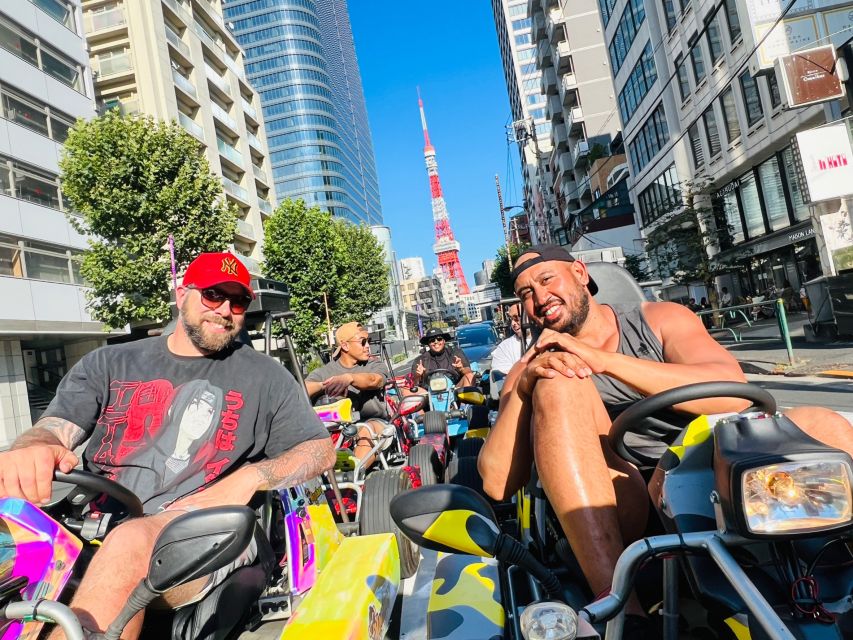
The route also reaches Omotesando, known for its stylish avenues and polished storefronts. Compared with Shibuya’s noise and crowds, this section gives you a smoother change of scene. You see another side of central Tokyo, one shaped by design, shopping, and broad tree-lined roads.
Some options may offer a longer loop around Tokyo. One rider specifically recommends choosing the long tour, and that advice makes sense if you want more than a quick taste of the city. The longer route gives the experience room to breathe and increases the chance of seeing several districts rather than making a short out-and-back run.
Still, longer is not automatically better for everyone. You remain seated in an open kart for the full ride, and the exposure to wind, weather, traffic noise, and exhaust adds up. A 75-minute option may suit a first-time driver or a family with young adults. The 105-minute version is better for people who want the ride itself to be the main event.
Same trip, a completely different kind of day:
- 1-Day Tokyo Bus Tour
★ 5.0 · 14,250 reviews - Tokyo: TOKYO SKYTREE® Admission ticket
★ 4.5 · 11,192 reviews - Tokyo: teamLab Planets TOKYO Digital Art Museum Entry Ticket
★ 4.6 · 9,779 reviews - Tokyo: Sumo Show Experience with Chicken Hot Pot and a Photo
★ 4.8 · 6,678 reviews
Costumes, cameras, and the photo package
Optional costumes make the activity more playful. You can choose from character-style outfits and add a visual theme to the group. Some people use this for family fun, while others simply enjoy the comic contrast of colorful costumes against Tokyo’s serious traffic and high-rise streets.
The costumes are not required, so you can keep the look simple if that suits you. If you do dress up, remember that the ride is open to the elements and that comfort still matters. You need to sit, steer, and follow signals for the whole route.
The photo service is one of the strongest practical features. Your guide takes pictures at key locations, allowing you to keep both hands available for driving. The photos are shared afterward by AirDrop or email, and one hard-copy photo is included.
The package also includes an action-camera or Insta360 mount, but not the camera itself. An action camera and Bluetooth speaker are separate extras. That wording matters because you should not assume a recording device comes with the booking.
Guides have earned particular praise for photography. Lewis is noted for sending many pictures through WhatsApp, while Yumi and Ren are repeatedly described as taking plenty of shots during the route. The exact guide will depend on the day, but photography is built into the experience rather than left to chance.
Safety, traffic, and the real feel of the ride
The safety briefing is not a box to tick and forget. Pay close attention to hand signals, group spacing, and instructions at lights. You may be comfortable driving at home, but driving on the other side of the road can require a quick mental adjustment. One family found that the briefing helped a newer overseas driver feel at ease.
The guide rides ahead and controls the formation. Staff also check that the group stays together and can pause to make sure everyone is doing fine. That support is a major part of the price. You are paying not only for a kart and fuel, but for a managed route through busy city streets.
The ride is exciting, but it can be intimidating at moments. One rider called it exhilarating and frightening in parts, especially in wet conditions. Another noted that the carts feel fast because your body is only a few inches above the road. That sensation is real even when the actual speed is moderate.
You should also expect petrol fumes from the kart ahead, particularly when the group is stopped or moving slowly. Tokyo traffic can create delays, too. One booking ran about an hour late, so avoid placing an important dinner reservation immediately afterward.
Rain is the biggest weather concern. The tour may be rescheduled when conditions are poor, and flexible operators have moved bookings to another time after wet-weather cancellations. Bring a plan B for the afternoon or evening, especially during a short Tokyo stay.
Is $116 a fair price?
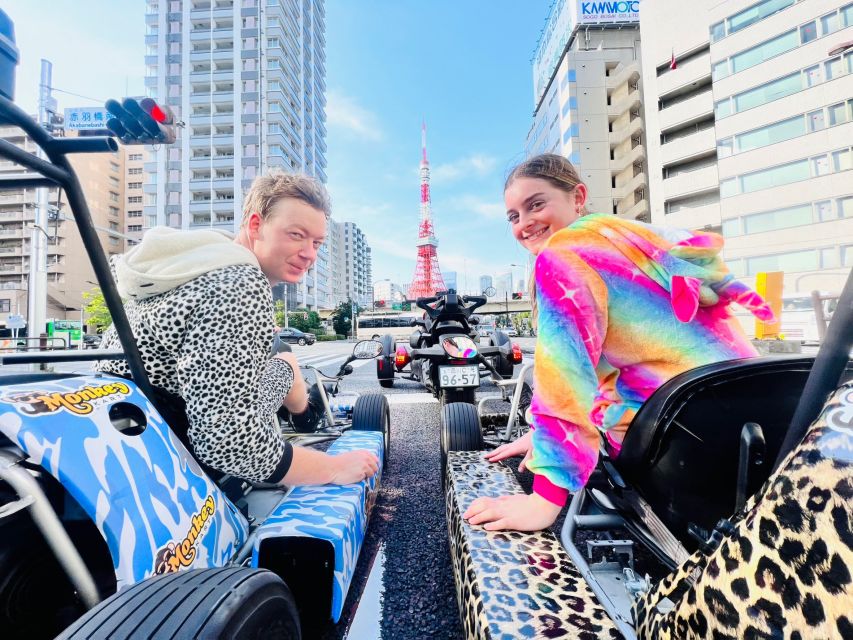
At $116 per person, this is not a cheap way to get from one district to another. Tokyo’s trains and walking routes cost far less, and a regular sightseeing bus may cover more landmarks with less effort.
The value comes from the combination of transport, entertainment, support, and photographs. Fuel, the kart, the instructor, costumes, photo service, one printed photo, and the camera mount are included. You also get a small group capped at eight, rather than being one face in a large coach crowd.
For a couple or group of friends, the price can make sense because the ride is both an activity and a sightseeing session. It is especially good if you have already seen Tokyo’s main sights in the usual ways and want something more physical and unusual.
The value is weaker if your main goal is historical or cultural explanation. The guide may share facts while you are stopped, and Andres is praised for tailoring commentary to the route, but the kart takes up most of your attention. You will not absorb the same amount of information as you would on a focused walking tour.
Who should book this experience?
You should consider it if you:
- Enjoy driving and want an unusual view of Tokyo
- Are comfortable in traffic and open to a little public attention
- Want photos without stopping to manage your own camera
- Are traveling with friends, a partner, or young adults
- Like a fast-paced activity more than a quiet sightseeing route
- Have time to adjust the booking if rain affects the schedule
It may not suit you if you are pregnant, do not hold a valid driving license, or dislike traffic-based activities. It is also a poor fit if you want a leisurely walk through each district or a detailed history lesson at every landmark.
The activity is for people over 18. You must bring your passport and valid driving documentation. Check the rules before leaving home, not at the meeting point.
Driving permits that Japan will accept
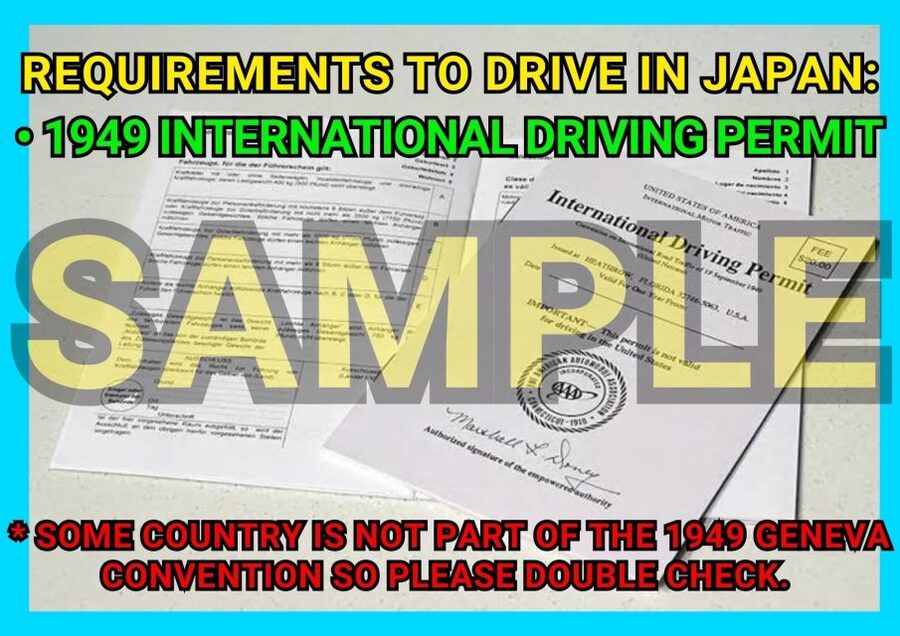
This is the most important booking detail. Drivers must carry a physical, hard-copy booklet of an International Driving Permit issued under the 1949 Geneva Convention by an official agency in their home country, such as AAA, AA, CAA, or another approved organization.
A phone image, online copy, or soft copy is not valid. A 1968 Vienna Convention permit is not accepted, nor are permits issued by FIA, IDA, or IAA under the rules given for this activity.
Drivers from France, Switzerland, Taiwan, Germany, Monaco, and Belgium need a physical Japanese translation of their local license, available through the Japan Automobile Federation. Licenses from Indonesia, Pakistan, Saudi Arabia, Mexico, Brazil, Costa Rica, Colombia, Kuwait, Qatar, and some other countries may not qualify, so check your national rules carefully.
This paperwork can determine whether you are allowed to drive. Do not assume that the international license you used elsewhere in Asia will work in Japan.
Should you book the Tokyo go-kart tour?
Book it if you want Tokyo sightseeing with a strong dose of motion, attention, and photo-friendly fun. The best parts are the run through Shibuya Crossing, the Tokyo Tower backdrop, the small group, and guides who take safety and photography seriously.
I would choose the longer option for an activity-focused evening and the shorter option if you are fitting it between other plans. Bring the correct paper permit, allow extra time in case of delays, and keep rain in mind.
Skip it if you want a calm cultural tour, dislike driving in city traffic, or cannot produce the required documents. For everyone else, this is a memorable way to see central Tokyo from a viewpoint no bus or pavement can quite match.
FAQ
How long does the Tokyo go-kart tour last?
The tour lasts between 75 and 105 minutes. The exact duration depends on the option you select, so check the available times before booking.
What landmarks does the route include?
The route includes Tokyo Tower, Shibuya Crossing, Roppongi, and Omotesando. The precise meeting point and route may vary by booking option.
Is the tour conducted in English?
Yes. The instructor and guide service are provided in English.
How many people are in each group?
The activity is limited to eight participants, making it a small-group experience.
What driving permit do I need?
You need a physical, hard-copy 1949 Geneva Convention International Driving Permit issued by an official agency in your country. Online copies and soft copies are not valid, and 1968 Vienna Convention permits are not recognized.
Are costumes and photos included?
Yes. Costumes, photos, one hard-copy photo, petrol, the go-kart, the instructor, and an action-camera or Insta360 mount are included. The action camera itself and a Bluetooth speaker are not included.
What happens if it rains?
The tour may be rescheduled because of rain. If weather affects your booking, keep your schedule flexible so you can move the activity to another available time.
Just added around Tokyo
- Kawagoe Japanese Food Tour : Unagi Kaiseki and Sake near Tokyo★ 5.0 · 30 reviews
- Kawagoe 4hr Private Tour with Licensed Guide (Kawagoe Dep)★ 5.0 · 13 reviews
- Little EDO Sushi Making workshop in Kawagoe★ 5.0 · 18 reviews
- 【R34】Tokyo:Private Daikoku tour in Modified R34★ 4.9 · 92 reviews
- :Tokyo,Shibuya/ Pro Photography in Kimono / English-Friendly★ 5.0 · 26 reviews
- Tokyo:Celebrate Unique Japanese New Year Tradition Festivity★ 3.9 · 20 reviews
- Tokyo: Allstar Food Tour★ 4.7 · 29 reviews
- Tokyo: West-Side Cycling and Food Tour with Guide★ 5.0 · 37 reviews
Go-Karts, compared.
Flagship 2-Hours Official Street Go-Kart Tour – Tokyo Bay Shop
Our verdict →
Asakusa, Skytree & Akhihabara Go-Kart City Experience
Our verdict →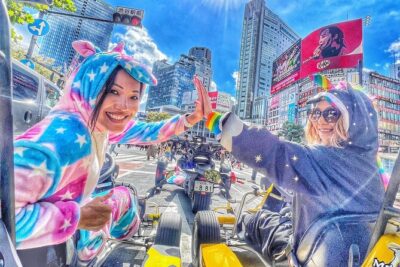
Best Go Kart Experience in Shibuya Crossing with Iconic Photos
Our verdict →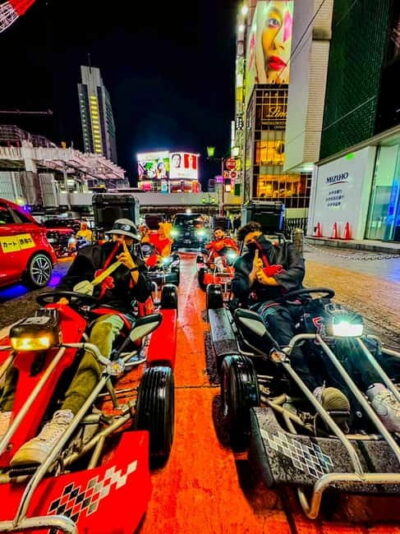
Shibuya and Shinjuku Streets Guided Go-Karting Tour
Our verdict →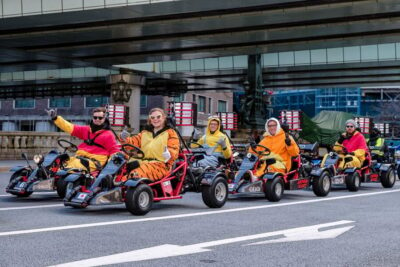
Browse the lists this tour appears in