
Reviewed · GO-KARTS
Official Street Go-Kart Tour – Akihabara
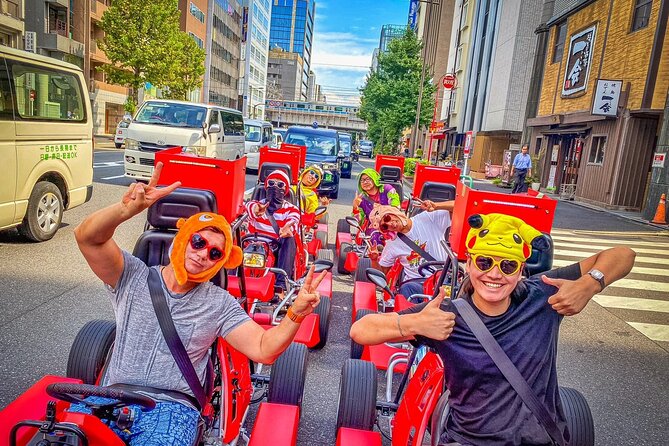
Driving a go-kart through central Tokyo puts you close to the city in a way a sightseeing bus cannot. You follow a lead guide through Akihabara, Tokyo Station, and Ginza, wearing a character-style costume if you wish, while the city carries on around you. It is playful, a little nerve-racking at first, and far more unusual than another walk through Akihabara’s arcades.
I like two things here: the short route covers several major districts, and the guides take the pressure off by leading the group and photographing the experience. Guides including Sam, Khan, Billy, Julian, and Gyula are repeatedly praised for clear instructions and calm road manners. The main drawback is serious: you need the right driving documents, and Tokyo traffic can feel intense if you are not comfortable behind the wheel.
Key points to know before booking
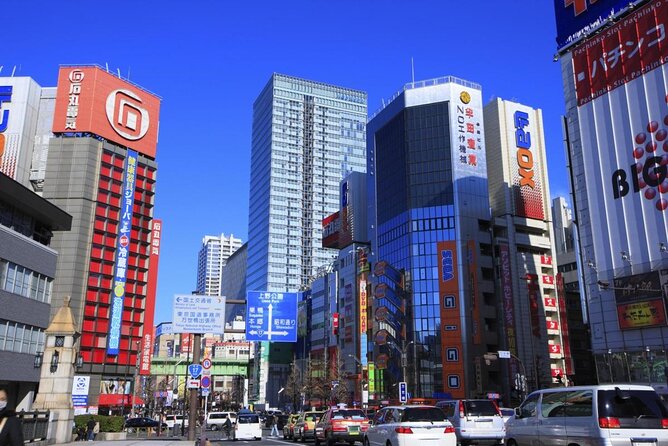
- You drive on public Tokyo roads, not on a private kart track, so normal traffic and road rules apply.
- The route links three distinct areas: the red-brick Tokyo Station building, Ginza’s polished shopping streets, and Akihabara’s anime and game center.
- Each kart is single-seat, so every participant must drive. Children and non-drivers cannot ride along.
- The guide leads a small group of up to six people, with the route lasting about one to one and a half hours.
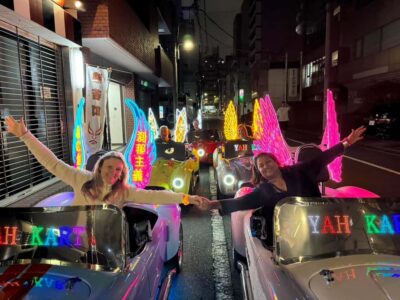
- Night departures are especially appealing for the bright signs and city lights, though the tour still depends on good weather.
- The permit rule is non-negotiable: most drivers need a physical 1949 Geneva Convention International Driving Permit, plus a physical passport.
A street-level way to see Tokyo
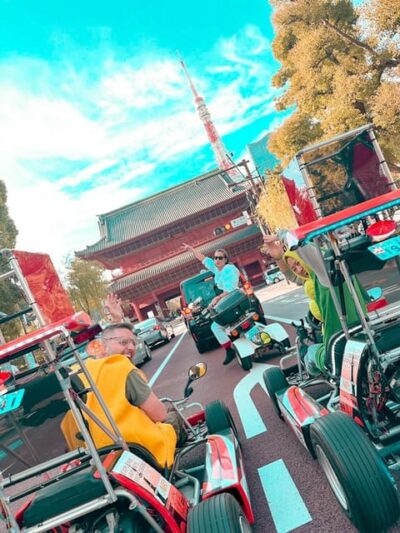
The central idea is simple: you drive a small kart in line behind a lead guide. This is not a race, and it is not a sightseeing ride where you sit back while someone else handles the vehicle. You are part of the traffic, following instructions, stopping at lights, and keeping pace with the group.
That distinction matters. The fun comes from the odd feeling of driving through one of the world’s great cities in a tiny open kart. It also means you should arrive ready to concentrate. Several people find the first few minutes stressful, especially during the safety briefing and the initial move into city traffic. Once you understand the kart and settle into the guide’s rhythm, the outing becomes easier.
The group is capped at six people, which is useful in a city where tight turns and traffic lights can split a large group. Your guide is responsible for keeping everyone together. Guides such as Sam and Billy are praised for giving clear directions, while Khan, Julian, and Gyula are noted for helping nervous drivers feel more at ease.
You may be offered a costume connected to comics, games, or anime. The costume rental fee is included, and the experience is designed to look as entertaining as it feels. There is one important limit: Mario, Nintendo-themed costumes, and clothing or items suggesting those characters are not allowed because of copyright restrictions.
More Go-Kart Tours in Tokyo
- Flagship 2-Hours Official Street Go-Kart Tour – Tokyo Bay Shop
★ 5.0 · 4,974 reviews - Official Street Go-Kart in Shibuya
★ 5.0 · 3,435 reviews - Tokyo: Street Kart Experience in Shibuya
★ 4.9 · 1,484 reviews
Starting in Akihabara
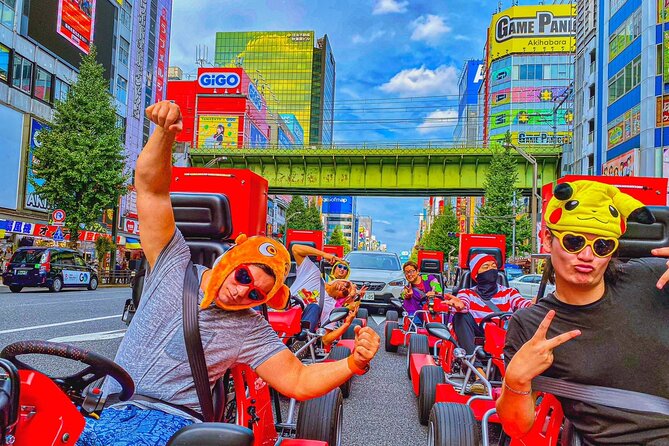
The meeting point is in Sotokanda, Chiyoda City, at the Hulic Akihabara Building, near 4-chome 12-9. It is close to public transportation, but do not treat the address as a detail to check at the last minute. One account of the operation refers to two meeting spots, so read your confirmation carefully and make sure you are heading to the location for your selected departure.
At the shop, you handle the practical steps before the fun begins. You receive the kart, choose a costume if you want one, and go through the safety instructions. Lockers are available, and an account of the setup also describes small bags or pouches for your phone and documents. These are useful touches, since you do not want loose belongings bouncing around while you drive.
The karts are described as easy to operate, but easy does not mean automatic. You still need to steer, brake, watch the road, and respond to the guide. Closed footwear is required. Skirts and long dresses are a poor choice because they can be awkward in a low kart.
You must carry your physical passport and the physical driving document required for Japan. A phone photograph or digital copy is not enough. The minimum age is 18, and every person in the group must qualify to drive.
Tokyo Station and its red-brick face
One of the route’s most memorable sights is the Marunouchi side of Tokyo Station. The station building’s restored red-brick façade gives you a strong change of mood after Akihabara’s colorful signs and specialist shops.
From a kart, you see the building as part of a working city rather than as an isolated photo stop. You are moving through the streets near a major transport hub, with office districts and traffic around you. The tour does not promise a long stop for an architectural visit, so think of this as a moving city view, not a replacement for exploring Tokyo Station on foot.
That is also the value of the route. In roughly an hour to an hour and a half, you connect areas that would otherwise require separate walks or train rides. You get a quick look at the formal, business-minded side of central Tokyo before continuing toward Ginza.
Your guide may give short explanations when the group stops at traffic lights. Billy and Sam are singled out for combining road guidance with brief information about the places around the route. That will not match the depth of a dedicated walking tour, but it adds useful context without slowing the drive.
Ginza, polished and bright
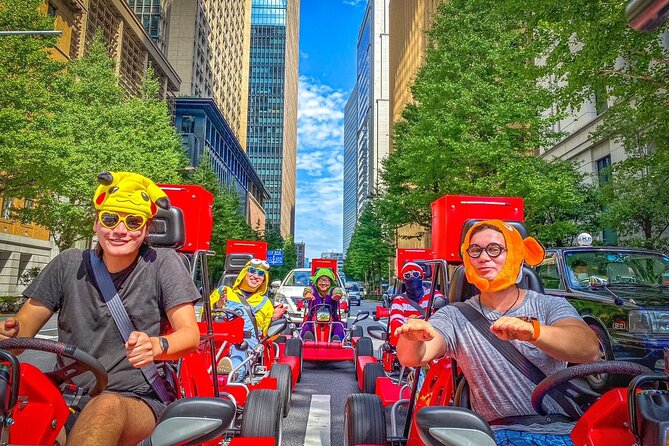
Ginza is Tokyo’s famous high-end shopping and dining district, with department stores, boutiques, galleries, restaurants, cafés, and nightlife. From street level, its appeal is not one single monument. It is the careful, polished feel of the avenues and the concentration of expensive shops and restaurants.
The kart gives you a quick circuit through this part of the city. You will not have time to browse a department store or sit down for dinner, so I would not book this as your Ginza visit if shopping is the main goal. Instead, it works as an overview and a chance to see the district lit up after dark.
Night departures receive particular praise for this reason. Ginza’s signs, shopfronts, and traffic create a stronger visual setting at night than in the middle of the day. Akihabara also benefits from the lights, making an evening departure a sensible choice if you want the most theatrical version of the route.
The trade-off is visibility and comfort. Night driving can be exciting, but it asks you to pay close attention. If you are already uneasy in unfamiliar traffic, a daytime departure may feel less demanding. The tour requires good weather, so the schedule can change if conditions are poor.
Same trip, a completely different kind of day:
- 1-Day Tokyo Bus Tour
★ 5.0 · 14,250 reviews - Tokyo: TOKYO SKYTREE® Admission ticket
★ 4.5 · 11,192 reviews - Tokyo: teamLab Planets TOKYO Digital Art Museum Entry Ticket
★ 4.6 · 9,779 reviews - Tokyo: Sumo Show Experience with Chicken Hot Pot and a Photo
★ 4.8 · 6,678 reviews
Returning through Akihabara’s anime and game center
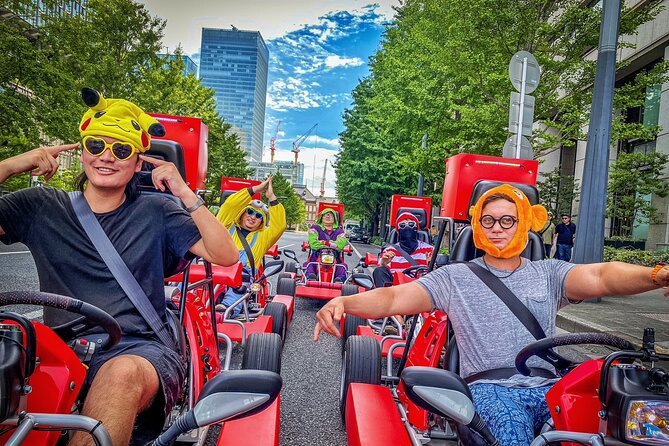
The route takes you through Akihabara, the district most associated with Japanese anime, manga, games, electronics, and character culture. Driving through it in a costume makes you part of the scene, at least for a short time. People may notice the karts and wave, which adds a light, public-performance quality to the outing.
This is not a substitute for an afternoon inside Akihabara’s shops. You are seeing the district from the road, not stopping at arcades or browsing merchandise. I would pair the kart tour with a separate walking visit if you want the full Akihabara experience.
Still, the moving view has its own appeal. You get to see the district as a series of streets and signs rather than a list of shops. The guide keeps the group moving, points out nearby sights when possible, and takes photos so you can focus on driving. Several accounts emphasize the value of not having to handle a camera while navigating.
The activity ends back at the meeting point. That makes it easy to continue with dinner or a night walk in Akihabara, provided you remember that the tour itself does not include food or drinks.
What the guide adds to the experience
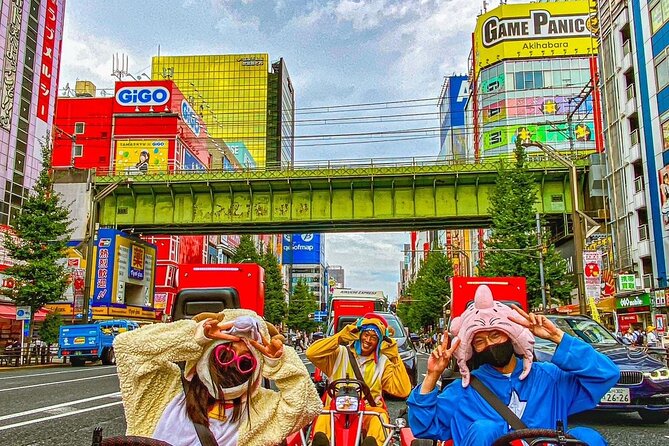
A good lead driver is the difference between an entertaining city outing and a stressful one. Your guide rides ahead, sets the pace, gives directions, and helps the group handle lights and turns. You should expect instructions to be direct rather than elaborate. That is appropriate here, since your first duty is driving safely.
The guides named in the feedback include Khan, Sam, Johnny, Billy, Mada, Julian, and Gyula. Their strengths are described in practical terms: clear communication, safe pacing, friendliness, useful comments at red lights, and plenty of photographs.
The photo service is worth noting. Guides take pictures along the way, so you do not need to use your phone while driving. This is especially helpful at night, when trying to frame a shot would take your attention away from the road. Ask how and when the photos will be provided at the start, since the supplied details do not specify a delivery method or exact number of images.
The maximum group size is six. That is small enough for the guide to keep an eye on the line, though your experience will still depend on the traffic and on the confidence of the other drivers. If you are booking for a family or group of friends, make one group booking rather than separate individual bookings. Separate reservations do not guarantee that you will ride together.
The permit rules deserve careful attention
This is the most important practical issue. A regular home-country driving license is not enough on its own.
Most participants need a physical International Driving Permit issued under the 1949 Geneva Convention by an authorized government organization. You must bring the physical permit and your physical passport. The operator specifically warns that licenses from countries not covered by that convention, including China, Indonesia, Mexico, Qatar, and Saudi Arabia, are not accepted for this activity.
There is an exception for licenses from Switzerland, Germany, France, Taiwan, Belgium, and Monaco. Drivers from those places need a Japanese translation issued by the Japan Automobile Federation, known as JAF, and must bring the physical domestic license, the official translation, and the physical passport.
Do this paperwork before you book, not the day before the tour. If you are unsure, contact the operator through the booking service with the country that issued your license. The permit requirement is not a minor formality, and you will not be allowed to drive without the correct documents.
You should also tell the operator in advance about any hearing or mobility impairment. The activity takes place in traffic and relies on guide instructions, so the staff needs that information before the tour.
Is $61.02 a fair price?
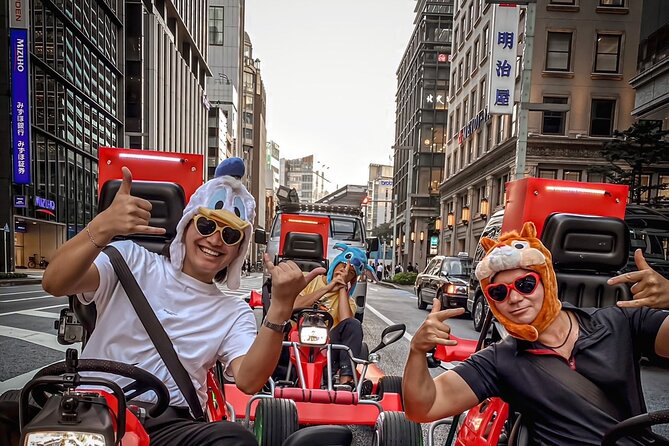
At $61.02 per person, the price includes the kart, fuel surcharge, costume rental, guide, taxes, fees, and handling charges. That is a reasonable package if you value the novelty of driving through several central districts and want the guide-led structure.
It is not the cheapest way to see Tokyo. Trains and walking cost much less, and a conventional sightseeing bus may cover more ground without requiring you to drive. You are paying for the unusual access and the activity itself, not simply for transportation between landmarks.
The included photos improve the value, since you do not need to arrange a separate photographer or risk using your phone on the road. The small group size also helps. If you are comparing this with other kart operators, check what each price includes, especially costumes, photographs, insurance, and route length.
Full coverage insurance is not included. It costs ¥1,000 per person. Food, drinks, and hotel pickup and drop-off are also excluded. You return to the meeting point, so plan your own way to and from the Akihabara start location.
Who will enjoy this, and who should skip it?
I would recommend this to an adult who wants an unusual Tokyo memory, enjoys driving, and does not mind being visible in public. It suits repeat visitors especially well, since it gives you a fresh way to see familiar districts. It can also add a shot of energy to a trip built mostly around temples, museums, shopping, and restaurants.
It is a good fit for couples, friends, and small families with adult drivers. The single-seat karts mean everyone participates directly, and the six-person limit can make a small group feel manageable.
I would be cautious if you dislike traffic, feel uncomfortable driving in an unfamiliar country, or want a quiet sightseeing experience. This is not a ride where you can switch off completely. The first part may feel tense, and the route is subject to weather.
Wear closed shoes and practical clothes. Avoid long skirts and dresses. Bring the original documents, arrive at the correct meeting point, and choose a departure time that matches your comfort with daytime or night driving.
Cancellation and weather details
You can cancel for a full refund up to 24 hours before the scheduled start time. Changes or cancellations made inside that 24-hour window are not accepted for a refund.
The activity requires good weather. If poor conditions cause the operator to cancel, you are offered another date or a full refund. This is worth keeping in mind when planning a tightly packed Tokyo itinerary.
Should you book the Akihabara street kart tour?
Book it if you want an active, slightly absurd, highly memorable way to see central Tokyo and you meet the driving-document rules. The route is short, but it links Akihabara, Tokyo Station, and Ginza while giving you a guide, a costume option, and photos along the way.
Skip it if you are hoping for a relaxed sightseeing bus, a private track, or a full guided visit inside each district. The strongest reasons to choose this tour are the unusual street setting, the small group, and the guides’ practical help. The strongest reasons to hesitate are public-road driving, the extra insurance cost, and the strict permit requirements.
For the best chance of a smooth outing, book as one group, double-check the meeting address, bring your physical passport and accepted permit, and consider an evening departure for the city lights.
FAQ
How long does the Akihabara street kart tour last?
The activity lasts approximately one hour to one hour and 30 minutes.
Where does the tour start and finish?
It starts at the Akihabara meeting point in Sotokanda, Chiyoda City, at the Hulic Akihabara Building, 4-chome 12-9. The activity ends back at the meeting point.
What sights are included on the route?
The route includes views of Tokyo Station’s Marunouchi red-brick building, Ginza, and Akihabara’s anime and game district.
Do I need an International Driving Permit?
Yes. Most participants need a physical International Driving Permit issued under the 1949 Geneva Convention, along with a physical passport. Drivers from Switzerland, Germany, France, Taiwan, Belgium, or Monaco need an official Japanese translation of their license from JAF instead.
Can I use only my home-country driving license?
No. A regular home-country license alone is not sufficient. Drivers must carry the required physical permit or official translation, plus their physical passport.
Can children or passengers ride in the karts?
No. The karts are single-seat vehicles, and every participant must be at least 18 years old and qualified to drive in Japan.
Are Mario or Nintendo costumes available?
No. Mario and Nintendo-themed costumes, clothing, and items suggesting those characters are not permitted because of copyright restrictions.
What should I wear for the tour?
Wear closed footwear. Skirts and long dresses are not advised. You should also bring the physical passport and driving documents required for the activity.
Is insurance included in the price?
The listed price includes the kart, fuel surcharge, costume rental, guide, taxes, fees, and handling charges. Full coverage insurance is optional and costs ¥1,000 per person. Food, drinks, and hotel transfers are not included.
Just added around Tokyo
- Kawagoe Japanese Food Tour : Unagi Kaiseki and Sake near Tokyo★ 5.0 · 30 reviews
- Kawagoe 4hr Private Tour with Licensed Guide (Kawagoe Dep)★ 5.0 · 13 reviews
- Little EDO Sushi Making workshop in Kawagoe★ 5.0 · 18 reviews
- 【R34】Tokyo:Private Daikoku tour in Modified R34★ 4.9 · 92 reviews
- :Tokyo,Shibuya/ Pro Photography in Kimono / English-Friendly★ 5.0 · 26 reviews
- Tokyo:Celebrate Unique Japanese New Year Tradition Festivity★ 3.9 · 20 reviews
- Tokyo: Allstar Food Tour★ 4.7 · 29 reviews
- Tokyo: West-Side Cycling and Food Tour with Guide★ 5.0 · 37 reviews
Go-Karts, compared.
Flagship 2-Hours Official Street Go-Kart Tour – Tokyo Bay Shop
Our verdict →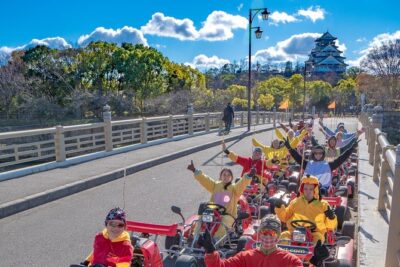

Asakusa, Skytree & Akhihabara Go-Kart City Experience
Our verdict →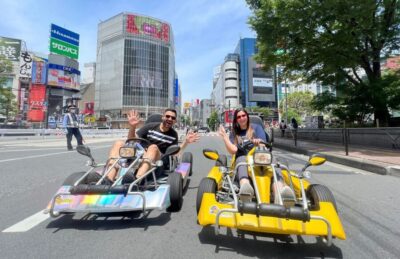
Premium Go-Kart Tour with Tower & Shibuya Crossing
Our verdict →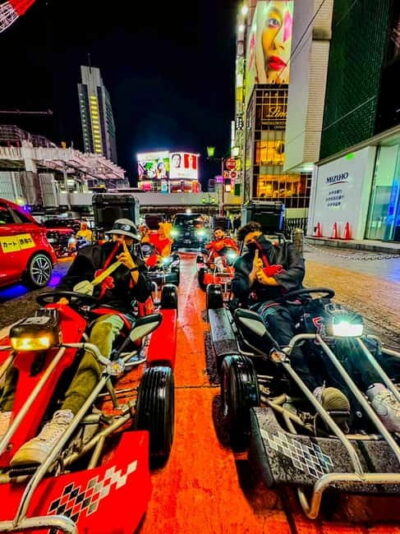
Shibuya and Shinjuku Streets Guided Go-Karting Tour
Our verdict →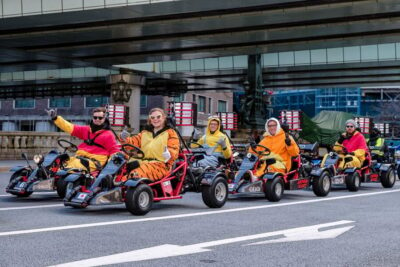
Browse the lists this tour appears in