
Reviewed · BAMBOO FOREST TOURS
Half Day Kyoto Sagano Bamboo Grove & Arashiyama Walking Tour
The best part of this outing is the way it strings together Kyoto’s bamboo grove, Zen gardens, wooded temples, and river scenery in one morning. You travel from Kyoto Station by local train, then cover about 3 kilometers on foot through Arashiyama and Sagano.
I like the licensed English-speaking guide, who adds context to places that can otherwise blur into a succession of pretty views. I also like the efficient mix of sights: Tenryu-ji for its garden, Jojakko-ji for its hillside views, and the yakatabune boat ride for a welcome pause.
The main drawback is crowd control. The group can reach 25 people, and busy trains, narrow paths, stairs, rain, and delayed stragglers can slow the pace. If you want long, quiet stretches in the bamboo, you may prefer to return later on your own.
Key points to know before booking
- Three major Arashiyama sights in four hours: See Jojakko-ji Temple, Tenryu-ji Temple, and Togetsukyo Bridge without having to plan the route yourself.
- About 3 kilometers of walking: Add stairs at Jojakko-ji and expect to be on your feet for most of the morning.
- Public transport is part of the experience: The train between Kyoto Station and Saga-Arashiyama uses non-reserved seats, so standing may be necessary.
- The bamboo grove is not a private retreat: It is one of Kyoto’s most popular spots, and the paths can be crowded, especially during cherry blossom and autumn color seasons.
- The tour ends at Kyoto Station: You can return with the group or stay in Arashiyama to visit the monkey park, eat, shop, or explore at your own pace.
- Summer plans change: From July through September 22, the earlier schedule replaces Jojakko-ji with Okochi Sanso Villa Garden.
A smart first morning in Arashiyama
Arashiyama sits on Kyoto’s western edge, far enough from the city center to feel greener and quieter, but close enough for a simple train ride. This tour makes the district manageable if you have only half a day or would rather not sort out the route, temple admissions, and local train connections yourself.
You meet at the JTB Sunrise Tours Desk in the basement of Avanti, near Kyoto Station. From there, you travel by public transport to Saga-Arashiyama Station. The train uses non-reserved seating, which means you may need to stand during busy periods. That detail matters if you are expecting a private coach or guaranteed seats.
The trip takes about four hours and normally finishes back at Kyoto Station. The timing leaves room for another afternoon plan, though the actual order can shift with traffic, crowds, and conditions at the sights.
The tour has a maximum of 25 people, but past departures have ranged from about three to around 25. A small group makes a real difference here. With 10 or 12 people, it is easier to hear the guide and move through temple grounds. With a full group, the outing can feel less graceful, particularly when people fall behind.
More Walking Tours in Kyoto
- Kyoto Geisha Walking Tour: Gion District & Hidden Gems
★ 4.7 · 3,273 reviews - Kyoto: Gion Magical Night Walking Tour with Geisha Trivia
★ 4.9 · 2,393 reviews - Kyoto: Gion Geisha District Walking Tour – Stories of Geisha
★ 4.7 · 2,187 reviews
Walking through the Sagano bamboo grove
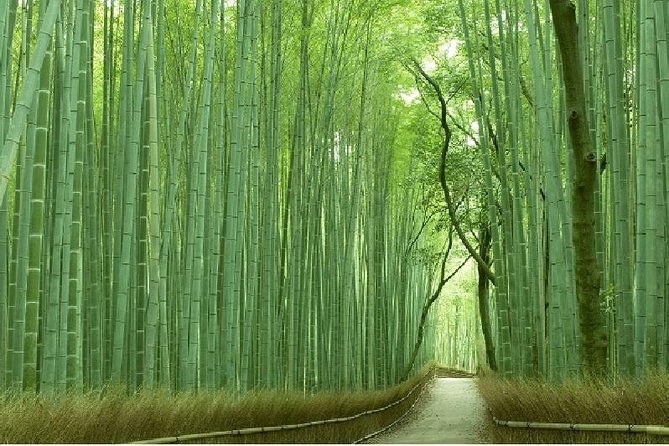
The bamboo grove is the headline attraction, and it earns its place. Tall bamboo rises on both sides of the path, with mountain slopes and wooded valleys nearby. In good conditions, the setting feels remarkably calm despite the fact that this is one of Kyoto’s most photographed areas.
Keep your expectations realistic. The grove is not an untouched forest where you will wander alone for an hour. The well-known paths can be busy, and the walk through the most famous section may take only about 15 minutes. The tour adds interest by approaching the area from Jojakko-ji and moving toward Tenryu-ji, rather than treating the bamboo as the only reason to come.
Your guide can point out details along the way and explain how the Sagano district fits into Kyoto’s cultural life. Guides including Sachiko, Donna, June, and Michiharu have led departures, and the strongest guide reports describe a friendly, clear style with personal stories and useful suggestions for the rest of your day.
This part of the walk is best early in the morning, before the paths become even more crowded. Wear shoes with good grip. The route is not extreme, but you will walk several kilometers and encounter stairs, uneven sections, and frequent stops.
Jojakko-ji Temple and the hillside views
Jojakko-ji is a smaller and more atmospheric stop than Tenryu-ji. It sits on the wooded side of Mount Ogura, with paths climbing through trees toward a pagoda and views across Sagano and Kyoto.
The temple is linked with the Tale of the Heike and the story of Empress Dowager Kenrei-mon-in. It was originally constructed as a nunnery, and the site has a quiet, secluded character that contrasts with the busy streets and bamboo paths below.
Look for the Jizo statue and the pagoda among the maple trees. In autumn, this is one of the strongest parts of the route, with red, orange, and yellow leaves covering the hillside. Spring and summer offer a different mood, with fresh foliage and shade, but autumn gives the temple its most dramatic appearance.
You receive about 30 minutes here. That is enough to see the main features and take in the views, but not enough for an unhurried visit if you want to examine every corner. The stairs may be tiring for anyone with limited mobility, and this stop deserves a slower pace than a quick photo break.
There is also an important seasonal change. From July through September 22, the schedule begins earlier to avoid the worst heat, and Jojakko-ji is replaced by Okochi Sanso Villa Garden. If Jojakko-ji is the reason you want this tour, check the date carefully before booking.
Tenryu-ji and its famous garden
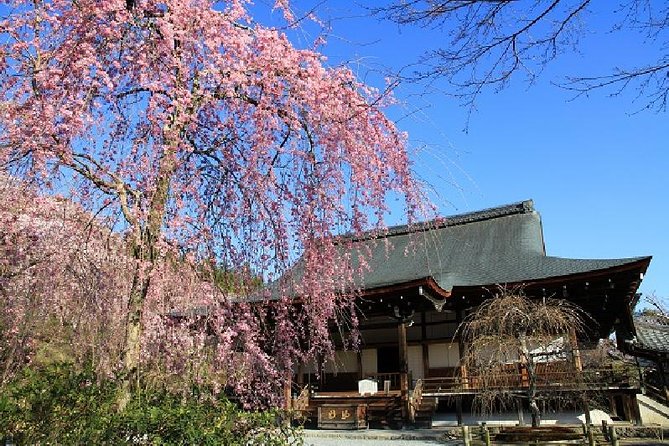
Tenryu-ji is the tour’s major temple visit. Founded in 1339 by Takauji of the Ashikaga Shogunate, it is one of the leading temples of the Rinzai Zen school and a World Heritage site.
The garden is the real focus. Its pond, rocks, trees, and borrowed views toward Arashiyama’s hills work together in the classic Japanese style. The garden has survived in its original design, giving you a chance to see how Zen temple gardens use space, water, and surrounding scenery without relying on bright decoration.
The visit lasts roughly 30 minutes. That is enough to understand why Tenryu-ji matters, but the tour is not a full scholarly examination of the temple complex. One point to note is that the experience may concentrate on the gardens rather than detailed interior access. If you want to spend a long time studying the buildings, art, or grounds, plan to return independently.
This is where a guide adds real value. Without context, you might simply admire the pond and move on. With an explanation of the temple’s origins, Zen tradition, and garden design, the stop becomes more than a scenic pause.
The grounds also offer a useful contrast with the bamboo grove. The grove is tall, enclosed, and visually repetitive. Tenryu-ji opens the view, frames the mountains, and gives you a calmer place to think about what you have just seen.
More Bamboo Forest Tours in Kyoto:
- Kyoto: Fushimi Inari, Kinkakuji, Bamboo Grove 1 Day Bus Tour
★ 4.8 · 4,316 reviews - Kyoto: Arashiyama Bamboo Forest, Monkeys, Matcha & Temple Tour
★ 5.0 · 759 reviews - Kyoto Ghost Tour: Dark Tales, Urban Legends, Bamboo Forest Night
★ 5.0 · 625 reviews - Arashiyama Bamboo Forest & Hidden Gems Bike Tour (Early Bird)
★ 5.0 · 613 reviews
Togetsukyo Bridge and the river pause
The final major sight is Togetsukyo Bridge, or the Crossing Moon Bridge. The current 250-meter bridge was reconstructed in 1934, replacing earlier versions of the crossing.
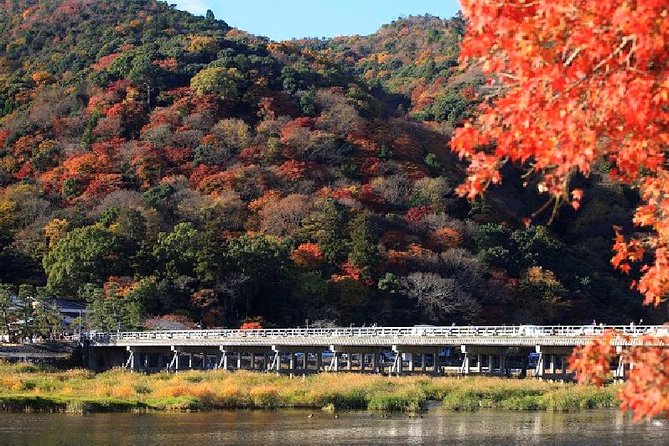
From the bridge, you look over the Hozu River toward the wooded hills of Arashiyama. Cherry blossoms make the area appealing in spring, while autumn brings color to the hillsides. The bridge is also a useful orientation point, showing how the river, mountains, temple district, and town fit together.
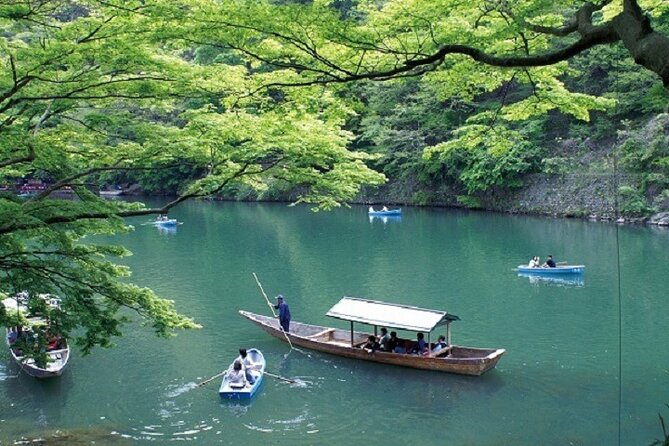
The tour includes a view of Togetsukyo and Arashiyama from a yakatabune, a traditional-style sightseeing boat. This short boat segment gives your feet a break after the walking and lets you see the river scenery from a different angle. One particularly useful feature is the change of pace: after several temple paths and crowded public areas, sitting on the water can feel like a genuine rest.
Conditions and timing can affect the exact order or arrival time. Do not treat the schedule as a minute-by-minute promise. The tour ends at Kyoto Station, and you are responsible for continuing to your next destination from there.
What the guide adds to the price
At $79.26 per person, this is not the cheapest way to see Arashiyama. You can reach the district by train yourself, walk through the bamboo grove, and pay temple admission separately. Independent visitors also have the freedom to linger, eat, shop, and change direction whenever they wish.
The value here comes from reducing friction. Your guide handles the route, transport connections, entrance fees, and explanations. You do not have to figure out which temple to visit first or keep checking a map while moving through a crowded district.
A licensed English-speaking guide is especially useful at Tenryu-ji and Jojakko-ji, where cultural background makes the grounds more meaningful. Strong guides such as Michiharu have also offered suggestions tailored to individual interests, including directions to other Kyoto attractions. Sachiko has helped people continue to the monkey park, with directions and lunch ideas after the scheduled tour.
The value drops if you already know Arashiyama well or prefer to move slowly. Some people found the group too large, with time lost waiting for anyone who wandered away. Others wanted more commentary and less unstructured time. You are paying for a guided introduction, not a private tour or a full-day cultural study.
Group size, pace, and practical comfort
The total walk is about 3 kilometers, but that figure does not tell the whole story. Add the station walking, temple paths, stairs, and time spent standing on the train. A moderate level of fitness is required.
Comfortable walking shoes are essential. Rain can make the paths less pleasant, and the combination of wet weather and a large group may slow the outing. The tour still operates as a walking experience, so bring clothing suitable for the forecast.
The tour can work well for families, but children under six are free only if they do not occupy a separate seat. Anyone under 18 needs written parental permission. Participants under 15, or children not yet enrolled in middle school, must be accompanied by a parent or guardian.
The public train is both practical and slightly unpredictable. Non-reserved seating keeps the cost and logistics simple, but you do not have a reserved place to sit. During busy periods, you may stand.
Staying in Arashiyama after the tour
One of the best choices comes at the end. You may return to Kyoto Station with the guide, or stay in Arashiyama and continue on your own. If you have the time, I recommend staying.
The monkey park is a popular follow-up, though reaching it involves more walking and a climb. Food, small shops, and additional shrines give the district more depth than the four-hour route can provide. Some people have also used the afternoon to explore nearby cultural sites based on guide recommendations.
Staying behind turns a tightly planned morning into a fuller day. Returning with the group makes more sense if you have a reservation elsewhere, luggage to collect, or a train to catch. Ask your guide for clear directions before separating, particularly if you are leaving at a busy time.
Who should book this Kyoto walking tour?
This tour suits you if you want a well-organized introduction to Arashiyama and prefer cultural explanation to independent wandering. It is also useful on a first Kyoto visit, when you want to see the bamboo grove and major temples without spending half a morning working out the route.
It is a good match for people who enjoy walking, gardens, historic temples, and scenic train rides. Autumn color and spring blossoms can make the setting especially appealing, though those seasons also bring larger crowds.
I would hesitate if your main goal is solitude. The bamboo grove is popular, the group may be large, and the train uses non-reserved seats. I would also think twice if stairs are difficult or if you want to spend most of the day in one temple.
The free cancellation policy allows a full refund if you cancel at least 24 hours before the start time. The tour requires at least two adults, so a date may be canceled if that minimum is not reached four days beforehand. In that case, you are offered another date or experience, or a full refund.
Should you book it?
Book this tour if you value clear navigation, temple context, and an efficient half-day route. The bamboo grove alone is easy to visit independently, but the combination of Jojakko-ji, Tenryu-ji, Togetsukyo Bridge, transport, admissions, and the boat ride gives the morning a useful shape.
Skip it if you want maximum freedom or a quiet, extended visit to the bamboo. In that case, go to Arashiyama on your own, arrive early, and keep the whole day open.
For most first-time visitors with moderate mobility, the $79.26 price is reasonable for a guided introduction. Just book it for the route and expert help, not for an empty bamboo forest.
FAQ
How long does the tour last?
The tour lasts approximately four hours and ends at Kyoto Station.
Where does the tour begin?
It begins at the JTB Sunrise Tours Desk in the basement of Avanti near Kyoto Station, at 31 Higashikujo Nishisanncho, Minami Ward, Kyoto.
Where does the tour end?
The tour ends when the group returns to Kyoto Station. You continue to your next destination independently.
How much walking is involved?
The stated walking distance is approximately 3 kilometers. You should also expect stairs at Jojakko-ji and time standing or walking during the public transport portions.
Is transportation included?
Yes. Transportation costs and entrance fees listed for the tour are included. The train uses non-reserved seats, so a seat is not guaranteed.
Is the yakatabune boat ride included?
Yes. The tour includes a sightseeing segment from which you can enjoy views of Togetsukyo Bridge and Arashiyama from the water.
Does the tour visit Jojakko-ji all year?
No. From July through September 22, the earlier summer schedule replaces Jojakko-ji with Okochi Sanso Villa Garden.
What is the largest possible group?
The tour can have a maximum of 25 participants.
Can children join the tour?
Children ages 0 through 5 are free if they do not occupy separate seats. Participants under 18 need written parental permission, and anyone under 15 or not yet enrolled in middle school must be accompanied by a parent or guardian.
Just added around Kyoto
- Sekka Cotton Furoshiki Class★ 5.0 · 19 reviews
- Kyoto Sword Experience – includes Museum Ticket/Ninja Experience★ 4.5 · 149 reviews
- Scenic Green Tea Fields of Hidden Kyoto & Local Tea Exp (Private)★ 5.0 · 32 reviews
- Secret Eastern Kyoto Biking Adventure★ 5.0 · 44 reviews
- Private Sake Tasting in Central Kyoto with Sake Sommelier★ 5.0 · 32 reviews
- Samurai School in Kyoto: Samurai for a Day★ 5.0 · 202 reviews
- SHIRAKAWA Japanese Culture Experiences with private English staff★ 5.0 · 16 reviews
- A Privately Guided Photoshoot in Beautiful Kyoto by a Pro★ 5.0 · 18 reviews