
Reviewed · KAMAKURA TOURS
When Emperors Reigned and Shoguns Ruled
Kamakura is where Japan’s samurai government first took firm shape, and this private walking tour gives that story a clear route through the town. You’ll move from Tsurugaoka Hachimangu Shrine to the Great Buddha and Hasedera, with guide Virgil explaining how shoguns, samurai, Shinto, and Zen changed Japan.
I like the personal pace and the built-in photography. Virgil can take photos as you go, and he has a knack for adding small historical stories instead of handing you a stack of dates. The main consideration is that the $108.99 price does not include admission to the Great Buddha or Hasedera, food, or transportation between attractions.
Key points
- Private for one to eight people: Ask questions freely and adjust the pace for children, slow walkers, or keen history fans.
- Virgil guides with stories and photos: He speaks English well, also speaks Spanish, and can take pictures of your group along the way.
- A useful four-hour route: Start at Kamakura Station and finish at Hase Station, covering the town’s major sights without backtracking.
- Strong historical focus: Learn how Minamoto Yoritomo’s shogunate, samurai rule, and Buddhism shaped Kamakura.
- Food is flexible: Lunch is not included, but the route passes Kamakura Komachidori, where you can buy sweets, snacks, and other food.
- Expect a walking day: The tour includes shrine grounds, shopping streets, temple levels, gardens, ponds, caves, and public transportation between major stops.
Why Kamakura makes a fine half-day from Tokyo
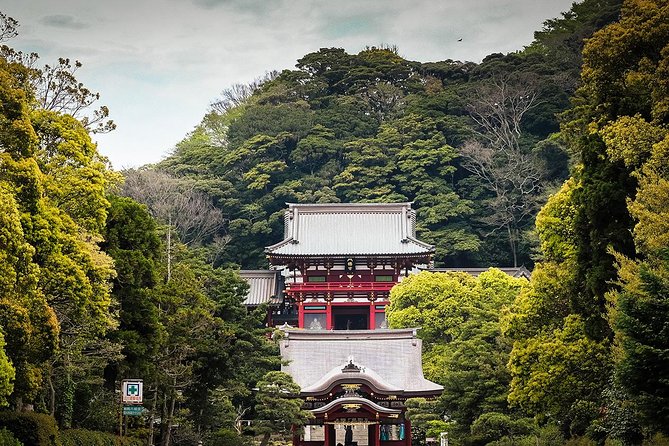
Kamakura offers a different view of Japan from the neon streets and modern museums of Tokyo. It was the seat of the Kamakura shogunate from 1185 to 1333, when military government took power under Minamoto Yoritomo and later shoguns.
That political shift is the thread running through this tour. You are not simply collecting shrine and temple photos. You are seeing how a warrior government used religious sites, ceremony, and city planning to establish authority.
The route also shows modern Kamakura alongside its older identity. Komachidori is full of snack shops, sweets, small stores, and souvenirs, while the shrines and temples offer quieter spaces nearby. That mix makes the town feel lived in rather than frozen in a museum display.
The tour lasts about four hours and is private, so your group alone joins the guide. That matters in Kamakura, where a fixed group schedule can feel rushed at crowded sites. If you want to stop for a photo, ask about a statue, or slow down with children, you have room to do so.
A few more Kamakura half-days worth comparing
- Tokyo: Kamakura & Enoshima Day Trip including Temple Tickets
★ 4.5 · 1,375 reviews - From Tokyo: Kamakura & Enoshima 1-Day Bus Tour
★ 4.5 · 189 reviews - Kamakura Historical Walking Tour with the Great Buddha
★ 5.0 · 129 reviews
Meeting Virgil at Kamakura Station
The tour begins at Kamakura Station, at 1-chōme-1-15 Onarimachi. From there, you walk along Wakamiya Main Street toward the city’s principal shrine.
Virgil is presented as both a local guide and a photographer. His role is more than pointing out buildings. He explains the political and religious background of the places you see, answers questions, and can take photos with your camera along the route.
That combination is useful for solo visitors. You do not have to ask another passerby to take a picture, and you can remain part of the moment instead of standing behind the camera. Families also get practical help. Virgil has been praised for patience with teenagers and for adjusting the day when a group walks slowly.
The meeting point is convenient for public transportation, but the tour does not include hotel pickup. You need to reach Kamakura Station yourself. The finish is at Hase Station on the Enoden Line, so you do not end where you started.
Wakamiya Main Street and the approach to the shrine
The first 20 minutes follow Wakamiya Main Street toward Tsurugaoka Hachimangu. This is a pleasant way to begin because the shrine does not appear as an isolated sight. You approach it through Kamakura’s main urban corridor, seeing how the old religious center connects with the modern town.
The walk also gives Virgil time to set the scene. The tour focuses on the Kamakura Period, from 1185 to 1333, and this opening helps you understand why the shrine mattered to the first shogun.
Admission to this part is free. The main point is orientation rather than a long stop, so do not expect a separate attraction with an extensive visit. It is the bridge between the station and the historical center.
Tsurugaoka Hachimangu, Minamoto Yoritomo’s shrine
Tsurugaoka Hachimangu is the first major stop, with about 50 minutes set aside. It is one of Japan’s most important Shinto shrines and was built by Minamoto Yoritomo, the first shogun, in the 12th century.
This is where the tour’s title comes into focus. The shrine is tied directly to the creation of shogun rule, so the visit gives political history a physical setting. You can ask about Yoritomo, the samurai government, and the role of Shinto in public life.
The shrine grounds are free to enter, which helps keep the base price reasonable. You should still plan for walking and standing. The tour is not a coach excursion that leaves you at a gate and collects you five minutes later.
I especially like this stop for visitors who want more than temple architecture. The guide can explain why a military leader would build such an important religious center and how the shrine helped connect political authority with sacred tradition.
Same trip, a completely different kind of day:
- Kamakura Private Tour: Temples, Nature, and the Great Buddha
★ 5.0 · 121 reviews - Kamakura Walking Tour – The City of Shogun
★ 5.0 · 100 reviews - Kamakura 8 hr Private Walking Tour with Licensed Guide from Tokyo
★ 5.0 · 80 reviews - Tokyo: Kamakura & Enoshima Day Tour with Pickup & Train Ride
★ 4.1 · 61 reviews
Komachidori, where old Kamakura meets today’s town
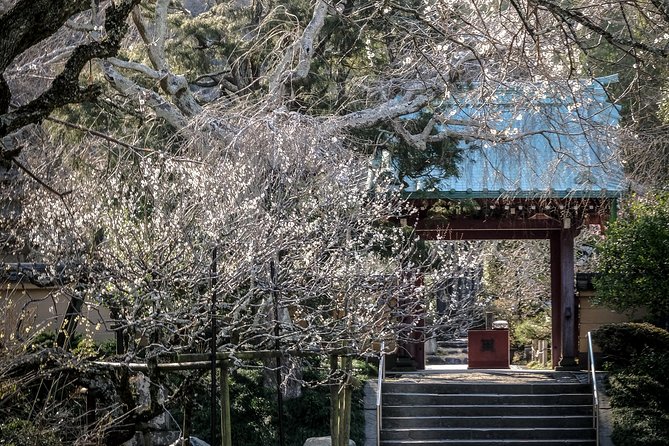
After the shrine, the group spends about 50 minutes on Kamakura Komachidori. This famous shopping street is lined with stalls and shops selling sweets, snacks, and souvenirs.
Komachidori gives the tour a welcome change of pace. After the formal grounds of Tsurugaoka Hachimangu, you see how Kamakura functions as a popular town today. It is a good place to notice local eating habits, browse small purchases, or pick up a snack.
Food and drinks are not included, so this is the natural point to spend your own money if you want something to eat. Lunch is also not included. One helpful detail from the tour experience is that a guide may help you find a meal, including soba, but you should treat that as part of the flexible day rather than a promised meal stop.
The drawback is simple: a shopping street can be crowded and distracting. If your main goal is quiet religious sites, 50 minutes here may feel long. If you enjoy trying snacks and seeing ordinary commercial life, it adds balance to the historical stops.
Public transportation to the Great Buddha
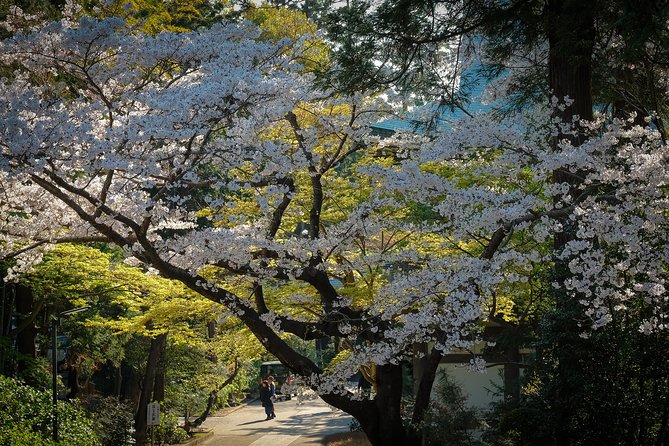
The tour continues toward Hase, and transportation between attractions is not included. The guide can help navigate public transportation, which is useful if you are not familiar with the local system, but you should plan for this part of the day as a separate expense.
The route finishes at Hase Station, so the direction makes sense. You are not sent back to Kamakura Station after reaching the western side of town. From Hase, you can continue independently on the Enoden Line.
Because the experience combines walking with local transit, wear comfortable shoes and leave a little energy for the final temple. The schedule is carefully packed: 20 minutes, 50 minutes, 50 minutes, 40 minutes, and 80 minutes add up to four hours.
The Great Buddha of Kamakura
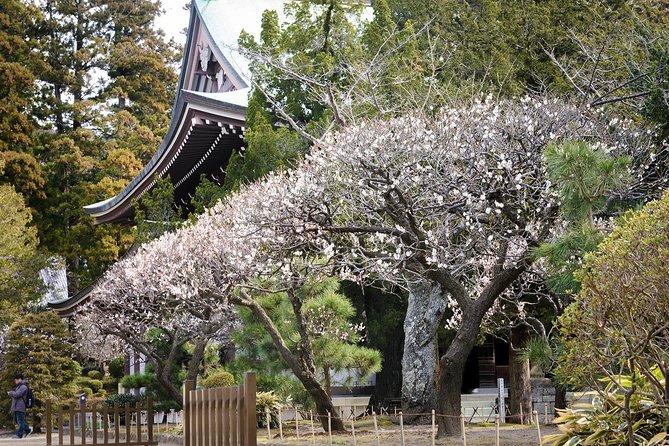
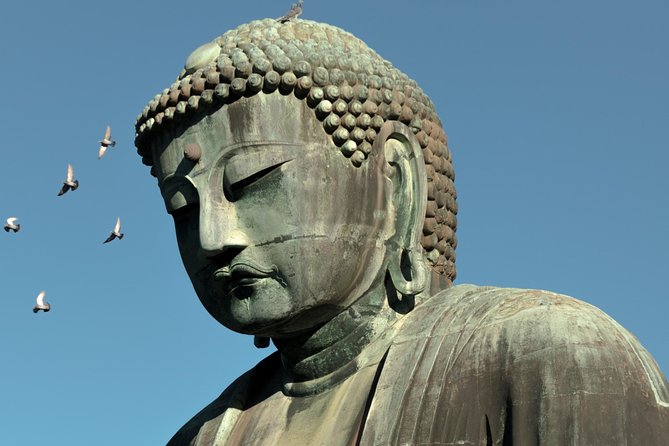
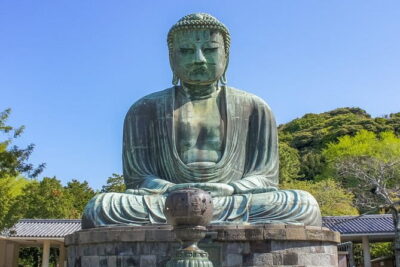
Kotoku-in is home to Kamakura’s famous Great Buddha, a huge bronze statue of Amida Buddha dating from the 13th century. The planned visit lasts about 40 minutes.
This is one of the clearest visual symbols of Kamakura. The statue is large enough to make an immediate impression, but the guide’s historical explanation gives it more weight. You can connect the image of Amida Buddha with the religious changes taking place during the age of the shoguns and the rise of new Buddhist movements.
Admission is not included. The supplied information does not give the current entrance fee, so check the amount when you book or arrive. The extra ticket is worth considering when comparing the total cost of the experience.
Forty minutes is enough for a focused visit, though it may not satisfy someone who wants a long, unhurried stop for detailed photography. The advantage is that the tour keeps moving and still leaves time for Hasedera, the final and longest visit.
Hasedera’s gardens, caves, and Kannon
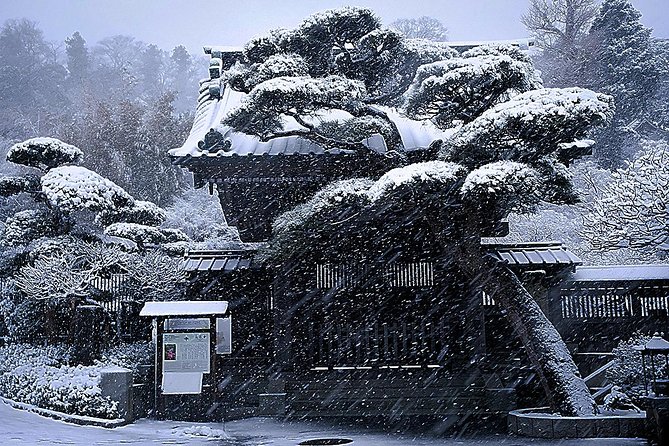
The final stop is Hasedera, with about 80 minutes planned. This Buddhist temple spreads across several levels and includes gardens, ponds, caves, and an ancient 11-headed statue of Kannon, the Goddess of Mercy.
This is the most varied stop on the route. You move through more than one type of space, from temple structures to planted grounds and cave areas. The change in height and the number of features make the visit feel fuller than a quick photo stop.
The 11-headed Kannon statue is the key religious object here. Virgil can help explain its meaning and place the temple within the wider story of Japanese Buddhism. The tour’s focus on the rise of Zen Buddhism makes this a useful point to ask how Buddhist practices and institutions developed during the Kamakura Period.
Admission is not included, and the grounds require walking across multiple levels. If you have limited mobility, contact the provider before booking because the available information says most people can participate but does not give a detailed accessibility plan.
The 80-minute allocation is sensible. Hasedera has enough to see that a short visit would feel thin, but the private format lets you spend your time according to your interests. You might focus on the statue and caves, linger in the gardens, or move through the grounds more quickly if your group has had a long day.
What the private format is really worth
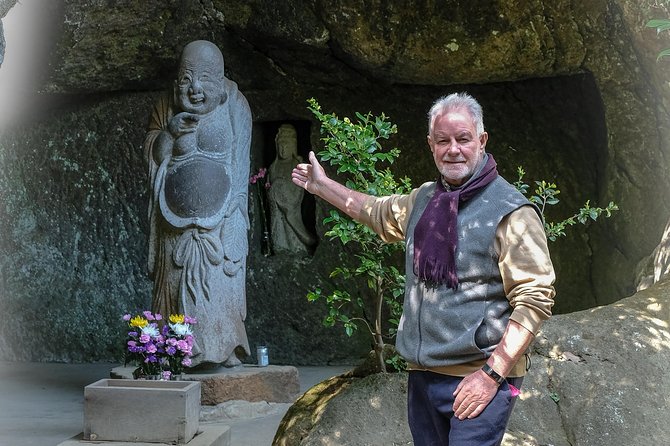
The biggest benefit of this tour is not simply having a guide at each sight. It is the freedom to shape the day around your group.
A solo visitor can ask constant questions without worrying about holding up strangers. A family can stop for photos or snacks. A group of friends can spend more time on samurai history and less time on shopping. The tour accepts groups of up to eight, so the per-person value improves when several people share the private experience.
The guide’s personal style also matters. Virgil has been praised for clear English, Spanish ability, patience, humor, and a strong command of Japanese history. He has handled rainy afternoons, busy Sundays, slow walkers, and visitors who got lost before meeting him.
That does not mean every moment will be perfectly calm. Kamakura can be crowded, the weather can change, and four hours goes quickly. The private format gives you flexibility, but it cannot remove crowds or shorten the distance between sites.
Is $108.99 a fair price?
At $108.99 per person, this is not the cheapest way to see Kamakura. You still pay separately for transportation, food, and the two attractions that charge admission.
The price makes more sense if you value context and convenience. You get a private guide, a photographer guide, and an escort for a route that covers the main historical sights. A group of up to eight can share that cost, while a solo visitor pays more for the same personal attention.
You are also paying for help making sense of the town. Without a guide, Tsurugaoka Hachimangu, the Great Buddha, and Hasedera can become a series of attractive but disconnected stops. With Virgil, the sites connect to the rise of shogun government, samurai culture, and Buddhist change.
I would compare this with the price of hiring a private guide for a similar half-day, then add the value of having someone take photos. If you are happy to read signs and explore independently, you may find the price high. If you want history explained in plain English and a flexible route, it is easier to justify.
Who should book this Kamakura tour?
This tour fits solo visitors, couples, families, and groups of up to eight who want a personal introduction to Kamakura. It is especially useful for a first visit, when you want to see the major places without spending time working out the route.
Families with older children and teenagers should do well because the day mixes shrines, shopping, food possibilities, a huge Buddha, caves, and gardens. Virgil’s patient approach also helps when younger members ask many questions or need a slower pace.
History fans will appreciate the focus on the Kamakura Period rather than a general sightseeing script. You should book it if you want to understand why Kamakura mattered, not just photograph its famous statue.
You may want another plan if you prefer a quiet, self-guided day, dislike walking, or want all entrance fees and meals covered in one price. The tour is active, and several costs remain separate.
Free cancellation is available up to 24 hours before the start time for a full refund. Changes or cancellations made less than 24 hours before the start are not accepted.
Should you book it?
Book this tour if you want Kamakura’s main sights tied together by a clear story, with a private pace and help taking photos. Virgil’s strength is the human side of guiding: history, questions, patience, and practical help with the route.
The best value comes when two or more people share the booking and care about historical context. For a solo visitor, the cost is harder to overlook, but the private attention and photography help balance it.
Bring comfortable shoes, budget for admissions and transit, and keep lunch flexible. If those details suit your plans, this is a thoughtful way to see Kamakura in four hours without reducing the town to a quick Great Buddha photo.
FAQ
How long does the Kamakura tour last?
The tour lasts approximately four hours.
Where does the tour begin?
It begins at Kamakura Station, located at 1-chōme-1-15 Onarimachi, Kamakura, Kanagawa 248-0012, Japan.
Where does the tour end?
It ends at Hase Station on the Enoden Line, at 2 Chome-14 Hase, Kamakura, Kanagawa 248-0016, Japan.
Is this a private tour?
Yes. Only your group participates, with group sizes ranging from one person to as many as eight people.
Are admission tickets included?
Admission is not included for Kotoku-in, home of the Great Buddha, or Hasedera Temple. The listed stops at Wakamiya Main Street, Tsurugaoka Hachimangu Shrine, and Kamakura Komachidori have no admission charge listed.
Is transportation included?
Transportation to and from the attractions is not included. The route uses public transportation between parts of Kamakura, and the guide can help with that process.
Can I cancel for a full refund?
Yes. You can cancel at least 24 hours before the experience start time for a full refund. Cancellations or changes made less than 24 hours before the start are not accepted.
Just added around Kamakura
- First time in Kamakura? Enjoy a Tour of All Must-sees!★ 5.0 · 15 reviews
- Your Own HANKO Name Seal Activity in Kamakura.★ 5.0 · 24 reviews
- Kamakura Tours Half Day or Full Day Tours with a local guide.★ 5.0 · 12 reviews
- Buddha, Bamboo & Zen – Bespoke Kamakura Private Walking Tours★ 5.0 · 25 reviews
- Exciting Kamakura – One Day Tour from Tokyo★ 5.0 · 40 reviews
- Kamakura Bamboo Forest and Great Buddha Private Tour★ 5.0 · 12 reviews
- Tokyo Yokohama Night View Tour With Kamakura And Enoshima★ 3.5 · 14 reviews
- Tokyo: Day Trip to Kamakura in Spanish – Spanish★ 4.9 · 22 reviews
Kamakura Tours, compared.
Kamakura & Enoshima Day Trip including Temple Tickets
Our verdict →
Kamakura Historical Walking Tour with the Great Buddha
Our verdict →
Kamakura 8 hr Private Walking Tour with Licensed Guide from Tokyo
Our verdict →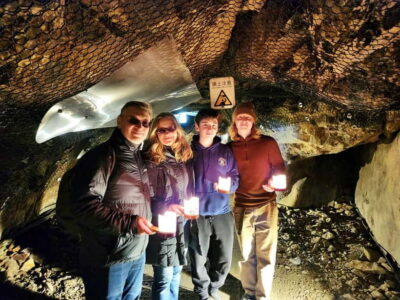
Kamakura Private & Customizable Tour – All-in-One Experience
Our verdict →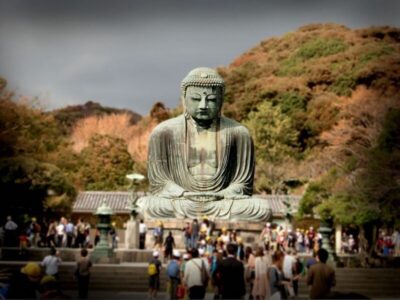
First time in Kamakura? Enjoy a Tour of All Must-sees!
Our verdict →Browse the lists this tour appears in