
Reviewed · KAMAKURA TOURS
Exciting Kamakura – One Day Tour from Tokyo
Kamakura gives you a sharp change of pace from Tokyo: bronze Buddhas, wooded temple grounds, ocean views, and a town shaped by samurai rule. This private day trip takes you to the Great Buddha, Hase-dera, Hokokuji’s bamboo grove, and Tsurugaoka Hachimangu Shrine without making you sort out the route alone.
I like two things especially. First, a guide meets you in your hotel lobby and helps with trains, buses, tickets, and directions. Second, the private format lets you ask questions, adjust the pace, and get practical help, such as finding gluten-free food or a good local noodle shop. The main drawback is the pace: you will walk a lot, ride several trains and buses, and pay transportation and entrance fees separately.
Key points to know before booking
- The Great Buddha is only one part of the day: You also visit Hase-dera, Hokokuji Temple, and Tsurugaoka Hachimangu Shrine.
- Your guide handles the navigation: Guides such as Akira, Yumi, Yoshi, and Kono-san have helped visitors manage Tokyo stations, Kamakura trains, buses, and local streets.
- Hase-dera is the seasonal highlight: Its hillside setting, ocean view, cave shrine, and hydrangeas make it especially appealing in June and July.
- Hokokuji offers a different temple experience: The compact bamboo grove and tea house provide a quieter change from Kamakura’s larger sights.
- Plan for a full day on your feet: Each principal stop is allocated about an hour, but transport and walking fill out the roughly 8.5-hour schedule.
- Check the extra costs carefully: The advertised price is $145.31 per person, while transportation and temple admission are not included.
Why Kamakura works so well as a Tokyo day trip
Kamakura was Japan’s capital from the late 12th century into the 14th century. That period left the town with temples, shrines, and links to the warrior government that ruled Japan from here.
You feel the contrast as soon as the city gives way to a smaller coastal setting. Tokyo is about scale and speed. Kamakura is about gates, stone paths, wooded hills, small lanes, and places of worship that still shape the town’s daily rhythm.
Doing this independently is possible, but the day involves more than simply boarding one train. You may need to manage Tokyo’s major stations, local rail connections, buses, and walking routes between sites. A private guide removes much of that mental work.
The guides featured by name in guest feedback include Akira Kamada, Yumiko Sano, Yoshi, Yoshio, Kono-san, Hideaki Murayama, and Yumi. Their styles can differ, so your experience will depend partly on who is assigned. Strong guides have helped with train tickets, explained the political and religious background of each site, taken family photographs, recommended lunch, and adjusted for food allergies.
That personal help is the central value of this tour. You are not buying admission to a single attraction. You are paying for a day of orientation in a place where the sights are spread across town.
More Day Trips in Kamakura:
- Tokyo: Kamakura & Enoshima Day Trip including Temple Tickets
★ 4.5 · 1,375 reviews - From Tokyo: Kamakura & Enoshima 1-Day Bus Tour
★ 4.5 · 189 reviews - Tokyo: Day Trip to Kamakura in Spanish – Spanish
★ 4.9 · 22 reviews
Meeting your guide and making the Tokyo to Kamakura trip
The tour begins at 9:00 am, with the meeting in your hotel lobby. Pickup and drop-off are included as a service, but your transportation cost is not. The stated transportation estimate is about ¥2,720 per person.
In practice, the day uses public transportation. Several guides have met groups at their hotels, then helped them through Tokyo stations, onto the train to Kamakura, and onward by local buses. That is especially useful if this is your first time using Japan’s rail system or if your group is unsure how to use its transit cards.
One guide helped a group add money to Pasmo cards. Another prepared a typed schedule before departure. Those are small touches, but they matter when you are trying to keep a long day moving.
The train ride takes roughly an hour to an hour and a half, depending on the route and connections. Do not think of that time as wasted. It is part of the experience, and your guide can explain what you will see and how the day fits together.
You should still arrive ready to walk. One particularly useful warning is simple: expect a high step count. This is not a seated sightseeing tour, and the route includes temple grounds, roads, station platforms, stairs, and bus stops.
Kotoku-in and Kamakura’s Great Buddha
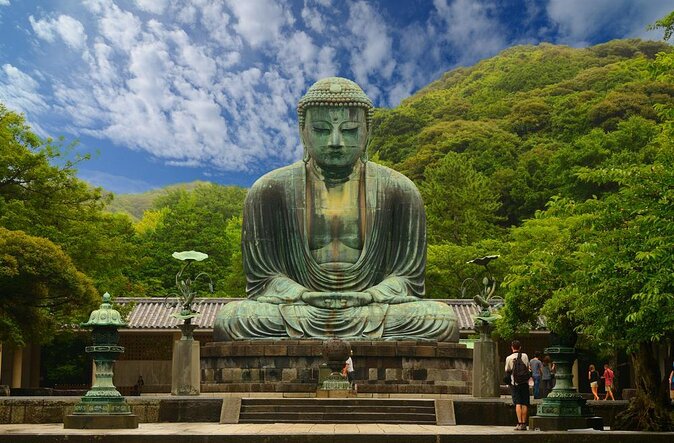
The day’s most famous sight is the bronze Buddha at Kotoku-in. Built in the 13th century, the statue is Kamakura’s landmark and the image most closely linked with the town.
The statue is impressive because it sits outdoors rather than inside a grand hall. You can take time to look at its scale, the calm expression, and the way the surrounding temple grounds frame it. The stop is usually planned for about an hour.
Admission is not included. The supplied information gives conflicting figures: the stop description says ¥300, while the cost details list ¥1,100. Check the current amount at booking or before your visit so your budget is accurate. The information also indicates that you may be able to enter the Buddha itself, an unusual option that is not ideal for anyone uncomfortable in tight spaces.
Kotoku-in can feel busy because it is Kamakura’s best-known attraction. That is not a reason to skip it. It is the one sight here that gives you an instant sense of why Kamakura appears on so many Tokyo day-trip plans.
Your guide adds value by placing the statue in its period. Instead of seeing only a large bronze figure, you learn why it became associated with Kamakura and the warrior government that developed here.
Hase-dera for gardens, ocean views, and hydrangeas
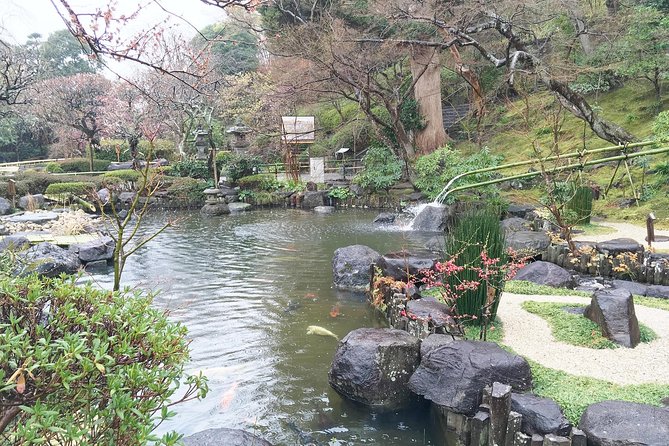
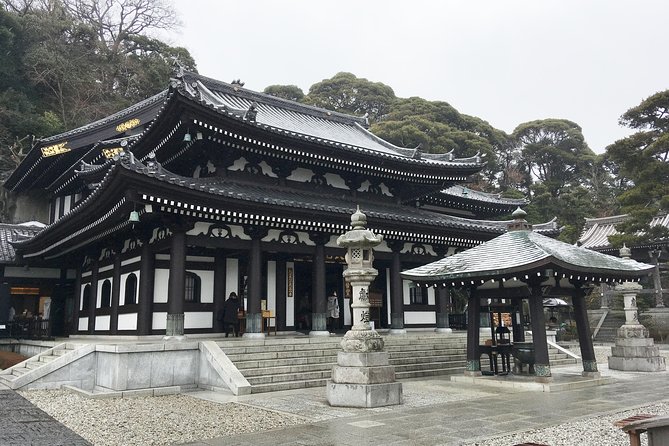
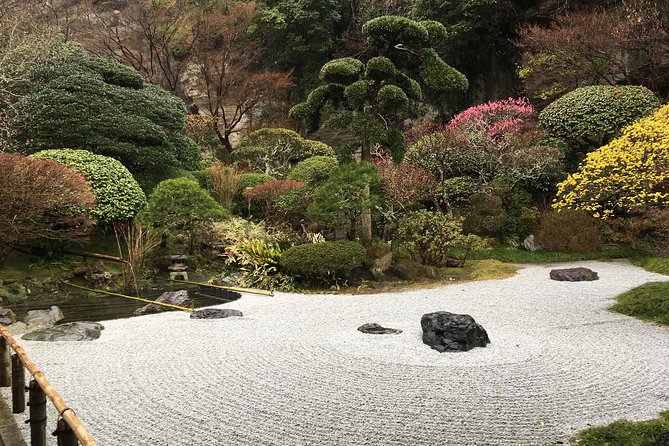
Hase-dera is more varied than Kotoku-in. The temple was built in the eighth century and includes a Japanese garden, Buddhist statues, a cave shrine, and a hillside view toward the Pacific Ocean.
The setting makes this a good place to slow down. You move from one type of sight to another rather than spending the whole hour looking at a single monument. The garden offers a gentler pause, while the higher viewpoints open the scene toward the water and surrounding town.
June and July bring one of Hase-dera’s biggest seasonal draws: hydrangeas. If you visit during their bloom, the flowers add color to the temple paths and hillside. The exact display depends on timing and conditions, but summer visitors should allow enough time to enjoy it rather than treating Hase-dera as a quick photo stop.
The cave shrine gives the temple another point of difference. It is a more enclosed, intimate space than the open grounds at Kotoku-in, and it helps show the range of religious sites in Kamakura.
Admission is separate. The stated fee is ¥400, which is straightforward compared with the conflicting Kotoku-in figures. The planned visit lasts about an hour, though you may want more time if gardens, flowers, and views are your priority.
Several guides have also recommended local restaurants after or around this stop. Lunch is not included, but the private format allows your guide to help find a place that fits your interests or dietary needs. One guide found a suitable restaurant for a guest with a food allergy, and another helped a group locate gluten-free food.
A few more Kamakura half-days worth comparing
- Kamakura Historical Walking Tour with the Great Buddha
★ 5.0 · 129 reviews - Kamakura Private Tour: Temples, Nature, and the Great Buddha
★ 5.0 · 121 reviews - Kamakura Walking Tour – The City of Shogun
★ 5.0 · 100 reviews - Kamakura 8 hr Private Walking Tour with Licensed Guide from Tokyo
★ 5.0 · 80 reviews
Hokokuji Temple and its compact bamboo grove
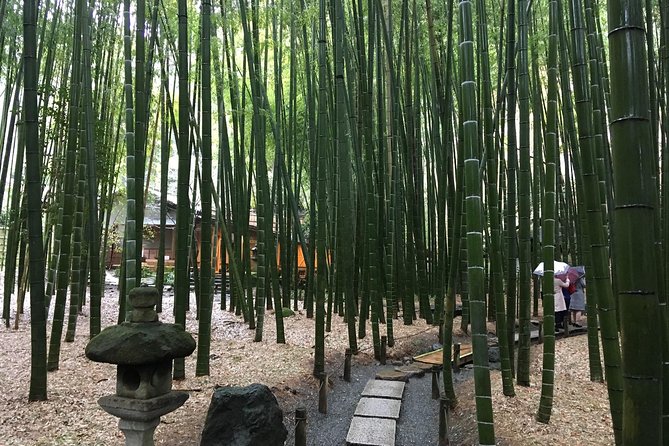
Hokokuji Temple provides the day’s clearest change of mood. The temple dates from the 14th century and is known for its bamboo grove. It is smaller and more focused than Hase-dera, but that is precisely why it works well in this sequence.
The bamboo path is not a giant forest. Think of it as a compact, carefully tended section that creates a cool, quiet corridor. It offers a break after the larger crowds and open views at the earlier stops.
A tea house is associated with the bamboo setting, and one group described ending the day’s temple visits there. Tea service is not included in the tour details, so treat it as an optional purchase rather than part of the price.
Admission is listed as ¥400 in the stop details and ¥300 in the cost section. As with Kotoku-in, confirm the current fee before setting your budget. This small inconsistency is worth checking because three paid temple visits add to the day’s expense.
Hokokuji is a good fit if you want photographs, quiet paths, and a temple experience that feels different from the Great Buddha. If you prefer grand buildings and major historical monuments, you may find the stop less essential. Your guide can help you understand why it is included and keep the visit from feeling like a rushed walk through bamboo.
Tsurugaoka Hachimangu and the warrior past
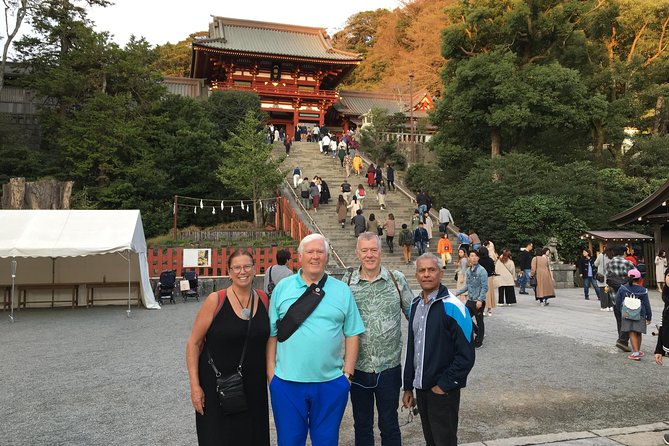
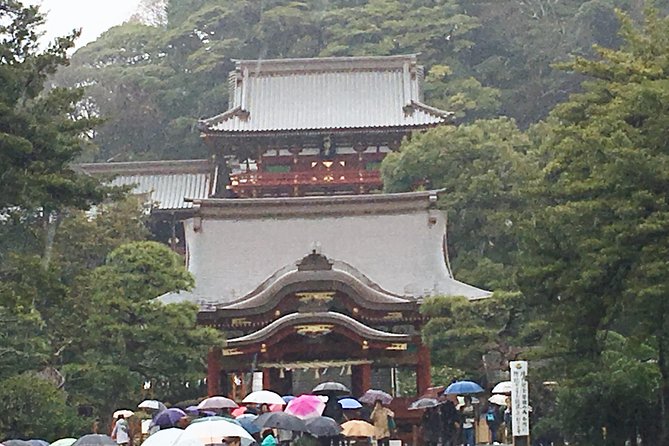
Tsurugaoka Hachimangu Shrine gives the day its strongest connection to the samurai era. It served as the official guardian shrine of the Kamakura shogunate and was associated with warriors and military power.
The approach and grounds make this a different experience from the Buddhist temples. Here, the focus is a Shinto shrine, its ceremonial spaces, and the role religion played in the political life of Kamakura.
The shrine has no admission fee, which helps balance the paid temple stops. Allow about an hour. You may also see natural features such as lotus ponds and carp, details that can make the grounds feel peaceful even when the main approach is active.
This is the stop where a good guide can make the largest difference. The buildings alone do not explain how Kamakura’s religious institutions connected to the shogunate. Ask questions about the warrior government, the shrine’s role, and the difference between Buddhist temples and Shinto shrines.
Lunch, food needs, and the private-tour advantage
Lunch is not included, but that is not necessarily a weakness. You are not locked into a fixed restaurant or menu, and the guide can help you choose based on what you want to eat.
Guides have recommended noodles, okonomiyaki, local restaurants near the main station, and Buddhist vegetarian food. One guest particularly valued a vegetarian meal at a restaurant connected with the Hase-dera area, while another group enjoyed okonomiyaki in a small local restaurant.
If you have allergies or follow a special diet, tell the operator ahead of time and remind your guide at the start. The private setting has helped guides search for gluten-free food and accommodate a guest with allergies, but the tour does not promise meals or dietary arrangements.
The private format also helps families. A guide can take photographs, slow down for a child, explain unfamiliar customs, or help with a goshuincho, the book used to collect temple and shrine stamps. One family particularly valued assistance with having its book stamped at each stop.
Pace, walking, and guide style
The tour has a strong 4.9 rating from 40 reviews and is recommended by 98 percent of guests. The most consistent praise goes to the guides’ punctuality, care with transportation, historical explanations, patience, and help with local food.
Akira receives especially warm attention for his organized approach and clear explanations. Yumi is praised for kindness, flexibility, and good food suggestions. Yoshi has been described as friendly and calm while still keeping the group on schedule. Kono-san has helped with transit, dietary needs, and the main sights.
The experience is not identical with every guide. One guest found a guide’s English limited, while another felt the guide walked too quickly and followed a prepared script too closely. Those comments are important because communication and pace affect a private tour more than they affect a bus excursion.
At booking, it is sensible to state your preferred walking speed, language needs, and interest in asking questions. If you want detailed cultural discussion, say so. If you need frequent breaks, say that too. The tour requires moderate physical fitness, and children must be accompanied by an adult.
What the $145.31 price really covers
The listed price is $145.31 per person. For a private, full-day experience with hotel-lobby meeting, a professional guide, transit assistance, four major Kamakura stops, and return help, that can be fair value for a first visit.
But the headline price is not your full day’s cost. Transportation is estimated at ¥2,720 per person. Entrance charges are extra, including Kotoku-in, Hase-dera at ¥400, and Hokokuji at either ¥300 or ¥400 depending on which supplied figure is current. Lunch and optional tea are also separate.
The value is strongest for couples, families, and small groups that would lose time or confidence navigating alone. Group discounts may improve the price for larger parties, but the exact discount is not provided.
You receive the most value if you want context and efficient routing. If you are comfortable with Japanese trains, buses, and temple research, you can spend less by going independently. You will also need to make your own decisions about which sites to skip.
Free cancellation is available up to 24 hours before the start time. Changes or cancellations inside that window are not accepted for a refund.
Who should book this Kamakura day trip?
I would choose this tour if Kamakura is a priority but you have only one day from Tokyo. It suits first-time visitors, families, older adults who want help with transport, and anyone who prefers asking questions as the day unfolds.
It is also a good match for guests with food concerns or a strong interest in history, provided they communicate those needs early. The private format gives you more flexibility than a large group outing.
I would think twice if you dislike public transportation, long walking days, or a schedule built around four major stops. The tour is not a relaxed seaside stroll. It is an active sightseeing day with a lot of ground to cover.
Should you book it?
Book this Kamakura tour if you want the Great Buddha, Hase-dera, Hokokuji, and Tsurugaoka Hachimangu in one organized day, with a guide to manage the practical details. The best guides, including Akira, Yumi, Yoshi, and Kono-san, add real value through history, transit help, photographs, food suggestions, and patience.
Before paying, confirm the current entrance fees, explain any language or mobility concerns, and understand that transportation and lunch cost extra. If you accept the walking and the public transit, this is a useful, personal way to see Kamakura without spending your limited Tokyo time lost between stations.
FAQ
How long does the Kamakura tour last?
The experience lasts approximately 8 hours and 30 minutes. It begins at 9:00 am.
Where do I meet the guide?
You meet the guide in your hotel lobby. Pickup and drop-off service is offered as part of the experience.
Is this a private tour?
Yes. Only your group participates, and a professional guide leads the private activity.
Which Kamakura sights are included?
The planned stops are Kotoku-in and the Great Buddha, Hase-dera Temple, Hokokuji Temple, and Tsurugaoka Hachimangu Shrine.
Are entrance fees included?
No. Entrance fees are separate. The supplied information lists fees for Kotoku-in, Hase-dera, and Hokokuji, but the Kotoku-in and Hokokuji amounts differ between the provided details, so confirm current prices before visiting.
Is transportation included in the tour price?
No. Your transportation cost is estimated at about ¥2,720 per person. The guide helps you navigate trains and local buses.
Is lunch included?
No. Lunch is not included. Guides can help suggest restaurants, including places suitable for noodles, okonomiyaki, vegetarian food, and some dietary needs.
How physically demanding is the tour?
You should have a moderate level of physical fitness. The day involves substantial walking, several train and bus rides, and time on your feet at temple and shrine grounds.
What is the cancellation policy?
You can cancel up to 24 hours before the start time for a full refund. Cancellations or changes made less than 24 hours before the experience are not accepted for a refund.
Just added around Kamakura
- First time in Kamakura? Enjoy a Tour of All Must-sees!★ 5.0 · 15 reviews
- Kamakura Tours Half Day or Full Day Tours with a local guide.★ 5.0 · 12 reviews
- Buddha, Bamboo & Zen – Bespoke Kamakura Private Walking Tours★ 5.0 · 25 reviews
- Your Own HANKO Name Seal Activity in Kamakura.★ 5.0 · 24 reviews
- Kamakura Bamboo Forest and Great Buddha Private Tour★ 5.0 · 12 reviews
- Tokyo Yokohama Night View Tour With Kamakura And Enoshima★ 3.5 · 14 reviews
- Tokyo: Day Trip to Kamakura in Spanish – Spanish★ 4.9 · 22 reviews
- Kamakura Temples Private Guided Tour from Tokyo★ 4.8 · 21 reviews
Kamakura Tours, compared.

Kamakura & Enoshima Day Trip including Temple Tickets
Our verdict →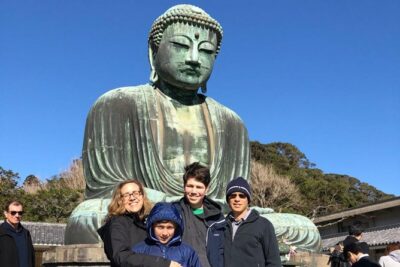
Kamakura Historical Walking Tour with the Great Buddha
Our verdict →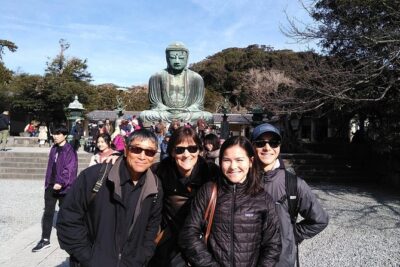
Kamakura 8 hr Private Walking Tour with Licensed Guide from Tokyo
Our verdict →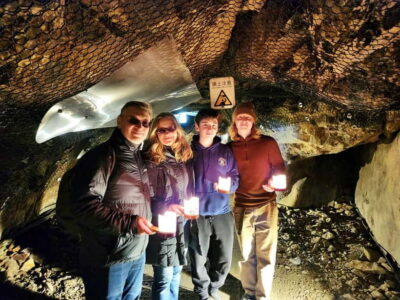
Kamakura Private & Customizable Tour – All-in-One Experience
Our verdict →
Browse the lists this tour appears in