
Reviewed · PEACE MEMORIAL TOURS
The Peace Memorial to Miyajima : Icons of Peace and Beauty
Hiroshima’s story is best understood beside its beauty, and this full-day outing joins the two in one carefully packed route. You’ll move from the quiet grounds of Peace Memorial Park and the sobering museum to Miyajima’s forested island, deer, traditional streets, and famous red shrine gate.
I like the small maximum of eight, which gives guides such as Ken, Kensuke, Yuka, and Kenny room to answer questions and adjust the pace. I also like the clear contrast between Hiroshima’s wartime history and Miyajima’s calm scenery. The tradeoff is public transportation: trams, buses, and a ferry are part of the day, so some time goes to transfers rather than sightseeing.
Key points to know
- Two very different halves: Hiroshima’s Peace Memorial sites come first, followed by Miyajima’s shrine, scenery, and deer.
- Small group of up to eight: You get more personal attention than on a large coach tour.
- Guides make a major difference: Ken and Kensuke Ohguchi receive especially strong praise for clear English, local insight, and careful timing.
- Public transport is built in: Tram, bus, and ferry fares are covered, but expect walking and connections.
- About $167.44 per person: The price makes the most sense if you want one day to cover both Hiroshima highlights and Miyajima.
- Plan for a full day: The tour begins at 8:30 a.m., lasts about eight hours, and ends at Hiroshima Station.
Hiroshima’s painful history, then Miyajima’s quiet beauty
This tour tackles Hiroshima in the right emotional order. You first spend time with the events of August 6, 1945, then move to Miyajima, where shrine architecture, water, mountain scenery, and deer offer a gentler second half.
That contrast is not just convenient. It helps you see Hiroshima as a living city rather than only a place defined by destruction. The morning asks for attention and respect. The afternoon gives you space to breathe.
The format suits you if you have only one day for both destinations. It is also useful if you want help with the local transport system. Your guide leads the way through the tram, bus, and ferry network, which can otherwise feel like a puzzle when you are watching the clock.
The day is not effortless. You will walk a lot, change vehicles, and spend much of the time on your feet. In hot weather, the long route can feel tiring. But the small group helps keep the pace more manageable than a large sightseeing bus.
More Peace Memorial Tours in Hiroshima:
- Hiroshima Historical Walking Tour – Why A-Bomb was Dropped
★ 4.8 · 893 reviews - Hiroshima: Miyajima Peace Memorial Icons of Peace and Beauty
★ 4.9 · 361 reviews - Hiroshima/Guided Virtual Tour of Peace Park/PEACE PARK TOUR VR
★ 5.0 · 157 reviews
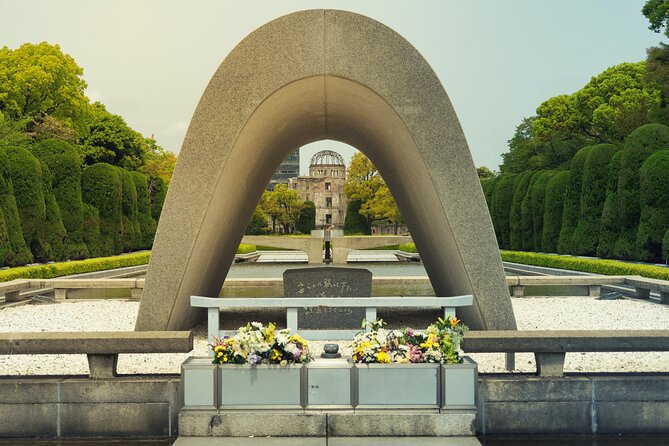
Peace Memorial Park: a quiet beginning
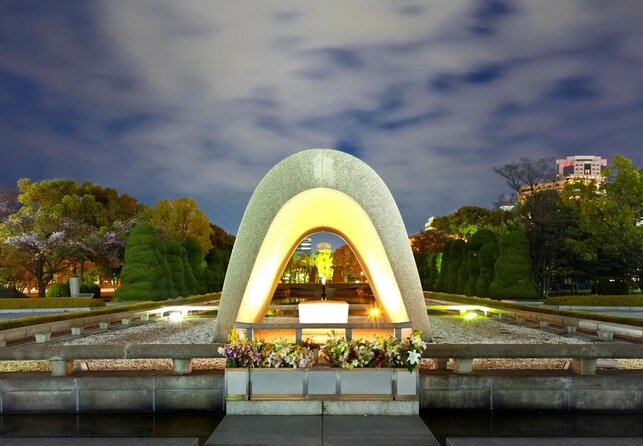
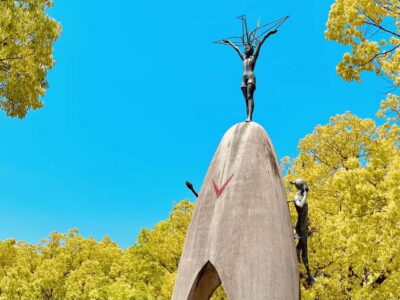
The first major stop is Hiroshima Peace Memorial Park, where you spend about two hours. The park’s greenery and waterways create a calm setting, but the calm is deliberate rather than casual. Each monument asks you to connect the peaceful surroundings with the terrible event the city remembers.
Your guide explains the key sites and gives the memorials their historical setting. This is where a good guide matters most. Names such as Ken and Kensuke Ohguchi come up often for their ability to explain difficult material in clear English and respond to individual questions.
A guide can also help you avoid rushing through the park. The schedule allows enough time to look, listen, and ask questions before entering the museum. That timing is one of the tour’s strengths. You are not simply dropped at a photo stop and hurried away.
The park is also where you should settle into the tone of the day. This is not a light sightseeing walk. Some parts may feel haunting, and you should allow yourself a little quiet time rather than treating every stop as a checklist.
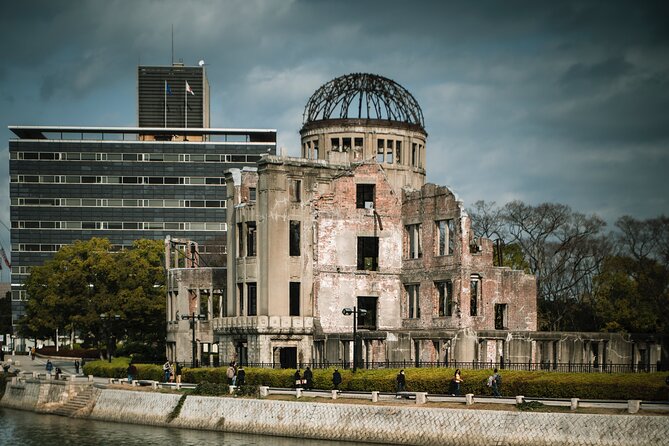
The Atomic Bomb Dome and a hard look at history
The Atomic Bomb Dome receives about 20 minutes. Admission is free, and the building is viewed from the outside as part of the park route.
The ruined structure is powerful because it is so direct. You do not need a long presentation to understand that this preserved shell is tied to August 6, 1945. Your guide can explain its place in Hiroshima’s memory and its UNESCO World Heritage status, while you have time to take in the building without a long formal visit.
Twenty minutes is enough for orientation and photographs, but not for an extended stop. That is appropriate here. The Dome works best as part of the larger Peace Memorial Park experience, not as an isolated attraction.
You may find this one of the most emotionally difficult moments of the day. The tour does not treat it as a cheerful photo opportunity, and you should expect the guide to keep the tone respectful.
One hour inside the Peace Memorial Museum
The Peace Memorial Museum gets about one hour, with admission included. This is the most information-heavy part of the morning, and it gives context to what you have just seen outdoors.
The exhibits address the events of August 6, 1945 and their human cost. You should expect a serious visit, not a quick museum sweep. Personal belongings, photographs, and accounts make the subject feel immediate, so give yourself room to pause.
One hour is useful but limited. If you like to read every panel in a museum, you may want more time than the schedule provides. The benefit of joining this tour is that your guide helps set the context before you enter and keeps the morning moving so Miyajima remains possible.
That balance is important. A private visit to Hiroshima’s memorial sites could easily fill half a day or more. This tour gives you a guided introduction, then adds Miyajima in the same outing. You gain breadth, but you give up the freedom to linger at every exhibit.
A few more Hiroshima half-days worth comparing
- Peaceful Hiroshima & Miyajima UNESCO 1 Day Bus Tour
★ 5.0 · 5,309 reviews - Hiroshima: Hiroshima and Miyajima UNESCO Sites 1-Day Tour
★ 4.9 · 2,330 reviews - Hiroshima / Miyajima Full-day Private Tour with Government Licensed Guide
★ 5.0 · 1,298 reviews - Osaka/Kyoto: Hiroshima Miyajima Bus Tour & Shinkansen Ticket
★ 4.7 · 919 reviews
The transport connection to Miyajima

After the museum, the route continues by public transportation toward Miyajima. Tram, bus, and ferry fares are included, so you do not need to budget separately for the standard transport used during the tour.
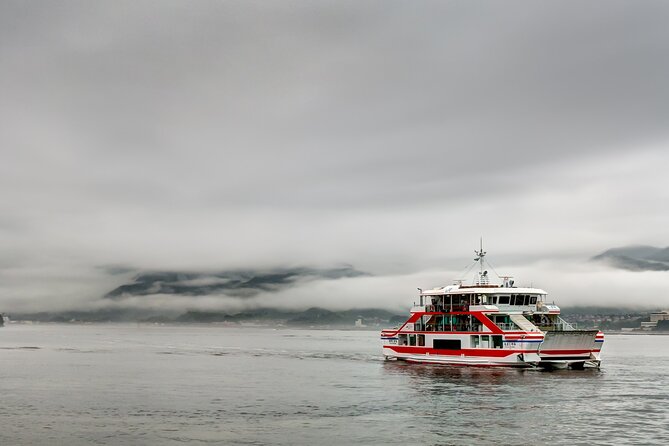
This is also the part that requires the most patience. The route can involve several connections, and one reported concern was that reaching the public ferry from the museum took two train connections. Smaller sightseeing boats leave closer to the museum and can be quicker, but they may not run in poor weather or at low tide, and they can sell out.
The public ferry is less glamorous than a private cruise, but it is a dependable way to reach the island when conditions allow. You should view the transfer as part of the practical cost of combining two destinations in one day, not as a scenic cruise included for its own sake.
Your guide’s role becomes especially useful here. Ken has helped people navigate the rail system and even offered practical assistance with onward train arrangements. Kenny has also been described as flexible about the final drop-off when the planned end point did not suit the group.
Still, do not book this tour expecting a private vehicle or a door-to-door ride. Private car options generally cost much more, while large bus tours may offer less personal attention. This tour sits between those choices: a small group, shared transport, and a guide who handles the route.
Miyajima: deer, streets, and island scenery
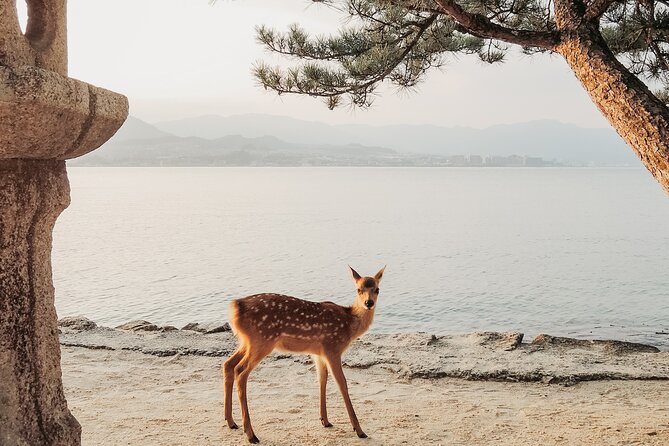
You have about two hours on Miyajima before the shrine visit, though the precise flow depends on transport and group timing. The island is known for traditional architecture, red maple trees, friendly deer, and its striking relationship between water, shrine buildings, and surrounding hills.
This part of the tour feels like a reset after the morning. You can walk through the streets, take photographs, and enjoy the island’s atmosphere without losing the historical focus of the day.
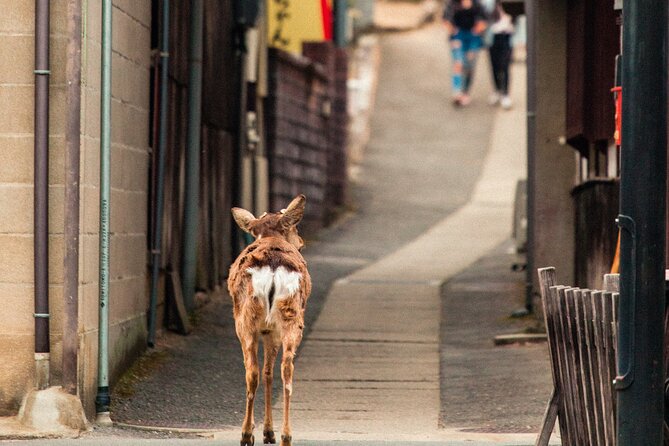
The deer are part of the appeal, especially if you have seen similar animals in Nara. They add a playful note, but the main draw is the combination of natural scenery and old religious architecture. You might also find local food and sweets along the way, though lunch is not included and you should plan to pay for it yourself.
The two-hour window is enough to get a sense of Miyajima, but it is not a full island exploration. You will not have unlimited time for every lane, shop, viewpoint, or optional walk. If Miyajima is your main reason for visiting Hiroshima, a separate half-day or full-day visit would give you more freedom.
For a one-day overview, though, the stop works well. You see the island’s central sights without having to arrange the ferry, shrine admission, and local route on your own.
Itsukushima Shrine and the floating gate
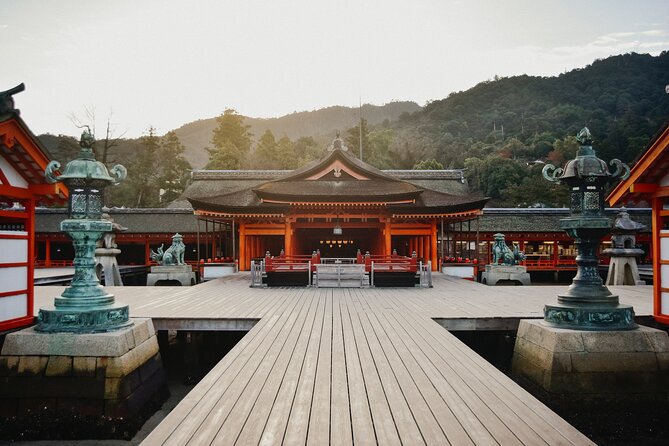
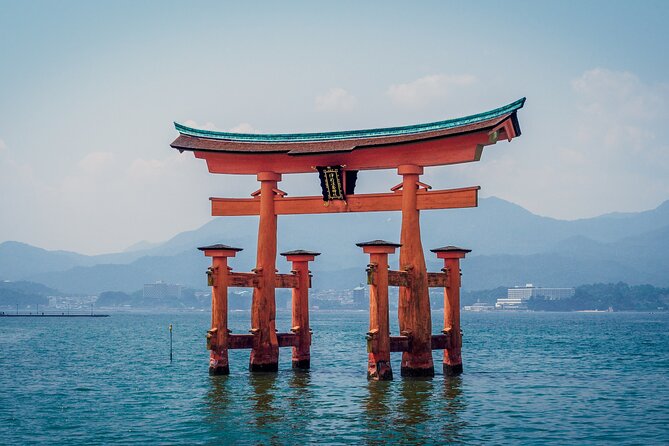
The final major sightseeing stop is Itsukushima Shrine, with about 90 minutes and admission included. This is the visual high point for many people on the tour, especially when the red shrine buildings and gate are reflected in the water.
The shrine’s design makes the island feel unlike an ordinary town visit. Buildings appear to extend over the water, and the famous red gate gives the setting its most recognizable image. Your guide introduces the religious and cultural meaning of the site while allowing time to look around at your own pace.
Conditions matter here. The appearance of the gate and shrine changes with tide and weather, and the tour description specifically notes that the activity requires good weather. If poor weather forces cancellation, you are offered another date or a full refund.
Itsukushima is also where the day’s pacing becomes clear. You arrive after a morning of serious history and a transport-heavy connection. The shrine gives you a rewarding final chapter, but you may be tired by the time you get there. Comfortable shoes and a reasonable fitness level are important.
What the guides add to the day
The strongest part of this experience is the guide, not a special vehicle or exclusive access. Ken and Kensuke Ohguchi are particularly associated with clear historical explanations, strong local knowledge, friendly conversation, and careful attention to the group.
Kensuke has been praised for explaining the monuments, judging how long to spend in the museum, and giving each member of a small group attention. Ken is described as fluent in English, easy to talk with, and well prepared for the transport connections. Yuka Yoshida is also noted for her understanding of the sites and for making the Miyajima portion especially enjoyable.
There is one important caution. Guide quality can vary, and one poor experience involved a guide whose English was considered insufficient. That appears to be an exception rather than the usual pattern, given the overall rating of 4.7 from 31 ratings and a 94 percent recommendation rate, but it is fair to keep the possibility in mind.
The small group helps. With no more than eight people, the guide can answer questions, adjust the walking pace, and keep track of everyone during transfers. A group of seven has been managed successfully, but you should still stay close when changing trains or boarding the ferry.
Is $167.44 a fair price?
At $167.44 per person, this is not a budget walking tour. The price includes the guide, public transportation fares, museum admission, and Itsukushima Shrine admission. Lunch is extra.
The value comes from combining two major destinations in eight hours. If you had limited time in Hiroshima, the tour could save you substantial planning effort. You get the Peace Memorial Park, Dome, museum, Miyajima, and shrine in one day, with someone else handling the route.
The price is harder to justify if you are staying several days and feel comfortable using Japanese public transportation. You could spend more time at the museum, choose a faster boat when available, or explore Miyajima at your own pace.
I would compare it with the alternatives. A private car tour offers more comfort and less time changing vehicles, but generally costs at least twice as much. A large bus tour may cost less, but it gives you less flexibility and a less personal guide experience.
This small-group option is a middle ground. You pay for structure, local help, admissions, and a maximum of eight people. It is good value for a first-time visit with limited time, less so for an independent visitor who wants long, unhurried museum time.
Practical details before you book
The meeting point is the 7-Eleven Hiroshima Motoyasubashi East Store at 1-chome-5-20 Otemachi. The tour starts at 8:30 a.m. and ends at Hiroshima Station, where drop-off is in central Hiroshima.
Wear comfortable shoes. The itinerary includes park paths, museum walking, station connections, a ferry, Miyajima streets, and shrine grounds. A moderate fitness level is required, and hot weather can make the day feel longer.
Bring money or a payment method for lunch, since it is not included. Mobile tickets are available, group discounts may be offered, and confirmation arrives at booking.
Free cancellation is available up to 24 hours before the start time. Changes or cancellations inside that window are not accepted for a refund. Since good weather is required, a weather cancellation brings the choice of another date or a full refund.
Who should book this Hiroshima day tour?
I would choose this tour if you have one free day, want both Hiroshima and Miyajima, and prefer a guide to manage the transport. It is especially useful for first-time visitors, history-focused travelers, and anyone who values a small group over a large coach.
I would think twice if you want a slow museum visit, dislike public transportation, or plan to spend most of the day taking photographs on Miyajima. The tour covers a lot, but that means you must accept a firm schedule and plenty of walking.
The best reason to book is the pairing itself. Hiroshima’s memorial sites and Miyajima’s shrine are very different, yet they belong in the same regional visit. With a strong guide such as Ken, Kensuke, Yuka, or Kenny, the day can feel personal rather than mechanical.
FAQ
How long does the tour last?
The tour lasts approximately eight hours and begins at 8:30 a.m.
Where does the tour start?
It starts at the 7-Eleven Hiroshima Motoyasubashi East Store, 1-chome-5-20 Otemachi, Naka Ward, Hiroshima.
Where does the tour end?
Drop-off is at Hiroshima Station in central Hiroshima.
How many people can join the tour?
The maximum group size is eight people.
Are transportation fares included?
Yes. Public transportation fares for the tram, bus, and ferry are included.
Is lunch included?
No. Lunch is not included in the tour price.
Are admission tickets included?
Admission to Hiroshima Peace Memorial Park activities, the Peace Memorial Museum, and Itsukushima Shrine is included. The Atomic Bomb Dome has no admission fee.
How much walking is involved?
You should expect a good deal of walking and need a moderate level of physical fitness.
What happens if bad weather cancels the tour?
If poor weather causes cancellation, you can choose another date or receive a full refund.
Just added around Hiroshima
- Full Day Hiroshima and Miyajima Tour by Bullet Train from Kyoto★ 4.5 · 120 reviews
- Hiroshima Saijo Sake Tasting Tour with visit to 7 Breweries★ 5.0 · 104 reviews
- Shore Excursion from Hiroshima Port : Private Tour in Hiroshima★ 5.0 · 17 reviews
- Okunoshima Rabbit Island Cycling Tour with Local Guide★ 4.5 · 17 reviews
- Hiroshima & Miyajima All-Inclusive Tour w/Licensed guide Pancho★ 5.0 · 54 reviews
- Private Full Day Hiroshima Tour★ 4.5 · 29 reviews
- Hiroshima Country Cycling: Explore Rural Life 1 HR from City★ 5.0 · 22 reviews
- Hiroshima Private Tour with a Local – Highlights & Hidden Gems★ 4.5 · 24 reviews
Peace Memorial Tours, compared.
Hiroshima Historical Walking Tour – Why A-Bomb was Dropped
Our verdict →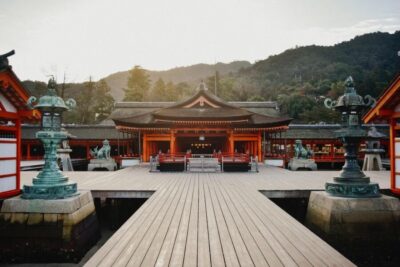
Hiroshima: Miyajima Peace Memorial Icons of Peace and Beauty
Our verdict →Browse the lists this tour appears in