
Reviewed · TEA CEREMONY EXPERIENCES
An Amazing set of Cultural experience: Kimono, Tea Ceremony and Calligraphy
Miyajima is known for its shrine and famous torii, but this small-group cultural experience takes you into a quieter side of the island. At Tokujuji Temple, you’ll put on a kimono, learn the careful manners of tea preparation, make your own matcha, and try Japanese calligraphy.
I like the warm, hands-on format, especially the staff’s help with choosing the kimono and taking plenty of photos. I also like the mix of activities: the tea ceremony gives you quiet observation, while calligraphy lets you make something with your own hands. The main consideration is timing. The activity is advertised as about 1 hour 30 minutes, while the itinerary information allows closer to two hours, so leave room in your Miyajima plans.
What makes this Miyajima experience worth your time
- Kimono dressing with help from the staff: Choose from available sizes and styles, then add socks, an obi, cords, and decorative flowers.
- A tea ceremony you can take part in: Watch the traditional movements, learn the manners, and whisk your own matcha.
- Calligraphy with a personal souvenir: Practice kanji and names, then have your work wrapped on a wooden spoon.
- Photos in the temple setting: Staff members take pictures throughout the experience, including family and group shots.
- A small group of no more than eight: This allows more personal attention than a large cultural demonstration.
- Easy access from the ferry: Okeiko Japan Miyajima is about a five-minute walk from the Miyajima ferry port toward Tokujuji.
Arriving from the Miyajima ferry port
The meeting point is Okeiko Japan Miyajima, at 741-1 Miyajimachō, Hatsukaichi, Hiroshima 739-0588. From the ferry port, walk for about five minutes in the direction of Tokujuji Temple.
That short walk matters. You do not need to arrange a taxi or search for a remote meeting point after crossing from Hiroshima. Still, give yourself enough time to get off the ferry, orient yourself, and walk over. Miyajima can be busy around the port, and arriving early is useful if you want a calmer start.
The activity ends back at the same meeting point. That makes it easy to continue sightseeing on Miyajima afterward, perhaps with the island’s better-known sights, shops, and paths. The exact order of the cultural activities may vary, but you should expect the session to move between kimono dressing, tea, calligraphy, and photographs.
The group limit is eight people. That is a good size for an activity involving clothing, demonstrations, writing practice, and photographs. You are less likely to feel lost in the back row, and the staff can give more direct help with details such as the kimono layers and tea movements.
More Kimono Experiences in Hiroshima:
- Kimono and Tea Ceremony in Miyajima
★ 5.0 · 73 reviews - Cultural Activities :Kimono, tea ceremony, Calligraphy and Amulet
★ 5.0 · 44 reviews - Kimono and Calligraphy Experience in Miyajima
★ 5.0 · 16 reviews
Choosing and wearing the kimono
The kimono portion is more than a costume change. It gives you a practical look at how a traditional outfit is assembled and worn.
You choose from the available kimonos in your size, with assistance from the staff. The dressing includes the kimono, socks, obi, cords, and a flower or other accessory. You do not have to work out the layers and ties alone. The staff dress you carefully, which is important because the outfit can feel unfamiliar and the process is not as simple as putting on a robe.
The selection is described as broad enough for different sizes, and one participant specifically noted being pleased to find a suitable fit. That does not mean every style or size will always be available, so it is sensible to approach the choice with some flexibility. The main point is the care taken during dressing, not a guaranteed chance to select one exact color or pattern.
Once dressed, you have time for photographs. The staff take many pictures during the activity, including group and family images. This is one of the strongest practical features of the experience. You can concentrate on the lesson instead of asking a companion to document every moment.
The kimono also changes how you experience the temple grounds. Walking in it encourages you to slow down and notice posture, sleeves, sandals, and the care that goes into the full outfit. It is a photo opportunity, but it also provides a physical connection to the tradition being introduced.
Learning tea ceremony at Tokujuji Temple
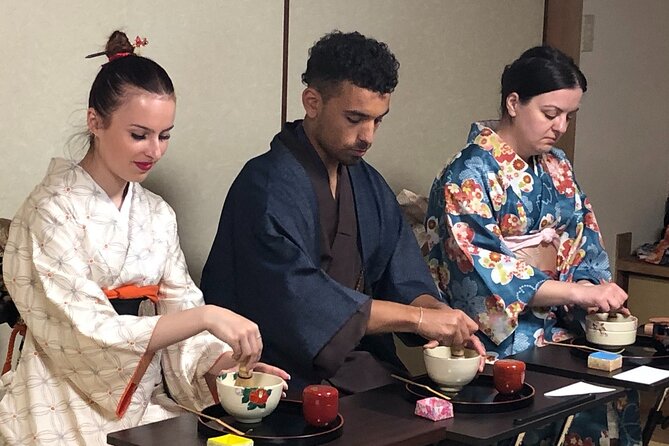
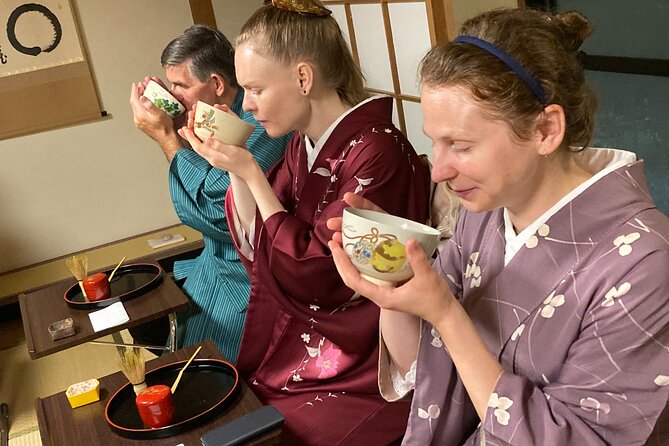
The tea ceremony takes place in a historic Zen temple setting, which gives the lesson a quiet sense of place. You first watch the ceremony and learn some of the manners and small movements. Then you prepare your own matcha.
That order is helpful. Tea ceremony can look simple until you notice the sequence, hand positions, bowl handling, and gestures. Watching first gives you a frame for the activity, while making the tea yourself turns the lesson from a performance into practice.
You will learn how to whisk the matcha and take part in the basic process. The experience is designed for beginners, so you do not need prior knowledge of Japanese tea customs. English explanations are provided, and the cultural details are presented in a way that lets you understand why the movements matter rather than simply copy them.
The tea bowls used during the session are made by local artisans. That detail adds something meaningful to the activity. You are not only learning about matcha in the abstract, you are handling a crafted object as part of the ceremony.
I would not book this expecting a long, formal tea-school lesson. The session combines several activities within roughly 90 minutes to two hours. The tea segment gives you an accessible introduction, not an advanced study of every rule and school of tea.
That balance suits most people visiting Hiroshima. You get enough explanation to appreciate the ritual, followed by the pleasure of making and drinking matcha yourself. It is calm, focused, and a welcome change from racing between major sights.
Practicing Japanese calligraphy
Calligraphy gives the experience a different rhythm. After the quiet concentration of tea, you move to a more active lesson with brush and ink.
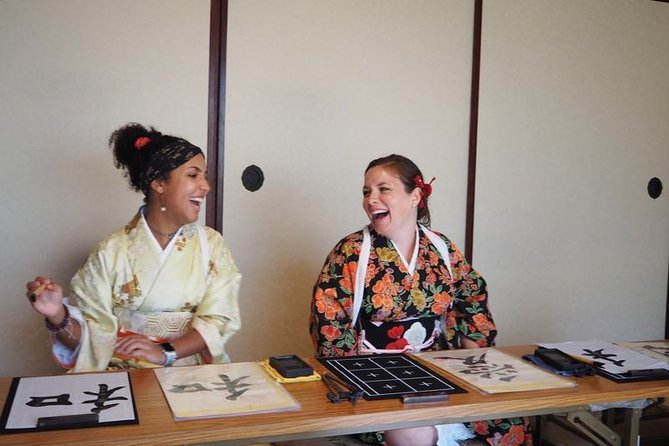
You practice kanji and can also write your own name. Beginners should expect the characters to be harder than they look. The strokes may seem basic when demonstrated, but spacing, pressure, and order require attention. That difficulty is part of the appeal. You are not simply copying a design for a photograph, you are trying to understand the control behind it.
The lesson can make Japanese writing feel less distant. Even a simple character becomes memorable when you have attempted it yourself. You may not produce museum-quality calligraphy, but you will have a better sense of why Japanese writing takes discipline.
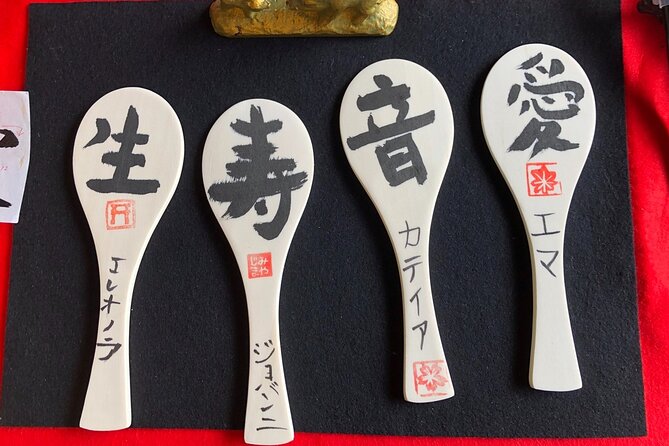
A particularly useful touch is the souvenir. The calligraphy can be placed on a wooden spoon and wrapped for you to take home. That gives the activity a clear finish and keeps the result from becoming another loose sheet in your luggage.
If you are traveling with children, the minimum age is six. Calligraphy offers them a task they can attempt at their own pace, though younger children may need help staying patient during the tea ceremony and kimono dressing.
More Calligraphy Classes in Hiroshima:
- Calligraphy Workshop at Traditional Folk Craft Shop in Hiroshima
★ 5.0 · 26 reviews - Private Hiroshima Calligraphy: Create Your Own Kanji Art Souvenir
★ 5.0 · 12 reviews - Tokyo: Calligraphy on Kanji Fan & Scroll with Drink
★ 5.0 · 210 reviews - Kyoto: Calligraphy class at Buddhist temple in city center
★ 5.0 · 167 reviews
Photos, gardens, and the human side of the visit
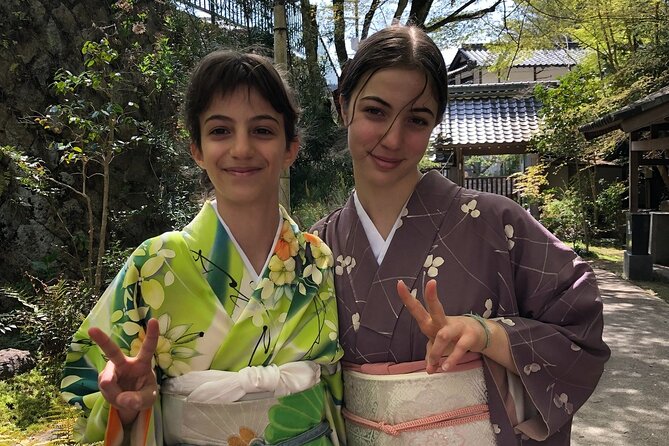
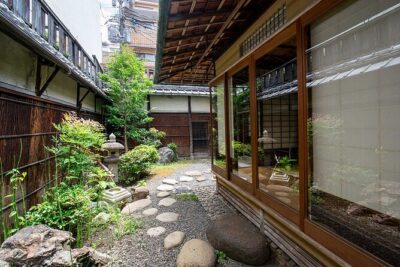
The staff take photographs throughout the experience, not only at one scheduled pose. That can include images while you are dressed, preparing tea, and practicing calligraphy. The temple grounds and gardens provide a natural setting for the kimono pictures.
You should ask how the photographs will be shared before you leave. One person had trouble with the app used for photo delivery, and the provider acknowledged the issue. The staff’s willingness to take many pictures is a plus, but the method for receiving them may not be as smooth for everyone.
The atmosphere is another strong point. The staff are described as kind, welcoming, and patient, including with people who arrived early because of the heat. If you reach the meeting point ahead of time, you may be allowed to wait rather than stand outside.
There is also a shop with cultural items. It is not the main reason to book, but it gives you something to browse before or after the session. Keep your focus on the scheduled activities, since shopping time is not presented as a formal part of the tour.
The experience can work well for couples, families, friends, and mixed groups. Men are welcome, and the activities are not limited to people who enjoy dressing up. The tea and calligraphy sections give the visit substance, while the kimono adds a playful element.
How the timing fits a Hiroshima day
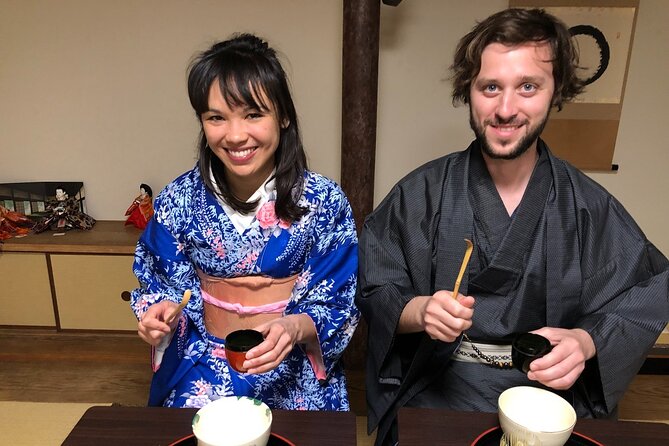
The listed duration is approximately 1 hour 30 minutes, while the itinerary details indicate two hours. I would plan for the longer window, especially if you want to arrive early, change carefully, take photographs, and collect your calligraphy souvenir.
Morning and afternoon start times provide useful flexibility. A morning booking can leave the rest of the day for Miyajima. An afternoon booking may work better if you want to see other parts of the island first.
The experience is best treated as one part of a Miyajima visit, not as a stand-alone stop in Hiroshima. You must first reach the island by ferry, then walk from the port to the meeting point. The trip is worthwhile if you already want to visit Miyajima and would like more than the usual shrine-and-shopping route.
Do not schedule a tight connection immediately afterward. The dressing, photographs, and hands-on lessons all take time, and the activity may run closer to two hours. The ferry ride and return travel also deserve a cushion if you have a train or reservation later in the day.
Is the $132.14 price good value?
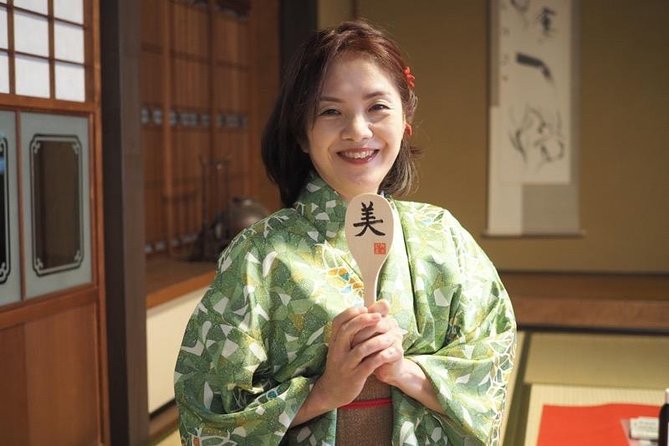
At $132.14 per person, this is not a cheap add-on for a quick lesson. The value depends on how much you want from the visit.
You are paying for several elements together: kimono rental and dressing assistance, a tea ceremony lesson, matcha preparation, calligraphy practice, access to a temple setting, staff guidance, photographs, and a wrapped souvenir. If you only want to wear a kimono for a few pictures, a simpler rental may cost less.
I think the price makes more sense if you want a guided cultural session with a personal touch. The group maximum of eight keeps the activity from feeling like a stage show, and the staff involvement is central to the experience. You are not left to dress yourself or watch a demonstration from a distance.
The photographs also add value, especially for families and couples who want pictures together. Since photo delivery may involve an app, confirm the process before departing. That small step can prevent a frustrating end to an otherwise pleasant visit.
The booking pattern, with reservations commonly made around 38 days ahead, suggests that you should not wait until the last moment if your dates are fixed. Free cancellation is available until 24 hours before the start time for a full refund. Changes or cancellations inside that window are not accepted and are not refundable.
Who should book this experience?
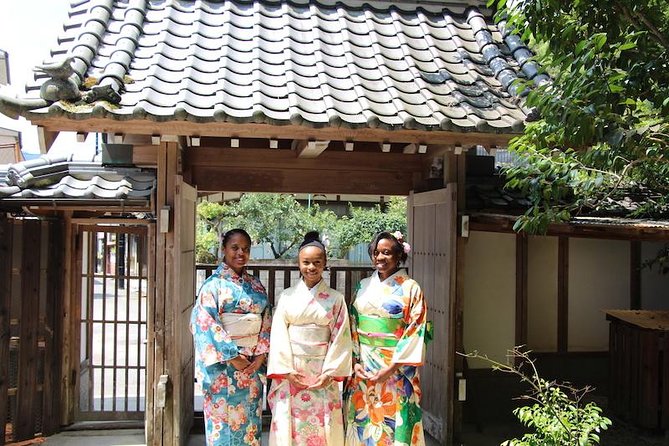
I would recommend it to you if you want a gentle introduction to several Japanese traditions in one place. It suits first-time visitors who want context, families with children aged six or older, couples looking for good photographs, and anyone who enjoys learning by doing.
It is also a good choice after visiting Hiroshima’s serious memorial sites. The setting offers time for quiet attention and reflection without turning the experience into a lecture. One person made the long trip from Osaka after considering skipping the activity and found the effort worthwhile, but that is a warning as much as an endorsement: do not make the journey unless you also want to spend time on Miyajima.
You may want to skip it if your schedule is already packed, you dislike changing clothes, or you want an in-depth tea ceremony taught according to a formal school. The activity is broad and friendly rather than specialized.
It is also less suitable if you need a completely predictable timetable. With several activities and photographs packed into one session, the end time may vary. Build in breathing room.
Final verdict: a thoughtful Miyajima add-on
Book this if you want to slow down and take part in Japanese traditions instead of only looking at them. The kimono dressing, tea preparation, and calligraphy work well together because each asks you to engage in a different way.
The best parts are the personal help from the staff, the small group size, the temple setting, and the large number of photographs. The main drawbacks are the fairly high price, the uncertain 90-minute to two-hour timing, and a possible hiccup when receiving the photos.
For a first visit to Miyajima, this experience adds something the main sights cannot: a chance to handle the objects, follow the manners, and make a small piece of calligraphy yourself. If that sounds more appealing than another quick photo stop, it is a strong choice.
FAQ
Where does the experience begin?
It begins at Okeiko Japan Miyajima, located at 741-1 Miyajimachō, Hatsukaichi, Hiroshima 739-0588, Japan.
How far is the meeting point from the ferry port?
Okeiko Japan Miyajima is about a five-minute walk from the Miyajima ferry port toward Tokujuji Temple.
Where does the activity end?
The activity ends back at the meeting point at Okeiko Japan Miyajima.
How long does the experience last?
The duration is advertised as approximately 1 hour 30 minutes. The itinerary information allows about two hours, so you should plan for some flexibility.
What activities are included?
You will wear a kimono, learn about the tea ceremony, prepare your own matcha, and practice Japanese calligraphy.
Is the experience suitable for children?
The minimum age is six. Most participants can take part.
How many people can join?
The activity has a maximum group size of eight people.
Can I cancel for a full refund?
Yes. You can cancel at least 24 hours before the local start time for a full refund. Cancellations or changes made less than 24 hours before the start time are not accepted and are not refunded.
More Tea Ceremony Experiences in Hiroshima
- Hiroshima Local guided Hiking Tour&Open-air Tea Ceremony
★ 5.0 · 213 reviews - Hiroshima: Morning Hiking Tour with Open-air Tea Ceremony
★ 4.8 · 58 reviews - Kyoto: Tea Ceremony in a Traditional Tea House in Kiyomizu
★ 4.9 · 3,519 reviews - Kyoto: Tea Ceremony Ju-An at Jotokuji Temple
★ 4.9 · 3,207 reviews
Just added around Hiroshima
- Full Day Hiroshima and Miyajima Tour by Bullet Train from Kyoto★ 4.5 · 120 reviews
- Hiroshima Saijo Sake Tasting Tour with visit to 7 Breweries★ 5.0 · 104 reviews
- The Peace Memorial to Miyajima : Icons of Peace and Beauty★ 4.5 · 31 reviews
- Shore Excursion from Hiroshima Port : Private Tour in Hiroshima★ 5.0 · 17 reviews
- Okunoshima Rabbit Island Cycling Tour with Local Guide★ 4.5 · 17 reviews
- Hiroshima & Miyajima All-Inclusive Tour w/Licensed guide Pancho★ 5.0 · 54 reviews
- Private Full Day Hiroshima Tour★ 4.5 · 29 reviews
- Hiroshima Country Cycling: Explore Rural Life 1 HR from City★ 5.0 · 22 reviews
Tea Ceremony Experiences, compared.

Tea Ceremony in a Traditional Tea House in Kiyomizu
Our verdict →


World Heritage Kyoto & Nara Uji Authentic Matcha Experience
Our verdict →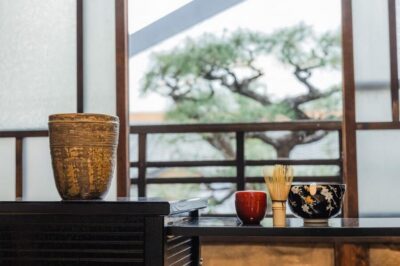

Arashiyama Bamboo Forest, Monkeys, Matcha & Temple Tour
Our verdict →
Browse the lists this tour appears in