
Reviewed · TEA CEREMONY EXPERIENCES
Hiroshima Local guided Hiking Tour&Open-air Tea Ceremony
Hiroshima’s Futaba Mountains rise just beyond the station, yet their forest paths feel far removed from the city. This small-group walk leads you through shrines, steep steps, a peace pagoda, and a quiet open-air tea ceremony with views over Hiroshima and Miyajima. Guides such as Nana, Michi, and Naomi explain Shinto customs and local history in a personal way.
I like the early start, which leaves most of your day free for Peace Memorial Park or Miyajima. I also like the unusual mix of forest bathing and Nodate tea, served outdoors at a sacred mountain site rather than in a formal tea house. The main caution is the climb: about 500 steps, uneven paths, and steep sections can feel demanding in hot weather.
Key points to know before booking
- A city hike with a rural feel: Futaba Mountain begins close to Hiroshima Station, so you do not need a long transfer to reach the trail.
- About 500 steps: The climb is manageable for many people, but this is not a flat sightseeing walk.
- Shrines come before the summit: Hiroshima Toshogu and Kinko Inari provide the cultural heart of the outing.
- Forest bathing is part of the experience: You pause in the trees for a guided sensory break, not simply a quick photo stop.
- Tea comes with a view: The Nodate ceremony takes place near the mountain shrine, looking over Hiroshima, the Seto Inland Sea, and Miyajima.
- Small groups matter: A maximum of six people gives the guide room to answer questions and adjust the pace.
Why this short hike reveals another Hiroshima
Most first visits to Hiroshima center on the Peace Memorial Park, the Atomic Bomb Dome, and the ferry to Miyajima. Those places deserve your time. But Hiroshima is not only a city of memorials. It is also a place of living religious traditions, wooded hills, family shrines, and quiet viewpoints.
This tour gives you that other side of Hiroshima in roughly three hours. You meet at the Shinkansen side of Hiroshima Station, then walk toward the lower slopes of the Futaba Mountains. The city remains close, but the mood changes quickly as shrine grounds and forest paths replace traffic and station crowds.
I like this contrast. You get a physical sense of Hiroshima’s setting instead of seeing the city only from a street or museum. From higher up, the view reaches across the city toward the Seto Inland Sea and Miyajima. The guide also links what you see to Hiroshima’s recovery, giving the view more meaning than a simple lookout stop.
The experience is best understood as a cultural walk with a climb, not as a serious mountain trek. You are not spending the morning racing toward a summit. There are regular pauses for shrine explanations, views, forest bathing, and tea. That makes the route friendly to people with moderate fitness, though the steps still deserve respect.
More Tea Ceremony Experiences in Hiroshima:
- Kimono and Tea Ceremony in Miyajima
★ 5.0 · 73 reviews - An Amazing set of Cultural experience: Kimono, Tea Ceremony and Calligraphy
★ 5.0 · 69 reviews - Hiroshima: Morning Hiking Tour with Open-air Tea Ceremony
★ 4.8 · 58 reviews
Starting at Hiroshima Station
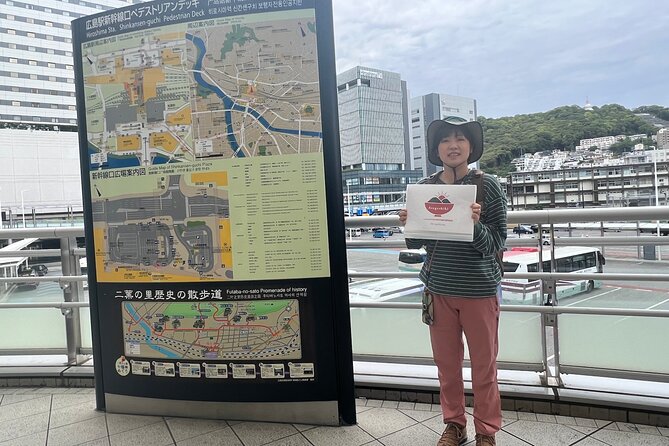
The meeting point is at the Hiroshima Station Shinkansen exit. This is useful if you are staying near the station, arriving by train, or planning to continue by rail later in the day. The guide explains the route at the start, so you know what kind of climb lies ahead.
The available start times are early morning, midmorning, and afternoon. The 7:30 departure is the best choice if you want the most usable day afterward. It also suits visitors who prefer cooler conditions, especially in summer. The later departures can work around a train arrival or another morning plan, but you lose the advantage of a quiet start and may feel the heat more strongly.
Arrive on time. The tour has a strict late-arrival rule: if you are more than 10 minutes late without contacting the operator, the booking can be canceled with the full fee charged. That is a practical reason to allow extra time inside the station, which has several exits and can be confusing on a first visit.
The group is capped at six people. That small size is one of the strongest reasons to consider this experience. A guide can stop when someone needs a breather, explain a shrine ritual without shouting, and keep the tea ceremony feeling personal rather than mass-produced.
Hiroshima Toshogu, the first cultural stop
The first major stop is Hiroshima Toshogu Shrine. This is where the tour shifts from a city walk to a lesson in Japanese religious customs and cultural heritage.
Your guide explains what you are looking at and how the shrine functions. You may learn how to approach a Shinto shrine, what certain features mean, and how offerings and wishes fit into local practice. The exact level of explanation depends on the guide, but Nana, Michi, and Naomi are repeatedly praised for making these customs clear and welcoming.
This stop rewards curiosity more than speed. If you have already visited shrines in Kyoto or Tokyo, do not assume you have seen everything. Guides point out details that are easy to miss when you walk through shrine grounds alone. Families can also take part in simple rituals, such as making an offering or posting a wish, when appropriate.
The shrine stop is not a long lecture. It gives you cultural footing before the climb continues. That matters because the next part of the route is not just a walk through trees. It follows a religious path with its own meaning.
Kinko Inari Shrine and the 500-step climb
From Hiroshima Toshogu, the route continues toward Kinko Inari Shrine and into Mt. Futaba. The tour information calls for about 500 steps. The paths are generally well maintained, but they can be uneven and steep in places.
This is the section where you should judge your own fitness honestly. Experienced hikers may find it easy. If you are new to hiking, the climb is still possible for many people because the guide builds in pauses. It is not a race, and the route includes several stops for explanations and rest. Still, you should wear shoes with a secure grip and bring water.
The climb becomes more pleasant as the city falls behind. The woodland provides shade, though summer conditions can still be severe. One account describes hiking in temperatures around 36 degrees Celsius, with the heat feeling closer to 40. On a hot day, take the guide’s water breaks seriously rather than trying to push through.
Kinko Inari Shrine adds another layer to the walk. The guide explains Shinto practices and the meaning of the shrine rather than treating it as a decorative photo stop. This is where the tour feels more local and less like a standard city excursion. You are following a route that people use for worship and reflection, not simply checking off a monument.
More Hiking Tours in Hiroshima:
- Fushimi Inari Hidden Hiking Tour (Private Option Available)
★ 5.0 · 1,750 reviews - Kyoto: 3-Hour Fushimi Inari Shrine Hidden Hiking Tour
★ 4.9 · 270 reviews - Hiking the Historic Nakasendo Trail [1 Day Tour from Nagoya]
★ 5.0 · 104 reviews - Kyoto Hiking Tour: The Nature and Legends of Kurama and Kibune
★ 5.0 · 75 reviews
Futabayama Peace Pagoda and the wide Hiroshima view
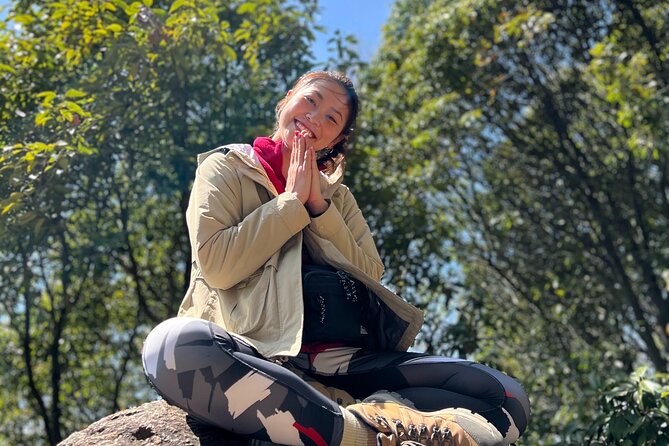
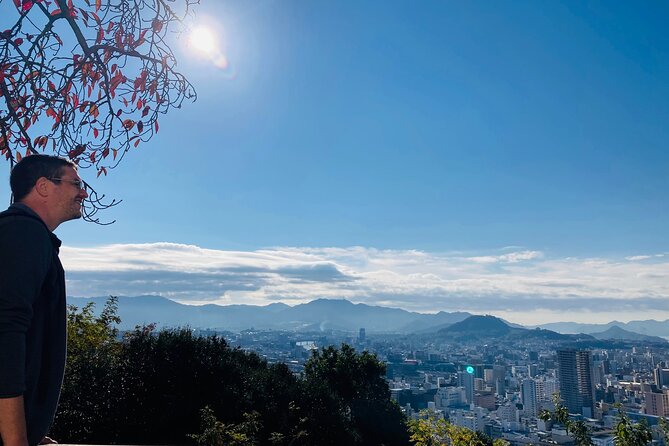
At the Futabayama Peace Pagoda, the reward is a broad view of Hiroshima, the Seto Inland Sea, and Miyajima. The position helps you understand the city’s geography. You see how Hiroshima sits between water and wooded hills, and how close the mountain is to the urban center.
The pagoda also adds a quiet historical note. The city below is associated with terrible destruction, but from this height you can see its long recovery as a living, working place. Guides connect the view with Hiroshima’s past without turning the whole tour into a solemn memorial talk.
Bring a camera if you like views, but leave room to simply look. Weather will affect what you can see. On a clear day, Miyajima is part of the reward. On a hazier day, the city and nearby hills may be the stronger part of the view.
The viewpoint is one of the tour’s best stopping places because it combines scenery with context. You are not only being told about Hiroshima. You are looking at the city from a position that changes how its history feels.
Forest bathing in the Futaba trees
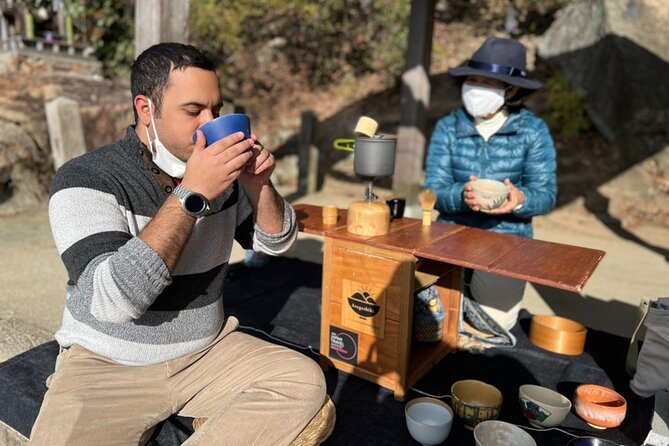
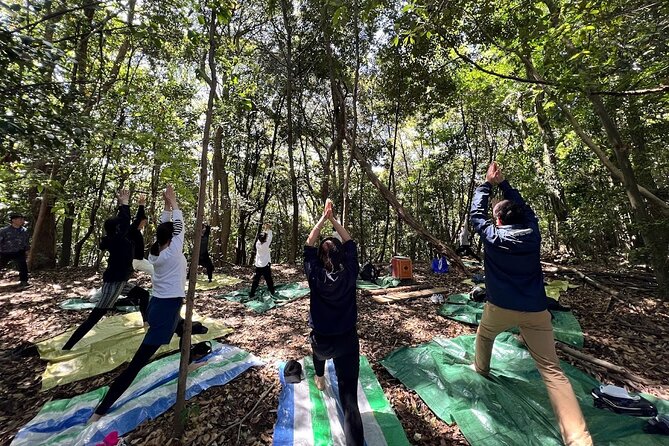
After reaching the higher part of the route, the experience includes Shinrinyoku, often translated as forest bathing. This is a guided pause in the woods, with attention directed toward the sounds, air, and feel of the natural setting.
Do not expect a long formal meditation course. The activity is a short sensory break, and one guide used a simple exercise focused on the senses. That makes it accessible even if you have never tried meditation. You can take part quietly, or simply use the pause to catch your breath and notice the forest.
I like this part because it changes the pace. Many walking tours move from sight to sight without giving you time to absorb where you are. Here, the forest itself becomes part of the program. It also gives the climb a purpose beyond reaching the viewpoint.
The forest pause may be especially welcome after the stairs. The guide can explain local customs, but you also get a stretch without constant talking. In hot weather, it offers shade and a chance to drink water before the tea ceremony.
Nodate tea at the mountain’s Okumiya
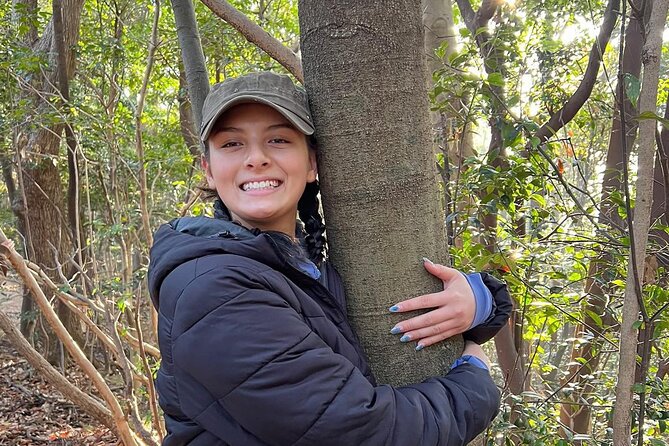
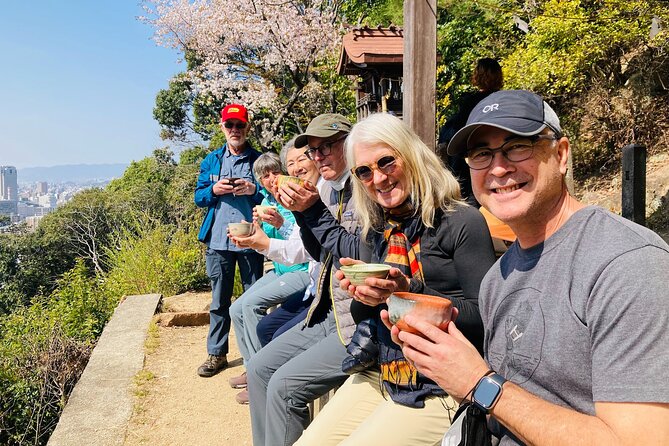
The final major experience is a Nodate tea ceremony at the Okumiya Shrine. Nodate means tea prepared outdoors. This is different from sitting in a polished tea-room setting with a formal interior and carefully arranged furnishings.
Here, the ceremony takes place in the mountain setting, with the city spread below. The guide prepares and serves the tea, explains what is happening, and creates a relaxed introduction to the custom. Some departures include matcha, while one account specifically mentions cold green tea, which can be a welcome choice after a warm climb. The exact serving may depend on the day and conditions.
The appeal is not technical mastery. It is the setting and the chance to share a small ritual in a place that feels connected to the route. You have just walked through shrine grounds and forest, then pause with tea and a view. The ceremony gives the morning a calm ending.
Allow the full hour shown for this section. It is not something to rush through for the next attraction. The guide may answer questions about Japanese tea customs, local religion, or the places you have visited. Since the group is small, the ceremony can feel more like a personal exchange than a performance.
If your idea of a tea ceremony is a formal indoor event, adjust your expectations. This is simpler and more outdoorsy. That is precisely its strength, but it also means weather and trail conditions shape the experience.
Returning to Hiroshima Station
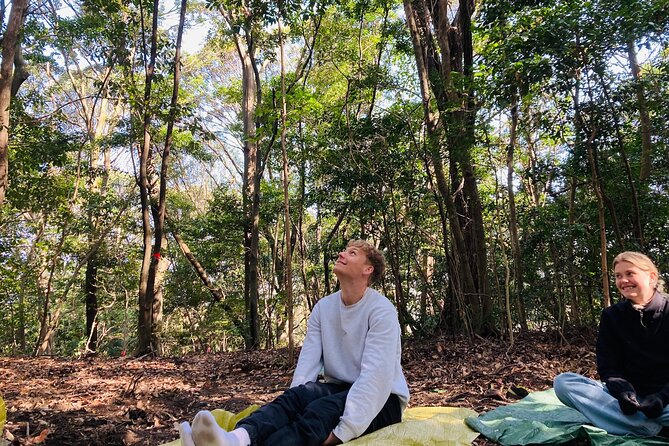
The tour returns to the Shinkansen exit at Hiroshima Station. The advertised duration is about three hours, though the exact pace can vary with the group, weather, and time spent at the shrines.
The return point makes the activity easy to combine with the rest of a Hiroshima visit. Afterward, you can continue to the Peace Memorial Park, eat near the station, or catch a train. The early departure is especially useful because you can finish around late morning and still have most of the day available.
The afternoon departures are less efficient if you plan to visit several major sights afterward. They may be useful if you arrive later or prefer a slower morning, but consider heat, daylight, and your evening plans.
Price, group size, and overall value
The price is $109.43 per person. That is not the cheapest way to spend three hours in Hiroshima, especially since the shrines and mountain can be reached without a large admission package. The value comes from the guide’s interpretation, the small group, the structured route, and the tea ceremony.
You are paying for more than a walk to a viewpoint. The guide explains Shinto practices, introduces the local pilgrimage route, leads you safely through the forest, organizes the forest-bathing pause, and prepares tea at the mountain shrine. For a first visit to Japan, that cultural explanation can be more useful than simply seeing another temple or shrine on your own.
The maximum group size of six also matters. With a large group, a steep path and outdoor tea service can become slow and impersonal. Here, the guide has a fair chance to respond to individual questions and adjust the rhythm.
Five percent of the fee is donated to Futaba Mountain conservation activities. That will not make the price right for every budget, but it gives the cost a clear local connection.
Who should book this experience
I would choose this tour if you want a break from museums, memorials, and busy city streets. It suits people who enjoy walking, local religion, small groups, and thoughtful interpretation more than those seeking a fast list of major sights.
Families can enjoy it too. The experience has been suitable for adults and teenagers, including a family with children aged 13 and 16. Children aged 0 to 5 can participate free, but the steps and heat still mean parents should decide based on the child’s ability to handle the route.
It is a good match for:
- First-time visitors who want cultural background beyond the Peace Memorial Park.
- Couples looking for a quiet shared activity.
- Families with older children or teenagers who can manage the climb.
- Visitors who prefer a personal guide to exploring shrines alone.
- Hikers who want a light city-based walk rather than a full-day mountain outing.
It is less suitable if you need a flat route, dislike stairs, or want a formal indoor tea ceremony. It may also be a poor choice during very hot weather if you are not comfortable exercising outdoors.
Wear comfortable walking shoes, carry water, and dress for the forecast. The path is maintained, but it is still a mountain route. Good weather is required, and the operator offers another date or a full refund if poor conditions force cancellation.
Should you book the Mt. Futaba morning walk?
Yes, if you want to see Hiroshima from a quieter, more local angle. The strongest parts are the small group, the shrine explanations, the view from the pagoda, and the outdoor tea served after the climb. Guides such as Nana, Michi, and Naomi add warmth and practical care, including frequent breaks in hot weather.
Book the early departure if possible. You will have cooler conditions, a calmer forest, and the rest of the day for Hiroshima’s major sights. Just be honest about the 500 steps. If you can manage a moderate, stop-and-start climb, this is a memorable way to connect Hiroshima’s natural setting, religious customs, and modern recovery in one compact morning.
FAQ
How long does the Hiroshima hiking and tea tour last?
The experience lasts approximately three hours and returns to Hiroshima Station.
Where does the tour start and finish?
It starts at the Hiroshima Station Shinkansen exit and ends back at the same meeting point.
How many steps are involved?
The hike includes about 500 steps on the way up Mt. Futaba.
What places are visited?
The route includes Hiroshima Toshogu Shrine, Kinko Inari Shrine, the Futabayama Peace Pagoda, and the mountain’s Okumiya Shrine.
Is the tea ceremony indoors or outdoors?
It is a Nodate tea ceremony, meaning it is performed outdoors at the mountain shrine with views over Hiroshima.
How many people can join the tour?
The activity has a maximum of six travelers.
What happens if the weather is poor?
The experience requires good weather. If it is canceled because of poor conditions, you can choose another date or receive a full refund.
Just added around Hiroshima
- Full Day Hiroshima and Miyajima Tour by Bullet Train from Kyoto★ 4.5 · 120 reviews
- The Peace Memorial to Miyajima : Icons of Peace and Beauty★ 4.5 · 31 reviews
- Hiroshima Saijo Sake Tasting Tour with visit to 7 Breweries★ 5.0 · 104 reviews
- Shore Excursion from Hiroshima Port : Private Tour in Hiroshima★ 5.0 · 17 reviews
- Okunoshima Rabbit Island Cycling Tour with Local Guide★ 4.5 · 17 reviews
- Hiroshima & Miyajima All-Inclusive Tour w/Licensed guide Pancho★ 5.0 · 54 reviews
- Private Full Day Hiroshima Tour★ 4.5 · 29 reviews
- Hiroshima Private Tour with a Local – Highlights & Hidden Gems★ 4.5 · 24 reviews
Tea Ceremony Experiences, compared.

Tea Ceremony in a Traditional Tea House in Kiyomizu
Our verdict →


World Heritage Kyoto & Nara Uji Authentic Matcha Experience
Our verdict →
Arashiyama Bamboo Forest, Monkeys, Matcha & Temple Tour
Our verdict →
Browse the lists this tour appears in