
Reviewed · FULL-DAY
Hiroshima & Miyajima: Private Full-Day Tour with a Local Guide
Hiroshima and Miyajima make a powerful pair: one city asks you to remember, while the other offers forest paths, temple grounds, sea views, and deer-lined streets. This private day with Alex, an English-speaking local guide, brings the two places together without making you manage every train, ferry, turn, and timing decision.
I like the personal history Alex brings to Peace Memorial Park, including stories about people affected by the bombing, Korean conscripts, and Hiroshima’s rebuilding. I also like the freedom to slow down on Miyajima for a café, Daishoin Temple, a forest walk, or a less crowded viewpoint instead of racing through a fixed checklist.
The main drawback is the schedule. Hiroshima and Miyajima are connected by roughly an hour of travel each way, including the ferry, so this is a full day with a lot of walking. Lunch, transport, and two admission fees are extra, and crowded ferry or shrine conditions can reduce the quiet time you hoped for.
Key points to know before booking
- A full day with Alex: You have a private English-speaking guide for your group, not a shared bus tour.
- History with human stories: Peace Memorial Park becomes more meaningful through personal accounts and less familiar subjects, including the experience of conscripted Koreans.
- Train and ferry travel: Hiroshima to Miyajima takes about an hour each way, and transportation costs are not included.
- Flexible Miyajima time: You may choose a café, Daishoin Temple, a quiet walk, souvenir shopping, or a scenic viewpoint.
- Tide-sensitive planning: The day may begin on Miyajima if that gives you a better view of the torii gate at high tide.
- Good value for private guiding: At $145.31 per person, the price makes the most sense for families or small groups that want personal pacing and local help.
Why this Hiroshima and Miyajima pairing works
Many Hiroshima visits divide attention between solemn memorials and the more relaxed pleasures of Miyajima. That contrast is exactly why this tour works. You spend time facing the difficult past, then have room to walk, eat, take photographs, and enjoy the island at a gentler pace.
The private format matters here. Peace Memorial Park can be emotionally heavy, and people respond to it differently. You may want detailed explanation and historical context. Someone in your group may need a quieter pause. With only your own group taking part, Alex can adjust the amount of discussion and keep the day from feeling like a lecture.
The same flexibility helps on Miyajima. You can focus on Itsukushima Shrine and the torii gate, or trade some standard sightseeing for Daishoin Temple, a café with a garden, a forest path, or an off-the-beaten-path sea view. That is a better fit for families, couples, and small groups with different interests than a rigid group itinerary.
More Full-Day Tours in Hiroshima:
- Hiroshima / Miyajima Full-day Private Tour with Government Licensed Guide
★ 5.0 · 1,298 reviews - Full Day Hiroshima and Miyajima Bus Tour from Hiroshima
★ 4.5 · 371 reviews - Hiroshima & Miyajima: Full-Day Private Tour & Licensed Guide
★ 4.8 · 252 reviews
Peace Memorial Park, where the day begins with purpose
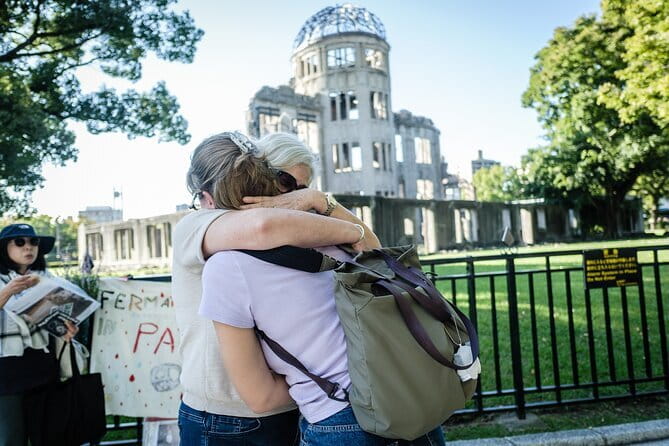
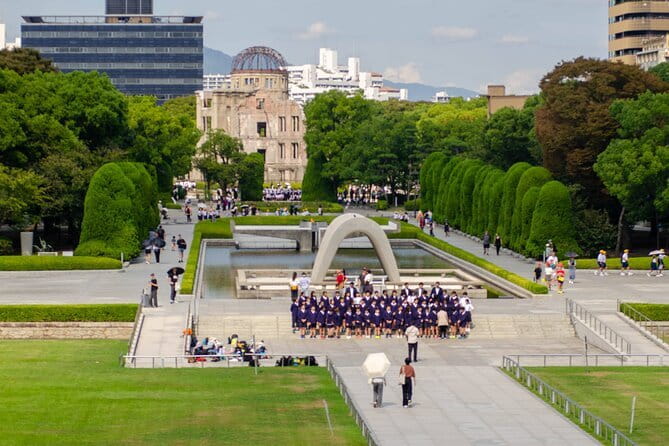
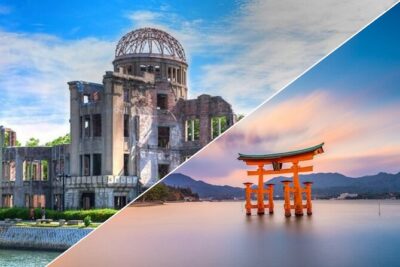
The first stop is usually Hiroshima Peace Memorial Park, with about an hour for a guided walk. The park includes the A-Bomb Dome and surrounding memorials, and Alex supplies the context that connects these sites to the people who lived through the bombing and the city that followed.
The A-Bomb Dome is visually striking, but it is not the whole story. A good guide helps you understand why the surviving structure matters and how the surrounding memorials give the site human meaning. Alex’s approach includes stories about individual victims and survivors, as well as the long process of rebuilding Hiroshima.
I particularly value the less familiar parts of the history. The experience can include discussion of the roughly 40,000 conscripted Koreans affected by the bombing, a subject many visitors have not encountered before. Reconstruction also receives attention, giving you a fuller picture than a visit focused only on the destruction of 1945.
The park is open and spread out, so you should expect walking rather than a quick stop beside one monument. On busy days, the atmosphere may be less quiet than you would prefer. Still, a private guide can help you find meaning even when the park is crowded.
Admission to the park itself is not included, though the walk through the public area forms the heart of this part of the tour.
The Peace Memorial Museum requires time and care
The next hour is set aside for the Hiroshima Peace Memorial Museum. You may visit with Alex or explore independently, depending on your interests and pace. That choice is useful because the museum can be intense, and not everyone wants the same level of guidance inside.
The museum’s exhibits are emotionally difficult. You should not think of this as a quick photo stop between attractions. Give yourself time to read, pause, and process what you see. Alex can help explain the historical setting and connect the exhibits with the stories introduced in the park.
The museum entrance fee is ¥200 per person, paid separately. That is a small extra cost, but you should include it when comparing the tour price with a self-guided day.
A private visit also helps if your group includes children or older relatives. You can decide when to move on rather than waiting for a large group. On the other hand, some people prefer to experience the museum alone, and this tour allows that too.
The train and ferry ride to Miyajima
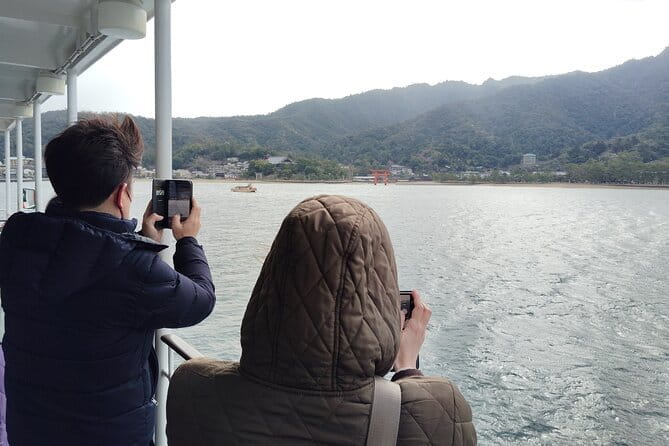
After the Hiroshima memorial area, you travel toward Miyajimaguchi and continue by ferry to Miyajima. The complete journey from Hiroshima to the island takes around one hour each way, including the ferry ride.
Transportation is not included in the $145.31 price, so plan for train and ferry fares in addition to admission costs. The exact transport choice can change depending on the day, but the important point is that this is not a private car tour by default. You will be moving through the local transport system with Alex guiding the way.
That can be an advantage. The train and ferry show you how the places connect in ordinary daily life, rather than keeping you inside a vehicle from one attraction to the next. It also means the day depends on transport schedules and crowd levels.
One practical tip: leave room in your expectations around the ferry. On busy days, boarding can take time and the vessel may be crowded. Alex has helped groups get through busy ferry periods and find good places for photographs, but he cannot remove the crowds altogether.
A few more Hiroshima half-days worth comparing
- Peaceful Hiroshima & Miyajima UNESCO 1 Day Bus Tour
★ 5.0 · 5,309 reviews - Hiroshima: Hiroshima and Miyajima UNESCO Sites 1-Day Tour
★ 4.9 · 2,330 reviews - Osaka/Kyoto: Hiroshima Miyajima Bus Tour & Shinkansen Ticket
★ 4.7 · 919 reviews - Hiroshima Historical Walking Tour – Why A-Bomb was Dropped
★ 4.8 · 893 reviews
Miyajima’s food and island streets
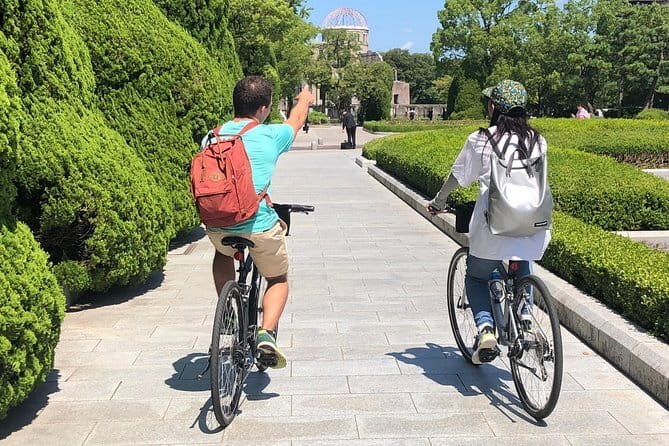
Once on Miyajima, lunch centers on local Hiroshima cuisine, with okonomiyaki the natural choice. This savory layered dish is associated with Hiroshima and gives you a chance to eat something tied to the region rather than defaulting to a familiar international meal.
Lunch is not included, and the exact restaurant is not specified in advance. Alex’s local food advice is one of the useful parts of the private format, particularly if you want suggestions that suit your group. Vegetarian and gluten-free options are available, but tell the guide about dietary needs before the day begins so the meal can be planned sensibly.
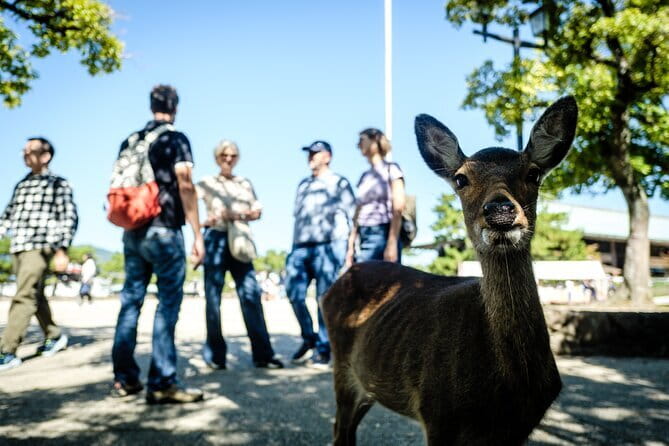
Miyajima’s main streets can be busy, especially around the shrine and ferry arrival area. You will find shops, cafés, food stops, and souvenir opportunities there. The tour does not force you to spend the whole island visit in the busiest lanes, though. You can move toward quieter paths and temple grounds when you have had enough of the crowds.
Itsukushima Shrine and the famous torii gate
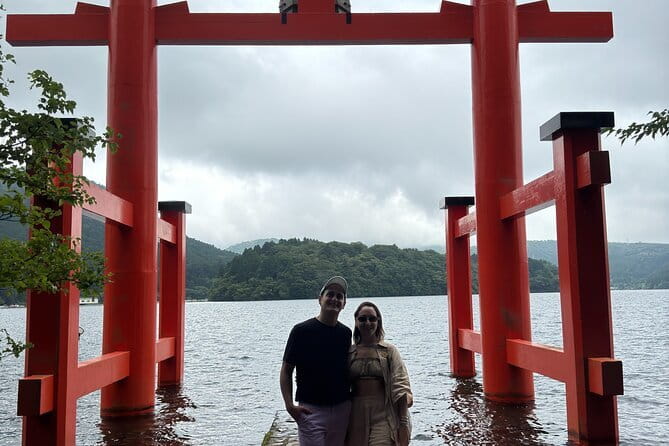
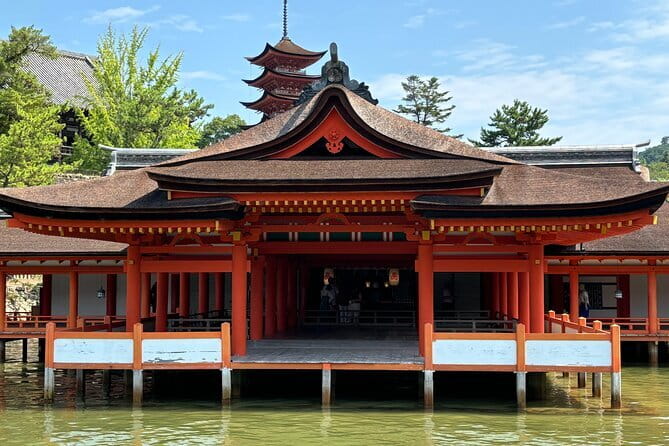
Itsukushima Shrine is the central Miyajima sight, and the floating torii gate is the image most people associate with the island. The shrine admission fee is ¥300 per person and is separate from the tour price.
The gate’s appearance changes with the tide. At high tide, it appears to float offshore. At low tide, you may be able to walk closer to its base. Since the water level affects the view, Alex may reverse the order of the day and begin on Miyajima if that gives your group a better high-tide experience.
This is one of the tour’s smartest practical features. A fixed route can leave you seeing the torii at an ordinary tide simply because the schedule says it is time to visit. A guide watching the day’s conditions can make a better use of your limited hours.
The shrine area can feel crowded and highly photographed. I would not book this experience expecting solitude at the torii gate. The benefit is having help with timing, orientation, and photographs, then being able to leave the busiest point for a quieter part of the island.
Daishoin Temple, cafés, and the quieter side of Miyajima
The final stretch is intentionally flexible. You might take a quiet walk, stop at a café, visit Daishoin Temple, or simply enjoy the island atmosphere. This is where the private format earns its keep.
Daishoin offers a different mood from the shrine. It gives you a chance to see a religious site and spend time away from the main waterfront route. The day can also include a forest walk or a café with a garden, depending on your interests and remaining time.
A scenic viewpoint away from the usual sightseeing route is another highlight. The tour description calls attention to strong sea views, and several past days have included quieter photo stops away from the main crowds. The exact viewpoint is not guaranteed, so think of it as a flexible possibility rather than a promised landmark.
If your group enjoys shopping, there may be time for souvenirs. If you would rather sit down after a long morning, you can use the flexible final hour and a half for a café stop. That choice is especially helpful for families, since not everyone needs to walk at the same speed or see every temple.
What the private format adds
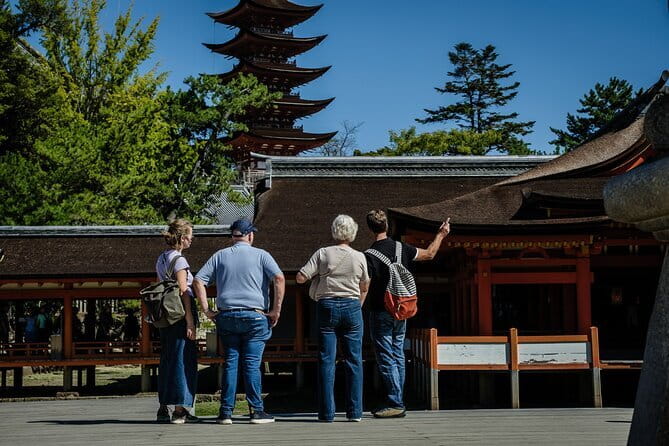
Alex’s strongest role is not simply pointing out the famous sights. It is adjusting the day to the people in front of him. Families have used the flexibility to keep adults and children interested. Groups have also changed parts of the plan to make the day more comfortable.
One particularly useful example involved a guest using a wheelchair after an accident. Alex arranged a rental car so the group could continue with the visit rather than canceling the day. That does not mean every accessibility need is automatically covered, but it does show why you should discuss mobility concerns before booking.
The official information says most people can participate, and service animals are allowed. The day still involves walking, public transport, ferry boarding, shrine grounds, and uneven outdoor areas, so ask Alex in advance about your specific situation.
You also get help with history beyond the standard talking points. Alex has been praised for explaining local history and politics, sharing personal connections to a bombing survivor, and relating well to adults and children. His English is described as clear, and the day is built around conversation rather than a memorized speech.
Price, timing, and who gets the best value
At $145.31 per person, this is not the cheapest way to see Hiroshima and Miyajima. You still pay separately for transportation, the ¥300 Itsukushima Shrine admission, the ¥200 Peace Memorial Museum admission, and lunch.
The price makes more sense if you are traveling as a small private group and want help making a complicated day work. A family can avoid splitting up over different interests. A couple can spend more time on history or photographs. Friends can choose a quieter island walk instead of being rushed from one stop to the next.
The tour lasts about eight hours, with operating hours listed from 8:00 AM to 7:30 PM. Since the day includes two major areas and about two hours of total Hiroshima to Miyajima travel, an early start is sensible. The exact meeting point can be your accommodation or another agreed location.
The tour is booked an average of 108 days ahead, so popular dates may require planning. Free cancellation is available up to 24 hours before the start time. Inside that window, the amount paid is not refunded and changes are not accepted.
Who should book this day
I would choose this tour if you want Hiroshima’s major sights but do not want to spend your limited time figuring out the train, ferry, shrine timing, and best order of stops. It also suits you if personal stories matter as much as photographs.
Families and small groups will gain the most from the flexible pacing. The private setting also works well if members of your group have different energy levels, dietary needs, or interest in the museum.
I would think twice if you prefer to explore alone, dislike a full day on foot, or want a slow Miyajima visit with no timetable. You may also prefer separate days for Hiroshima and Miyajima, since combining them means accepting a busy schedule.
Should you book Hiroshima and Miyajima with Alex?
Book it if you want a thoughtful history lesson in the morning and a flexible island day afterward. Alex brings local perspective, personal stories, useful timing advice, and the ability to adjust the plan when your group needs a change.
Skip it if you want the lowest-cost option or several unhurried hours in one place. For most visitors with only one day, though, the private format gives you something valuable: a clear route through two very different places, with enough freedom to make the day feel like your own.
FAQ
How long does the Hiroshima and Miyajima tour last?
The experience lasts approximately eight hours.
Is hotel pickup available?
Yes. Pickup from your accommodation or another agreed meeting point is included.
Is this a private tour?
Yes. Only your group participates in the activity.
Are transportation costs included?
No. Train, ferry, or other transportation costs are not included. The trip from Hiroshima to Miyajima takes around one hour each way, including the ferry.
How much are the admission fees?
Itsukushima Shrine costs ¥300 per person, and the Peace Memorial Museum costs ¥200 per person. These fees are paid separately.
Can the itinerary change with the tide?
Yes. Depending on the tide, the day may begin on Miyajima so you can see the torii gate at high tide.
Just added around Hiroshima
- Full Day Hiroshima and Miyajima Tour by Bullet Train from Kyoto★ 4.5 · 120 reviews
- Hiroshima Saijo Sake Tasting Tour with visit to 7 Breweries★ 5.0 · 104 reviews
- The Peace Memorial to Miyajima : Icons of Peace and Beauty★ 4.5 · 31 reviews
- Shore Excursion from Hiroshima Port : Private Tour in Hiroshima★ 5.0 · 17 reviews
- Okunoshima Rabbit Island Cycling Tour with Local Guide★ 4.5 · 17 reviews
- Hiroshima & Miyajima All-Inclusive Tour w/Licensed guide Pancho★ 5.0 · 54 reviews
- Private Full Day Hiroshima Tour★ 4.5 · 29 reviews
- Hiroshima Country Cycling: Explore Rural Life 1 HR from City★ 5.0 · 22 reviews
Full-Day, compared.
Hiroshima / Miyajima Full-day Private Tour with Government Licensed Guide
Our verdict →

5 Top Highlights of Kyoto Full Day Bike Tour (E-bike option)
Our verdict →
Mt. Fuji, Hakone Full-Day Private Tour with English Driver Guide
Our verdict →
Full Day Guided Tour to Kyoto and Nara from Osaka by Van
Our verdict →
Browse the lists this tour appears in