
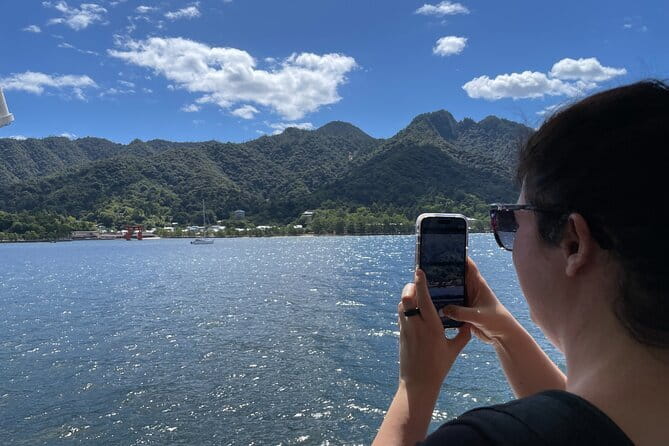
Reviewed · TEMPLES & SHRINES
Miyajima Highlights: Itsukushima Shrine & Island Nature
Miyajima’s great trick is that its famous torii gate never looks quite the same. At high tide, it appears to float offshore. At low tide, you can walk toward it and see its full size. This private tour pairs that changing view with Itsukushima Shrine, Daishoin Temple, and quieter corners of the island.
I like the one-to-one attention and the chance to ask direct questions about Shinto, Buddhism, local customs, and Hiroshima’s past. I also like the flexible pace, which guides such as Aya, Yuka, Masa, and Mana have used to adjust visits for families, cruise passengers, and history-minded guests. The main drawback is cost: at $141.23 per person, you still pay for public transportation and lunch separately.
Key points at a glance
- The tide shapes your visit: The torii looks offshore at high tide and can be reached on foot at low tide.
- A private guide changes the experience: Your group gets the guide’s full attention rather than a standard group script.
- Daishoin adds spiritual depth: This old temple offers a quieter, more natural setting than the main shrine area.
- You use public transportation: Budget ¥1,340 per person for the basic transport, with faster boat options costing extra.
- The tour includes more than the headline sights: Senjokaku, Omotesando Street, local foods, and island life are part of the half-day plan.
Why Miyajima works so well with a private guide
Miyajima is easy to recognize and harder to understand. The floating torii, red shrine buildings, deer, souvenir shops, and ferry terminal make an immediate impression, but the island’s religious meaning can get lost in a quick photo stop.
This tour gives you a guide who can explain why Miyajima has long been treated as a sacred island. You are not simply checking off Itsukushima Shrine. You are seeing how Shinto beliefs, Buddhist practice, island customs, and the tides all shape the visit.
The private format matters most if you enjoy asking questions. You can stop to ask about shrine rituals, the role of deer, the difference between a shrine and a temple, or Hiroshima’s connection to the island. Guides have also shared personal family stories and broader cultural background, which can make the history feel more immediate.
The tour is also a good fit for a mixed-interest group. One person can focus on architecture, another on religion, and another on food or local life. A guide such as Yuka or Masa can adjust the conversation rather than forcing everyone through the same speech.
More Temple & Shrine Tours in Hiroshima
- Hiroshima and Miyajima Day Trip with Itsukushima Shrine & Ferry
★ 5.0 · 378 reviews - Miyajima: Cultural Experience in Zen Temple
★ 5.0 · 258 reviews - Day Trip to Hiroshima & Miyajima with Itsukushima Shrine
★ 4.6 · 124 reviews
Meeting in Hiroshima and crossing to Miyajima
The day begins with a meeting on foot at a hotel or train station in Hiroshima City. The tour uses public transportation, so this is not a private vehicle excursion. That keeps the cost below a fully private car tour, but you should be ready to walk, board trains or ferries, and manage your own transit fare.
The basic transportation cost is listed as ¥1,340 per person. It is not included in the tour price, so carry enough yen or be prepared to pay as directed by your guide. Private options are available for an additional ¥2,300 to ¥8,000 each way, including fast boats, direct boats, or taxis.
The trip between Miyajima and Hiroshima takes about an hour using the usual ferry and train connections. A direct boat to Peace Memorial Park can take about 45 minutes and is available as an option. The order can also be changed between Miyajima and Peace Park, which helps if your schedule or the tide makes one sequence more useful than another.
That flexibility is valuable, but the schedule needs a little care. A five-hour tour is enough for the main island sights, yet the crossing, shrine visit, temple, shopping street, and possible Peace Park connection can make the day feel full. If you want a long lunch, a careful museum visit, or Mount Misen as well, you should ask about the timing before booking.
Meeting Miyajima’s deer and sacred identity
The first island stop introduces Miyajima as a place revered as the island of the gods. Deer are described as messengers of the gods, and they are one of the first details you notice after arriving.
The deer add charm, but the guide can help keep the visit from becoming only a wildlife photo stop. The point of this section is to frame Miyajima as a spiritual place before you reach its most famous buildings.
Allow about 30 minutes here. That is enough to get oriented and hear the basic cultural background, though it is not a long nature walk. You may also find the island’s atmosphere changes as you move away from the main approach and into quieter areas.
Watching the tide at the floating torii
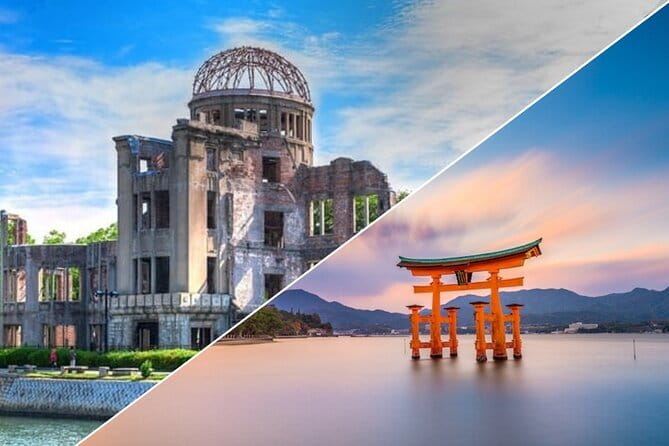
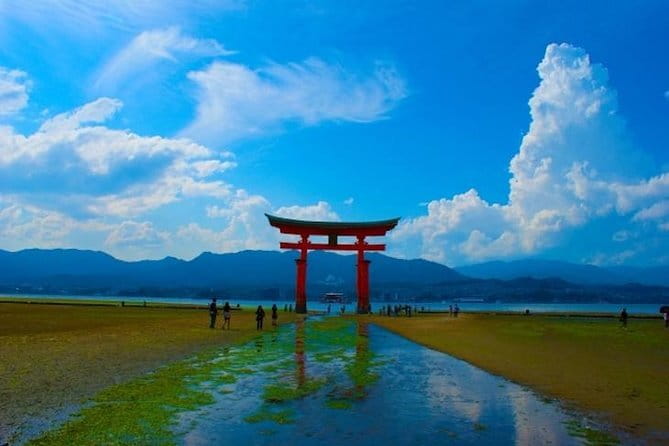
The torii gate is the visual centerpiece of the visit, and tide timing affects what you see. At high tide, the gate appears to float on the water. At low tide, you can walk toward it and appreciate its height and construction from ground level.
Neither view is automatically better. High tide gives you the classic floating image. Low tide gives you a closer look and a stronger sense of scale. If the gate is your top priority, ask your guide about the tide and how the day’s order has been arranged.
The scheduled stop is about 15 minutes, so this is a focused visit rather than a long shoreline pause. You will want your camera ready, but do not rush past the guide’s explanation of why the gate and shrine are designed to work with the sea.
Same trip, a completely different kind of day:
- Peaceful Hiroshima & Miyajima UNESCO 1 Day Bus Tour
★ 5.0 · 5,309 reviews - Hiroshima: Hiroshima and Miyajima UNESCO Sites 1-Day Tour
★ 4.9 · 2,330 reviews - Hiroshima / Miyajima Full-day Private Tour with Government Licensed Guide
★ 5.0 · 1,298 reviews - Osaka/Kyoto: Hiroshima Miyajima Bus Tour & Shinkansen Ticket
★ 4.7 · 919 reviews
Inside UNESCO-listed Itsukushima Shrine
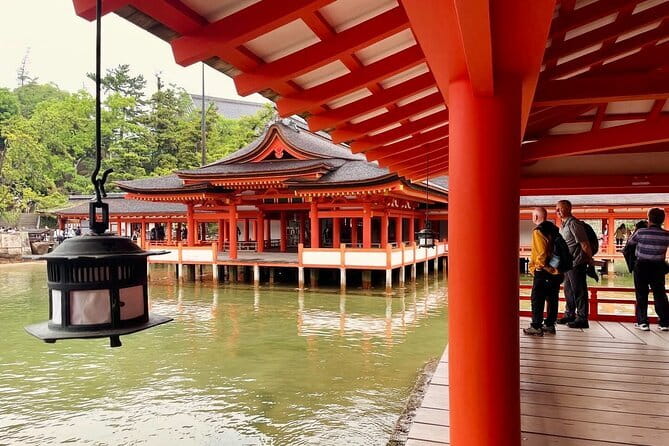
Itsukushima Shrine is built to appear as if it floats above the water, and its appearance changes with the ebb and flow of the tide. The shrine is both a national treasure and a UNESCO World Heritage site, but those labels only tell part of the story.
The buildings make more sense when you understand their relationship to the sacred island and the sea. A private guide can point out the religious meaning behind the layout and explain how the shrine differs from Daishoin Temple, which comes later.
You have about 30 minutes inside the shrine, and admission is included. That is a useful saving compared with the other costs of the day, especially since the shrine is the one paid admission specifically covered by the tour.
The main limitation is time. Thirty minutes allows for a guided introduction and a look through the principal areas, but it may feel short if you want to linger over every detail or take many photographs. Your guide can help you focus on the parts that match your interests.
Daishoin Temple, Miyajima’s quieter spiritual stop
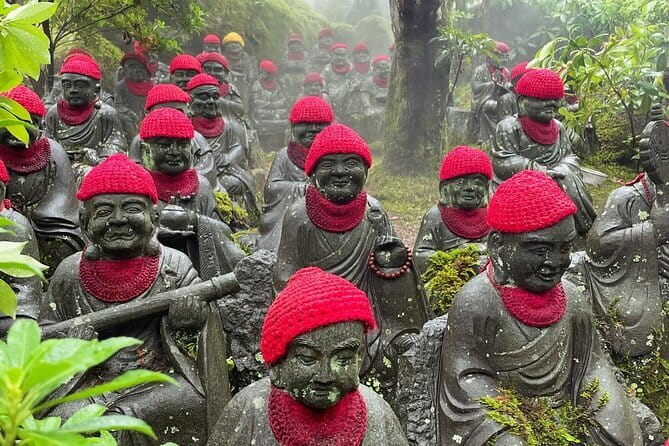
Daishoin Temple is one of the strongest parts of the experience for anyone who wants more than the famous torii. It is described as the oldest temple on Miyajima and sits amid the island’s natural setting.
The temple offers a different mood from Itsukushima Shrine. The shrine is tied closely to the sea and the changing tide. Daishoin brings you into a more reflective temple environment, with its own religious traditions and details to discuss.
The scheduled visit lasts about 45 minutes, making it the longest stop on the island. That gives your guide time to explain the temple’s importance, its connection with influential figures such as Shogun Hideyoshi, and the ways Buddhist practice fits into Miyajima’s spiritual life.
I would give Daishoin special weight if you are interested in religion, architecture, or quieter places. If your main goal is shopping and food, the temple still earns its place, but you may need to keep the visit moving.
Senjokaku and its open wooden spaces
Senjokaku is connected with Itsukushima Shrine and dates to the 16th century. The building is known for its large halls and open, wall-less spaces, creating a calm contrast to the more structured shrine interiors.
It was ordered by Shogun Hideyoshi, adding another layer to the island’s religious and political past. The visit lasts about 20 minutes, enough to appreciate the scale and simplicity of the space without turning it into a long architectural study.
Admission is not included here, so check the current entrance requirement with your guide. The extra charge is likely to be modest compared with the tour price, but it is still worth carrying some money for admissions, food, and transport.
Omotesando Street and Miyajima’s local flavors
Omotesando Street is the island’s practical break from temples and history. It is lined with food shops and souvenir stores selling specialties such as oysters, conger eel rice bowls, and momiji manju, a steamed sweet shaped like a maple leaf.
The tour allows about 40 minutes for the street. That is enough time to look around and sample something if you choose, but lunch is not included. Plan to pay separately for all food and drinks.
This part is useful because it connects the sacred island with everyday commerce. You can see how Miyajima’s identity is presented through food and gifts, rather than only through monuments.
Guides have shared local snacks with their groups, and Yuka has been especially praised for joining in with food and conversation. Still, you should not assume that tastings are included. Treat them as optional purchases from your own budget.
What the guide adds to the day
The guide is the reason to choose this tour over simply taking the ferry and walking around on your own. Several guides are associated with the experience, including Aya, Yuka, Masa Kobayashi, and Mana.
Aya has been described as punctual, friendly, flexible, and attentive to special requests. Yuka has helped cruise passengers manage a tight schedule and has explained Hiroshima and Miyajima in an approachable way. Masa has worked particularly well with history-focused guests and families. Mana has shared personal connections to Hiroshima, including a family story connected with the atomic bombing.
Those details matter because the tour is not only about facts. You can ask for cultural explanations, historical context, family stories, or practical help with tickets and transport. English ability has also been praised, which is important when discussing religious ideas and complicated historical subjects.
The guide’s style will still depend on who leads your group. The provider assigns the guide, so you should not assume you can select one of the named guides. You can, however, use the advance customization consultation to explain your interests, mobility needs, timing limits, or preferred balance of history, food, and scenery.
Cost, transport, and what you really receive
The tour costs $141.23 per person. That is a serious price for a five-hour walking tour, particularly because public transportation costs ¥1,340 per person, food is extra, and private boats or taxis can add ¥2,300 to ¥8,000 each way.
The value comes from the private format and the planning help. You are paying for a local guide dedicated only to your group, advance customization, shrine admission, and tour photo data. For a family or small group that would otherwise hire a guide separately, the price can make sense.
For a solo visitor or couple on a tight budget, self-guided Miyajima is cheaper. You can reach the shrine, temple, shopping street, and torii without joining this experience. The private tour earns its higher price when you want interpretation, a flexible order, help with public transportation, or a more personal connection to Hiroshima and Miyajima.
I would also compare the five-hour length with your wider Hiroshima schedule. If you have limited time in the city, the guide may help you combine Miyajima with Peace Park in a sensible order. If you want a slow island day, five hours may feel too compressed.
Who should book this Miyajima tour
I would choose this experience if you want context rather than only photographs. It suits couples, families, cruise passengers, first-time visitors, and anyone who prefers to ask questions as they walk.
It is especially useful for people interested in Japanese religion and Hiroshima history. The combination of Itsukushima Shrine, Daishoin Temple, Senjokaku, and the guide’s cultural explanation gives you a fuller picture than a short sightseeing loop.
Families may appreciate the private pace and the guide’s ability to adjust for children. History teachers and serious students can ask for more detail. Cruise passengers may find the planning help valuable because the available time is often fixed.
I would hesitate if you want a food tour, a Mount Misen hiking day, or a long visit to the Peace Memorial Museum. Those are not the main focus here. The tour is built around Miyajima’s religious sites, island culture, and guided walking.
Practical details before you reserve
This is a private activity, so only your group participates. Pickup is on foot, and the meeting point is a hotel or train station in Hiroshima City. You should expect walking and public transportation throughout the day.
Most people can participate, and service animals are allowed. The provider asks people with cold symptoms not to join. The experience also requires good weather, and a weather cancellation offers either another date or a full refund.
Free cancellation is available up to 24 hours before the start time. Changes or cancellations inside that window are not accepted for a refund, so check your Hiroshima plans before committing.
The tour includes Itsukushima Shrine admission and photo data, but not lunch, drinks, public transportation, private transportation, or tips. Bring a plan for those costs. You should also allow some flexibility for tide conditions and the order of the stops.
Should you book it?
Book this Miyajima tour if you want a private guide to explain the island’s spiritual meaning, help manage the transport, and shape the day around your interests. The strongest reasons are the personal attention, the cultural context, and the chance to see Daishoin and Senjokaku as well as the famous torii.
Skip it if you are comfortable exploring independently or need the lowest-cost option. The price rises once you add transport and food, and the five-hour schedule cannot cover every Hiroshima attraction at a relaxed pace.
For many visitors, the best choice comes down to one question: do you want to simply see Miyajima, or do you want help understanding why the island matters? If the second answer is yours, this private format is worth serious consideration.
FAQ
How long does the Miyajima tour last?
The experience lasts approximately five hours.
Where does the tour begin?
You meet the guide on foot at a hotel or train station in Hiroshima City.
Is transportation included?
No. The tour uses public transportation, and the listed basic transportation cost is ¥1,340 per person.
Can I use a private boat or taxi?
Yes. Private transportation is available as an option, including fast boats, direct boats, or taxis. The stated cost is approximately ¥2,300 to ¥8,000 each way.
Is lunch included?
No. Food and drinks are not included in the tour price.
Is admission to Itsukushima Shrine included?
Yes. The entrance fee for Itsukushima Shrine is included.
Is admission to Senjokaku included?
No. Admission to Senjokaku is not included.
Is this a group tour?
No. This is a private activity, so only your group participates.
Can the itinerary be customized?
Yes. Advance customization consultation is included, and the order of Miyajima and Peace Park can be changed.
What happens if the weather is poor?
The experience requires good weather. If it is canceled because of poor weather, you can choose a different date or receive a full refund.
Just added around Hiroshima
- Full Day Hiroshima and Miyajima Tour by Bullet Train from Kyoto★ 4.5 · 120 reviews
- Hiroshima Saijo Sake Tasting Tour with visit to 7 Breweries★ 5.0 · 104 reviews
- The Peace Memorial to Miyajima : Icons of Peace and Beauty★ 4.5 · 31 reviews
- Shore Excursion from Hiroshima Port : Private Tour in Hiroshima★ 5.0 · 17 reviews
- Okunoshima Rabbit Island Cycling Tour with Local Guide★ 4.5 · 17 reviews
- Hiroshima & Miyajima All-Inclusive Tour w/Licensed guide Pancho★ 5.0 · 54 reviews
- Private Full Day Hiroshima Tour★ 4.5 · 29 reviews
- Hiroshima Private Tour with a Local – Highlights & Hidden Gems★ 4.5 · 24 reviews
Temples & Shrines, compared.

Tea Ceremony in a Traditional Tea House in Kiyomizu
Our verdict →

Meiji Shrine, Asakusa, Skytree Bus Tour and Cruise
Our verdict →
Fushimi Inari Hidden Hiking Tour (Private Option Available)
Our verdict →
Osaka/Kyoto:Kinkakuji,Arashiyama,FushimiInariShrine,NaraPark
Our verdict →
Nikko: Kegon Falls, Lake Chuzenji & Toshogu Temple
Our verdict →
Kamakura & Enoshima Day Trip including Temple Tickets
Our verdict →Browse the lists this tour appears in