
Reviewed · SUMO EXPERIENCES
November Sumo Tournament tour in Fukuoka (Tickets Included)
Fukuoka’s November sumo tournament gives you a rare look at Japan’s national sport while the action is still unfolding in front of you. The afternoon centers on the stronger wrestlers, the ring-entering ceremony around 3:30 PM, and the serious hush that settles over the hall before each bout.
I like two things here: tickets are included, a big help for a tournament that can sell out quickly, and an English-speaking guide explains the rules and rituals as you watch. Guides such as Yuko, Masa, Asa, and Tam Tam have been singled out for their passion and clear explanations.
The main catch is the seating. You receive a 3F Chair A or B seat, with no seat choice, and some seats are near the back with limited closeness to the dohyo. At $261, you are paying for access and guidance as much as for the ticket itself.
Key points to know before booking
- Fukuoka hosts sumo in November: The tournament runs for 15 days, with the strongest bouts in the afternoon.
- The key ceremony begins around 3:30 PM: You arrive after the early lower-ranked matches, when the main program is getting underway.
- Guides explain sumo as you watch: Expect help with rules, wrestlers, rituals, and the culture around the sport.
- Seats are fixed in the third floor: You cannot choose your location, and Chair A or B seats may be far from the ring.
- Bring money for snacks and drinks: Beer, yakitori, and other food are sold inside, but they are not part of the tour.
- Plan to arrive early: The group leaves at 2:30 PM sharp from Fukuoka Kokusai Center.
Why the November tournament is worth your afternoon
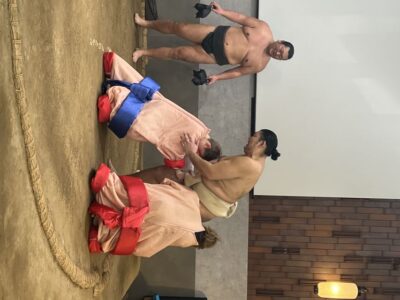
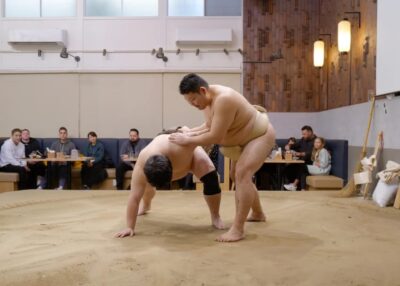
Sumo is easy to misunderstand if you only see short clips. The bout itself can last seconds, but the minutes before it are full of ceremony: wrestlers enter, salt is thrown, bodies are stretched, and both men take time to prepare.
That ritual is part of the sport, not filler between matches. A guide helps you see why the wrestlers stamp their feet, why the ring matters, and how rank shapes the day. Without that context, you might simply see two large men pushing and shoving. With it, you begin to read the gestures, pauses, and crowd response.
Fukuoka’s tournament is one of only six major sumo tournaments held each year. Tokyo has three, while Osaka, Nagoya, and Fukuoka each host one. The November event gives Fukuoka a special place on the sumo calendar, and tickets can be difficult to secure through the official sales channel.
The tournament day begins early, at about 8 AM, with lower-ranked wrestlers. This tour joins in the afternoon, so you miss the opening hours but arrive in time for the more prominent matches. The strongest wrestlers appear from around 3:30 PM, and the day finishes at about 6 PM.
More Sumo Experiences in Fukuoka:
- Fukuoka Sumo Tournament November 2025 with a Sumo Expert Guide
★ 5.0 · 21 reviews - Tokyo: Sumo Show Experience with Chicken Hot Pot and a Photo
★ 4.8 · 6,678 reviews - Tokyo: Sumo Show and Dining Experience
★ 4.8 · 2,742 reviews
Meeting at Fukuoka Kokusai Center at 2:30 PM
The meeting point is Fukuoka Kokusai Center, at 2-2 Chikkōhonmachi in Hakata Ward. The activity begins at 2:30 PM, although the meeting instructions also refer to gathering at about 2:15 PM. I would treat 2:15 PM as the safer arrival time.
This matters because it is a group tour, and the guide leaves promptly. The guide is usually identifiable by the instructions provided for the day, but clear directions have not always felt sufficient for people unfamiliar with the venue. Give yourself time to locate the correct spot rather than arriving at the last second.
Your guide leads the group into the convention center and helps you get oriented. Tickets are handed out on the tour date, rather than sent to you in advance. Keep your booking confirmation available on your phone.
The tour is near public transportation, and most people can take part. Strollers may be stored at the venue, but they cannot be taken up to the seating area. Large luggage also cannot be brought to your seat, so arrive with only what you can comfortably keep with you.
A short lesson before the first major bouts
The educational part of the tour is important, especially if this is your first sumo event. The guide covers what sumo is, how matches are won, basic rules, and the history and traditions surrounding the sport.
The depth of this introduction can vary. Some guides have offered thorough explanations before and during the matches. Other groups have found the pre-match briefing brief and wished for more background before taking their seats.
That is worth knowing if you are booking mainly for a structured cultural lesson. You should expect useful help, but not necessarily a long classroom-style presentation. The guide’s greatest value often comes during the bouts, when you can ask about a wrestler, a ritual, or a rule at the moment it becomes relevant.
Guides named in the feedback include Yuko, Masa, Asa, and Tam Tam. Yuko is praised for making the afternoon memorable, while Masa is described as attentive and ready to answer questions. Asa’s enthusiasm and care for her group made a strong impression, and Tam Tam helped explain how sumo is as much about ritual as physical competition.
The company has also indicated that audio support may be used alongside live guiding. That can help when the group is spread out or the arena is noisy, though you should not assume every explanation will be equally detailed.
Watching the dohyo from a third-floor chair
Your ticket is for a 3F Chair A or B seat. You cannot choose the exact seat, and this is the most important limitation to understand before paying $261.
The chair section gives you a proper individual seat, unlike floor-level box seating, but the view may be distant. Some seats are near the back of the hall, making the wrestlers look smaller and limiting the feeling of being close to the dohyo. Other groups have been seated together, which is helpful if you are attending with family or friends, but the exact arrangement depends on the tickets assigned.
You will still see the full ring and follow the action. Sumo is not only about a close-up view of the wrestlers. The audience reactions, the formal entrances, the referee’s movements, and the steady rhythm of the program all matter.
Still, do not book this experience expecting premium ringside access. If being close to the action is your priority, check the exact seat category carefully and compare it with the official ticket price before booking.
The guide may move between people or answer questions during the matches. The advertised maximum is 15 participants, but some past groups have felt larger than that. A larger group can make personal contact harder, especially if everyone has questions at once.
A few more Fukuoka half-days worth comparing
- Private Fukuoka Tour with a Local, Highlights & Hidden Gems 100% Personalised
★ 5.0 · 143 reviews - Fukuoka Your Way: 100% Customisable Private Tour with Local Guide
★ 5.0 · 83 reviews - Fukuoka Full-Day Private Tour with Government Licensed Guide
★ 5.0 · 55 reviews - Fukuoka: Nakasu Food Stall Private Guided Tour with Tastings
★ 4.8 · 48 reviews
The afternoon schedule and what you actually see
The tour lasts about three and a half hours according to the main timing, while the venue portion is described as roughly three hours. In practical terms, you meet around 2:15 to 2:30 PM, watch the afternoon program, and finish when the tournament day ends around 6 PM.
You are not attending from the first match at 8 AM. That is a sensible choice for most visitors because the early bouts involve lower-ranked wrestlers, while the afternoon brings the higher-ranked competitors and the main ceremony.
Around 3:30 PM, the dohyo-iri, or ring-entering ceremony, becomes a central moment. Wrestlers enter in groups, and the ceremony gives you a clear view of the ranking structure and formal side of the sport.
The best part of the afternoon is the gradual change in mood. Early matches can feel like a chance to learn the rhythm. As the higher-ranked wrestlers appear, the hall grows more focused and the bouts carry greater weight.
Your guide helps you understand who is entering and what to watch. That can turn a confusing sequence of short matches into a story about rank, style, and reputation.
Beer, yakitori, and the relaxed side of the arena
You are free to buy food and drink inside the stadium and eat at your seat. Beer and yakitori are specifically mentioned, and this is one of the pleasures of the afternoon.
Bring cash, especially if you plan to buy refreshments or merchandise. Food and drinks are not included in the $261 price, so budget for them separately.
The relaxed food option balances the formal nature of sumo. You can watch a serious bout while sharing skewers or having a beer, much as Japanese spectators do at sporting events. You can also bring your own food and drink into the arena, according to the practical guidance provided for this experience.
Remember to clean up after yourself. The venue is part of the experience, and leaving food containers or rubbish at your seat is poor form.
Is $261 good value for this sumo experience?
The price is easiest to judge in three parts: the ticket, the convenience, and the guide.
The ticket matters because November tournament seats may sell out quickly. If you are unable to buy directly, a package that secures entry has real value. You also avoid trying to understand Japanese ticket sales while planning an international trip.
The guide adds another layer. You receive explanations about the sport, its traditions, the wrestlers, and how to follow the bouts. That help is especially useful if you know little about sumo and want more than a silent seat in the arena.
But the price becomes harder to justify if you view it as a simple ticket purchase. Third-floor Chair A or B seats can have a low face value, and you cannot choose a closer section. Some people have felt they paid a large premium for a distant seat and a guide shared with a sizable group.
My practical advice is to compare the official ticket categories before you book. If the official event is sold out and attending this tournament is important to you, the package may be worth the extra cost. If you can buy a similar seat directly, then the guide service needs to be valuable to you to justify the difference.
Who will enjoy this afternoon most?
This tour suits you if you want a clear introduction to sumo and prefer to have someone explain what is happening in real time. It is also useful if you have limited time in Fukuoka and want to focus on the afternoon’s strongest bouts rather than spend the entire day at the center.
First-time sumo spectators are likely to get the most from the explanations. You do not need to know the rules in advance, and the guide can help you recognize the difference between a ritual and an actual scoring action.
Families can participate, though children have specific seating rules. Children aged three and under enter free but do not receive their own seat, so they must sit on an adult’s lap. Children aged four and older need their own ticket. Tell the operator in advance if you are bringing a child aged three or under.
This may not suit you if you want premium seats, a very small group, or a long formal lecture before the matches. It may also disappoint if you expect the guide to sit beside you and provide constant one-on-one attention throughout the program.
Practical details that can make the day easier
Arrive before 2:30 PM. The group leaves on time, and being late can create real problems at a large venue.
Keep your phone charged, since the ticket and booking information are mobile. Wear something comfortable for several hours of seated viewing, and avoid bringing large bags.
Plan to buy food and drinks separately. Cash is a useful precaution for beer, yakitori, and merchandise.
The activity ends back at the meeting point. Free cancellation is available if you cancel at least 24 hours before the local start time. Within 24 hours, the payment is not refunded, and late changes are not accepted.
Should you book the Fukuoka sumo tour?
Book it if you want a guaranteed seat at the November tournament and would benefit from an English-speaking guide explaining the sport as it happens. The access is the strongest reason to choose it, followed by the chance to understand sumo’s rituals instead of simply watching unfamiliar matches.
Before paying, accept the seat conditions. You receive a third-floor Chair A or B seat, not a seat you select, and the view may be far from the ring. At $261, this is best viewed as a ticket-access and cultural explanation package, not a bargain seat.
If you are flexible on price and want the easiest route into a sold-out event, it can be a smart choice. If you care most about sitting close to the dohyo, compare other options first.
FAQ
Where does the sumo tour meet?
The meeting point is Fukuoka Kokusai Center, 2-2 Chikkōhonmachi, Hakata Ward, Fukuoka, Japan.
What time does the tour start?
The official start time is 2:30 PM. The meeting instructions also advise gathering around 2:15 PM, so arrive early.
How long does the experience last?
The activity takes approximately three and a half hours. The venue portion is described as about three hours, with the tournament ending around 6 PM.
Which sumo tournament does this tour attend?
It attends the Fukuoka tournament held in November. Fukuoka hosts one of Japan’s six major annual sumo tournaments.
What type of seat is included?
You receive a 3F Chair A or B seat. The exact seat cannot be chosen.
Are food and drinks included?
No. You can buy beer, yakitori, and other food inside the stadium, or bring your own food and drink into the arena.
Can children join the tour?
Children aged three and under can enter for free but must sit on an adult’s lap. Children aged four and older need their own tickets.
Can I cancel for a full refund?
Yes, if you cancel at least 24 hours before the experience’s local start time. Cancellations or changes made within 24 hours are not refunded or accepted.
Just added around Fukuoka
- Fukuoka Sumo Tournament November 2025 with a Sumo Expert Guide★ 5.0 · 21 reviews
- Dazaifu and Yanagawa Canal Cruise Private Guide Day Tour by Train★ 5.0 · 13 reviews
- Fukuoka Group/Private Tour by Local Professionals!★ 5.0 · 15 reviews
- Hakata Old Town Walking Tour Tracing the True History of Fukuoka★ 5.0 · 17 reviews
- Colors of Japan, Fukuoka Nokonoshima Island Park & Wagyu BBQ★ 5.0 · 15 reviews
- Bike Tour in Fukuoka City【Bike is Life】Fukuoka ” Hakata ” Ride★ 4.5 · 18 reviews
- Fukuoka Private Tour: Heart and Tradition of Hakata★ 5.0 · 19 reviews
- Fukuoka’s Sacred Path: Temples, History & Culture★ 5.0 · 17 reviews
Sumo Experiences, compared.
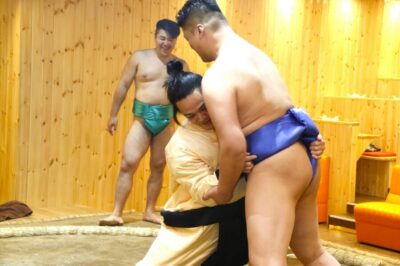
Sumo Show Experience with Chicken Hot Pot and a Photo
Our verdict →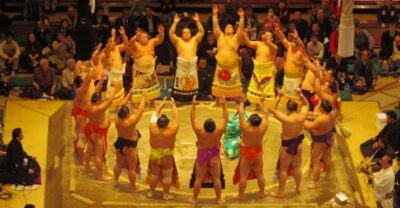
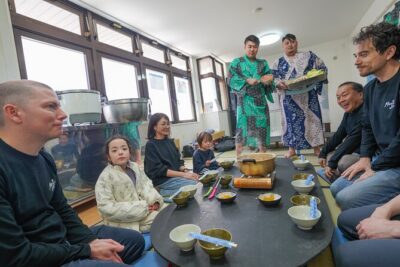
Authentic Sumo Experience in Tokyo: Enter the Sanctuary
Our verdict →

Browse the lists this tour appears in