
Reviewed · HISTORICAL TOURS
Hakata Old Town Walking Tour Tracing the True History of Fukuoka
Hakata’s story comes alive in small places: a temple gate, a wooden townhouse, a tea shop that has served its community for 300 years. This three-and-a-half-hour walk links those pieces with shrines, crafts, food, and trade ties to the Asian mainland. The tea stop and the chance to see the giant Buddha at Tochoji are my two favorite reasons to book.
I also like the small group size, capped at 10 people, and the way the walk finishes at Kushida Shrine rather than sending you back to the starting point. You get a useful slice of central Fukuoka without spending a full day on a bus. The main drawback is the fixed noon start and roughly 3 kilometers of walking, with no late-arrival option.
Key points to know before you book
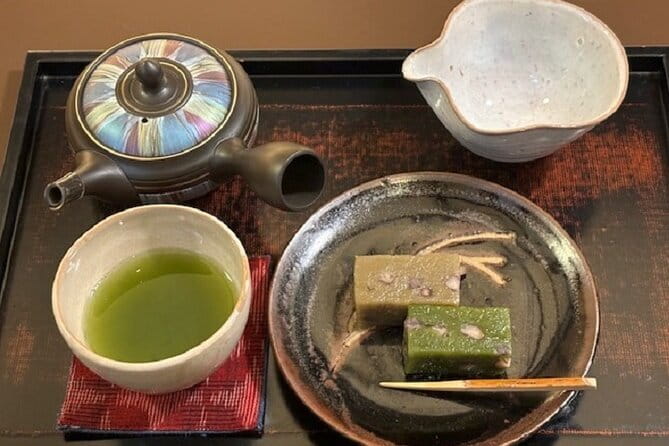
- Taste Yame kabusecha: Try a less bitter green tea with a fuller umami flavor, paired with a local Japanese confection.
- See Tochoji’s Fukuoka Daibutsu: The temple houses Japan’s biggest wooden Buddha.
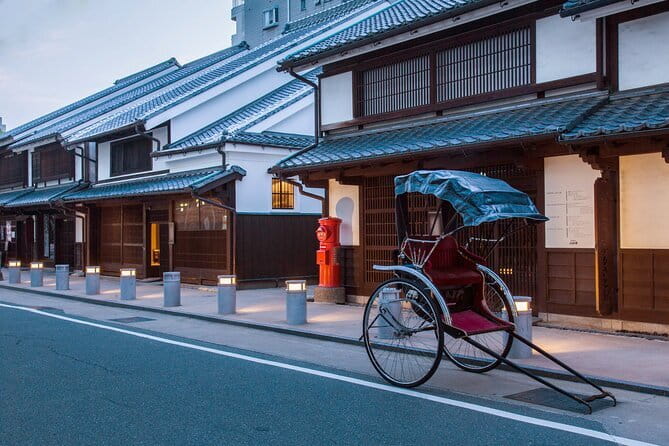
- Walk through true Hakata Old Town: Sennen-no-Mon and nearby temple streets give context to the district’s past.
- Visit a traditional townhouse replica: Hakatamachiya Furusatokan explains local festivals, crafts, and everyday customs.
- Finish at Kushida Shrine: The home of the Hakata Gion Yamakasa festival displays its large decorative float year-round.
- Keep the afternoon free: The tour begins at noon and lasts about 3 hours 30 minutes, but road conditions and walking pace can change the timing.
Why this walk explains Hakata better than a quick shrine stop
Fukuoka is often treated as a food city and a convenient gateway to Kyushu. That is fair, but it leaves out Hakata, the older urban center that grew through trade with the Asian continent. This walk gives you a way to see that story in physical form.
You move from temples to a tea shop, then from a reconstructed townhouse to a working shrine. That order matters. Instead of treating each sight as an isolated photo stop, the guide can connect religion, commerce, annual festivals, food customs, and local identity.
The tour is conducted in English and limited to 10 people. That is small enough for questions without requiring the cost of a private guide. A previous tour guide named Miyoko was praised for being punctual, kind, and able to answer questions about the area. Guide assignments can change, but the small format should still make conversation easier than on a large coach tour.
The walk starts at noon at the Fukuoka City Tourist Information Center beside Hakata Station. You need to arrive on time. Late arrivals cannot join partway through, and the booking is canceled if you miss the departure.
More Historical Tours in Fukuoka:
- Fukuoka Essentials: History, Culture, & Charms
★ 4.8 · 39 reviews - Fukuoka’s Sacred Path: Temples, History & Culture
★ 5.0 · 17 reviews - World Heritage Shirakawa-go and Experience Tours from Kanazawa
★ 5.0 · 4,049 reviews
Sennen-no-Mon and the first steps through Old Hakata
The opening section takes you through Hakata Old Town toward Jotenji Temple. You first encounter Sennen-no-Mon, a welcome gate that marks the Old Town area. It gives the walk a clear sense of place before you reach the major temple buildings.
Jotenji Temple itself receives a short stop, listed as 15 minutes for the 2025 schedule and 30 minutes for the 2026 schedule. The walk through the surrounding streets is part of the appeal. You are not simply dropped in front of a famous building, given a quick explanation, and moved along.
This part is useful if you want to understand the shape of Hakata. The area’s identity grew around religious sites, merchant activity, and connections beyond Japan. Your guide can point out how the neighborhood’s customs developed, though the exact amount of time at each point may shift with walking speed and road conditions.
Do not expect a long, quiet temple visit here. The schedule is compact, and the group still has four other stops ahead. Think of Jotenji and Sennen-no-Mon as an introduction to the district rather than the central event of the afternoon.
Tochoji Temple and the great wooden Buddha
Tochoji gets a longer look, with 20 minutes in the 2025 schedule and 40 minutes in the 2026 schedule. That difference is worth checking when you reserve, since it changes how much time you may have inside the grounds.
The temple’s five-story pagoda is now regarded by locals as a symbol of Hakata. The more unusual sight is the Fukuoka Daibutsu, described as Japan’s biggest wooden Buddha. It gives this stop real weight, especially if you have already seen several smaller temples in Japan and want something on a larger scale.
Admission is included. That removes one small decision during the walk and means your guide can focus on the setting rather than sending you to buy tickets.
Your visit may depend on the conditions at the temple. Religious sites sometimes restrict entry, and the route can be changed if access is not possible. Possible replacement destinations include Waka Hachimangu Shrine, Myoraku-ji Temple, Engaku-ji Temple, and Ryugu-ji Temple. No refund is provided if one of these alternatives replaces a listed stop, so book this as a guided Hakata history walk rather than a guarantee of entry to every named site.
A tea break at the 300-year-old Mitsuyasu Seikaen
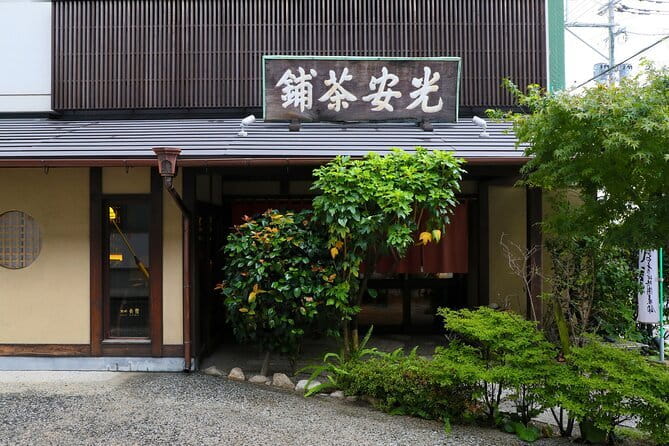
The most distinctive stop is Mitsuyasu Seikaen Tea Leaf Shop, a business with 300 years of history. The setting gives you a pause from the walking and a direct taste of Fukuoka’s local food culture.
You receive kabusecha from Yame, a tea-producing area in Fukuoka. Kabusecha is shaded during cultivation, which helps produce a tea with less bitterness and more umami. You also receive a Japanese confection, with the teacake charge included in the tour price.
I like this stop because it gives you something to do, not just something to look at. You can taste the difference between a local tea and the more general green tea served in many restaurants. The sweet also makes sense alongside the tea, rather than feeling like an unrelated snack added to the schedule.
The tea break is listed as 40 minutes for 2025 and 30 minutes for 2026. That is enough time for a proper rest, but not enough to turn the visit into a long tea ceremony. The information provided does not describe a formal ceremony, so you should expect tea tasting and local confectionery in the shop’s traditional interior.
Children aged 0 to 5 can join free, but their seat and teacake are not included. You can instead book them at the child rate if you want those items included.
More Walking Tours in Fukuoka:
- Fukuoka Private and Personalized Walking Tour with a Local
★ 4.7 · 46 reviews - Fukuoka: Private Walking Tour with Local Guide
★ 4.8 · 22 reviews - Kyoto Geisha Walking Tour: Gion District & Hidden Gems
★ 4.7 · 3,273 reviews - Tokyo Tsukiji Fish Market Food and Culture Walking Tour
★ 5.0 · 3,184 reviews
Hakatamachiya Furusatokan and everyday local life
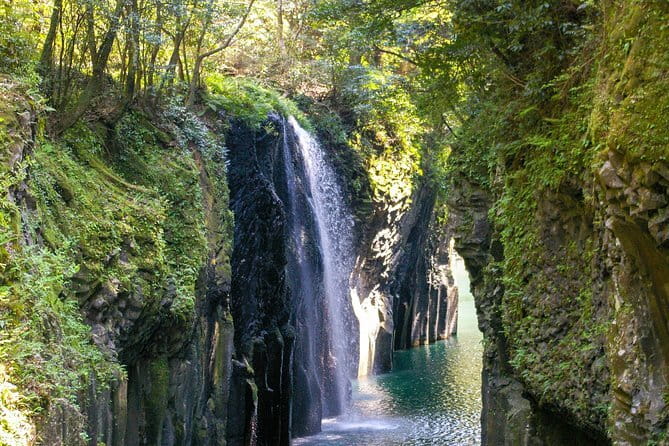
After the tea stop, you visit Hakatamachiya Furusatokan. The building is a replica of a traditional Hakata townhouse, and its exhibits cover annual events, handicrafts, and daily life in older Fukuoka.
This is an important balance to the temples. Shrines and pagodas show the public and religious face of a place. A townhouse museum helps you think about how people worked, celebrated, made things, and organized ordinary life.
The stop lasts 25 minutes in 2025 and 40 minutes in 2026. If you care about crafts and local customs, the longer schedule will give you more room to look closely. If you prefer famous buildings and outdoor sights, this may feel slower, but it is one of the stops that gives the tour its local character.
I would pay attention to the annual events section. Hakata’s festivals are not just entertainment for visitors. They are part of the way the city presents its identity and links present-day Fukuoka with older customs. The guide’s explanations can help you understand why the displays matter instead of leaving you to guess from labels.
Kushida Shrine and the Hakata Gion Yamakasa
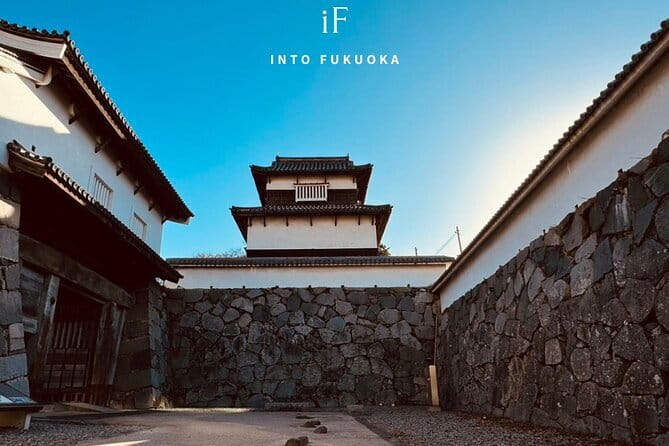
The tour finishes at Kushida Shrine, Hakata’s oldest tutelary shrine. Locals affectionately call it Okushida-san, and it is closely tied to the Hakata Gion Yamakasa festival.
The shrine displays kazariyama floats throughout the year. These large decorative structures are associated with the festival and give you a visual way to connect the earlier townhouse and craft displays with a living annual tradition.
This is a strong ending because it leaves you in the middle of Hakata’s old center rather than at a generic transport stop. From here, Kushida Shrine is about a 15-minute walk from JR Hakata Station. The guide will explain how to return, but you are responsible for making your own way to your next destination.
The tour ends in front of the shrine. That is useful if you want to continue exploring on foot, visit nearby parts of Hakata, or stop for food after the tour. It also means you should not plan another appointment immediately after the scheduled finish. Road conditions, the group’s physical stamina, and access to the shrines and temples can delay the arrival time.
What the $190.49 price gives you
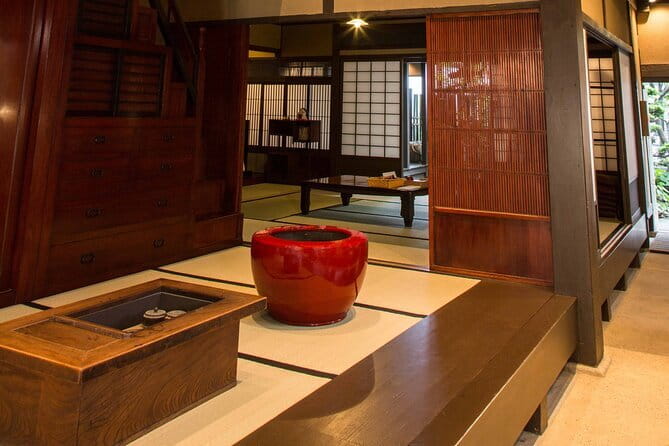
At $190.49 per person, this is not a cheap orientation walk. The value depends on how much you want interpretation and structure.
You are paying for an English-speaking guide, admission fees, the tea and Japanese confection, and a carefully linked route through five different types of place. The group size is limited to 10, which matters in temples and inside the smaller tea shop. You are also paying to avoid having to research the connections between Yame tea, Hakata festivals, religious sites, and local crafts on your own.
The price is harder to justify if you only want to see the outside of the main shrines. You could walk around Hakata independently for less. But independent sightseeing will not provide the same built-in explanation, tea tasting, or organized access to the townhouse exhibits.
The tour is booked an average of 67 days ahead, so this is not an activity I would leave until the last minute if it fits your schedule. Confirmation is subject to availability and is sent within 48 hours of booking.
Walking, timing, and who will enjoy it most
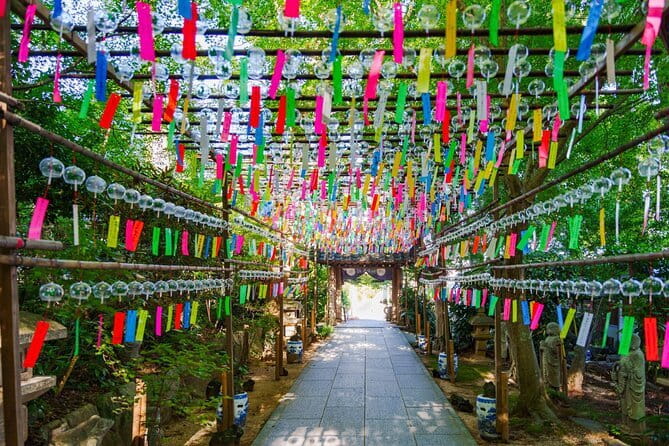
You will walk approximately 3 kilometers over the full itinerary. The tour asks for moderate physical fitness, and comfortable clothing and shoes are essential. There is a rest at the tea shop, but you should not treat this as a seated sightseeing tour.
The noon start works well if you want a relaxed morning at Hakata Station or need time to arrive from another part of Fukuoka. It also places the tea break in the middle of the afternoon. The fixed start is less convenient if you have a morning train, a lunch reservation, or a tight evening departure.
Public transportation can be used partway through, but you must pay the fare yourself. The normal plan is to walk the entire route.
The tour suits you best if:
- You want a guided introduction to Hakata rather than a list of isolated sights.
- You enjoy temples, local food, crafts, and festival traditions in equal measure.
- You value a small group and the chance to ask questions.
- You can comfortably walk 3 kilometers and keep a fixed schedule.
- You want to finish near Kushida Shrine and continue on your own.
It may not suit you if you need wheelchair-friendly pacing, want a private tour, or prefer a long visit at one major temple. The supplied information does not give specific accessibility details, so anyone with mobility concerns should confirm directly before booking.
Participants under 18 need written parental permission. Anyone under 15, or not yet enrolled in middle school, must be accompanied by a parent or guardian.
Should you book the Hakata Old Town walk?
Book it if you want Fukuoka explained through its older center, not just sampled through food. The combination of Tochoji’s great Buddha, a historic tea shop, a townhouse display, and Kushida Shrine gives you a good range in one afternoon.
I would especially recommend it for a first visit to Fukuoka, for anyone curious about local customs, and for people who appreciate a guide who can answer questions. The reported experience with Miyoko suggests the small group can feel personal and well managed, though a different guide may lead your departure.
Skip it if you want a flexible route or a bargain-priced stroll. The cost is high for a 3-kilometer walk, and the schedule can change if a shrine restricts entry or the group runs late. For the right visitor, though, the tea tasting and local context make this far more useful than simply collecting shrine photographs.
FAQ
Where does the tour begin?
It begins at the Fukuoka City Tourist Information Center at Hakata Station, 1-1 Hakataekichūgai, Hakata Ward, Fukuoka.
What time does the tour start?
The scheduled start time is 12:00 pm.
Where does the tour end?
It ends in front of Kushida Shrine at 1-41 Kamikawabatamachi, Hakata Ward, Fukuoka.
How long is the tour?
The tour lasts approximately 3 hours 30 minutes.
How far will I walk?
You will walk approximately 3 kilometers during the full itinerary.
Is the tour conducted in English?
Yes. An English-speaking guide leads the tour.
Is tea included?
Yes. The tour includes kabusecha from Yame and a local Japanese confection at Mitsuyasu Seikaen Tea Leaf Shop.
Is admission included?
Admission fees listed for the tour are included. Fees not specifically listed as included are not covered.
Can I cancel for a refund?
You can receive a full refund if you cancel at least 24 hours before the experience start time. Cancellations or changes made less than 24 hours before the start are not refunded or accepted.
Just added around Fukuoka
- Fukuoka Sumo Tournament November 2025 with a Sumo Expert Guide★ 5.0 · 21 reviews
- Dazaifu and Yanagawa Canal Cruise Private Guide Day Tour by Train★ 5.0 · 13 reviews
- Fukuoka Group/Private Tour by Local Professionals!★ 5.0 · 15 reviews
- Colors of Japan, Fukuoka Nokonoshima Island Park & Wagyu BBQ★ 5.0 · 15 reviews
- Bike Tour in Fukuoka City【Bike is Life】Fukuoka ” Hakata ” Ride★ 4.5 · 18 reviews
- Fukuoka Private Tour: Heart and Tradition of Hakata★ 5.0 · 19 reviews
- Fukuoka’s Sacred Path: Temples, History & Culture★ 5.0 · 17 reviews
- Fukuoka Evening Tours: Yatai, Izakaya, Karaoke and more★ 5.0 · 21 reviews
Historical Tours, compared.

Imperial Palace and Shogun Historical Walking Tour
Our verdict →
World Heritage Kyoto & Nara Uji Authentic Matcha Experience
Our verdict →
Kyoto Gion: 2-Hour Geisha Culture & History Walking Tour
Our verdict →
Hiroshima Historical Walking Tour – Why A-Bomb was Dropped
Our verdict →
Yanaka Walking Tour: Historic and Traditional District of Tokyo
Our verdict →
Shinjuku Historical Walking Tour & Secret Backstreets
Our verdict →
Mt. Fuji Heritage Tour: Traditional Villages, Lakes & Shrine
Our verdict →Browse the lists this tour appears in