Reviewed · FULL-DAY
Aomori Full-Day Private Trip with Government-Licensed Guide
Aomori’s best stories are spread between enormous Nebuta floats, ancient Jomon foundations, bold modern buildings, and museums devoted to local artists. This private tour lets you shape the day around those interests instead of following a fixed bus route. Wa Rasse and Sannai-Maruyama are the strongest pair for a first visit.
I like the chance to work with guides such as Kaz, Tomohiko Kudo, Fuji, or Rocky Tanaka, since several guides have tailored days around apples, food, temples, art, and local traditions. I also like that the tour is limited to your own party, making it easier to adjust the pace or spend longer at a place that catches your attention.
The main caution is that six hours is not enough for all six listed sights. You choose three or four, and you pay for admission, lunch, and transport yourself. Guide quality can also vary, so confirm your guide and plan in advance.
Key points to know before booking
- Choose three or four sights: The day is designed around your interests, not a fixed six-stop schedule.
- See real Nebuta floats: Wa Rasse displays five large floats from the previous festival, with video, sound, and photographs.
- Visit a major Jomon site: Sannai-Maruyama presents reconstructed foundations from a settlement first found in 1992.
- Expect a walking tour: Pickup means meeting your guide on foot within the designated Aomori city area.
- Budget beyond the tour price: The $154.84 per-person fee excludes admissions, transport, lunch, and personal purchases.
- Ask about the guide: Past guides have included Kaz, Tomohiko Kudo, Fuji, Rocky Tanaka, Tomi, and Kazu.
A private look at Aomori’s two big stories
Aomori is often treated as a stopover on the way to somewhere else. That is a mistake. The city has two especially strong stories to tell: the summer Nebuta Festival and the much older Jomon settlement at Sannai-Maruyama.
This tour gives you a way to connect those stories. At Wa Rasse, you see the scale and drama of Nebuta without needing to visit during the August 2 to 7 festival. At Sannai-Maruyama, you move far beyond modern Japan and look at the foundations of a settlement from the Jomon period.
The private format matters here. You can ask why Nebuta floats are built the way they are, how the festival works, or what archaeologists learned from the Sannai-Maruyama site. A guide can also adjust the balance between museums, outdoor sites, food, and religious buildings.
The published score is strong at 4.8 out of 5 from 33 ratings, with 94 percent recommending the experience. That is encouraging, but the guide is the key variable. The best accounts describe guides who communicated before the tour, handled special requests, and brought local knowledge to places such as Sannai-Maruyama. One serious complaint describes poor time management, incorrect festival information, rushed meals, and missed stops. I would treat the tour as a flexible framework, not a guarantee that every suggested sight will fit.
More Full-Day Tours in Japan:
- From Tokyo: Mount Fuji Full-Day Sightseeing Trip
★ 4.5 · 4,970 reviews - Mount Fuji Full-Day Private Tour from Tokyo (Customizable)
★ 4.9 · 1,470 reviews - Hiroshima / Miyajima Full-day Private Tour with Government Licensed Guide
★ 5.0 · 1,298 reviews
What six hours really gives you
The tour lasts about six hours, but the included plan is three or four sights from a larger list. That distinction is important. The six locations below are possible choices, not a promise that you will visit all of them.
A sensible first-time plan might pair Wa Rasse with Sannai-Maruyama and then add either the Aomori Museum of Art or the Prefectural Kyodokan. If you prefer art, you might choose Wa Rasse, the Aomori Museum of Art, the Munakata Shiko Memorial Museum, and the Contemporary Art Center.
I would not try to force all six into one day. The tour is conducted on foot, and transportation fees are not included. If your guide recommends a bus or train between distant stops, that cost is yours. Lunch also uses part of the six-hour window, so decide early if food is a priority.
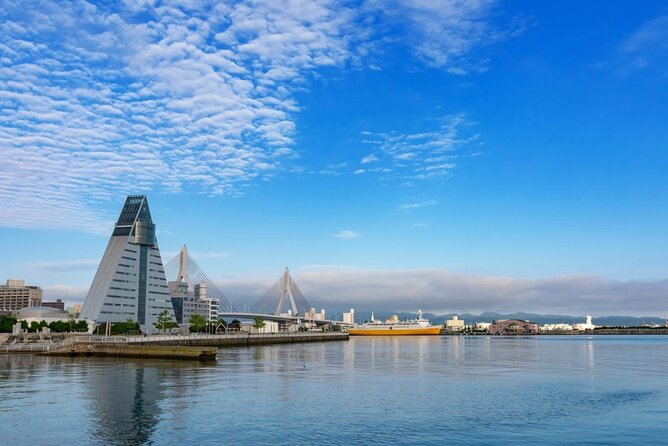
The city keeps much of its Edo-period grid pattern, although it suffered heavy bombing during World War II. Many current attractions are modern buildings, which gives the day an unusual mix of old city lines, contemporary architecture, archaeological remains, and festival tradition.
Wa Rasse and the power of Nebuta
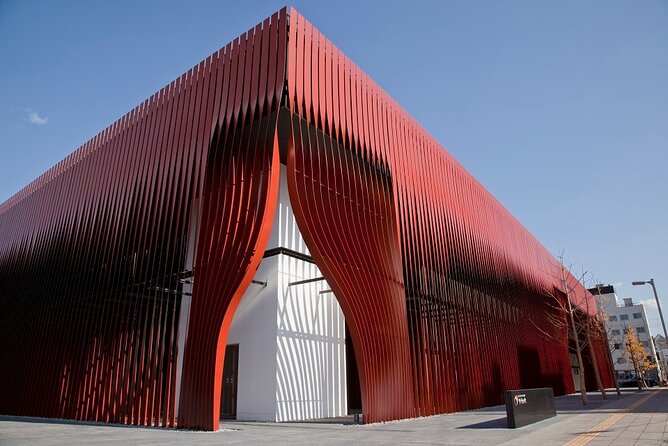
Nebuta Museum Wa Rasse is the clearest starting point for understanding Aomori. The arts and cultural center displays five floats from the previous year’s festival. These are not small museum models. The huge illuminated forms show why Nebuta is such a major event in northern Japan.
Inside, you can expect video installations, recorded sounds, and photographs that explain the festival atmosphere. The visual effect is impressive, but the guide adds value by explaining what you are looking at and how the floats relate to Aomori’s annual celebration.
Allow about an hour, plus admission. The ticket is not included in the tour price, and the guide’s entry fee is covered only for sights listed in the official selection. Confirm the current admission arrangements before the day.
The Nebuta Festival takes place from August 2 to 7. If you visit during that period, ask your guide exactly what is happening that day. One past complaint involved incorrect information about a parade, so I would not rely on a casual answer when festival events matter to your plans. Ask for times and locations in writing if you are visiting during festival season.
Sannai-Maruyama and the Jomon past
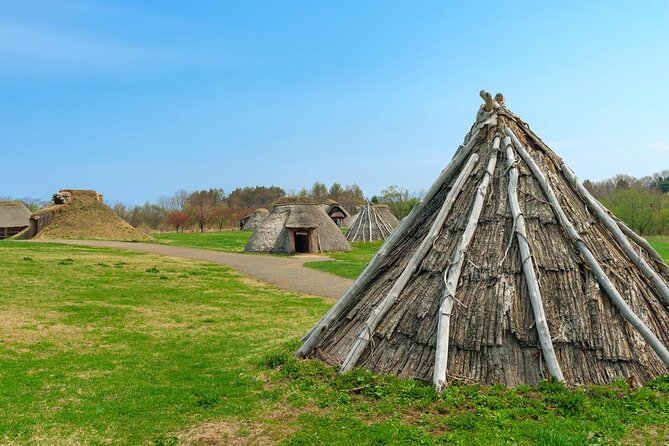
Sannai-Maruyama is the strongest stop for anyone interested in archaeology or early Japanese history. The site reveals reconstructed foundations of a Jomon-era settlement. It was first discovered in 1992 and later declared a special national historic landmark.
What makes the place useful is its physical scale. You are not simply looking at a display case of old pottery. The reconstructed settlement foundations help you picture how people organized daily life many thousands of years ago. The related museum material can put the site’s tools, structures, and culture into context.
Several guides have received especially warm praise for their handling of Sannai-Maruyama. Kaz, in particular, has led visitors through the site with detailed explanations of the excavation, culture, and archaeological findings. If this is your main reason for booking, request a guide with strong experience at Sannai-Maruyama.
Plan on about an hour, though the site can easily absorb more time. Since the tour includes only three or four sights, you can ask to give this stop priority rather than rushing through it for the sake of another museum.
The Aomori Museum of Art is close to Sannai-Maruyama, so these two stops make practical sense together. The tour provider does not promise private transportation, however. Ask your guide how the day will connect the sites and what local transport will cost.
More Private-Only Departures in Japan:
- Tokyo 6hr Private Tour with Government-Licensed Guide
★ 5.0 · 3,902 reviews - Private Tour to Mt. Fuji and Hakone (Fully Licenced Operator)
★ 5.0 · 1,910 reviews - Fushimi Inari Hidden Hiking Tour (Private Option Available)
★ 5.0 · 1,750 reviews - Private Kyoto Tour with a Local, Highlights & Hidden Gems, Personalised
★ 5.0 · 1,543 reviews
Aomori Museum of Art and Tadao Ando’s building
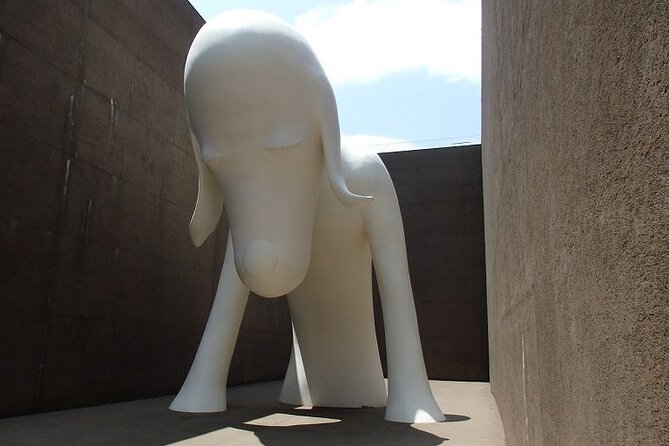
The Aomori Museum of Art is notable before you enter. Architect Jun Aoki designed the white cubic building to work with the historic setting around Sannai-Maruyama. Its form is modern and spare, making it a useful contrast to the archaeological site nearby.
I like this pairing because it shows two very different ways Aomori presents its past. Sannai-Maruyama gives you reconstructed traces of an ancient settlement. The art museum places those older ideas beside modern Japanese design and contemporary exhibition space.
The stop takes about an hour, and admission is extra. If your interests lean toward architecture, art, or the relationship between old and new, I would choose this over trying to fit in every museum on the list.
The description provided for this experience does not name the museum’s current exhibitions. Ask your guide what is on display when you book, especially if a particular artist or collection matters to you.
Three art stops with very different personalities
The Aomori Contemporary Art Center occupies the grounds of Aomori Public College. Tadao Ando designed it, and the building’s water feature is part of the experience. The setting gives you architecture as well as art, but its location may make it less convenient to combine with several downtown stops during a six-hour walking day.
The Munakata Shiko Memorial Museum of Art focuses on Aomori-born woodblock artist Munakata Shiko, who lived from 1903 to 1975. He is often associated with expressive, powerful prints, and the museum includes his major work Ten Great Disciples. This is the best choice for a focused look at a local artist rather than a broad survey of Japanese art.
The Aomori Museum of Art offers a different experience, with its white geometric building and location near Sannai-Maruyama. You can use the private format to ask your guide to compare the city’s modern art institutions and help you choose one.
I would select only one or two art stops unless art is the main purpose of your day. Each is listed as an approximately one-hour visit, and admission is not included. A rushed museum visit is rarely good value.
The Prefectural Kyodokan and local history
The Aomori Prefectural Kyodokan, also described as the Aomori Prefectural Folk Museum, focuses on local history and culture. Its collection includes Jomon-period pottery, miniature reconstructions of Jomon huts, and tools from the period.
This stop can work well for families and for anyone who wants more context before or after Sannai-Maruyama. The models and objects may help make the archaeological site easier to understand, especially if you prefer a museum display before walking through outdoor remains.
Allow about an hour and expect to pay admission separately. Because the tour description provides limited detail about the current displays, ask the guide what is most worthwhile there before committing one of your three or four stops.
Food, temples, apples, and the flexible part of the day
The official plan emphasizes museums and historic sites, but the private format can include local experiences if you arrange them with your guide. Past days have included apples, local meals, temples, shrines, and markets.
One guide helped arrange a meal at a fish market, where the sashimi was described as especially fresh. Another introduced local tastes including Aomori apples and a deep-fried breaded cutlet of oysters and pork. These details matter because a private tour can connect the sights to daily life rather than keeping you inside museums all day.
Do not assume lunch is included. It is not. Do not assume a market meal will be quick, either. One poorly managed day lost time waiting for food and then rushed the meal. If you want the fish market, tell the guide before starting and agree on how much time you want to spend there.
Past itineraries have also included Utoh Shrine, Seiryuji Temple, a lacquerware shop, and samurai sword practice. These are not guaranteed stops in the official six-site selection, so treat them as possible custom requests only after confirming the plan. A review describing a trip to Hirosaki Castle should not be used as a promise for this tour. The stated conditions say that Hirosaki cannot be visited.
Choosing the right guide and pace
The experience provider is Japan Guide Agency, and the tour uses independent licensed English-speaking guides. Names connected with past tours include Kaz, Kazumi, Kazu, Tomohiko Kudo, Fuji, Tomi, Rocky Tanaka, and others.
Several guides have been praised for strong preparation and friendly communication. Kaz contacted one visitor through WhatsApp before the tour and adjusted the day around timing, interests, and a request involving a mother-in-law with mobility issues. Tomohiko Kudo has been described as having long ties to the area and experience in city marketing. Fuji led a less tourist-focused day that included temples and swordsmanship practice.
That is useful, but it also shows why you should ask who your guide will be. The tour is only as good as the person leading it. Ask for:
- The exact three or four stops
- The route and transport plan
- Admission costs
- Lunch arrangements
- The guide’s experience at Sannai-Maruyama or Wa Rasse
- Any festival events taking place that day
The tour is private, so only your party participates. Groups cannot be combined, and the tour cannot be changed into a Hirosaki excursion.
Is $154.84 per person good value?
At $154.84 per person, this is not a cheap sightseeing walk. The price makes more sense for a small party that wants interpretation, planning help, and a flexible schedule. It is less attractive if you simply want to enter one museum and look around independently.
Remember the additional costs: entrance fees, transportation, lunch, and personal spending. The listed price includes the licensed local English-speaking guide and a customized tour of three or four selected sites. It does not include a private vehicle.
For two people, the price buys a private guide for about six hours. For a larger group, the per-person cost may feel better, especially if everyone has different interests or mobility needs. Group discounts are offered, though the exact discount is not specified.
I would compare the cost with the value of your time. A guide can help you avoid guessing which museums fit together, explain the city’s local traditions, and make the archaeological site more meaningful. If you are comfortable researching and using public transport, you can spend less on your own.
Walking, timing, and practical limits
This is a walking tour, and pickup is on foot within a designated area of Aomori city. The tour is near public transportation, but transport fees are excluded. Wear comfortable shoes and tell the guide early if you need a slower pace.
Most people can participate, and service animals are allowed. The private format makes it easier to discuss mobility needs, but the tour does not promise accessible transport or guaranteed seating. Contact the provider before booking if access is important.
You receive confirmation at booking. Free cancellation is available up to 24 hours before the start time. Changes or cancellations inside that window are not accepted for a refund, based on local time.
Should you book this Aomori tour?
I would book it if you want help connecting Nebuta, Jomon archaeology, local art, and food in one day. It suits first-time visitors, cruise passengers with limited time, families who need flexibility, and small groups that prefer conversation over a standard group bus.
I would especially request Wa Rasse and Sannai-Maruyama, then choose one art museum or the Kyodokan. Ask for a guide with strong experience at your top stop, confirm the route, and leave Hirosaki out of your plan.
I would skip it if you want a low-cost, fully fixed walking tour or if you expect a private car and all admissions to be covered. The experience can be excellent with the right guide and a realistic schedule, but you need to take part in the planning. That is the price of flexibility, and also its main reward.
FAQ
How long is the Aomori private tour?
The tour lasts approximately six hours.
How many sights can I visit?
The tour includes a customizable selection of three or four sites from the listed options. You should not expect to visit all six major stops in one six-hour day.
Is transportation included?
No. The tour is conducted on foot, and transportation fees are not included. Pickup means meeting your guide on foot within the designated Aomori city area.
Are entrance fees and lunch included?
No. Admission fees, lunch, transportation, and personal expenses are extra. The guide’s entry fees are covered only for sights listed in the official selection.
Can I visit Hirosaki on this tour?
No. The stated tour conditions specifically exclude Hirosaki, even though some past guiding experiences described visits there.
Can I cancel for a full refund?
Yes. You can cancel at least 24 hours before the experience start time for a full refund. Cancellations or changes made less than 24 hours before the start time are not accepted for a refund.
Just added around Japan
- Sekka Cotton Furoshiki Class★ 5.0 · 19 reviews
- Kyoto Sword Experience – includes Museum Ticket/Ninja Experience★ 4.5 · 149 reviews
- Scenic Green Tea Fields of Hidden Kyoto & Local Tea Exp (Private)★ 5.0 · 32 reviews
- Secret Eastern Kyoto Biking Adventure★ 5.0 · 44 reviews
- Private Sake Tasting in Central Kyoto with Sake Sommelier★ 5.0 · 32 reviews
- Samurai School in Kyoto: Samurai for a Day★ 5.0 · 202 reviews
- SHIRAKAWA Japanese Culture Experiences with private English staff★ 5.0 · 16 reviews
- A Privately Guided Photoshoot in Beautiful Kyoto by a Pro★ 5.0 · 18 reviews
Full-Day, compared.

Hiroshima / Miyajima Full-day Private Tour with Government Licensed Guide
Our verdict →

5 Top Highlights of Kyoto Full Day Bike Tour (E-bike option)
Our verdict →
Mt. Fuji, Hakone Full-Day Private Tour with English Driver Guide
Our verdict →
Full Day Guided Tour to Kyoto and Nara from Osaka by Van
Our verdict →