
Reviewed · COOKING CLASSES
Tokyo: Wagyu and 7 Japanese Dishes Cooking Class
Tokyo’s Wagyu and 7 Japanese Dishes Cooking Class turns everyday Japanese cooking into a proper meal. In about three hours, you prepare dashi, miso soup, omelette, salads, tofu, sukiyaki with Wagyu, and dorayaki, then sit down to eat what you made.
I like the small group of up to eight, which gives you time at the counter instead of leaving you to watch from the back. I also like the practical recipes and ingredient advice, including tips for finding Japanese products and making substitutions at home. The only catch is the studio’s residential location, which can be tricky to find if you arrive without internet access.
Key points at a glance
- Seven dishes plus a Wagyu centerpiece: Prepare a full meal rather than one narrow specialty.
- Hands-on from start to finish: Roll omelette, make dashi, cut cucumbers, fill tofu, cook sukiyaki, and prepare dorayaki.
- English-speaking local teachers: Instructors explain both cooking steps and the cultural meaning behind the food.
- A useful class for beginners: The methods are manageable, with recipes you can try again at home.
- Residential Tokyo setting: The studio is on the second floor of a beige building in Shinanomachi.
- Strong value at $67: Ingredients, utensils, apron, towel, welcome tea, recipes, and the meal are included.
A full Japanese meal, not just a Wagyu tasting
The main appeal here is range. You are not simply shown how to sear a piece of beef, then sent home. You work through several small dishes that explain the basic building blocks of Japanese home cooking.
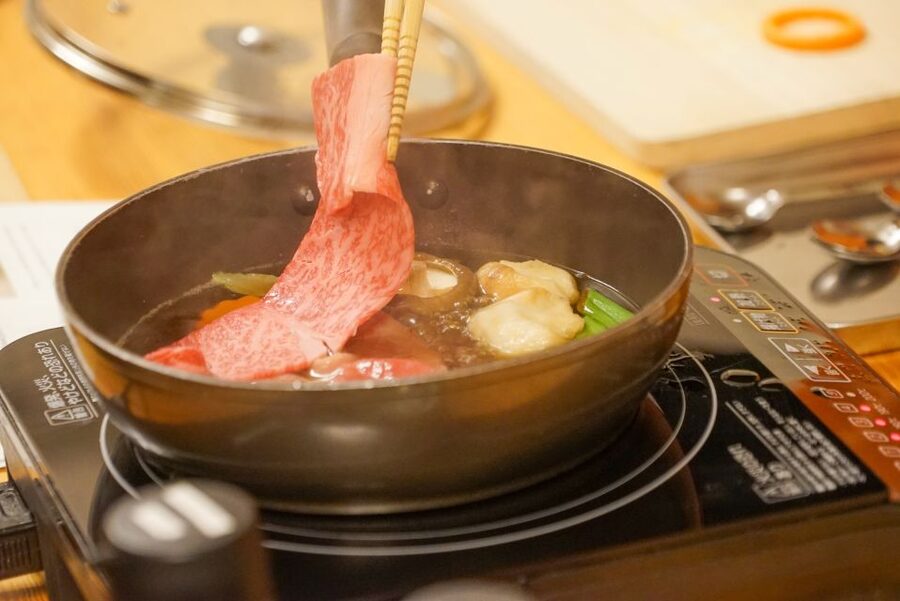
The Wagyu appears in a sukiyaki-style hotpot, where thin beef cooks with a savory sauce and other ingredients. That gives you a better sense of how Japanese cooking balances sweet, salty, umami, and delicate texture. The beef is the star, but it works best as part of the whole meal.
The class is advertised as Wagyu and seven Japanese dishes, with eight elements in the completed meal. Menus can use seasonal ingredients, so the exact lineup may vary. The dishes demonstrated in recent sessions have included rolled Japanese omelette, dashi made from scratch, miso soup, accordion-cut cucumber salad, sesame potato salad, tofu stuffed with ground chicken, ginger and edamame, Wagyu sukiyaki, and rice flour dorayaki pancakes.
That is a lot to prepare in three hours, but the work is broken into short, clear tasks. Ingredients are prepared sensibly in advance, while you still handle the key cooking and cutting steps yourself.
More Cooking Classes in Tokyo
- Ramen & Gyoza Cooking Class in Tokyo with Local Supermarket Visit
★ 5.0 · 823 reviews - Tokyo: Easy Ramen Cooking Experience in Kabukicho, Shinjuku
★ 4.6 · 321 reviews - Ramen and Sushi Cooking Class with Sake Pairing Set in Tokyo
★ 5.0 · 291 reviews
What you do during the three-hour class
The class runs for about three hours, with roughly two and a half hours spent preparing food before you eat together. You begin with an introduction to the ingredients, tools, and the meal ahead. A welcome tea is included, a small touch that gives the room time to settle before the cooking starts.
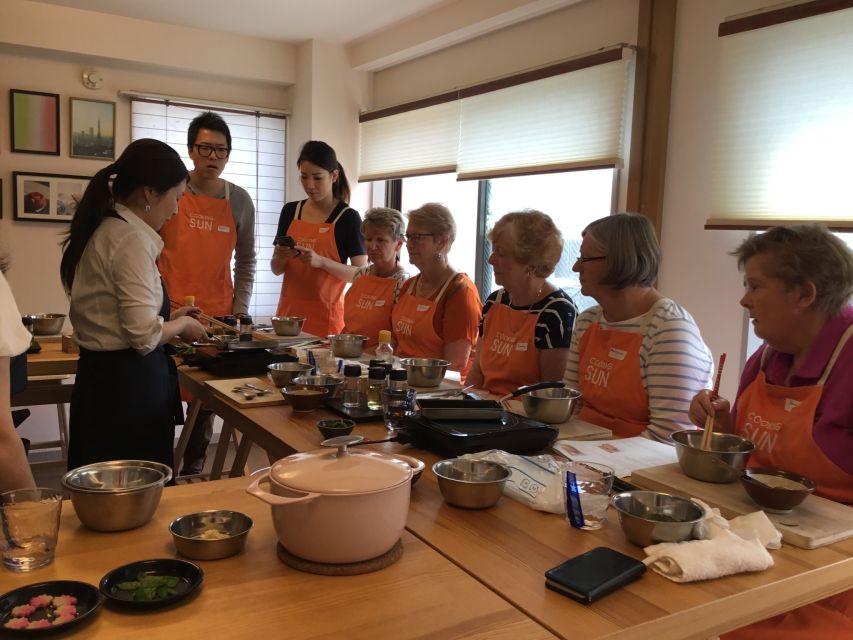
The teachers demonstrate each task, then guide you through your own work. This structure suits beginners because you do not need to guess what comes next. You can ask about unfamiliar ingredients, cooking times, knife work, and ways to repeat the recipe outside Japan.
Starting with Japanese basics
Dashi is one of the most useful lessons. This stock forms the base of many Japanese soups and sauces, and making it from scratch helps you understand why Japanese food can taste full without being heavy.
You also learn about miso, including the difference between white and red miso. That kind of detail matters at home, because miso is not one single flavor. The class connects ingredients to their purpose instead of treating them as mysterious products from a supermarket shelf.
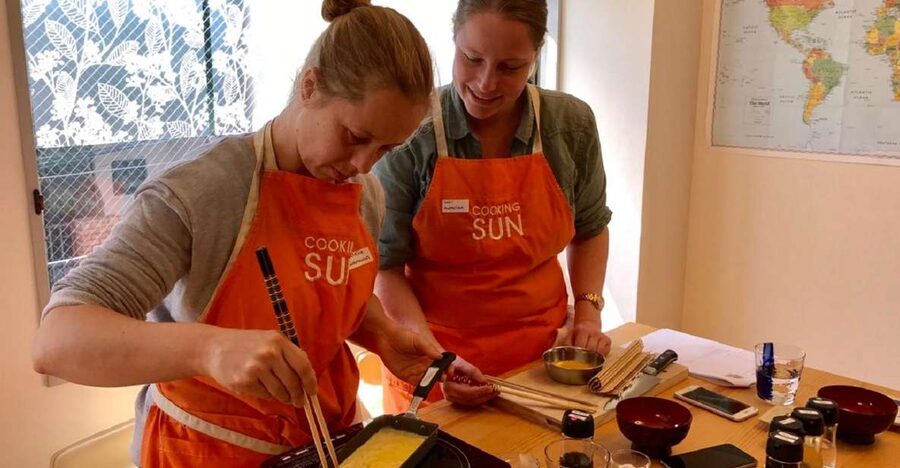
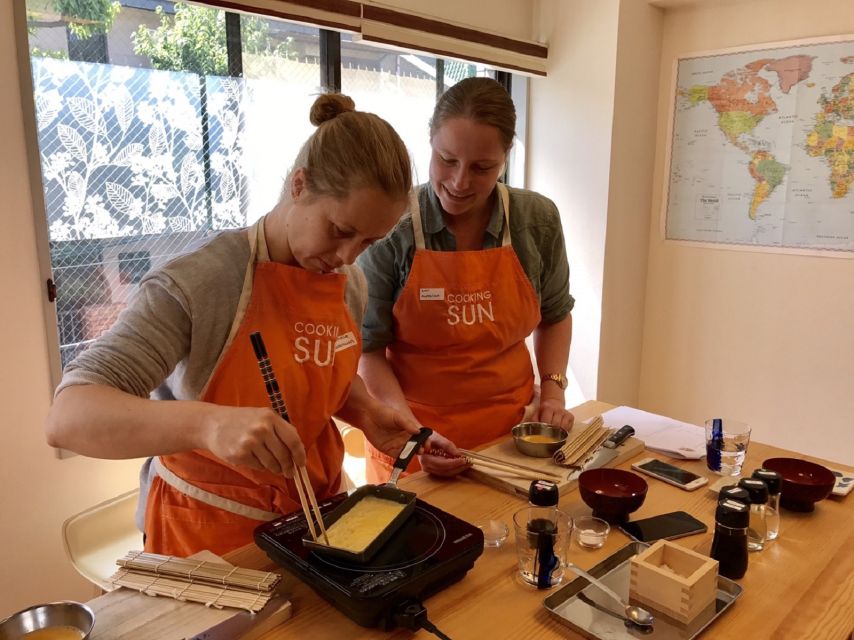
The rolled omelette is another practical task. It looks simple, but the technique gives you a taste of the careful shaping used in Japanese cooking. You can expect the instructors to demonstrate the motion first and then help you work through it.
Salads, vegetables, and texture
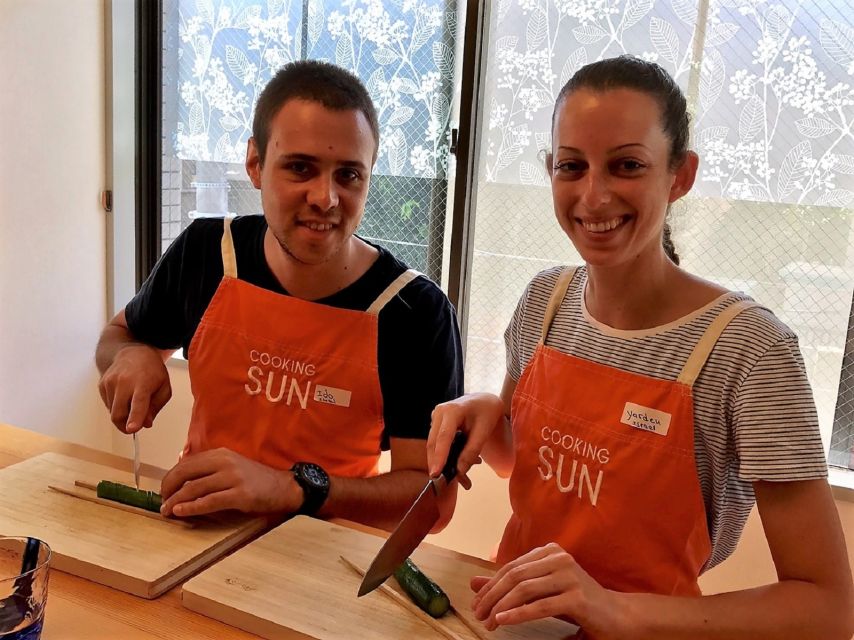
The vegetable dishes keep the meal from becoming a parade of meat and soup. Accordion-cut cucumber adds a little knife practice and shows how a small change in cutting can alter texture and appearance.
Sesame potato salad brings a familiar ingredient into a Japanese setting. These are the kinds of recipes I find most useful for a home kitchen, since they do not depend on rare equipment or advanced skill.
The pace is active, but not designed as a test. You are learning how Japanese cooks build contrast through soft tofu, crisp vegetables, warm broth, and tender meat.
More Wagyu Experiences in Tokyo
- Tokyo Night Foodie Tour in Shinjuku – Seasonal Sushi, Wagyu Beef
★ 5.0 · 1,161 reviews - Small-Group Wagyu Beef and 7 Japanese Dishes Tokyo Cooking Class
★ 5.0 · 190 reviews - Wagyu & Sake Pairing in Shinjuku – Steak, Shabu-Shabu & More
★ 5.0 · 112 reviews - Tokyo: Wagyu and Sushi Gastronomic Journey
★ 4.3 · 24 reviews
The stuffed tofu dish
One of the more distinctive dishes uses tofu filled with ground chicken, ginger, and edamame. It gives you a chance to work with a familiar ingredient in a less familiar form.
The ginger adds lift, while the edamame brings color and a firm bite. The recipe also shows how Japanese home cooking can make a modest ingredient feel special through seasoning and careful preparation.
This is a good example of the class’s overall approach: not restaurant theatrics, but food that you could plausibly make again for a family meal.
Wagyu sukiyaki
The Wagyu is prepared as sukiyaki, a dish known for thinly sliced beef cooked in a sweet-savory broth or sauce. You prepare the hotpot as part of the group’s meal, then enjoy the tender beef alongside the other dishes.
This is where the $67 price begins to make sense. Wagyu can be costly in Tokyo restaurants, and the class lets you taste it while also learning how it fits into a traditional dish. You are paying for instruction, ingredients, equipment, and a substantial meal, not just a small sample of beef.
The beef has received especially strong praise for tenderness and flavor. Still, keep your expectations sensible. This is a cooking class, not a specialist Wagyu restaurant, so the value comes from the complete experience rather than from receiving a large steak.
Finishing with dorayaki
Dessert is made in the pan as dorayaki-style rice flour pancakes. Ending with something sweet gives the class a clear beginning, middle, and finish.
The pancakes are approachable and useful for home cooks. You leave having prepared a full Japanese meal, from stock and soup to dessert, rather than learning a single isolated recipe.
Why the teaching makes the difference
The instructors speak English and explain more than the mechanics of chopping and stirring. They discuss where ingredients fit in Japanese cooking, how dishes developed, and what people commonly eat at home.
The teaching team has included Yuki, another instructor also named Yuki, Yuko, Aya, Kaori, and Bifuka. The exact teachers depend on the session, but the format remains personal and guided.
The strongest part of the teaching is its practical tone. You can ask what to use if a Japanese ingredient is unavailable abroad, and the instructors offer substitutions where suitable. That makes the recipes far more useful than a demonstration you can only reproduce in Tokyo.
The class also suits solo visitors. One person can join without feeling lost in a large crowd, and the group size encourages conversation while everyone cooks. Couples and families can work together, too. An 11-year-old participant was able to take part with a parent, and the easygoing structure also suits teenagers.
A clean, homey studio in Shinanomachi
The studio is in a residential part of Tokyo rather than a major sightseeing zone. That adds a small local touch to the outing, since you see an ordinary neighborhood instead of spending the whole day around the city’s big stations and shopping streets.
The room is described as clean, bright, and well equipped, with good knives, pans, utensils, aprons, and tables. Apron and towel rental are included, so you do not need to bring cooking gear.
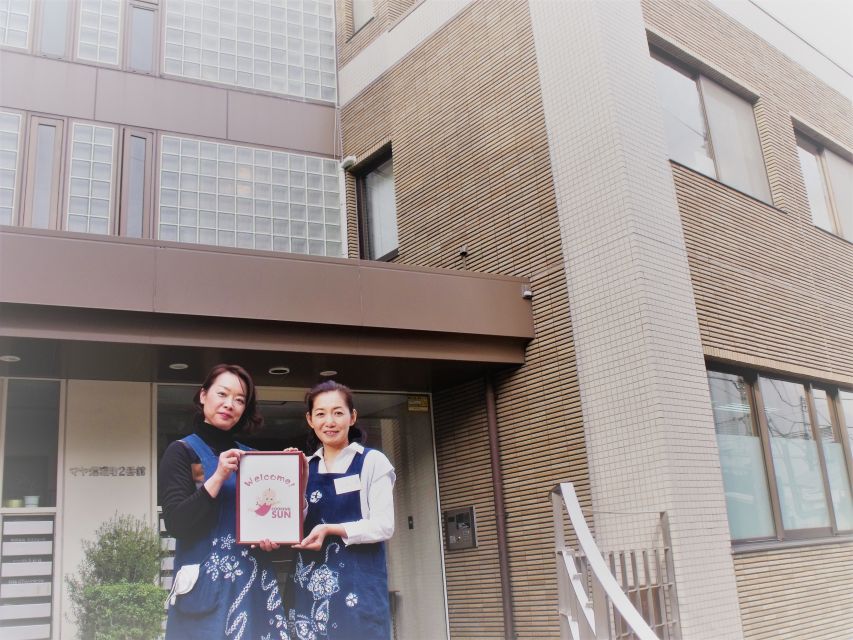
Finding the building takes care. Search Google Maps for Cooking Sun Tokyo at Shinanomachi 18-39, Shinjuku-ku, Tokyo. The studio is on the second floor of a beige residential building. At the entrance, use the right-hand door and press 314 on the intercom.
If you will not have Wi-Fi, prepare the directions before leaving your hotel. This is not the sort of activity where you want to wander around the neighborhood trying to identify the correct entrance. Private vehicles are allowed, but drivers should not wait in front of the building. A nearby coin-operated parking lot is the better choice.
The value of $67 per person
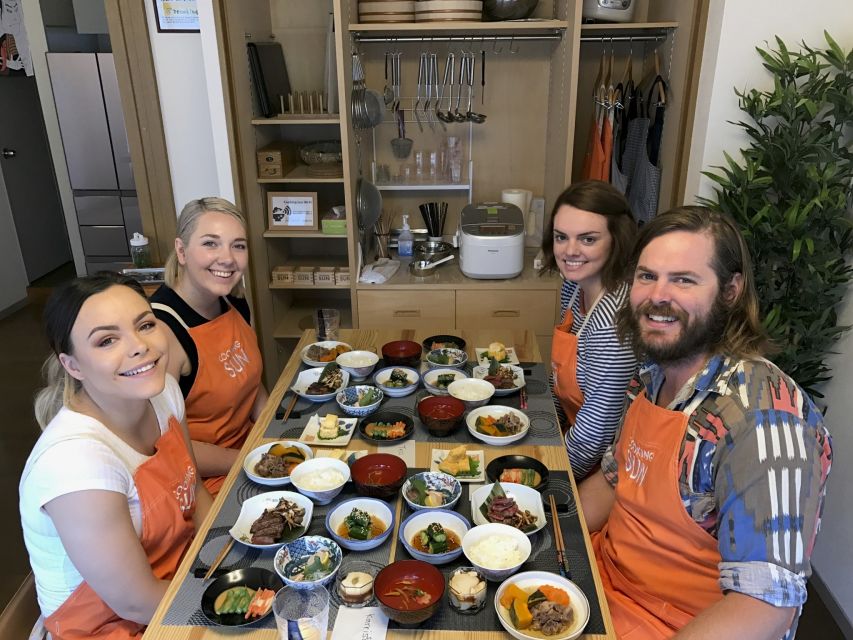
At $67, this class is priced above a casual food sampling, but the comparison is not quite fair. You receive ingredients, utensils, apron and towel rental, welcome tea, recipes, instruction, and a cooked meal that includes Wagyu.
You also learn seven recipes in one sitting. If you tried to order comparable dishes separately in Tokyo, you might spend as much while learning very little about how the food was made.
The best value comes for people who will use the recipes later. Dashi, miso soup, cucumber salad, potato salad, stuffed tofu, and dorayaki are not just holiday memories. They are practical dishes that can become part of your cooking at home.
The price is less compelling if you dislike hands-on activities or want a relaxed meal with no work. You will be standing, preparing food, listening to instructions, and sharing a kitchen space for much of the session.
Dietary requests and what to tell the school
The cooking school can substitute ingredients for allergies, gluten-free diets, religious restrictions, vegetarian preferences, and other dietary needs. You must state your requirements when booking so the team can plan the menu.
This is especially important because the class includes several dishes and shared preparation. Do not wait until you arrive to explain a serious allergy or restriction.
The menu is suitable for people who do not eat fish, since the featured protein is Wagyu and one of the other dishes uses ground chicken. Still, ask in advance about the full ingredient list if you need to avoid particular foods.
Who will enjoy this class most
I would recommend it to first-time visitors who want a useful introduction to Japanese food before spending the rest of their trip eating in restaurants. Learning dashi, miso, sukiyaki, and common side dishes gives you a better sense of what appears on Japanese tables.
It is also a good choice for repeat visitors who have already eaten sushi and ramen and want to understand everyday cooking. This class focuses on a broader home-style meal, not only the dishes most familiar to visitors from abroad.
Couples, families with older children, solo visitors, and food-focused groups should all find the format workable. The eight-person limit keeps the room social without turning it into a crowd.
You might skip it if your main goal is advanced knife technique, professional culinary training, or a long lesson focused only on Wagyu. The class keeps techniques accessible, so experienced cooks may find the cooking straightforward. Its strength is the breadth of dishes, cultural context, and recipes you can repeat.
Practical planning before you book
The class lasts three hours, so plan it as a main activity rather than something to squeeze between two distant appointments. Starting times vary, and availability should be checked when you book.
You do not need to arrange hotel pickup. Transportation to the residential studio is your responsibility, and the meeting point deserves extra attention because the building can be hard to spot.
Cancellation is free up to 24 hours before the activity for a full refund. You can also reserve and pay later, which helps if your Tokyo schedule is still changing.
The cooking school limits each group to eight participants. That small size is one of the better reasons to book ahead, especially if you want to attend with family or a partner.
Should you book the Wagyu cooking class?
Book it if you want more than a meal and would like to understand how several Japanese dishes fit together. The Wagyu is appealing, but the bigger reward is learning a repeatable set of recipes in a friendly English-speaking class.
I would place it early in a Tokyo visit if food is central to your trip. You will have new ingredients to look for, new dishes to recognize, and a clearer idea of what Japanese home cooking involves.
Skip it if you want a quiet tasting with no preparation, or if your interest is limited to premium beef. For everyone else, $67 is a fair price for three hours of instruction, a full meal, and recipes that can follow you home.
FAQ
How long does the Wagyu cooking class last?
The activity lasts three hours, with about two and a half hours devoted to preparing the meal before you sit down to eat.
How many people are in each class?
The class is limited to eight participants, creating a small-group setting with time for hands-on instruction.
Is the class taught in English?
Yes. The instructors speak English, and the activity includes explanations of cooking methods, ingredients, and the cultural background of the dishes.
What food do you prepare?
The menu includes Wagyu sukiyaki and seven Japanese dishes. Examples include dashi miso soup, rolled omelette, cucumber salad, sesame potato salad, stuffed tofu, and dorayaki rice flour pancakes. Seasonal ingredients may affect the exact menu.
Are ingredients and cooking equipment included?
Yes. Ingredients, utensils, recipes, a towel, an apron, and a welcome tea are included.
Can dietary requirements be accommodated?
The school can substitute ingredients for allergies, gluten-free diets, religious dietary restrictions, vegetarian preferences, and other needs. Tell the school about your requirements when booking.
Just added around Tokyo
- Kawagoe Japanese Food Tour : Unagi Kaiseki and Sake near Tokyo★ 5.0 · 30 reviews
- Kawagoe 4hr Private Tour with Licensed Guide (Kawagoe Dep)★ 5.0 · 13 reviews
- Little EDO Sushi Making workshop in Kawagoe★ 5.0 · 18 reviews
- 【R34】Tokyo:Private Daikoku tour in Modified R34★ 4.9 · 92 reviews
- :Tokyo,Shibuya/ Pro Photography in Kimono / English-Friendly★ 5.0 · 26 reviews
- Tokyo:Celebrate Unique Japanese New Year Tradition Festivity★ 3.9 · 20 reviews
- Tokyo: Allstar Food Tour★ 4.7 · 29 reviews
- Tokyo: West-Side Cycling and Food Tour with Guide★ 5.0 · 37 reviews
Cooking Classes, compared.

Browse the lists this tour appears in