Reviewed · PRIVATE
Private Harajuku Omotesando Architecture Tour
Harajuku and Omotesando reveal a side of Tokyo that is easy to miss behind the shopping bags. In just over three hours, this private walk connects Meiji Shrine, Yoyogi Gymnasium, and bold designer buildings with ordinary side streets where local life carries on.
I like the way the tour explains why architects and luxury brands chose this particular stretch of Tokyo. I also like the private, flexible format, since you can ask about Japanese architects, photography, urban planning, or the buildings that catch your eye. The main drawback is simple: 210 minutes is a lot of walking, and the area offers enough architecture to make the time feel short.
Key points at a glance
- Start beside Meiji Shrine: Meet at Café Mori no Terrace near the large wooden entrance gate, not at the cafe inside the shrine.
- See major architectural names: The route includes The Iceberg, Dior, Louis Vuitton, Sunny Hills, and Prada.
- Look beyond luxury shops: A side trip into back streets shows homes, smaller streets, and everyday Japanese life.
- Ask for a personal focus: Guides can adapt the walk to your interests, including Japanese architects and urban design.
- Build in a cafe break: Drinks are included, giving your feet a rest and your camera a pause.
- Consider an evening start: Night lighting gives several buildings a different look and can make the walk feel less conventional.
Why Harajuku and Omotesando make a fine architecture walk
Harajuku is often reduced to youth fashion, colorful street style, and crowded shopping lanes. Omotesando is often compared with Rodeo Drive, thanks to its luxury stores and polished storefronts. Both descriptions are partly right, but neither explains the area very well.
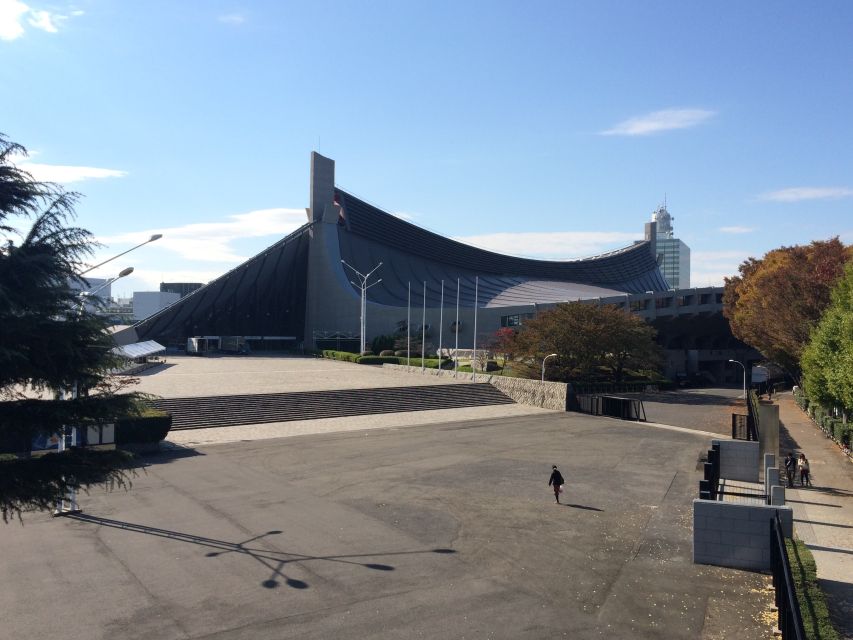
The appeal comes from the sharp changes in a small area. One moment you are near the wooded entrance to Meiji Shrine. Soon you are looking toward Kenzo Tange’s Yoyogi Gymnasium, then walking along a broad avenue lined with international fashion houses. Turn into a side street, and the mood shifts again.
This tour gives those changes a structure. Instead of simply pointing a camera at handsome buildings, your guide can explain why this district attracts major architects and why a brand might choose one dramatic building over a standard shopfront.
That context matters. You begin to see Omotesando as a planned urban setting, not just a shopping street. The trees, wide sidewalks, slope, storefronts, and nearby residential lanes all help explain its appeal.
A few more Tokyo half-days worth comparing
- 1-Day Tokyo Bus Tour
★ 5.0 · 14,250 reviews - Tokyo: TOKYO SKYTREE® Admission ticket
★ 4.5 · 11,192 reviews - Tokyo: teamLab Planets TOKYO Digital Art Museum Entry Ticket
★ 4.6 · 9,779 reviews
Meeting at Meiji Shrine without getting lost
The meeting point is in front of Café Mori no Terrace, located in the large open area by Meiji Shrine’s big wooden entrance gate. The address is 1 Yoyogikamizonocho, Shibuya City, Tokyo 151-0052.
From JR Harajuku Station, leave by the Omotesando exit and walk toward the forest. A useful detail: you do not pass through a Shinto gate to reach the meeting point. Also, do not confuse this cafe with the similarly named cafe inside Meiji Shrine.
This is a practical place to begin. You get a clear landmark, open space, and the shrine forest as a backdrop before the tour turns toward modern Tokyo. If you are arriving by train, allow enough time to orient yourself around Harajuku Station and the shrine entrance.
From Jingubashi Bridge to Yoyogi Gymnasium
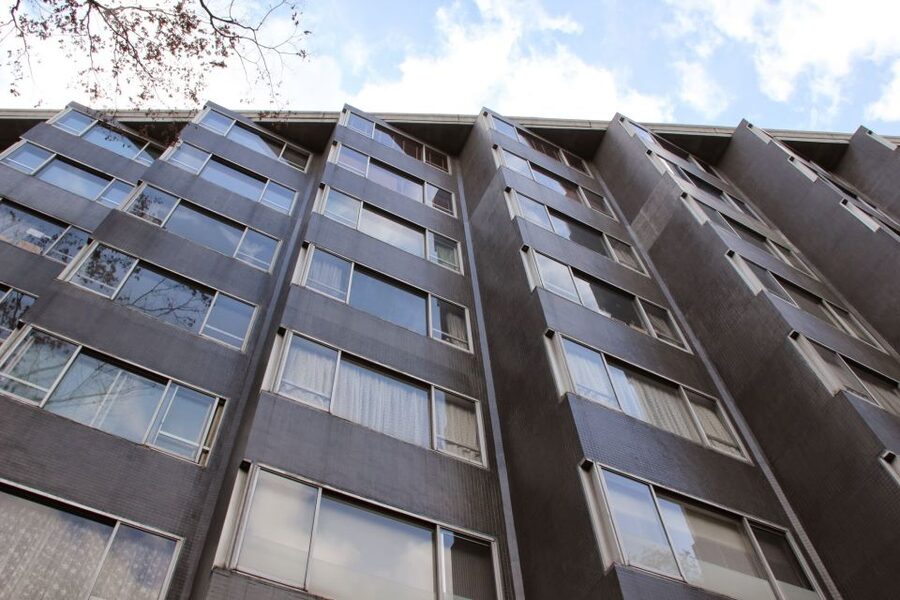
The walk begins at Jingubashi Bridge, in front of Meiji Shrine. This puts you at a useful meeting point between old and new Tokyo. The shrine represents a quieter, more traditional setting, while Harajuku and Omotesando quickly bring you into the city’s fashion and design center.
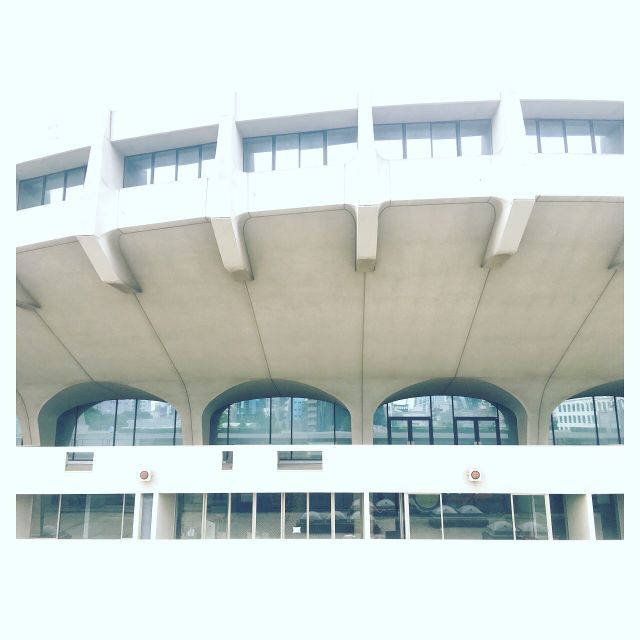
One early highlight is Yoyogi Gymnasium, viewed from a distance. Its sweeping form is one of Tokyo’s best-known modern architectural sights. The tour does not present it as an isolated monument. Instead, you see it as part of the wider city, with the surrounding streets and later buildings helping you understand how Tokyo mixes large public works with commercial architecture.
This distant view is also a reminder that the tour is primarily an outdoor walk. You are not entering every building, and the main reward comes from seeing the structures in their street setting. That suits photographers and architecture fans who care about angles, scale, facades, and the relationship between a building and the people around it.
Omotesando’s designer buildings, from Dior to Prada
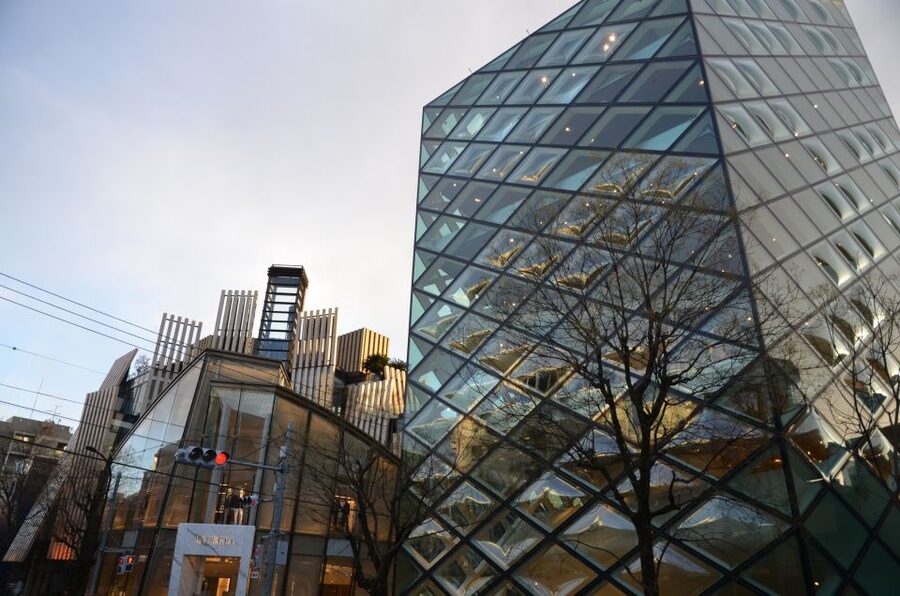
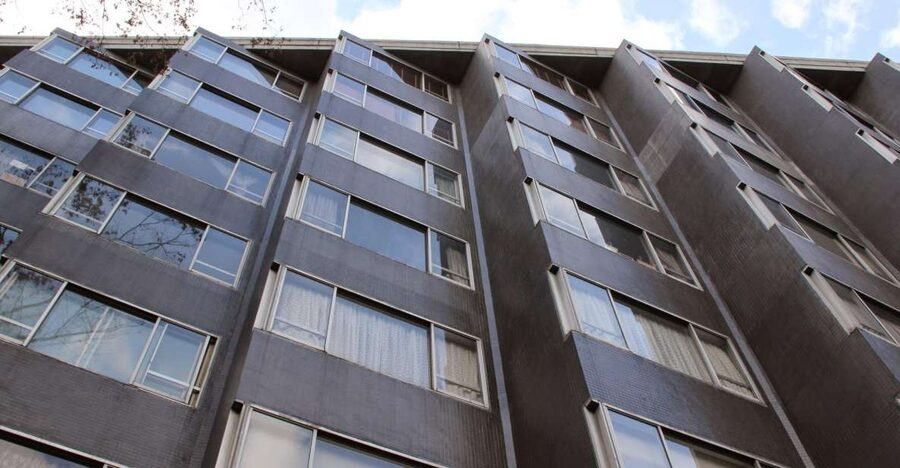
The central part of the walk focuses on contemporary architecture connected with famous fashion and food brands. The named stops include The Iceberg, Dior, Louis Vuitton, Sunny Hills, and Prada.
Each building offers a different photo opportunity. The point is not simply that these companies sell expensive goods. Their buildings are designed to carry a brand’s identity from the sidewalk into the structure itself. Your guide can help you look at materials, shapes, transparency, patterns, and the way each facade changes as you walk past it.
Dior, Louis Vuitton, and Prada make clear why Omotesando attracts high-profile designers. The stores are not interchangeable boxes. They compete for attention through architecture, yet the avenue still has a visual rhythm rather than a row of unrelated billboards.
Sunny Hills brings another kind of interest. It is known for its distinctive structure, and its presence helps show that this district is not limited to European luxury labels. Japanese design ideas and international brands share the same streets.
The Iceberg adds another strong visual stop. A good guide can help you notice how its form works from different viewpoints, which is useful if you enjoy photography. Bring a phone or camera, but also remember to look up from the screen. These buildings are meant to be read from the street as you move around them.
More Private-Only Departures in Tokyo:
- Tokyo 6hr Private Tour with Government-Licensed Guide
★ 5.0 · 3,902 reviews - Tokyo Customized Private Tour (Must See Places in 1 Day)
★ 5.0 · 1,499 reviews - Tokyo: Private City Highlights Tour with Local Guide
★ 4.8 · 1,433 reviews - Private Custom Tour: Tokyo in a Day
★ 5.0 · 1,432 reviews
Why this differs from Ginza
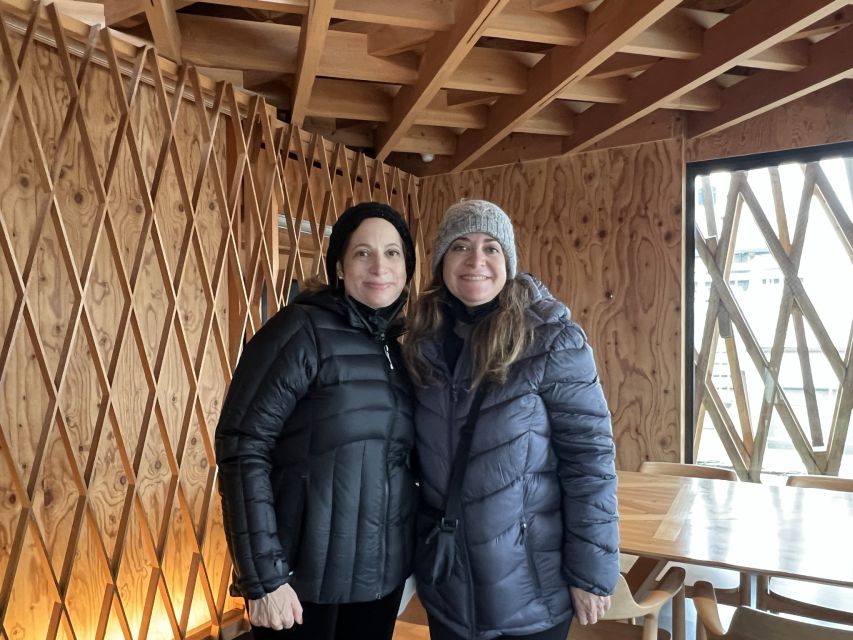
The comparison with Ginza is useful, but the two areas do not feel the same. Ginza is associated with grand avenues, established department stores, and a more formal commercial character. Omotesando combines luxury shopping with creative architecture, younger fashion districts, and nearby back streets.
The tour makes this difference easier to understand because you are not confined to the main avenue. A turn into a quieter neighborhood can reveal a much more ordinary side of Harajuku. The contrast is valuable: designer stores may be only a few minutes from residential streets and smaller local businesses.
That is one of the strongest reasons to choose this walk instead of simply shopping in Omotesando. You get a reading of the district as a living part of Tokyo, not just a display area for international brands.
The side streets and Cat Street connection
A side trip into the back streets is built into the route. This portion helps balance the polished main avenue with a less formal view of the area. You might find narrow streets, local homes, and daily routines that are easy to miss if you stay on Omotesando.
The walk may also include Cat Street, depending on the guide and your interests. It is described as a lively neighborhood, and it gives the route a different pace from the large avenue. You can ask your guide to spend more time here if this mix of fashion, smaller streets, and local atmosphere appeals to you.
This flexibility is one of the private tour’s practical strengths. You are not locked into a fixed group pace. If you care most about architecture, the guide can keep the focus on buildings. If you want a broader picture of the neighborhood, you can give more time to Harajuku’s side streets.
Guide quality and the value of a private walk
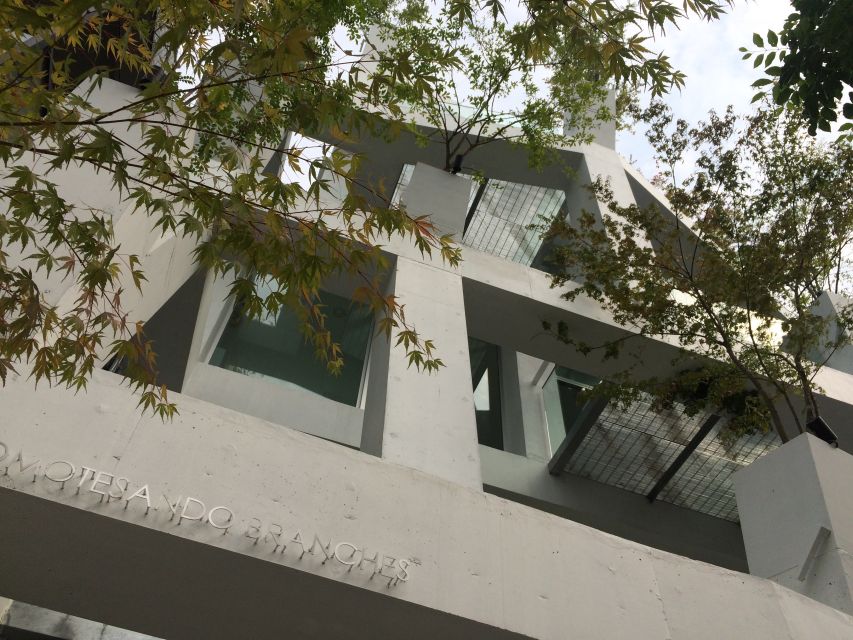
The guide makes a large difference on an architecture tour. A building can look impressive without being easy to understand. The best guides add the missing link between the design, the architect, the client, and the surrounding street.
The guides associated with this experience have included Sakai Mari, Taka, Fuki, Yoshi, and Hal. Their backgrounds and presentation styles vary. Taka, for example, is a retired urban planner and MIT graduate, while Fuki is described as especially focused on architecture. Sakai Mari has led groups in fluent English and used visual aids and other materials during the walk.
You should not assume that one particular guide will be assigned, so check the booking details if a named guide matters to you. Still, the range of backgrounds is encouraging. The tour is not limited to memorized facts about famous stores. It can cover Japanese architects, urban planning, and the design choices behind buildings that you may pass several times during your stay.
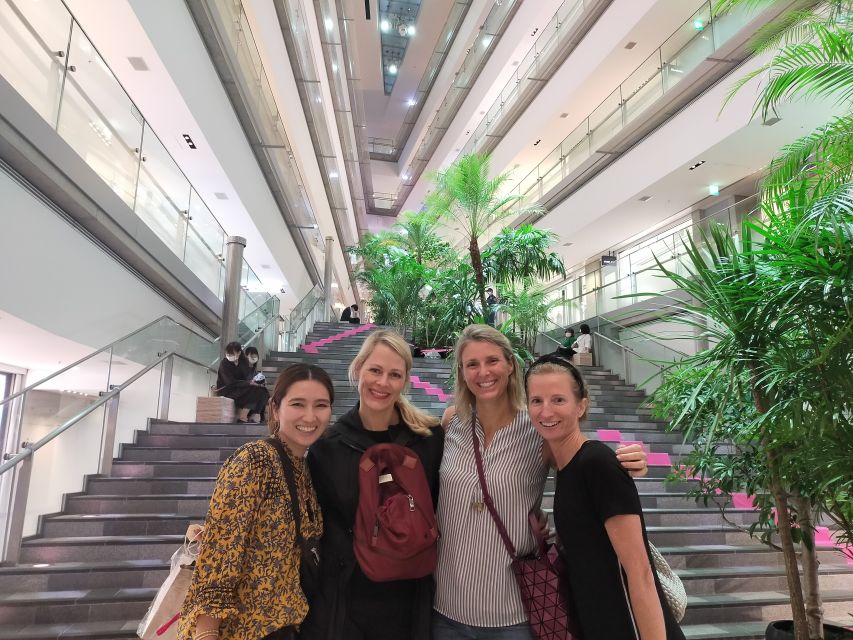
Because the group is private, you can ask direct questions without worrying about slowing down strangers. A solo participant can have a focused conversation, while couples or families can set the pace together.
A cafe break in the middle of a long walk
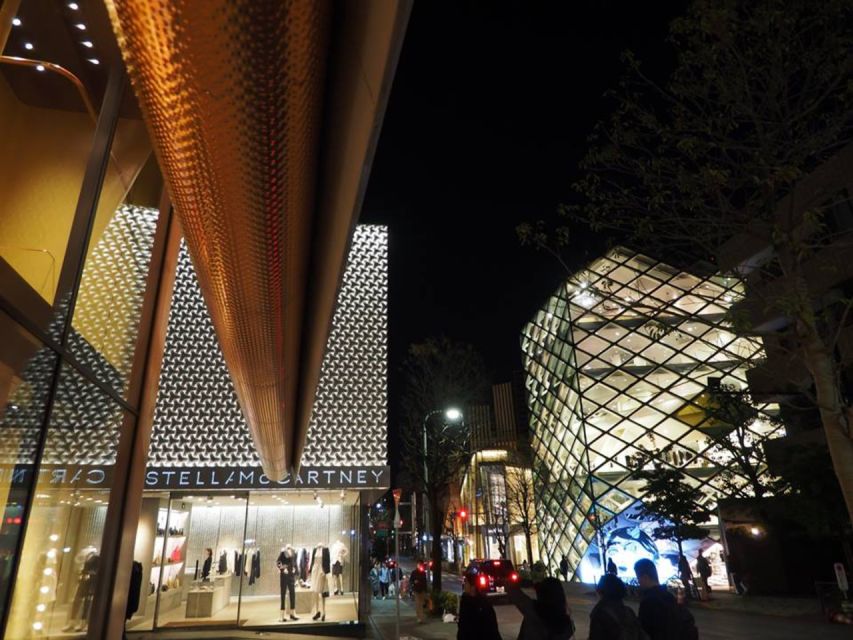
Drinks and a break at a cafe are included. This may sound minor, but it improves a three-and-a-half-hour walking tour. You can rest your feet, discuss the buildings you have seen, and decide what deserves more attention during the remaining route.
Meals are not included, so do not treat the cafe stop as lunch. It is a pause rather than a full dining experience. If you need a substantial meal, plan it before or after the tour.
Comfortable shoes are important. The route covers several parts of Harajuku and Omotesando, and the area is best understood on foot. The tour is listed as wheelchair accessible, but you should still confirm any specific route needs when booking, especially if you require detailed information about surfaces or breaks.
Taking the tour at night
An evening tour gives the buildings a different personality. Storefront lighting, reflections, and illuminated facades can change the way you see Dior, Prada, Louis Vuitton, and the other major stops.
Night also shifts the balance between architecture and shopping. You may pay more attention to light and silhouette than to the daytime materials and details. For photographers, this can be a real advantage.
The tradeoff is that some architectural details may be harder to see after dark. If your main interest is close inspection of surfaces, structure, and facade materials, a daytime start may serve you better. If you want atmosphere and a fresh photographic angle, ask about an evening departure when checking available times.
Is $129 per person good value?
At $129 per person, this is not a budget walking tour. The price makes more sense if you are genuinely interested in architecture, design, or the way Tokyo’s districts develop. You are paying for a private guide, English explanation, route flexibility, and 210 minutes of attention rather than for admission to a single attraction.
For a private group, the value improves when several people share the experience. Solo visitors may find the cost harder to justify unless architecture is a major trip interest or they want a personalized conversation with a specialist guide.
I would compare it with the cost of spending half a day wandering without context. You can see many of these buildings on your own, but you may not understand why they are there, how they relate to one another, or where the residential side streets begin. If those questions matter to you, the fee is easier to defend.
The tour also works well early in a Tokyo visit. Afterward, you can return to Omotesando or Cat Street on your own and recognize buildings and streets that might otherwise blur together.
Who will enjoy this tour most?
I would choose this experience if you:
- Like architecture, fashion, photography, or urban design
- Want a private guide rather than a large group
- Prefer a walk that mixes major sights with ordinary side streets
- Enjoy asking detailed questions
- Want to see Harajuku beyond youth fashion and shopping
- Can walk for several hours with a planned cafe break
It is less suitable if you want indoor attractions, a food-focused tour, or a short sightseeing loop with little walking. You should also avoid booking it as a simple shopping tour. The stores are important mainly because of their buildings and place in the district.
Booking details worth knowing
The experience lasts 210 minutes and is conducted in English by a licensed guide. It is a private group tour, and starting times depend on availability.
Transportation to and from the Harajuku and Omotesando area is not included. You make your own way to Café Mori no Terrace near Meiji Shrine. Free cancellation is available up to 24 hours before the tour for a full refund, and you can reserve now and pay later.
The tour is listed as wheelchair accessible, while comfortable shoes are recommended for everyone. Since the route is flexible, tell the provider what interests you most before the walk. Specific architecture, photography, back streets, and evening views can all shape the experience.
Should you book the Harajuku Omotesando architecture tour?
Book it if you want to understand why this part of Tokyo looks the way it does. The strongest parts are the mix of famous buildings, less polished neighborhoods, and a guide who can adjust the conversation to your interests.
I especially recommend it for architecture fans and curious first-time visitors who want more than a shopping street. At $129 per person, it asks for a serious budget, but the private format and three-and-a-half-hour route give you plenty of time to ask questions and see the district in context.
Skip it if you mainly want retail time, restaurant stops, or a quick introduction to Harajuku. For everyone else, this is a thoughtful way to connect Meiji Shrine, Yoyogi Gymnasium, Omotesando’s designer facades, and the back streets in one well-planned walk.
FAQ
How long does the Harajuku Omotesando architecture tour last?
The tour lasts 210 minutes, or three and a half hours.
What language is the tour conducted in?
The tour is conducted in English by a licensed English-speaking guide.
Is this a private tour?
Yes. It is offered for a private group rather than as a shared group experience.
Where does the tour meet?
The meeting point is in front of Café Mori no Terrace in the large open area by Meiji Shrine’s big wooden entrance gate. The address is 1 Yoyogikamizonocho, Shibuya City, Tokyo 151-0052.
How do I reach the meeting point from Harajuku Station?
Leave JR Harajuku Station through the Omotesando exit and walk toward the forest. You do not pass through a Shinto gate to reach the cafe.
What buildings are included on the route?
The route includes views of Yoyogi Gymnasium and contemporary buildings such as The Iceberg, Dior, Louis Vuitton, Sunny Hills, and Prada.
Are food and drinks included?
Meals are not included. A break with drinks is included during the walk.
Is the tour wheelchair accessible?
Yes, the activity is listed as wheelchair accessible. Comfortable shoes are recommended, and you can confirm any specific access needs when booking.
Just added around Tokyo
- Kawagoe Japanese Food Tour : Unagi Kaiseki and Sake near Tokyo★ 5.0 · 30 reviews
- Kawagoe 4hr Private Tour with Licensed Guide (Kawagoe Dep)★ 5.0 · 13 reviews
- Little EDO Sushi Making workshop in Kawagoe★ 5.0 · 18 reviews
- 【R34】Tokyo:Private Daikoku tour in Modified R34★ 4.9 · 92 reviews
- :Tokyo,Shibuya/ Pro Photography in Kimono / English-Friendly★ 5.0 · 26 reviews
- Tokyo:Celebrate Unique Japanese New Year Tradition Festivity★ 3.9 · 20 reviews
- Tokyo: Allstar Food Tour★ 4.7 · 29 reviews
- Tokyo: West-Side Cycling and Food Tour with Guide★ 5.0 · 37 reviews
Private, compared.
Private Tour to Mt. Fuji and Hakone (Fully Licenced Operator)
Our verdict →
Fushimi Inari Hidden Hiking Tour (Private Option Available)
Our verdict →
Private Kyoto Tour with a Local, Highlights & Hidden Gems, Personalised
Our verdict →
Tokyo Customized Private Tour (Must See Places in 1 Day)
Our verdict →
Tokyo 4hr Private Tour with Government-Licensed Guide
Our verdict →
Tokyo, Shaped Around You: A Private Experience with a Local
Our verdict →