
Reviewed · KAMAKURA TOURS
Tokyo: Day Trip to Kamakura in Spanish – Spanish
Kamakura gives you a quick change of pace from Tokyo: one moment you are at Tokyo Station, and later you are among temple gardens, old legends, and the calm bronze figure of the Great Buddha. I like the Spanish-language guidance and the way the day combines major sights with time for lunch and shopping. Guides including Camila, Nerea, Ori, Nikita, Paula, and Emi have been praised for clear explanations and patient help.
I also like the use of public transportation, which keeps the experience connected to ordinary Japanese life rather than sealed inside a tour bus. The main drawback is cost clarity: the $86 price does not include roughly ¥2,300 in transportation, ¥700 in temple admissions, or food and drinks. You will also walk, use trains and a tram, and carry only a small day bag.
Key points to know before booking
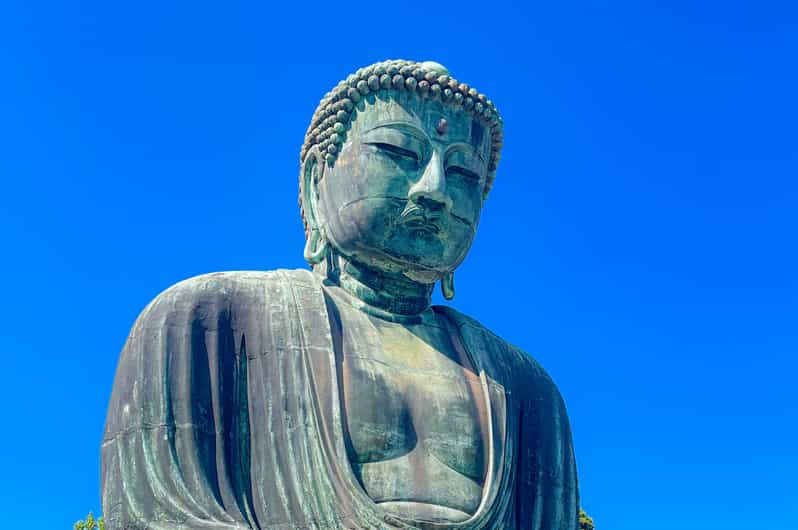
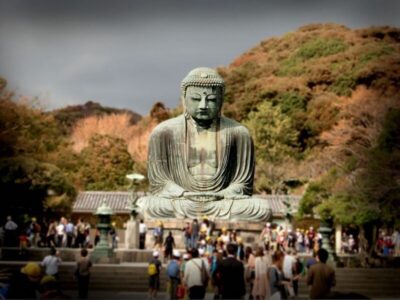
- The Great Buddha measures 13 meters and weighs 121 tons: Kotoku-in’s bronze statue is the visual anchor of the day.
- Hase-dera comes first: An old tram carries you to a temple filled with myths, gardens, and spiritual stories.
- Spanish is the advertised tour language: Guides such as Nerea and Camila have been praised for patient, useful explanations.
- The outing lasts eight hours: It begins and ends at Tokyo Station’s Marunouchi Square.
- Expect extra costs: Set aside ¥2,300 for transportation and ¥700 for temple tickets, plus lunch and drinks.
- This is not a luggage-friendly excursion: Large bags, unaccompanied minors, wheelchair users, and people with hearing impairments are not accommodated.
Why Kamakura makes a smart day away from Tokyo
Tokyo can fill a whole trip with neon signs, department stores, train stations, and crowds. Kamakura offers a different rhythm. This former settlement is known for temples, shrines, old streets, wooded surroundings, and the famous Great Buddha. You still get there by train, but the mood changes once you leave the capital behind.
I like this excursion because it gives you a taste of Kamakura without asking you to solve the route yourself. You meet in front of Tokyo Station at the Marunouchi Square central exit, then travel together by public transportation. That matters in Japan, where a day trip can become confusing when you are watching platform signs, transfers, fares, and the clock at the same time.
The tour also gives you a Spanish-speaking guide who can explain the stories behind the buildings. That is useful here. Kamakura is not just a collection of attractive temples. The legends, religious details, and local customs make the visit more meaningful, especially if you want more than a quick photograph.
The tradeoff is that this is a full day with several transport legs. You will not be escorted in a private vehicle from one doorway to the next. Public transportation keeps the cost and environmental impact lower, but it also means standing, walking through stations, and keeping track of your belongings.
More Day Trips in Kamakura:
- Tokyo: Kamakura & Enoshima Day Trip including Temple Tickets
★ 4.5 · 1,375 reviews - From Tokyo: Kamakura & Enoshima 1-Day Bus Tour
★ 4.5 · 189 reviews - Exciting Kamakura – One Day Tour from Tokyo
★ 5.0 · 40 reviews
Meeting at Tokyo Station and taking the train
The day starts at Tokyo Station, outside the facade in Marunouchi Square at the central exit. This is a practical meeting point, but Tokyo Station is large, so allow enough time to reach the correct exit. The tour ends at the same meeting point after the return journey.
From there, the group takes a train to Kamakura. Transportation is not included in the $86 price, and the stated transport cost is ¥2,300. Treat that figure as an important part of your budget, not a minor footnote. You will also pay ¥700 for temple admissions, with lunch and drinks extra.
Public transportation is part of the experience. You get a look at how people move between Tokyo and nearby towns, and you avoid the feeling of being carried from sight to sight in a sealed vehicle. One account specifically noted that the trains and tram had air conditioning and that there were no long waits for transport. That can make a warm or tiring day easier.
Still, this arrangement suits you best if you are comfortable with a moving schedule and normal city walking. The tour does not take large bags, so leave suitcases at your hotel. Bring a compact day pack for water, a wallet, a phone, and anything else you need for eight hours.
Hase-dera and the old tram ride
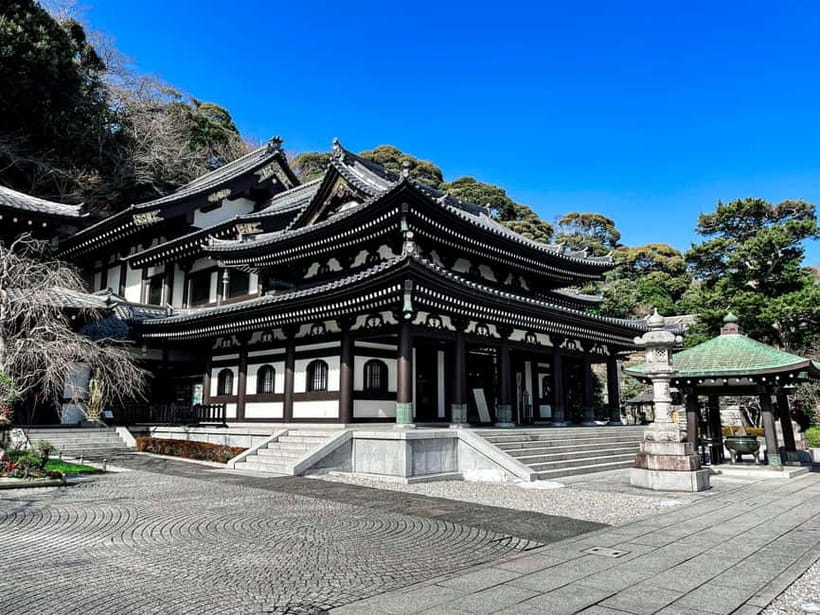
Once in Kamakura, you board one of the oldest trams still operating in Japan. The tram takes you to Hase-dera, making the journey part of the sightseeing rather than a simple transfer.
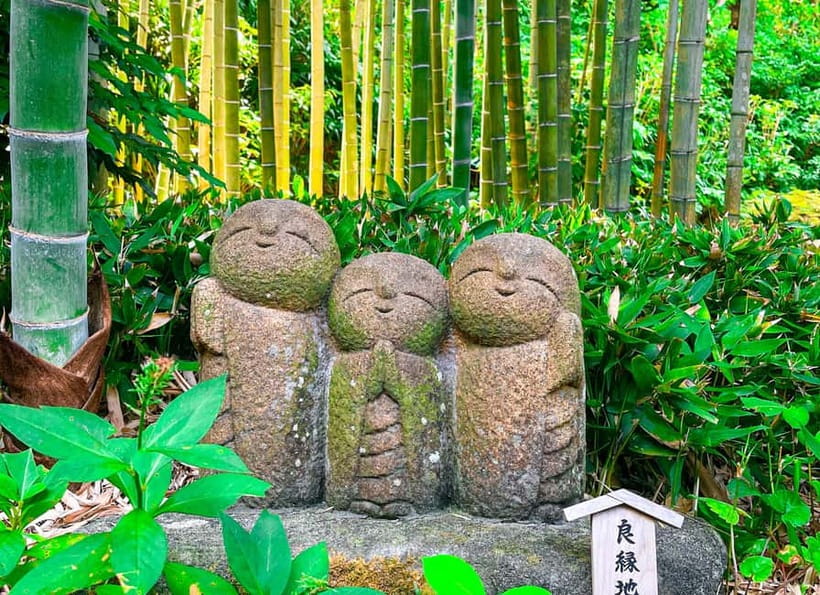
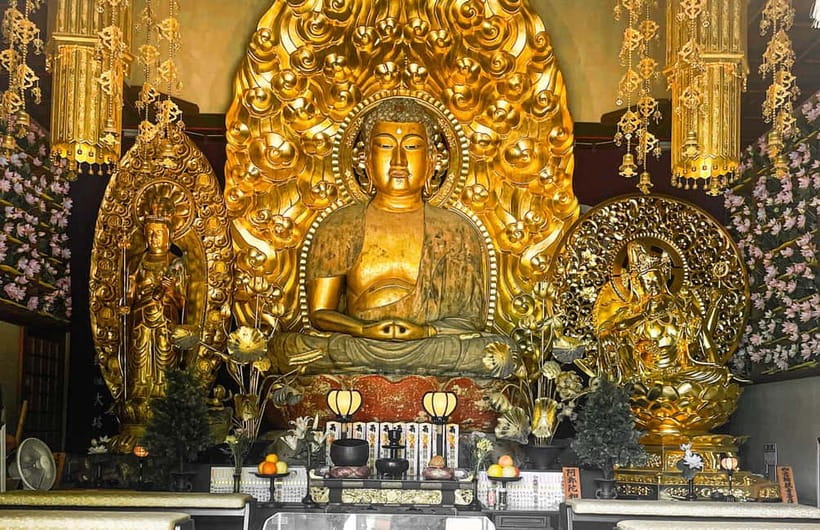
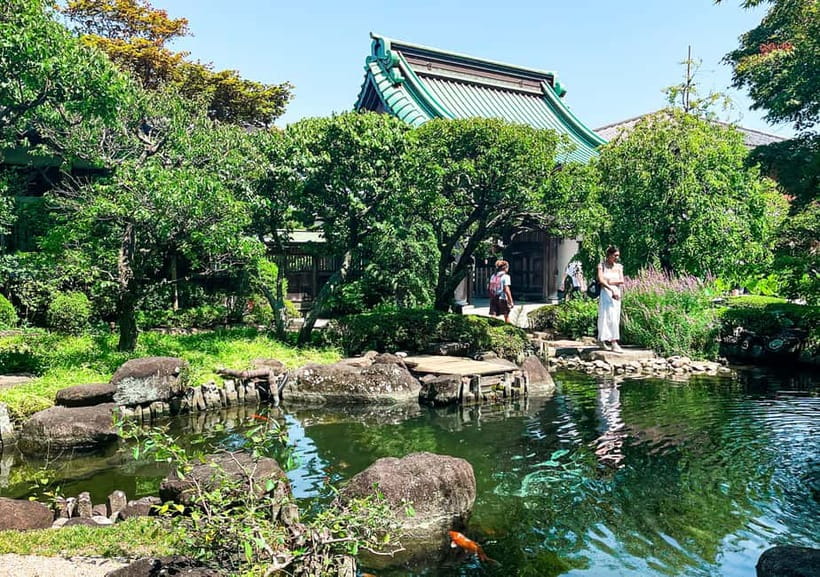
Hase-dera is presented as a temple filled with myths and legends. The guide’s role is especially valuable here because the pleasure comes from learning what you are looking at, not only from walking through the grounds. The temple is also associated with attractive plant life and calm views, giving you a clear break from Tokyo’s hard urban edges.
The exact pace of the visit depends on the group and the day, but you should expect to walk through temple areas and listen to explanations along the way. Wear shoes that feel good for extended walking. Comfortable clothing is more useful than dressing for photographs alone.
Several guides have received especially warm praise for their manner. Nerea was described as patient, kind, and good at adjusting to children in the group. Nikita was noted for making people feel at ease and explaining the sights in detail. Paula was praised for her understanding of Japanese history, while Ori made the visit lively and added practical recommendations.
Those details matter because temple visits can feel quiet and formal at first. A good explanation helps you notice the purpose of a building, the meaning of a story, or the reason a certain part of the grounds matters. The experience is strongest if you enjoy asking questions and listening rather than rushing from one photo stop to the next.
Meeting Kamakura’s Great Buddha at Kotoku-in
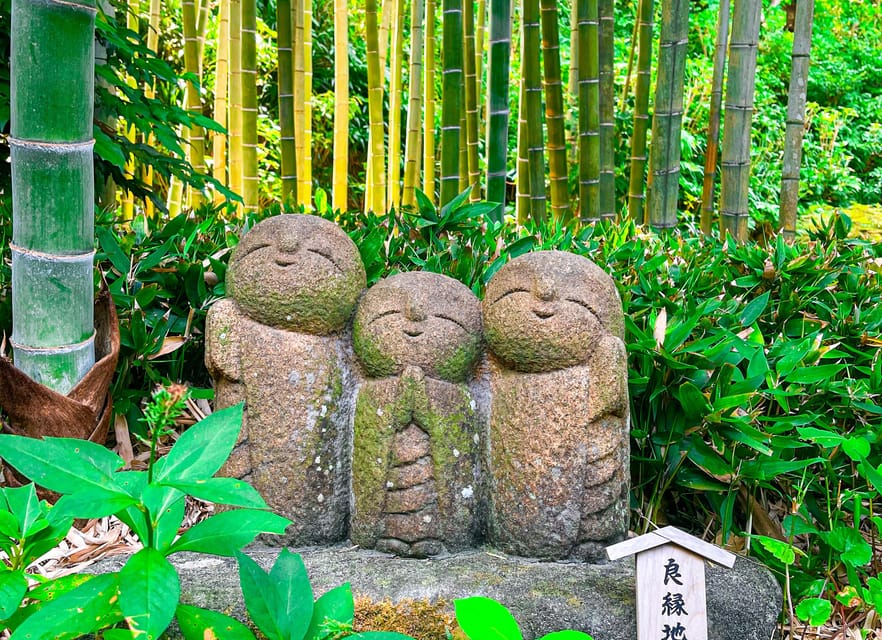
After Hase-dera, you walk to Kotoku-in Temple. The main attraction is the bronze Buddha, which measures 13 meters and weighs 121 tons. It is described as the second largest bronze Buddha in Japan, making this more than a quick stop on a temple circuit.
The statue has an impressive physical presence, but the setting also gives the visit its calm. You are seeing a major religious symbol in a town known for spiritual sites and natural surroundings, not in the middle of a modern city plaza. The guide helps place the statue within Kamakura’s religious and cultural story.
This stop is likely to be the most memorable part of the itinerary for many people. Even if you are not deeply interested in religious art, the size and age of the monument make it easy to appreciate. You can also use the time to ask your guide about Buddhist traditions, the meaning of the statue, and how Kamakura differs from Tokyo.
Temple admission is not included. The listed cost is ¥700 for the temple visits. Keep some Japanese yen available, or confirm your preferred payment method before the day begins. Since admissions and transport are separate, the real cost of the outing is higher than the headline price.
A few more Kamakura half-days worth comparing
- Kamakura Historical Walking Tour with the Great Buddha
★ 5.0 · 129 reviews - Kamakura Private Tour: Temples, Nature, and the Great Buddha
★ 5.0 · 121 reviews - Kamakura Walking Tour – The City of Shogun
★ 5.0 · 100 reviews - Kamakura 8 hr Private Walking Tour with Licensed Guide from Tokyo
★ 5.0 · 80 reviews
Lunch and shopping on Kamakura’s main street
After the temple visits, the group moves to Kamakura’s main street. It is lined with shops and has a distinct local atmosphere, making it a useful counterpoint to the quiet temple grounds.
You have time for lunch and shopping here. Food is not included, so you can choose how much to spend. That flexibility is helpful because people have different appetites and budgets. It also means you should not assume the $86 covers the whole day.
The shopping time gives you a chance to browse at your own speed, but remember that this is still part of a group excursion. You will need to return at the agreed time for the train back to Tokyo. Ask the guide for recommendations if you want a particular type of food, a small gift, or a better idea of what to look for.
This is also where the guide’s practical advice can add real value. The excursion promises suggestions for continuing your trip, so you can use lunch or shopping time to ask about Tokyo neighborhoods, Japanese customs, or other places to visit. That kind of advice is most useful when you are still building your plans and want help beyond the day’s fixed route.
What the Spanish guidance adds
The tour is conducted in Spanish, which makes the cultural material easier to follow if Spanish is your strongest language. The stated guide service is friendly and personal, and the strongest comments focus on patience, clear explanations, and useful information.
Camila was praised for managing the excursion efficiently and explaining the sights in a relevant way. Nerea was especially effective with a group that included children, adapting her pace and telling the stories in an engaging manner. Nikita was described as attentive and welcoming, and Ori was praised for making the tour enjoyable while offering good recommendations.
One point needs clarification before you book. In one case, the guide initially said the tour would be in Spanish but also guided in English. The guide was still considered very good, but if Spanish-only commentary is essential for you, confirm the language arrangement in advance.
The experience appears best suited to people who want context without having to research every temple beforehand. You will hear stories and historical information while seeing the actual places, which helps the details stay connected to the day.
Is $86 a fair price for this day trip?
The price is reasonable only if you calculate the add-ons honestly. At $86 per person, you receive an eight-hour guided excursion in Spanish, but you must add ¥2,300 for transportation, ¥700 for temple tickets, and your own food and drinks.
That makes this less of a bargain for someone who is happy to navigate Kamakura alone. If you can read train information, plan the route, and research the temples, independent travel may cost less. You would also control your timing and spend as long as you like at each stop.
The tour earns its price through convenience and explanation. You do not need to work out the train and tram route, and you have a Spanish-speaking person to connect the sites with history, legends, and local customs. For a first visit to Japan, that can be worth more than the raw transport savings.
The environmental angle is also practical rather than decorative. The excursion uses public transportation instead of a dedicated tour vehicle. That keeps you close to daily life in Japan and avoids adding a private coach to a route that already has regular train and tram service.
Who will enjoy this Kamakura outing most?
I would recommend this day to you if you want a guided introduction to Kamakura and prefer to hear the cultural background in Spanish. It is a good fit for couples, families with older children, and visitors who want an organized day outside Tokyo without giving up local trains and trams.
Families should note the positive experience of Nerea adapting to children, but the schedule still involves a full eight hours of movement. Children who tire quickly may find the transport, temple walking, and return journey demanding.
You should think twice if you use a wheelchair, have a hearing impairment, or need a private vehicle. The activity is specifically not suitable for wheelchair users or people with hearing impairments, and public transportation is used throughout.
It is also a poor match for anyone carrying luggage. Large bags are not allowed, and the meeting point is a busy station area. Store your main luggage before arriving at Tokyo Station.
Practical details that make the day easier
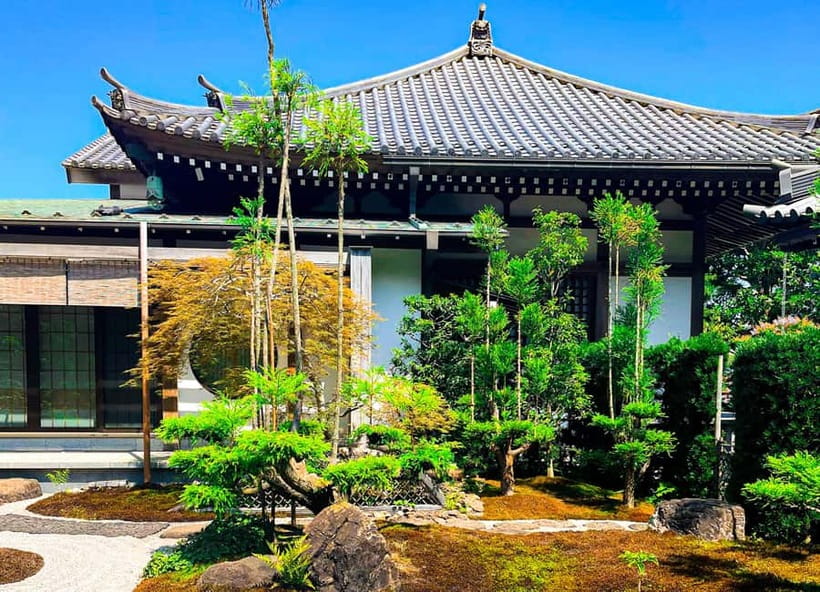
Wear comfortable shoes and bring a small bag only. The day includes trains, an old tram, walks between attractions, temple grounds, and time on a shopping street.
Budget separately for the ¥2,300 transport cost, ¥700 temple admissions, lunch, and drinks. The ability to reserve now and pay later can help if your plans are still changing, and cancellation is available up to 24 hours before departure for a full refund.
The tour begins and ends at the same Tokyo Station meeting point. That makes it easier to plan your evening, but do not schedule a tight dinner reservation immediately afterward. Public transportation is usually efficient, yet a full day of sightseeing is better with a little breathing room.
Bring curiosity as well as a camera. The best part of Kamakura is not simply seeing the Great Buddha. It is understanding how the temples, legends, old transport, shopping streets, and quieter surroundings fit together.
Should you book the Kamakura tour?
Book it if you want a Spanish-speaking guide, a structured eight-hour outing, and help understanding Hase-dera and the Great Buddha without planning every train and temple yourself. The consistently strong guide feedback, especially for Camila, Nerea, Ori, Nikita, and Paula, is the clearest reason to choose it.
Skip it if you want the lowest possible cost, dislike public transportation, need accessibility support, or prefer to spend unlimited time at one site. Remember to add transport, admissions, and meals to the advertised price.
For many first-time visitors, this is a sensible bridge between Tokyo and rural-feeling Japan. You get the famous statue, a temple reached by an old tram, a Spanish explanation of the stories, and time to explore Kamakura on foot. That is a full and useful day, provided you pack light and budget for the extras.
FAQ
Is this Kamakura tour conducted in Spanish?
Yes. Spanish is the stated tour language. One guide also used English during part of an excursion, so confirm the language arrangement if Spanish-only guidance is essential.
Where does the tour start and finish?
The meeting point is in front of Tokyo Station’s facade in Marunouchi Square, at the central exit. The activity returns to the same meeting point.
How long does the excursion last?
The excursion lasts eight hours.
Are transportation and temple tickets included?
No. Transportation costs ¥2,300, and temple tickets cost ¥700. Food and drinks are also excluded.
Can I bring luggage or a large bag?
No. Luggage and large bags are not allowed. Bring only a small day bag.
Is the tour suitable for wheelchair users or people with hearing impairments?
No. The activity is listed as unsuitable for wheelchair users and people with hearing impairments.
Just added around Kamakura
- First time in Kamakura? Enjoy a Tour of All Must-sees!★ 5.0 · 15 reviews
- Kamakura Tours Half Day or Full Day Tours with a local guide.★ 5.0 · 12 reviews
- Buddha, Bamboo & Zen – Bespoke Kamakura Private Walking Tours★ 5.0 · 25 reviews
- Your Own HANKO Name Seal Activity in Kamakura.★ 5.0 · 24 reviews
- Exciting Kamakura – One Day Tour from Tokyo★ 5.0 · 40 reviews
- Kamakura Bamboo Forest and Great Buddha Private Tour★ 5.0 · 12 reviews
- Tokyo Yokohama Night View Tour With Kamakura And Enoshima★ 3.5 · 14 reviews
- Kamakura Temples Private Guided Tour from Tokyo★ 4.8 · 21 reviews
Kamakura Tours, compared.
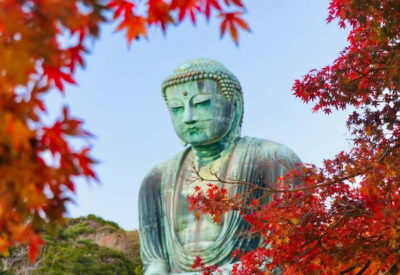
Kamakura & Enoshima Day Trip including Temple Tickets
Our verdict →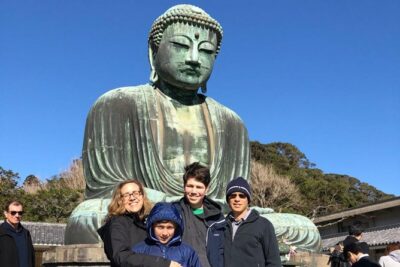
Kamakura Historical Walking Tour with the Great Buddha
Our verdict →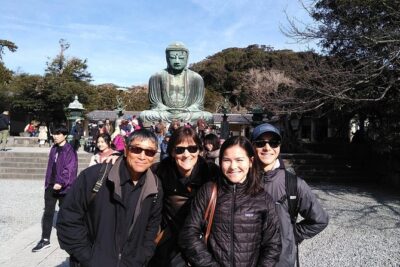
Kamakura 8 hr Private Walking Tour with Licensed Guide from Tokyo
Our verdict →
Kamakura Private & Customizable Tour – All-in-One Experience
Our verdict →
Browse the lists this tour appears in