
Reviewed · CUSTOM PRIVATE TOURS IN TOKYO
Tokyo Customized Private Tour: See Top Attractions in 1 Day
Tokyo is easiest to enjoy when someone helps you make sense of its scale. This private tour lets you choose the mix: old Asakusa, food-focused Tsukiji, quiet shrine grounds, Harajuku shops, or neon-heavy Shibuya. Guides such as Yuriko, Yoko, Tak, and Yeonmi have been especially praised for adapting the day to families, food lovers, and first-time visitors.
I like two things here. First, your guide teaches you how to use Tokyo’s metro instead of simply driving you past the sights. Second, the itinerary can shift around your interests and energy level, which matters in a city where a single station transfer can eat up time. The drawback is the walking: you pay $141 per person, then add transport, meals, and any entry fees.
Key points at a glance
- Private route, not a fixed checklist: Choose roughly two or three areas in four hours, three or four in six hours, or four or five in eight hours.
- A useful first-day orientation: Your guide can show you how Tokyo stations and trains work, saving time later in your trip.
- Old and modern Tokyo in one day: Pair Sensō-ji with Meiji Shrine, Takeshita Street, Shibuya, or Shinjuku.
- Strong family appeal: Guides have adjusted the pace for children, helped at crowded crossings, and kept young visitors interested.
- Tsukiji needs planning: The market is generally closed Wednesdays and Sundays, with the Imperial Palace or Hamarikyu Garden used as alternatives.
- Budget beyond the tour fee: You pay transportation, lunch, entrance fees, and personal costs for both you and your guide.
The real strength is a day built around you
The tour costs $141 per person and lasts from four to eight hours. That is not a cheap orientation walk, but it buys something a standard group tour cannot: a private guide who can change the order, slow down, or drop a stop when your group has had enough.
The four-hour option is best treated as a focused introduction. Two or three areas are realistic. A six-hour day allows three or four areas, while eight hours can cover four or five without forcing every stop into a rushed photo break.
I would choose the full day only if your group has clear priorities and can handle a lot of walking. Tokyo is spread out, and the metro makes it possible to cover ground, but every station involves stairs, corridors, platforms, and transfers. A shorter tour can be better if you are jet-lagged, traveling with small children, or arriving after a long flight.
Your guide meets you at your central Tokyo hotel, within the city’s 23 wards. Hotels in Chiba, including Maihama, hotels in Kanagawa such as Yokohama, airports, and ports are not included for pickup. If you stay outside Tokyo, you must reach the designated meeting point.
More Custom Private Tours in Tokyo
- Tokyo Customized Private Tour (Must See Places in 1 Day)
★ 5.0 · 1,499 reviews - Private Custom Tour: Tokyo in a Day
★ 5.0 · 1,432 reviews - Tokyo Customized Private Tour: See Top Attractions in 1 Day
★ 5.0 · 1,351 reviews
Tsukiji brings food and practical city lessons
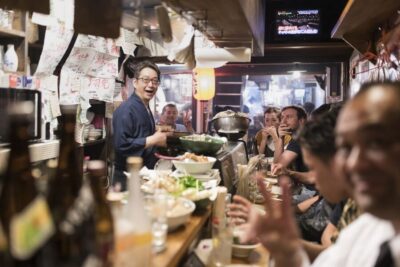
Tsukiji Outer Market is a smart opening stop for food-minded visitors. It gives you a chance to see small food shops and market lanes, and the guide can help you make sense of what you are seeing rather than leaving you to point at unfamiliar items.
Past feedback also highlights food stops around Ueno, including a guide-led food outing. If food is high on your list, say so before the tour begins. The day is customizable, and your guide can shape the route around that interest.
There is one important catch. Tsukiji is generally closed on Wednesdays and Sundays, though you should check the official schedule before booking around it. If it is closed, the route switches to the Imperial Palace or Hamarikyu Garden. That backup is useful, but it is not the same experience, so market fans should confirm the day carefully.
The market also adds to the walking load. Wear comfortable shoes, and do not expect the tour to be a ride between attractions. Public transportation is used for the longer hops, with walking at every end.
Asakusa and Sensō-ji show you Tokyo’s older face
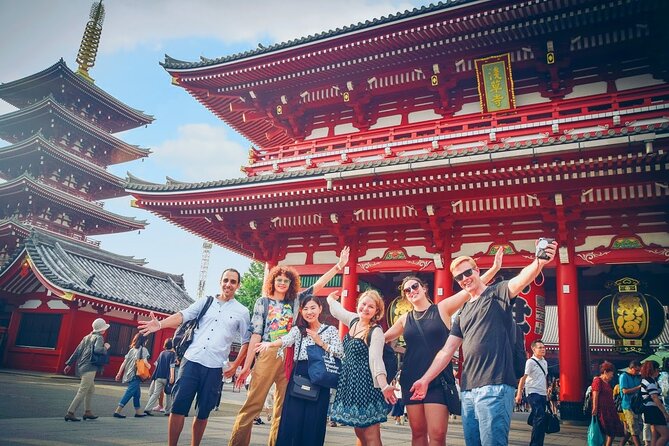
Sensō-ji Temple is given about an hour for guided sightseeing, followed by a short visit around Asakusa. This is one of the clearest places to begin understanding Tokyo’s traditional side.
A private guide can explain the temple customs, point out details you might otherwise pass, and help you move through the area at a useful pace. You can ask more questions here than you usually can on a large group tour, especially if you want cultural context rather than quick facts.
Asakusa works well with Tsukiji because both areas feel quite different from Shibuya or Harajuku. Still, do not try to linger everywhere. The suggested timing gives Sensō-ji the attention it deserves, while the 15-minute Asakusa stop is more of a brief look at the surrounding district.
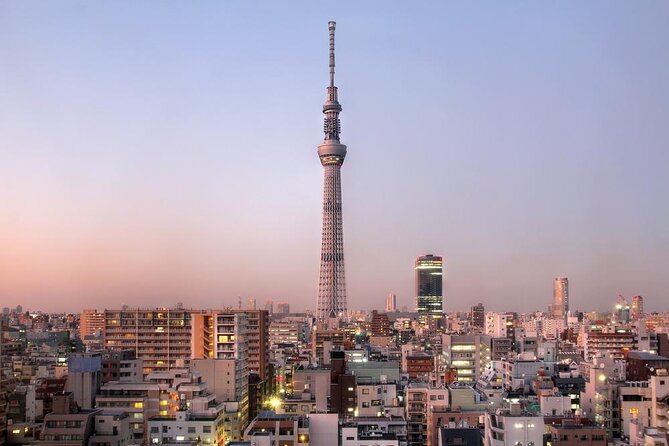
Tokyo Skytree Town is another possible choice. It is listed as a one-hour stop for sightseeing and photos, but it may compete with Asakusa for your time. If you want temples and traditional streets, keep Asakusa. If you want a modern Tokyo viewpoint area, ask about Skytree Town instead.
Meiji Shrine and Harajuku make a strong pairing
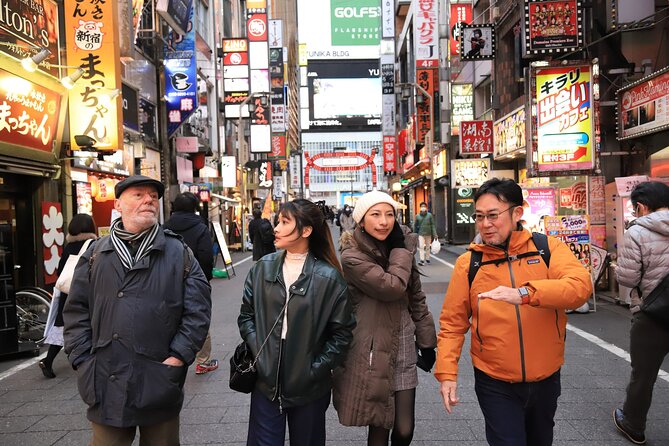
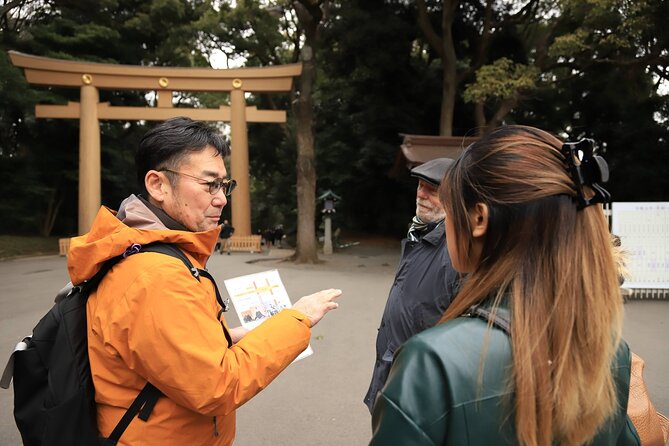
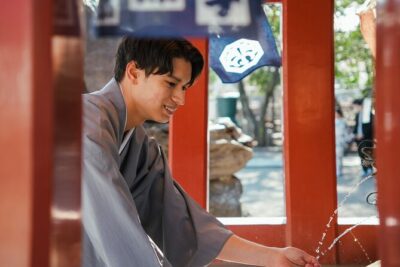
Meiji Shrine receives about an hour of guided sightseeing. It offers a change of pace from markets, stations, and shopping streets, with a setting suited to learning about Shinto traditions and modern Japan’s relationship with its major shrines.
Then comes Takeshita Street in Harajuku, also allotted about an hour. Here the focus shifts to photos, shopping, and the youthful side of the city. This combination is particularly good for families and mixed-interest groups because one stop supplies calm and cultural explanation, while the next gives you shops and visual energy.
The tour’s strongest family pattern appears here. Guides have adjusted shrine time for children, moved toward anime and electronics when that suited a group, and used small activities to keep younger visitors involved. One guide even brought paper to teach origami on the subway. Those details matter if your family needs variety, not just a long string of temples.
Takeshita Street can be crowded, and one hour passes quickly. I would decide in advance if you care more about shopping, photos, or simply seeing the street. Your guide can help prevent this stop from swallowing the day.
More Day Trips in Tokyo
- 1-Day Tokyo Bus Tour
★ 5.0 · 14,250 reviews - Tokyo: DisneySea 1-Day Passport
★ 4.5 · 2,726 reviews - Tokyo Disneyland 1-Day Passport
★ 4.6 · 2,512 reviews - Tokyo Panoramic 1 Day: Meiji Shrine, Asakusa, Odaiba and SKYTREE®
★ 4.5 · 1,222 reviews
Shibuya and Shinjuku show the modern city at full speed
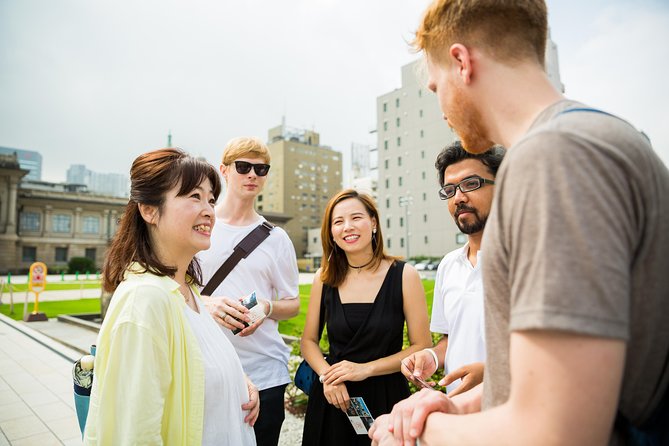
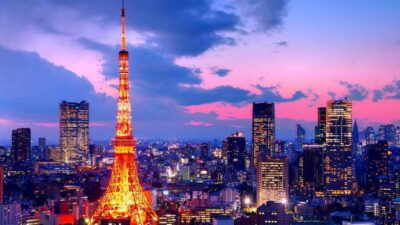
Shibuya City is planned as roughly an hour for a guided visit. This is the place to see the famous Scramble Crossing and get a sense of Tokyo’s modern commercial center.
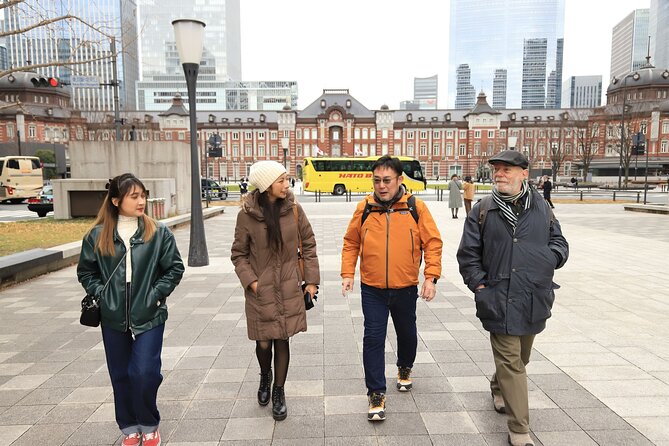
A guide is most useful here for the transitions. Tokyo stations can feel like underground neighborhoods, and your guide can handle the route while explaining how to get around later. Several past visitors found the metro instruction alone worth the cost, especially during a first Tokyo visit.
Shinjuku is another one-hour option, with time for a photo stop, a visit, and guided sightseeing. You might choose Shinjuku instead of Shibuya if you prefer a different slice of modern Tokyo, but covering both in a short tour may leave little time for temples, food, or shopping.
The sample full-day plan runs from 9 a.m. to 5 p.m. and includes Tsukiji, Asakusa, Meiji Shrine and Harajuku, then Shibuya. That is an ambitious day, but it has a sensible rhythm: market, temple, shrine, shopping street, and major crossing.
Ginza offers shopping, while Hamarikyu slows the pace
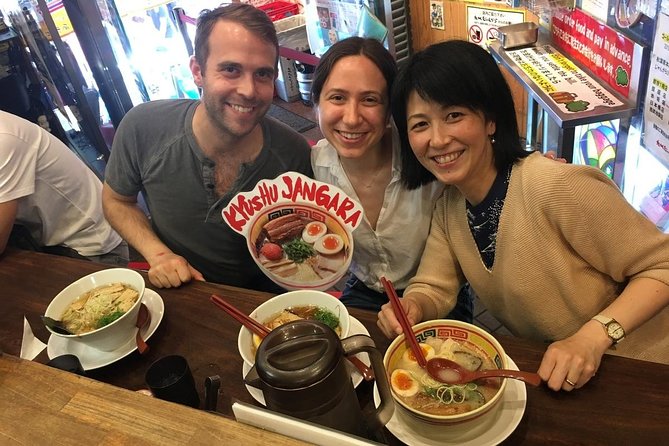
Ginza is listed as a one-hour stop for photos, sightseeing, and shopping. It is a practical choice if your interests lean toward department stores, polished streets, and central Tokyo shopping rather than shrine visits.
Hamarikyu Gardens gives you a quieter alternative. It is also a useful replacement if Tsukiji is closed. Since both sites appear as possible stops, you can ask your guide to balance a busy city day with a garden visit.
The itinerary also includes the Tokyo National Museum, which can suit visitors who want more cultural content. It receives one hour, so you should be realistic about what you can see. A one-hour museum visit is an introduction, not a complete museum day.
Odaiba is another possible destination. It gives you a different side of Tokyo, but its distance may make it a poor choice if you also want Asakusa, Harajuku, and Shibuya. Your guide can help decide if it fits your available hours.
Your guide can make the metro part of the experience
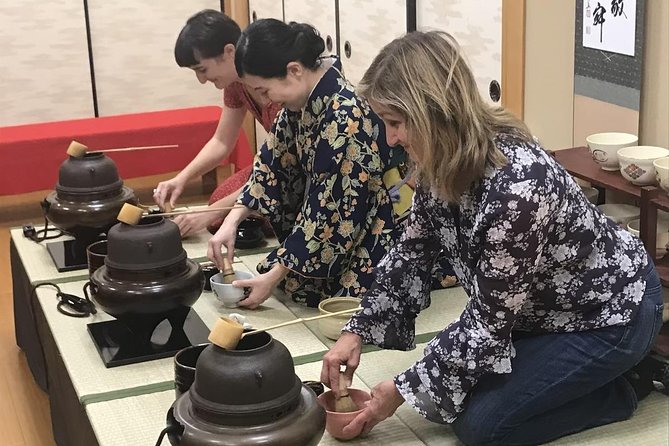
Transportation is not included in the $141 price, and you pay the fares for yourself and your guide. Lunch, entrance fees, and personal expenses are also extra. That makes the final cost higher than the headline figure, especially for a larger family.
Still, the public transit format has real value. Guides have helped visitors understand Tokyo’s train system, find the right platforms, and move through complex stations. That lesson can pay off for the rest of your trip because you are not dependent on taxis or organized transfers.
The price also includes hotel pickup and drop-off within the eligible part of Tokyo. That removes the stress of finding a first meeting point in a huge city. It is less useful if your hotel is outside the 23 wards, so check that detail before booking.
This is not a luxury car tour. You will walk, ride the metro, wait in stations, and manage crowds. The upside is a more local way to connect the city’s districts. The downside is fatigue, particularly in summer, during rainy weather, or after a long day at the airport.
What the guide quality means for your day
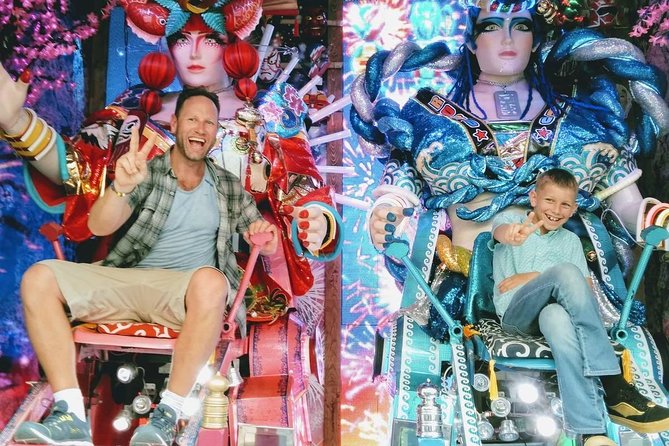
The guide is the main reason to book this experience. Names praised in past bookings include Yoko, Yuriko, Tak, Yeonmi, Aki, Nino, Mami, Hiro, Yuki, Sachimi, and Naoko. The repeated pattern is flexibility: guides have adjusted routes, helped families, answered cultural questions, and changed activities when children lost interest.
English ability is listed as part of the tour, and the strongest guide experiences included clear explanations and help with practical tasks. You can ask your guide to focus on food, history, shopping, family needs, or metro skills.
Send your priorities before the day if possible, or discuss them at pickup. Say which sights are essential, how much walking your group can manage, and if anyone needs breaks. A private tour is only as useful as the information you give the guide.
One past booking had a less enthusiastic note about wanting different places visited. That is a helpful warning: customization works best when you are specific. If you simply ask to see the top attractions, you may get a sensible standard route, but you may not get your personal version of Tokyo.
Who will get the most from this tour
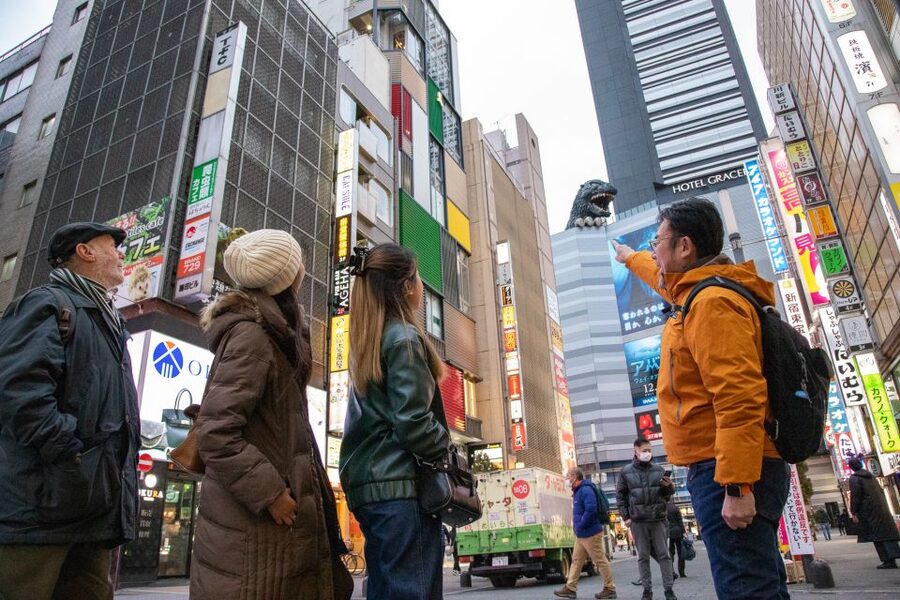
I would recommend it most strongly to first-time visitors with limited time. It gives you a city orientation, a practical metro lesson, and a chance to see several major districts without spending your first day studying maps.
Families are another strong match. Guides have worked with toddlers, elementary-age children, teenagers, and groups with different energy levels. They can adjust the order and switch from shrines to shopping or electronics when needed.
Food lovers can ask for market and local food stops. Visitors who want quiet cultural sites can favor Sensō-ji, Meiji Shrine, Hamarikyu Garden, or the Tokyo National Museum. Shoppers can emphasize Harajuku and Ginza.
I would hesitate if you dislike walking, want a fixed deep visit to one museum, or prefer a fully prepaid package. You will pay extra for transit, food, and entries, and the tour takes place rain or shine. It is also not suitable for wheelchair users.
Cancellation is free up to eight days in advance for a full refund. That is useful when your Tokyo plans are still taking shape, but the important decision is choosing the right duration and priorities.
Should you book the Tokyo private tour?
Book it if you want a flexible first day, need help with Tokyo’s metro, or are traveling with a family that cannot follow a rigid group schedule. At $141 per person before extras, the value comes from time saved, route changes, and personal help rather than from included tickets or transport.
Choose four hours for a focused introduction, six hours for a balanced day, and eight hours only if your group is comfortable walking and you have a clear plan. Ask for Tsukiji only when it is open, and name your must-see districts in advance.
If you want to cover old Tokyo, modern Tokyo, local food, and basic city skills in one private day, this is a sensible choice. Just keep the route realistic. Tokyo rewards a well-planned shortlist more than a frantic race through every famous name.
FAQ
How long does the private Tokyo tour last?
The tour lasts between four and eight hours. A four-hour tour generally covers two or three places, six hours covers three or four, and eight hours covers four or five.
What places can I visit?
Possible stops include Sensō-ji, Asakusa, Meiji Shrine, Takeshita Street, Tsukiji Outer Market, Shibuya, Shinjuku, Ginza, Tokyo Skytree Town, the Tokyo National Museum, Odaiba, and Hamarikyu Gardens.
Can I customize the itinerary?
Yes. The sites can be adjusted to match your interests, and you can discuss your preferred route and pace with your guide.
Is hotel pickup included?
Hotel pickup and drop-off are included for hotels in central Tokyo within the city’s 23 wards. Pickup is not available from hotels in Chiba or Kanagawa, airports, or ports.
Is transportation included in the price?
No. You pay public transportation costs for yourself and your guide. Lunch, entrance fees, and personal expenses are also excluded.
What happens if Tsukiji Outer Market is closed?
The tour visits either the Imperial Palace or Hamarikyu Garden instead. Tsukiji is generally closed on Wednesdays and Sundays, but you should check the official schedule.
Is the tour suitable for children?
Yes. The private format allows the guide to adjust the route and pace for families. Past guide support has included helping with children in crowded areas and changing activities to suit different ages.
Is the tour wheelchair accessible?
No. The activity is not suitable for wheelchair users.
What should I bring?
Bring comfortable shoes. The tour uses public transportation and includes substantial walking, and it operates in rain or shine.
Just added around Tokyo
- Kawagoe Japanese Food Tour : Unagi Kaiseki and Sake near Tokyo★ 5.0 · 30 reviews
- Kawagoe 4hr Private Tour with Licensed Guide (Kawagoe Dep)★ 5.0 · 13 reviews
- Little EDO Sushi Making workshop in Kawagoe★ 5.0 · 18 reviews
- 【R34】Tokyo:Private Daikoku tour in Modified R34★ 4.9 · 92 reviews
- :Tokyo,Shibuya/ Pro Photography in Kimono / English-Friendly★ 5.0 · 26 reviews
- Tokyo:Celebrate Unique Japanese New Year Tradition Festivity★ 3.9 · 20 reviews
- Tokyo: Allstar Food Tour★ 4.7 · 29 reviews
- Tokyo: West-Side Cycling and Food Tour with Guide★ 5.0 · 37 reviews
Custom Private Tours in Tokyo, compared.
Tokyo Customized Private Tour (Must See Places in 1 Day)
Our verdict →
Browse the lists this tour appears in