
Reviewed · CITY TOURS IN TOKYO
Tokyo: Private City Highlights Tour with Local Guide
Tokyo can feel like several cities stitched together by trains. This private tour gives you a local guide to connect the pieces, from Senso-ji Temple in Asakusa to the forested grounds of Meiji Jingu, with your route shaped around what you care about most. Guides such as Fumiko, Kenji, Atsushi, and Yumi have helped families, first-time visitors, food lovers, and history fans make sense of the city.
I especially like two things here: you can learn to use Tokyo’s metro while you sightsee, and you can adjust the day when the weather, crowds, or your children’s energy call for a change. The main caution is that this is a walking tour, not a chauffeur service. Your price covers the guide, but not your trains, taxis, lunch, or entrance fees.
Key points to know before booking
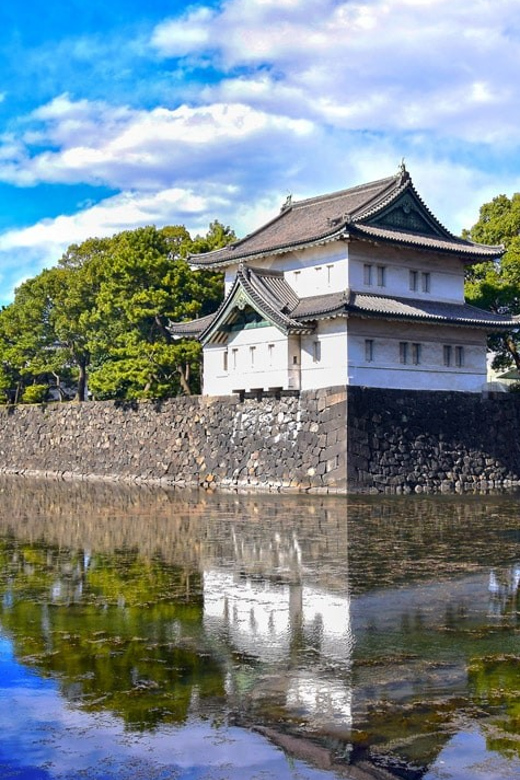
- Choose your own Tokyo mix: Pair Asakusa and the Imperial Palace with Meiji Jingu, Tsukiji, Harajuku, Akihabara, or quieter Nezu.
- Start with practical help: Your guide meets you at your hotel and can show you how to handle Tokyo’s train system.
- Expect plenty of walking: Public transport and foot travel connect the stops, with taxis sometimes used between sites.
- Get cultural context, not just photos: Nationally licensed guides explain Japanese customs, religion, history, and everyday life.
- Good for families and mixed interests: Guides can slow the pace, add breaks, and find lunch options that suit different tastes.
- Plan for extra costs: The $106 price is per person, while transport, food, and any admission fees are separate.
What this private Tokyo tour really offers
This is not a fixed sightseeing circuit where every group follows the same script. You choose from a long list of Tokyo sights, then your guide works out a practical route for a four to eight-hour day.
That flexibility matters in Tokyo. Asakusa and Meiji Jingu sit in different parts of the city, and adding Tsukiji, Shinjuku, or Akihabara means using trains and walking through large stations. A local guide can help you spend less time staring at route maps and more time seeing the city.
The tour is conducted in English or Japanese. Every guide is nationally licensed as a Tour Guide-Interpreter, a Japanese government certification that requires strong knowledge of Japanese culture and history. That does not mean every guide will have the same style, so it is worth sharing your interests and preferred pace before the day begins.
The most useful pattern is to begin with a broad plan, then leave room for sensible changes. Kenji, for example, adjusted a route around seasonal events and showed how temple stamp books, known as goshuin books, work. Atsushi changed plans when a protest affected the Shinjuku area. That kind of local judgment is hard to get from a map.
More City Tours in Tokyo
- Tokyo: 3-Hour Bike or E-Bike City Highlights Tour
★ 4.8 · 435 reviews - Day Private City Tour of Tokyo with English speaking driver
★ 5.0 · 94 reviews - Tokyo City Tour by Private Car & English guide
★ 5.0 · 91 reviews
Asakusa and Senso-ji: the best first look at old Tokyo
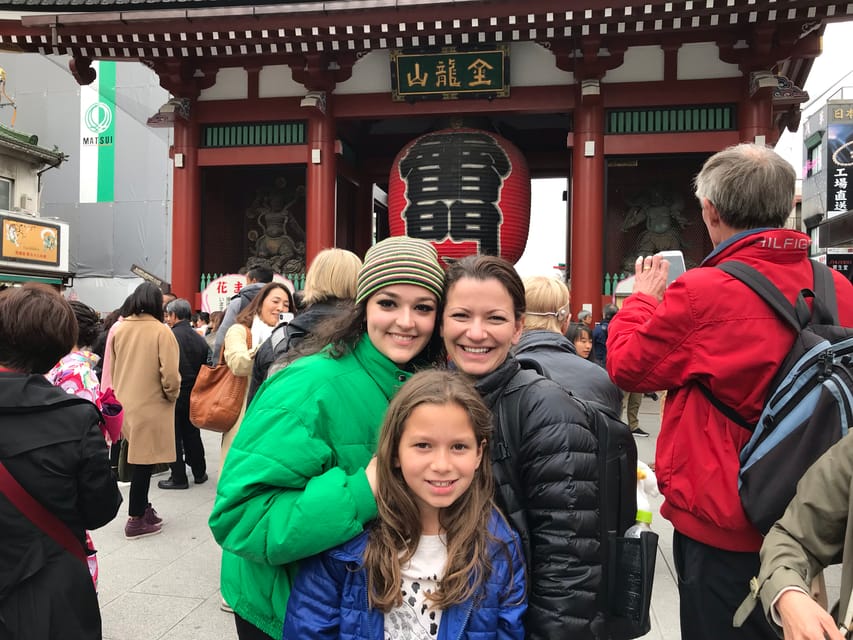
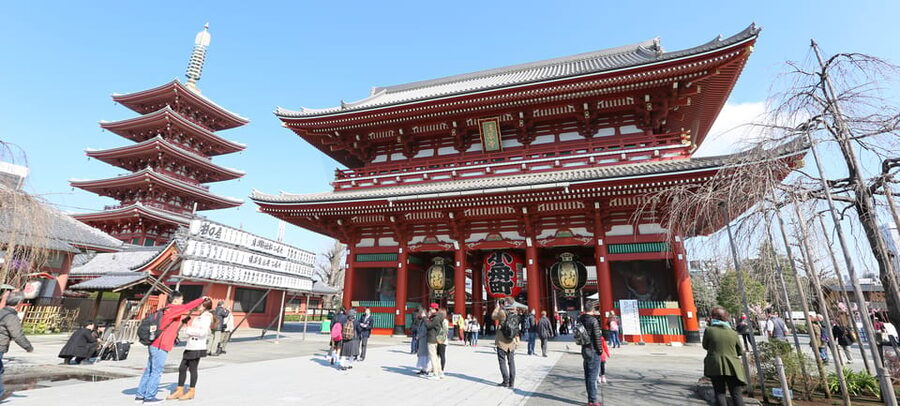
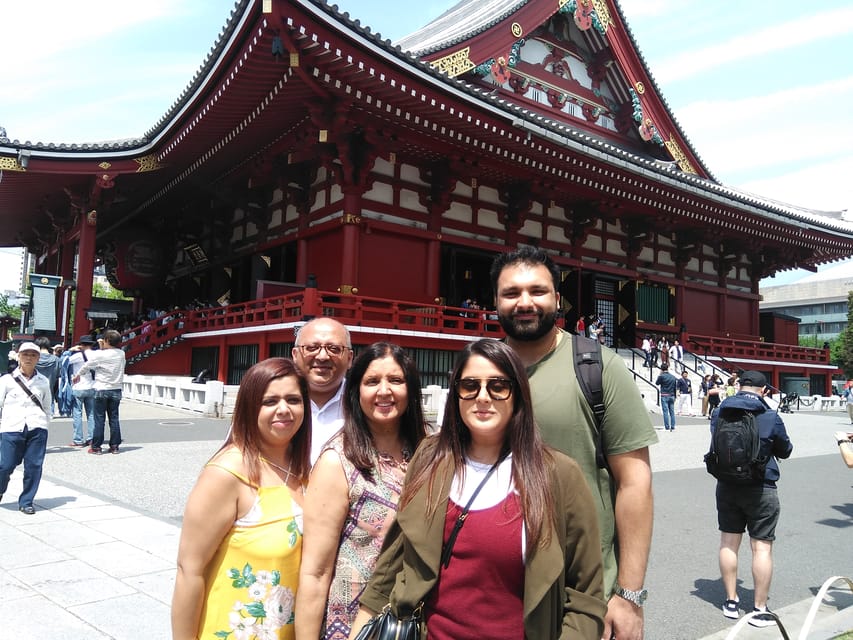
Asakusa is often the right opening act because it gives you a clear introduction to traditional Tokyo. The focus is Senso-ji, the famous Buddhist temple, reached through the Nakamise shopping street.
You can expect your guide to explain the religious customs around the temple, not simply point out the gate and pagoda. This is where questions about incense, prayer, purification, and temple etiquette become useful. The area also offers shops and street food, though your exact stops depend on your interests and available time.
Asakusa works well for first-time visitors because it feels visually distinct from Tokyo’s office districts and neon shopping centers. It also gives your guide a natural place to explain how Buddhist and Shinto traditions appear in daily life.
The drawback is crowding. Senso-ji is one of Tokyo’s best-known sights, and the approach can feel packed at busy times. A four-hour tour may require choosing between lingering in Asakusa and reaching another district. If Senso-ji is a priority, tell your guide before the day starts.
The Imperial Palace and its gardens
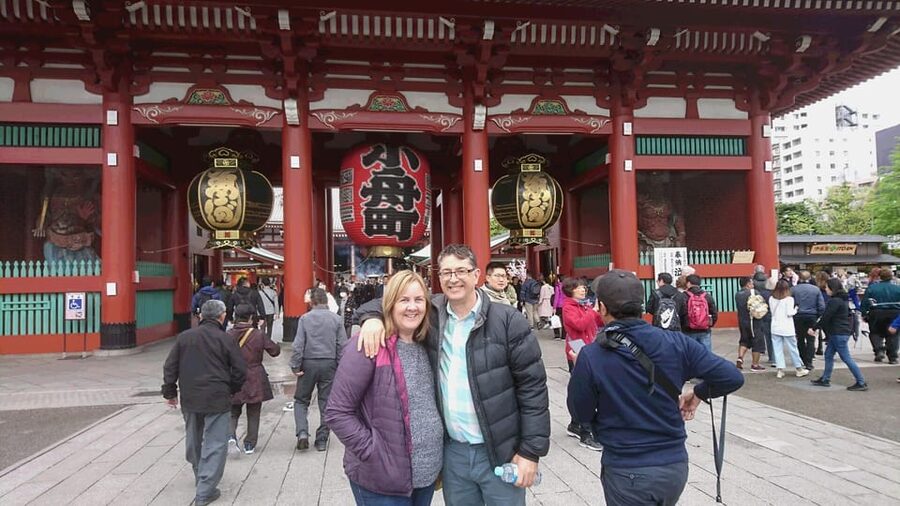
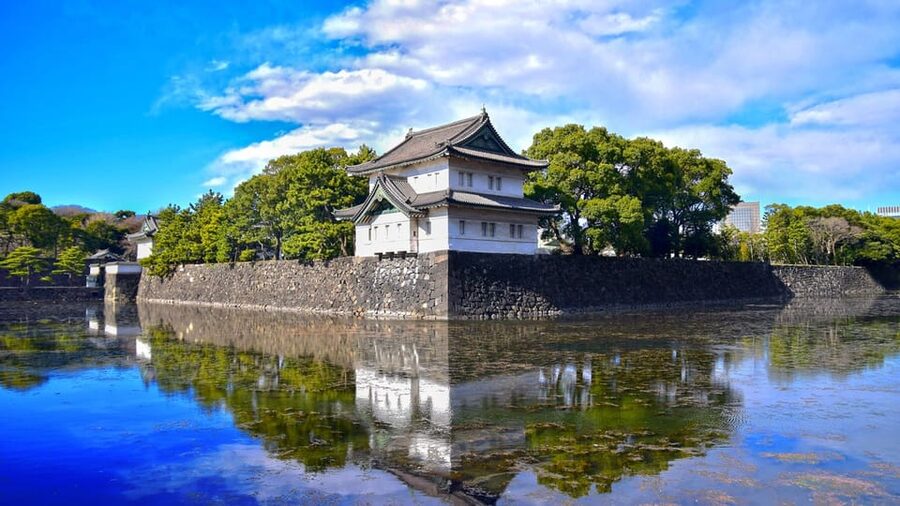
The Imperial Palace area brings a different mood. You might walk through the Outer Garden, known as Gaien, or visit the East Gardens if they fit the schedule and opening conditions.
The broad spaces around the palace offer a pause from Tokyo’s dense streets. The gardens also give your guide a chance to explain the imperial institution, Japanese history, seasonal customs, and the way public access works.
Do not assume that every part of the palace is open at all times. One carefully timed visit allowed access to palace grounds during a special period, while other routes focused on the gardens and outer areas. Ask your guide exactly which section is planned.
I like this stop for travelers who want context rather than another shopping street. It is less immediately dramatic than Senso-ji or Shibuya Crossing, but it helps you understand Tokyo as a capital city. It also works well as a calmer stretch in a long day.
Meiji Jingu and Harajuku: forest, faith, and youth culture
The contrast between Meiji Jingu and Harajuku is one of the strongest pairings on this tour. Meiji Jingu sits in a broad forested setting between Shibuya and Shinjuku, while nearby Harajuku offers fashion, character goods, and the youth-oriented energy of Takeshita Street.
At the shrine, your guide can explain Shinto customs and help you understand what you are seeing at the entrance, along the approach, and at the main shrine area. The forest makes this a welcome break after noisy roads and crowded stations.
Takeshita Street offers a sharper change of pace. It is associated with youthful fashion and kawaii culture, and it can be a good choice for teenagers or anyone interested in modern Japanese style. It is also narrow and busy, so it may not suit every traveler for a long stay.
One family found that Yumi made the main sights manageable for an 11-year-old, while Lance adjusted the route for two young children and added stops when needed. That is the practical value of a private guide: you can see both major sites without pretending that every member of your group wants the same pace.
Same trip, a completely different kind of day:
- 1-Day Tokyo Bus Tour
★ 5.0 · 14,250 reviews - Tokyo: TOKYO SKYTREE® Admission ticket
★ 4.5 · 11,192 reviews - Tokyo: teamLab Planets TOKYO Digital Art Museum Entry Ticket
★ 4.6 · 9,779 reviews - Tokyo: Sumo Show Experience with Chicken Hot Pot and a Photo
★ 4.8 · 6,678 reviews
Tsukiji, lunch, and Tokyo’s food culture
Tsukiji Fish Market is still a useful stop for food lovers, even though the wholesale tuna auction moved to Toyosu. The area offers food shops, small restaurants, and a chance to discuss seafood, market customs, and Japanese eating habits.
Lunch is not included, so you pay directly for what you choose. That is a drawback if you prefer a fully packaged tour, but it gives your group control over cost and appetite. A guide can help a mixed group find different options, as Kei did for a party whose members wanted separate food choices.
Food need not be the sole focus. Anne’s route included coffee and several food and drink stops, then added Nezu Shrine and other shrines. Atsushi directed one group to a ramen experience with an anime-style setting, which worked especially well for a teenager.
You should tell your guide about dietary needs and food interests in advance. The supplied details do not promise a food tour or a particular restaurant, so think of lunch as a flexible part of the day rather than a fixed attraction.
Shinjuku, Shibuya, and the modern city
Shinjuku and Shibuya show Tokyo at its most intense. Shibuya Crossing is the obvious photo stop, while Shinjuku offers major stations, department stores, nightlife areas, and the compact lanes of Golden Gai.
Golden Gai may appeal to adults interested in Tokyo’s small bar culture, but it is not automatically the best choice for families or for a short tour. Ask your guide to match the district to your group rather than trying to collect every famous name.
Shibuya Crossing is quick to visit but useful as a symbol of modern Tokyo. Your guide can help you reach a good viewing point and explain how the surrounding district fits into the city. Shinjuku may require more time simply because the station and surrounding streets are so large.
A private guide also helps when conditions change. One group left Shinjuku because a protest was taking place and continued to Meiji Jingu instead. That is a sensible trade, not a missed sight. You gain a more comfortable day by avoiding a place that is temporarily unpleasant.
Akihabara, Nezu, and quieter choices
Akihabara is the choice for electronics, anime, manga, games, and Japan’s pop culture. It can be a strong addition for teenagers, collectors, and visitors who already know they want this side of Tokyo.
Nezu offers a quieter and more traditional alternative. It is useful for people who want shrines and local streets without building the whole day around the city’s biggest attractions. Your guide may also suggest nearby areas or smaller shrines that fit your interests.
The tour’s ability to include lesser-known places is one of its better features. Ted, for example, shaped a route around local areas rather than only the standard sights. Maddie added places that were not on the initial plan. Still, the phrase local should not be taken to mean that every stop will be secret or free of other visitors. Tokyo is a huge city, and popular places remain popular.
Four hours or eight hours?
A four-hour tour is enough for a focused introduction. You might choose Asakusa and the Imperial Palace, or combine Meiji Jingu with Harajuku and Shibuya. This shorter version suits visitors with limited time, families who tire easily, or anyone who wants help on the first morning before exploring alone.
Six hours gives you a better balance. You can usually combine several districts, include lunch, and allow time for explanations instead of racing from one photo stop to the next. A six-hour route with Asakusa, Tsukiji, the Imperial Palace, and Meiji Jingu is ambitious but workable when the route is planned carefully.
Eight hours is the best option for a broad city introduction, but do not confuse longer with effortless. One guide covered a great deal in eight hours, while another helped a family see many sights with breaks and adjustments. You will still spend much of the day walking, standing, and changing trains.
Heat deserves attention. During a hot day, Sam added regular cool stops, and other guides slowed down or changed plans for children. Tokyo summers can make even a sensible itinerary feel demanding. Wear comfortable shoes, carry water, and tell your guide if you need frequent rests.
Getting around: useful training for the rest of your trip
There is no private vehicle included. You and your guide travel on foot, by public transport, and sometimes by local taxi. Bring Japanese yen for transport costs, since those fares are separate from the tour price.
This arrangement is more than a limitation. Tokyo’s trains are one of the main tools you need for the rest of your visit, and a guide can show you how to read routes, transfer between lines, and use your phone for directions. Atsushi helped one group set up quick phone access to trains, while Steve helped another group understand the metro network.
Large stations can be tiring, especially with luggage, strollers, or reduced mobility. The tour is listed as wheelchair accessible, but the exact route still matters because Tokyo stations and streets vary. Discuss the places you want to visit and the kind of access you need before the day is confirmed.
The meeting point is handled on foot after hotel pickup. Although hotel pickup and drop-off are included, this does not mean a car will collect you. If you are staying outside central Tokyo or considering a route involving Yokohama, clarify the meeting and travel plan with the guide. The stated train time between Tokyo and Yokohama is about 30 minutes.
What the $106 price includes, and what it does not
At $106 per person, the tour is easiest to justify for a first day in Tokyo, a short visit, or a group that wants private attention. The guide can save you planning time, help you avoid basic transit mistakes, and explain cultural details that are easy to miss when sightseeing alone.
The value is strongest for families and mixed groups. A guide can slow down for children, recommend food that suits different tastes, and shift the route when someone needs a break. It is also useful for older travelers or anyone uneasy about Tokyo’s rail system.
You need to budget beyond the advertised price. Transport, local taxis, lunch, personal purchases, and entrance fees are not included. Many selected sights are viewed from public areas, but any paid admission you choose is extra.
Free photos are included, but I would treat that as a small bonus rather than a reason to book. The main benefit is the human help: route planning, cultural explanation, and the ability to change the day without rebuilding it yourself.
Which guide style may suit you?
The provider assigns a guide, so you cannot assume a particular person will lead your tour. You can, however, describe what you want in advance.
If you want history and religious traditions, guides such as Kenji, Masami, Nori, and Elly have been praised for explaining customs and historical background. If food matters most, explain whether you want markets, ramen, coffee, or a broad mix of stops.
For metro help, Atsushi, Steve, Koji, and Yumi are examples of guides who have spent time teaching visitors how to move around Tokyo. For families, Lance, Tako, and Noripy adapted routes around children, heat, breaks, and access needs.
Communication before the tour matters. The booking is not final until the guide contacts you, and most guides make contact within seven days. Use that conversation to set priorities, state your walking limits, and ask which sights can realistically fit your time.
The small drawbacks you should weigh
The flexible format can also create uncertainty. You are not buying a fixed list of guaranteed stops, and the final route depends on your chosen places, opening conditions, crowd levels, weather, and available time.
The tour also asks you to make decisions. If you arrive with a long wish list and refuse to rank it, you may spend the day moving between districts rather than enjoying them. Pick two or three priorities, then let your guide build around them.
Finally, this is not the cheapest way to see Tokyo if you are comfortable using trains and reading guidebooks. A private guide costs more than independent sightseeing, and you still pay your own transport and meals. The extra money buys ease, personal pacing, and conversation, not a luxury vehicle or an all-inclusive day.
Should you book this Tokyo tour?
I would book it for your first day, especially if Tokyo feels intimidating, you are traveling with children, or your group has different interests. A guide can give you the city’s basic map, teach you enough transit skills to continue alone, and add meaning to temples, shrines, gardens, markets, and modern districts.
Choose four to six hours if you want a focused start. Choose eight only if your group is comfortable with a long walking day and you have several high-priority sights. The tour is less suitable if you want a fixed luxury itinerary, private car transport, or a fully prepaid food and admission package.
Before booking, prepare a short wish list and ask your guide to rank it. With that small bit of planning, the experience offers a practical introduction to Tokyo rather than a frantic collection of famous names.
FAQ
How long does the private Tokyo tour last?
You can book a tour lasting from four to eight hours. Starting times depend on availability.
What sights can I choose?
The available choices include Asakusa, the Imperial Palace, Shinjuku Gyoen National Garden, Tsukiji Fish Market, Meiji Jingu Shrine, Akihabara, Hama Rikyu Gardens, Harajuku, Takeshita Street, Nezu, and Shinjuku Golden Gai.
Is hotel pickup included?
Yes. Hotel pickup and drop-off are included, but the tour itself is conducted on foot and by public transport or local taxi. A private vehicle is not included.
Are transportation costs included in the price?
No. You pay your own train and taxi costs. The tour information advises you to carry Japanese yen for transportation.
Is lunch included?
No. Lunch is paid separately. Your guide can help shape the route around food preferences and suitable lunch options.
Which languages are available?
The tour is available with a live guide in English or Japanese.
Can I cancel for a full refund?
Yes. You can cancel up to 24 hours before the tour begins for a full refund. The reservation is not confirmed until the guide contacts you.
Just added around Tokyo
- Kawagoe Japanese Food Tour : Unagi Kaiseki and Sake near Tokyo★ 5.0 · 30 reviews
- Kawagoe 4hr Private Tour with Licensed Guide (Kawagoe Dep)★ 5.0 · 13 reviews
- Little EDO Sushi Making workshop in Kawagoe★ 5.0 · 18 reviews
- 【R34】Tokyo:Private Daikoku tour in Modified R34★ 4.9 · 92 reviews
- :Tokyo,Shibuya/ Pro Photography in Kimono / English-Friendly★ 5.0 · 26 reviews
- Tokyo:Celebrate Unique Japanese New Year Tradition Festivity★ 3.9 · 20 reviews
- Tokyo: Allstar Food Tour★ 4.7 · 29 reviews
- Tokyo: West-Side Cycling and Food Tour with Guide★ 5.0 · 37 reviews
City Tours in Tokyo, compared.
Browse the lists this tour appears in