
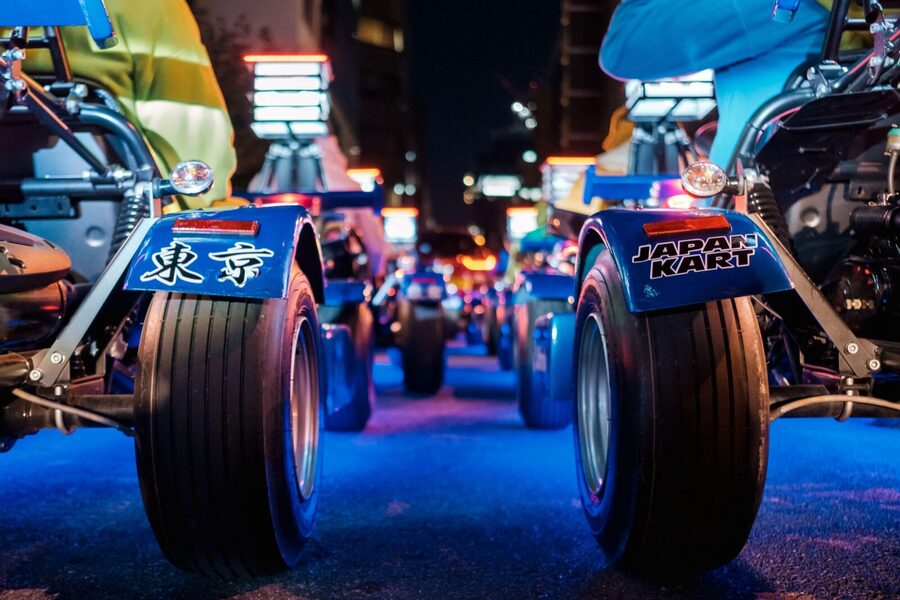
Reviewed · GO-KARTS
Official Japan Go-Kart Through Shibuya / Shinjuku
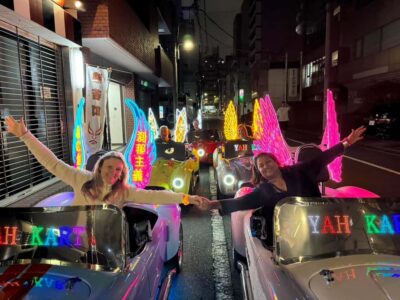
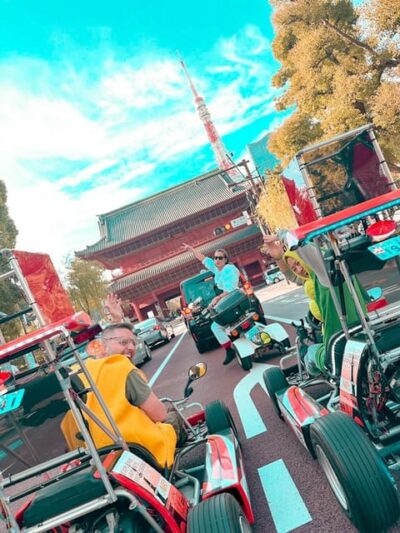
Tokyo looks wonderfully different from a go-kart. You sit low, feel the air, and pass through Shibuya Scramble Crossing rather than viewing it from a pavement or observation deck. The whole city becomes part of the ride: neon signs, wide avenues, Tokyo Tower, and curious pedestrians waving from the curb.
I like two things especially. First, the staff take safety seriously, using a lead vehicle and support staff behind the group on some routes. Second, the team takes photos and videos during the ride, with many groups receiving them at no extra cost. The main drawback is simple: Tokyo traffic means plenty of red lights, slow stretches, and occasional stops.
Key points at a glance
- Shibuya from road level: Cross the famous scramble crossing in a small, open kart with the city moving around you.
- Two useful route lengths: Choose a roughly 90-minute West Tokyo route or a two-hour route covering Tokyo Tower, the Imperial Palace area, and Tokyo Station.
- Safety support matters: You receive a full briefing, and guides help keep the group together through traffic and intersections.
- Costumes are included: Dressing up adds a playful touch and draws plenty of smiles from people along the road.
- Your documents decide everything: You need the correct license, passport, and Geneva Convention 1949 international driving permit, or the required Japanese translation.
- Best for confident adults: You must be at least 18, wear proper shoes, and be comfortable driving in city traffic.
What driving through Tokyo actually feels like
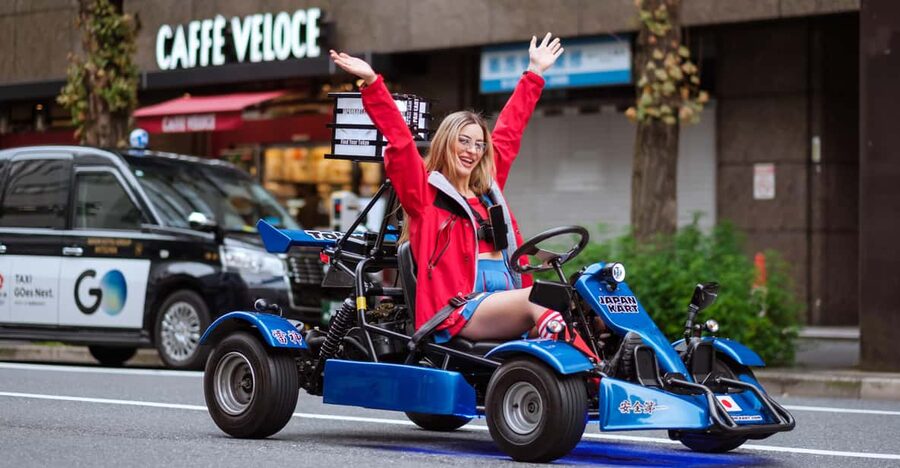
This is not a go-kart track with tight corners and racing laps. JAPANKART uses go-karts designed for public-road driving, so the experience is closer to a guided city drive with a playful vehicle than a speed contest.
You sit close to the ground, which changes your view of Tokyo. Cars and buses feel taller, shop signs seem closer, and even an ordinary intersection becomes part of the show. You will not be flying through every street. Traffic lights, lane changes, and busy roads naturally keep the pace measured.
That slower rhythm has a useful side. You have time to look around, follow the guide, and take in the city instead of worrying about speed. At the same time, anyone expecting constant acceleration may find the ride stop-and-go, especially around central Tokyo at busy times.
The group is guided in English, and the staff give a full safety briefing before departure. Several groups have been supported by a lead car or van and staff behind the karts, with a motorcycle also used on some outings. You can still become separated briefly by a red light or another vehicle, but the support team is there to guide you back.
More Go-Kart Tours in Tokyo
- Flagship 2-Hours Official Street Go-Kart Tour – Tokyo Bay Shop
★ 5.0 · 4,974 reviews - Official Street Go-Kart in Shibuya
★ 5.0 · 3,435 reviews - Official Street Go-Kart Tour – Akihabara
★ 5.0 · 1,578 reviews
Shibuya Scramble Crossing is the big moment
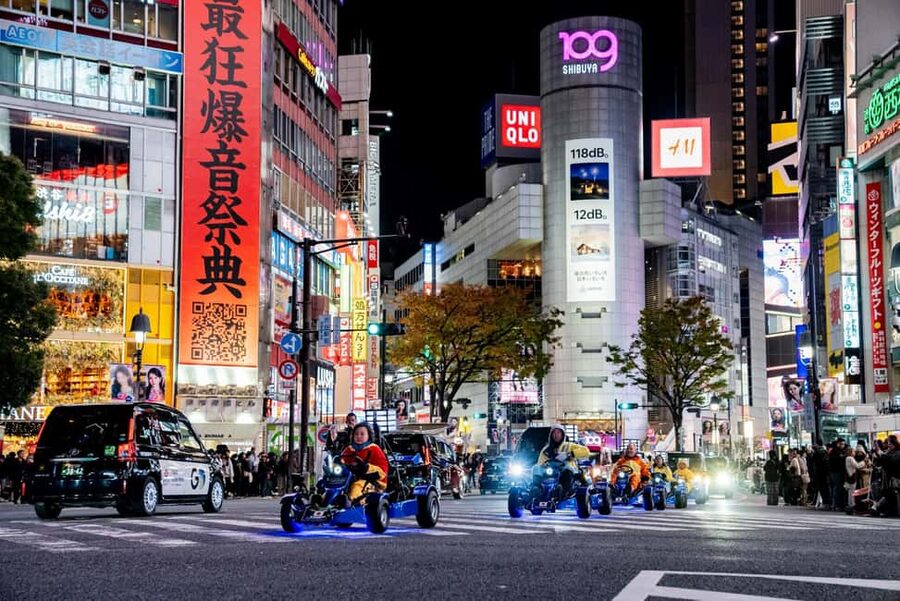
For most people, Shibuya Scramble Crossing is the reason to book. From street level, you approach with the traffic, wait for the signal, and then cross with the famous intersection opening in front of you.
The crossing is more than a photo stop. It gives you a quick look at Tokyo’s public theater: giant screens, tall buildings, organized movement, and people watching from every side. In a go-kart, you are not just observing the scene. You become part of it.
Some routes pass through Shibuya more than once, giving you another chance to enjoy the crossing and the attention from the pavement. People may smile, wave, or take pictures, especially when the group is wearing costumes. That interaction is one of the unusual pleasures of the ride.
Do not assume every departure follows exactly the same path. The experience information lists different route combinations, including West Tokyo sights, central Tokyo landmarks, and other areas such as Ginza, Ueno, and Asakusa. Confirm the route attached to your chosen branch and tour length if a particular neighborhood matters to you.
Choosing between the 90-minute and two-hour routes
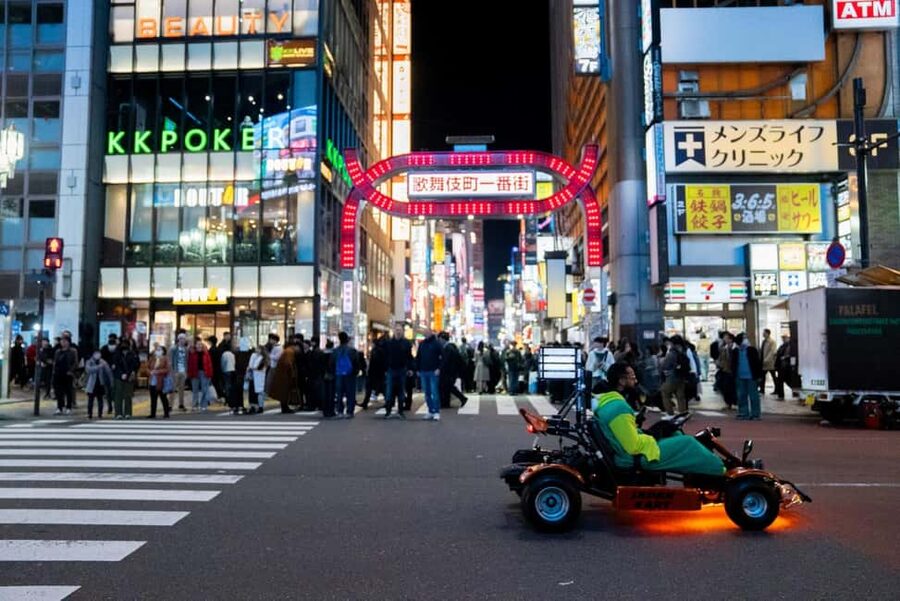
The shorter option is aimed at West Tokyo and includes Shibuya Scramble Crossing, Harajuku, Omotesando, and Shinjuku Kabukicho. This is a good choice if your priority is Tokyo’s modern shopping districts, fashion streets, nightlife signs, and the famous crossing.
Harajuku and Omotesando give the ride a different feel from Shibuya. You move from the huge intersection into streets associated with shopping and youth culture, then toward Shinjuku. Kabukicho adds bright signs and a late-night district atmosphere, even if you take the tour during daylight.
The two-hour route adds a broader central Tokyo circuit. It includes Tokyo Tower, Shibuya Scramble Crossing, the Imperial Palace area, and Tokyo Station. The longer ride gives you more variety, but it also means more time exposed to traffic, weather, and waiting at signals.
I would choose the 90-minute outing if you want a lively introduction and have a packed Tokyo schedule. Choose the two-hour version if you want the ride itself to be one of your main activities and prefer a wider look at the city.
The supplied details also mention routes through Ginza, Ueno, and Asakusa. These areas do not appear in every stated itinerary, so treat them as route possibilities rather than guaranteed stops. The itinerary attached to your booking is the one to trust.
Tokyo Tower, the Imperial Palace, and Tokyo Station
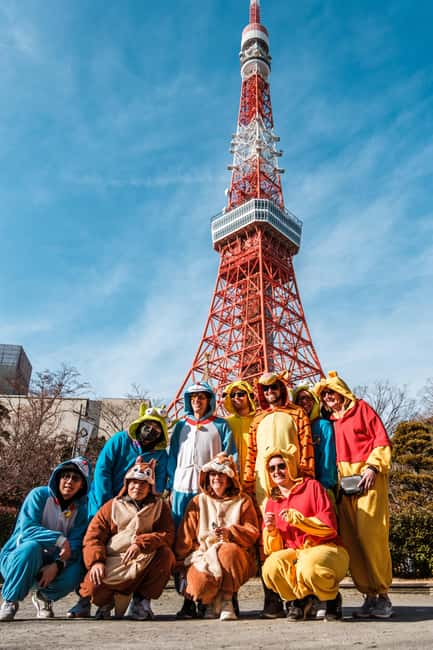
Tokyo Tower is listed as a break and photo stop on the two-hour route. That pause matters because the ride is not only about passing landmarks. You get a chance to appreciate the tower, take pictures, and reset before returning to the road.
The Imperial Palace is listed as a pass-by point. You should expect to see the area from the kart rather than take a full palace tour or enter a museum. It works as part of the city drive, showing the contrast between central Tokyo’s formal spaces and its dense commercial districts.
Tokyo Station is another photo stop. The station is a useful visual counterpoint to Shibuya’s giant screens and Shinjuku’s entertainment signs, with a grander architectural character. Since the activity includes several photo opportunities, you get more than a single landmark moment.
Roppongi is listed as a pass-by location. It adds another central district to the route, but it is not described as a separate stop. Keep that distinction in mind if you are booking mainly for a particular attraction.
Same trip, a completely different kind of day:
- 1-Day Tokyo Bus Tour
★ 5.0 · 14,250 reviews - Tokyo: TOKYO SKYTREE® Admission ticket
★ 4.5 · 11,192 reviews - Tokyo: teamLab Planets TOKYO Digital Art Museum Entry Ticket
★ 4.6 · 9,779 reviews - Tokyo: Sumo Show Experience with Chicken Hot Pot and a Photo
★ 4.8 · 6,678 reviews
Costumes, cameras, and the social side of the ride
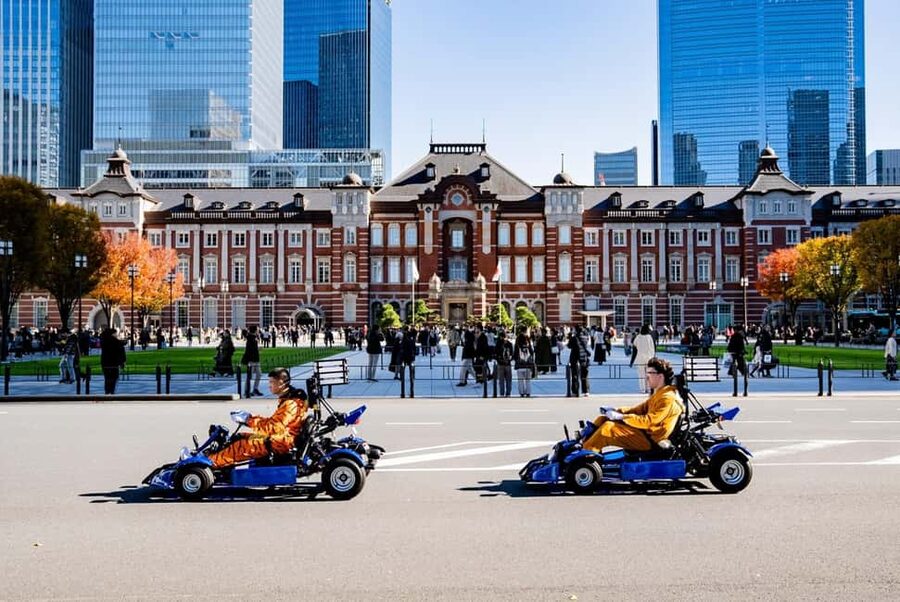
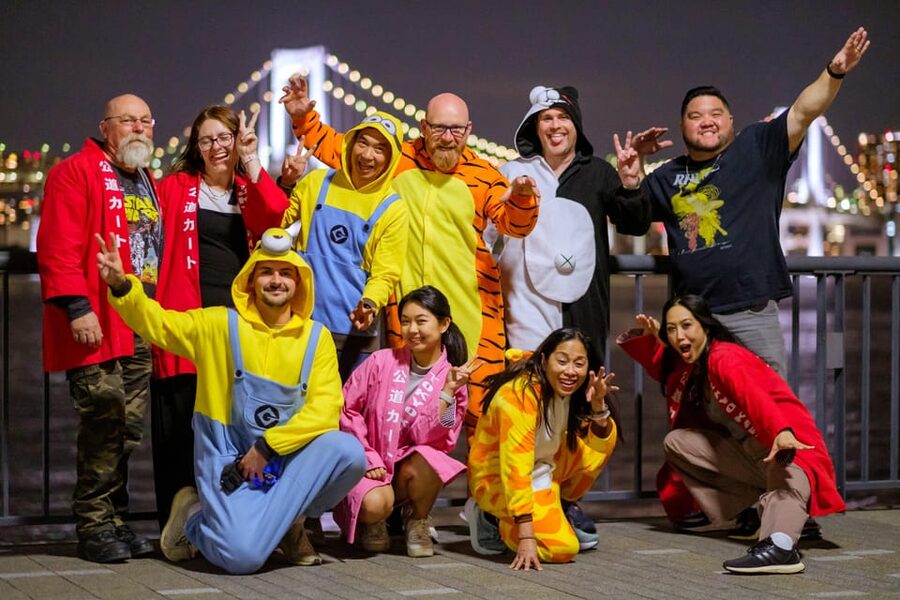
Costumes are included, and they are not a minor extra. They turn an ordinary drive into a public spectacle. You will likely attract smiles and waves, and the clothing gives your group a shared joke from the moment you leave the shop.
Jackets are available in colder months. That helps, but you should still dress for an open-air ride. The experience includes gas, the safety briefing, and guide-taken photos and videos. Some groups also use mounts for a GoPro or phone, so you may have a way to record your own view, provided your equipment is suitable and secure.
The photo service adds real value. A staff member can capture the group while you concentrate on driving, then share the images and videos at the end. That is especially useful because taking pictures while operating a kart is not practical or safe.
The small-group option is another plus. The exact group size is not stated, so do not expect a private tour unless you book one specifically. Still, a guided group gives the ride a social feel and lets you meet other people who are happy to dress up and play along.
Safety is more than a quick briefing
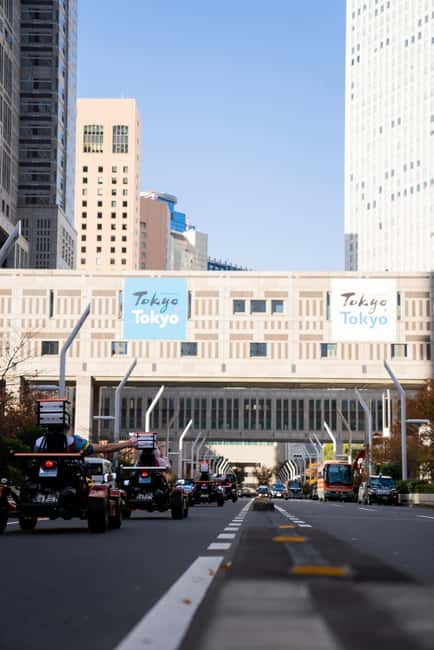
The safety briefing covers the karts and the road-driving rules. Instructions are given in English, and the staff guide the group during the ride rather than simply sending everyone out alone.
Support vehicles and staff help manage the group. A lead car can set the pace, while a vehicle or motorcycle behind can assist if someone gets delayed. This does not remove the normal risks of city driving, but it gives you a clear structure to follow.
You should expect occasional separation at traffic lights or when cars move between karts. The staff have procedures for bringing people back together, but you still need to pay attention and follow directions. This is not the right activity for someone who dislikes driving near regular traffic.
Do not wear sandals or flip-flops. Alcohol and drugs are prohibited, and you cannot bring alcoholic drinks into the vehicle. These rules are basic, but they matter more here because you are operating a motor vehicle on public roads.
The paperwork can make or break your booking
Check your driving documents before you pay. You need all three of these in the standard case:
- Your driving license from your home country
- A hard-copy international driving permit issued under the Geneva Convention 1949
- Your passport
The international permit must come from an approved issuer in your own country. A permit bought from an online company is not acceptable, and a Vienna Convention 1968 permit is not accepted in Japan. The permit must be in booklet form, not simply a loose paper document.
Drivers from Switzerland, Germany, France, Taiwan, Belgium, Estonia, or Monaco follow a different process. You need your original driving license, an official Japanese translation from the authorized organization, and your passport.
US military personnel need the combination of an active military ID and a stateside driver license under the SOFA arrangement.
Bring the physical documents to the shop. A digital copy or missing hard copy will not work, and you can be refused without a refund if the paperwork is wrong. If you have any doubt, contact JAPANKART before the day of the ride.
Is $122 a fair price?
At about $122 per person, this is not a cheap way to get from one Tokyo neighborhood to another. You are paying for a guided experience, a road-legal kart, fuel, safety support, costumes, and staff-taken photos and videos.
The value depends on how you compare it. If you want efficient sightseeing, the subway will take you farther for much less. If you want a memorable activity built around Shibuya and Tokyo’s major roads, the price is more reasonable because the drive itself is the attraction.
The included photos improve the calculation. You do not have to ask a stranger to photograph your group at every stop, and you can keep images of the experience afterward. Jackets in colder months and the organized support vehicles also mean fewer small extras to arrange yourself.
I would not book this as your only way to see Tokyo. It does not replace walking through Asakusa, visiting a museum, or spending time inside a neighborhood. I would book it as a special activity for one afternoon or evening, especially if your group enjoys dressing up, being seen, and trying something you cannot easily do elsewhere.
Weather, timing, and comfort
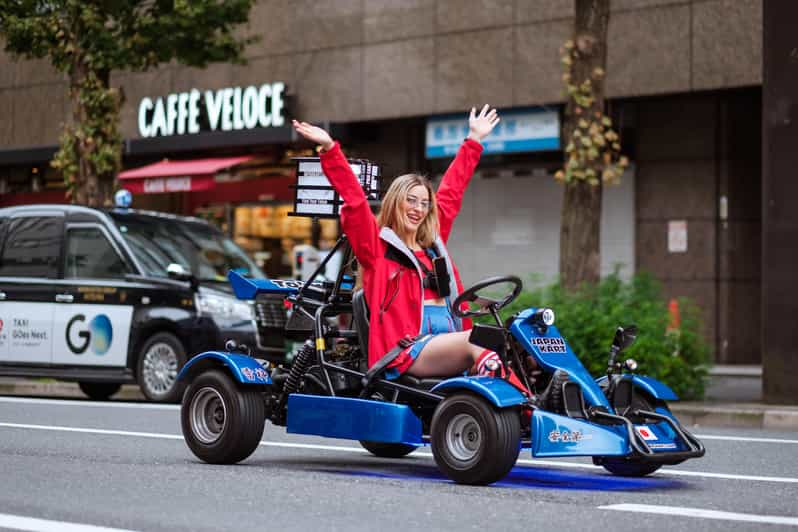
The karts are open to the air, so weather affects the experience directly. Rain can make the ride colder and more difficult, while hot weather can be tiring. One group riding in 35°C heat received ice water along the way, but you should still plan clothing with the forecast in mind.
Cold-weather jackets are provided during colder months. Even so, a comfortable layer is sensible because you are exposed to wind while moving and may sit at traffic lights.
Timing affects the pace. A late-afternoon departure can run into heavy traffic, which means more time stopped at lights and fewer stretches of open road. That is not a fault with the guide, but it is part of driving in Tokyo.
If you have flexibility, ask about available departure times and consider the weather before confirming. Bad-weather cancellations qualify for a full refund, or you may be able to reschedule depending on availability. Mechanical problems can also lead to a changed or canceled schedule.
Who should book the JAPANKART ride?
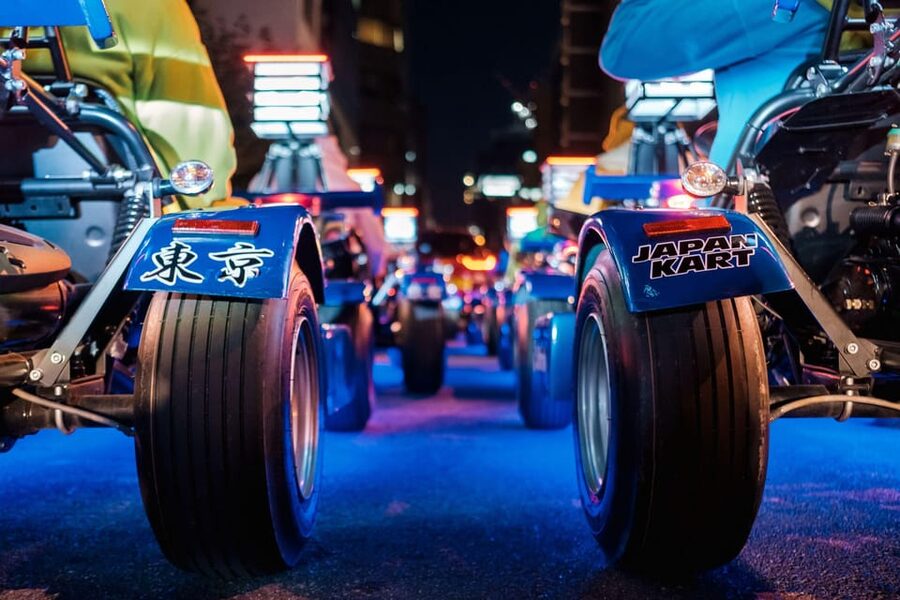
This suits adults who hold the correct Japanese driving documents, are at least 18, and want an active city experience. It is particularly good for couples, friends, and small groups who enjoy unusual photos and do not mind attracting attention.
It also works well for someone who has already seen Tokyo from trains and pavements and wants a different angle. The guide support makes it friendlier for a first road-kart experience, but you still need to feel comfortable operating a vehicle in city traffic.
I would hesitate if you dislike public attention, want a quiet sightseeing tour, or expect a racing experience. I would also avoid booking before confirming your IDP, since the paperwork rule is strict and a missing document can end the day before it begins.
FAQ
How long does the go-kart tour last?
The activity lasts about two to three hours overall. The listed driving choices include a 90-minute route and a two-hour route, with the exact duration depending on the option selected.
Where does the tour start?
The available starting branches are JAPANKART Kanda and JAPANKART Shinjuku. Your meeting point may vary according to the option you book.
Where does the tour finish?
The listed drop-off branches are JAPANKART Shinjuku and JAPANKART Kanda. The finish point depends on your selected option.
Do I need a driving permit?
Yes. Most drivers need a driving license from their home country, a hard-copy international driving permit issued under the Geneva Convention 1949, and a passport.
Are Vienna Convention 1968 permits accepted?
No. International driving permits issued under the Vienna Convention 1968 are not accepted for this activity.
What if my license is from France or Germany?
Drivers from France, Germany, Switzerland, Taiwan, Belgium, Estonia, or Monaco need their original license, an official Japanese translation from the authorized organization, and their passport.
Is the activity available to people under 18?
No. Drivers must be at least 18 years old.
Are costumes included?
Yes. Costumes are included, and jackets are provided during colder months.
Are photos included?
Guide-taken photos and videos are included. Some groups also have access to mounts for a GoPro or phone.
What happens if bad weather cancels the tour?
You are eligible for a full refund if the tour is canceled because of bad weather. You may also have the option to reschedule, depending on availability.
Should you book it?
Book it if you want to cross Shibuya in a road kart, enjoy costumes and attention, and see Tokyo from a low, open-air viewpoint. The safety support, English instructions, and included photos make the experience easier for first-timers.
Before booking, check your driving documents carefully. If you expect a fast race, a quiet tour, or a guaranteed visit to every neighborhood listed in the general description, choose something else. If you accept traffic, weather, and red lights as part of the deal, JAPANKART offers a memorable way to spend a few hours in Tokyo.
Just added around Tokyo
- Kawagoe Japanese Food Tour : Unagi Kaiseki and Sake near Tokyo★ 5.0 · 30 reviews
- Kawagoe 4hr Private Tour with Licensed Guide (Kawagoe Dep)★ 5.0 · 13 reviews
- Little EDO Sushi Making workshop in Kawagoe★ 5.0 · 18 reviews
- 【R34】Tokyo:Private Daikoku tour in Modified R34★ 4.9 · 92 reviews
- :Tokyo,Shibuya/ Pro Photography in Kimono / English-Friendly★ 5.0 · 26 reviews
- Tokyo:Celebrate Unique Japanese New Year Tradition Festivity★ 3.9 · 20 reviews
- Tokyo: Allstar Food Tour★ 4.7 · 29 reviews
- Tokyo:Calligraphy &Make your original folding fan in Asakusa★ 5.0 · 62 reviews
Go-Karts, compared.
Flagship 2-Hours Official Street Go-Kart Tour – Tokyo Bay Shop
Our verdict →
Asakusa, Skytree & Akhihabara Go-Kart City Experience
Our verdict →
Premium Go-Kart Tour with Tower & Shibuya Crossing
Our verdict →
Shibuya and Shinjuku Streets Guided Go-Karting Tour
Our verdict →
Browse the lists this tour appears in