
Reviewed · DAY TRIPS IN TOKYO
Tokyo Private Day Trip – Enjoy Your First-Time Visit to Tokyo!
Tokyo is easiest to understand when you see its contrasts in one day: a forested shrine, youth fashion streets, a seafood market, a red steel tower, and an old temple district. This private seven-hour tour links those pieces by train and on foot, giving you a useful first look at a huge city without asking you to plan every transfer.
I like the chance to learn Tokyo’s rail system while moving between major sights, and I like that the guide can help with lunch, train tickets, photos, and local customs. Guides including Usha, Taku, Ken, Eriko, and Meg have been praised for thoughtful planning and flexible routes. The tradeoff is a lot of walking, extra costs for transport and food, and occasional unevenness in guiding quality.
Key points to know
- Five very different Tokyo stops: Meiji Shrine, Takeshita Street, Tsukiji Market, Tokyo Tower, and Senso-ji Temple.
- Public transport is part of the lesson: You pay your own fares, but a good guide can make Tokyo’s subway and train network much less confusing.
- Private means adaptable: The route can focus more on shopping, food, history, photography, or major sights.
- Lunch is not included: Tsukiji is the planned food stop, but you choose and pay for your meal.
- Come ready to walk: Sneakers, water, cash, and weather protection will make the day easier.
- Guide quality matters: Most experiences appear to be strong, but a small number of accounts describe weak commentary or poor handling of a train transfer.
A useful first day in a very large city
At $99.49 per person, this tour is priced as a practical orientation rather than a luxury private car outing. You pay separately for local transportation, lunch, entrance fees, and personal purchases. For the pre-planned route, the listed estimated tour expenses are 2,780 Japanese yen per person, in addition to the booking price.
That total can still make sense if you are visiting Tokyo for the first time. You are not just paying to look at five famous places. You are paying for help connecting them, understanding what you are seeing, ordering food, and finding your way through stations. A private guide can also adjust the pace for your family or spend more time on the subjects you care about.
The itinerary begins at Harajuku Station and finishes at Asakusa Station. Hotel pickup is not included on the pre-planned route, though a hotel in Tokyo can be selected as the meeting point with a customizable option. The day is built around public transportation, so it gives you an early lesson in how Tokyo works.
The scheduled sightseeing times add up to about four hours and 40 minutes. The remaining time is used for trains, walking, lunch, station navigation, and the natural pauses that come with a private day. Expect a full outing, not five quick photo stops.
More Day Trips in Tokyo
- 1-Day Tokyo Bus Tour
★ 5.0 · 14,250 reviews - Tokyo: DisneySea 1-Day Passport
★ 4.5 · 2,726 reviews - Tokyo Disneyland 1-Day Passport
★ 4.6 · 2,512 reviews
Meiji Shrine: quiet trees before the city rush
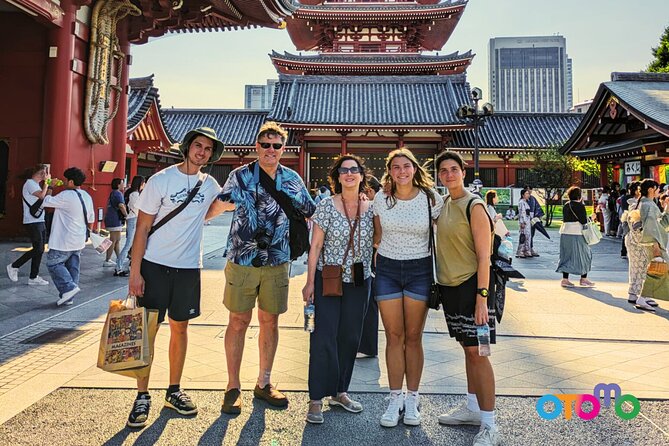
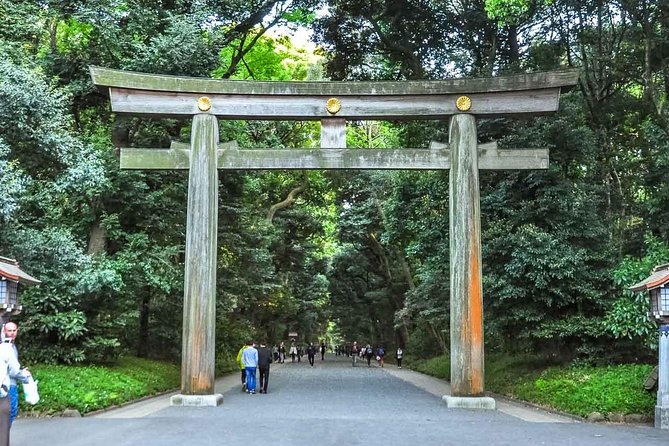
Meiji Jingu Shrine gets about 50 minutes, and it is a smart place to start. From Harajuku, you move quickly from one of Tokyo’s busiest areas into a broad wooded setting. The contrast helps you see that Tokyo is not only towers, traffic, and neon.
Your guide can explain the shrine’s role, customs, and place in modern Japanese life. The grounds are free to enter, but proper shrine behavior matters: follow the guide’s lead at the entrance, keep voices low, and watch how people approach the worship area.
Do not expect an elaborate indoor museum visit. The appeal is the setting, the scale, and the chance to learn how a Shinto shrine functions. The 50-minute stop is enough for an introduction, though it may feel short if you want slow photographs or a longer walk through the grounds.
Weather affects this part of the day more than some others. You will be outside and walking on paths, so comfortable shoes and protection from rain or heat are sensible. One guide, Meg, was especially praised for adjusting an outdoor shrine visit during very hot weather, which is the sort of flexibility that helps on a Tokyo day.
Takeshita Street and Omotesando: two faces of Harajuku
The next 50 minutes cover Takeshita Street and the nearby Omotesando area. These streets show Tokyo’s fashion culture from two angles. Takeshita Street is associated with youth style, colorful shops, and crowds. Omotesando offers a more polished shopping setting.
This is a good stop if you want to understand present-day Tokyo, not just its temples. You might browse clothing, snacks, souvenirs, or small shops, but the short timing means you should not plan a serious shopping spree here. Tell your guide early if shopping matters more to you than photography or history.
The private format helps. A guide can point out useful shopping areas, explain local habits, and suggest souvenirs suited to your budget. Toshi was praised for giving souvenir advice, while another private itinerary was adjusted for a group that wanted more shopping and fewer conventional sights.
The main drawback is crowding. Takeshita Street can be busy, and moving as a group through narrow, popular streets takes patience. Keep your belongings close and agree on a meeting point if your party wants to look around separately. The tour is private, but this part of Tokyo is not quiet or private.
Tsukiji Market: lunch with a practical warning
Tsukiji receives the longest scheduled stop, about one hour and 30 minutes. That makes sense because this is both a food stop and a chance to explore one of Tokyo’s best-known market districts.
The wholesale fish market moved to Toyosu in 2018, but Tsukiji remains a place for food shops, small restaurants, and market atmosphere. You can look for seafood, prepared food, kitchen goods, and other Japanese specialties. Your guide can help you choose a place and manage the ordering process, which is valuable if you do not read Japanese or are unsure how the market restaurants work.
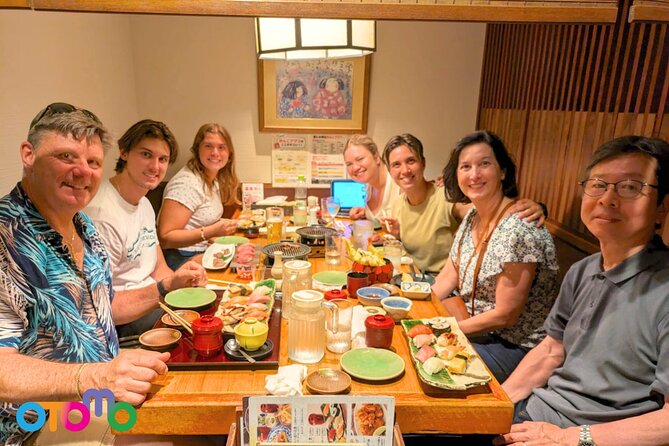
Lunch is not included, so budget separately. The price of a meal depends on what you order, and the tour does not promise a particular restaurant. Several guides, including Taku and Meg, were praised for taking groups to affordable or local-style places, while one account specifically described a memorable sushi lunch in the market area.
Plan around the market calendar. Many shops near Tsukiji close on Wednesdays, Sundays, and public holidays. On those days, your guide may direct you to an open shop or shift lunch to nearby Ginza or Tsukishima. This is useful, but it also means the Tsukiji experience can feel different depending on the date.
Bring cash. Some shops accept only cash, and all food and drink costs are yours. A mask is recommended for the market. The area can be crowded, and you should follow your guide’s advice about where to stand and how to move through busy lanes.
Same trip, a completely different kind of day:
- Tokyo: TOKYO SKYTREE® Admission ticket
★ 4.5 · 11,192 reviews - Tokyo: teamLab Planets TOKYO Digital Art Museum Entry Ticket
★ 4.6 · 9,779 reviews - Tokyo: Sumo Show Experience with Chicken Hot Pot and a Photo
★ 4.8 · 6,678 reviews - Tokyo: Shinjuku Food Tour (13 Dishes at 4 Local Eateries)
★ 5.0 · 6,603 reviews
Tokyo Tower: a classic city view
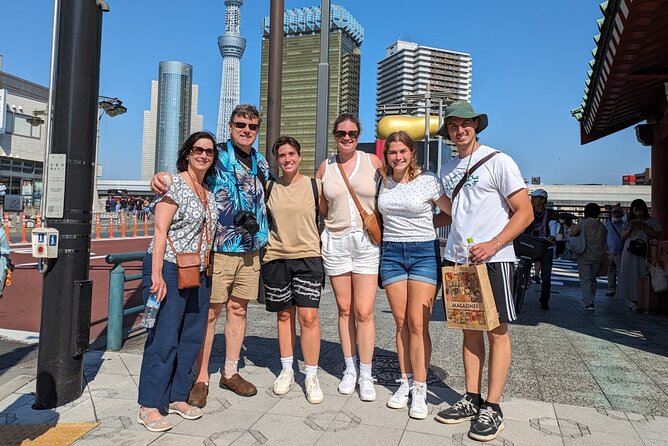
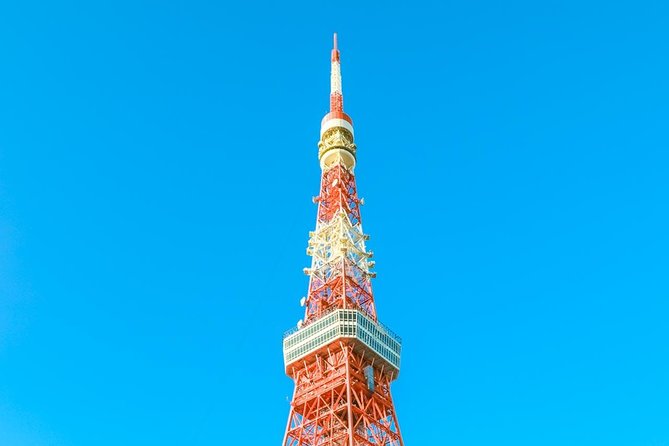
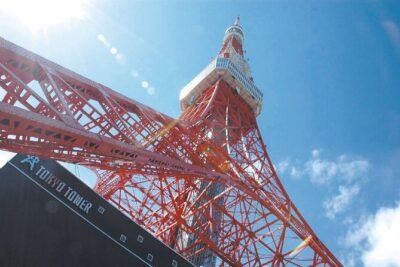
Tokyo Tower gets about 45 minutes, and its admission is not included. Built in 1958, the red-and-white tower remains one of Tokyo’s best-known symbols, even though Tokyo Skytree is taller.
This stop works well after the market because it shifts the focus from street-level food to a broad view of the city. You can decide with your guide whether the available time and added admission cost suit your interests. If you are watching your budget, you may prefer to see the tower from outside and spend more time elsewhere, but the tour description lists the tower as a planned stop and identifies the admission fee as extra.
The time is fairly tight once you include entry and movement. If your priority is a long observatory visit, ask about the schedule before the day begins. A few private groups have added Tokyo Skytree or other stops by extending the day, but you should not assume extra time is included.
The tower is also a useful test of the tour’s pacing. The standard plan covers a lot of ground, so your guide may need to keep the group moving to reach Asakusa. That works for a first overview, but it is less suitable if you prefer lingering at every sight.
Senso-ji in Asakusa: finish among Tokyo’s oldest sights
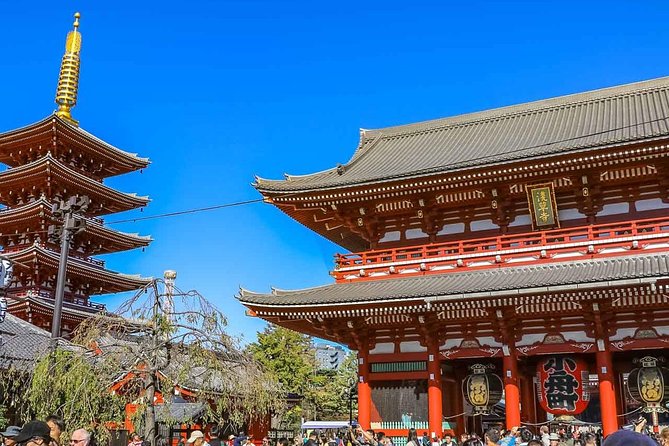
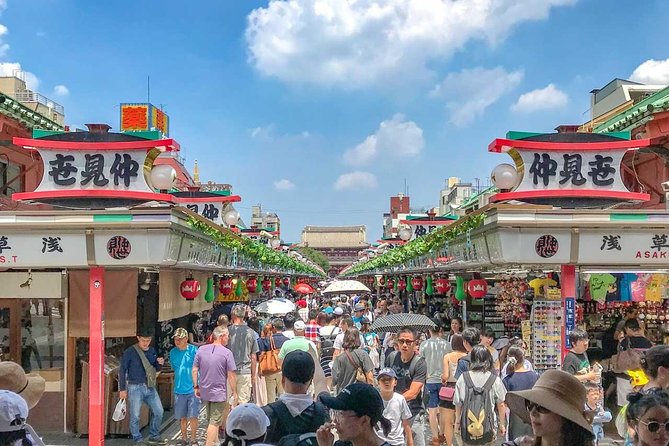
The tour ends at Senso-ji Temple, with about 45 minutes planned. This is Tokyo’s oldest temple and the centerpiece of Asakusa. The large red lantern at Kaminarimon Gate, the approach through Nakamise shopping street, and the temple buildings give you a strong final image of traditional Tokyo.
Admission is free. You can look at the shops, observe temple customs, and ask your guide about the difference between this Buddhist temple and the Shinto shrine at Meiji Jingu. That comparison is one of the strongest educational parts of the route because you see both religious settings in a single day.
Forty-five minutes is enough to get the basic shape of Asakusa, but it is not enough for every side street, shop, and temple detail. The planned finish at Asakusa Station is convenient if you want to continue exploring, return to your hotel, or travel onward. Your guide can help you understand the route back, though you remain responsible for your own transportation costs.
Some guides have gone beyond the formal end of the tour to help with the trip home. Meg and Mark were praised for helping groups find their way back, and one guide even spent an extra hour escorting a group toward Tokyo Skytree. Treat such help as a courtesy, not something guaranteed by the seven-hour booking.
The real advantage is learning Tokyo’s train system
The sightseeing is only half the reason to book this experience. Tokyo’s train and subway network can be intimidating on a first visit, especially when you are changing lines, reading station signs, and trying to keep a group together.
The guide does not pay your fares, but can show you how to buy tickets, locate platforms, and transfer between lines. Yutaka was praised for helping a group understand the transport system, and Taku’s clear explanations reportedly made the rail network feel manageable. That practical lesson can save time during the rest of your trip.
Still, rail transfers require care. Stay together at gates, wait until everyone has passed through, and do not board before your entire group is ready. One serious account described a family becoming separated during a train transfer, followed by a stressful reunion. The tour operator apologized and said it was tightening procedures, but you should still take an active role in keeping your party together.
If you have older relatives, young children, or anyone who tires easily, tell the guide before the route begins. The itinerary can change for weather and temporary closures, and a private guide has more room to adjust than a large group tour. You should not expect a completely effortless day, though. Tokyo’s stations and streets require regular walking.
Customizing the day without losing its shape
The standard route gives you a solid first look at Tokyo. The customizable option is better if you already know your priorities. You can request more shopping, more food, particular neighborhoods, photography, or different attractions.
Contact the guide about two weeks ahead if you choose the custom option. If you do not respond to the company, the standard itinerary will be used. The custom meeting place can be a hotel in Tokyo, which may be convenient, but hotels outside Tokyo are not eligible under the stated rules.
Private does not mean unlimited. Time, train travel, admissions, and meal breaks still shape the day. A custom route that tries to combine too many distant districts may become rushed. I would choose two or three priorities and let the guide build around them.
The strongest guide experiences have shared a common pattern: an early conversation about interests, clear English, useful historical context, and willingness to adjust the pace. Usha was praised for a thoughtful custom plan and help with photos. Eriko was praised for adapting the day and helping with airport train tickets. Ken was praised for connecting history with modern Japanese life.
Guide quality and what you should ask for
The company has many guides, so your experience may depend heavily on who is assigned. Most of the supplied feedback is very positive, with a 4.9 rating and a 97 percent recommendation figure. Names that received especially warm praise include Murayama-san, Yutaka, Tatsu, Usha, Taku, Eriko, Meg, Ken, Shinobu, and Mark.
The strongest comments focus on friendliness, good English, flexibility, local restaurant suggestions, photography help, and clear rail guidance. That tells you what to request before the day begins: a sensible pace, historical explanation at each stop, and help with the next part of your Japan trip.
A small number of low ratings describe thin commentary, an unstructured route, and one difficult train incident. That does not erase the strong overall record, but it is a fair reason to confirm the meeting details and tell the guide what level of explanation you want.
What to bring and what the $99.49 price really covers
Bring comfortable sneakers. You will walk through shrine grounds, shopping streets, market lanes, temple approaches, and stations. Add a small amount of cash, a phone, water, weather protection, and room in your budget for lunch and purchases.
The $99.49 price includes the private guide and the private format. It does not include train or subway fares, lunch, entrance fees, or other personal costs. The pre-planned route lists 2,780 yen per person in additional estimated tour costs, while Tokyo Tower admission is separately identified as not included.
For a solo visitor or couple, this can be a reasonable way to reduce first-day confusion. For a larger group, the private format may offer stronger value if everyone shares the same interests and wants help moving together. If you already know Tokyo’s rail system and prefer slow, independent visits, you may find the cost less appealing.
Bad weather can change transportation, destinations, or routes. Temporary closures can also lead to substitute stops. That flexibility is useful, but the exact day is not guaranteed to look identical to the standard plan.
Should you book this private Tokyo day tour?
Book it if you want a fast but useful orientation to Tokyo, especially on your first day. It suits people who want major sights, local trains, a market lunch, and an English-speaking guide without joining a large group.
Choose the customizable option if shopping, food, photography, or a particular neighborhood matters more than the standard five-stop route. Contact the guide early, wear good shoes, and state clearly that you want real explanations rather than simple directions.
Skip it if you dislike walking, want long visits at each attraction, or prefer to control every yen and every minute. Also remember that guide quality can vary, so confirm the route and ask for help with transport before you start.
For most first-time visitors, the combination of shrine, fashion street, market, tower, and temple gives you a useful framework for the rest of Tokyo. The tour is at its best when your guide acts as both interpreter and practical coach, helping you see the city and then move through it on your own.
FAQ
How long is the Tokyo private day tour?
The tour lasts approximately seven hours.
Where does the standard tour begin?
The standard meeting point is Harajuku Station at 1 Chome-18 Jingumae, Shibuya, Tokyo.
Where does the standard tour end?
The standard tour ends at Asakusa Station at 1-chōme-1-3 Asakusa, Taito City, Tokyo.
Which attractions are included in the planned route?
The route includes Meiji Jingu Shrine, Takeshita Street and Omotesando, Tsukiji Fish Market, Tokyo Tower, and Senso-ji Temple.
Is this a private tour?
Yes. Only your group participates in the private tour or activity.
Are transportation costs included?
No. You pay all transportation costs during the tour. Public transportation is used to move between the stops.
Is lunch included?
No. Lunch is not included. You pay for your own meal, and the guide can direct you to places near Tsukiji or nearby areas if market shops are closed.
Is Tokyo Tower admission included?
No. The Tokyo Tower admission fee is not included.
Can the itinerary be customized?
Yes. You can select the customizable option and contact the guide about two weeks in advance. If you do not respond, the standard itinerary will be used.
Just added around Tokyo
- Kawagoe Japanese Food Tour : Unagi Kaiseki and Sake near Tokyo★ 5.0 · 30 reviews
- Kawagoe 4hr Private Tour with Licensed Guide (Kawagoe Dep)★ 5.0 · 13 reviews
- Little EDO Sushi Making workshop in Kawagoe★ 5.0 · 18 reviews
- 【R34】Tokyo:Private Daikoku tour in Modified R34★ 4.9 · 92 reviews
- :Tokyo,Shibuya/ Pro Photography in Kimono / English-Friendly★ 5.0 · 26 reviews
- Tokyo:Celebrate Unique Japanese New Year Tradition Festivity★ 3.9 · 20 reviews
- Tokyo: Allstar Food Tour★ 4.7 · 29 reviews
- Tokyo: West-Side Cycling and Food Tour with Guide★ 5.0 · 37 reviews
Day Trips in Tokyo, compared.
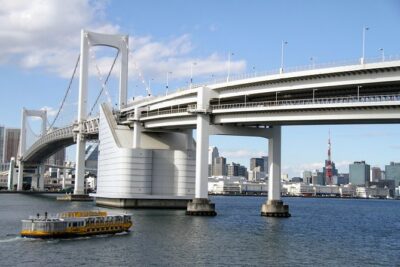
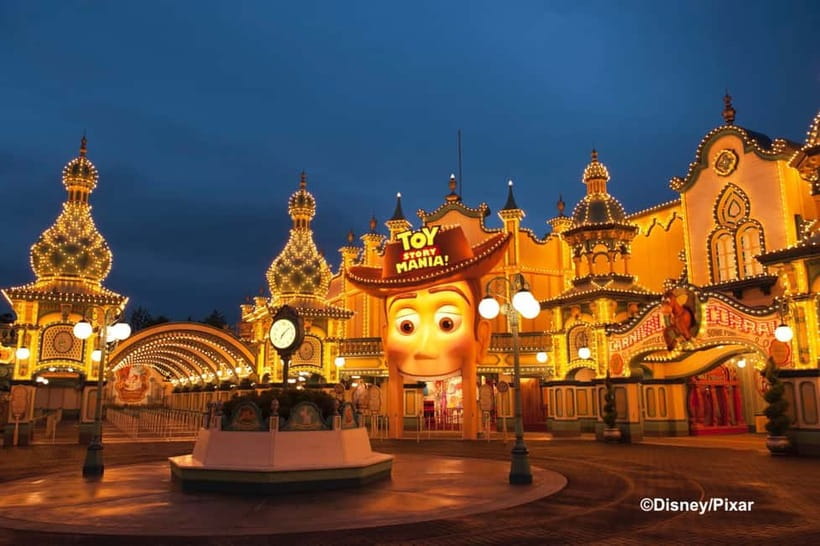
Tokyo Panoramic 1 Day: Meiji Shrine, Asakusa, Odaiba and SKYTREE®
Our verdict →

Tokyo Disneyland: 1-Day Entry Ticket and Private Transfer
Our verdict →
Browse the lists this tour appears in