
Reviewed · PHOTO SHOOTS IN TOKYO
Tokyo Cyberpunk Street Photo Tour
Tokyo looks made for night photography, and this small-group walk puts you right in the glow. You’ll work through Kabukicho, Omoide Yokocho, and Shibuya Crossing, learning how to handle neon, crowds, reflections, and long exposures rather than simply snapping quick holiday pictures.
I especially like the practical teaching and the tiny group size, which can be capped at four people. Guides such as Charles and Lukasz have helped people adjust Canon, Fuji, and iPhone settings on the spot. The main caution is pace: one guide was reported to walk too fast, and Shinjuku Station can make the meeting point hard to find.
Key points at a glance
- Shinjuku after dark: Start among Kabukicho’s neon signs, traffic, and narrow side streets.
- Omoide Yokocho: Spend about 30 minutes photographing a compact lane of small eateries and glowing signs.
- Shibuya Crossing finish: End at one of Tokyo’s best-known street scenes, with crowds suited to motion blur and long exposure.
- Camera or phone friendly: You can join with a proper camera or a smartphone, though manual exposure control helps.
- Small group instruction: The maximum is four people, allowing direct help with composition and settings.
- Price and duration: The cost is $184.99 per group of up to two, for about 2.5 to 3 hours, with train fare extra.
Tokyo after dark is your subject
This is not a general sightseeing walk with a few camera tips sprinkled on top. It is a hands-on night photography session built around Tokyo’s signs, streets, people, and movement.
Your guide shows you how to make the city work in a picture. That may mean controlling shutter speed for moving crowds, finding a clean frame in a busy street, or adjusting exposure so a bright sign does not turn into a white blur. You get instruction, then time to try it yourself.
That workshop rhythm is the strongest part of the experience. Guides have helped beginners locate basic phone controls, use contrast adjustments, lock exposure, and find better framing. More experienced photographers can ask about camera settings and composition without being left behind.
The experience is advertised as about three hours, while the detailed schedule describes roughly 2.5 hours. Plan for an evening walk in that range. You will cover a fair amount of ground, and the route includes a train ride from Shinjuku to Shibuya.
More Photo Shoots in Tokyo
- Best Go Kart Experience in Shibuya Crossing with Iconic Photos
★ 5.0 · 348 reviews - Tokyo Go-Karting Experience: Shibuya Crossing with Photos
★ 4.8 · 190 reviews - Tokyo by Night Photography Tour (Private Option Available)
★ 5.0 · 151 reviews
Meeting near Shinjuku Station at 7:00 pm
The meeting point is Happy Lemon Keio Shinjuku Shop, at 1-chōme-1-4 Nishishinjuku, Shinjuku City. The start time is 7:00 pm.
Give yourself extra time. Shinjuku Station is enormous, and reaching the correct exit or nearby shop can take longer than expected, especially on your first night in Tokyo. The meeting details are clear on paper, but the station itself can be confusing. A screenshot of the meeting address and a little spare time will make the start less stressful.
The tour is near public transportation, and the group size is limited to four. That is small enough for the guide to check your camera or phone without turning the outing into a private lesson at private-tour prices.
The evening setting matters. At 7:00 pm, Tokyo’s signs are glowing, commuters and nightlife crowds are moving through the streets, and the contrast between artificial light and dark alleys is already useful for photography.
Kabukicho: neon, crowds, and the first camera adjustments
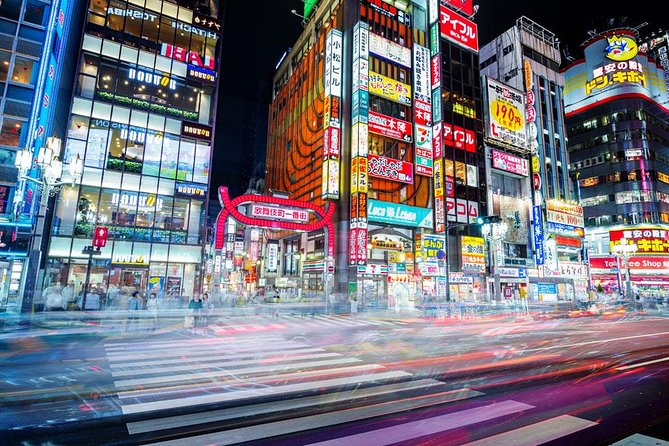
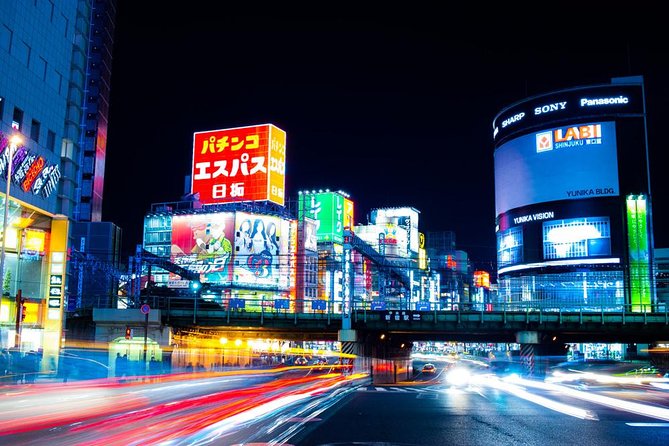
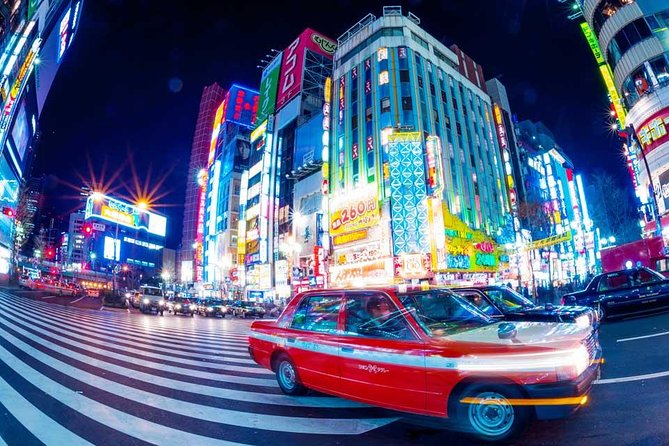
The first main stop is Kabukicho, where you spend about an hour. This is a good opening section because there is plenty to work with: bright signs, illuminated buildings, people crossing the frame, and the layered look of a major entertainment district.
Your guide will likely begin with the basics needed for night work. That can include shutter speed, exposure, composition, and the way different settings change the feeling of a photograph. If you use a phone, the instruction can be just as practical. The guides have worked with iPhones and shown people where to find exposure controls and how to keep the phone from making its own unwanted decisions.
Kabukicho can feel visually crowded, which is useful but not always easy. A beginner may point the camera at everything at once. The guide’s value is helping you decide what belongs in the frame and what should be left out.
Look for lines made by streets and signs. Watch for reflections and people passing through pools of light. You may also work on a longer exposure, but remember that a longer shutter speed can turn moving people into soft streaks. That is not a mistake if you want motion. It is a problem only when you wanted sharp figures.
This first hour is also where you learn how the guide teaches. Charles has been praised for patience and for making quick camera adjustments easy to understand. Lukasz has used a demonstration-first approach, showing a technique before giving participants time to try it. That is helpful when you have arrived with a new camera or have never photographed at night.
Omoide Yokocho: a smaller frame in Memory Lane
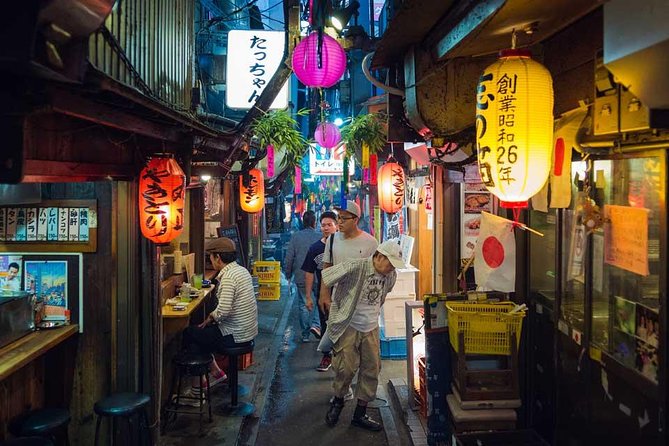
The tour continues to Omoide Yokocho, also called Memory Lane, for about 30 minutes. This compact passage is a useful change from Kabukicho’s larger streets.
Here, you can concentrate on details. Small signs, close-set storefronts, narrow lanes, and warm artificial light give you more controlled compositions. Instead of trying to photograph a whole district, you can work on one doorway, one sign, or a person passing through a tight patch of light.
This stop is also a reminder that good street photography does not require a famous landmark. Tokyo’s character often appears in ordinary corners, especially when color, signage, and people line up for a second.
Your guide can help you position yourself without blocking the lane and suggest a better angle before you waste time taking the same weak picture repeatedly. That local knowledge is useful because the best position is not always obvious when you are watching both the crowd and your camera screen.
Thirty minutes is enough for a focused session, but not enough for endless experimentation. If you become absorbed in one scene, keep an eye on the group and the time. This is a moving tour, not an open-ended photo walk.
Same trip, a completely different kind of day:
- 1-Day Tokyo Bus Tour
★ 5.0 · 14,250 reviews - Tokyo: TOKYO SKYTREE® Admission ticket
★ 4.5 · 11,192 reviews - Tokyo: teamLab Planets TOKYO Digital Art Museum Entry Ticket
★ 4.6 · 9,779 reviews - Tokyo: Sumo Show Experience with Chicken Hot Pot and a Photo
★ 4.8 · 6,678 reviews
The train to Shibuya costs extra
After Shinjuku, the group takes a train to Shibuya. The fare is not included, so carry money or a transit card. The experience information also lists bus fare as not included, but the route specifically describes a train journey.
This short transfer is part of the practical design of the tour. Shinjuku and Shibuya offer different types of night photography, and connecting them lets you compare the two areas in one evening.
The train ride also means you should pack light. A camera, spare battery, and phone are easier to manage than a large bag while walking through crowded streets. The available information does not specify equipment requirements, but one experienced participant suggested a camera with some control over shutter speed or overall exposure, along with a tripod.
A tripod is not stated as compulsory, and you can join with a phone. Still, anyone hoping to practice long exposures should consider the stability issue. You may need to find a steady surface, use the camera’s stabilization, or accept a shorter exposure.
Shibuya at night: people become the moving subject
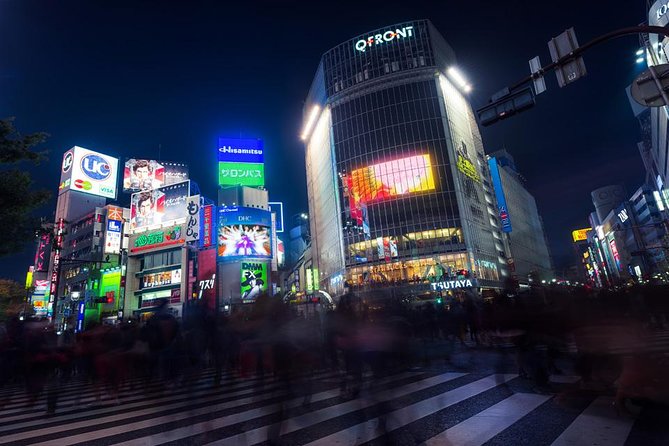
The Shibuya portion brings a different energy. This is Tokyo’s youth and nightlife center, with glowing signs, restaurants, drinking spots, and a steady stream of people.
The guide will help you look for more than a bright sign. A good street image may depend on timing, with a person crossing at just the right moment or a group creating a useful shape against the lights. You will work on composition while dealing with real movement, not a quiet, posed scene.
Stephane has been praised for helping participants find lines, colors, and small visual details. That kind of direction is valuable in Shibuya because the area can overwhelm your eye. You need to choose one idea at a time.
You should also expect to keep moving. The tour covers public streets and crowded areas, so comfortable shoes matter. One account described a guide walking too quickly, with the group eventually losing sight of him and missing the final hour. That appears to be an isolated problem in an otherwise well-regarded experience, but it is worth taking seriously. Stay close, especially when crossing streets or leaving a station.
Finishing at Shibuya Crossing
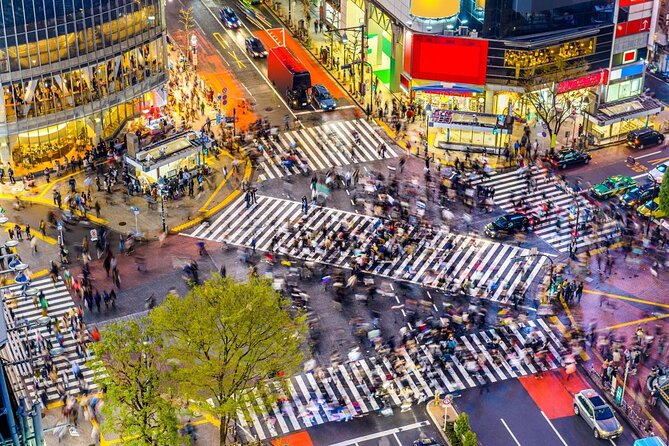
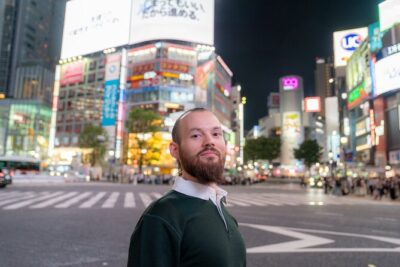
The final major stop is Shibuya Crossing, with about 45 minutes scheduled. This gives you time to photograph the crossing rather than merely glance at it and move on.
The scene works particularly well for motion. A faster shutter can freeze individual people, while a slower shutter can turn the crossing into flowing human movement. Bright signs create strong backgrounds, but they can fool automatic exposure. Your guide can help you balance the light so the signs retain color and the street does not disappear into black.
The crossing is often compared with the futuristic city feeling associated with Blade Runner. The comparison is about mood, not a film location claim. Neon, scale, crowds, and wet or reflective pavement can create that science-fiction atmosphere, especially when you frame the street tightly.
Do not expect every image to be perfect. Crowds move unpredictably, signs flicker, and people can enter your frame at the wrong moment. That is part of the lesson. You learn to wait, adjust, and try again.
The tour ends near Shibuya Station at 2-chōme-2-1 Dōgenzaka. From there, you have your own plans for the rest of the evening.
What the guide adds to the experience
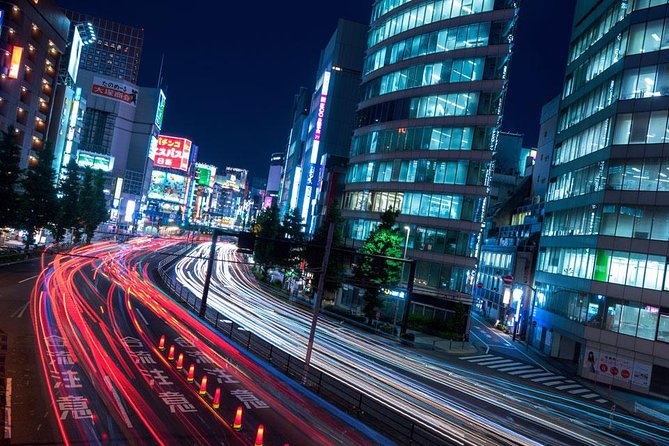
The guide is the difference between this and a self-guided night walk. You can find Kabukicho, Memory Lane, and Shibuya Crossing yourself. The value comes from having someone point out a workable position, explain a setting, and help you understand why one frame succeeds while another does not.
The guides named in the feedback include Charles, Lukasz, Stephane, and Nat. Charles is often described as friendly, patient, and hands-on. Lukasz has helped both beginners and more experienced photographers, including people using Canon and Fuji cameras. Stephane has focused on composition and visual structure.
The teaching is not limited to expensive cameras. Several people used only phones and still received practical help. You do not need formal photography training, and you should not feel that you need professional equipment.
At the same time, this is primarily a photography experience. If you want a detailed explanation of Tokyo’s history, neighborhoods, or nightlife culture, this may feel thin. One assessment described the activity as strictly about photographs rather than wider local understanding. I would choose a separate cultural or food tour if that is your main goal.
Who gets the best value for $184.99?
The price is $184.99 per group of up to two people. For two participants, that works out to about $92.50 each, before the train fare. For a private-feeling lesson with a maximum of four people, that is reasonable if you care about improving your pictures.
The value is strongest when you arrive with a clear aim. Perhaps you want to learn long exposure, understand your new camera, or return home with better night images than automatic mode can provide. The guide’s corrections can save you from spending several evenings guessing at settings.
The price is less attractive if you mainly want a casual sightseeing walk. You will spend much of the evening stopping, adjusting, shooting, and trying again. Someone who prefers a fast tour of famous sights may find the pace too slow in some places and too fast between them.
The small group helps. With only two to four people, the guide can spend time on individual cameras and phones. If your booking has fewer participants, the instruction may feel more personal, but the listed maximum is four.
Practical advice before you go
Bring the camera or phone you actually plan to use in Japan. This is not the time to arrive with an unfamiliar device and expect to master every function in a few minutes.
Charge your battery before leaving. Night photography uses screens and repeated shots, and there is no promise of charging access during the walk.
If your camera allows it, learn where to change shutter speed and exposure before the tour. You do not need to be advanced, but knowing the basic controls will give you more time to practice.
Wear comfortable shoes and keep your equipment easy to reach. You will walk through crowded districts and use public transportation.
Stay close to the guide. This is especially important in Shinjuku and Shibuya, where a few seconds of stopping can separate you from the group. The tour is small, but that does not make Tokyo’s crowds small.
The tour requires good weather. If poor weather causes cancellation, you are offered another date or a full refund. Otherwise, the booking is non-refundable and cannot be changed, so choose your date carefully.
Should you book the Tokyo Cyberpunk Street Photo Tour?
Book it if you want to learn while photographing Tokyo at night, especially if you use a phone or a camera with manual controls. The strongest parts are the direct instruction, the compact group, and the mix of large scenes such as Shibuya Crossing with tighter locations such as Omoide Yokocho.
It is also a good first-evening activity for getting a feel for Shinjuku and Shibuya, provided photography is your priority. You will see famous streets, but the goal is to make pictures rather than collect a list of facts.
Skip it if you want a broad cultural tour, dislike walking in crowds, or need a fully flexible booking. Also think twice if you are uncomfortable keeping a brisk pace between stops.
For an aspiring night photographer, the $184.99 group price can be well spent. You leave with more than a set of neon snapshots: you get practical ways to handle exposure, movement, and composition on your own for the rest of your trip.
FAQ
How long does the Tokyo Cyberpunk Street Photo Tour last?
The experience lasts approximately 3 hours. The detailed schedule describes about 2.5 hours, so plan for an evening outing in that range.
What time does the tour start?
The tour starts at 7:00 pm.
Where does the tour begin?
It begins at Happy Lemon Keio Shinjuku Shop, 1-chōme-1-4 Nishishinjuku, Shinjuku City, Tokyo 160-0023, Japan.
Where does the tour end?
It ends near Shibuya Station at 2-chōme-2-1 Dōgenzaka, Shibuya, Tokyo 150-0043, Japan.
Can I use a smartphone instead of a camera?
Yes. The experience is suitable for a camera or smartphone, and the guides can provide tips for phone photography.
How many people can join?
The maximum group size is four travelers. The price covers a group of up to two people.
Is transportation included?
The train from Shinjuku to Shibuya is taken at your own expense. Bus fare is also listed as not included.
What happens if bad weather cancels the tour?
The experience requires good weather. If it is canceled because of poor weather, you will be offered a different date or a full refund.
Just added around Tokyo
- Kawagoe Japanese Food Tour : Unagi Kaiseki and Sake near Tokyo★ 5.0 · 30 reviews
- Kawagoe 4hr Private Tour with Licensed Guide (Kawagoe Dep)★ 5.0 · 13 reviews
- Little EDO Sushi Making workshop in Kawagoe★ 5.0 · 18 reviews
- 【R34】Tokyo:Private Daikoku tour in Modified R34★ 4.9 · 92 reviews
- :Tokyo,Shibuya/ Pro Photography in Kimono / English-Friendly★ 5.0 · 26 reviews
- Tokyo:Celebrate Unique Japanese New Year Tradition Festivity★ 3.9 · 20 reviews
- Tokyo: Allstar Food Tour★ 4.7 · 29 reviews
- Tokyo: West-Side Cycling and Food Tour with Guide★ 5.0 · 37 reviews
Photo Shoots in Tokyo, compared.
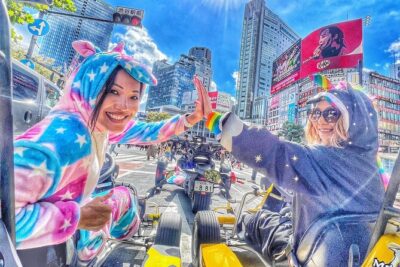
Best Go Kart Experience in Shibuya Crossing with Iconic Photos
Our verdict →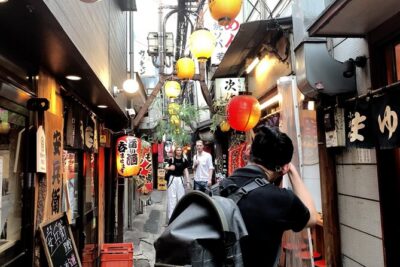
Tokyo by Night Photography Tour (Private Option Available)
Our verdict →
Tokyo Asakusa: Miu Kimono Rental and Optional Photoshoot
Our verdict →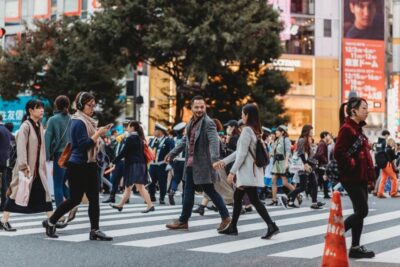
Tokyo Portrait Tour with a Professional Photographer
Our verdict →
Browse the lists this tour appears in