
Reviewed · OSAKA TOURS
Osaka: Visit the must-see places.
Osaka reveals itself in layers on this ambitious city tour: a castle tied to Japan’s civil wars, temples that explain the arrival of Buddhism, a retro entertainment district, a food market, and the neon streets around Dotombori. Spanish-speaking guide Manuel Pérez leads the route, using the subway and plenty of walking to connect Osaka’s major sights in one long day.
I like the way this tour joins history and everyday Osaka instead of treating the city as a string of photo stops. I also like the practical help, including food suggestions, shopping stops, and explanations of customs that can be hard to pick up on your own. The main drawback is the pace: you cover a lot of ground, pay your own subway fares and food costs, and need comfortable shoes, cash, and stamina.
Key points at a glance
- Osaka Castle opens the day with Japan’s Sengoku-era story, including Toyotomi Hideyoshi and the castle’s role in the 16th century.
- Shitennoji and Isshin-ji offer two very different religious experiences, from an ancient Buddhist temple complex to statues made with the ashes of the deceased.
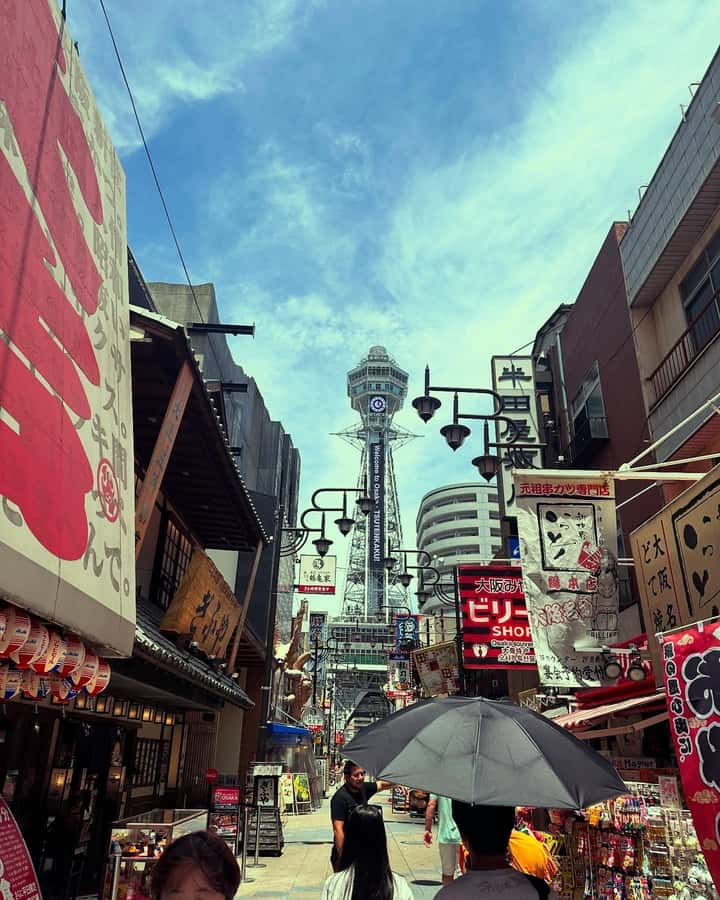
- Shinsekai brings retro Osaka flavor, with kushikatsu restaurants and views of the Tsutenkaku Tower.
- Kuromon Market is the food stop, where you can look for sushi, seafood, and wagyu beef.
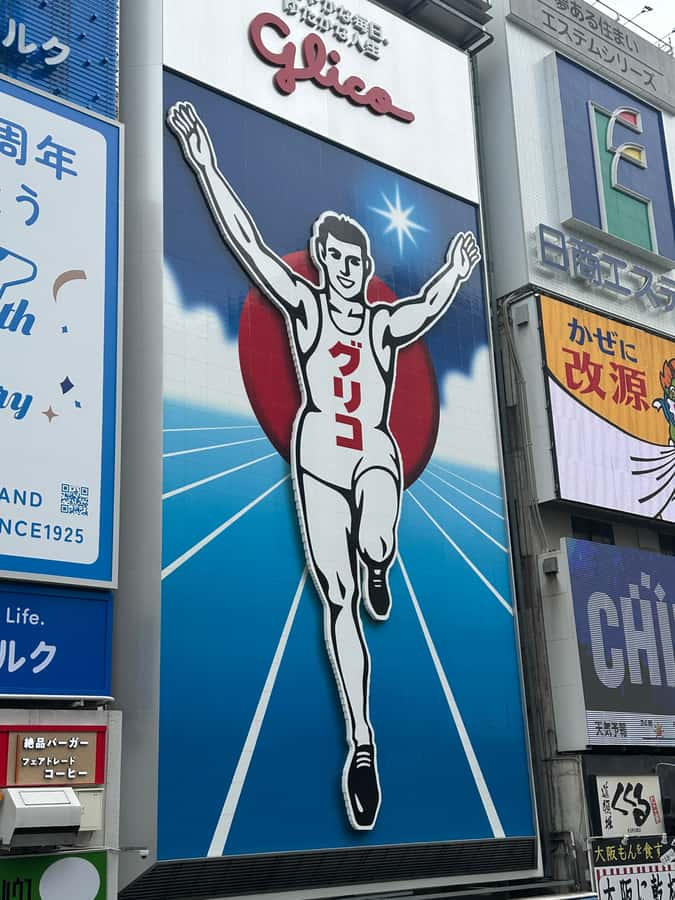
- Namba and Dotombori finish with Osaka’s famous neon, including the Glico Man and Kani Doraku crab.
- Spanish-speaking guide Manuel Pérez adds context and flexibility, with help choosing food and answering questions about Japan.
Osaka Castle and the story of Toyotomi Hideyoshi
Meet at Exit 3B of Morinomiya subway station. This is a useful starting point because the tour begins beside Osaka Castle Park, rather than spending the first part of the morning finding the monument from a distant station.
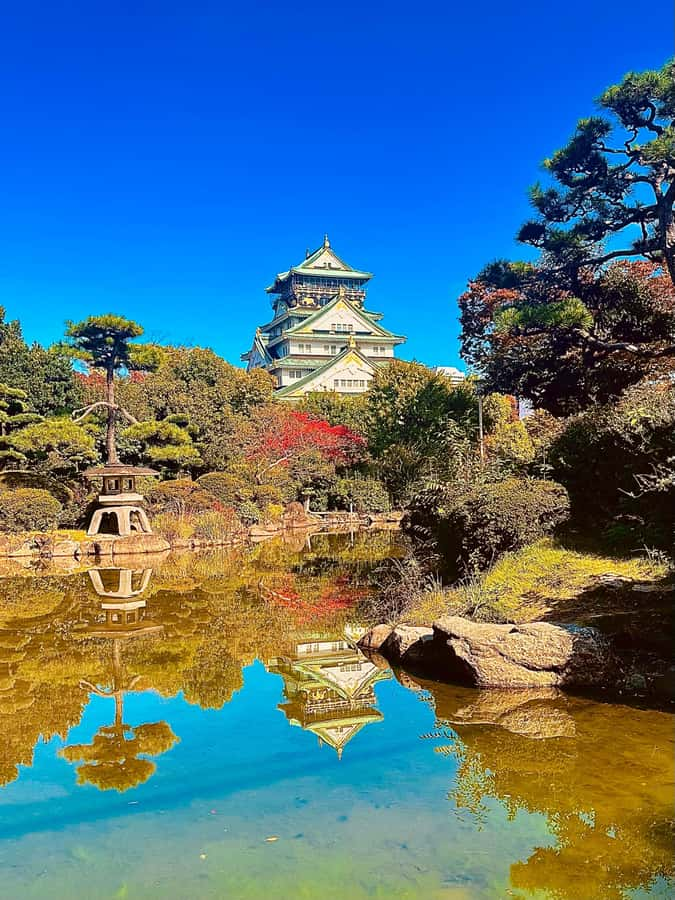
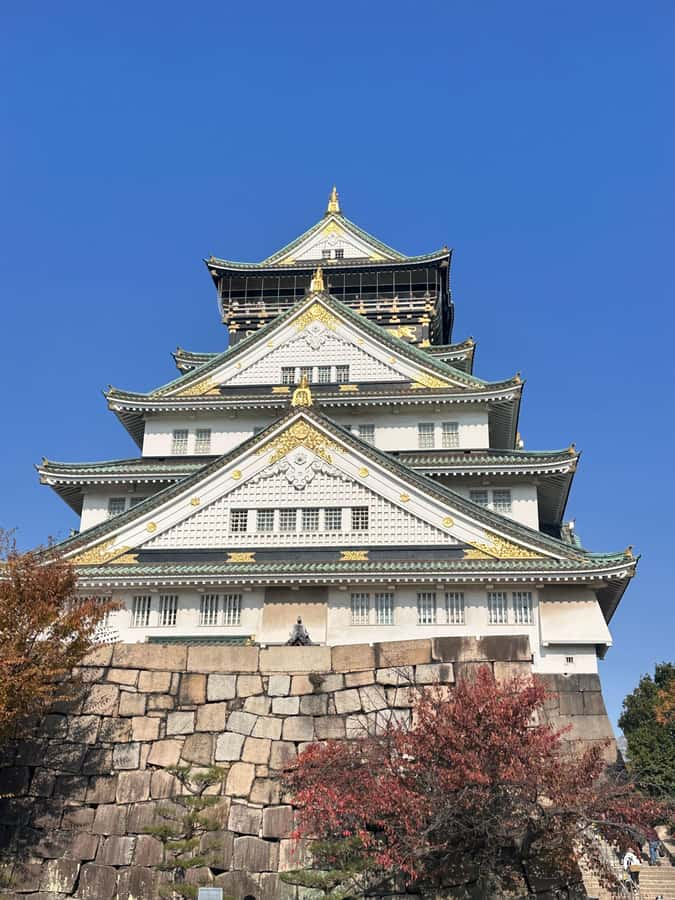
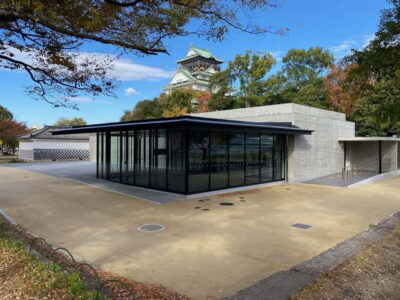
Osaka Castle is the grand opening scene. The original castle was built in the 16th century by Toyotomi Hideyoshi, one of the major figures of Japan’s Sengoku period. That was an age of rival warlords, shifting alliances, and military campaigns, so the castle gives Manuel a natural place to explain how Osaka became tied to the struggle for control of Japan.
You will explore the castle grounds and surrounding park. The experience here is not only about looking up at the tower and taking a picture. The park helps you understand the scale of the site, while the guide supplies the political and military background that makes the castle more than a handsome landmark.
This stop is especially useful if Osaka is your first Japanese city. A guide can explain why Hideyoshi matters and connect the castle to the larger story of national unification. If you have already visited several Japanese castles, you may find the historical explanation more valuable than the castle exterior itself.
The tour information does not specify admission to the castle interior, so do not assume that a museum or tower ticket is included. The advertised visit focuses on the castle and its extensive grounds. Ask Manuel on the day if you want to clarify the exact amount of free time available for any paid entry.
A few more Osaka half-days worth comparing
- Osaka Go Karting Tour with Funny Costume
★ 5.0 · 2,658 reviews - Osaka Castle: Museum and Tower Entry Ticket
★ 4.5 · 2,380 reviews - Osaka: Shinsekai Food Tour with 13-15 Dishes at 5 Eateries
★ 4.8 · 2,204 reviews
Shitennoji, Japan’s early Buddhist landmark
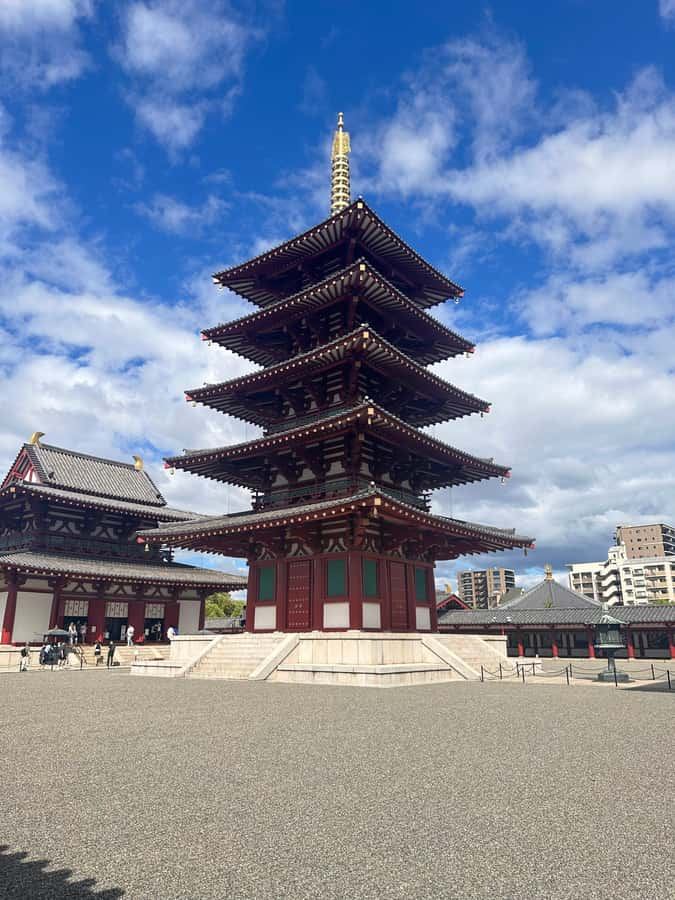
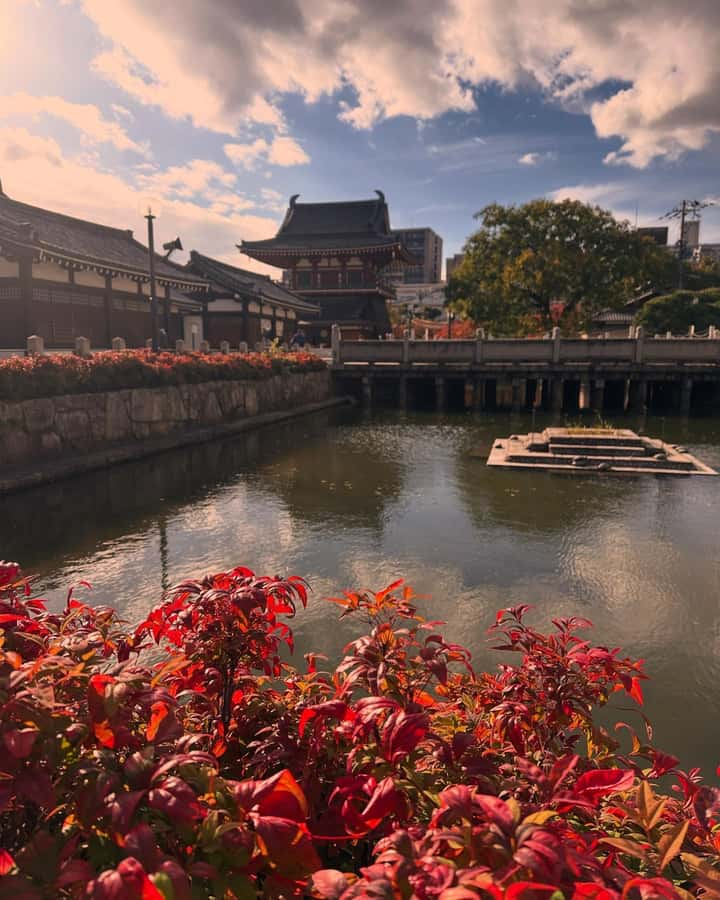
Next comes Shitennoji, founded in 593 and described as Japan’s oldest Buddhist temple. It offers a different mood from Osaka Castle. The castle explains power and war; Shitennoji introduces the arrival of Buddhism and the role that religion played in Japanese culture.
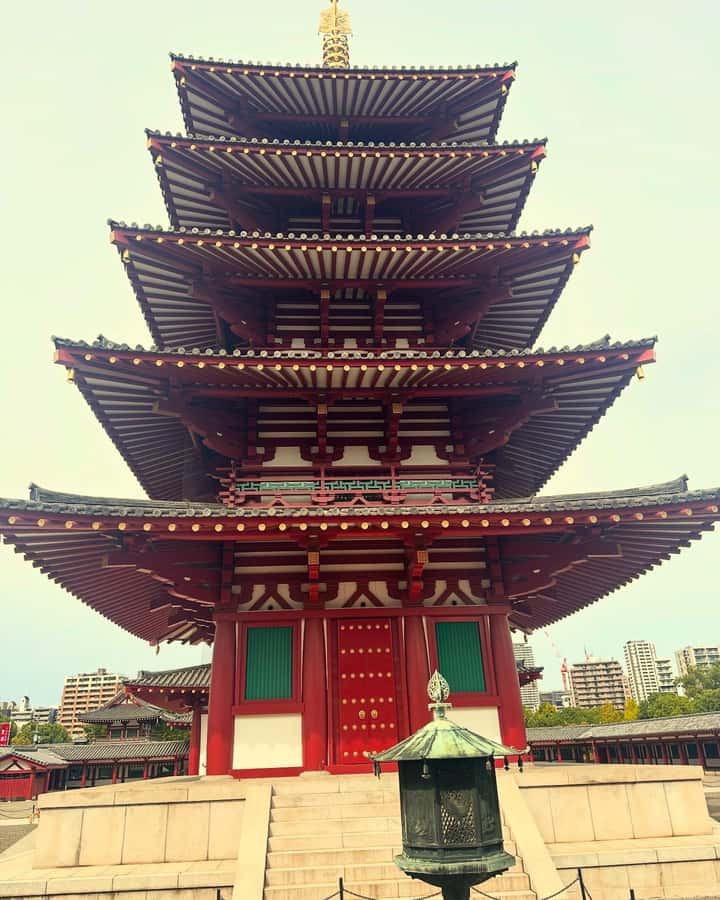
You will walk through the temple area and its serene garden, with time to admire the five-story pagoda. This is a good point in the route to slow down and notice details. The quiet setting creates a sharp contrast with the city streets, and Manuel can explain how Buddhist ideas became part of Japanese life.
The temple is important for more than its age. It helps you see how Osaka’s identity is not limited to food, shopping, and neon signs. Religious sites remain part of the city’s daily fabric, and this stop gives the itinerary some needed stillness.
The route does not promise a private ceremony or special access. You are visiting as part of a sightseeing tour, so keep the usual temple manners in mind: speak quietly, follow posted rules, and dress in a way that feels respectful. The tour asks you to wear comfortable clothes, which is practical here as well as for the rest of the day.
Isshin-ji and a striking Buddhist funeral tradition
Isshin-ji Temple is one of the more unusual stops. It is known for Buddhist statues made from human ashes, a practice connected with honoring the deceased. This is not a standard sightseeing subject, and the stop gives the tour a more serious side.
Manuel can explain the link between religious practice and funeral culture in Japan. You may find the subject moving, surprising, or simply unfamiliar. It is worth approaching with respect rather than treating the statues as an oddity for a quick photograph.
This temple also gives you a chance to compare two Buddhist sites in the same day. Shitennoji presents an ancient temple complex and pagoda, while Isshin-ji focuses more directly on remembrance and the relationship between the living and the dead.
The supplied tour details do not state how long you stay at either temple. Since the route includes seven major areas, expect a guided visit rather than a long period for solitary reflection. If Isshin-ji is one of your main reasons for booking, tell Manuel early so you can understand how much time the schedule allows.
Shinsekai, kushikatsu, and the Tsutenkaku Tower
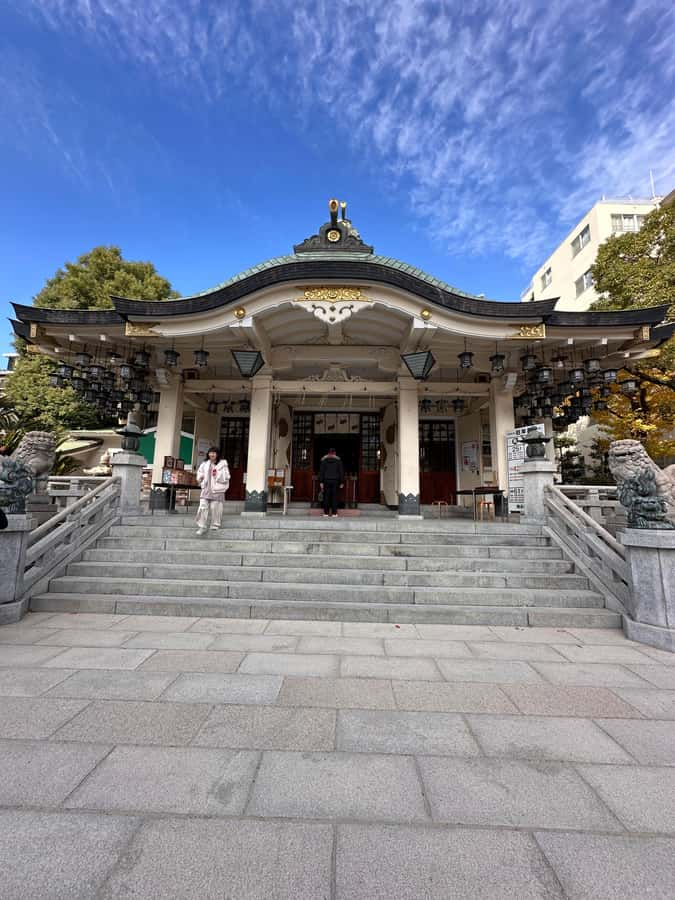
Shinsekai changes the tone again. This neighborhood is known for neon lights, traditional restaurants, and a retro atmosphere. It feels tied to an older image of Osaka, with the Tsutenkaku Tower acting as its visual marker.
The food to look for here is kushikatsu, fried skewers that may include meat, seafood, or vegetables. Food is not included in the $73 price, so any tasting is at your own expense. Bring cash, as the tour specifically advises it, and remember that the guide’s transportation does not cover your own subway fares.
I like this stop because it connects Osaka’s personality with what you eat. Kushikatsu is not just a dish to photograph. It is a neighborhood specialty and a simple way to experience the city’s casual food culture. Manuel can also help explain where to eat and how to approach the local dining scene.
The retro setting may be less appealing if you want polished shopping streets or a quiet cultural visit. Shinsekai is deliberately lively and informal. It also adds more walking and more sensory noise to an already full route, so this is where comfortable shoes begin to matter.
Same trip, a completely different kind of day:
- Osaka Food Tour: 13 Dishes at 5 Local Eateries
★ 5.0 · 2,149 reviews - Hungry Osaka Street Food Tour:15 Tastings & 3 Drinks with a Local
★ 5.0 · 1,727 reviews - Osaka: teamLab Botanical Garden Entry Ticket
★ 4.5 · 1,710 reviews - Osaka: Tea Ceremony Experience
★ 4.9 · 1,426 reviews
Kuromon Market and the cost of eating well
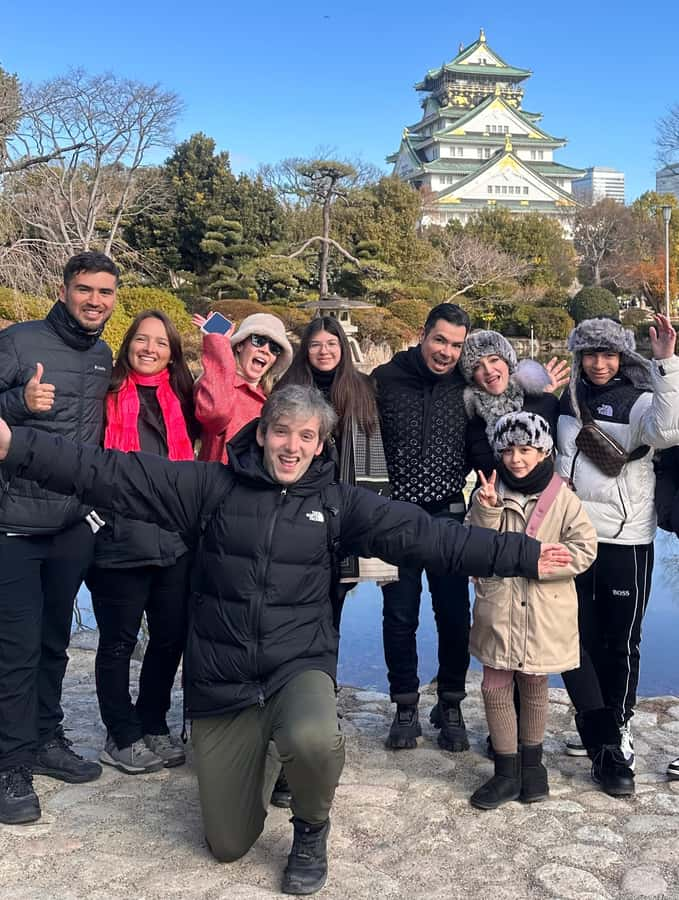
Kuromon Market is the tour’s main food-focused stop. It is known for fresh produce and local specialties such as sushi, seafood, and wagyu beef. You can browse first, then decide if you want to spend money on a snack or a small meal.
This is a good arrangement for different appetites. You are not locked into a group meal or a fixed menu. If you have been waiting to try a particular seafood item, Kuromon gives you choices. If you are already full from an earlier stop, you can focus on the sights and save your budget.
The market is also useful for understanding Osaka’s food reputation. Instead of receiving a general lecture about local cuisine, you see ingredients and prepared dishes in one place. Manuel’s recommendations can help you choose, especially if you are unsure about what a stall sells or how much food makes sense during a walking tour.
Keep in mind that market prices vary, and meals, drinks, and personal expenses are not included. The $73 covers the guided experience, not the food itself. That makes the tour good value if you want a guide to organize a broad introduction, but less attractive if you prefer to spend the same amount on independent eating.
Namba and Dotombori under the neon signs
The final section takes you into Namba and Dotombori, Osaka’s best-known entertainment and shopping areas. Here the city becomes louder and more theatrical, with bright signs, restaurants, and crowds moving along the streets.
The tour stops at the Glico Man, one of Osaka’s most recognizable signs. You will also see the animated crab outside Kani Doraku. These are classic Osaka photo locations, but they make more sense after you have visited the temples, market, and old-style district. The day ends with the city’s public face: food, advertising, nightlife, and a little playful excess.
Dotombori is a place where you can continue exploring after the tour, though this activity officially ends back at the Morinomiya meeting point. Since the itinerary returns to the starting point, plan your evening with that in mind. Do not assume you can simply finish in Dotombori and leave from there.
Namba and Dotombori are also where the tour’s contrasts come together. Osaka can be solemn at Isshin-ji, historic at Osaka Castle, traditional at Shitennoji, and wonderfully loud beside the canal-side signs. A guide helps you connect those pieces instead of seeing them as unrelated stops.
What Manuel adds to the day
The strongest part of the experience is the guide-led context. Manuel Pérez is named as the guide, and the feedback supplied about his work points to several practical strengths: detailed explanations of Japanese and Osaka history, attention to the group’s needs, punctuality, and useful restaurant suggestions.
One family with a seven-year-old found that Manuel kept an eye on everyone throughout the route. Another guest appreciated receiving restaurant recommendations and details for later use. Those points matter because the itinerary is long and varied. A guide who watches the group’s energy and answers questions can make a packed day much easier.
The tour is in Spanish. That is a major reason to choose it if you want to discuss Japanese customs, religion, and history in Spanish rather than rely on short English explanations or written information. Manuel also appears willing to adapt recommendations to what you want to eat or see, though the core route remains fixed around the major Osaka stops.
There is no stated group size, so you should not assume a private tour. The supplied information does show that personalized attention is part of the guide’s approach, but the booking details do not promise an exclusive experience. Ask before booking if group size is important to you.
Walking, subway fares, and what to bring
This is an active city tour. You use the subway between areas and walk through castle grounds, temple compounds, market streets, and entertainment districts. Bring comfortable shoes and clothes, since the route covers a lot of Osaka in one day.
The guide handles the tour transportation in the sense that the route uses public transit with the guide. Your own transportation costs are not included. You must bring cash or a transport card such as ICOCA, Suica, or Pasmo to ride the subway.
Cash is also useful for food and personal purchases. Meals and drinks are not included, and the tour does not mention a food allowance or group restaurant booking. Budget separately for anything you want to try at Shinsekai or Kuromon Market.
The activity is not suitable for wheelchair users and does not allow baby carriages. That is important to know before booking, because the combination of subway travel, stairs or station transfers, temple grounds, market streets, and sustained walking may be difficult for anyone needing step-free access.
The tour ends back at the original meeting point, Exit 3B at Morinomiya station. Since no exact duration is provided, allow most of the day for the experience. The route is described as extensive, and one guest specifically viewed it as a good way to learn Osaka in a day.
Is $73 a fair price?
At $73 per person, the value depends on how you like to see a city. You are paying for a Spanish-speaking guide, historical explanation, route planning, and a full list of major sights. Transportation fares, food, drinks, and personal purchases are extra.
I think the price is fair for someone who wants structure and interpretation. Covering Osaka Castle, two temples, Shinsekai, Kuromon Market, Namba, and Dotombori independently would require planning several subway journeys and deciding how much time to give each place. The guide removes much of that work.
The value is weaker if you want a slow day at each location. This itinerary aims for breadth, not long museum visits or extended shopping. You will see many important places, but you may have limited free time at each one.
The reserve-now, pay-later option can help if your plans are still shifting, and cancellation is allowed up to 24 hours before the activity for a full refund. Those terms reduce some booking risk, but the main decision is still about pace: choose this for a guided overview, not a leisurely neighborhood wander.
Who should book this Osaka tour?
You should consider it if you:
- Want a Spanish-language introduction to Osaka
- Prefer a guide to explain history, religion, and local customs
- Have one day for the city’s major sights
- Want food suggestions without committing to an included group meal
- Are comfortable using the subway and walking for much of the day
- Enjoy seeing both famous landmarks and ordinary neighborhood character
It may not suit you if you use a wheelchair, need a baby carriage, dislike public transportation, or want a slow itinerary with plenty of independent time. It is also not the right choice if your main goal is a long Osaka Castle interior visit, because the included information does not promise a castle admission ticket or a specific amount of indoor time.
Should you book it?
Book this tour if you want to cover Osaka’s essential sights with Spanish-speaking guide Manuel Pérez and prefer explanations over simply collecting photographs. The best parts are the mix of castle, temples, food districts, and neon streets, plus the practical restaurant advice.
Skip it if you want to set your own pace, spend heavily at Kuromon Market, or focus on one district in depth. For an active first look at Osaka, though, the route gives you a useful city map in your head and enough local context to keep exploring after the guide returns you to Morinomiya.
FAQ
What language is the tour conducted in?
The tour is conducted in Spanish. The named guide is Manuel Pérez.
Where does the tour start?
The meeting point is Exit 3B of Morinomiya subway station.
Where does the tour end?
The activity ends back at the original meeting point.
Are subway fares included?
No. You pay your own transportation costs. Bring cash or an ICOCA, Suica, or Pasmo transportation card.
Are food and drinks included in the price?
No. Meals, drinks, and personal expenses are not included. You may choose to buy food at Shinsekai or Kuromon Market.
Is the tour suitable for wheelchair users or baby carriages?
No. The activity is not suitable for wheelchair users, and baby carriages are not allowed.
What can I bring for the tour?
Bring comfortable shoes, comfortable clothes, and cash. You also need cash or a transportation card for the subway.
Just added around Osaka
- Exclusive Sushi Making Experience with a Master Chef – Osaka Area★ 5.0 · 25 reviews
- Private Home-Style Cooking Class in Osaka with Local Mom Yoshiko★ 5.0 · 46 reviews
- Hidden Osaka – Yukaku Red Light Tour & Culinary Adventure★ 4.8 · 96 reviews
- Osaka: Walking Tour and Top Highlights★ 4.8 · 104 reviews
- Osaka: Private Ceramic Painting Workshop★ 5.0 · 13 reviews
- Pickleball in Osaka, Kobe & Kyoto with Locals!★ 4.7 · 80 reviews
- Eat Like a Local in Osaka – Private Custom Street Food Tour★ 4.3 · 33 reviews
- Osaka:SUMO BEATS SHOWCASE: Taiko Drum and Wagyu burger!★ 4.2 · 37 reviews
Osaka Tours, compared.
Shinsekai Food Tour with 13-15 Dishes at 5 Eateries
Our verdict →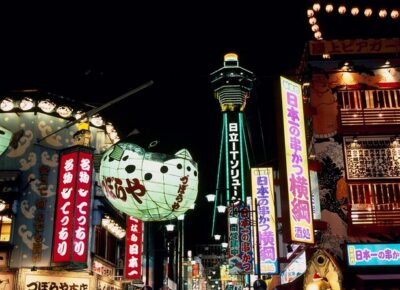
Hungry Osaka Street Food Tour:15 Tastings & 3 Drinks with a Local
Our verdict →
Deep Backstreet Osaka Tours (Option to add Dinner)
Our verdict →Browse the lists this tour appears in