
Reviewed · CYCLING TOURS
One-Day Osaka Bike Adventure: 5–6 Hours
Osaka reveals itself quickly from a bicycle. In five to six hours, you can pedal from the riverside gardens of Nakanoshima to Osaka Castle, Shitennoji Temple, Shinsekai, and Namba. The route mixes major sights with ordinary neighborhoods, so you get more than a checklist of famous places.
I especially like two things here. First, the ride is mostly easy and fairly flat, with only slight hills around Osaka Castle. Second, the guides bring their own stories and local knowledge. Matt is often praised for his background in Japanese history, while Mayco, Akira, Yuki, and Danyk are also named as warm, engaging guides. The main consideration is physical: a 13-mile or roughly 20-kilometer ride through city streets is manageable for a reasonably fit person, but it is not a sightseeing bus.
Key points to know before booking
- A full-city introduction: The route links Nakanoshima, Osaka Castle, Shitennoji, Shinsekai, and Namba in one morning and afternoon.
- A small group setting: The maximum is eight people, which helps the guide manage city riding and answer questions.
- A relaxed pace: The ride includes frequent sightseeing stops, and the route is described as mostly flat.
- Local food is part of the day: Lunch is arranged at a local place, with vegetarian choices available. Confirm the exact lunch cost when booking, since the tour details describe it both as included and as your own expense.
- Good cultural range: You’ll see a Buddhist temple, a castle park, a working-class district, a knife shop, and a quirky shrine.
- Age and height limits matter: Riders must be at least 140 centimeters tall, and the experience is not recommended for children aged 12 and under.
Why a bicycle works so well in Osaka
Osaka is spread out. You can use trains to move quickly between districts, but trains do not show you the spaces between them. On this ride, you pass river paths, old business streets, temple grounds, shopping areas, and local streets in one continuous outing.
The route covers about 13 miles or 20 kilometers, depending on the exact ride. That is a lot of ground, yet the stops break the day into short pieces. You are not expected to cycle hard for six straight hours. The purpose is to keep moving, pause for stories and photographs, then ride on.
I like this format for a first day in Osaka. You get a rough map in your head, learn which areas deserve a return visit, and pick up practical ideas for the rest of your stay. The guides also point out places you might miss from a train or walking route.
City cycling does require attention. Osaka has busy streets and crowds, and one rider noted that the route can test your bike skills when people gather around the main sights. The guides appear to handle the group carefully, but you should feel comfortable braking, steering, and riding around other people.
More Bike Tours in Osaka
- 5-Hour Osaka Bike Tour to the Neighborhood of Osaka Castle
★ 5.0 · 319 reviews - Eat, Drink & Cycle: Osaka Foodie Bike Tour
★ 5.0 · 224 reviews - Osaka E-Bike Tour with a Local Guide
★ 5.0 · 219 reviews
Starting in Tenma and along the Nakanoshima riverside
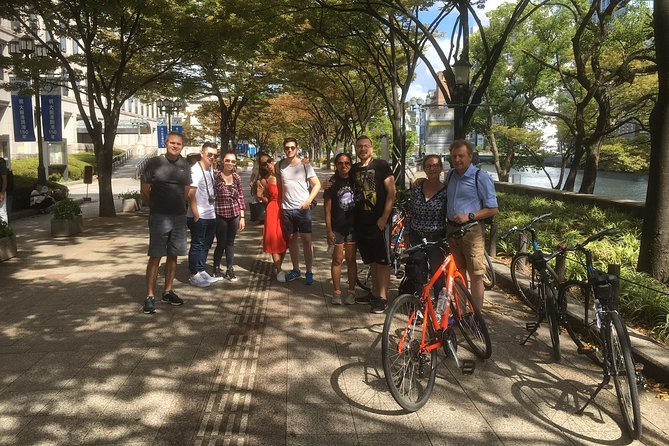
The meeting point is at 1-chōme-10-7 Tenma in Kita Ward, with a 9:30 am start. After you receive your bicycle, helmet, and bottled water, the route begins around Nakanoshima Park.
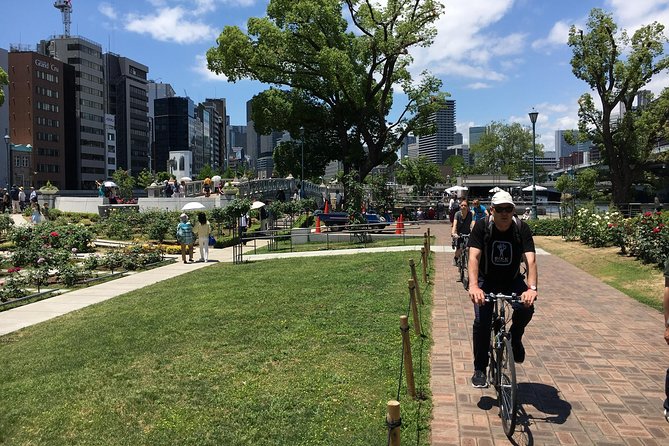
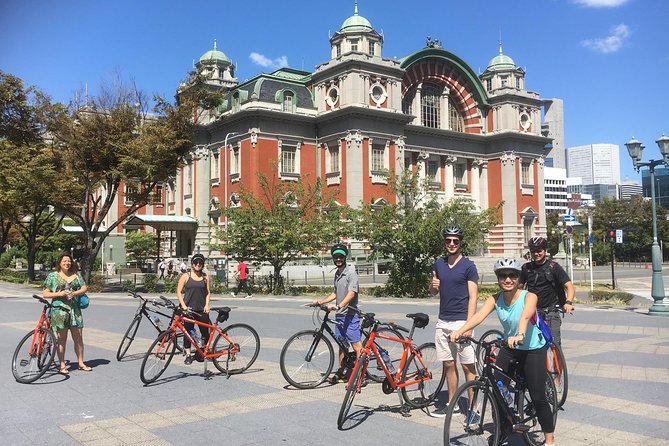
Nakanoshima is a pleasant opening chapter. The park runs between rivers and sits in Osaka’s old business district, where older buildings and open public spaces give you a different view of the city. The ride along the water brings a breeze and a little breathing room before the busier sections.
You spend about 20 minutes in the park, followed by another riverside stretch. This is not a major landmark stop in the same way as Osaka Castle, but it helps you understand Osaka as a city shaped by water and commerce. It also gives the group time to settle into the bikes.
Mint Museum grounds and Osaka’s modern story
The next stop is near the Mint Museum. You do not enter the museum, so this part is best understood as an outdoor history lesson rather than a museum visit.
The guide explains the area’s role in Japan’s modernization. That context adds value because the tour is not only about old temples and castles. Osaka’s identity also comes from industry, trade, money, and the modern city that grew around them.
The stop lasts about ten minutes. If you want to tour the museum itself, plan a separate visit on another day. Here, the attraction is the guide’s explanation and the chance to see the grounds as part of a wider city ride.
Osaka Castle Park, photos, and a little uphill effort
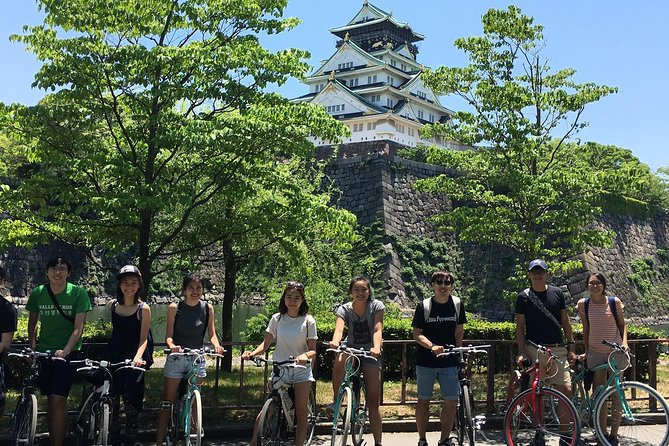
Osaka Castle Park is one of the main highlights. You ride through its greenery, stop for photos, and hear about the castle’s place in Japanese history and culture. There may also be time for an ice cream, a useful reward if the day is warm.
The park provides some of the best photo opportunities on the route. It also brings the only specific physical warning mentioned in the tour details: there are slight hills around the castle. This is not a mountain ride, but you will notice the effort more here than along the riverside.
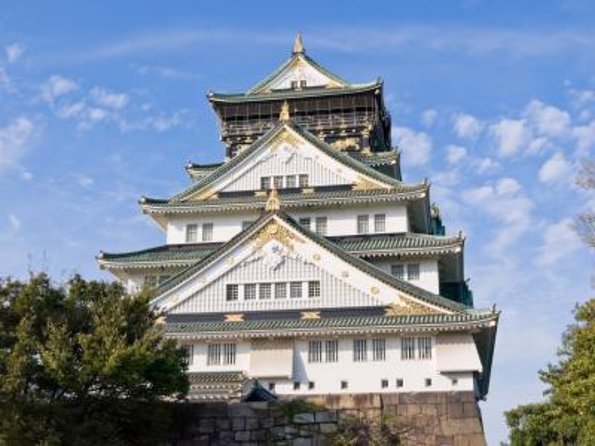
The castle itself carries a large share of Osaka’s historical identity. A guide can give you the basic story without requiring you to spend hours inside a museum or castle exhibition. The stop lasts around 30 minutes, enough for photographs and an explanation, but not enough for an extended interior visit.
One practical point: the route order may vary. The stated schedule places Osaka Castle Park third, while one rider described it as the final highlight. Treat the listed stops as the core plan, not a promise of an exact sequence.
Same trip, a completely different kind of day:
- Osaka Go Karting Tour with Funny Costume
★ 5.0 · 2,658 reviews - Osaka Castle: Museum and Tower Entry Ticket
★ 4.5 · 2,380 reviews - Osaka: Shinsekai Food Tour with 13-15 Dishes at 5 Eateries
★ 4.8 · 2,204 reviews - Osaka Food Tour: 13 Dishes at 5 Local Eateries
★ 5.0 · 2,149 reviews
Shitennoji, Japan’s oldest Buddhist temple
Shitennoji offers a sharp change of mood. After the open park and city streets, the temple grounds provide a quieter pause. The tour describes it as Japan’s oldest Buddhist temple, and the guide explains its place in the country’s development.
You get about 15 minutes here. That is enough to see the setting, take in the atmosphere, and ask a few questions. It is not a full temple study session, so visitors with a strong interest in Buddhist architecture may want to return independently.
I like this stop because it keeps the tour from becoming a string of modern streets and photo points. Osaka is often known for food and shopping, but Shitennoji reminds you that the city also has a long religious and cultural story.
Shinsekai and the Tsutenkaku view
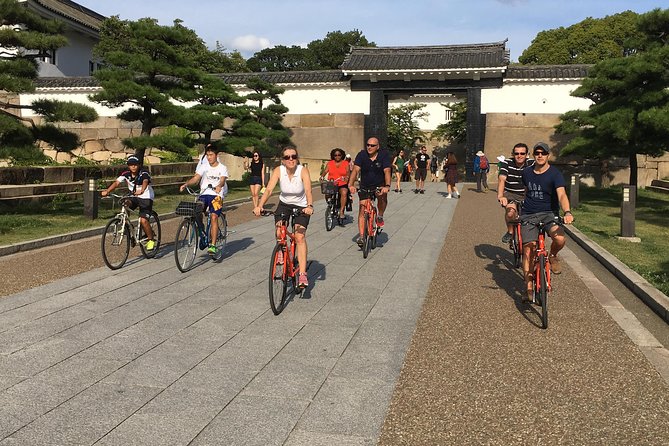
Shinsekai brings a more colorful, informal side of Osaka. The group stops beneath the Tsutenkaku tower, takes photographs, and explores a district long associated with working-class Osaka.
The stop is brief, around 15 minutes. You may see street food and plenty of local character, but do not expect a long food crawl. The value comes from seeing a part of Osaka that feels different from the polished areas around major stations.
This is also a good place to ask your guide for food suggestions. Osaka has a strong food culture, and the ride includes a local lunch later in the day. The guide can help explain what you are seeing, rather than leaving you to guess which dishes or streets matter.
Tower Knives and Osaka’s practical craft
Tower Knives Osaka is one of the most distinctive stops. You receive an introduction to one of Japan’s well-known knife exporters, learn about knife making in the area, and may get to use one of the tools yourself.
The visit lasts about 15 minutes, so it is an introduction rather than a long shopping appointment. Still, it adds a hands-on element that the temples and parks cannot provide. You see a modern commercial craft tied to Japanese food culture and everyday life.
If you are interested in buying a knife, ask the guide about the visit and the time available. The information provided confirms the introduction and hands-on chance, but not specific shopping arrangements, prices, or shipping services.
Lunch and the best pause of the day
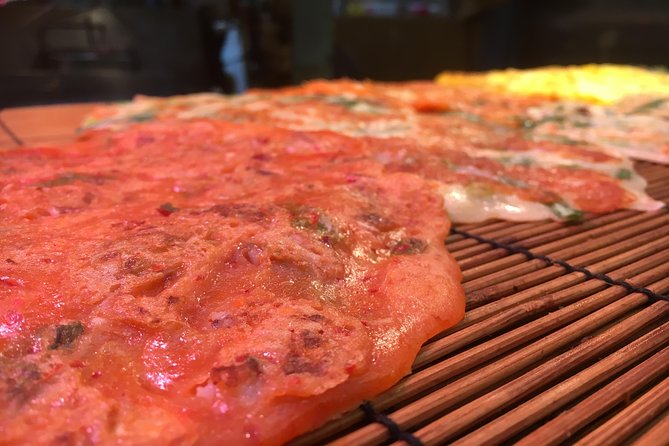
Lunch is arranged at a local spot, and several descriptions single it out as a strong part of the experience. Specific meals mentioned include sushi and curry, and vegetarian options are available if requested in advance.
The tour details are not fully consistent about payment. One section lists lunch among the inclusions, while another says you try local flavors at your own expense. Ask for clarification before booking or at the start of the day so you know what the $106.12 price covers.
Lunch matters for more than hunger. It gives you time to sit down, talk with the guide, and try food in a setting chosen for the group. A standard attraction tour can feel rushed; a local meal makes the day feel more connected to Osaka’s daily life.
You should still treat lunch as a set part of a cycling day, not a restaurant tour. The exact restaurant and menu are discussed on the day, so there is no fixed food promise beyond the availability of local choices and vegetarian fare.
Namba Yasaka Shrine and the final ride back
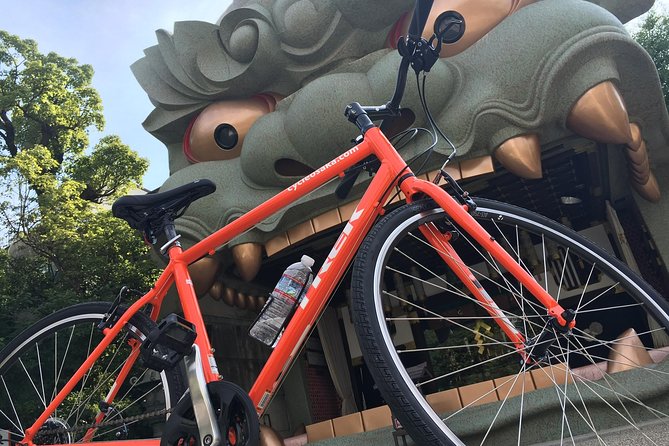
Near the end, the group stops briefly at Namba Yasaka Shrine. The visit lasts only about five minutes, but the shrine is highly photogenic because of its unusual design.
You can look at prayer tablets and pick up a good-luck charm. This is a quick stop, not a full shrine visit, yet it makes a memorable final image before the ride returns to the meeting point.
The activity ends where it began. That is useful if you have onward plans in central Osaka, though you should leave room after the official five to six hour window rather than booking a tight connection.
Guides, group size, and the feel of the ride
Guide quality is central to this experience. Matt is repeatedly praised for his Japanese history background, personal stories, humor, and ability to adjust to riders with different strength and skill levels. Mayco, Akira, Yuki, and Danyk are also named for their friendly approach, cultural explanations, and ability to keep the day moving.
That range of guide names suggests the experience is not built around one single host. Your exact style may vary. One guide may lean into history, another into local customs, food, or personal recommendations.
The group limit is eight people. That is small enough for a guide to watch the group in traffic and stop for questions without managing a crowd. It also means the pace may reflect the slowest rider. That is good for a relaxed outing, but less suitable if you want a fast athletic ride.
Bikes and helmets are provided, along with bottled water. Riders have described the bicycles as comfortable and easy to use. You still need moderate physical fitness, confidence on a bike, and the ability to ride for several hours.
The activity is not recommended for children aged 12 and under, and riders must be at least 140 centimeters tall. One family had a correctly sized bike for a 14-year-old, so older children may be able to take part if they meet the height and ability requirements.
Is $106.12 a fair price?
At $106.12 per person, this is not the cheapest way to see Osaka. Public transport and self-guided sightseeing will cost less. The price makes more sense if you value the guide, the bicycle, the route planning, the small group, and the chance to cover districts that would take much longer on foot.
You are paying for access to a broad overview in one day. A self-guided route could include the same major areas, but you would need to plan the streets, choose a bicycle, manage navigation, and research the historical background yourself.
Lunch needs checking because of the conflicting payment information. If lunch is included, the value improves. If it is paid separately, budget for it as an extra. Either way, the meal is part of the schedule and not something you need to organize on the morning.
The strongest value is for a first or second day in Osaka. You get a city orientation, local suggestions, and enough cultural context to decide where to return. If you already know Osaka well and want a slow, detailed visit to one neighborhood, this broad loop may feel too general.
What to bring and how to prepare
Wear comfortable clothes for cycling and shoes that work well on pedals. Osaka can be warm, and the ride includes open riverside stretches, parks, and city streets. The tour provides bottled water, but you may still want extra water depending on the weather.
Arrive ready to ride at 9:30 am. Because the group moves through busy areas, keep your attention on the guide and the road rather than trying to take photographs while cycling. There will be stops for pictures.
Tell the operator about vegetarian needs when booking. Also confirm the lunch payment arrangement, the expected route order, and the weather policy if rain is possible. The tour requires good weather, and a cancellation for poor weather brings a choice of a different date or a full refund.
Free cancellation is available up to 24 hours before the start time. Changes or cancellations made less than 24 hours before departure are not accepted for a refund. The activity can also be canceled if the minimum number of participants is not reached.
Who should book this Osaka bike tour?
I would choose this ride if you want to see many sides of Osaka in one day and enjoy learning while you move. It suits reasonably fit adults, older children who meet the height rule, solo visitors, couples, and small groups who want a local guide without joining a huge coach tour.
It is especially useful early in your stay. The route gives you a practical sense of distance between districts, and the guide can add ideas for meals, customs, and later visits.
I would skip it if you dislike city cycling, need a fully predictable schedule, or want long visits inside Osaka Castle, Shitennoji, or the Mint Museum. The stops are short, and the ride itself is the main event.
For most active visitors, I think the balance is strong: major sights, smaller cultural stops, local food, and a manageable pace. Confirm the lunch cost and route order, then book it for a clear-weather day when you want Osaka to feel like a city you are moving through, not just a list of stations.
FAQ
How long does the Osaka bike tour last?
The experience lasts approximately five to six hours and begins at 9:30 am. It ends back at the original meeting point.
Where does the tour start?
The meeting point is 1-chōme-10-7 Tenma, Kita Ward, Osaka, 530-0043, Japan. The location is near public transportation.
What sights are included?
The route includes Nakanoshima Park, the Mint Museum grounds, Osaka Castle Park, Shitennoji Temple, Shinsekai, Tower Knives Osaka, and Namba Yasaka Shrine.
Are bikes and helmets provided?
Yes. The tour includes a bicycle, helmet, bottled water, and an English-speaking guide.
Is lunch included in the price?
The tour information is inconsistent. One section lists lunch as included, while another says lunch is at your own expense. Confirm the arrangement before booking. Vegetarian options are available if requested in advance.
Can children join the tour?
The activity is not recommended for children aged 12 and under. Riders must also be at least 140 centimeters tall.
Just added around Osaka
- Exclusive Sushi Making Experience with a Master Chef – Osaka Area★ 5.0 · 25 reviews
- Private Home-Style Cooking Class in Osaka with Local Mom Yoshiko★ 5.0 · 46 reviews
- Hidden Osaka – Yukaku Red Light Tour & Culinary Adventure★ 4.8 · 96 reviews
- Osaka: Walking Tour and Top Highlights★ 4.8 · 104 reviews
- Osaka: Private Ceramic Painting Workshop★ 5.0 · 13 reviews
- Pickleball in Osaka, Kobe & Kyoto with Locals!★ 4.7 · 80 reviews
- Eat Like a Local in Osaka – Private Custom Street Food Tour★ 4.3 · 33 reviews
- Osaka:SUMO BEATS SHOWCASE: Taiko Drum and Wagyu burger!★ 4.2 · 37 reviews
Cycling Tours, compared.
Arashiyama Bamboo Forest & Hidden Gems Bike Tour (Early Bird)
Our verdict →
Browse the lists this tour appears in