
Reviewed · CYCLING TOURS
Hiroshima 3hr Peace Cycling Tour with Local Guide
Hiroshima’s story changes when you leave the Peace Park and follow it outward by bicycle. This three-hour e-bike tour connects famous landmarks with quieter places that show how far the blast reached and how the city rebuilt itself. Guides such as Shin and Moe may add family memories that turn dates and statistics into something personal.
I like the small group limit of 10, which leaves room for questions and keeps the ride manageable. I also like the flat route, the easy electric bicycles, and the mix of major sights with overlooked monuments. The main consideration is the serious subject matter. This is not a light sightseeing spin, and the pace may slow if children or less confident riders are in the group.
What makes this ride worth your morning
- Personal local storytelling: Guides including Shin, Moe, Toma, Thomas, Kana, and others explain Hiroshima’s past, recovery, and present-day life. Some guides share family connections to the bombing.
- A route beyond the Peace Museum: You visit the Atomic Bomb Dome, but also Hiroshima Castle, the Red Cross Hospital window frame, surviving trees, bridges, and a railway connected to August 6, 1945.
- Comfortable electric bicycles: The route is relatively flat, and the e-bikes make summer heat and the three-hour distance easier.
- A maximum of 10 people: The group size allows more direct conversation than a large bus or walking tour.
- A useful three-hour format: You return to the Peace Park at about 1 p.m., leaving the afternoon open for the Peace Memorial Museum, Miyajima, or further city sightseeing.
- A practical rainy-day backup: Poor weather can lead to a refund, a new date, or a walking route focused on the hypocenter and nearby Peace sites.
Hiroshima’s story told from the saddle
The best reason to choose this tour is its shape. You are not simply taken from one famous monument to another. You move through modern Hiroshima, along rivers, past parks, and into areas where small reminders of August 6, 1945 still sit beside ordinary city life.
That contrast matters. Hiroshima is not preserved as a ruin. It is a working city with trams, schools, shops, parks, and residents going about their day. Cycling lets you see both truths at once: the destruction that happened here and the city that came afterward.
The route is gentle rather than athletic. The bicycles are electric, the terrain is described as relatively flat, and the ride includes frequent stops. If you can manage a standard bicycle but do not want to work hard in the heat, this setup makes sense. A few people have found the bikes slightly small, so check your fit at the start and speak up before leaving.
The guides are a major part of the experience. Shin is often praised for combining clear historical explanations with stories connected to his family. Moe has also been described as especially thoughtful, with family links to people who lived through the bombing. Other guides, including Toma, Thomas, and Kana, bring their own local perspective and answer questions along the way.
Personal stories should not replace historical context, and this tour uses both. You get facts about the blast and reconstruction, along with human details about what the event meant for families and the city. The tone remains respectful, but the guides also keep the ride approachable and conversational.
More Bike Tours in Hiroshima
- Hiroshima in a Nutshell: Morning Bike Adventure
★ 5.0 · 524 reviews - Hiroshima 2hr Peace Cycling Tour with Local Guide
★ 5.0 · 321 reviews - Hiroshima: Peace Cycling Tour with Local Guide
★ 4.8 · 286 reviews
Starting at the Peace Park Rest House
You meet at the Hiroshima Peace Memorial Park Rest House. The morning departure is scheduled for 10 a.m., while the afternoon option meets at 2 p.m. The guide handles introductions, explains the route, checks the bicycles, and covers safety procedures before you set off.
The meeting point is convenient for the main Peace Park area and public transportation. There is no luggage storage at the Rest House, so leave large bags at your accommodation or use coin lockers at the International Conference Center Hiroshima or the Hiroshima Peace Memorial Museum, about a six-minute walk away.
The tour is shared, with up to 10 people. That is small enough to feel personal, but it is not a private ride. The guide may adjust the pace for children or riders who are new to cycling. If you arrive late without contacting the operator, the tour can be canceled with no refund, so allow time to find the Rest House.
Hiroshima Castle and Gokoku Shrine
The first ride takes you to Hiroshima Castle, where the guide explains its wartime role and the military station that was among the first places to report the atomic bombing. The castle adds useful context because it shifts the story away from the Peace Park alone and toward Hiroshima’s prewar identity.
You then stop at Hiroshima Gokoku Shrine and its gate. The Guardian Dog statue and shrine gate offer a look at lesser-known remnants that survived the blast. These are short stops, but they help show that survival did not always mean an entire building remained intact. Sometimes one gate, statue, or fragment carries the story.
This opening section is especially useful if you choose the three-hour route rather than the shorter two-hour option. The longer ride adds Hiroshima Castle and more prewar and postwar context, making it a better choice if you want more than the central Peace Park sights.
Central Park, Aioi Bridge, and the Atomic Bomb Dome
Hiroshima Central Park provides a break from monuments. You ride through open green space and see the city’s quieter side before reaching Aioi Bridge. The bridge was the intended target for the bomb, and its position helps you understand the geography of the attack.
From there, the group moves to the Atomic Bomb Dome. This is the most recognizable stop, but seeing it as part of a bicycle route gives it a different setting. You approach it through the present-day city rather than encountering it as an isolated memorial.
The guide explains local memories and the Dome’s place in Hiroshima’s story. You should expect this part to be emotional. The tour does not treat the site as a quick photo stop, and you will have time to listen, ask questions, and take in the building’s remains.
The main limitation here is time. Fifteen minutes at the Dome is enough for an explanation and a close look, but not for a full visit to the Peace Memorial Museum. Plan the museum separately if you want exhibits, survivor testimony, and more detailed historical material.
Same trip, a completely different kind of day:
- Peaceful Hiroshima & Miyajima UNESCO 1 Day Bus Tour
★ 5.0 · 5,309 reviews - Hiroshima: Hiroshima and Miyajima UNESCO Sites 1-Day Tour
★ 4.9 · 2,330 reviews - Hiroshima / Miyajima Full-day Private Tour with Government Licensed Guide
★ 5.0 · 1,298 reviews - Osaka/Kyoto: Hiroshima Miyajima Bus Tour & Shinkansen Ticket
★ 4.7 · 919 reviews
Rivers, bridges, and the city that came back
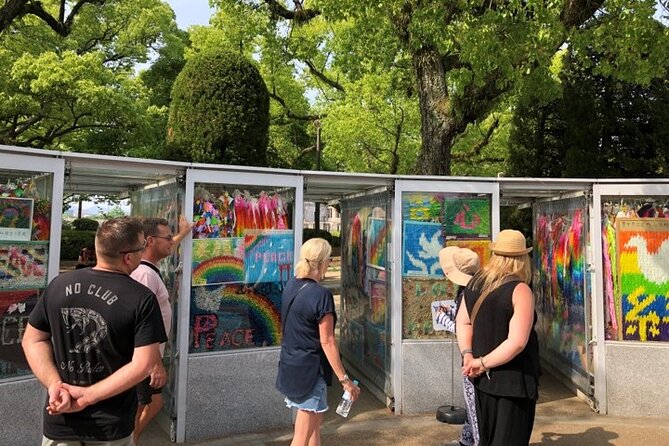
After the Dome, the ride follows the Motoyasu River and crosses or approaches the Peace Bridge area. Riverside cycling gives you a sense of Hiroshima’s physical layout and creates a quieter transition after the most intense memorial sites.
The route then continues to Higashisenda Park, about 1 kilometer from the center of the blast. Trees sent from countries around the world fill the park, making it a place where international remembrance meets everyday local space. Your guide explains the stories linked to the site.
This is one of the tour’s strongest ideas: you see how remembrance has been placed within the living city. A park, a bridge, or a line of trees may look ordinary at first. With the right explanation, each becomes part of a larger account of survival, mourning, and rebuilding.
The Red Cross Hospital window frame
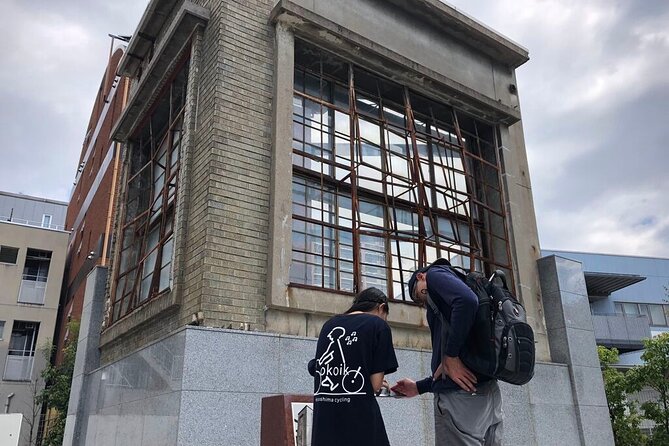
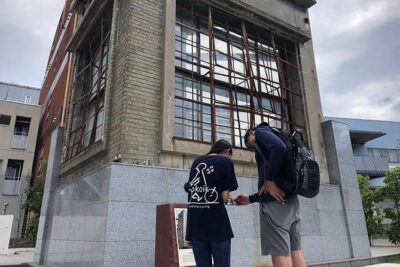
At Hiroshima Red Cross Hospital, you see the Atomic Bomb Window Frame Monument. The remains of the hospital building offer a direct sense of the blast’s force, especially because the site lies about 1.5 kilometers from the hypocenter.
This stop is less instantly famous than the Atomic Bomb Dome, but it can be harder to process. A surviving window frame is a small object. That is precisely why it works. It links a large historical event to the rooms, patients, and staff who were inside the hospital when the city changed in an instant.
The guide’s explanation is important here. Without context, the monument could be easy to pass. With context, it becomes one of the clearest physical reminders on the route.
Hiroshima’s surviving railway and Miyuki Bridge
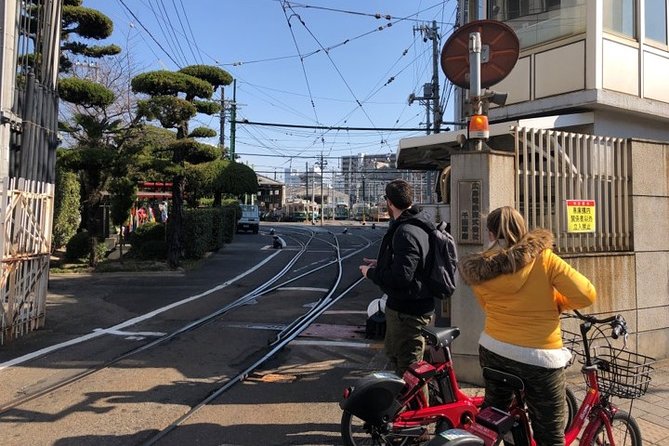
The ride continues toward Hiroshima’s railway, roughly 2 to 2.5 kilometers from the blast center. The guide explains that two trains survived the bombing and continued to be used. This detail brings the event into contact with ordinary transport and daily routines.
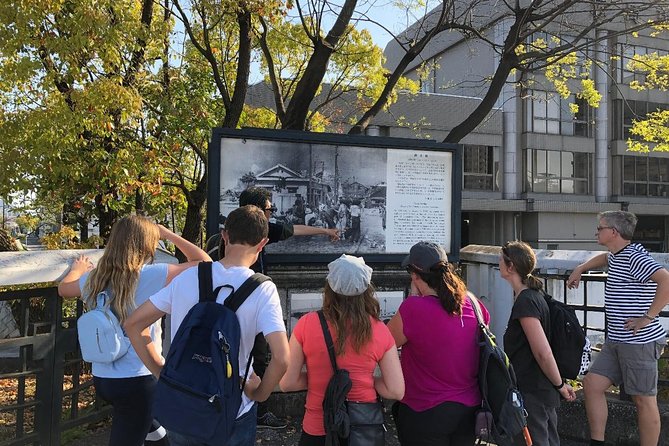
At Miyuki Bridge and the Kobayashi River, you reach an area described as close to the point where the bomb’s reach ended. A photograph displayed there shows the difference between Hiroshima then and Hiroshima now. The scene gives you another way to measure the scale of destruction without relying only on a map.
These stops also make good use of the bicycle. On foot, covering this much ground would take longer and might leave you focused on the effort. By bike, you can connect the sites while still stopping often enough to listen.
The surviving weeping willow and Peace Boulevard
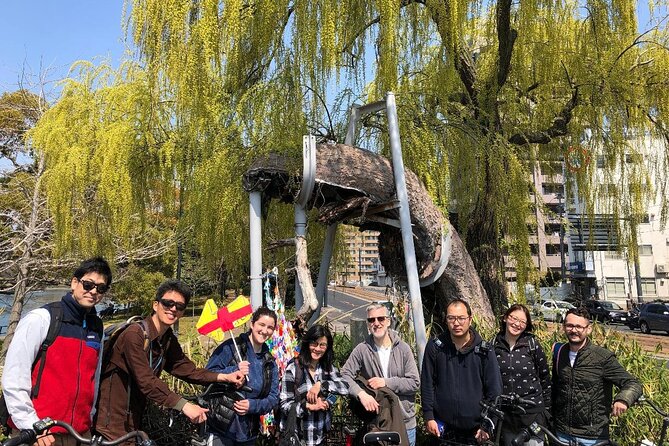
The surviving weeping willow tree is presented as a highlight of the ride. It continued growing despite the belief that Hiroshima would not support natural growth for decades. The tree represents endurance, but the guide also places it within the wider pattern of recovery rather than treating it as a simple symbol.
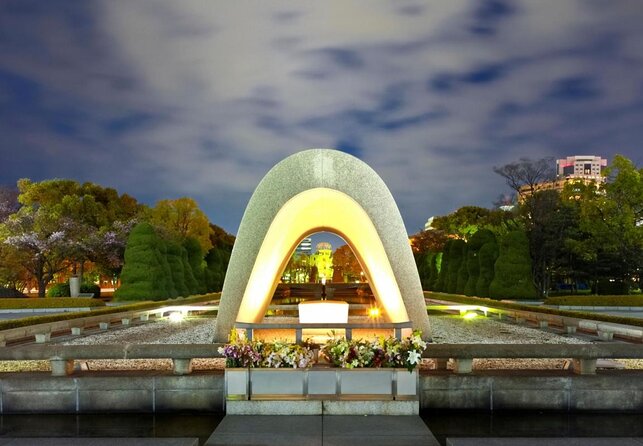
The final stretch follows Peace Boulevard back toward the Peace Park. Along the way, you pass monuments and trees linked to Hiroshima’s past while seeing the city as it functions today. That last contrast is central to the tour. You finish not in a frozen memorial zone, but in a city that has rebuilt and continued.
The morning route returns to the Peace Park at about 1 p.m. The afternoon tour runs from 2 to 5 p.m. The exact timetable can change, so do not schedule a train connection immediately afterward.
Price, equipment, and who gets good value
At $85.89 per person, this is not the cheapest way to see the Peace Park. The price makes more sense when you count the electric bicycle, guide, included entrance fees, bicycle accident insurance, and the amount of ground covered in three hours.
A walking tour can take you through the main memorial area at a lower cost, and the Peace Memorial Museum can be visited independently. The bicycle tour earns its price by reaching sites beyond the central park and by giving you a guide for the links between them.
You need an adult bicycle if you are at least 145 centimeters tall. Children from 110 to 145 centimeters can use one of the two children’s bicycles available for a booking, and children under 15 can use adult or children’s bicycles at the child rate. Electric bicycles with child seats are available for children under 22 kilograms and under 115 centimeters.
The tour suits adults, families with cycling-age children, and anyone who wants historical context without spending the entire day indoors. It is less suitable if you dislike bicycles, have trouble riding in a group, or want a quiet private experience with complete control over the pace.
Weather, cancellations, and practical planning
The experience depends on safe weather. If rain prevents the bicycle route, you may be offered another date, a refund, or a rainy-day walking route. That route includes the Peace Memorial Park, Atomic Bomb Dome, hypocenter, Former Bank of Japan, Fukuromachi Elementary School, and the main street, ending around 1 p.m. or 5 p.m., depending on departure time.
You can also cancel for a full refund up to 24 hours before the local start time. Cancellations or changes made inside that window are not refunded or accepted. Since weather can affect the ride, avoid booking it as the only activity on your final day in Hiroshima.
Bring water and dress for the season, especially in hot weather. The electric bikes reduce effort, but you are still outdoors for three hours. Hiroshima Free Wi-Fi is available around the city, though the tour itself does not provide Wi-Fi.
Should you book this Hiroshima cycling tour?
Book it if you want a human-scale introduction to Hiroshima, especially if you have only one day in the city. The route covers the essential Peace sites and adds places you might not find on your own, while the e-bikes keep the distance comfortable.
Choose the three-hour version if you want Hiroshima Castle, more prewar context, and a fuller look at postwar recovery. If your schedule is tight or you mainly want the Peace Park and Atomic Bomb Dome, the two-hour option may be enough.
I would not choose this tour simply for a pleasant bike ride. Its purpose is more serious. You will hear about the bombing, see physical remnants, and may hear personal family stories from guides such as Shin or Moe. For many people, that direct connection is what makes the experience memorable. If you are ready for a thoughtful morning, the $85.89 cost is reasonable for the coverage, equipment, and guide time.
FAQ
Where does the Hiroshima Peace Cycling Tour start?
The tour starts at the Hiroshima Peace Memorial Park Rest House in Naka Ward, Hiroshima.
Where does the tour finish?
The activity ends back at the Hiroshima Peace Memorial Park Rest House.
How long does the cycling tour take?
The tour lasts about three hours. The morning schedule runs from 10 a.m. to 1 p.m., and the afternoon schedule runs from 2 p.m. to 5 p.m.
How many people can join the tour?
The shared tour has a maximum of 10 participants.
Are electric bicycles provided?
Yes. Adult electric bicycles are provided, and children’s bicycles and electric bicycles with child seats are available under the stated height and weight limits.
How tall must I be to use an adult bicycle?
You must be at least 145 centimeters tall to use an adult bicycle.
What happens if it rains?
If rain makes the cycling route unsafe, you can choose another date, receive a refund, or change to the rainy-day walking route when offered.
Are entrance fees included?
Yes. Entrance fees listed as included in the route are covered in the tour price.
Can I cancel for a full refund?
Yes. You can cancel at least 24 hours before the experience start time for a full refund. Cancellations or changes made less than 24 hours before the start time are not accepted or refunded.
Just added around Hiroshima
- Full Day Hiroshima and Miyajima Tour by Bullet Train from Kyoto★ 4.5 · 120 reviews
- Hiroshima Saijo Sake Tasting Tour with visit to 7 Breweries★ 5.0 · 104 reviews
- The Peace Memorial to Miyajima : Icons of Peace and Beauty★ 4.5 · 31 reviews
- Shore Excursion from Hiroshima Port : Private Tour in Hiroshima★ 5.0 · 17 reviews
- Okunoshima Rabbit Island Cycling Tour with Local Guide★ 4.5 · 17 reviews
- Hiroshima & Miyajima All-Inclusive Tour w/Licensed guide Pancho★ 5.0 · 54 reviews
- Private Full Day Hiroshima Tour★ 4.5 · 29 reviews
- Miyajima Guided Tour and Fresh Oyster Farm Tour★ 5.0 · 20 reviews
Cycling Tours, compared.
Arashiyama Bamboo Forest & Hidden Gems Bike Tour (Early Bird)
Our verdict →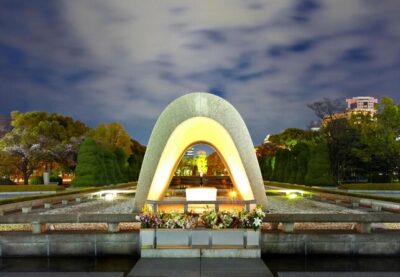
Browse the lists this tour appears in