
Reviewed · CYCLING TOURS
Hiroshima: Peace Cycling Tour with Local Guide
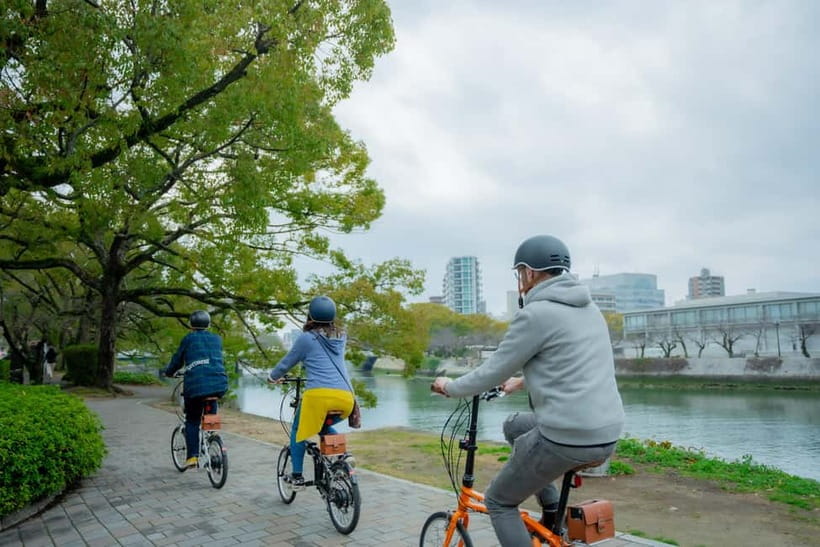
Hiroshima’s story becomes clearer when you leave the Peace Memorial Park and pedal through the city that grew around the ruins. This tour connects the famous monuments with ordinary streets, surviving trees, hospitals, bridges, rail lines, and neighborhoods linked to August 6, 1945. Guides such as Shin, Kana, Moe, and Bella add family memories and local perspective without turning the experience into a dry history lecture.
I like two things especially: the easy electric bicycles, which let you cover more ground without racing, and the move beyond the standard sightseeing circuit, where the city’s recovery is easier to see. The main consideration is that this is still a serious history tour. Some stories are painful, and the shared group may move at the pace of children or less confident cyclists.
Key points to know before booking
- Personal local storytelling: Guides including Shin and Kana have shared family connections to Hiroshima’s wartime history.
- Two route lengths: Choose a two-hour route focused on Peace Park and nearby A-bomb sites, or a three-hour circuit with Hiroshima Castle, bridges, parks, hospitals, and suburban landmarks.
- Electric bikes included: The bikes make the ride manageable for people who are comfortable cycling but not especially fit.
- Small shared group: The maximum is 10 people, though the pace may slow when children or inexperienced cyclists join.
- A wider view of Hiroshima: You see the famous dome, but also surviving streetcars, trees, bridges, and less-touristed sites.
- Practical limits: Adult electric bikes require a height of at least 145 centimeters, and child seats and children’s bikes are limited.
Why cycling adds something to Hiroshima
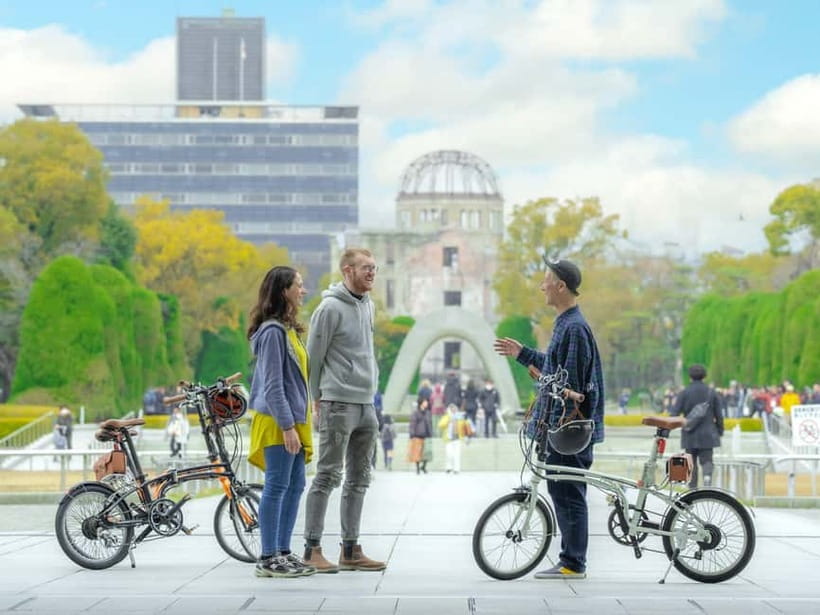
The Peace Memorial Park is essential, but it can leave you with an incomplete picture of Hiroshima. Its monuments and museum focus the mind on the bombing, while the rebuilt city around it can seem almost separate from that past.
A bicycle helps connect those two impressions. You ride from carefully maintained memorial spaces into working neighborhoods, crossing streets and rivers that were part of the city before the bombing and remain part of daily life today.
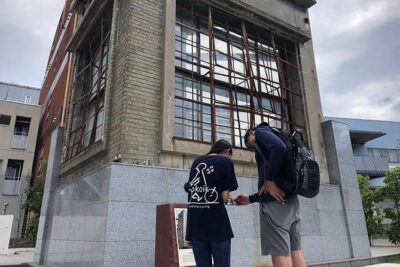
The tour also makes it possible to reach several A-bomb heritage sites in one outing. You are not simply moving between major attractions by tram or on foot. You can pause at places that are easy to pass without noticing, then hear why they matter.
The electric assistance is useful rather than showy. The route is not presented as an athletic challenge, and the distance between stops is generally manageable. You still need to ride a bicycle safely, but you do not need to be especially fit.
More Bike Tours in Hiroshima
- Hiroshima in a Nutshell: Morning Bike Adventure
★ 5.0 · 524 reviews - Hiroshima 2hr Peace Cycling Tour with Local Guide
★ 5.0 · 321 reviews - Hiroshima and Miyajima by Bike and Boat
★ 5.0 · 172 reviews
Meeting at the Peace Park Rest House
The meeting point is the Rest House in Hiroshima Peace Memorial Park. From Hiroshima Station, take the Hiroshima Electric Railway to Atomic Bomb Dome Station. The ride takes about 20 minutes, followed by a walk of roughly five minutes.
Arrive early. If you are late without contacting the operator, the tour can be cancelled and the same-day fee is nonrefundable. This is one of those activities where a calm start matters, since you will need time to find the meeting point, check your bike, and listen to the safety briefing.
The group can include up to 10 participants. That is small enough for questions and conversation, but it is still a shared ride. If children or less experienced cyclists are in the group, the guide may adjust the pace for everyone.
Bring comfortable clothes, shoes, a towel, and drinks. High heels are not allowed, and they would be a poor match for the pedals and stops anyway. Hiroshima can be hot, so water and sensible clothing matter. One guide has been noted for carrying cold towels, salt candies, wet wipes, and ice packs during hot weather, but you should still arrive prepared.
The two-hour route: a focused introduction
The shorter route begins with the Peace Memorial Park. The guide explains what the park represents and helps you read the monuments rather than simply pass them. You will hear about the Atomic Bomb Dome, the memories attached to the site, and the condition of Hiroshima around the hypocenter.
This opening is valuable if you are visiting Hiroshima for only a day. You get historical context before moving out into the city, and the bicycle allows the group to see more than a walking tour can cover in the same time.
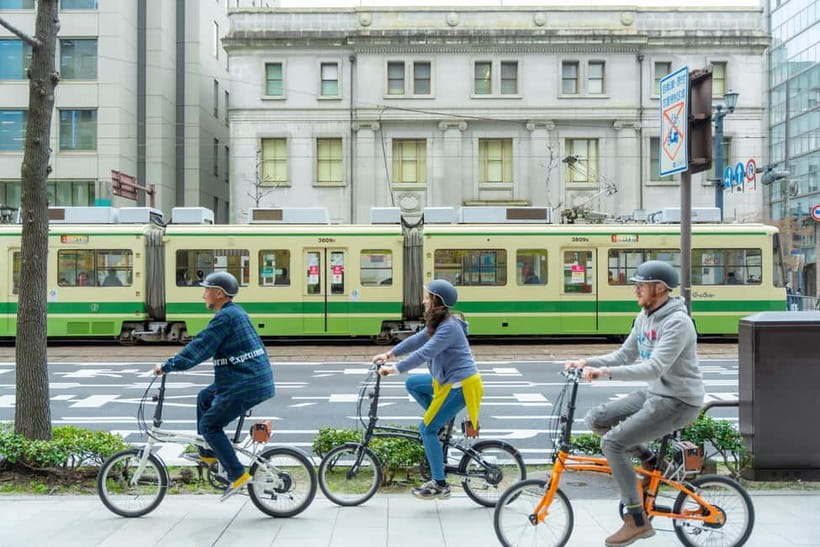
At around the one-hour mark, the route turns toward areas beyond the most visited part of the park. One especially memorable subject is the A-bombed streetcar, a train that survived the blast and continues to operate. The point is not only the vehicle itself. The streetcar represents the way ordinary systems and ordinary people were caught in an extraordinary event, then became part of the city’s return to daily life.
From there, the guide takes you through local streets and past additional A-bomb heritage sites. You see a Hiroshima that is green, active, and rebuilt, while hearing about the destruction that once reached far beyond the memorial grounds.
The two-hour option finishes back at the meeting point. It is a good fit if you want a serious introduction without giving up most of an afternoon. It also leaves time for the Peace Memorial Museum, though the tour does not replace a museum visit.
The three-hour route: a broader city circuit
The longer route gives the story more room to breathe. It begins near Hiroshima Castle, then continues to Hiroshima Gokoku Shrine and its shrine gate before reaching Hiroshima Central Park.
These early stops help show Hiroshima as more than a memorial destination. The city has religious sites, public parks, civic spaces, and a normal urban rhythm. The guide ties those places to what existed before the bombing, what was destroyed, and what was rebuilt.
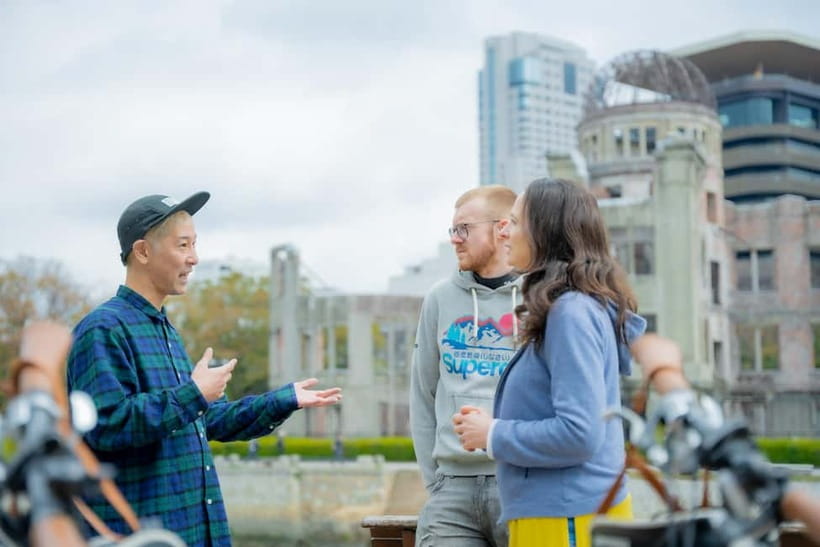
The route then moves toward Aioi Bridge and the Atomic Bomb Dome. Aioi Bridge is an important point in understanding the bombing because of its connection to the intended target area. At the dome, the guide gives context for the building and the surrounding Peace Memorial Park.
Next come the Motoyasu River and Peace Bridge, followed by Higashisenda Park. Rivers and bridges are easy to treat as scenic backdrops, but here they help you understand Hiroshima’s layout and the spread of damage through the central city.
The ride continues to Hiroshima Red Cross Hospital. This stop brings the story toward medical response and the human cost of the bombing. It can be a sobering part of the route, but it adds a layer that monuments alone cannot provide.
You then visit Hiroshima Railway, the Miyuki Bridge and Kobayashi River, and a surviving weeping willow tree. These stops are among the reasons to choose the longer option. They are not just famous photo points. They show how individual trees, railway lines, hospitals, and bridges can carry memories across generations.
The final stretch includes Peace Boulevard before the group returns to the meeting point. The entire three-hour route is still compact, but it gives you a more complete sense of how the city connects its past with present-day streets.
Same trip, a completely different kind of day:
- Peaceful Hiroshima & Miyajima UNESCO 1 Day Bus Tour
★ 5.0 · 5,309 reviews - Hiroshima: Hiroshima and Miyajima UNESCO Sites 1-Day Tour
★ 4.9 · 2,330 reviews - Hiroshima / Miyajima Full-day Private Tour with Government Licensed Guide
★ 5.0 · 1,298 reviews - Osaka/Kyoto: Hiroshima Miyajima Bus Tour & Shinkansen Ticket
★ 4.7 · 919 reviews
The guides make the difference
The quality of this experience depends heavily on the person leading your group. The guides named in the available information include Shin, Kana, Moe, Bella, Mai, Hugo, Tomas, and others from the local team.
Shin is especially associated with personal family stories passed down through parents and grandparents. His approach combines historical explanation with a message of healing and peace. He is also described as energetic and highly engaging, which helps during a subject that could otherwise feel heavy from beginning to end.
Kana has been praised for combining careful explanation with warmth and humor. Her personal stories help connect large historical events with family memory. Moe is also noted for sharing family experiences and for taking practical care of the group in hot conditions.
The guides do not all have the same style. That is normal with a team-based tour, and the exact person leading your ride depends on the date. What you can reasonably expect is an English-speaking local guide who grew up in or around Hiroshima and can explain places that are easy to miss without local help.
Personal stories should be handled with care. They do not replace historical evidence, but they can show how the bombing remains part of family memory. The strongest moments on this tour come when the guide connects a street, tree, bridge, or railway line with a human story, then brings the group back to the city’s message of hope.
What the electric bikes are really like
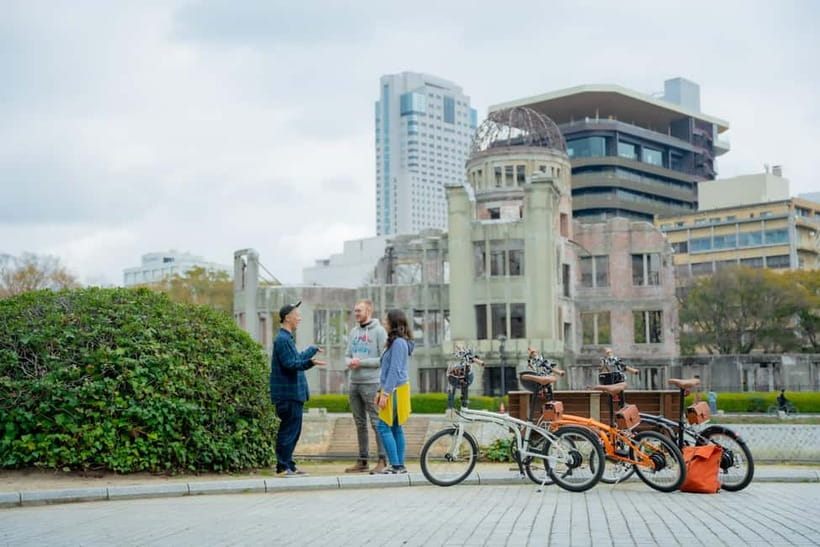
The bicycles are electric, and the ride is described as comfortable and easy to operate. This is useful for couples, families, and solo visitors who want to cover a wider area without turning the day into exercise.
The route includes city streets, bridges, and regular stops. You should still know how to ride a bicycle and feel comfortable following a guide through town. The tour is not suitable for someone who cannot cycle.
One practical point is bike size. Adult electric bicycles are for people at least 145 centimeters tall. A taller rider has noted that the bike felt small-framed, so very tall cyclists may want to ask about the available bicycles before booking.
Children aged 15 and under can use adult or children’s bicycles at the child rate. Children’s cross bikes are intended for heights from 110 to 145 centimeters, and only two are available per booking. Electric bikes with child seats are for children under 22 kilograms and under 115 centimeters.
Infant seats and children’s bicycles are limited. Contact the operator before reserving if you need one. The activity accepts children from age one, but the bike arrangement must be suitable for the child.
A thoughtful tour, not a light sightseeing ride
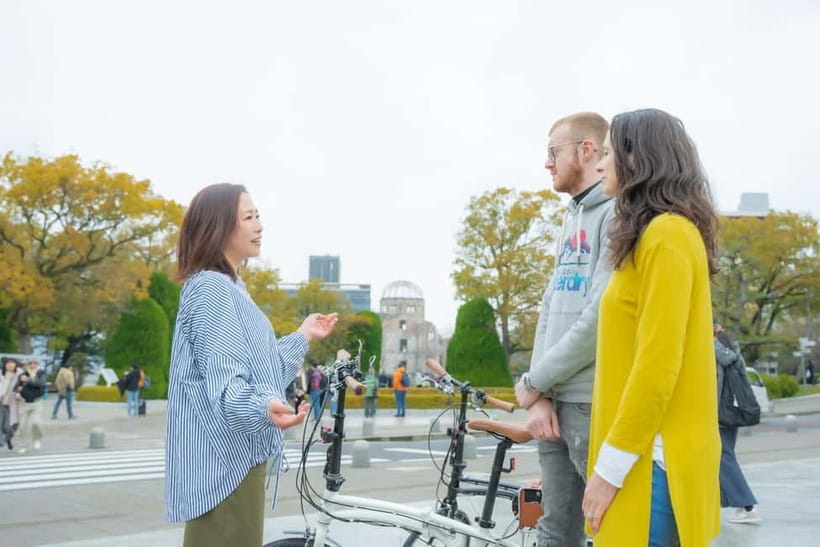
Hiroshima’s history cannot be separated from grief, and this tour does not try to make it cheerful. It does, however, balance destruction with recovery.
You will hear about the severe damage within a 2.5-kilometer radius of the hypocenter, then see how the area has been rebuilt and filled with trees, parks, homes, railways, and public life. That contrast is central to the experience.
The tone can vary by guide and by group. Personal stories may make the ride more emotional, while humor and conversation can make it easier to process. The best approach is to give yourself time afterward rather than schedule a rushed attraction immediately after the tour.
I would pair the bike ride with the Peace Memorial Museum either before or after, depending on your schedule. The museum supplies exhibits and documentation. The bicycle tour supplies movement through the city and local explanation. Together, they give you two different ways to understand Hiroshima.
Is $52 a fair price?
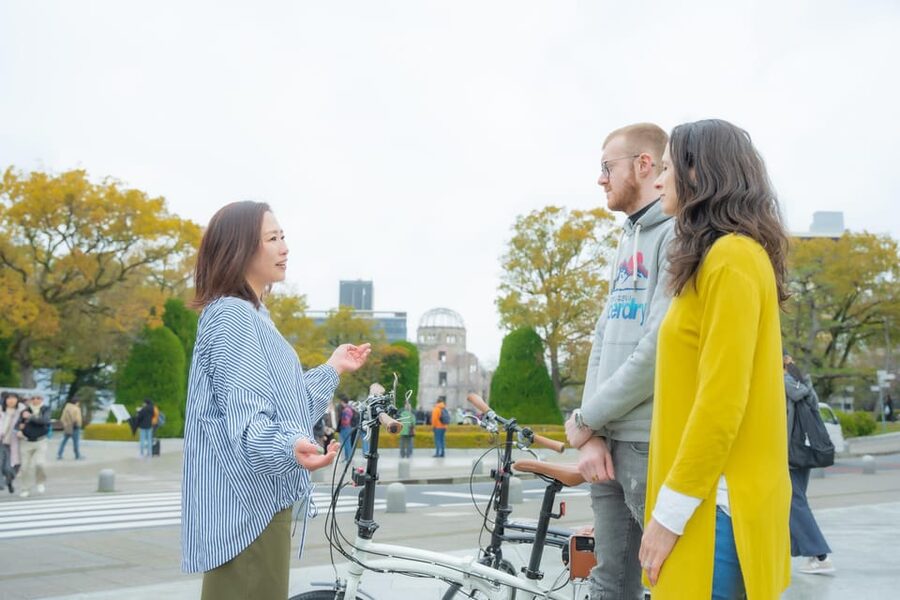
At $52 per person, the price includes the rental electric bicycle, an English-speaking guide, and bicycle accident insurance. Food and drinks are not included.
I consider that reasonable for a two or three-hour small-group tour, especially because the bike lets you reach more sites than a short walking tour. You are paying not only for transport, but also for route planning, equipment, local interpretation, and the time needed to explain places outside the main park.
The value is strongest if you have limited time in Hiroshima or want help connecting scattered sites. It is less compelling if you prefer to explore slowly on foot, spend several hours in the museum, or avoid cycling in city traffic.
The three-hour option offers the better value for a visitor who wants a fuller city circuit. The two-hour route makes more sense when your schedule is tight or you want to leave room for other sights.
Who should book this ride?
I would recommend it to first-time visitors who want a clear introduction to Hiroshima and to families with older children or teenagers who may find a long walking tour tiring. The bicycles add variety, and the pace can make the history feel more connected to real places.
It also suits solo visitors. The groups are small enough to make conversation easy, and the ride gives you a natural way to meet other people without spending an entire day together.
Cyclists should be comfortable with a shared pace. You may not always set the speed you prefer, since the guide adjusts for the least experienced rider. That is a fair trade for a family-friendly group, but serious cyclists may find the ride slow.
You should also choose carefully if the weather is poor or unusually hot. The operator may adapt on the day, but cycling remains more exposed than a museum visit. Drink plenty of water and dress for the conditions.
Final verdict: book it for context and local connection
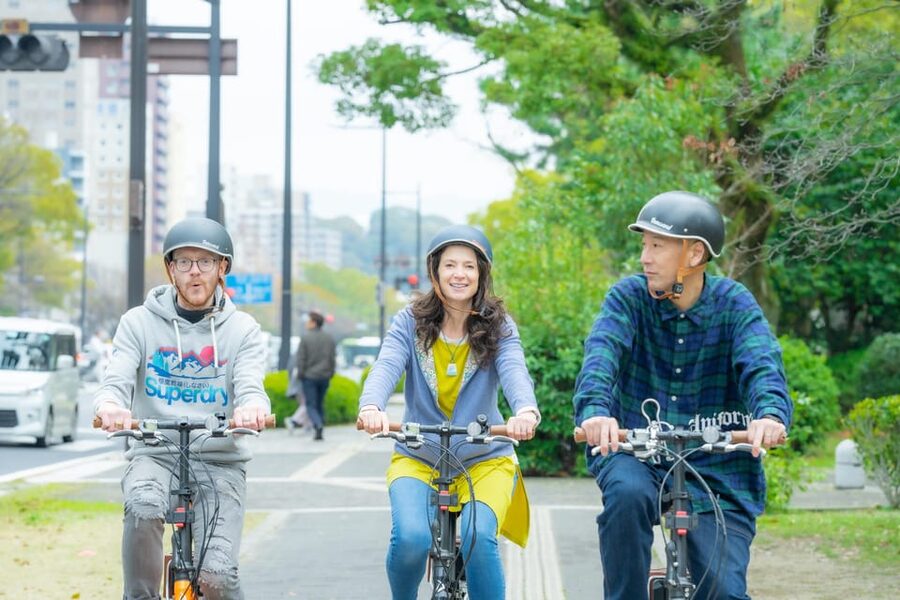
Book this Hiroshima Peace Cycling Tour if you want more than the Atomic Bomb Dome and a quick walk through Peace Park. The strongest part is the connection between major memorials and ordinary city places, supported by guides such as Shin and Kana who bring family memory and local feeling to the route.
Choose the three-hour tour if you want Hiroshima Castle, the rivers, bridges, hospital, railway, surviving willow, and Peace Boulevard. Choose the two-hour version if you need a compact introduction.
I would skip it only if you cannot ride a bicycle, are below the 145-centimeter adult-bike minimum without arranging a child bike, or want a quiet, self-guided museum day. For most visitors who can cycle comfortably, $52 buys a moving and practical way to understand how Hiroshima was destroyed, remembered, and rebuilt.
FAQ
How long is the Hiroshima Peace Cycling Tour?
You can choose a two-hour or three-hour route. The two-hour course begins at the Peace Memorial Park and includes nearby A-bomb heritage sites and the A-bombed streetcar. The three-hour route covers a wider circuit through central Hiroshima.
What is included in the price?
The price includes a rental bicycle, an English-speaking guide, and bicycle accident insurance. Food and drinks are not included.
Where does the tour meet?
The meeting point is the Rest House in Hiroshima Peace Memorial Park. From Hiroshima Station, take the Hiroshima Electric Railway to Atomic Bomb Dome Station, then walk about five minutes.
Is the guide English-speaking?
Yes. The tour is conducted in English, with a live local guide.
How many people can join the tour?
The shared tour is limited to 10 participants. The guide may adjust the pace if children or people who are less accustomed to cycling are in the group.
Do I need to be an experienced cyclist?
You do not need to be especially fit, since the bicycles are electric and the route is paced with regular stops. You must be able to ride a bicycle safely, and the activity is not suitable for someone who cannot cycle.
What height is required for an adult electric bicycle?
Adult electric bicycles are available for people at least 145 centimeters tall. People below that height may be able to use a children’s bicycle, subject to availability and the stated height limits.
Can young children join?
Reservations are available for children from age one. Electric bicycles with child seats are for children under 22 kilograms and under 115 centimeters. Children’s bicycles are available for children from 110 to 145 centimeters, but child seats and children’s bicycles are limited.
What should I bring?
Bring comfortable shoes, comfortable clothes, a towel, and drinks. High-heeled shoes are not allowed.
Can I cancel the tour?
You can cancel up to 24 hours in advance for a full refund. If you arrive late without prior notice, the tour may be cancelled and the same-day cancellation fee is nonrefundable.
Just added around Hiroshima
- Full Day Hiroshima and Miyajima Tour by Bullet Train from Kyoto★ 4.5 · 120 reviews
- Hiroshima Saijo Sake Tasting Tour with visit to 7 Breweries★ 5.0 · 104 reviews
- The Peace Memorial to Miyajima : Icons of Peace and Beauty★ 4.5 · 31 reviews
- Shore Excursion from Hiroshima Port : Private Tour in Hiroshima★ 5.0 · 17 reviews
- Okunoshima Rabbit Island Cycling Tour with Local Guide★ 4.5 · 17 reviews
- Hiroshima & Miyajima All-Inclusive Tour w/Licensed guide Pancho★ 5.0 · 54 reviews
- Private Full Day Hiroshima Tour★ 4.5 · 29 reviews
- Hiroshima Private Tour with a Local – Highlights & Hidden Gems★ 4.5 · 24 reviews
Cycling Tours, compared.
Arashiyama Bamboo Forest & Hidden Gems Bike Tour (Early Bird)
Our verdict →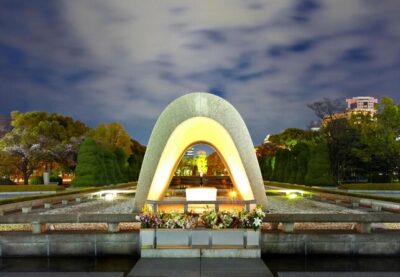
Browse the lists this tour appears in