
Reviewed · MARKETS
Kuromon Market Tour: All inclusive 6~8 Dishes & 3~4 samplings
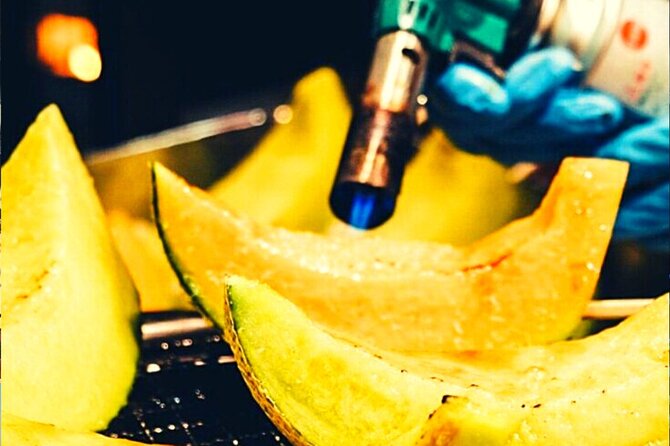
Kuromon Market is at its best when someone helps you read it. This two-hour walk turns a crowded row of food stalls into a guided meal, with 6 to 8 dishes and 3 to 4 extra tastings such as seafood, okonomiyaki, sweets, Japanese tea, fish cakes, sea urchin, and possibly fugu.
I like the personal scale, with no more than nine people, and the way guides such as Anna, Hikaru, Michael, and Mico connect you with small vendors. I also like that the food comes with useful explanations about quality, customs, and how to order. The main drawback is simple: this is not suitable for vegetarians or vegans, and the food list can change with the market.
Key points at a glance
- A full market meal: You receive at least six dishes plus three to four samplings, so arrive hungry.
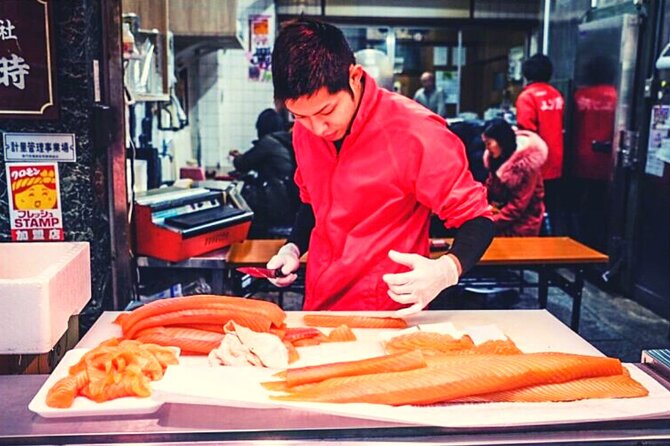
- Seafood takes center stage: Expect fresh fish and shellfish, with some tours including otoro tuna, oysters, sea urchin, pufferfish, or fugu.
- Small groups matter: The maximum group size is nine, allowing room for questions and personal food choices.
- Your guide opens doors: Guides have working relationships with vendors and can help you find family-run stalls and less obvious specialties.
- A 2 p.m. starting time: Meet at Nippombashi Station and return to the same meeting point after about two hours.
- Best for curious eaters: This suits people who want to try Osaka foods they might not recognize or know how to order.
Why Kuromon Market works best with a guide
Kuromon Ichiba is easy to reach, but easy to misunderstand. You can walk its covered lanes alone, yet a row of unfamiliar seafood, grilled items, pickles, sweets, and kitchen goods can leave you unsure about what is worth buying, where you may eat, and how each food fits into Osaka life.
A good guide gives the market a human scale. Instead of choosing at random, you follow someone who knows which vendors are reliable and which foods are worth your appetite. The guides connected with this experience include Anna, Hikaru, Michael, Mico Yamamoto, and British Andy. Your assigned guide may vary, but the format remains the same: walk, stop, taste, ask questions, and keep moving before the next sample melts or cools.
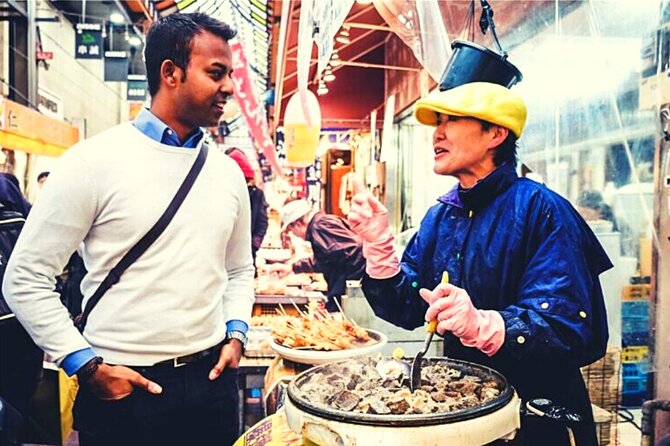
I especially like the local contacts. Several guides are described as having warm relationships with the stall owners, and that changes the mood from a simple purchase to a brief meeting with the people selling the food. You may see a vendor prepare an item, hear how it is served, or get a clearer explanation than you would manage on your own.
This is also useful if you are visiting Osaka early in your trip. The guides give practical food suggestions, explain common phrases and customs, and sometimes point you toward other places to eat or visit. One guide even helped a participant plan an evening around live music and offered ideas for nearby attractions.
More Market Tours in Osaka
- Kuromon Market Food Walking Tour in Osaka (6 stops, 6 tastes)
★ 5.0 · 550 reviews - Osaka: Kuromon Market Food Walking Tour (6 stops, 6 tastes)
★ 4.6 · 272 reviews - Osaka: Cooking Class & Sake Tasting with Local Market Visit
★ 4.8 · 31 reviews
Starting at Nippombashi Station at 2 p.m.
The meeting point is at Nippombashi Station, at 1 Chome-5 Nipponbashi in Osaka’s Chuo Ward. The tour starts at 2 p.m. and finishes back at the meeting point after roughly two hours.
That timing has two advantages. First, you can use the morning for another Osaka sight and make the market your main meal of the afternoon. Second, you do not need to manage a long transfer between the beginning and end of the activity. The walk stays focused on Kuromon Market.
Give yourself enough time to find the station meeting point. The supplied details identify Nippombashi Station rather than a specific platform or exit, so check the final meeting instructions carefully after booking. A mobile ticket is provided, and confirmation arrives at booking.
The tour has a maximum of nine people. That is small enough for a guide to notice if you have questions, need a slower explanation, or want to understand a food before trying it. One family group also found the format workable with children, including a two-year-old, while another family with children aged nine to fourteen appreciated the guide’s ability to offer alternatives for pickier eaters.
The first taste: fresh seafood and market specialties
The strongest part of this food walk is the range. You are not simply handed one large dish and sent on your way. The experience is built around several tastes, with seafood usually playing a major role.
Possible samples described by the tour include sushi, oysters, sea urchin, fish cakes, pufferfish, fugu, and otoro tuna. These are not guaranteed items, since the food depends on what is available and what your guide selects, but they show the level of variety. Otoro, the fatty section of tuna, was singled out as a particularly memorable taste for its smooth, buttery texture.
Fugu is another possible highlight. Pufferfish requires careful preparation, so it is the sort of food many people prefer to try with a guide rather than guess their way through a market stall. The tour’s food choices have also included whale in at least one account, though this should be treated as an occasional possibility, not a promise.
The value here is not only the number of foods. Your guide explains what you are eating and helps separate everyday Osaka fare from items aimed mainly at sightseers. That context matters when a price tag is high or an ingredient is unfamiliar. You can ask how to identify quality, how a dish is normally eaten, and what makes it local.
If you have allergies or strong food restrictions, ask before booking. The tour is explicitly not suitable for vegetarians or vegans, and the advertised menu can change. The supplied information does not give a full allergy policy, so do not assume that a guide can replace a formal dietary arrangement.
Okonomiyaki, sweets, and Japanese tea
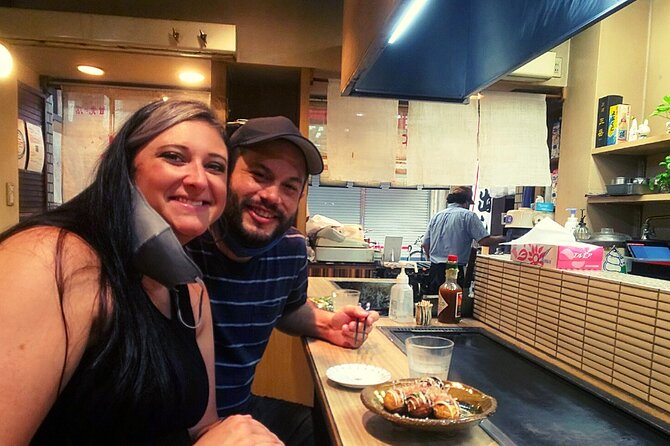
Seafood gets much of the attention, but the tasting is wider than raw fish. Osaka is known for hearty local foods, and okonomiyaki is included among the possible dishes. This gives the tour a useful balance: you get the sea, but also a cooked specialty tied closely to Osaka’s food identity.
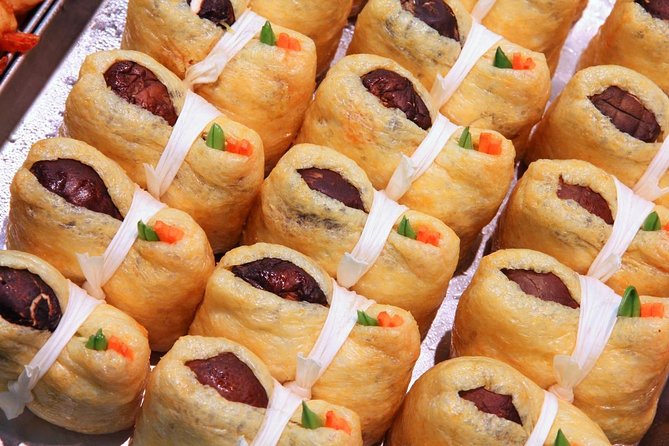
Dessert and tea help break up the savory stops. Possible sweets include sakura-mochi, while Japanese tea provides a quieter taste after several richer foods. The combination also makes the tour more approachable for anyone who is curious about Japanese food but not eager to eat seafood at every stop.
You should expect food to be served in small portions rather than as a formal restaurant meal. Even so, the number of stops adds up. One guide specifically advises arriving with little or no food already in your stomach. I would follow that advice, especially if you want to try every offered item rather than choose only a few.
Because the tour lasts about two hours, the pace is active. You walk between stalls, stop to eat, listen to short explanations, and move on. This is not a sit-down cooking class or a slow lunch. It is better for you if you enjoy tasting several things and learning as you go.
Same trip, a completely different kind of day:
- Osaka Go Karting Tour with Funny Costume
★ 5.0 · 2,658 reviews - Osaka Castle: Museum and Tower Entry Ticket
★ 4.5 · 2,380 reviews - Osaka: Shinsekai Food Tour with 13-15 Dishes at 5 Eateries
★ 4.8 · 2,204 reviews - Osaka Food Tour: 13 Dishes at 5 Local Eateries
★ 5.0 · 2,149 reviews
What the guides add to the food

The guides are the main reason to book this instead of simply wandering through Kuromon Market. Their value comes in three areas: translation, food judgment, and local perspective.
A guide with chef experience, such as Hikaru, can explain ingredients and preparation in practical terms. Anna is described as energetic, funny, and attentive to individual preferences. Michael is praised for his food focus and for adding a few samples based on group interests. Mico Yamamoto is described as especially clear and considerate. British Andy is noted for explaining the market, traditions, and the way Osaka’s food culture has changed.
These descriptions give you a useful idea of the range, but the named guide is not guaranteed. You should book for the guiding style and small-group format rather than for one particular person.
The personal help is especially useful at a market. A guide can show you which stall to approach, help with language, explain how to eat a dish, and answer questions without making you feel awkward. One participant said the guide helped distinguish authentic products from items aimed at the tourist trade. That is exactly the kind of detail that is difficult to gain from a quick solo walk.
Families may also find the format easier than expected. Guides have adjusted food choices for children and offered alternatives when someone in the group did not want a particular dish. Still, the market is a food-focused walk, not a children’s attraction, so young children need to be comfortable with unfamiliar tastes and a steady walking pace.
The small-group format and market pace
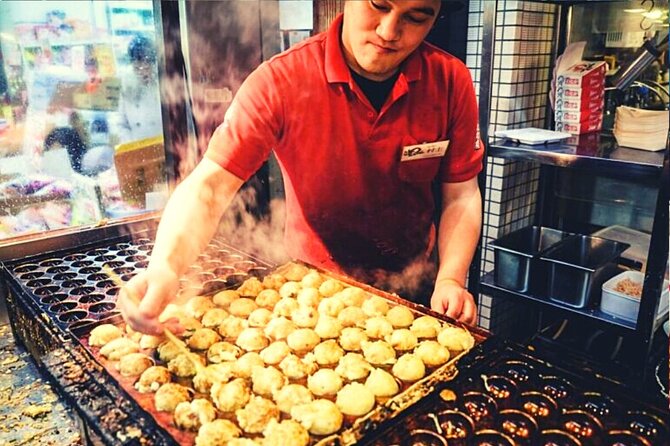
A maximum of nine people is a strong feature. It keeps the guide close enough to explain what is happening and makes it easier to gather around a stall without creating a large crowd.
You also have a better chance to ask for a small adjustment. Guides have added samples based on personal interests, and private or very small bookings have sometimes allowed a more customized route. That does not mean every food request can be met, but it is more realistic in a group of a few people than on a large coach tour.
The tradeoff is that Kuromon Market itself can be crowded and noisy. You are walking through an active commercial market, not a quiet museum. Your guide helps you handle the confusion, but the setting remains busy. If you want long explanations at every stop or plenty of time to photograph each dish, the two-hour schedule may feel quick.
The route stays in Kuromon Market, with the activity ending where it began. Some guides have also added nearby suggestions, such as Den-Den Town or Doguyasuji, but those extras are not part of the stated itinerary. Doguyasuji, known for kitchen tools and knives, is a useful area to visit afterward if your guide points you there, but plan it as your own follow-up rather than a guaranteed tour stop.
Is $63.43 a fair price?
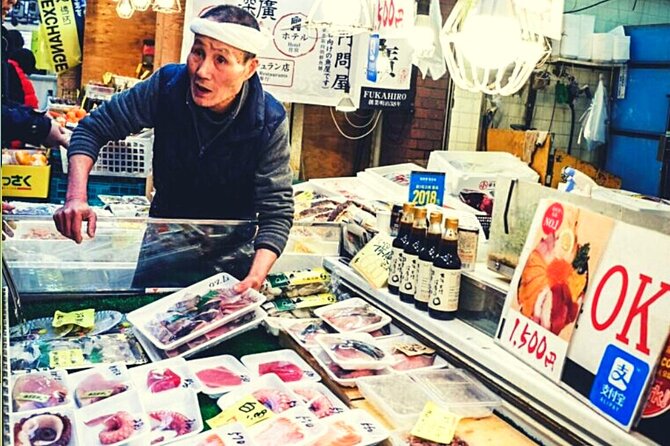
At $63.43 per person, this is more expensive than simply buying one snack at a market stall. The comparison is not quite fair, though, because you are paying for a meal-sized range of tastings, a guide, translation help, vendor access, and the time saved by avoiding random choices.
The food alone is likely to be substantial. You receive 6 to 8 selected dishes and 3 to 4 additional samplings, with accounts describing people leaving full. Seafood can also become expensive when it includes items such as otoro, oysters, sea urchin, or fugu. The price makes the most sense if you plan to treat the tour as lunch or a late afternoon meal rather than eat a full meal before it.
I see the value most clearly for first-time visitors to Osaka, people nervous about ordering unfamiliar food, and anyone who wants to understand what they are tasting. If you already know Kuromon Market well, speak Japanese comfortably, and prefer to choose every bite yourself, the added cost may feel less worthwhile.
The 96 percent recommendation rate and 4.9 rating from 103 ratings point to a consistently strong experience, but food tours always depend on the guide, market conditions, group mix, and your own appetite. The price is fair when you use the tour for both food and orientation.
Who should book this Kuromon Market walk?
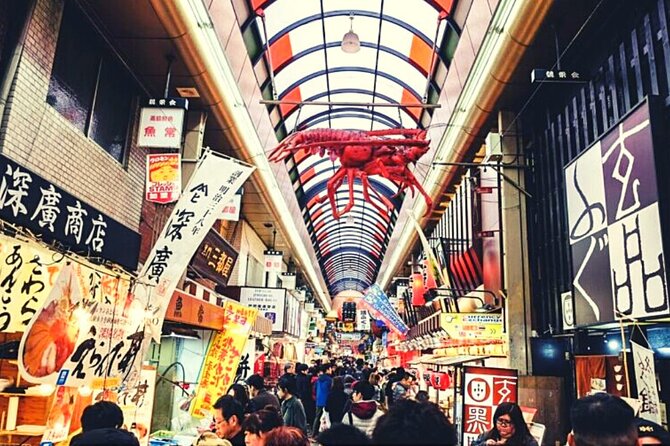
I would recommend it to adventurous eaters who want a broad introduction to Osaka food without spending days researching stalls. It also fits a short Osaka visit, including a day trip from Kyoto, because the tour gives you a concentrated experience in two hours.
It works well for:
- First-time visitors who do not know how to order at market stalls
- Seafood fans who want to try several grades and preparations
- Families with children who can manage a walking food tour
- People who like learning food customs along with tasting
- Anyone who wants restaurant suggestions and neighborhood ideas from a local guide
I would hesitate if you are vegetarian or vegan, have complex dietary restrictions, dislike seafood, or want a quiet, seated meal. The tour may also disappoint you if you expect a fixed menu. The food changes, and some unusual items are offered according to market supply and group interest.
Practical details before you reserve
The experience lasts about two hours and begins at 2 p.m. at Nippombashi Station. It ends back at the same meeting point, which makes it easy to continue exploring Osaka afterward.
Confirmation is received at booking, and the experience uses a mobile ticket. It is near public transportation, service animals are allowed, and most people can participate. The maximum group size is nine.
Free cancellation is available if you cancel at least 24 hours before the local start time. Cancellations or changes made later are not refunded or accepted. The experience also requires a minimum number of participants. If that minimum is not reached and the activity is canceled, you are offered another date or experience, or a full refund.
Should you book it?
Book this tour if you want Kuromon Market to be more than a walk past food stalls. The strongest reasons are the wide range of tastings, the small group, and guides who can explain what you are eating while steering you toward trusted vendors.
Arrive hungry, keep an open mind, and tell your guide early if there are foods you especially want to try. If you need vegetarian food or a fixed menu, choose another Osaka food experience. For everyone else, $63.43 is a sensible price for a full tasting meal plus the local help that makes an unfamiliar market much easier to enjoy.
FAQ
Where does the Kuromon Market tour begin?
The tour begins at Nippombashi Station, at 1 Chome-5 Nipponbashi in Osaka’s Chuo Ward.
What time does the tour start?
The stated start time is 2 p.m.
How long does the tour last?
The tour lasts approximately two hours.
Where does the tour finish?
The activity ends back at the meeting point at Nippombashi Station.
How much food is included?
The tour includes 6 to 8 selected dishes and 3 to 4 additional samplings of Osaka food specialties.
What kinds of food might be included?
Possible foods include fresh seafood, sushi, oysters, sea urchin, otoro tuna, fish cakes, fugu or pufferfish, okonomiyaki, desserts such as sakura-mochi, and Japanese tea. The exact food selection can change.
Is the tour suitable for vegetarians or vegans?
No. The tour information states that it is not suitable for vegetarians or vegans.
How many people can join the tour?
The maximum group size is nine travelers.
Can I cancel for a full refund?
Yes, if you cancel at least 24 hours before the experience start time. Cancellations made less than 24 hours before the start are not refunded.
Just added around Osaka
- Exclusive Sushi Making Experience with a Master Chef – Osaka Area★ 5.0 · 25 reviews
- Private Home-Style Cooking Class in Osaka with Local Mom Yoshiko★ 5.0 · 46 reviews
- Hidden Osaka – Yukaku Red Light Tour & Culinary Adventure★ 4.8 · 96 reviews
- Osaka: Walking Tour and Top Highlights★ 4.8 · 104 reviews
- Osaka: Private Ceramic Painting Workshop★ 5.0 · 13 reviews
- Pickleball in Osaka, Kobe & Kyoto with Locals!★ 4.7 · 80 reviews
- Eat Like a Local in Osaka – Private Custom Street Food Tour★ 4.3 · 33 reviews
- Osaka:SUMO BEATS SHOWCASE: Taiko Drum and Wagyu burger!★ 4.2 · 37 reviews
Markets, compared.

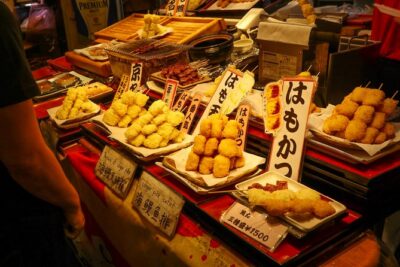
Nishiki Market Brunch Walking Tour (7 Tastings + Brunch)
Our verdict →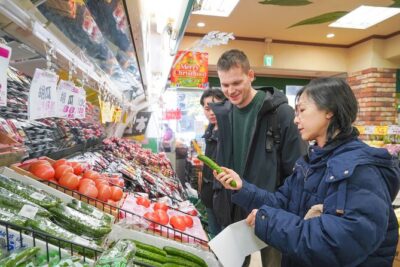
Tokyo Washoku 4-hour Cooking Class: From Market to Table
Our verdict →
Browse the lists this tour appears in