
Reviewed · CYCLING TOURS
Hiroshima: City and Miyajima Bike and Boat Tour
Hiroshima’s most moving sights and Miyajima’s wooded island paths fit into one well-paced day on this small-group bike and boat tour. You cycle the flat route around the Peace Park and A-bomb Dome, then trade the city for a ferry ride and the orange shrine buildings of Miyajima.
I like the easy cycling route, which works well if you can ride a bike but do not want a demanding athletic tour. I also like the city-to-island contrast: Hiroshima’s wartime memory and feudal past give way to Miyajima’s religious setting, greenery, and picture-ready lanes.
The main consideration is time. At 450 minutes, this is a full day, and the combination of cycling, train travel, ferry travel, and walking may feel busy if you prefer a slow visit to one place. The tour is also not suitable for pregnant women, wheelchair users, or anyone who cannot ride a bike.
Key points at a glance
- Flat Peace Park cycling: Ride around the A-bomb Dome and key memorial areas at an easy pace.
- Hiroshima’s feudal past: Visit Hiroshima Castle after the Peace Park, adding an important pre-modern chapter to the day.
- Train and ferry to Miyajima: Your transport to the island is arranged, with the boat ticket included.
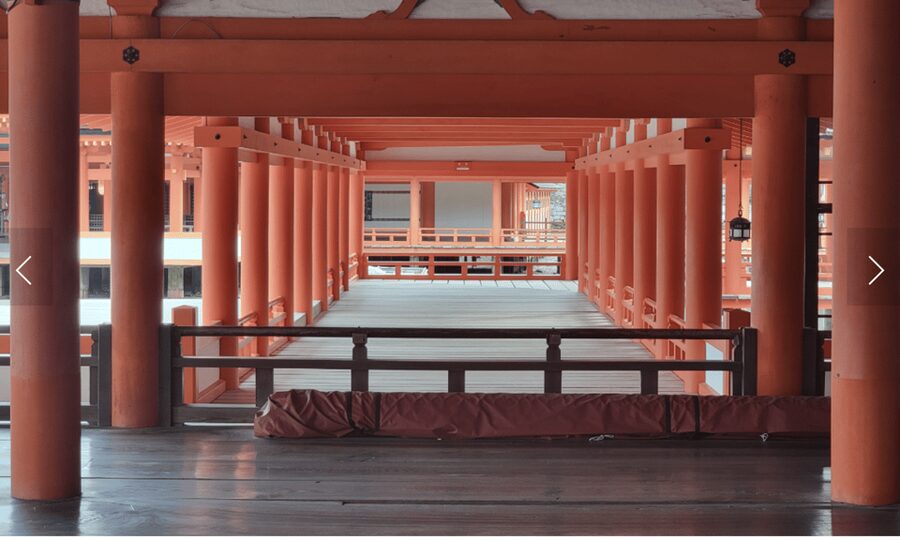
- Itsukushima Shrine visit: See Miyajima’s famous orange Shinto buildings and learn why the island became a religious center.
- Small group of up to eight: The guide can answer questions and support slower riders more easily than on a large coach tour.
- Trek bikes for different riders: Step-through bicycles and child-sized bikes are available, with heights requested in advance.
Why this Hiroshima day works so well
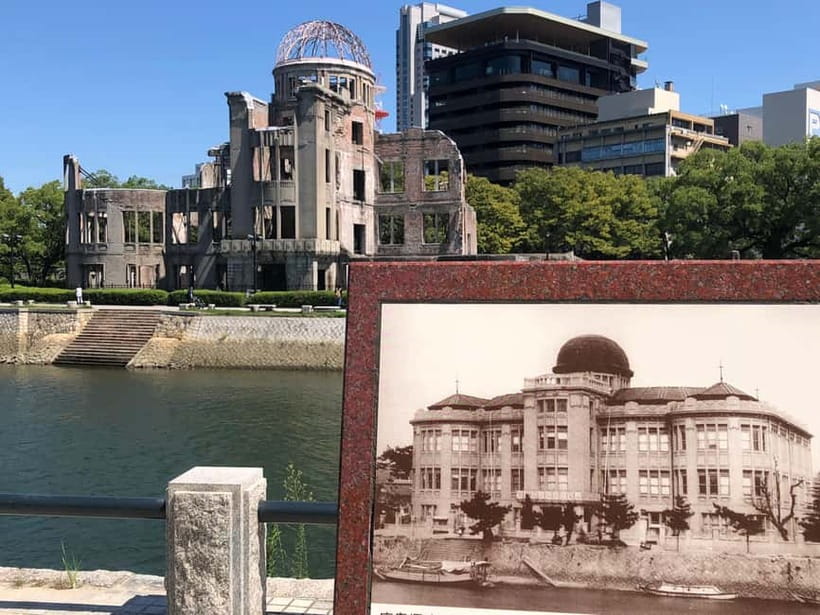
Hiroshima is easier to understand when you connect its different chapters. The Peace Park recalls the atomic bombing and the city’s work of remembrance. Hiroshima Castle points to the feudal period before modern Japan. Miyajima then offers a very different setting, where forested hills, shrine buildings, and religious traditions shape the visit.
This tour links those places without asking you to solve the transport puzzle alone. You cycle during the Hiroshima portion, then travel by train and ferry to Miyajima. For a first visit, that is useful. You get a clear sense of the city, see one of its major historic sites, and reach the island in the same day.
The group is limited to eight people. That matters most at the Peace Park, where you may have serious questions about the bombing, memorials, and Hiroshima’s recovery. Guides including Ishan, Aimee-Linh, Melissa, and Sage have been praised for answering questions carefully, adding humor when appropriate, and adjusting their support to the group.
You should expect a thoughtful day rather than a simple sightseeing ride. The subject matter at the Peace Park is difficult, but the tour also places it within a wider story of Hiroshima before and after the bombing.
More Bike Tours in Hiroshima
- Hiroshima in a Nutshell: Morning Bike Adventure
★ 5.0 · 524 reviews - Hiroshima 2hr Peace Cycling Tour with Local Guide
★ 5.0 · 321 reviews - Hiroshima: Peace Cycling Tour with Local Guide
★ 4.8 · 286 reviews
Cycling through the Peace Park and past the A-bomb Dome
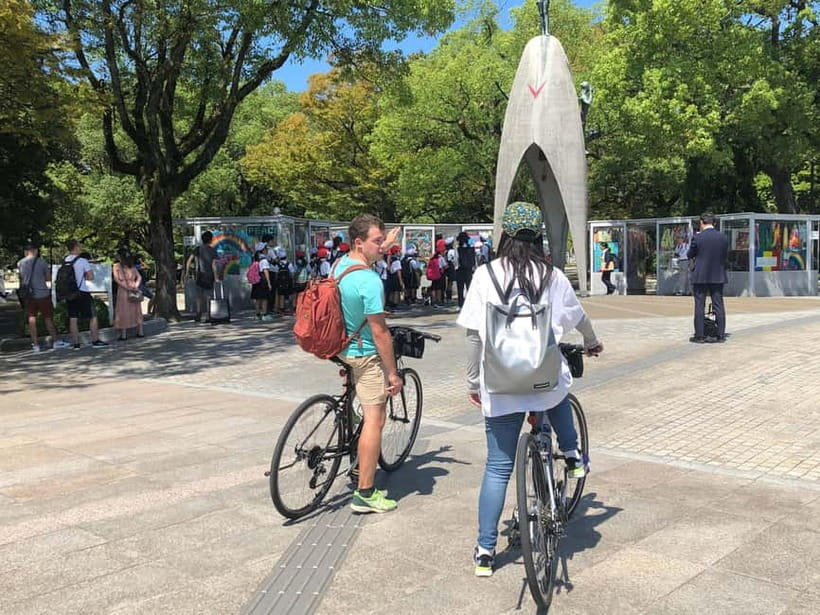
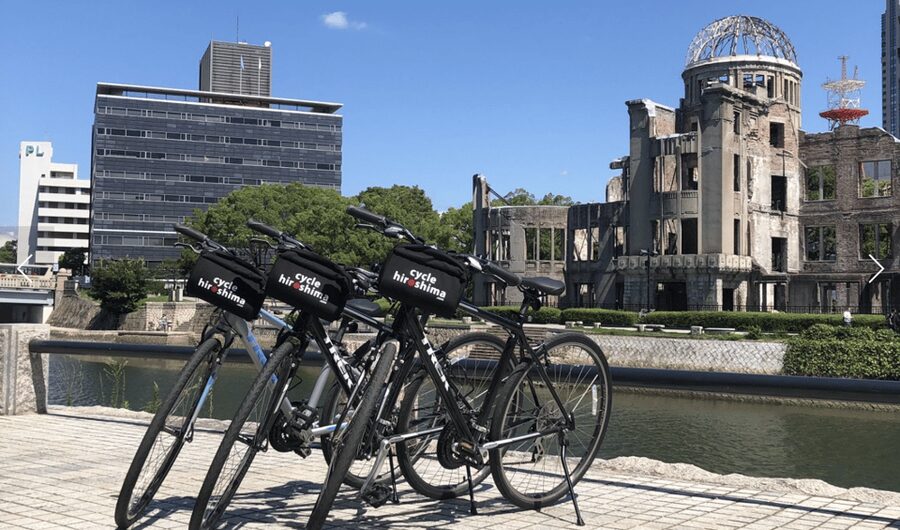
The tour begins with a guided cycle around Hiroshima’s Peace Park and the A-bomb Dome. This is the most emotionally serious part of the day, and having a guide gives the visit shape. Instead of simply passing memorials and taking photographs, you receive commentary about the events connected with the area and the meaning of the surroundings.
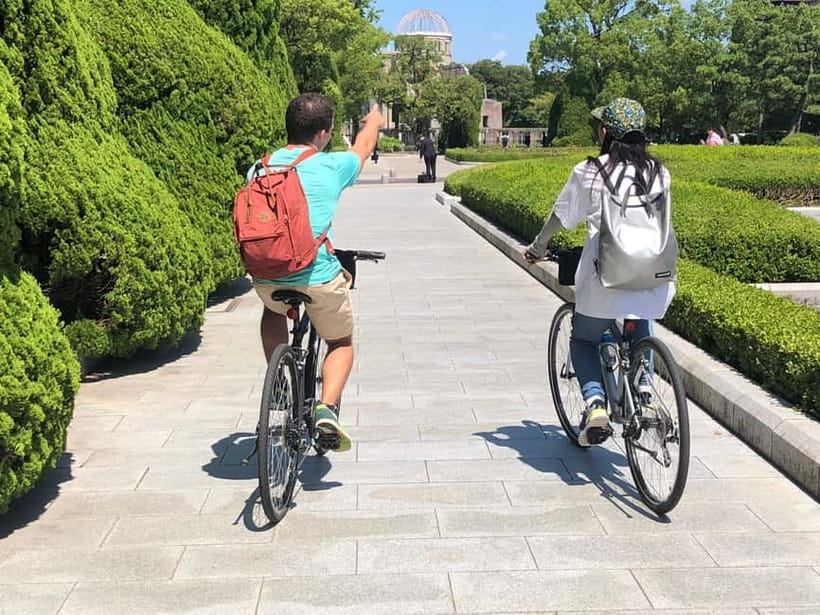
A bicycle is especially useful here because the route is flat and allows you to cover the area without turning the morning into a long march. You do not need advanced cycling skills. The pace is intended to be manageable, and a particularly useful detail is that slower riders are supported rather than left struggling behind.
The A-bomb Dome is one of Hiroshima’s most recognizable sights. Seeing it from a bicycle route gives you several changing views, while the surrounding Peace Park provides space to pause and listen. You should bring comfortable clothes and shoes, since the day later includes a walking tour on Miyajima.
The subject can be heavy. Some people may prefer to visit the Peace Park alone, with plenty of quiet time. This tour is better for you if you want context and conversation as part of the visit. Guides have been singled out for presenting both the terrible effects of the atomic explosion and Hiroshima’s continuing work of remembrance in a clear, careful way.
Hiroshima Castle and the city before 1945
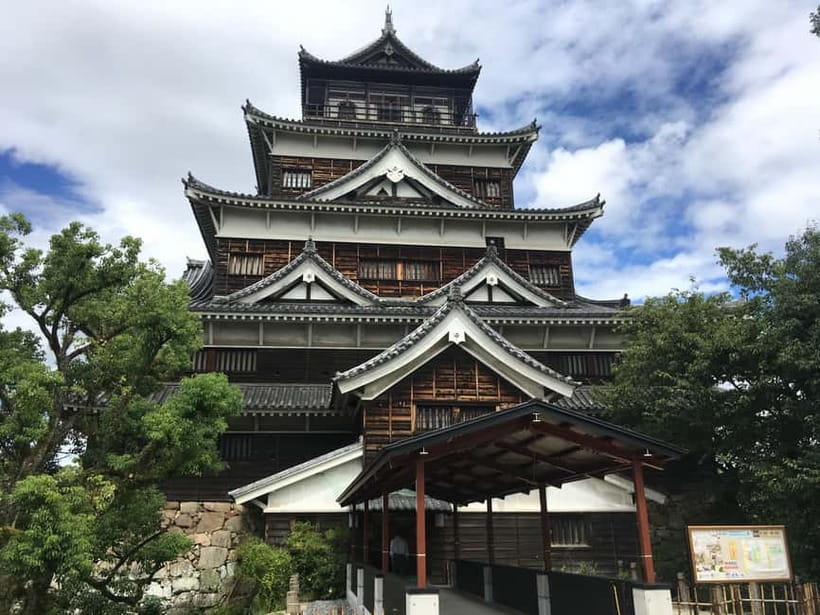
After the Peace Park, the tour visits Hiroshima Castle. This stop changes the subject from twentieth-century war to the city’s feudal past, helping you see Hiroshima as more than the place associated with the atomic bombing.
The castle gives the day a useful historical balance. Hiroshima has a long story before 1945, and the stop introduces that earlier period in a compact way. You can expect the guide to explain the city’s pre-Meiji background, as one guide did during a rainy-day tour, rather than treating the castle as a quick photo stop.
The information provided does not promise a separate extended castle museum visit or a long amount of free time inside. I would therefore think of this as a guided stop within a packed day, not a full castle study session. If Hiroshima Castle is your main interest, you may want extra time on another day.
Still, this part earns its place. The Peace Park can dominate a first visit emotionally. Hiroshima Castle reminds you that the city also had a feudal identity, political importance, and centuries of life before the modern tragedy.
Taking the train and ferry to Miyajima
From Hiroshima, you continue by train and then board a ferry for Miyajima Island. The train and ferry transfers are included, as is the boat ticket. That keeps the day moving and saves you from working out the connection while trying to stay with a small group.
The ferry is one of the day’s most welcome changes of pace. After the urban sights and serious discussion at the Peace Park, the water crossing leads to a place known for wooded slopes and orange Shinto buildings. The contrast is not just visual. Hiroshima asks you to think about memory and modern history, while Miyajima introduces a long religious tradition.
The ferry section does mean you have less control over your own schedule. You are following the tour’s timing, and the 450-minute length leaves limited room for extended independent stops. That is the trade-off for seeing both destinations in one day.
You should also keep an eye on the weather. In case of rain, the operator contacts you with two choices: switch to a walking tour around the Peace Park or take a full refund. Make sure your contact details are current and that you can be reached before the tour.
More Boat Tours in Hiroshima:
- Hiroshima and Miyajima by Bike and Boat
★ 5.0 · 172 reviews - Hiroshima and Miyajima 1 Day Cruise Tour
★ 5.0 · 24 reviews - Dinner Cruise on HANAIKADA (Raft-Type Boat) with Scenic View of Miyajima
★ 5.0 · 21 reviews - Mt Fuji & Hakone Cruise, Drum Show Bullet Train 1 Day from Tokyo
★ 4.0 · 7,413 reviews
Walking through Miyajima’s religious center
Once you arrive, the tour becomes a walking visit through Miyajima. The island developed as a religious center, and the guide explains that role while leading you through its lanes and major sights.
The island is a strong counterpoint to Hiroshima. Its greenery provides the setting, while the orange shrine buildings offer the bold color that makes Miyajima so recognizable. The route includes numerous photo opportunities, but the guide’s explanation gives those views a purpose beyond simply finding the prettiest angle.
Itsukushima Shrine is included. This is an important advantage because it makes the Miyajima portion more than a general wander around the island. You will learn about the shrine and the island’s religious identity as you see the buildings in their setting.
The walking portion may be the day’s favorite for many people, but it is also where comfortable shoes matter most. The exact amount of walking time is not specified, and the full tour combines cycling with island exploration. If you need frequent rest stops, tell the guide early.
Miyajima is also the part of the tour most likely to feel crowded or visually busy at popular points, although the small group helps keep the experience personal. You are not simply being delivered to a viewpoint and sent back to a bus. The guide remains part of the visit, explaining what you are seeing and pointing out the island’s religious background.
Bikes, group size, lunch, and the price
At $138 per person, this is not a budget sightseeing outing. I think the price is reasonable if you want a guided full-day plan that combines two destinations and includes several costs: the bike, helmet, lunch, water, train and ferry transfers, and the English-speaking guide.
The value is strongest for a first-time visitor who wants to see both Hiroshima and Miyajima without arranging separate bookings. You also get a small group of no more than eight people, which usually makes questions and practical support easier.
The price is less compelling if you already know Hiroshima well, want a long independent visit to Miyajima, or only care about the Peace Park. You are paying for the connection between places and for the guide’s interpretation, not just for transport.
Bikes are Trek brand models in a range of sizes. Step-through bikes and child-sized bikes are available, which widens the range of people who can take part. You must still be able to ride a bike, and the cycling route is not designed for wheelchair users. Provide everyone’s height when booking so the correct bicycle can be prepared.
Lunch and water are included, which removes two small but real hassles from a long day. Dietary restrictions should be provided in advance. The tour does not include hotel pickup or drop-off, so you need to reach the starting point yourself and make your own way home afterward.
The guides make a real difference
This itinerary covers serious history, practical transport, and a lot of ground. The guide is therefore central to the experience.
Ishan has been praised for enthusiasm and for taking time to answer many questions. Aimee-Linh brings historical detail and humor, while Melissa has been noted for handling the difficult story of the atomic bombing with care and then continuing to the island. Sage has been described as offering in-depth context on the Peace Park, Hiroshima Castle, pre-Meiji history, and Miyajima, even on a wet day.
These names reflect guides who have led recent departures, but your guide will depend on the date. What you can count on is an English-language tour with live commentary, rather than an audio guide or self-guided route.
The small group also gives the guide room to adjust. Slower riders can receive support, and questions do not disappear into a crowd. One practical detail is worth noting: a guide may extend the day slightly if needed, but you should not plan your evening around that possibility. Treat the published 450 minutes as the working length.
Rain, fitness, and the feel of the day
The cycling is flat and suitable for anyone who can ride a bicycle. You do not need to be a strong cyclist, and the pace is described as easy. Still, you should be comfortable getting on and off a bike and continuing through a full day that includes a later walk.
The tour is not suitable for people who cannot ride, pregnant women, or wheelchair users. No special sports clothing is required. Comfortable clothes, comfortable shoes, and a camera are the sensible choices.
Rain is the largest weather concern. The operator offers a Peace Park walking tour instead of cycling or a full refund if rain affects the plan. That policy is reassuring, but the decision depends on the conditions and the contact process, so remain reachable.
Smoking is not allowed. Hotel pickup and drop-off are not included. These are small points, but they matter when you are building a busy Hiroshima day around the tour.
Who should book this tour
I would choose this experience if you have one main day for Hiroshima and Miyajima and want someone else to connect the pieces. It suits curious first-time visitors, couples, families with suitable child-sized bikes, and anyone who prefers historical explanation to simply moving from sight to sight.
It is also a good choice if you want a gentle ride rather than a strenuous cycling excursion. The flat route, bike options, and small group keep the physical side approachable.
I would hesitate if you want a long, quiet visit at each site. The day covers a lot, and the train, ferry, cycling, and walking sections leave less free time than an independent two-day plan. I would also reconsider if weather looks poor and you are set on cycling, since the alternative may be a walking Peace Park tour.
Should you book the Hiroshima and Miyajima bike tour?
Book it if you value context, easy cycling, and an efficient link between Hiroshima’s major sights and Miyajima. The best feature is the combination: the A-bomb Dome and Peace Park, Hiroshima Castle, a ferry ride, Itsukushima Shrine, and the island’s religious story all appear in one carefully connected day.
Skip it if you want to set your own pace, avoid cycling entirely, or give Miyajima a full day of its own. At $138, the tour earns its price through the guide, small group, included transport, bike, lunch, and water. For a first Hiroshima visit, that is a practical package with real historical value.
FAQ
How long does the tour last?
The tour lasts 450 minutes, or 7.5 hours. Starting times vary, so check availability for the date you want.
Is the cycling route difficult?
The cycling route is completely flat and suitable for all skill levels among people who can ride a bike. The tour also supports slower riders.
What kind of bikes are available?
The tour provides Trek bikes in a range of sizes, along with step-through bikes and child-sized bikes. You should provide everyone’s height in advance.
Are the train and ferry included?
Yes. Train and ferry transfers to Miyajima are included, and the boat ticket is provided.
Is lunch included?
Yes. Lunch and water are included. You should provide information about any dietary restrictions before the tour.
What happens if it rains?
The operator will contact you and offer either a walking tour around the Peace Park or a full refund. Make sure you can be reached.
Does the tour provide hotel pickup?
No. Hotel pickup and drop-off are not included, so you must arrange your own transport to and from the tour.
Just added around Hiroshima
- Full Day Hiroshima and Miyajima Tour by Bullet Train from Kyoto★ 4.5 · 120 reviews
- Hiroshima Saijo Sake Tasting Tour with visit to 7 Breweries★ 5.0 · 104 reviews
- The Peace Memorial to Miyajima : Icons of Peace and Beauty★ 4.5 · 31 reviews
- Shore Excursion from Hiroshima Port : Private Tour in Hiroshima★ 5.0 · 17 reviews
- Okunoshima Rabbit Island Cycling Tour with Local Guide★ 4.5 · 17 reviews
- Hiroshima & Miyajima All-Inclusive Tour w/Licensed guide Pancho★ 5.0 · 54 reviews
- Private Full Day Hiroshima Tour★ 4.5 · 29 reviews
- Hiroshima Private Tour with a Local – Highlights & Hidden Gems★ 4.5 · 24 reviews
Cycling Tours, compared.
Arashiyama Bamboo Forest & Hidden Gems Bike Tour (Early Bird)
Our verdict →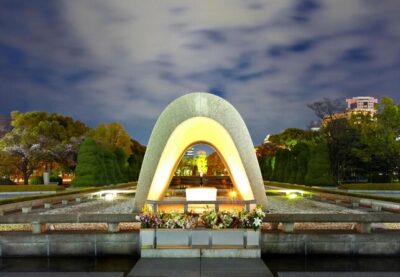
Browse the lists this tour appears in