
Reviewed · DAY TRIPS IN HIROSHIMA
Hiroshima: Hiroshima and Miyajima UNESCO Sites 1-Day Tour
Hiroshima and Miyajima make a striking pair: one asks you to face the costs of war, while the other offers a calm island of shrines, sea views, deer, and maple-themed sweets. This 8-hour guided day handles the tricky transport between them, leaving you to focus on the places rather than train timetables and ferry connections.
I especially like the careful pacing at the Peace Memorial sites and the change of mood after lunch on Miyajima. Guides such as Marin, Rino, Tomo, Mo, and Momiji have earned repeated praise for clear English, warmth, and thoughtful explanations. The main drawback is that the day is full, and Miyajima can feel crowded. You get a useful overview, not a slow, private exploration.
The day in four useful points
- A powerful morning at Hiroshima’s Peace Memorial sites, including the Atomic Bomb Dome, memorial park, and museum.
- A smooth coach and ferry connection to Miyajima, with transport arranged from Hiroshima Station.
- A choice of Hiroshima-style okonomiyaki, with a vegetarian option if requested at least two days ahead.
- A well-balanced afternoon, combining Itsukushima Shrine, Daisho-in Temple, and free time on Omotesando Street.
- Multilingual help on the bus, with audio in Spanish, French, Italian, German, Portuguese, and Ukrainian.
- Free Wi-Fi on the coach, plus an English-speaking guide throughout the day.
Why this Hiroshima and Miyajima combination works
Hiroshima is not a city you should rush through, but many visitors have only one day. This tour makes a sensible choice: it gives the morning to the city’s most important memorials, then takes you to Miyajima for scenery, food, and traditional culture.
The emotional shift is part of the experience. The first half is serious and often difficult. The second half gives you room to breathe, with a ferry crossing, island paths, shrine architecture, temple grounds, and shopping streets. I like that the tour does not treat Hiroshima as only a tragedy or Miyajima as only a photo stop.
The price is $122 per person. That is not the cheapest way to see the area, but it covers the coach, round-trip ferry, admission to the Peace Memorial Museum and Miyajima sites, guide service, taxes, and handling charges. Add the included Wi-Fi and the bus audio system, and the price is fair for a packed day with several connections already arranged.
You should still think about what you value. If you enjoy setting your own pace, you may prefer independent visits. If you want both UNESCO-related sights in one day and would rather not work out the transport, the fee buys convenience and structure.
More Day Trips in Hiroshima
- Peaceful Hiroshima & Miyajima UNESCO 1 Day Bus Tour
★ 5.0 · 5,309 reviews - From Hiroshima: Hiroshima & Miyajima 1 Day Tour with Lunch
★ 4.7 · 395 reviews - Hiroshima and Miyajima Day Trip with Itsukushima Shrine & Ferry
★ 5.0 · 378 reviews
Meeting at Hiroshima Station
The tour begins in front of the Shinkansen Ticket Gate on the second floor of Hiroshima Station, at the North Gate. Look for a staff member carrying a green and white flag.
This is a practical meeting point, especially if you arrive by bullet train. Hotel pickup and drop-off are not included, so you need to reach the station on your own. Give yourself enough time to find the North Gate and the correct floor. The tour returns to the same general area at the end of the day.
One important scheduling note: if you plan to take a Shinkansen after the tour, do not book it too tightly. The operator advises buying the ticket after the tour, or booking a train after 6:30 p.m. That is good advice for a day involving roads, ferries, and a busy island.
The first coach ride takes about 20 minutes. You pass Hiroshima Castle, though the tour does not stop there. The air-conditioned bus has free Wi-Fi, and audio commentary is available in six languages besides the live English and Japanese guiding.
Atomic Bomb Dome and the Peace Memorial Park
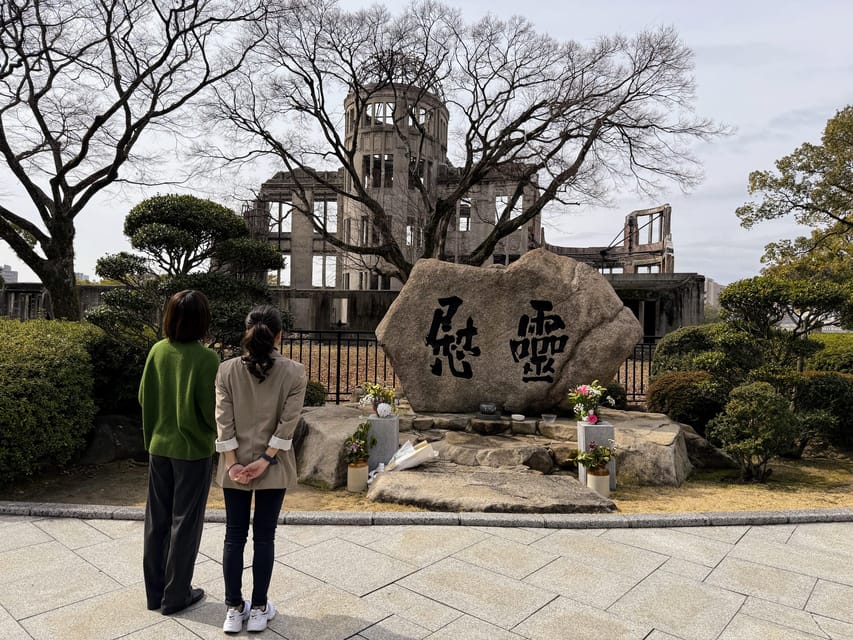
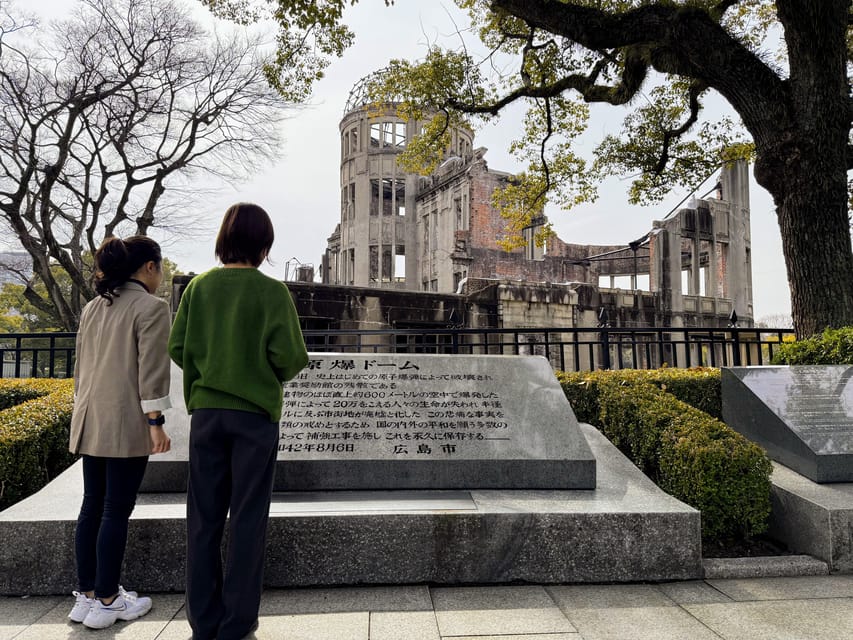
The Atomic Bomb Dome is the first major stop. Its exposed framework and damaged dome are difficult to look at casually. The building survived the blast near the center of the bombing, and its preserved condition gives the site a physical focus that photographs alone cannot provide.
The guided visit lasts about 20 minutes. That is enough for an introduction and some time to take in the structure, but not enough for a long architectural study. Your guide helps place the building within Hiroshima’s story, then the group moves into Peace Memorial Park.
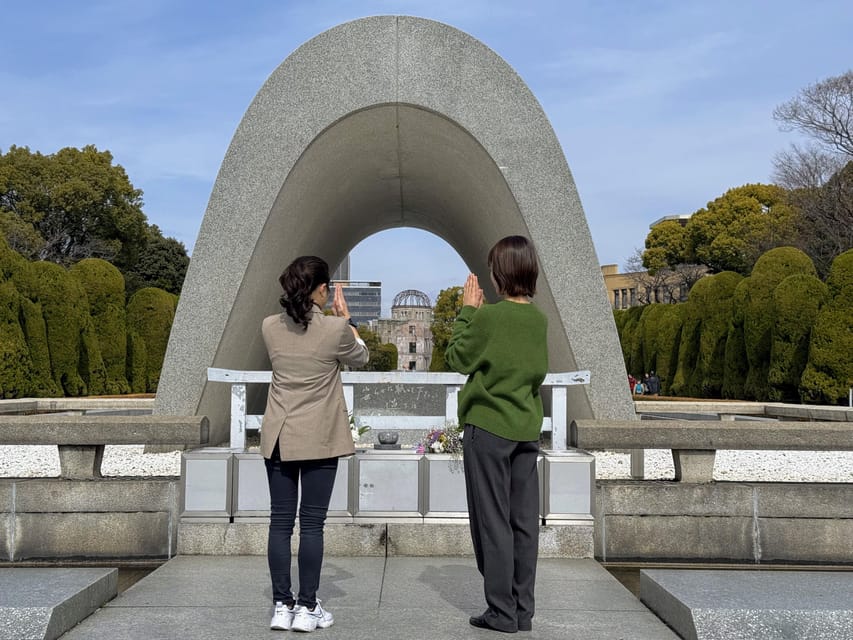
The park includes the Cenotaph for the A-bomb Victims and the Children’s Peace Monument. The latter is linked to Sadako Sasaki, who died from leukemia caused by radiation exposure. Paper cranes have become closely tied to the monument and to the city’s wider message of peace.
I appreciate having a guide during this part because the memorials can otherwise blur together. A good guide gives you the meaning behind each place without turning the visit into a lecture. Recent guides named Marin, Rino, Tomo, Mo, and Momiji have been praised for handling the subject with care, clear explanations, and a touch of human warmth.
You have about 40 minutes for the park and its memorials. That is enough to walk between the key sites, but you should not expect to see every corner. Wear comfortable shoes and keep an eye on the meeting time.
One serious hour at the Peace Memorial Museum

The Hiroshima Peace Memorial Museum receives about an hour of free time. This section is self-guided rather than a continuous guided walk, which gives you control over how quickly you move through the exhibits.
The museum presents the bombing and its aftermath through objects, photographs, personal accounts, and displays about the damage to the city. Some exhibits are upsetting. I recommend entering with enough emotional space to pause when needed, rather than treating this as another quick sightseeing stop.
One useful extra is the museum audio guide, available for an additional 500 yen according to one detailed account of the visit. It is not included in the tour price, but it can add context while you move through the displays. The tour’s own bus audio guide does not replace the museum guide, since the bus commentary is meant for the journey between stops.
The one-hour allocation is a compromise. It lets you see the main exhibits while keeping Miyajima on the same day, but a visitor who wants a close reading of the entire museum could use more time. If Hiroshima’s wartime history is your main reason for coming, consider visiting the museum separately and giving it a longer block.
From February 16 through 21, 2026, the museum is closed for exhibit replacement. During those dates, the tour visits the Hiroshima National Peace Memorial Hall for the Atomic Bomb Victims instead. No refund is offered for this change, so check the date carefully before booking.
Same trip, a completely different kind of day:
- Hiroshima / Miyajima Full-day Private Tour with Government Licensed Guide
★ 5.0 · 1,298 reviews - Osaka/Kyoto: Hiroshima Miyajima Bus Tour & Shinkansen Ticket
★ 4.7 · 919 reviews - Hiroshima Historical Walking Tour – Why A-Bomb was Dropped
★ 4.8 · 893 reviews - Hiroshima Peace (Heiwa) Walking Tour at World Heritage Sites
★ 5.0 · 872 reviews
The ferry to Miyajima and lunch on the island
After the museum, the coach ride to the ferry takes about 40 minutes. The ferry crossing lasts about 20 minutes and gives you open views across the Seto Inland Sea. The water, islands, and low hills provide a strong contrast with the morning’s city memorials.
Lunch is taken at a local restaurant and lasts about 50 minutes if you select the meal option. Hiroshima-style okonomiyaki is made in layers, with cabbage, pork, noodles, and egg. It is more substantial than the simpler pancake-style versions found elsewhere in Japan, and the noodles give it a filling base.
This is one of the tour’s most useful local touches. You are not just eating between sightseeing stops. You are trying a dish closely tied to Hiroshima, in the same region where it became a favorite everyday meal.
A vegetarian okonomiyaki option is available, but you must request it at least two days before the tour. Vegan, halal, and gluten-free options are not available. If you have any of those dietary needs, choose the no-lunch option and make your own food arrangements.
Itsukushima Shrine and the floating torii
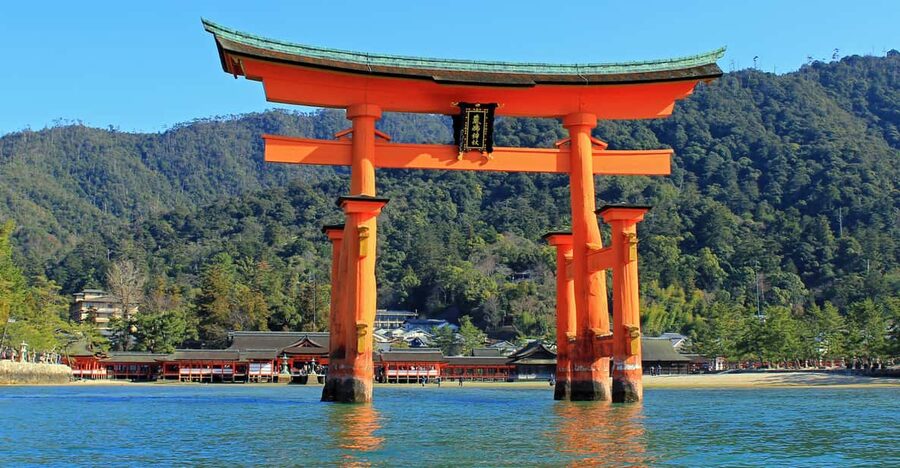
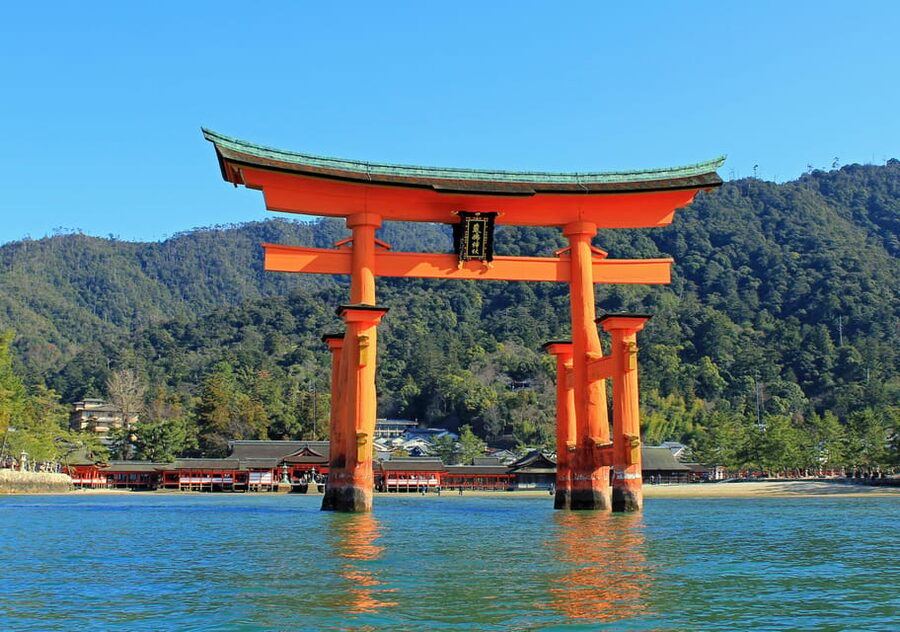
Itsukushima Shrine is Miyajima’s headline attraction. Its red buildings extend toward the water, and the famous torii gate appears to float offshore at high tide. The effect changes with the tide and weather, so the view will not look identical in every photograph.
The shrine visit includes guided time and free time, for about an hour in total. Your guide can explain the shrine’s religious role, the island’s traditions, and the reason the water setting matters. You then have room for your own photographs and a closer look at the buildings.
This is also where the tour can feel busiest. Miyajima is one of Japan’s best-known day destinations, and the approach to the shrine and shopping streets may be crowded. Do not expect solitude around the torii gate. The value here is having the visit organized and interpreted, not escaping the crowds entirely.
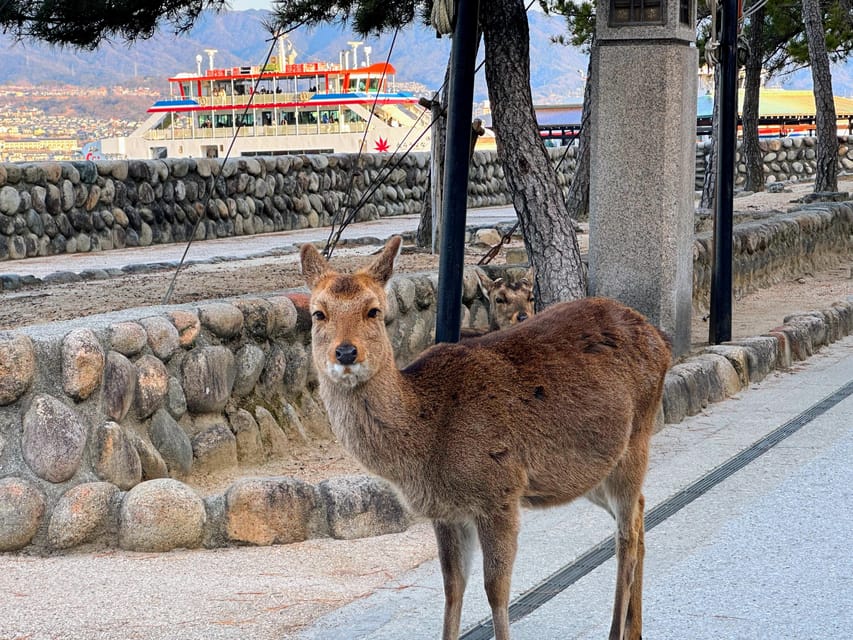
The island’s deer are another part of the experience. They may appear around the main paths and public areas. Enjoy watching them, but keep your food and paper items secure.
Daisho-in Temple and a quieter side of Miyajima
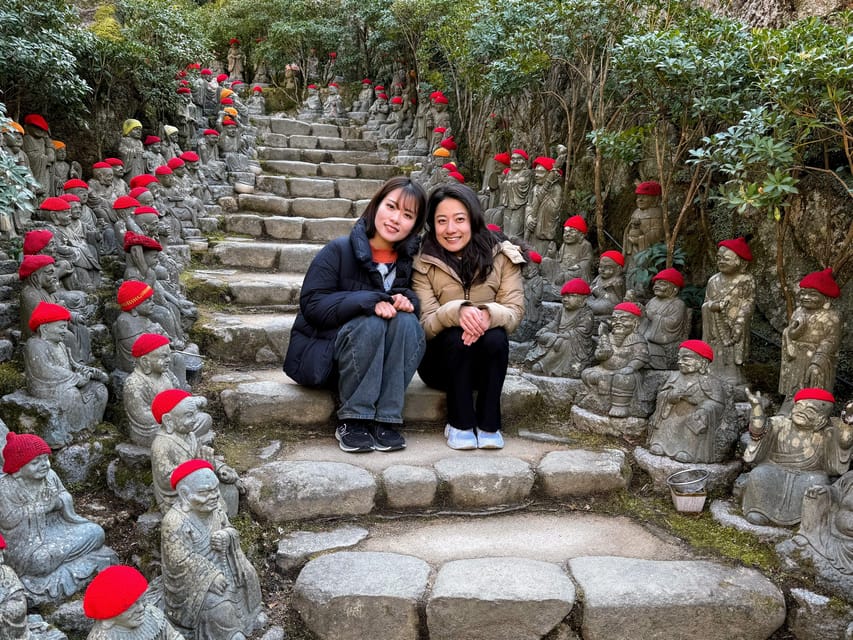
Daisho-in provides a different mood from the shrine. This Buddhist temple sits on Mount Misen and is known for its gardens and many stone statues. The tour allows about 30 minutes here, enough for a calm walk through the grounds and views toward Miyajima and the Seto Inland Sea.
I like this stop because it keeps the afternoon from becoming one long sequence of souvenir shops and photographs. The temple offers a quieter place to notice small details, including the rows of statues and the setting among the mountain slopes.
The visit is not a hike to the summit of Mount Misen. If you want a long mountain walk or the full ropeway experience, you will need separate time. On this tour, Daisho-in is a compact temple visit that adds religious and scenic variety.
Omotesando Street free time
The final island stop is free time on Omotesando Street, Miyajima’s main shopping area. You can browse local snacks, souvenirs, maple-themed treats, hand-painted fans, and other crafts.
The 40-minute free period is useful, but short. I would choose one priority before you start: a snack, a particular souvenir, or a last look at the street. Trying to shop casually from one end to the other may leave you watching the clock.
This is also your chance to absorb the island at your own speed. The guided portions give you context, while this unstructured time lets you follow your own interests. Keep track of the meeting point and departure time, since the ferry and coach connections cannot wait for late shoppers.
Returning to Hiroshima Station
The return ferry takes about 20 minutes, followed by roughly 50 minutes by coach to Hiroshima Station. The full day ends near the original meeting area.
The schedule is efficient, but road traffic and ferry timing mean you should not plan a tight onward connection. The advice to use a Shinkansen after 6:30 p.m. is especially sensible if you are making this a day trip from Osaka. The train ride from Osaka to Hiroshima can make the excursion possible, but it also creates a long day on both ends.
That long day is the central trade-off. You see an enormous amount in one outing, yet you have limited time for side streets, the castle, the museum’s full collection, or a longer stay on Miyajima after sunset. Some visitors have enjoyed staying later on the island for sunset, but that is outside the scheduled return and should not be treated as part of the tour.
Guides, transport, and the pace
The strongest part of this experience is the live guiding. Names vary by departure, but Marin, Rino, Tomo, Mo, and Momiji appear repeatedly in the supplied tour feedback. The praised qualities are consistent: fluent English, careful organization, humor used at the right moments, and serious handling of Hiroshima’s painful past.
Some guides use sketches, photos, and visual notes to explain sites. That can help when you are standing in an open park with several monuments around you. A good guide also manages the practical side of the day, from ferry boarding to keeping the group together.
The bus is air-conditioned, and the ferry is included both ways. The multilingual audio guide covers Spanish, French, Italian, German, Portuguese, and Ukrainian. One practical caution: the English bus audio has been reported as quiet on one departure, so do not rely on it as your only source of information. The live guide usually provides the main explanations.
This tour is not suitable for wheelchair users. The day includes coach transfers, ferry boarding, walking through memorial grounds, shrine areas, temple grounds, and shopping streets.
Who should book this tour?
I would choose this outing if you have one day in Hiroshima and want both major UNESCO-related stops without managing several transport links. It suits first-time visitors, families who want a clear plan, and anyone making a day trip from Osaka.
It is also a strong fit if history matters to you but you want the day to include beauty and food as well. The morning is emotionally demanding, and Miyajima gives you a gentler setting afterward.
I would hesitate if you prefer long museum visits, quiet photography, independent food choices, or a slow island day. You should also think twice if you need vegan, halal, or gluten-free lunch arrangements, since the supplied meal cannot meet those needs.
Cancellation is free up to 24 hours before the tour, and you can reserve now and pay later. Those terms help if your Japan schedule is still moving around, though you should still check the museum closure dates and your train plans.
Should you book the Hiroshima and Miyajima tour?
Book it if you want a well-organized first look at Hiroshima’s memorial sites and Miyajima in one day. The best reasons are the thoughtful guides, included transport, ferry connections, and the sharp contrast between a solemn morning and a beautiful island afternoon.
Skip it if you want to set your own pace or give the Peace Memorial Museum several hours. At $122, the value is strongest for visitors who would otherwise spend time arranging buses, ferries, entrances, and lunch. For a single day, it is a practical way to understand Hiroshima and see Miyajima without turning the schedule into a puzzle.
FAQ
How long is the Hiroshima and Miyajima tour?
The tour lasts about 8 hours, including coach travel, ferry crossings, guided visits, lunch if selected, and free time.
Where does the tour begin?
You meet in front of the Shinkansen Ticket Gate on the second floor of Hiroshima Station at the North Gate, at 2-1185 Matsubarachō, Minami-ku, Hiroshima. Look for staff holding a green and white flag.
Is hotel pickup included?
No. Hotel pickup and drop-off are not included. You must reach Hiroshima Station for the start and return to the station at the end.
Is the tour conducted in English?
Yes. A live tour guide is available in English and Japanese. The listed guides include Marin, Rino, Tomo, Mo, and Momiji, though the guide depends on the departure.
Are other languages available?
Yes. A multilingual audio guide is available on the bus in Spanish, French, Italian, German, Portuguese, and Ukrainian.
Is lunch included?
Lunch is included only if you select the lunch option. The meal is Hiroshima-style okonomiyaki with cabbage, pork, noodles, and egg.
Can I request a vegetarian lunch?
Yes. A vegetarian okonomiyaki option is available, but you must request it at least two days before the tour.
Are vegan, halal, or gluten-free meals available?
No. Vegan, halal, and gluten-free options are not available. You should select the no-lunch option if you need one of these diets.
Is the Peace Memorial Museum open every day of the tour?
The museum is closed for exhibit replacement from February 16 through 21, 2026. During those dates, the tour visits the Hiroshima National Peace Memorial Hall for the Atomic Bomb Victims instead, with no refund for the change.
Can I take a Shinkansen after the tour?
Yes, but the operator advises booking a Shinkansen after 6:30 p.m. or purchasing the ticket after the tour on the same day. The return involves a ferry and coach ride, so a tight connection is risky.
Just added around Hiroshima
- Full Day Hiroshima and Miyajima Tour by Bullet Train from Kyoto★ 4.5 · 120 reviews
- Hiroshima Saijo Sake Tasting Tour with visit to 7 Breweries★ 5.0 · 104 reviews
- The Peace Memorial to Miyajima : Icons of Peace and Beauty★ 4.5 · 31 reviews
- Shore Excursion from Hiroshima Port : Private Tour in Hiroshima★ 5.0 · 17 reviews
- Okunoshima Rabbit Island Cycling Tour with Local Guide★ 4.5 · 17 reviews
- Hiroshima & Miyajima All-Inclusive Tour w/Licensed guide Pancho★ 5.0 · 54 reviews
- Private Full Day Hiroshima Tour★ 4.5 · 29 reviews
- Hiroshima Private Tour with a Local – Highlights & Hidden Gems★ 4.5 · 24 reviews
Day Trips in Hiroshima, compared.
Peaceful Hiroshima & Miyajima UNESCO 1 Day Bus Tour
Our verdict →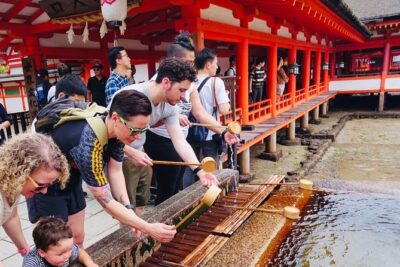
Browse the lists this tour appears in