
Reviewed · BAMBOO FOREST TOURS
Kyoto Arashiyama Bamboo Forest & Scenery Customized Private Tour
Arashiyama’s famous Bamboo Forest is only the opening act. The real appeal of this private tour is being able to shape four hours around the places you care about, from Tenryu-ji’s Zen garden to quiet hillside temples and old thatched buildings in Sagano. I like the personal guide service and the freedom to skip stops that do not suit your group. The main catch is that entrance fees, trains, taxis, and food are extra.
I also like that the tour starts at Saga-Arashiyama Station, not at your hotel, which makes the plan clear and easy to organize. Guides such as Takuma Goda, Fuji, Kazu, Yasuna, and Yumiko have been praised for friendly English, local insight, and patience with photo stops. Just remember: this is a walking tour, not a private van excursion, and four hours can pass quickly in this large area.
Key points to know before you book
- Pick two or three main sights: The flexible format lets you focus on temples, gardens, scenery, or the bamboo grove instead of racing through every possible stop.
- Meet at Saga-Arashiyama Station: You arrange your own way to the station, and the tour returns there at the end.
- Expect real walking: Comfortable shoes matter, and some choices involve hills, temple grounds, or long distances between stops.
- Entrance fees are separate: Tenryu-ji, Okochi Sanso, Jojakko-ji, Nisonin, Giōji, Adashino Nembutsu-ji, Otagi Nenbutsu-ji, and Monkey Park Iwatayama are not included.
- A guide adds context: The strongest part of the experience is the chance to ask questions and understand the temples, gardens, customs, and neighborhoods as you go.
- Plan for extra transport costs: Public trains, buses, or local taxis may be used, but their fares are not part of the tour price.
Why a private walk works well in Arashiyama
Arashiyama is one of Kyoto’s most scenic districts, but it is not a single attraction that you can neatly check off in an hour. The bamboo path, Katsura River, temples, gardens, hillside viewpoints, and old Sagano lanes spread across a broad area.
A private guide helps you make sensible choices. If your group wants classic Kyoto scenery, you might combine Togetsukyo Bridge, Tenryu-ji, and the Bamboo Forest. If you prefer quiet temples and autumn color, Jojakko-ji, Nisonin, and Giōji make more sense. If you want a longer walk into the old Sagano district, Otagi Nenbutsu-ji and Saga Toriimoto are worth considering.
The flexibility is especially useful for families, couples, and small groups with different interests. You can ask for more time at a garden, slow down for photographs, or avoid a stop that requires more uphill walking. Guides have also adjusted the pace for groups with children and for visitors who wanted to spend extra time taking pictures.
The four-hour length is enough for a well-planned introduction, but not enough for every stop listed. The itinerary presents many possibilities, not a promise that you will visit all of them. Be ready to choose.
More Custom Private Tours in Kyoto
- Kyoto: Arashiyama Customized Rickshaw Tour & Bamboo Forest
★ 5.0 · 432 reviews - Kyoto: Private Customized Walking Tour with a Local Insider
★ 4.8 · 383 reviews - Kyoto Customized Private Tour: See Top Attractions in 1 Day
★ 5.0 · 342 reviews
Starting at Saga-Arashiyama Station
Your guide meets you in front of a ticket gate at JR Saga-Arashiyama Station. This is practical because the station is near public transport, but hotel pickup is not included. You need to reach the meeting point on your own.
From Kyoto Station, the journey to Saga-Arashiyama takes about 30 minutes according to the tour information, and a JR Pass may cover that train journey. Build in enough time to find the correct station exit and ticket gate. Guides may send meeting details and photographs before the tour, which can help, but you should still check your route before leaving your hotel.
The tour ends back at the same meeting point. That is useful if you have onward plans in central Kyoto, but it also means you should not schedule a tight reservation immediately afterward. A delayed train, a crowded bamboo path, or a group that wants extra photographs can affect the timing.
Togetsukyo Bridge and the Katsura River
Togetsukyo Bridge is one of Arashiyama’s signature views. The wooden-toned bridge stretches about 155 meters over the Katsura River, with the Arashiyama mountains behind it.
This is a strong first stop because it gives you a sense of the district’s geography. From the bridge, you can see the river corridor, the mountains, and the busy approach to the temple and bamboo areas. It is also an easy place for group photographs.
The bridge itself is free, but the surrounding area can be crowded. Your guide can explain the setting and help you decide whether to linger or move on. Do not expect the bridge stop to be a long guided visit. Its value is the view and the orientation, not an extended historical presentation.
Tenryu-ji and its Zen garden
Tenryu-ji is one of Kyoto’s best-known Zen temples and a UNESCO World Heritage Site. Its garden is the main reason to include it in a four-hour visit.
The garden changes character with the seasons. Spring flowers, summer greenery, autumn leaves, and winter simplicity each give the grounds a different feel. The mountain backdrop also matters. Rather than looking at a garden in isolation, you see how the designers used the surrounding hills as part of the composition.
Tenryu-ji is a good choice if this is your first visit to Arashiyama or if you want a major cultural site alongside the bamboo grove. The drawback is the admission fee, which is not included for you or your guide. You should also expect more people here than at some of the smaller temples farther into Sagano.
I would not combine every distant stop with Tenryu-ji. Give the temple and garden enough time to feel unhurried, then choose one or two nearby sights rather than trying to cross the entire district.
More Bamboo Forest Tours in Kyoto:
- Kyoto: Fushimi Inari, Kinkakuji, Bamboo Grove 1 Day Bus Tour
★ 4.8 · 4,316 reviews - Kyoto: Arashiyama Bamboo Forest, Monkeys, Matcha & Temple Tour
★ 5.0 · 759 reviews - Kyoto Ghost Tour: Dark Tales, Urban Legends, Bamboo Forest Night
★ 5.0 · 625 reviews - Arashiyama Bamboo Forest & Hidden Gems Bike Tour (Early Bird)
★ 5.0 · 613 reviews
Okochi Sanso Garden and a quieter hillside setting
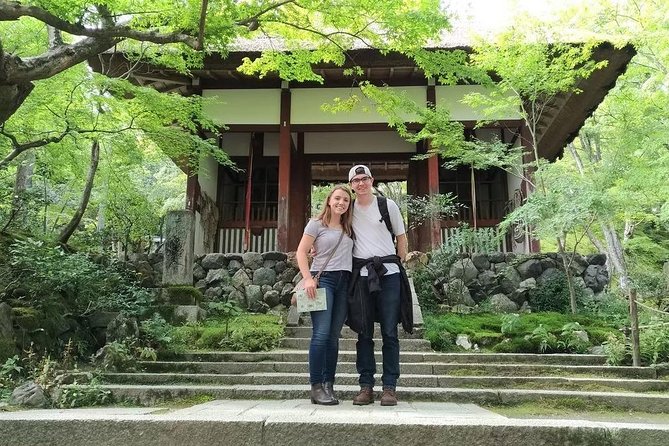
Okochi Sanso was created by Denjiro Okochi, a famous actor from samurai films. He spent about 30 years developing the villa garden, which covers roughly 19,800 square meters.
This stop offers a different mood from the main bamboo path. It is a private villa garden with seasonal plantings, hillside scenery, and space to pause. Spring blossoms and autumn color are particular draws, though the setting can be attractive at other times too.
The entrance fee is extra, and the garden requires a reasonable level of walking. For many people, it is a better choice than squeezing in another large temple because it combines scenery, garden design, and a personal story.
Ask your guide how it fits with your other choices. Okochi Sanso, Tenryu-ji, and the Bamboo Forest can make a satisfying cluster. Adding distant Sagano temples on top may leave you spending more time walking between places than enjoying them.
Jojakko-ji and Nisonin for seasonal color
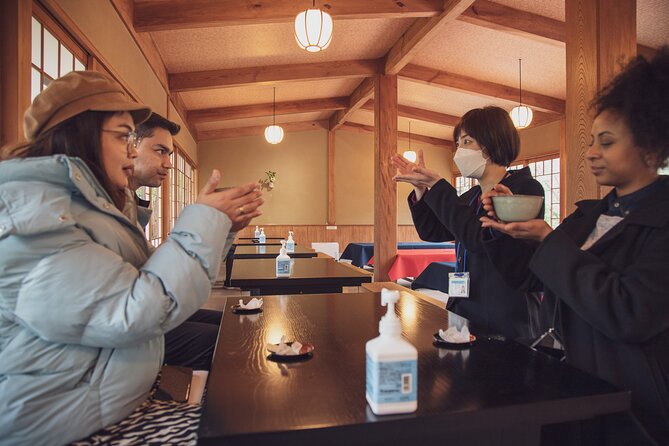
Jojakko-ji sits on the hillside of Mount Ogura, an area celebrated for autumn foliage since the late Heian period. About 200 old maple trees turn red, orange, and yellow in autumn, making this one of the better choices for a fall visit.
The hillside location gives the temple a more elevated feel, though it also means some walking on uneven or sloped paths. Admission is not included. If you have limited mobility or dislike hills, tell your guide before choosing it.
Nearby Nisonin is another temple known for autumn leaves. Its name refers to the two principal Buddhist images enshrined there. The grounds are described as quiet and surrounded by scenery that has lasted through many centuries.
Jojakko-ji and Nisonin overlap in their appeal, especially during fall. You may not need both unless you have a strong interest in temple gardens and seasonal color. A private guide can help you decide which fits your pace and interests.
Giōji and the story behind the moss
Giōji is associated with a tragic love story involving a dancer who became a nun after losing the favor of a powerful figure. That human story gives the temple a more intimate feel than a grand site such as Tenryu-ji.
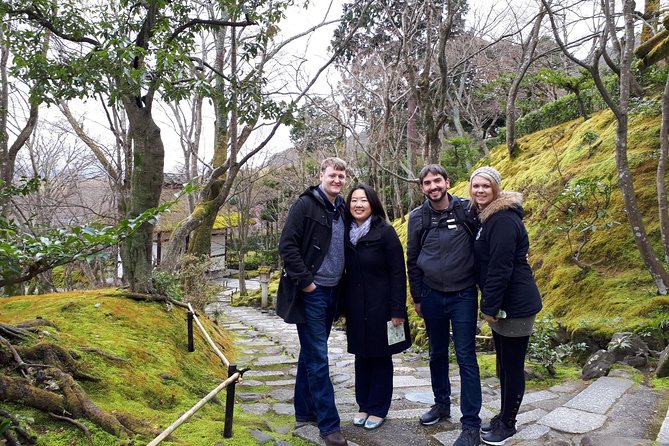
The grounds are known for their quiet atmosphere and moss-covered setting. It is a useful choice if you want a smaller temple with a strong emotional story rather than a large complex full of formal buildings.
Admission is extra. As with the other hillside temples, allow time for walking and do not assume every stop can be covered comfortably in four hours. Giōji works best as part of a quieter Sagano route, perhaps with Nisonin or one of the preservation areas.
Adashino Nembutsu-ji and Otagi Nenbutsu-ji
Adashino Nembutsu-ji occupies an area used for burials since ancient times. Stone Buddhas were dedicated here to mourn the dead and mark the separation between the living and those who had passed away.
This is a more solemn stop than the bamboo grove or river bridge. It gives you a chance to consider Kyoto’s religious traditions and the role of memorial spaces. Keep your behavior respectful, especially around stone figures and burial areas.
Farther along, Otagi Nenbutsu-ji has origins reaching back to the eighth century. The temple was later abandoned after wartime decline and severe typhoon damage in 1950, then restored. Its setting at the far end of the area makes it harder to pair with many central Arashiyama sights in a short tour.
Both temples require admission fees. I would choose them for a group that wants history, religion, and a longer walk through Sagano, not for someone whose main goal is a quick bamboo photograph.
Saga Toriimoto and old Kyoto streets
Saga Toriimoto Traditional Buildings Preservation Area lies at the far end of Sagano along Atago Highway, the road leading toward Atago Shrine. The preserved stretch runs for about 600 meters and includes farmhouse-style buildings and thatched roofs.
This is a welcome change from the main Arashiyama approach. Instead of a famous single monument, you get a look at older residential architecture and a quieter road through the district.
The area is free to visit, but reaching it takes time. If you want to see Toriimoto, tell your guide early so the route can be built around it. Pairing it with Otagi Nenbutsu-ji makes geographic sense, while combining it with Monkey Park and several central temples may create a long, tiring day.
Monkey Park Iwatayama
Monkey Park Iwatayama is home to about 120 Japanese macaques living in the wild. It is an optional choice for animal lovers and families who want a nature-focused stop.
The park is not a quick roadside viewing point. The tour information calls for a moderate level of physical fitness, and the park adds walking to an itinerary that already involves temples and paths. Admission is extra.
Choose Monkey Park if seeing the macaques matters to you. Skip it if your priority is architecture, gardens, or the full bamboo and temple route. A private tour is useful here because you can make that choice without being tied to a fixed group schedule.
The Bamboo Forest, with realistic expectations
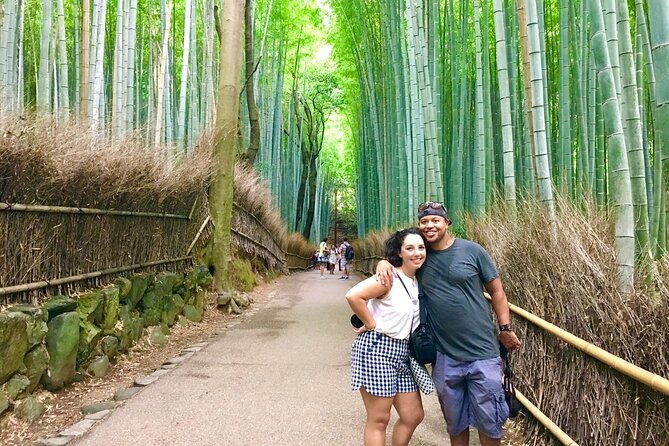
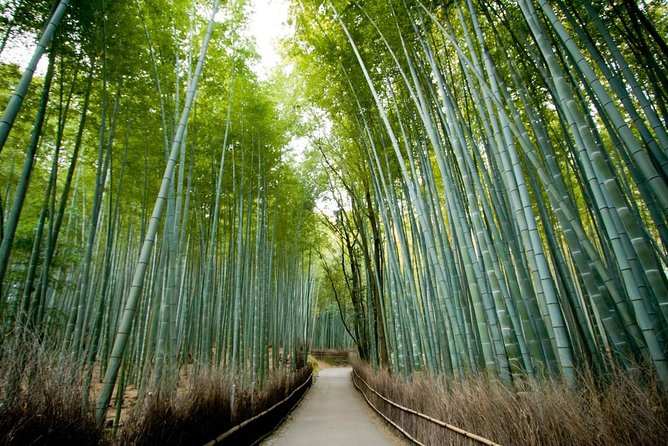
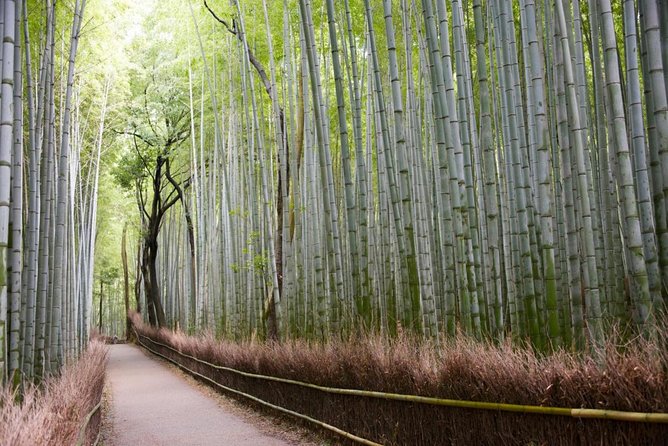
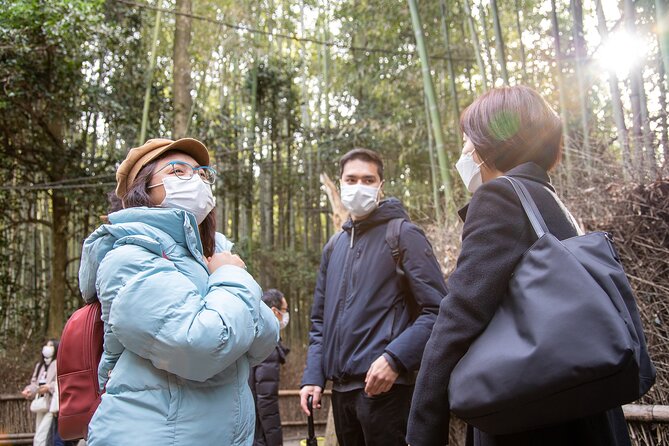
The Bamboo Forest is the image most people associate with Arashiyama. Tall bamboo rises on both sides of the path, creating a striking corridor that feels unlike the rest of Kyoto.
It is free, and it is worth seeing. The important practical point is that the path can be crowded, especially at popular times. You should not expect a private, empty forest simply because you have a private guide.
Your guide can provide context, help you find the right route, and balance the crowded main path with quieter nearby places. Several guides, including Fuji, Kazu, Yasuna, and Yumiko, have been praised for giving people time for photographs and keeping the pace relaxed. Guide assignments can change, so you cannot request a particular personality with certainty unless the operator confirms it.
The bamboo path is best treated as one part of the outing. If you only want a photograph, you can visit independently. The private tour earns its value by adding temple choices, local explanation, and route planning around the bamboo grove.
What the guide adds
The guide is the main reason to choose this experience over going alone. You get a licensed local English-speaking guide who can explain the temples, stories, customs, and neighborhoods while you walk.
A good guide also handles the small decisions that can consume time in Arashiyama. Should you visit Tenryu-ji before the bamboo path? Is it sensible to add Otagi Nenbutsu-ji? Which temple fits the weather and your walking pace? The private format gives you room to ask.
The strongest guide names associated with this experience include Takuma Goda, Osamu, Fuji, Yasuna, Kazu, Yumiko, Naomi, Akiko, and Koji. Accounts of their guiding emphasize clear English, patience, warmth, and a willingness to answer questions. Fuji and Yumiko were especially praised for maintaining a good mood in rainy weather, while Akiko and Kazu were noted for adjusting the outing to personal interests.
This does not guarantee a specific guide or identical style. Still, the pattern suggests that the human side of the tour is a major part of what you are paying for.
Cost, walking, and what you pay separately
The listed price is $132.14 per person, with group discounts available. For a private four-hour tour, that can be fair value if your group wants personal guidance and a custom route. It is less attractive if you only want the Bamboo Forest and one nearby photo stop, since those can be visited without a guide.
The price does not include:
- Temple and garden admission fees
- Admission for your guide
- Train, bus, or taxi fares
- A private van
- Hotel pickup
- Food or other personal purchases
Transportation costs depend on the stops you choose. A route centered on the bridge, Tenryu-ji, and the bamboo area may require less paid transport than a route extending to Otagi Nenbutsu-ji or Monkey Park.
This is a moderate walking experience. Wear comfortable shoes, expect a rain-or-shine outing, and bring suitable clothing for the forecast. The tour is not presented as wheelchair-accessible, and the information specifically asks for moderate physical fitness, so discuss your needs with the operator before booking.
Who should book this private Kyoto tour
I would recommend it to first-time Kyoto visitors who want help making sense of Arashiyama, families that need a flexible pace, couples who prefer a private guide, and small groups with a clear interest in temples, gardens, or seasonal scenery.
It also suits solo visitors. A one-person booking can become a personal walking lesson in the district, though the per-person price may feel high compared with joining a shared group.
I would be more cautious if you want a van, hotel pickup, a fixed list of every attraction, or a food tour. Food appears in some guide experiences connected with the area, but this tour’s stated inclusions focus on guiding and walking, not meals. Do not book expecting tastings unless they are confirmed separately.
Should you book the Arashiyama private tour?
Book it if you want choice and explanation, not just a route to the bamboo grove. The best plan is to select two or three main areas before meeting your guide, then leave room to adjust for weather, crowds, energy, and your group’s interests.
For a classic first visit, I would consider Togetsukyo Bridge, Tenryu-ji, and the Bamboo Forest. For a quieter day, look at Okochi Sanso, Jojakko-ji, Giōji, or Nisonin. For a longer historical walk, choose Toriimoto with Adashino or Otagi Nenbutsu-ji.
The $132.14 price is easiest to justify when shared by a group and used for thoughtful route planning. If you are happy to walk independently and read about the temples on your phone, save the money. If you want a local person to connect the scenery, stories, and practical choices, this is a strong way to spend four hours in Arashiyama.
FAQ
Where does the tour begin?
The tour begins at JR Saga-Arashiyama Station, in front of a ticket gate. Hotel pickup is not included.
Where does the tour end?
The activity ends back at the meeting point at Saga-Arashiyama Station.
How long is the tour?
The tour lasts approximately four hours.
Is this a private tour?
Yes. Only your own group participates in the private activity.
Are entrance fees included?
No. Entrance fees for you and your guide are optional extras and are not included in the listed price.
Is transportation included?
No. This is primarily a walking tour. Public transportation or local taxis may be used between stops, but those fares are not included, and a private van is not provided.
Just added around Kyoto
- Sekka Cotton Furoshiki Class★ 5.0 · 19 reviews
- Kyoto Sword Experience – includes Museum Ticket/Ninja Experience★ 4.5 · 149 reviews
- Scenic Green Tea Fields of Hidden Kyoto & Local Tea Exp (Private)★ 5.0 · 32 reviews
- Secret Eastern Kyoto Biking Adventure★ 5.0 · 44 reviews
- Private Sake Tasting in Central Kyoto with Sake Sommelier★ 5.0 · 32 reviews
- Samurai School in Kyoto: Samurai for a Day★ 5.0 · 202 reviews
- SHIRAKAWA Japanese Culture Experiences with private English staff★ 5.0 · 16 reviews
- A Privately Guided Photoshoot in Beautiful Kyoto by a Pro★ 5.0 · 18 reviews