
Reviewed · BUS TOURS
From Tokyo: Kamakura & Enoshima 1-Day Bus Tour
Kamakura gives you a quick change of scene from Tokyo: samurai-era shrines, a bronze Buddha beneath the open sky, temple gardens, shopping streets, and sea views. This tour packs the area’s main sights into one day, then adds Enoshima Island, where you can wander shrine lanes and look toward Mount Fuji in clear weather.
I like the combination of roundtrip bus transport and included temple admissions, especially if you want to see several places without working out local train connections. I also like the balance of guided context and free time. Guides such as Omar, Yuki, Chen, and Mitsuko have been praised for warmth, clear directions, and useful food advice.
The tradeoff is a firm schedule and a long day. Traffic can make the return to Tokyo slow, and Enoshima involves hills, stairs, and careful timing. You need to arrive early at the exact pickup point, since the bus leaves on time and late arrivals may not receive a refund.
Key points to know before you book
- Four major stops in one day: Visit Tsurugaoka Hachimangu, the Great Buddha, Hase-dera, and Enoshima.
- A practical escape from Tokyo: Air-conditioned roundtrip transport saves you from planning several train rides.
- About two hours at Enoshima: You have time for food, shops, shrines, views, and possibly the lighthouse area.
- Temple entrance fees are included: Admission to Kōtoku-in and Hase-dera is covered.
- The day depends on traffic: The return drive can take much longer than expected.
- Enoshima requires stamina: Hills, steps, and a distant bus meeting point can be tiring, especially in rain or heat.
Why Kamakura makes a good day away from Tokyo
Tokyo can fill your senses quickly. Kamakura offers a different rhythm, with wooded temple grounds, old shrine approaches, small food shops, and the Pacific coast nearby. It was once the center of a warrior government, and the monuments here give you a useful introduction to Japan’s samurai period without requiring a long trip from the capital.
You are not simply riding to one famous statue and returning. The day connects Kamakura’s spiritual center with two important temples and then moves west to Enoshima, an island with its own shrine complex and ocean outlooks.
At $66.05 per person, the value is strongest if you want convenience. The price includes an air-conditioned vehicle, taxes, a guide, and admission to Kōtoku-in and Hase-dera. Lunch is not included, so you should budget separately for food, snacks, and optional purchases on Komachi Street or Enoshima.
A self-guided day may cost less if you are comfortable with Japanese train routes and crowding, but the bus removes much of the planning. You also receive commentary in English or Chinese, although both languages may be handled on the same bus depending on the group.
More Bus Tours in Kamakura:
- Mt Fuji and Hakone 1-Day Bus Tour Return by Bullet Train
★ 5.0 · 26,383 reviews - 1-Day Tokyo Bus Tour
★ 5.0 · 14,250 reviews - PERFECT KYOTO 1-Day Bus Tour
★ 5.0 · 13,518 reviews
Tsurugaoka Hachimangu and the approach through Komachi Street
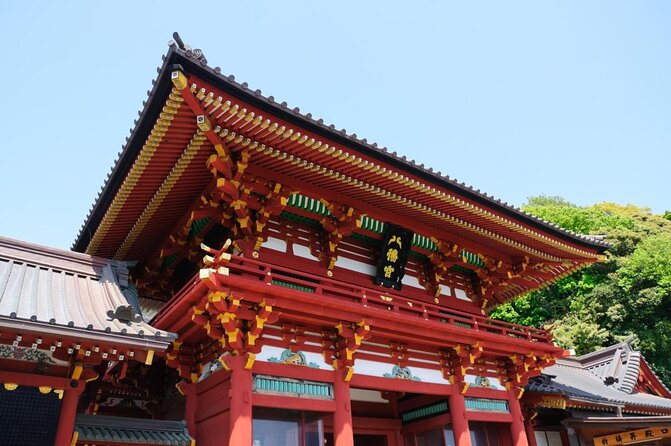
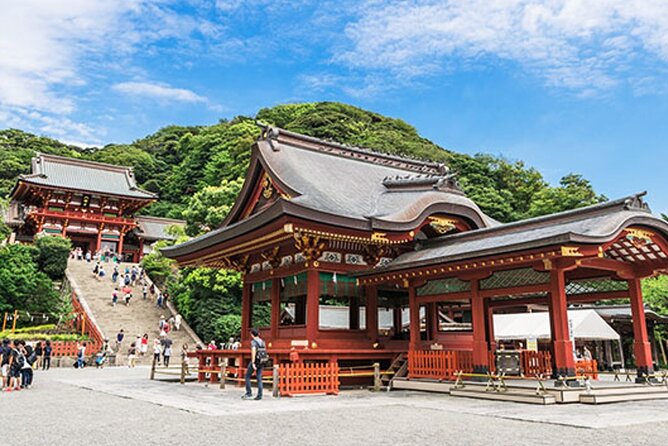
The day begins at Tsurugaoka Hachimangu, Kamakura’s central Shinto shrine and one of its most important cultural sites. The entrance leads through a large torii gate toward ponds, koi, broad paths, red shrine buildings, and a long approach that gives the visit a sense of ceremony.
You have about two hours in this part of Kamakura. That is generous enough to see the main shrine and spend time on Komachi Street, the shopping road leading toward the shrine. I like this opening because it lets you begin with both culture and everyday local life.
Komachi Street is lined with snacks, handmade goods, souvenirs, and small restaurants. It can be crowded, but it is also an easy place to find lunch items or something sweet for the bus. Pay attention to the meeting time. Shopping streets are good at making a few minutes disappear.
The wider shrine grounds include several smaller points of interest. Shirahata Shrine, beside Yanagihara Pond, is connected with Minamoto no Yoritomo, the founder of the Kamakura shogunate. Another shrine pavilion dates from the Muromachi period, and red flags add a strong visual touch.
You will not see every Kamakura site listed in the background information. Places such as Zeniarai Benten, the Kamakura Museum of Literature, and the earthquake museum are useful ideas for a separate visit, not stops you should assume are part of this bus day. That distinction matters if you are building a detailed Kamakura plan.
The Great Buddha at Kōtoku-in
The next major stop is Kōtoku-in, home to the Great Buddha of Kamakura. This bronze Amida Buddha has sat outdoors for centuries and is the image most closely associated with Kamakura.
The visit lasts about 30 minutes. That is enough to see the statue, take photographs, and absorb the setting, but it is not a long temple visit. The site can be very busy, and you may need to move efficiently. One small extra experience, entering the rear of the Buddha, requires a 50-yen payment, so keep a few coins handy if you want to try it.
The short stop has a clear advantage: you see one of Japan’s best-known monuments without losing half the day. The drawback is that people who like slow photography or quiet contemplation may feel pressed.
The guide’s commentary can make a major difference here. Some guides give historical context and explain what you are seeing, while the quality of explanation can vary by guide and by the language arrangement on the bus. Omar, Yuki, Chen, and Koji have received especially positive praise for clear, friendly, or informative guiding.
Hase-dera, gardens, and a little more time to wander
Hase-dera is a different experience from Kōtoku-in. It is known for its eleven-headed Kannon statue, and the temple grounds include landscaped areas and elevated paths. The visit lasts about 50 minutes, with admission included.
I would treat this as one of the most rewarding stops for atmosphere. The Great Buddha is a single powerful sight. Hase-dera gives you more layers: religious art, greenery, paths, and changing views as you move through the grounds.
That said, the stop is not designed for a leisurely temple study. Some people have found the time short once they included lunch, photographs, and the route through the grounds. If you like to read every sign or stop at every viewpoint, make a plan before you arrive.
Wear shoes that are comfortable for uneven paths and stairs. The tour includes walking at several stops, and Enoshima adds much more climbing later in the day.
More Day Trips in Kamakura:
- Tokyo: Kamakura & Enoshima Day Trip including Temple Tickets
★ 4.5 · 1,375 reviews - Exciting Kamakura – One Day Tour from Tokyo
★ 5.0 · 40 reviews - Tokyo: Day Trip to Kamakura in Spanish – Spanish
★ 4.9 · 22 reviews - Mt Fuji & Hakone Cruise, Drum Show Bullet Train 1 Day from Tokyo
★ 4.0 · 7,413 reviews
Enoshima Island, shrine lanes, and Pacific views
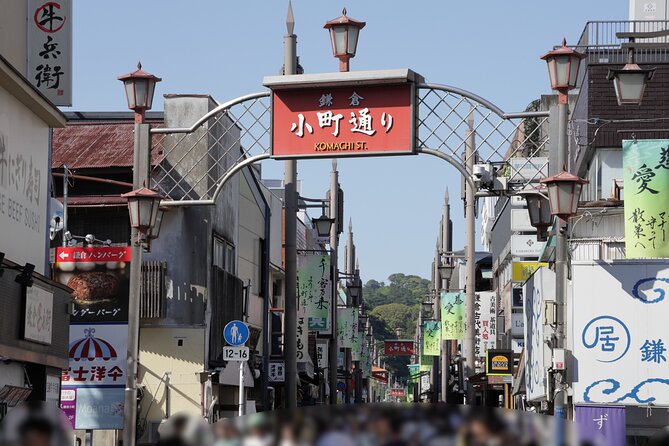
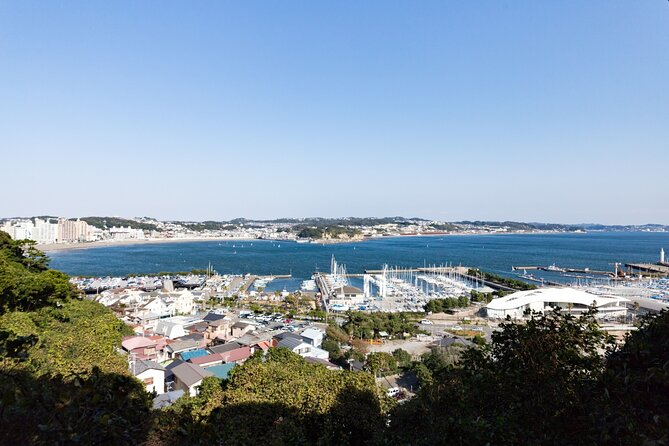
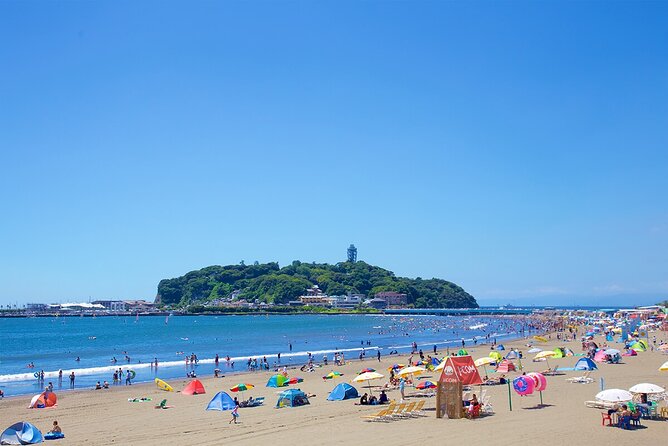
Enoshima is the final major stop, with about two hours to explore. The island is connected to the mainland and feels more like a compact coastal outing than a formal temple visit. You can browse narrow shopping streets, stop for seafood, visit shrines, and look out across the water.
The island’s shrine complex is dedicated to Benzaiten, associated with music, wealth, and wisdom. It includes three shrines: Hetsu-no-miya, Nakatsu-no-miya, and Okutsu-no-miya. The route rises through the island, so the visit is not flat or effortless.
You may also see the Samuel Cocking Garden and its observation lighthouse. The lighthouse reaches 59.8 meters, or 119.6 meters above sea level. On a clear day, the views can stretch toward Mount Fuji, although weather decides how much of the mountain you see.
Two hours sounds generous, but Enoshima offers more than you can comfortably cover at a slow pace. You need to choose. Focus on the shrines and views, shop and eat, or add the garden and lighthouse if time allows. The escalator system can save energy on the uphill route, but it does not remove all the stairs, particularly if you continue toward the caves or farther parts of the island.
This is the stop where clear instructions matter most. Confirm exactly where and when you must meet the bus. In rain, darkness, or poor visibility, finding the bus away from the main shopping area can be stressful. Keep the guide’s directions and the meeting time in your phone, but do not rely on having time to search at the end.
Food, free time, and the pace of the day
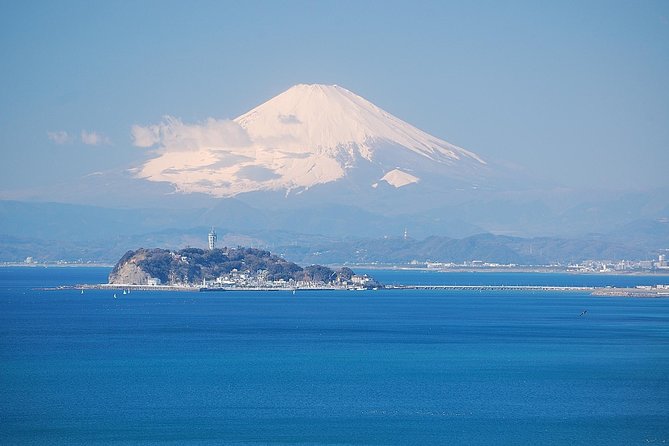
Lunch is not included, which gives you freedom but also makes timing important. Komachi Street has snacks and casual food, while Enoshima is known for seafood and has restaurants near the shopping lanes.
The best place to eat depends on the order of the stops. Traffic or a route change can sometimes shift the schedule, and an early arrival in Enoshima may mean that some restaurants are not yet open. Carrying a small snack from Tokyo or Komachi Street is a sensible backup.
The tour generally aims to give you time to explore on your own rather than keeping you in one large group at every moment. You can follow the guide for explanations, then break away for photographs, shopping, or a quiet walk, as long as you return on time.
That freedom is a real benefit for couples and families with different interests. It also means you must manage your own watch. The bus cannot wait for one late person, and the operator states that late arrivals at the wrong location may not be refunded.
Bus comfort, group size, and the return to Tokyo
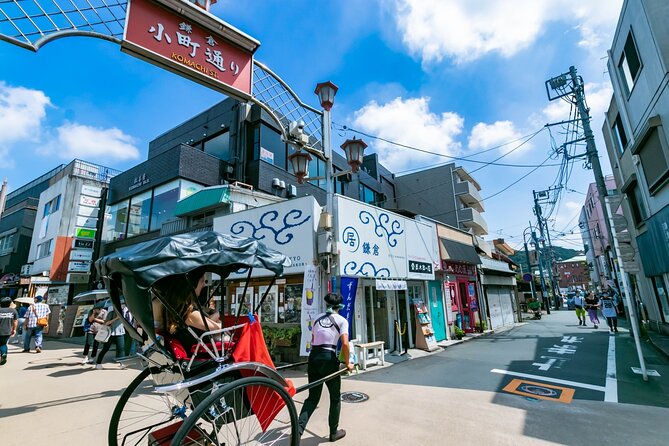
The vehicle is air-conditioned, and some departures use a modern bus with USB charging. Conditions can vary, however. One account described an older bus and uncomfortable rear seating over a wheel, while other accounts found the bus clean and comfortable.
The maximum group size is 90 people, though actual group size can be smaller. Some departures have felt manageable rather than oversized, but you should still expect a proper coach tour, not a private excursion.
The bus is most useful between distant stops. It saves you from changing trains and gives you a place to rest between visits. The downside is road traffic. The return to Tokyo can be long, especially during busy periods, so do not schedule a tight dinner reservation, airport transfer, or evening performance after the tour.
The only stated drop-off point is near Shinjuku Station’s West Exit, at the Shinjuku Post Office area. If you are staying in Ikebukuro or elsewhere in Tokyo, plan your evening route from Shinjuku. The information also describes two centrally located pickup choices, but the precise meeting details supplied here identify Shinjuku Post Office, so confirm your selected pickup point before departure.
Guides can shape the whole experience
The strongest part of this tour may be the guide. Omar has been praised for humor, warmth, and historical explanations. Yuki has earned notice for careful group management, clear English, and practical help, including checking names, assisting with small problems, and making sure people are not left behind.
Chen has been described as friendly and clear, while Mitsuko and Mits have been praised for kindness, useful suggestions, and a relaxed manner. These personal touches matter on a day with several stops and a strict departure schedule.
The experience can be less satisfying if the guide focuses mostly on logistics. Some departures have included solid historical context, while others have offered little explanation beyond where to go and when to return. If learning about Kamakura matters to you, stay close to the guide during the walking portions and ask questions when there is an opening.
English and Chinese commentary may be provided on the same bus. That arrangement can affect the amount of time available in each language, so expect the style and depth of commentary to vary.
Who should book this Kamakura day trip?
I would choose this tour if you want to see Kamakura and Enoshima in one day without managing the transport yourself. It suits first-time visitors to Tokyo, families, and anyone who values a clear route with built-in admissions and a guide.
It also works well if you want a broad introduction rather than a slow, specialist visit. You will see major sights, get time for food and shopping, and learn enough to decide which part of Kamakura deserves a return visit.
I would hesitate if you want complete control over timing, quiet temple visits, or a full exploration of Enoshima’s caves, gardens, and shrine paths. Independent visitors can spend longer at one place and avoid the risk of a long bus ride back through Tokyo traffic.
The tour requires punctuality and reasonable walking ability. Heat, rain, and stairs can change the feel of the day. Bring water, comfortable shoes, a light rain layer, and small cash for minor purchases and optional entry points.
Should you book it?
Book this tour if convenience matters more than flexibility. For $66.05, you receive transport, a guide, and two important temple admissions, then fit four very different settings into one long day.
Skip it if you dislike fixed schedules or need a guaranteed early return to Tokyo. For everyone else, this is a practical way to trade city noise for shrine grounds, a famous bronze Buddha, and an island with sea views. Just arrive at least 10 minutes early, confirm the exact meeting point, and keep your Enoshima plans focused rather than trying to see every corner.
FAQ
How long does the Kamakura and Enoshima tour last?
The experience lasts approximately 9 to 10 hours, including transportation between Tokyo, Kamakura, Enoshima, and the return to Tokyo.
Where does the tour start and finish?
The stated meeting point and drop-off point are at the Shinjuku Post Office area in Shinjuku. The tour has only one stated drop-off point, near Shinjuku Station’s West Exit.
What sights are included?
The main stops are Tsurugaoka Hachimangu Shrine, Komachi Street, Kōtoku-in and the Great Buddha, Hase-dera Temple, and Enoshima Island.
Are entrance fees included?
Admission to Kōtoku-in and Hase-dera is included. Other optional costs, such as food or extra activities on Enoshima, are not included.
Is lunch included?
No. You pay for lunch yourself. Food is available around Komachi Street and Enoshima, but schedules can affect which restaurants are open when you arrive.
What happens if I arrive late?
The bus leaves on time and cannot wait. Arriving late or going to the wrong meeting point may result in missing the tour without a refund.
Can I cancel for a refund?
You can cancel at least 24 hours before the start time for a full refund. Cancellations or changes made less than 24 hours before the experience are not refundable.
Just added around Kamakura
- First time in Kamakura? Enjoy a Tour of All Must-sees!★ 5.0 · 15 reviews
- Your Own HANKO Name Seal Activity in Kamakura.★ 5.0 · 24 reviews
- Kamakura Tours Half Day or Full Day Tours with a local guide.★ 5.0 · 12 reviews
- Buddha, Bamboo & Zen – Bespoke Kamakura Private Walking Tours★ 5.0 · 25 reviews
- Exciting Kamakura – One Day Tour from Tokyo★ 5.0 · 40 reviews
- Kamakura Bamboo Forest and Great Buddha Private Tour★ 5.0 · 12 reviews
- Tokyo Yokohama Night View Tour With Kamakura And Enoshima★ 3.5 · 14 reviews
- Tokyo: Day Trip to Kamakura in Spanish – Spanish★ 4.9 · 22 reviews
Bus Tours, compared.
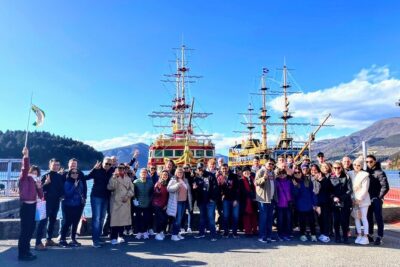
Mt Fuji and Hakone 1-Day Bus Tour Return by Bullet Train
Our verdict →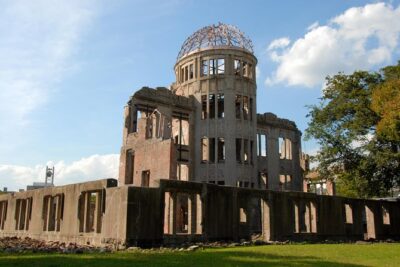
Peaceful Hiroshima & Miyajima UNESCO 1 Day Bus Tour
Our verdict →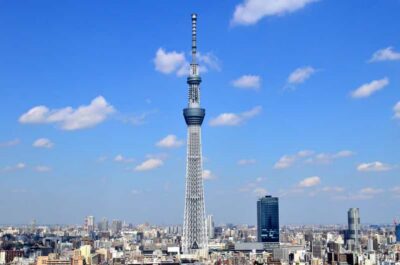
Meiji Shrine, Asakusa, Skytree Bus Tour and Cruise
Our verdict →
Kyoto/Osaka: Nara, Fushimi Inari Taisha, Arashiyama Bus Tour
Our verdict →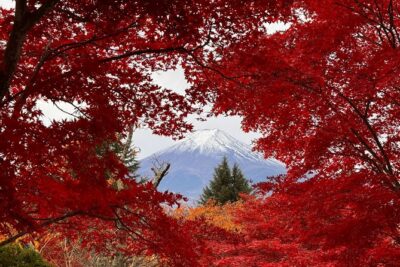
Mt.Fuji & Lake Kawaguchiko 1-Day Bus Tour w/Optional Lunch
Our verdict →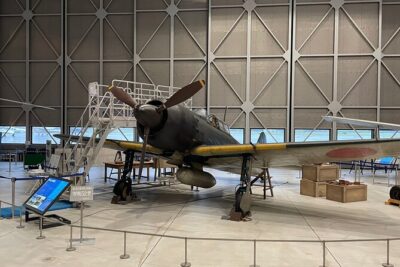
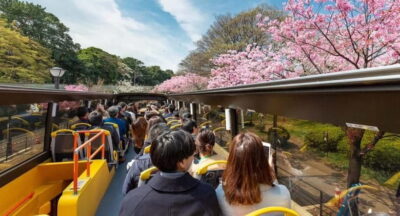
Open Top Panoramic Sightseeing Bus with Audio Guide
Our verdict →
[One-day bus tour departing from Kanazawa Station] Shirakawa-go and Gokayama – Two World Heritage Villages Enjoyable Bus Tour
Our verdict →Browse the lists this tour appears in