
Reviewed · HIROSHIMA TOURS
Mitaki Peace Tour Beyond Central Hiroshima
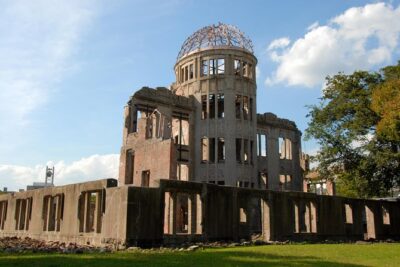
Mitaki Temple gives this Hiroshima tour its unusual power. You begin with the Atomic Bomb Dome and the Rest House in the city center, then ride into the hills to a quiet Buddhist temple tied to the city’s wartime story. The change of setting is the point. Peace here is not only a museum subject. It is something you consider among trees, bells, stone figures, and mountain paths.
I like the small group of up to six, which suits Mitaki’s narrow, peaceful paths. I also like that the $88.68 price covers the temple entrance, bus, train, and a licensed local guide. The main drawback is the walking: the route includes a gentle uphill approach and temple paths, so it is not a good fit if you have difficulty walking.
Key points at a glance
- A two-part Hiroshima experience: Start with the Atomic Bomb Dome and Rest House, then shift to Mitaki Temple for a quieter form of remembrance.
- Seven small experiences: Expect guided walks, points of interest, temple sights, and simple activities that connect Hiroshima’s past with the idea of peace.
- A local bus and train ride: Public transport is part of the experience, not just a transfer. You see how the peaceful temple area relates to central Hiroshima.
- Mitaki’s most memorable sights: Look for the pagoda, bell hall, stone Buddhist statues, peace monuments, and structures preserved after the atomic bombing.
- Best in seasonal color: Late autumn can bring red leaves scattered along the wooded paths, though scenery depends on timing and weather.
- Good value for a short tour: At $88.68, the fee includes admission, both listed transport legs, a guide, and a recycled-paper crane postcard.
Why Mitaki changes the way you see Hiroshima
Hiroshima’s Peace Memorial Park is essential, but it can feel concentrated and formal. Mitaki offers a different setting. The temple sits in wooded hills close to the city, yet it feels far removed from central Hiroshima’s streets and memorial buildings.
That contrast gives the tour its shape. At the park, you face the direct facts of the atomic bombing. At Mitaki, you have more room to think about what followed, how ordinary places were affected, and how peace is remembered outside the main memorial district.
I like this approach because it avoids treating Hiroshima as only a single historic site. The city’s story continues beyond the Atomic Bomb Dome. Mitaki Temple adds a local and spiritual setting, one that people in Hiroshima have valued for centuries.
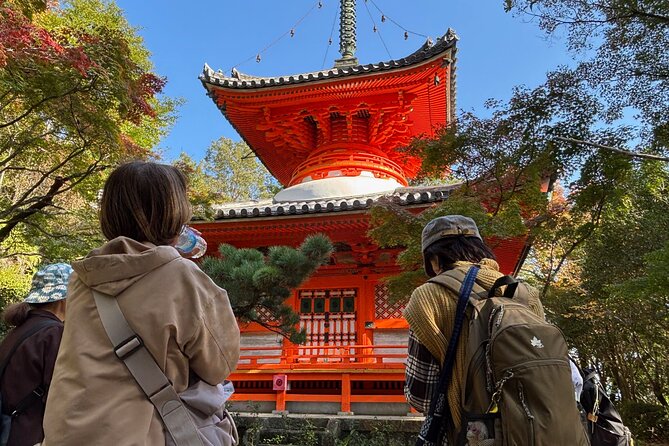
The temple was founded in 809. Its age matters, but the visit is not simply an architectural stop. You walk through a living religious site with a calm atmosphere, stone Buddhist figures, a pagoda, a bell hall, and monuments connected with peace and remembrance.
The tour lasts about 3 hours 25 minutes to 4 hours. That is long enough to connect the two places without taking up your entire day. Since the start time is 1:00 pm, you still have the morning for the Peace Memorial Museum, Miyajima planning, or a relaxed meal.
A few more Hiroshima half-days worth comparing
- Peaceful Hiroshima & Miyajima UNESCO 1 Day Bus Tour
★ 5.0 · 5,309 reviews - Hiroshima: Hiroshima and Miyajima UNESCO Sites 1-Day Tour
★ 4.9 · 2,330 reviews - Hiroshima / Miyajima Full-day Private Tour with Government Licensed Guide
★ 5.0 · 1,298 reviews
Starting at Peace Memorial Park
The meeting point is at the Hiroshima Peace Memorial Park Rest House, near the Atomic Bomb Dome area. The listed location includes a sign explaining atomic-bomb damage, so allow a little time to find the correct spot within the park.
The opening walk takes about an hour. Your guide introduces several important places, including the Rest House and the Atomic Bomb Dome. Depending on available time, the route may also include the hypocenter.
The Rest House is especially useful because it is not just a modern interpretation of the bombing. It is a building that survived the atomic blast with major damage. The Atomic Bomb Dome, of course, is Hiroshima’s most recognizable symbol, but seeing it with a guide helps place it within the wider city and the human story behind it.
The possible visit to the hypocenter is one detail to keep in mind. It is not guaranteed on every departure, since the exact timing can vary. The guide uses this first section to prepare you for Mitaki, rather than treating the temple as a disconnected sightseeing stop.
This opening part is serious. You should expect explanations about the reality of the bombing, not a light introduction before the scenic section. That balance is important. Mitaki’s greenery may feel peaceful, but the visit gains meaning because you first understand the event that shaped its memorials.
Riding the local bus into the hills
After the Peace Park walk, you take a local bus from the Atomic Bomb Dome area toward Mitaki. The fare is included, so you do not need to arrange a separate ticket for this section.
I like the fact that public transport remains part of the tour. You are not sealed inside a private vehicle. The bus connects the central memorial area with the quieter Mitaki district and gives you a practical sense of how near the temple is to the city.
The ride also helps reset the pace. You move from a place filled with visitors and major monuments to an area associated with woods, slopes, and a local temple. The route is part of the story: Hiroshima’s peace sites are not all concentrated in one park.
The tour information describes Mitaki as about 2 kilometers from central Hiroshima. That makes it an easy addition to a city visit, though the temple itself is on a mountainside and the approach is not completely flat.
Walking to Mitaki Temple
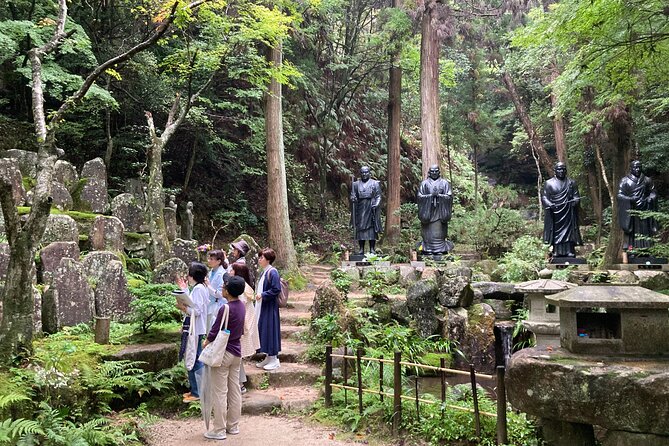
After leaving the bus, you walk for about 10 minutes to Mitaki Temple. The pace is relaxed, with stops at points of interest and explanations from the guide.
This is where sturdy, comfortable shoes matter. You do not need to be an expert hiker, but you should be ready for an uphill walk and temple paths. The route is not recommended for people with walking difficulties, and the narrow paths are better suited to a small group than a large tour.
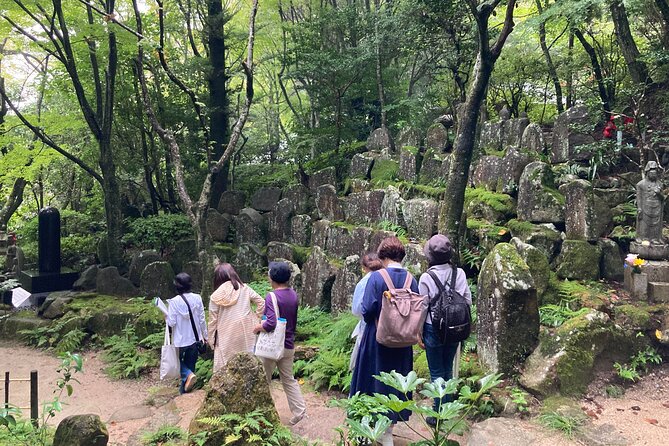
Mitaki’s setting is one of its biggest strengths. The temple is surrounded by trees and mountain air, with a sense of quiet that is hard to find in central Hiroshima. In late autumn, red leaves may still be scattered along the paths. The exact display depends on the season, but the wooded setting remains part of the appeal throughout the year.
Bring water. Bottled water is not included, and the walking can leave you thirsty, especially in warmer weather.
Same trip, a completely different kind of day:
- Osaka/Kyoto: Hiroshima Miyajima Bus Tour & Shinkansen Ticket
★ 4.7 · 919 reviews - Hiroshima Historical Walking Tour – Why A-Bomb was Dropped
★ 4.8 · 893 reviews - Hiroshima Peace (Heiwa) Walking Tour at World Heritage Sites
★ 5.0 · 872 reviews - Hiroshima in a Nutshell: Morning Bike Adventure
★ 5.0 · 524 reviews
Exploring Mitaki’s pagoda, bell hall, and stone figures
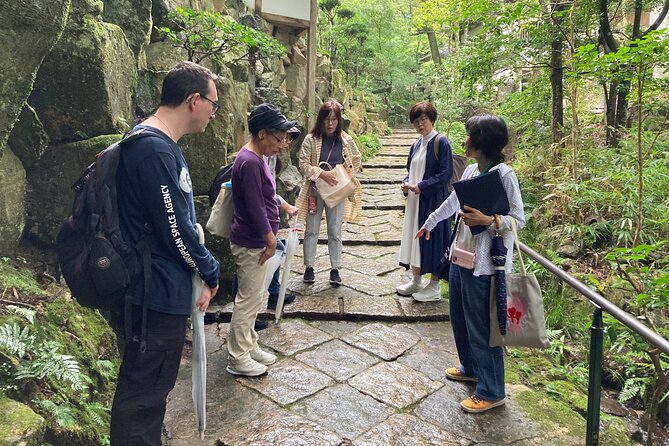
The temple visit lasts about 2 hours 50 minutes, making it the main part of the experience. Your guide takes you through the grounds at a measured pace rather than rushing from one sight to the next.
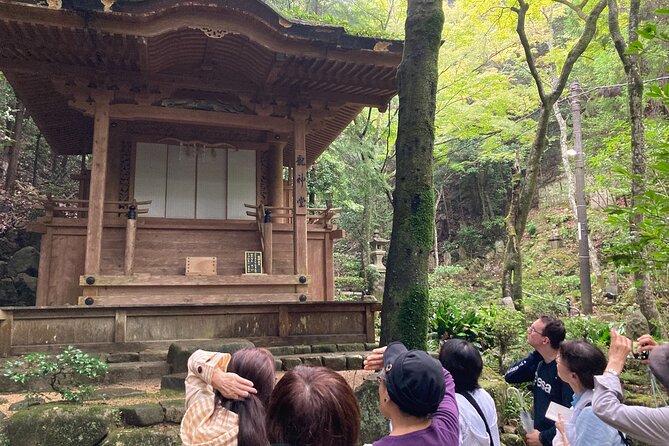
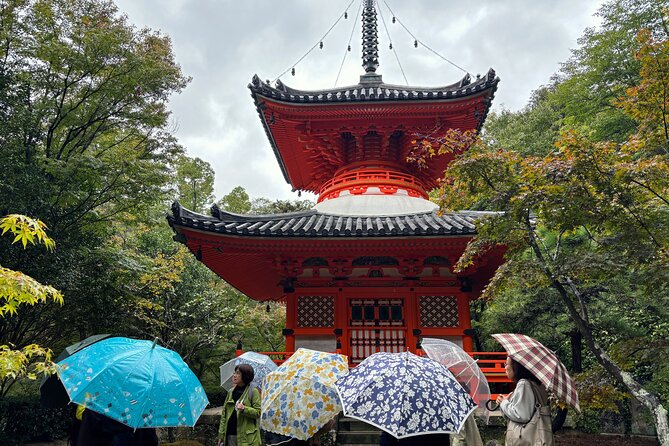
The pagoda is one of the most striking features. The bell hall adds another strong visual and spiritual point, while the many stone Buddhist statues give the paths a more intimate character. You may find yourself paying attention to small details that would be easy to pass without an explanation.
The temple also contains structures preserved after the atomic bombing, along with peace and remembrance monuments. These details connect the old temple with modern Hiroshima. The result is not a museum display placed in a separate building. It is a historic religious setting carrying visible traces of the city’s twentieth-century experience.
The tour includes seven experiences at Mitaki and its surroundings. The exact order and length of each activity can depend on the guide and conditions, but the idea is clear: this is more than a short photo stop. You make small observations, take easy walks, and use the setting to think about Hiroshima’s past and what it might teach today.
The peaceful mood is real, but it does not erase the difficult subject. That is why the guide matters. Without context, you could see Mitaki as a lovely temple in the hills. With context, the quiet surroundings become part of the reflection.
What the guide adds
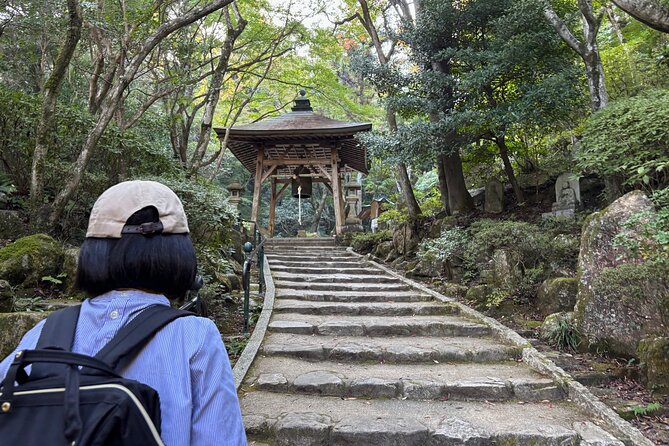
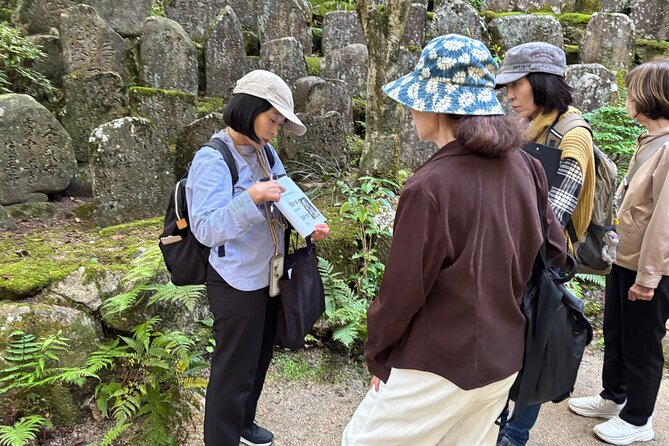
A self-guided visit would show you the pagoda, statues, and trees. It might not explain how the temple relates to the atomic bombing or why certain monuments matter.
The licensed local guide provides that link. The tour’s strongest feature is not a long lecture. It is the way explanations are placed along the route, while you are looking at the actual buildings and surroundings.
The information provided does not name the individual guides, so you should not expect to book a particular person. It does promise a licensed local guide, and the group size is capped at six. That small size should make it easier to hear, ask questions, and keep a quiet pace on narrow paths.
The tour is especially useful if you have already seen the main Hiroshima memorial sites but want a broader understanding of the city. It also works for a first visit if you want a guided introduction that combines the central memorial district with a less familiar temple.
Returning by train to central Hiroshima
After Mitaki Temple, you walk to Mitaki Station and take the train back. The fare is included.
Your guide accompanies you to Hiroshima Station, which is two stops from Mitaki. You can also get off at Yokogawa Station, the next stop, or Hakushima Station, the stop after that. This flexibility is useful if your hotel or evening plans are closer to one of those stations.
The listed end point is Hiroshima Station. You should still tell the guide where you want to leave the train, especially if you plan to get off before the final stop.
The return journey keeps the tour practical. You are not left to work out an unfamiliar route after the temple visit. At the same time, the tour does not include transport back to every part of Hiroshima, so you will need to arrange your onward journey from the station where you get off.
Is $88.68 a fair price?
At $88.68 per person, this is not the cheapest way to see Mitaki Temple. You are paying for a guided experience, not just entry to the grounds.
The value comes from four things:
- A licensed local guide for the full route
- Mitaki Temple admission
- The bus from the Atomic Bomb Dome area
- The return train from Mitaki Station
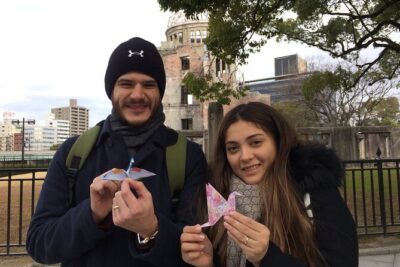
You also receive a postcard featuring a recycled-paper crane and a stamp. It is a small item, but it fits the subject and gives you a simple reminder of the peace theme.
If you are comfortable navigating public transport and researching Mitaki on your own, an independent visit will cost less. The tradeoff is that you may miss the connection between the temple, the atomic bombing, and Hiroshima’s wider memorial story.
For me, the price makes the most sense for visitors who want interpretation and a carefully planned half-day route. It is less compelling if you only want a quick temple photograph or prefer to explore without a schedule.
Who should book this experience?
I would choose this tour if you want to see a quieter side of Hiroshima after visiting the Atomic Bomb Dome. It suits people who enjoy history, religious sites, nature, and thoughtful conversation in one outing.
It is also a good choice for solo visitors who want company without joining a large coach group. A maximum of six people is a strong advantage here. Mitaki’s narrow paths and calm mood would not suit a large, noisy group.
Families with older children may find the route meaningful, provided everyone can manage the walking. The tour is not recommended for anyone with walking difficulties, and the guide cannot remove the uphill sections.
Photographers should find several appealing subjects: the pagoda, autumn leaves, stone figures, wooded paths, and views around the temple. Still, this is not primarily a photo tour. The peace and remembrance theme comes first.
Weather matters. The experience requires good weather, so a poor forecast can lead to a different date or a full refund. You can cancel for a full refund up to 24 hours before the 1:00 pm start time. Changes or cancellations within 24 hours are not refunded.
Final decision: book it for meaning, not just scenery
Book the Mitaki Peace Tour if you want Hiroshima to feel larger than the Peace Memorial Park. The route gives you the city’s central memorial landmarks, a local bus ride, a centuries-old temple, and a quieter place to consider what peace means after catastrophe.
Skip it if you have limited mobility, dislike guided interpretation, or want to spend your afternoon entirely in the city center. The walking and the serious subject need to suit your plans.
For most visitors who have half a day available, this is a thoughtful and well-sized tour. The best reason to book is the connection between places: Hiroshima’s public memory begins at the Dome and continues up the wooded paths of Mitaki.
FAQ
Where does the tour begin?
It begins at the Hiroshima Peace Memorial Park Rest House, near the Atomic Bomb Dome area. The listed meeting location is in Nakajimacho, Hiroshima.
What time does the tour start?
The tour starts at 1:00 pm.
How long does the tour last?
The experience lasts approximately 3 hours 25 minutes to 4 hours.
How many people can join?
The maximum group size is six travelers.
Is transportation included?
Yes. The bus from the Atomic Bomb Dome area to the Mitaki area and the train from Mitaki Station are included.
Where does the tour end?
The guide accompanies you to Hiroshima Station. You may also get off at Yokogawa Station or Hakushima Station before reaching Hiroshima Station.
Is Mitaki Temple admission included?
Yes. The entrance fee to Mitaki Temple is included.
Is bottled water provided?
No. You should bring bottled water or another drink because the walking can make you thirsty.
Can I cancel for a full refund?
Yes. You can cancel at least 24 hours before the local start time for a full refund. Cancellations or changes made less than 24 hours before the start are not refunded, and poor weather may lead to a different date or a full refund.
Just added around Hiroshima
- Full Day Hiroshima and Miyajima Tour by Bullet Train from Kyoto★ 4.5 · 120 reviews
- Hiroshima Saijo Sake Tasting Tour with visit to 7 Breweries★ 5.0 · 104 reviews
- The Peace Memorial to Miyajima : Icons of Peace and Beauty★ 4.5 · 31 reviews
- Shore Excursion from Hiroshima Port : Private Tour in Hiroshima★ 5.0 · 17 reviews
- Okunoshima Rabbit Island Cycling Tour with Local Guide★ 4.5 · 17 reviews
- Hiroshima & Miyajima All-Inclusive Tour w/Licensed guide Pancho★ 5.0 · 54 reviews
- Private Full Day Hiroshima Tour★ 4.5 · 29 reviews
- Hiroshima Private Tour with a Local – Highlights & Hidden Gems★ 4.5 · 24 reviews
Hiroshima Tours, compared.
Peaceful Hiroshima & Miyajima UNESCO 1 Day Bus Tour
Our verdict →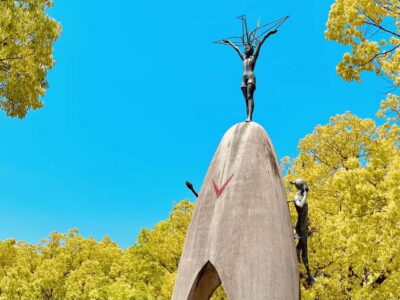
Hiroshima Historical Walking Tour – Why A-Bomb was Dropped
Our verdict →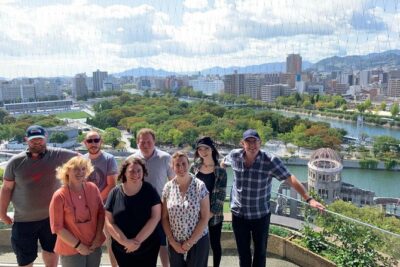
Hiroshima Peace (Heiwa) Walking Tour at World Heritage Sites
Our verdict →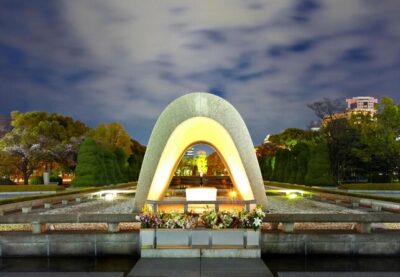
Hiroshima City 4hr Private Walking Tour with Licensed Guide
Our verdict →
Japanesel Archery Experience HIROSHIMA CASTLE SHARAKU
Our verdict →
Browse the lists this tour appears in