
Reviewed · KIMONO & YUKATA EXPERIENCES
Kimono and Calligraphy Experience in Miyajima
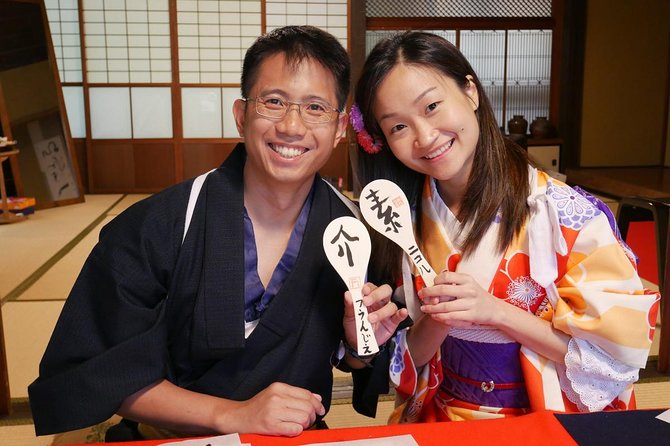
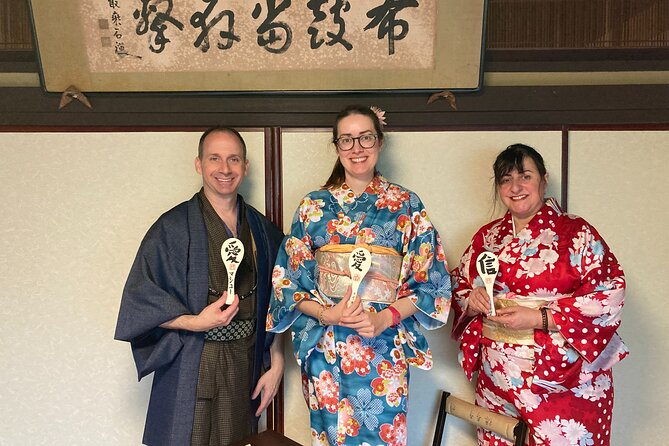
Miyajima is best known for Itsukushima Shrine and its great torii, but this one-hour kimono and calligraphy experience takes you into a quieter corner of the island. At a temple away from the busiest streets, you choose traditional clothing, learn the basics of Japanese brush writing, and leave with a personalized rice scoop for good luck.
I like the wide kimono choice, with more than 100 garments and options for different body types. I also like the small group limit of six, which gives you time to ask questions, practice your strokes, and pose for photographs without feeling rushed.
The main thing to consider is getting there. The temple sits away from Miyajima’s central tourist area, and map apps may guide you along a longer mountain-side route. Give yourself extra time, and treat the quiet setting as part of the experience rather than a nuisance.
Key points at a glance
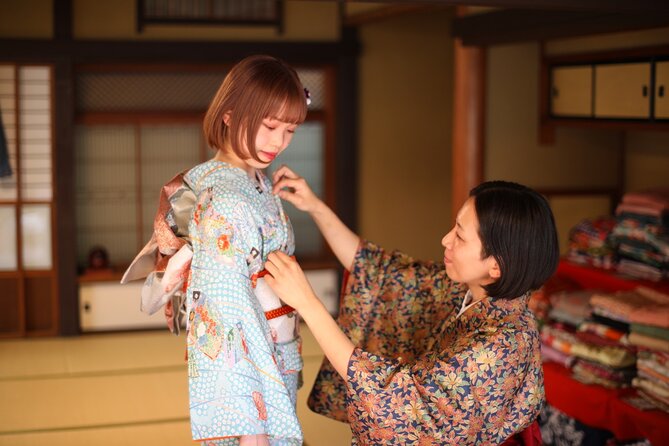
- Choose from more than 100 kimono: Staff help you put on the kimono, obi belt, and other required pieces.
- Practice before you write: You begin with brush-holding and basic strokes before moving on to kanji.
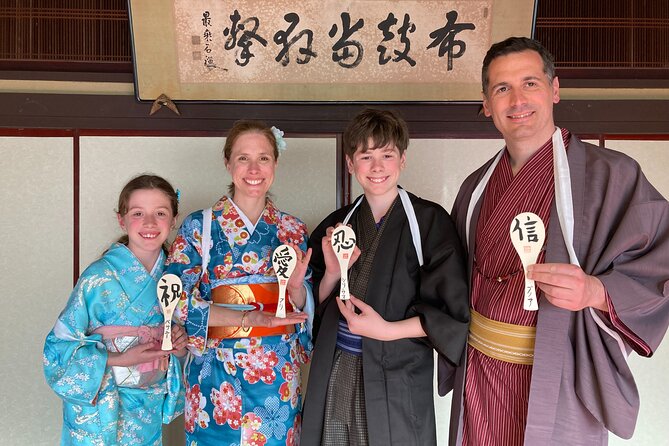
- Create a personal souvenir: Write a chosen character and your name on a wooden rice scoop, then take it home in a protective container.
- Photographs are included: Staff take pictures during the activity and share them after you complete a questionnaire.
- Small groups make a difference: The experience accepts no more than six people.
- Morning or afternoon timing: You can fit the session around Itsukushima Shrine and the island’s tide schedule.
Why this Miyajima activity feels different
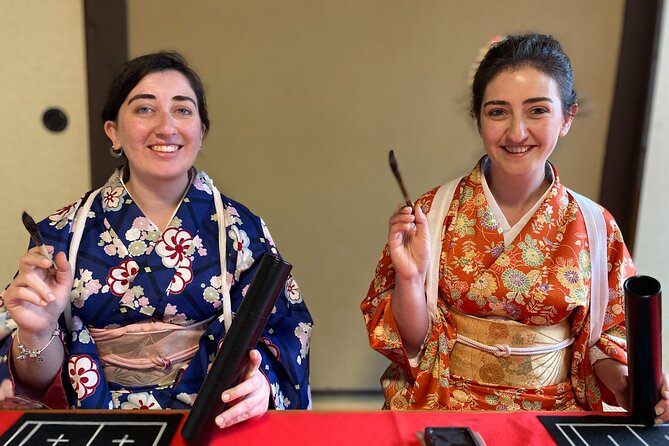
Many visitors experience Miyajima by walking between the ferry terminal, shopping streets, and Itsukushima Shrine. That route is worthwhile, but it can feel crowded and tightly scheduled. This activity changes the pace. You enter Tokujyuji, a Sōtō Zen temple, and spend an hour on two practical arts rather than simply looking at historic buildings.
The setting matters. You are not being dressed up in a shop beside the main tourist flow. You put on a kimono in a temple environment, then sit in a traditional-style room for calligraphy. The result feels more personal than a quick costume rental and photo stop.
The experience is also easy to understand. You do not need previous knowledge of Japanese writing. The lesson starts with how to hold the brush and how to make basic lines. That simple beginning is useful because the brush behaves differently from a pen, and a few minutes of practice helps you control the ink before working on your final piece.
More Kimono Experiences in Hiroshima:
- Kimono and Tea Ceremony in Miyajima
★ 5.0 · 73 reviews - An Amazing set of Cultural experience: Kimono, Tea Ceremony and Calligraphy
★ 5.0 · 69 reviews - Cultural Activities :Kimono, tea ceremony, Calligraphy and Amulet
★ 5.0 · 44 reviews
Choosing a kimono at Tokujyuji Temple
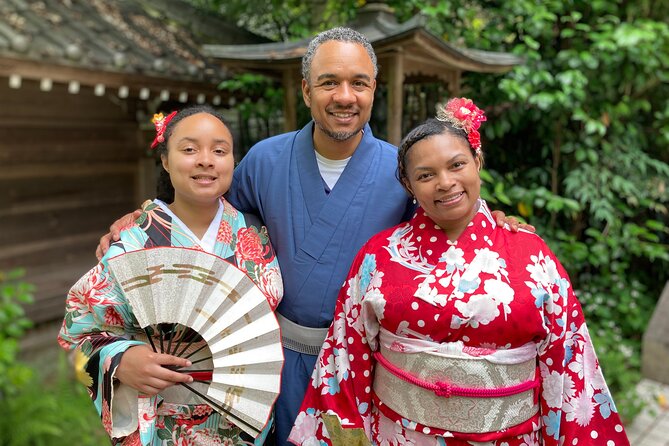
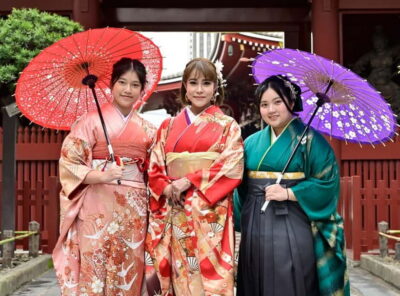
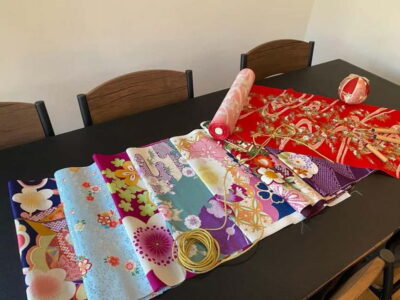
The first part is dressing. You choose from a collection of more than 100 kimono, then staff help with the obi belt and the other pieces needed to complete the outfit. The large selection gives you a real choice of colors and patterns instead of leaving you with one or two standard costumes.
This is also a good option if you are concerned about fit. One family found suitable choices for plus-sized participants, and a 69-year-old participant was comfortable taking part despite initial worries about wearing a kimono. That does not guarantee every style will suit every person, but it does show that the activity is not aimed only at young, slim visitors.
You should allow staff to do the dressing. A kimono is not simply a robe you throw on, and the belt and layers need to be arranged correctly. The dressing itself becomes part of the cultural lesson. You get a chance to see how the clothing is assembled before you start the artistic portion.
Once dressed, you can take photographs before the calligraphy lesson. The staff also take pictures while you work. This helps if you are traveling alone or if everyone in your group wants to appear in the photos. The pictures are shared after you answer a questionnaire.
Learning brush strokes before writing kanji
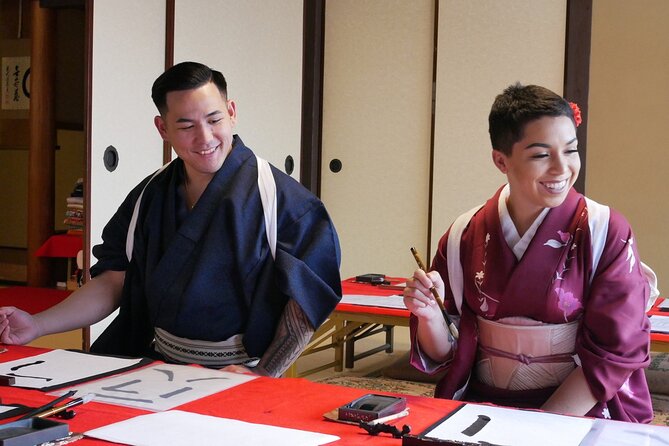
The calligraphy lesson begins at an accessible level. You learn how to hold the brush and practice basic lines. This is a smart sequence because it lets you get used to pressure, angle, and movement before attempting a Chinese character.
Next, you choose a kanji character from several samples. The character becomes the focus of your practice, so your finished work has a personal meaning rather than being a random design. If none of the listed choices appeals to you, you may be able to request another character. One participant was allowed to choose a character outside the prepared list.
You also create a version of your name in hiragana or katakana, the Japanese phonetic writing systems. This gives you two different ways to connect with the language: a kanji with a selected meaning and your own name written in Japanese script.
The teacher guides you through practice before you work on the final object. You sign the artwork in Japanese, add a stamp, and then take it with you. The lesson is not meant to make you a calligrapher in an hour. Its value is in giving you a clear, hands-on introduction and a result you made yourself.
The wooden rice scoop is the best souvenir
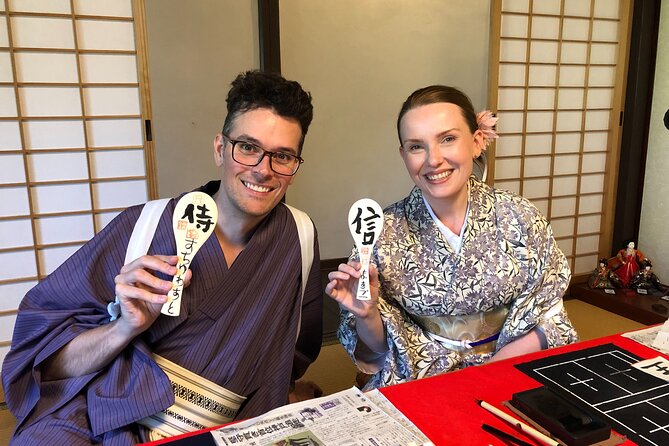
The personalized rice scoop is more useful than a standard printed souvenir. Miyajima is associated with rice scoops, and this activity lets you write directly on one. You practice on paper first, then transfer your chosen character and name to the wooden scoop.
The scoop is a modest object, but that is part of its charm. It is easy to pack, connected to the island, and carries your own writing rather than someone else’s artwork. Staff provide a container so the finished piece can travel home safely.
You should not expect a museum-quality calligraphy piece. Your lines may be uneven, and that is exactly what makes the item personal. The teacher’s guidance gives you enough structure to produce something pleasing, while the handmade result keeps it from feeling mass-produced.
More Calligraphy Classes in Hiroshima:
- Calligraphy Workshop at Traditional Folk Craft Shop in Hiroshima
★ 5.0 · 26 reviews - Private Hiroshima Calligraphy: Create Your Own Kanji Art Souvenir
★ 5.0 · 12 reviews - Tokyo: Calligraphy on Kanji Fan & Scroll with Drink
★ 5.0 · 210 reviews - Kyoto: Calligraphy class at Buddhist temple in city center
★ 5.0 · 167 reviews
Photographs in the temple and garden
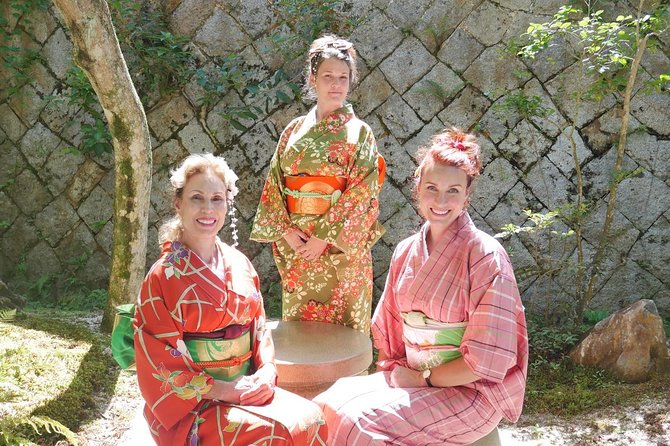
The photo element adds value, particularly for couples, families, and solo visitors. Staff photograph you during the dressing and calligraphy portions, and you can also take pictures in a Japanese garden.
The garden gives you a more natural background than a shop interior. Your time there is tied to the activity, so it is not a separate sightseeing stop or a long portrait session. Still, you get a chance to show the kimono properly and record the visit before changing back.
If you are shy about being photographed, tell the staff what you prefer. The supplied details confirm that pictures are taken and later shared, but they do not specify how many images you receive or how they are delivered. Consider the photo service a useful extra, not a formal professional shoot.
Planning the one-hour visit around Miyajima
The activity lasts about one hour and offers morning and afternoon sessions. That makes it easy to place around the shrine, ferry schedule, and tide changes. One couple used the time while waiting for the water conditions at Itsukushima Shrine to change, which is a practical way to fill an otherwise awkward gap.
Miyajima’s great torii and shrine are closely tied to the tides. If you want to see the shrine area at different water levels, a fixed one-hour cultural activity can fit neatly into the wait. Check your personal sightseeing plan before booking, then choose the morning or afternoon time that leaves room for the rest of the island.
The meeting point is Tokujyuji Temple at 741-1 Miyajimachō, Hatsukaichi, Hiroshima 739-0513. The activity ends at the same place. It is near public transportation, but getting there may still take more effort than walking to a shop near the main shopping street.
Map applications can sometimes guide you along a mountain-side road. I would check the route before leaving the ferry area, allow extra walking time, and avoid arriving at the last minute. The temple’s distance from the main tourist path is a drawback for convenience, but it also provides the calm atmosphere that makes this activity appealing.
Is $84.92 a fair price?
At $84.92 per person, this is not a budget stop. You are paying for more than a short lesson. The price covers kimono dressing, access to the clothing collection, instruction in calligraphy, the personalized rice scoop, photographs, and the use of a temple setting.
The value depends on what you want from Miyajima. If you only want to see the shrine and torii, this will feel like an expensive addition. If you want an activity that gives you something to do, something to photograph, and something to take home, the price is easier to justify.
The small group limit helps. With no more than six people, the teacher can watch your brush technique and help with the character you choose. A larger class could make the dressing and calligraphy feel more rushed. Families and couples may also find the combined format better value than booking separate kimono and cultural activities.
The experience is about an hour, so the hourly cost is high if you measure it only by duration. I would judge it by the quality of the keepsake and the personal attention, not by the clock. The rice scoop, name writing, kimono, and photographs give the session several useful elements in a compact package.
Who will enjoy this most?
This suits you if you want a cultural activity with a clear beginning and end. It works well for couples, families with children age six or older, friends, and anyone who wants more than sightseeing photographs.
It is also a good choice for mixed-age groups. The lesson does not require athletic ability, and the experience has already accommodated an older participant who was unsure about wearing a kimono. Children can practice brush strokes and choose a character, though younger children may need help staying careful around ink and the finished artwork.
Solo visitors can benefit from the staff photography. You still receive an object made during the lesson, and the small group format should make it easier to follow the instruction.
This may not suit you if you dislike dressing up, have very limited time on Miyajima, or want a long formal lesson in Japanese calligraphy. The session is introductory and practical, not an advanced art course. It is also less convenient if you want to stay close to the ferry terminal and main shrine area.
Booking, cancellation, and weather notes
You receive confirmation when you book. Free cancellation is available up to 24 hours before the start time for a full refund. Cancellations or changes made less than 24 hours before the start time are not accepted for a refund.
The cut-off follows local time in Japan. The activity also requires good weather. If poor weather causes cancellation, you are offered another date or a full refund. Since the meeting point is away from the busiest part of Miyajima, check the forecast and route before setting out.
Should you book the kimono and calligraphy experience?
I would book this if you want a quiet, personal activity that combines dressing, art, photographs, and a useful souvenir. The personalized rice scoop gives the session a strong finish, while the small group and wide kimono selection make it more welcoming than a quick rental-shop visit.
I would skip it if your Miyajima schedule is already packed or if the $84.92 price feels high for a one-hour activity. The walk to Tokujyuji requires planning, and the calligraphy is designed for beginners.
For most visitors with room in the schedule, this is a thoughtful way to spend an hour between shrine visits and tide changes. Arrive early, wear something comfortable beneath the kimono, and make sure you know the route to the temple. You will leave with a personal keepsake and a better sense of how clothing, writing, and daily objects connect in Japanese culture.
FAQ
How long does the kimono and calligraphy experience last?
The activity lasts approximately one hour.
Where does the activity begin?
It begins at Tokujyuji Temple, also called Sōtō-shū Kinkōzan Tokujyuji, at 741-1 Miyajimachō, Hatsukaichi, Hiroshima 739-0513, Japan.
Where does the activity end?
The activity ends back at the meeting point at Tokujyuji Temple.
How many people can join?
The maximum group size is six people.
What is the minimum age?
The minimum age is six.
Is kimono dressing included?
Yes. You choose a kimono from a collection of more than 100 garments, and dressing with the obi belt and other required items is included.
What happens during the calligraphy lesson?
You learn how to hold the brush, practice basic lines, choose a kanji character, and write your name in hiragana or katakana. You then sign and stamp your artwork.
What can I take home?
You can take home your calligraphy on a personalized wooden rice scoop. A container is provided for it.
Are photographs included?
Staff take photographs during the lesson, and you may also take pictures in a Japanese garden. The photographs are shared after you answer a questionnaire.
Can I cancel for a full refund?
You can cancel up to 24 hours before the experience start time for a full refund. Changes or cancellations made less than 24 hours before the start time are not accepted for a refund. If poor weather causes the activity to be canceled, you are offered a different date or a full refund.
Just added around Hiroshima
- Full Day Hiroshima and Miyajima Tour by Bullet Train from Kyoto★ 4.5 · 120 reviews
- Hiroshima Saijo Sake Tasting Tour with visit to 7 Breweries★ 5.0 · 104 reviews
- The Peace Memorial to Miyajima : Icons of Peace and Beauty★ 4.5 · 31 reviews
- Shore Excursion from Hiroshima Port : Private Tour in Hiroshima★ 5.0 · 17 reviews
- Okunoshima Rabbit Island Cycling Tour with Local Guide★ 4.5 · 17 reviews
- Hiroshima & Miyajima All-Inclusive Tour w/Licensed guide Pancho★ 5.0 · 54 reviews
- Private Full Day Hiroshima Tour★ 4.5 · 29 reviews
- Hiroshima Private Tour with a Local – Highlights & Hidden Gems★ 4.5 · 24 reviews
Kimono & Yukata Experiences, compared.

Sumo Show & Experience w/ Optional Kimono & Hot Pot
Our verdict →
Family-Friendly Kimono & Yukata Experience at WARGO
Our verdict →
Browse the lists this tour appears in