
Reviewed · JDM & CAR MEETS
Tokyo: Daikoku JDM Car Meet & Night Car Culture Tour
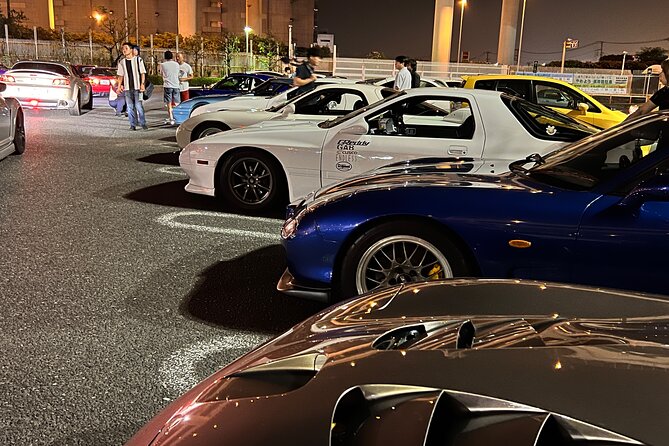
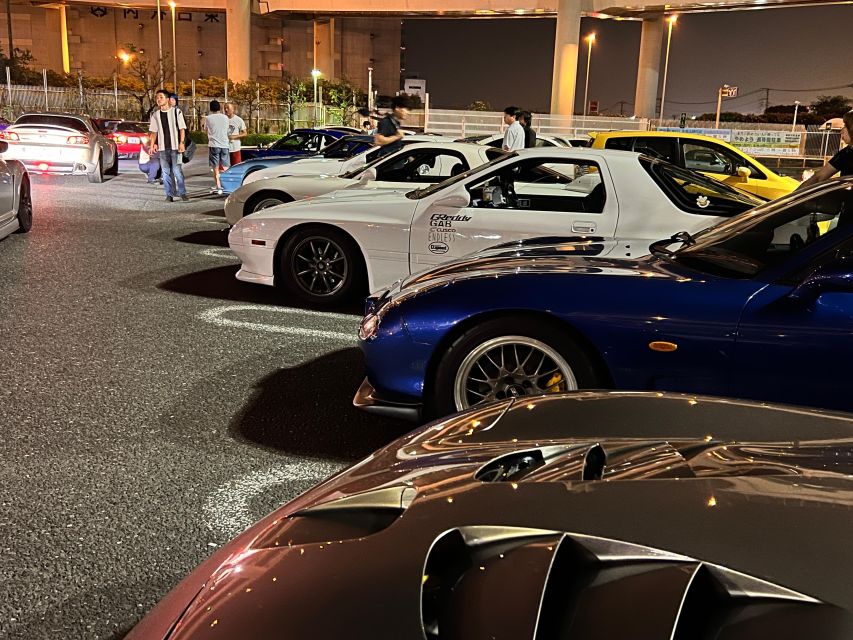
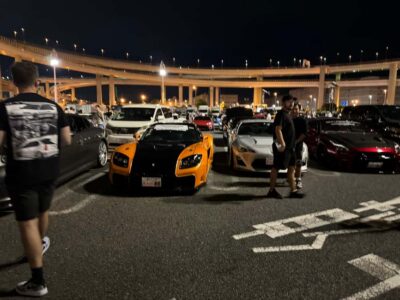
Tokyo’s Daikoku car scene is not a staged movie set. It is a real gathering of tuned Japanese cars, European exotics, luxury machines, and people who care deeply about how cars look, sound, and move. This four-hour night tour with MisiuJDMX takes you there by road, with Tokyo’s lights sliding past the windows and a car-loving guide explaining what you are seeing.
I like the small groups of up to 10 and the chance to ride in something more interesting than a standard sightseeing van. I also like the stops at APIT Autobacs and Tatsumi, since they add useful context to Daikoku rather than making the whole evening one parking-area visit. The main catch is simple: no one can promise which cars will appear, and Daikoku can close without notice.
Key things to know before you book
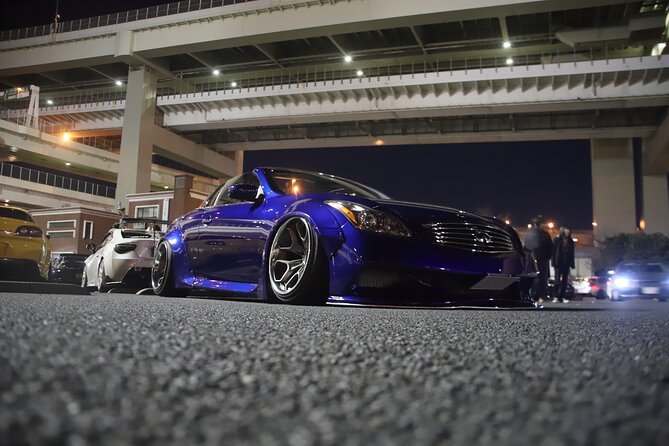
- Daikoku is the main event: Plan on about an hour there, with time to walk around, take photos, and see the meet at its best.
- The vehicle is part of the experience: Options can include a van, Nissan Skyline, Mazda RX-7, Lexus, European car, or another selected vehicle.
- APIT Autobacs is more than a shop: You can browse tuning parts, car goods, memorabilia, and displayed builds for about 25 minutes.
- Night gives you the best setting: Rainbow Bridge, Tokyo Tower, Tokyo Skytree, and the city roads look especially good after dark.
- The guides add real value: Michael, Mori, Karim, Jason, and Julian are among the hosts praised for car knowledge, safe driving, and friendly conversation.
- Expect car culture, not street racing: The tour follows Japanese law and does not include drifting, racing, or reckless driving.
Why Daikoku feels different from a movie scene
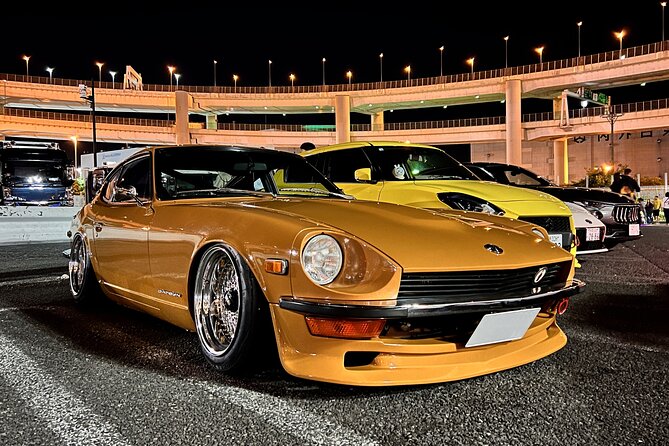
If your idea of Tokyo car culture comes from Tokyo Drift, Initial D, Wangan Midnight, or racing games, this tour gives you a chance to see the real setting behind that fantasy. The mood is less Hollywood and more social gathering. Cars arrive, owners talk, people look carefully, and the atmosphere depends on the night.
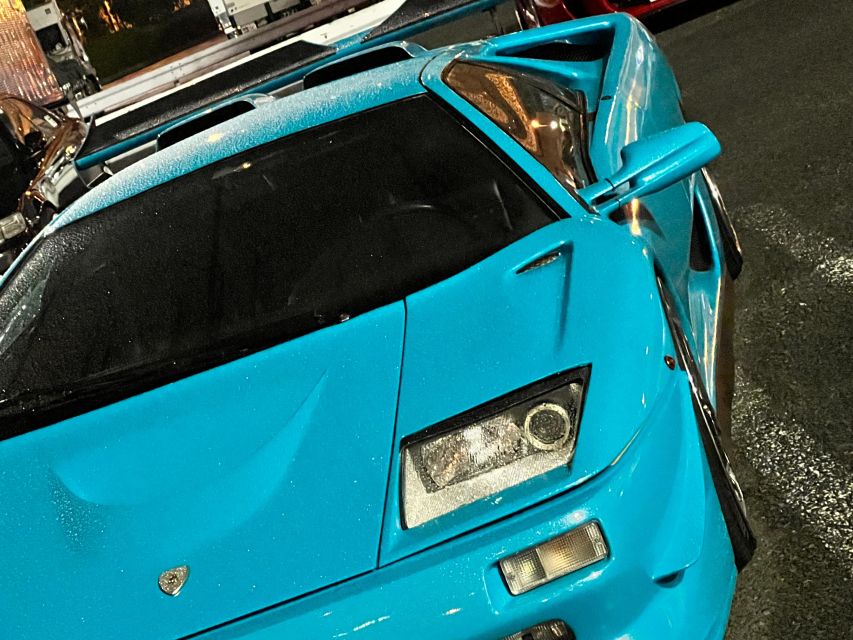
That difference matters. You will not be promised tire smoke, illegal racing, or a parade of supercars. You might see several generations of Nissan GT-R, modified Skylines, custom builds, Ferrari, Lamborghini, American cars, German performance cars, or something much rarer. You might also arrive on a quiet night. The surprise is part of the appeal, but it means you should book this for the setting and access, not for one specific model.
The tour is led by local hosts who spend much of the ride explaining Japanese car culture and Tokyo itself. Michael is often singled out for his long experience and enthusiasm, while Mori receives praise for combining car stories with details about the city. Karim, Jason, and Julian are also named as friendly, capable hosts. Guides can vary, so treat those names as examples rather than a guarantee of who will drive you.
More JDM Car Tours in Tokyo:
- FAST&FURIOUS EXPERIENCE Tokyo Car Club membership
★ 4.7 · 1,145 reviews - GT-R35 800hp Club Membership – secret underground car meet
★ 4.8 · 998 reviews - Tokyo: Fast & Furious Tokyo Drift 3 Experience (Kaila Yu SP)
★ 4.8 · 947 reviews
The four-hour route through Tokyo after dark
The tour begins at one of the listed meeting points, including 2-chōme-29-8 Dōgenzaka at the Tōeidō Building. Your exact starting point depends on the option you book, so check the meeting instructions closely and arrive early.
From there, the vehicle heads toward the waterfront and industrial roads. The route passes Roppongi Hills, where Tokyo’s polished city center gives way to the wider road network used by the car scene. You may also pass Tokyo Skytree, Haneda Airport, Tokyo Tower, and parts of central Tokyo. These are drive-by sights, not long sightseeing stops, but they help make the ride feel like a moving tour of the city.
The loop across the Rainbow Bridge is one of the evening’s best visual moments. From the road, you get broad views of Tokyo’s illuminated skyline and the bay. I would not book this as a replacement for a dedicated city-view tour, but the bridge adds atmosphere and gives the drive a clear sense of place.
Traffic can affect the timing and order. Weekend routes may differ from weekday routes, and the host can change the plan because of weather or road conditions. The provider aims to make at least three stops, with Daikoku included and the other locations selected from places such as Tatsumi, Umihara, APIT Autobacs, or Gaienmae.
APIT Autobacs gives you the enthusiast’s shopping stop
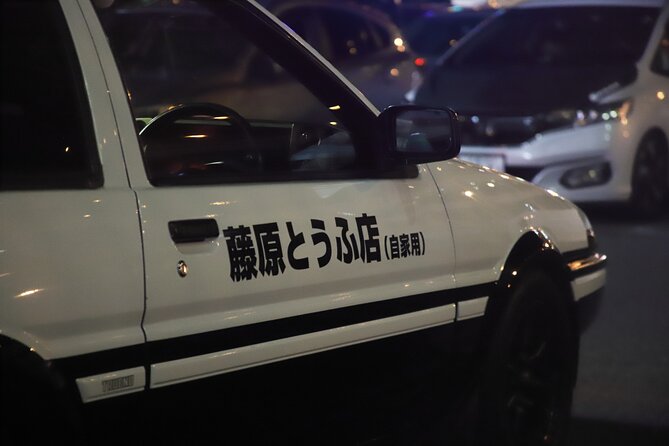
APIT Autobacs Shinonome is scheduled for about 25 minutes. This is Japan’s largest automotive store, and it is a useful first look at the practical side of the scene.
Inside, you may find tuning parts, car accessories, clothing, memorabilia, and displayed builds. You do not need to be a serious mechanic to enjoy it. The store makes clear that Japanese car culture is not only about rare cars in a parking lot. It also includes parts, styling choices, maintenance, and the endless search for small improvements.
Twenty-five minutes is enough for a quick look, but it can feel short if you want to examine products or shop carefully. One person specifically wished for more time there, which is understandable. I suggest deciding in advance if you are browsing for souvenirs or simply looking at the displays. If you start buying parts and merchandise, the clock will move quickly.
Tatsumi shows the road culture before Daikoku
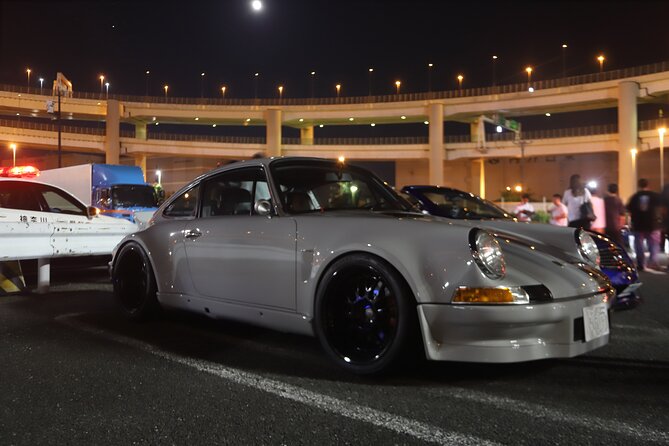
Tatsumi 1st Parking Area is normally a 15-minute stop. It is smaller and more compact than Daikoku, but it helps you see how expressway rest areas can become meeting points for car fans.
The stop may be especially useful if Daikoku is quiet or if you want to compare different kinds of meet locations. The tour may also use other spots depending on the day and time. A second gathering point can sometimes be closed by the time you arrive, and in that case the guide may still drive past the area or adjust the route.
Do not treat Tatsumi as a guaranteed show with a fixed lineup. The point is to see where people gather and how the scene changes through the night. Your guide can explain what makes each location important, which is often more valuable than simply ticking off another stop.
A few more Tokyo half-days worth comparing
- 1-Day Tokyo Bus Tour
★ 5.0 · 14,250 reviews - Tokyo: TOKYO SKYTREE® Admission ticket
★ 4.5 · 11,192 reviews - Tokyo: teamLab Planets TOKYO Digital Art Museum Entry Ticket
★ 4.6 · 9,779 reviews - Tokyo: Sumo Show Experience with Chicken Hot Pot and a Photo
★ 4.8 · 6,678 reviews
Daikoku Parking Area is the highlight
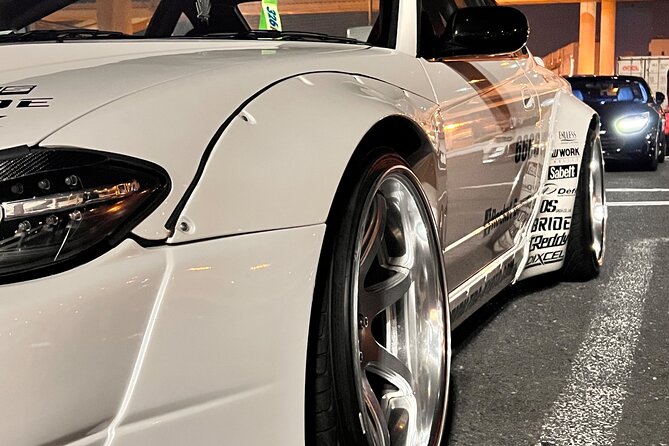
The tour usually allows about one hour at Daikoku Parking Area. That is enough time to get out, walk around, inspect the cars, and take photos without feeling rushed.
Daikoku has been a major meeting place for more than 30 years. Its appeal comes from the mixture. You might see carefully restored Japanese classics beside heavily modified modern cars, a row of GT-Rs, a Ferrari, a Lamborghini, a luxury sedan, or a build that makes sense only after someone explains the work behind it.
The reviews describe nights with many cars, including multiple generations of GT-R, older Skylines, European exotics, and even an LFA appearing shortly before departure. Those moments cannot be arranged, but the tour places you in the right setting to catch them.
I like that the experience does not pretend to control the scene. There is no guaranteed model, number of cars, or level of activity. A Friday or weekend may bring a fuller lot, but even that is not a promise. The best approach is to enjoy the whole range, from the car you recognize immediately to the unusual build you have never seen before.
Daikoku is a public rest area, not a private attraction. It can close without notice. If that happens, the host changes the route and provides other stops. The tour also may be canceled in heavy rain, while ordinary wet weather can still mean a worthwhile evening. One family had a good experience in the rain, with the guide allowing time to look around despite the conditions.
Respect matters here. Keep the volume down, do not touch cars, and follow the host’s instructions. The scene is built around enthusiasm and courtesy, not disruption.
The ride can be as memorable as the stops
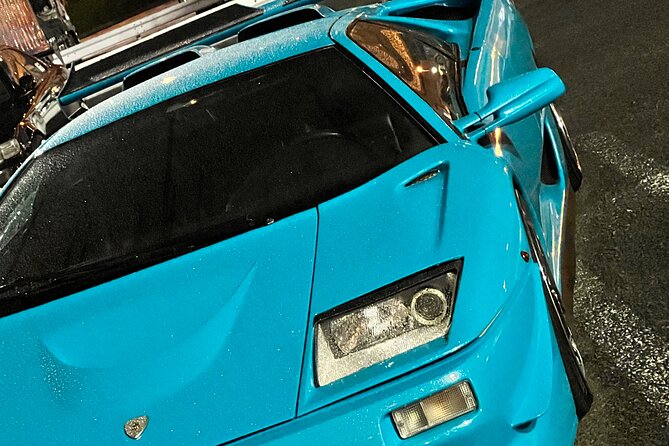
MisiuJDMX uses a range of clean, well-maintained vehicles. Depending on the group and availability, you might ride in a spacious van, a Lexus, a Nissan Skyline, a Mazda RX-7, another JDM car, a European model, or a luxury vehicle.
The vehicle choice is not guaranteed, so I would not pay expecting one exact car. Still, the possibility adds a nice bonus. One visitor was upgraded from the van to a sedan, while others rode in an RX-7 or Skyline. Another described the back seat of the RX-7 as small but manageable for a shorter passenger. If you are tall or have limited space needs, contact the provider before booking and ask about the vehicle option.
The van is the practical choice for larger groups. Depending on group size and remaining seats, a party may need to split between two vans. That is worth knowing if you are booking with friends or family and want everyone in one vehicle.
The driving style is intended to be safe and responsible. You get the sensation of Tokyo’s fast road network and the famous loop around the city, but not a racing session. Some visitors describe the expressway drive as feeling like a real-life racing game, but the tour does not include illegal drifting, street racing, or loud rev battles.
What the guides add to the evening
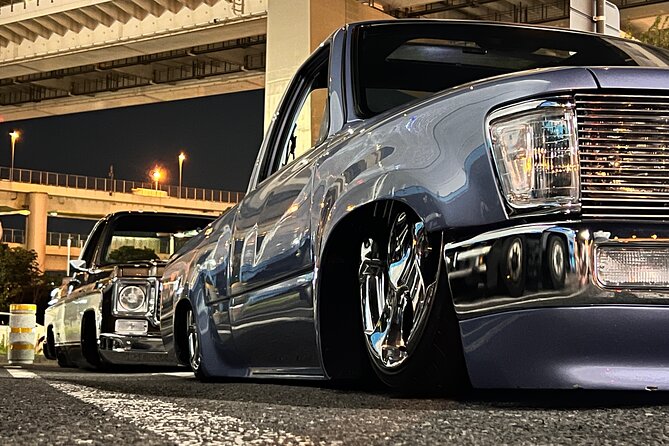
The strongest part of this tour is often the conversation between stops. The guides explain the cars, the roads, the meet locations, and the cultural background. Michael is associated with more than 25 years in the auto industry, working with Japanese, European, and American brands. That kind of experience can help you understand why a car matters, not just what badge it wears.
Mori is praised for explaining both Tokyo and its car culture. Karim is often described as a careful driver who keeps the ride fun without making it reckless. Jason has been appreciated for his explanations and his work behind the wheel of the RX-7. Julian is noted for giving groups enough time at each stop.
The tone varies by guide and group, but English is the default. Japanese, Polish, German, and Italian may also be available. If you have detailed questions about a particular model, ask early in the ride. The small-group format makes it easier to have a real conversation than on a large bus tour.
Is $98 a fair price?
At $98 per person, I see this as a fair price if you value transport, local access, and a host who can explain the scene. You are paying for four hours of driving, several stops, city views, all listed fees and taxes, and a small group capped at 10 people. That compares well with a private car hire, especially since you would need local route knowledge and a vehicle to reach these places yourself.
The price is less compelling if you only want to see a guaranteed collection of supercars. No tour can control who arrives at Daikoku, and the parking area may close. You are buying a well-planned chance to enter the scene, not a fixed car exhibition.
Food, drinks, and souvenirs are extra. You cannot smoke, eat, or drink in the vehicle. Bring a passport or other ID, particularly if the provider requests it for the activity.
Free cancellation is available up to 24 hours before departure, and you can reserve now and pay later. Children under five are not accepted. Children aged five to seven who need a booster seat require advance contact with the provider. The experience is not suitable for wheelchair users.
Who should book this car culture tour?
I would recommend it first to JDM fans, racing-game players, car photographers, and anyone curious about the social side of Japanese motoring. It also works well as a birthday surprise. One family booked it for a son and found that the car enthusiast and the less car-focused parent could both enjoy the evening.
You do not need to know every Skyline generation to have a good time. The city views, unusual vehicles, and moving route make the experience accessible to beginners. Still, anyone expecting a proper drifting lesson or a guaranteed ride in a particular performance car should choose another activity.
The tour suits couples and small groups particularly well. A solo participant can also fit in easily because the guides encourage conversation and the group size stays limited. If you are booking with children, check the age rules and vehicle seating before paying.
Practical tips for getting more from the night
- Choose an evening departure when possible. The Rainbow Bridge, Tokyo Tower, and skyline views are central to the mood.
- Ask about the vehicle option if riding in a particular type of car matters to you.
- Keep expectations flexible. The best car of the night may be a surprise.
- Bring a phone or camera, but do not block walkways or touch vehicles at the meets.
- If APIT interests you, move quickly. Twenty-five minutes passes fast in a large automotive store.
- Expect changes on weekends, in bad weather, and during heavy traffic.
- If Daikoku closes, judge the tour by the full route, not only by that one stop.
Should you book it?
Book this tour if you want access to Tokyo’s car scene with a local host, a comfortable ride, and enough time at Daikoku to look around properly. The best parts are the combination of roads, city lights, APIT Autobacs, and the unpredictable mix of cars at the meet.
Skip it if you need a guaranteed Skyline, supercar, or racing experience. For most people who want the real atmosphere behind the movies and games, $98 buys a well-paced evening and a far more useful introduction than simply trying to find Daikoku on your own.
FAQ
How long is the Tokyo Daikoku car meet tour?
The experience lasts four hours. The route and timing can change because of traffic, weather, weekends, and the activity at each stop.
What places does the tour visit?
The route may include APIT Autobacs Shinonome, Tatsumi 1st Parking Area, and Daikoku Parking Area. It also passes sights such as Roppongi Hills, Rainbow Bridge, Tokyo Skytree, Haneda Airport, Tokyo Tower, and parts of Tokyo and Yokohama.
Is Daikoku Parking Area guaranteed to be open?
No. Daikoku is a public rest stop and can close without notice. If it closes, the host adjusts the route and provides another experience.
Can I choose the vehicle I ride in?
Vehicle type depends on availability, group size, and the option booked. Possible vehicles include vans, JDM cars, European cars, luxury models, and factory performance cars. A specific model is not guaranteed.
How many people can join the tour?
The tour is limited to 10 participants. A larger booking using the van option may need to split between two vans if seats are limited.
Is the tour available in languages other than English?
English is the default language. Japanese, Polish, Italian, and German may also be available.
Can children join the experience?
Children under five cannot join. If a child aged five to seven needs a booster seat, contact the provider before the tour date.
What happens if the weather is bad?
Tours usually operate in most weather, but heavy rain may lead to cancellation for safety and comfort. The host may also change the route because of weather conditions.
Just added around Tokyo
- Kawagoe Japanese Food Tour : Unagi Kaiseki and Sake near Tokyo★ 5.0 · 30 reviews
- Kawagoe 4hr Private Tour with Licensed Guide (Kawagoe Dep)★ 5.0 · 13 reviews
- Little EDO Sushi Making workshop in Kawagoe★ 5.0 · 18 reviews
- 【R34】Tokyo:Private Daikoku tour in Modified R34★ 4.9 · 92 reviews
- :Tokyo,Shibuya/ Pro Photography in Kimono / English-Friendly★ 5.0 · 26 reviews
- Tokyo:Celebrate Unique Japanese New Year Tradition Festivity★ 3.9 · 20 reviews
- Tokyo: Allstar Food Tour★ 4.7 · 29 reviews
- Tokyo: West-Side Cycling and Food Tour with Guide★ 5.0 · 37 reviews
JDM & Car Meets, compared.
FAST&FURIOUS EXPERIENCE Tokyo Car Club membership
Our verdict →
EVO, WRX, Skyline – JDM Night Run to Daikoku Car Meet
Our verdict →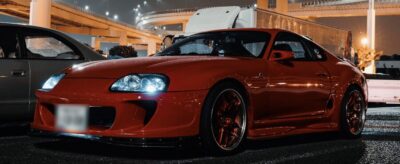
Tokyo Drift: Daikoku PA Supreme Car Experience 大黒PA
Our verdict →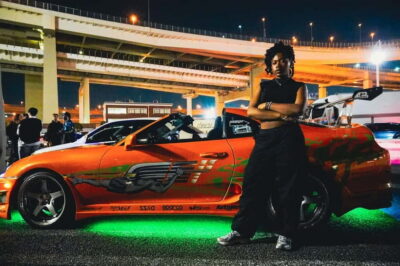
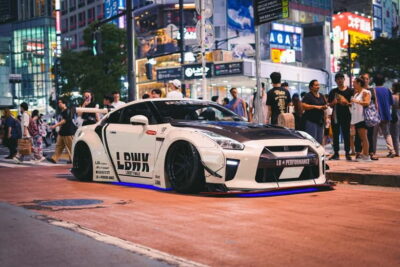
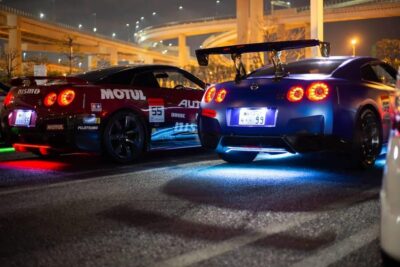
Tokyo JDM Night: 600hp C63s AMG Edition 1 (Private)
Our verdict →Browse the lists this tour appears in