
Reviewed · COOKING CLASSES
Tokyo: Night Cooking Class: 5 Home-Cooked Japanese Dishes
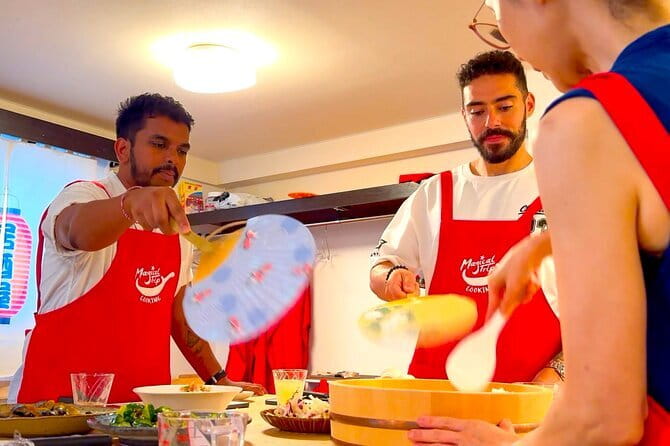
Tokyo’s best food lessons do not always take place in grand cooking schools. This three-hour izakaya-style class brings you into the relaxed world of Japanese home drinking, where small plates arrive one after another and the food is made to suit the drink. You will cook sushi hand rolls, wagyu or tofu steak, Japanese rolled egg, and grilled eggplant with miso sauce.
I like two things right away: the small group of up to six keeps the class personal, and the recipes use ingredients you can usually find outside Japan. Guides such as Alice, Masae, and Fuji have been praised for making the evening friendly, clear, and fun. The main consideration is that the published material describes five dishes, while the included menu specifically names four, so ask ahead about the exact fifth item.
Key points to know before booking
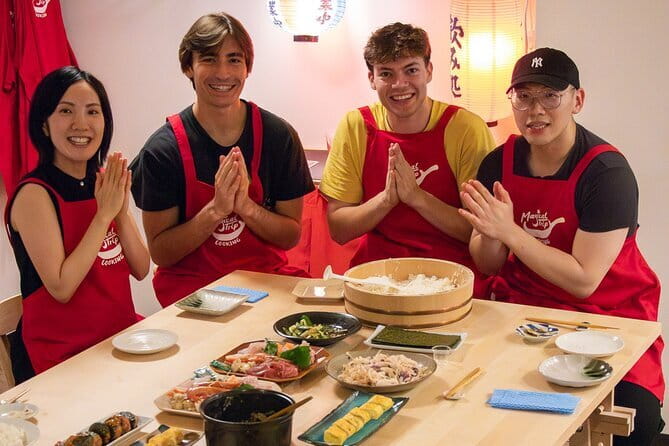
- Japanese home drinking culture: Learn how small dishes fit around sake, beer, and other drinks in a casual nomikai setting.
- Four named dishes: Make sushi hand rolls, wagyu or tofu steak, rolled Japanese egg, and miso-glazed grilled eggplant.
- Three drinks included: Choose alcoholic or soft drinks, with alcohol limited to people aged 20 and over.
- A genuinely small class: The group is limited to six, which gives you more room to ask questions and handle the cooking yourself.
- Recipes for home use: Take the instructions with you so the food can return to your own dinner table.
- Dietary limits matter: Vegetarians can be accommodated, but the class is not suitable for vegans or people requiring gluten-free food.
Why an evening cooking class fits Tokyo so well
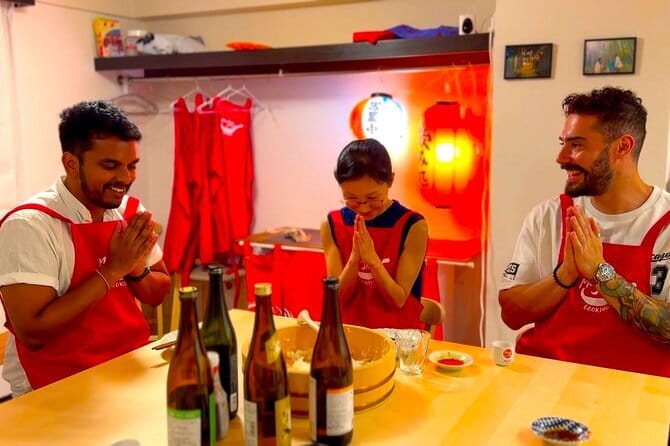
Many Japanese food experiences focus on sushi, ramen, or tea. This one takes a broader view. It shows you how Japanese people often eat at home or in an izakaya, with several modest dishes shared over drinks instead of one large main course.
That matters because the cooking is tied to a social habit. You are not simply learning how to slice fish or roll rice. You are learning how salty, sweet, smoky, crisp, and savory foods work together across an evening.
The class is held at night, which gives it a different mood from a daytime market visit. You can meet at Iriya Station, cook, eat, and finish with the feeling that you have attended a small Japanese dinner party rather than a formal lesson.
I especially like the practical angle. The recipes are designed around ingredients available in your home country, so you do not need to search for a specialist Japanese grocery after returning home. That makes the $103 price easier to judge. You are paying for instruction, food, three drinks, equipment, recipes, photos, and a social evening, not just for a meal.
More Cooking Classes in Tokyo
- Ramen & Gyoza Cooking Class in Tokyo with Local Supermarket Visit
★ 5.0 · 823 reviews - Tokyo: Easy Ramen Cooking Experience in Kabukicho, Shinjuku
★ 4.6 · 321 reviews - Ramen and Sushi Cooking Class with Sake Pairing Set in Tokyo
★ 5.0 · 291 reviews
Finding the meeting point near Iriya Station
The meeting point is in front of the FamilyMart next to the Gindako takoyaki shop at Iriya Station Exit 2. This detail is important because there are two FamilyMart stores near the station.
Look for the FamilyMart beside both Gindako and Doutor Coffee. If you walk to the wrong convenience store, you may lose time before the class even begins. I would save the meeting instructions on your phone and allow a few extra minutes to identify the correct shop.
There is no hotel pickup or drop-off. You make your own way to the station, which keeps the arrangement simple but means you need to plan your return trip after the evening ends. The activity lasts three hours, but the exact starting times vary, so check the available slot before booking.
The cooking begins with an izakaya frame
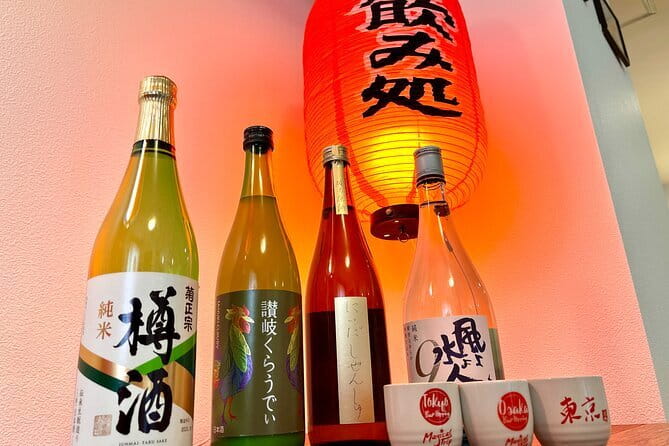
The evening is built around the idea of a Japanese nomikai, a social drinking gathering where food and drinks share equal billing. In this setting, the dishes are not meant to compete with one another. Each one brings a different taste or texture to the table.
You might prepare ingredients, learn basic cooking methods, and then sit down to taste the results with the group. The class is hands-on, so you should expect to take part rather than watch a guide do all the work.
That makes the small group size useful. With no more than six participants, there is less chance of standing at the back or waiting too long for a turn. It also gives you a better chance to ask about Japanese cooking habits, drink pairings, and ways to adapt the recipes at home.
The English-speaking guide is part teacher and part host. Alice has been praised for her lively instruction and ability to make the night fun. Masae has taken participants through a local supermarket before welcoming them into the cooking studio, adding a useful shopping angle. Fuji has also been singled out as a strong instructor.
Guide assignments can vary, so you should not book on the assumption that one particular person will lead your class. Still, the repeated pattern is clear: the guide’s warmth and teaching style are a major part of the experience.
Four dishes that give you a useful taste of Japan
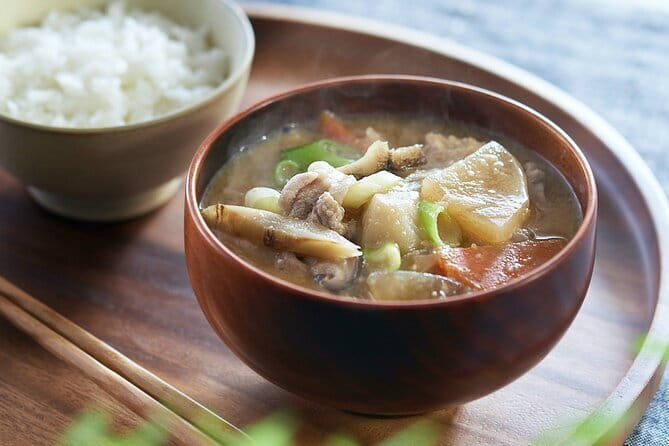
The included dishes cover several common Japanese techniques and flavors.
Same trip, a completely different kind of day:
- 1-Day Tokyo Bus Tour
★ 5.0 · 14,250 reviews - Tokyo: TOKYO SKYTREE® Admission ticket
★ 4.5 · 11,192 reviews - Tokyo: teamLab Planets TOKYO Digital Art Museum Entry Ticket
★ 4.6 · 9,779 reviews - Tokyo: Sumo Show Experience with Chicken Hot Pot and a Photo
★ 4.8 · 6,678 reviews
Sushi hand rolls
Hand rolls are a good choice for a group class because they are less rigid than formed sushi. You can assemble them yourself and adjust the filling to your taste.
The lesson gives you a look at the balance between rice, seaweed, and filling. It also fits the social purpose of the class: hand rolls are easy to make, pass around, and eat without formal table service.
Wagyu or tofu steak
The steak course offers a meat option, while tofu provides a vegetarian alternative. This is one reason to state your diet clearly when booking.
Wagyu gives the meal a special-occasion feel, but it is worth remembering that the class is not presented as a full wagyu tasting. The value is in learning how the ingredient fits into a small Japanese drinking menu.
Tofu makes the dish more flexible for vegetarians. Vegetarian participants are welcome, and the cooking process and ingredients can be arranged for them. Vegans are not accepted, however, so vegetarian and vegan should not be treated as interchangeable here.
Japanese-style rolled egg
Japanese rolled omelette, often called tamagoyaki, is deceptively simple. The finished egg looks neat, but getting the layers right takes attention.
This is a useful home skill because the dish can work at breakfast, in a lunch box, or as part of a larger Japanese meal. In an izakaya setting, its gentle sweetness gives your palate a break from stronger flavors such as miso or grilled meat.
Grilled eggplant with miso sauce
Eggplant with miso brings smoky, sweet, and savory notes to the table. It also shows how a humble vegetable can become a satisfying small plate through careful grilling and a strong sauce.
I like this inclusion because it keeps the menu from becoming meat and seafood heavy. It gives you a dish that is easy to repeat at home and useful for serving vegetarian friends.
The experience is promoted around five home-cooked dishes, and the broader description also refers to skewers, tempura, and pickles. The included details name the four dishes above, so the exact fifth preparation may depend on the class or current menu. Confirm this if the number of dishes is central to your decision.
Drinks are part of the lesson, not an extra purchase
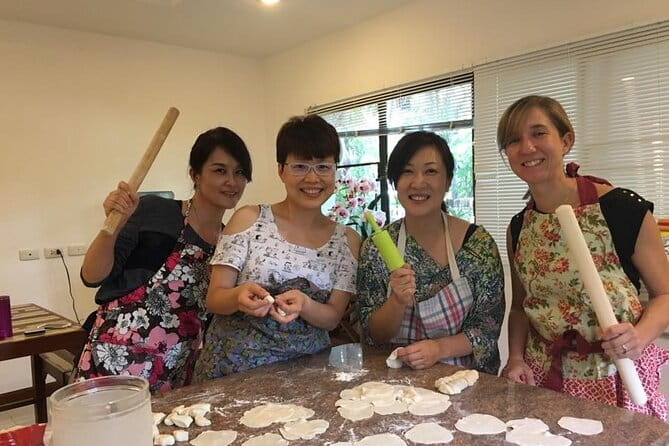
Three cans of alcoholic or soft drinks are included. The class is meant to show how different foods pair with Japanese drinks, so the beverages are not merely refreshments.
You may taste sake, Japanese beer, or nonalcoholic options, depending on your age and preference. Japanese law allows alcohol only for people aged 20 and over. Children and younger participants can take part in the cooking, but they cannot join the sake or alcoholic tasting.
The drink pairing element adds value for anyone who enjoys Japanese beer or sake. You can pay attention to how a salty snack, sweet egg, grilled vegetable, or richer steak changes the taste of the drink.
It also makes the evening feel more social. You cook, sit down, taste, and talk. Solo visitors can meet other people without needing to arrange a separate night out, while couples and friends get an activity with more substance than simply ordering dinner.
What the small-group format means for you
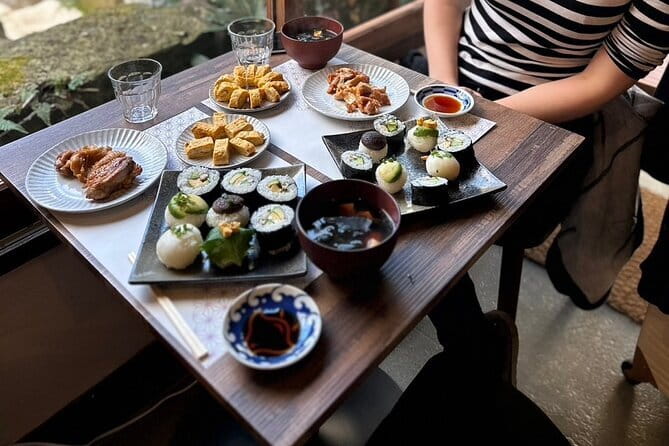
A limit of six participants is one of the strongest features here. Cooking classes can become frustrating when several people crowd around one work surface or when the instructor has to repeat every step to a large room.
A six-person cap does not guarantee a private class. The class may include other participants, and the group size can vary. One couple once had a session with only three people, but you should treat that as a possibility rather than a promise.
The intimate format is especially helpful if you are a beginner. You can ask how to handle a technique, check whether your egg is rolling correctly, or ask what substitute to use at home. Experienced cooks will likely enjoy the cultural context and the chance to compare Japanese methods with their own.
Families need to read the age rules carefully. The activity information says participants can be aged six and above, but the booking guidance also lists it as unsuitable for children under 12. Knife and hot cooking steps are limited to those aged 12 and over, with parent or guardian supervision. In practical terms, older children may enjoy it most, while younger children may spend time in the available playroom rather than taking part in every task.
A practical look at the $103 price
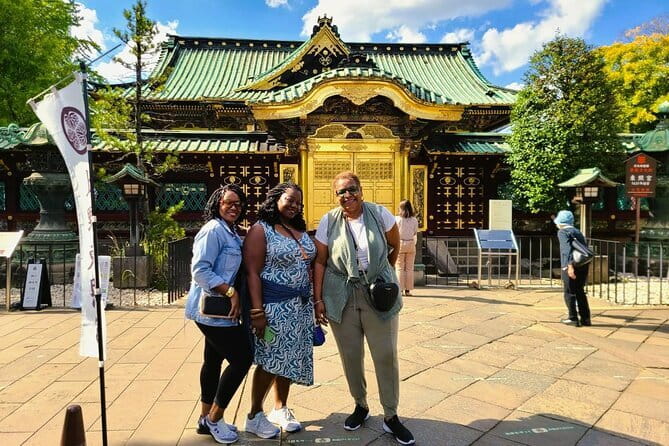
At $103 per person, this is not a cheap dinner. It can still be fair value if you want instruction, food, drinks, and a personal group setting in one evening.
The price includes all ingredients, cooking equipment, a local English-speaking guide, three alcoholic or soft drinks, recipes, and tour photos. You also get a meal you helped prepare, which makes the cost easier to justify than a standard restaurant bill if you care about learning.
The strongest value comes after the class. The recipes are intended for home use, and the ingredients are chosen with international kitchens in mind. If you recreate even a few dishes for friends, the experience gives you more than a one-night meal.
The value is weaker if you want a long list of rare ingredients, advanced professional training, or a full evening of unlimited drinks. This is a friendly cultural cooking class, not a chef certification course or a sake seminar.
Dietary needs, comfort, and access
Vegetarians are welcome, and the cooking process can be adjusted for them. The class is not suitable for vegans or people who need gluten-free food.
Allergy handling also deserves careful attention. The food is prepared in kitchens that do not belong to MagicalTrip, and an allergy-free environment cannot be guaranteed. Substitutions may not always be possible, although the team will try to compensate at other points in the meal.
Tell the operator about dietary needs before you commit, and do not assume that a requested substitution will be available. If cross-contact with allergens poses a serious risk, this is probably not the right cooking class for you.
Some parts of the itinerary are not accessible by wheelchair or stroller. Smoking is not allowed. Pregnant participants are listed as unsuitable for the activity, so this is another point to settle before booking.
Who will enjoy this class most
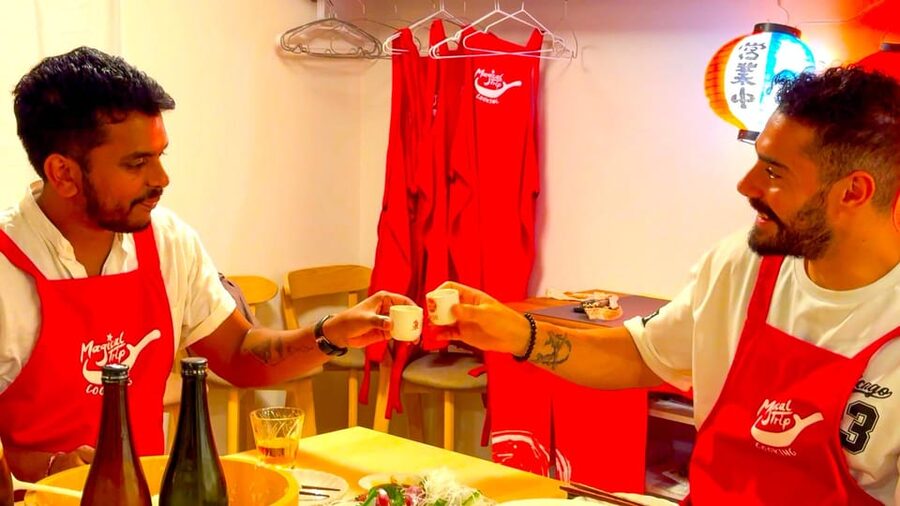
I would choose this experience for you if you want food to be a way into everyday Japanese culture. It suits:
- Couples who want a shared evening activity instead of a standard restaurant meal
- Solo visitors who enjoy meeting a few people in a relaxed setting
- Friends looking for recipes they can use at home
- Sake and Japanese beer fans who want to connect drinks with food
- Beginner cooks who prefer guided, hands-on instruction
- Vegetarian participants who can eat dairy, eggs, and other non-vegan ingredients
I would hesitate if you need a fully accessible route, strict gluten-free preparation, vegan food, or a guaranteed private class. I would also check the menu if you are specifically booking for five clearly defined dishes.
Should you book the Iriya cooking class?
Book it if you want a warm, social evening that teaches you how Japanese small plates fit around drinks. The combination of a six-person limit, take-home recipes, three included drinks, and named guides such as Alice, Masae, and Fuji gives the class a personal feel.
The best reason to choose it is not the promise of a fancy meal. It is the chance to understand the rhythm of Japanese home drinking culture and leave with dishes you can make again.
Skip it if your needs require strict allergy control, vegan or gluten-free cooking, full wheelchair access, or a guaranteed private lesson. Also confirm the current menu if the advertised five dishes are important to you. For everyone else, the $103 cost is reasonable for a three-hour class, dinner, drinks, and practical skills you can carry home.
FAQ
How long does the Tokyo cooking class last?
The class lasts three hours.
Where do I meet the guide?
Meet in front of the FamilyMart next to the Gindako takoyaki shop at Iriya Station Exit 2. There are two FamilyMart stores near Iriya Station, so use the one beside Gindako and Doutor Coffee.
What language is the class conducted in?
The live tour guide speaks English.
How many people can join the class?
The group is limited to six participants. The class may include other participants, and a private session is not guaranteed.
What dishes are included?
The included cooking activities specifically name sushi hand rolls, wagyu or tofu steak, Japanese-style rolled egg, and grilled eggplant with miso sauce. The experience is promoted as a five-dish class, so confirm the current fifth dish before booking.
Are drinks included?
Yes. Three cans of alcoholic or soft drinks are included. Alcoholic drinks and sake are available only to people aged 20 and over.
Can vegetarians join?
Yes. Vegetarian participants are welcome, and the ingredients and cooking process can be arranged. The class is not suitable for vegans or people who need gluten-free food.
Can children take part?
The activity is open to participants aged six and above, but knife and hot cooking steps are only for people aged 12 and over under parent or guardian supervision. The booking information also lists the experience as unsuitable for children under 12, so families should confirm the age policy before booking.
Just added around Tokyo
- Kawagoe Japanese Food Tour : Unagi Kaiseki and Sake near Tokyo★ 5.0 · 30 reviews
- Kawagoe 4hr Private Tour with Licensed Guide (Kawagoe Dep)★ 5.0 · 13 reviews
- Little EDO Sushi Making workshop in Kawagoe★ 5.0 · 18 reviews
- 【R34】Tokyo:Private Daikoku tour in Modified R34★ 4.9 · 92 reviews
- :Tokyo,Shibuya/ Pro Photography in Kimono / English-Friendly★ 5.0 · 26 reviews
- Tokyo:Celebrate Unique Japanese New Year Tradition Festivity★ 3.9 · 20 reviews
- Tokyo: Allstar Food Tour★ 4.7 · 29 reviews
- Tokyo: West-Side Cycling and Food Tour with Guide★ 5.0 · 37 reviews
Cooking Classes, compared.

Browse the lists this tour appears in