
Reviewed · NARA TOURS
Private Nara Tour from Osaka – Meet at Your Hotel
Nara’s greatest pleasure is how quickly the city shifts from urban Osaka to temple roofs, old lanes, and deer wandering through the park. This private tour takes you to Todai-ji and its 15-meter Great Buddha, then adds Kofuku-ji, Himuro Shrine, Yoshikien Garden, and a short walk along Higashimuki Shopping Street.
I like the private format, since guide Masa can adjust the pace and answer all your questions. I also like the clear cultural mix: you get major sights, a local lunch stop, time with Nara’s deer, and an English-speaking guide who can explain the difference between temples and shrines.
The main consideration is cost and timing. At $514 for a group of up to six, the price can make good sense for a full group, but you still pay train fares, lunch, and drinks separately. The six-hour schedule is efficient, not leisurely, with about 70 minutes on the train each way.
Key points to know before booking
- Masa is the named guide: He is praised for clear English, patience, flexibility, and detailed explanations, with printed Spanish information available on request in at least one case.
- Todai-ji is the centerpiece: You see the enormous Great Buddha and learn why the temple became such an important Buddhist site.
- Nara Park is more than a photo stop: You can feed the free-roaming deer and walk through the setting around the temples.
- The day covers several different places: Kofuku-ji, Himuro Shrine, Yoshikien Garden, Higashimuki Shopping Street, and Todai-ji each offer a different view of Nara.
- The price works best for a group: Entrance fees and hotel meet-up are included, but transportation, lunch, and drinks are not.
- Plan for walking: Comfortable shoes, water, sunscreen, and a camera are sensible choices.
Leaving Osaka for Japan’s first permanent capital
The day begins with a hotel meet-up in Osaka, followed by a train ride of roughly 70 minutes. That transfer is not just a way to get from one city to another. It gives you time to leave the dense streets of Osaka behind and arrive in a place shaped by temples, gardens, and long religious traditions.
Your exact travel time can vary with your hotel location. The train fare is also not included, so factor that into the advertised group price before you book. A private guide helps here, since you do not have to work out the route alone or keep a large group together.
The full experience lasts six hours, including the return train ride. That makes it a practical choice for an Osaka stay when you want a substantial cultural outing without committing a full day from early morning until late evening.
A few more Nara half-days worth comparing
- World Heritage Kyoto & Nara Uji Authentic Matcha Experience
★ 5.0 · 1,573 reviews - Kyoto/Osaka: Nara, Fushimi Inari Taisha, Arashiyama Bus Tour
★ 4.7 · 1,275 reviews - Nara Half Day Trip Walking Tour (Private Option Available)
★ 5.0 · 937 reviews
Higashimuki Shopping Street gives you a quick local orientation
The first walking stop is Higashimuki Shopping Street, with about 20 minutes for a guided look around. This is a short introduction rather than a shopping expedition, but it helps you get your bearings before the temples begin.
The value of this stop comes from the contrast. Nara is not only a collection of famous religious buildings. It is also a living city, with shops, snacks, and everyday streets connecting the historic sights.
Do not expect a long browsing session here. Twenty minutes passes quickly, especially if you want to stop for food or souvenirs. If snacks matter to you, mention that to Masa early. His flexible approach has allowed extra snack stops for some groups, but additions should be arranged or requested during the day rather than assumed.
Kofuku-ji shows Nara’s temple tradition in a compact visit
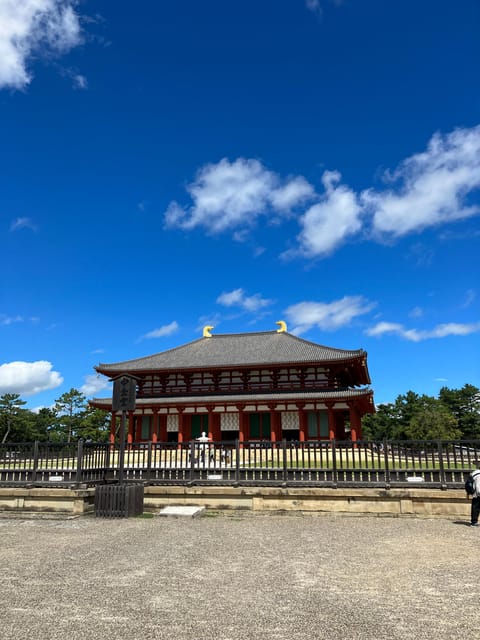
Kofuku-ji receives about 30 minutes of guided attention. It was originally built in 669 and is counted among Nara’s Seven Great Temples. It is also part of the UNESCO World Heritage designation for the historic monuments of ancient Nara.
This is a useful first temple because it gives you a frame for the rest of the day. You can look closely at the wooden architecture while Masa explains how temples fit into Japan’s religious and cultural past. The grounds have a calm feel, a welcome change after the train ride and shopping street.
Thirty minutes is enough for an introduction and a guided walk, but not for a slow study of every building or treasure. If you are especially interested in Buddhist art or architecture, you may wish the stop were longer. The benefit of a private tour is that you can tell Masa where your interests lie, and he can direct the explanation toward them.
Nara Park puts the deer beside the temples
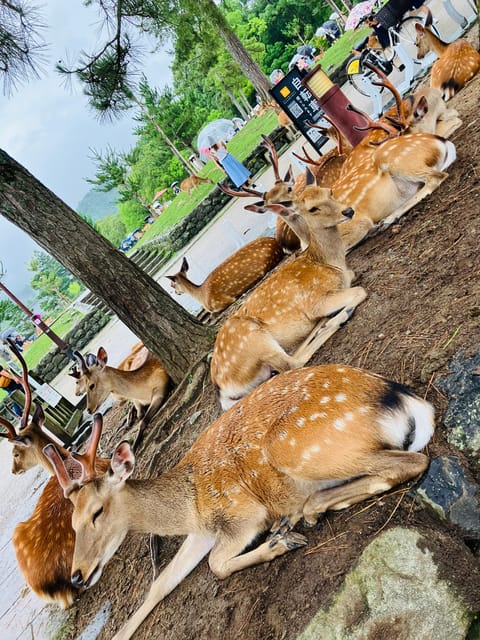
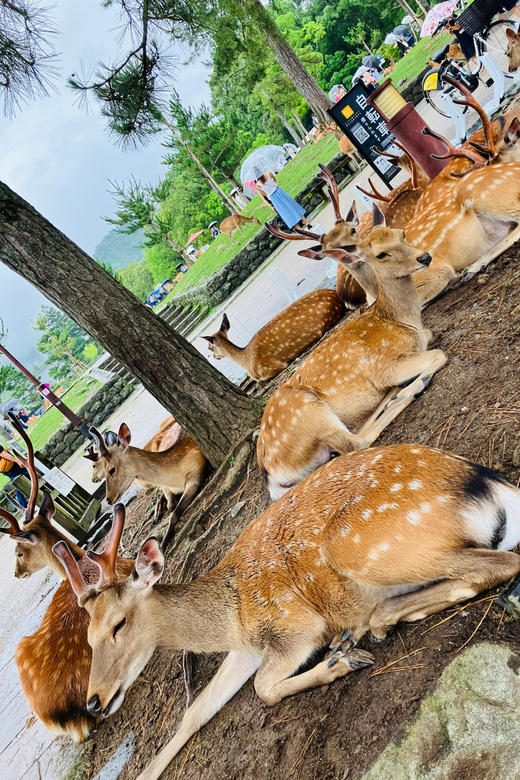
Nara Park is the part many people picture first, and the tour gives it about 30 minutes. The deer roam freely here, and you have the chance to feed them and take photographs.
These are not simply park animals. Deer have been linked with Nara for centuries and are regarded as sacred messengers of the gods. That belief helps explain why the animals are such a central part of the city’s identity.
The deer encounter is memorable, but keep your attention on the animals rather than treating them as tame props. They are friendly, yet they remain animals with their own behavior. The park also gives you open views toward the surrounding area and a chance to walk at an easier pace between temple visits.
Families and photographers will likely value this stop most. If you are traveling with young children, the deer provide a welcome change from formal history. If temples are your only interest, the park may feel like a short pause, but it is also the bridge between Nara’s natural setting and its religious sites.
More Private-Only Departures in Nara:
- Kyoto/Osaka: Kyoto and Nara Customized Private Guided Tour
★ 4.6 · 258 reviews - Nara 6hr Private Tour with Government-Licensed Guide
★ 5.0 · 219 reviews - Kyoto Private Car Tour – Full Day with Local Guide & Nara Option
★ 5.0 · 169 reviews - From Osaka/Kyoto: Private Kyoto & Nara Day Trip with Pickup
★ 4.7 · 122 reviews
Lunch is included in the schedule, not the price
The tour allows one hour at a local restaurant. This is helpful because the day has several walking stops, and a proper break keeps the schedule from becoming a string of hurried visits.
Lunch and drinks are not included, so bring that extra cost into your planning. The restaurant is described as local, but a specific menu or restaurant is not provided. That means you should ask Masa about the available choices if you have dietary needs or a particular food preference.
The one-hour pause is also a good moment to discuss the second half of the day. Since this is a private group, you can ask questions about the shrine and garden stops ahead. You may also want to use the break for water, especially in warm weather.
Himuro Shrine adds a quieter religious stop
After lunch, the tour visits Himuro Shrine for around 20 minutes. The shorter stop gives you a chance to see a shrine rather than another Buddhist temple, which makes the day more varied.
This difference matters. Japan’s temples and shrines can look similar to a first-time visitor, especially when you are moving quickly between historic sites. A guide can point out the difference in purpose and tradition, helping you understand what you are seeing instead of collecting names and photographs without context.
Twenty minutes is a brief visit, but that brevity keeps the whole outing within six hours. If you prefer quiet places and careful observation, you may wish for more time here. If your priority is seeing Nara’s biggest landmarks, the short stop is a reasonable trade.
Todai-ji and the Great Buddha are the day’s main event
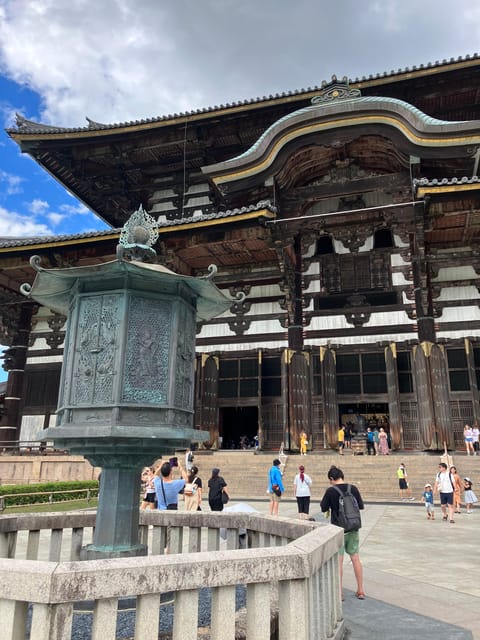
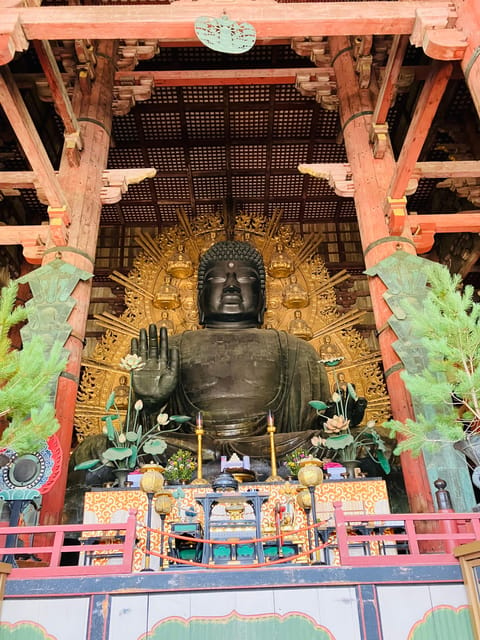
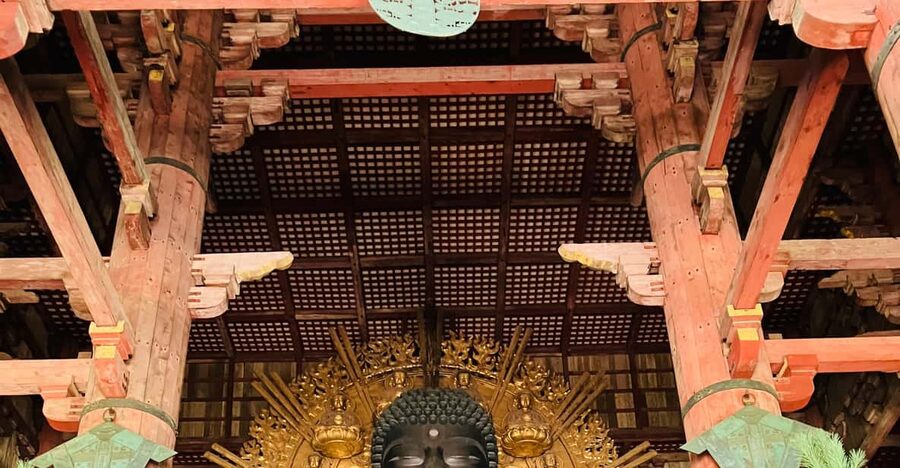
Todai-ji receives about one hour, and this is where the tour reaches its full scale. The temple is home to the Great Buddha, a bronze statue about 15 meters tall. The size of the figure and the surrounding temple complex make this more than a routine sightseeing stop.
Todai-ji was founded in the eighth century and became an important symbol of Buddhism in Japan. Masa can explain how the temple fits into Nara’s role as the country’s first permanent capital, giving the building a place in the larger story rather than presenting it as an isolated monument.
One hour allows time to enter, look carefully, take photographs, and hear the main historical points. It is still not an unlimited visit. The temple attracts many people, and you may need to share your attention between the Buddha, the building, and the flow of the visit.
This is where a private guide earns much of the fee. Masa has been praised for answering many questions patiently and for explaining details clearly. If you want to know how temple and shrine traditions differ, how the Great Buddha was made, or why Todai-ji matters, ask directly. The experience will be better if you treat the tour as a conversation rather than a lecture.
Yoshikien Garden provides a calm final stop
The final sightseeing stop is Yoshikien Garden, with around 20 minutes for a guided visit. After the size and crowds of Todai-ji, a garden offers a quieter finish.
The short visit works as a pause before returning to Osaka. You can slow down, take photographs, and enjoy the garden setting without needing to absorb another large block of history. It also gives the day some visual variety. You have seen shopping streets, temple buildings, open parkland, a shrine, and now a traditional garden.
Again, 20 minutes is enough for an overview but not a long, unhurried garden visit. If gardens are your main interest, this tour may leave you wanting more time. If you want a broad introduction to Nara in one outing, the balance is sensible.
The private format and guide Masa
The strongest reason to choose this experience is the guide. Masa is specifically named in the feedback, and the praise is consistent: clear English, punctuality, patience, warmth, and the ability to tailor the day to personal interests.
That flexibility matters more than it might at first appear. One group arranged an additional destination in advance. Another received printed information in Spanish, even though the advertised guide languages are English and Japanese. A guest who wanted extra snack stops was accommodated. These details suggest you should contact the operator before the tour if you need a change, rather than waiting until the last minute.
Masa was also praised for explaining the difference between temples and shrines. That is exactly the sort of detail that turns a sightseeing route into a useful introduction to Japan. The guide was born and raised in Japan, according to the tour information, and gratuity is optional but appreciated.
The private group format means you are not sharing the day with strangers. You can ask basic questions without holding back, spend a little longer at a favorite place when possible, or signal that you are ready to move on. The schedule still has fixed limits, so private does not mean completely open-ended.
Does $514 offer good value?
The advertised cost is $514 per group of up to six. At the maximum group size, that works out to about $86 per person before train fares, food, and drinks. For a couple or a smaller group, the per-person cost rises quickly.
The price includes entrance fees to the mentioned sites, hotel meet-up and return with the guide, and the private guiding service. Transportation fees are separate, despite the convenient hotel pickup, and lunch is also separate.
I see the value most clearly for a group of four to six people who want a private day and would otherwise need to organize train travel, temple visits, directions, and historical context themselves. The included hotel service is useful in Osaka, particularly if you do not want to navigate the trip independently.
Independent visitors can spend less by taking the train and visiting the main sights on their own. You would then give up Masa’s explanations, the flexible pacing, and the simple door-to-door arrangement. The decision comes down to how much you value those services, not just the entrance tickets.
Free cancellation up to 24 hours before the activity and reserve-now, pay-later terms add planning flexibility. These are useful if your Osaka schedule may shift, but they do not change the extra costs for transport and lunch.
Who should book this Nara day trip?
I would recommend it to first-time visitors who want Nara’s essential sights in one organized outing. It also fits families, older relatives, and small groups who value hotel pickup and do not want to manage the route alone.
History fans will appreciate Kofuku-ji, Todai-ji, and the explanation of Nara’s place as Japan’s first permanent capital. Nature lovers and photographers will get their best moments in Nara Park and Yoshikien Garden. The deer are a major draw for children, though you should still wear comfortable shoes and keep water with you.
This is less suitable if you want a very slow temple study, a long shopping session, or a flexible full-day schedule. The train takes roughly 70 minutes each way, and every stop has a planned time. You get breadth and guidance rather than hours at one site.
Wear comfortable shoes. Bring a camera, sunscreen, and water. Since the tour involves outdoor walking and temple grounds, those simple preparations will make the six hours easier.
Should you book it?
Book this tour if you want a well-organized introduction to Nara with a private English-speaking guide, especially if your group can share the $514 cost. Masa’s patience, flexibility, and ability to explain cultural differences add real value beyond simply reaching the sights.
Skip it if you are comfortable arranging your own train trip and prefer to spend as long as you like at one temple. For everyone else, this is a practical way to combine Nara’s major cultural sites, deer-filled park, garden scenery, and local streets in a single Osaka outing.
FAQ
How long does the private Nara tour from Osaka last?
The tour lasts six hours, including the train journeys between Osaka and Nara. The schedule lists about 70 minutes for each train ride, though travel time can vary based on your Osaka hotel location.
What places are visited during the tour?
The route includes Higashimuki Shopping Street, Kofuku-ji, Nara Park, a local restaurant for lunch, Himuro Shrine, Todai-ji, and Yoshikien Garden.
Is lunch included in the tour price?
No. Lunch and beverages are not included, although the schedule includes a one-hour stop at a local restaurant.
Are train fares included?
No. Transportation fees are separate from the tour price. Hotel meet-up and return with the guide are included.
Can I feed the deer in Nara Park?
Yes. The tour includes time in Nara Park, where you can feed the free-roaming deer and take photographs.
What languages does the guide speak?
The listed guide languages are English and Japanese. The named guide, Masa, has been praised for his English explanations, and printed Spanish information was provided to one group.
Just added around Nara
- Private Kyoto Tour by Car with Optional Nara or Osaka Add-Ons★ 5.0 · 36 reviews
- Kyoto, Osaka, Nara Private Tour by Car English Driver Guide★ 4.0 · 63 reviews
- Nara Todaiji Kasuga Taisha Private Full Day Tour From Kyoto★ 5.0 · 13 reviews
- From Kyoto: Nara History Guided Half Day Bus Tour with lunch★ 5.0 · 23 reviews
- Nara 8hr Private Tour – Kyoto DEP. with Licensed Guide★ 5.0 · 115 reviews
- Arashiyama & Nara Highlights: One-Day Private Tour Adventure★ 5.0 · 16 reviews
- Kyoto Private Car Tour – Full Day with Local Guide & Nara Option★ 5.0 · 169 reviews
- Kyoto & Nara Private Tour from Osaka Kyoto Hotel Pick-up★ 4.5 · 32 reviews
Nara Tours, compared.

World Heritage Kyoto & Nara Uji Authentic Matcha Experience
Our verdict →
Nara Half Day Trip Walking Tour (Private Option Available)
Our verdict →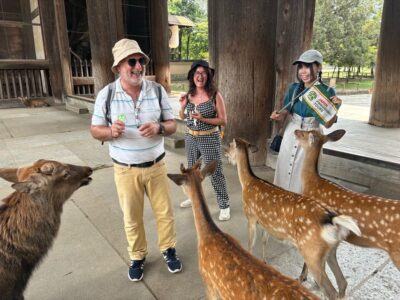
Nara and Uji Day Trip with Deer Park and Hot Spring
Our verdict →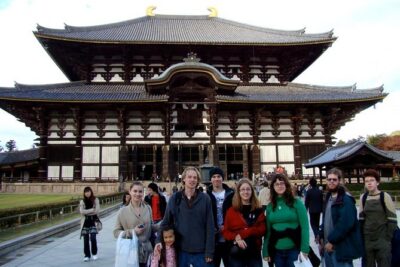
Nara 6hr Private Tour with Government-Licensed Guide
Our verdict →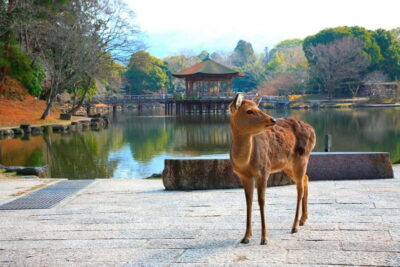
Browse the lists this tour appears in