
Reviewed · BUS TOURS
Osaka/Kyoto: Hiroshima Miyajima Bus Tour & Shinkansen Ticket
Hiroshima and Miyajima make a powerful pairing: one place asks you to face the worst of war, while the other offers a quiet island shrine rising from the sea. This 12-hour day trip covers both without asking you to decode Japan’s rail and ferry systems on your own.
I like the smooth handoff from Shinkansen to tour bus to ferry, and I like that the day includes a proper Hiroshima-style okonomiyaki lunch rather than a forgettable station meal. Guides such as Joe, Kane, Hiro, Azusa, and Chikako have been praised for clear explanations, humor, and personal stories.
The main drawback is time. The Peace Memorial Museum gets roughly an hour, and many people will want longer there. Miyajima also deserves a full day, but this tour gives you about an hour of free time after the shrine. Expect a busy schedule and plenty of walking.
Key points to know before you book
- Two major Hiroshima sights in one day: Visit the Atomic Bomb Dome and Peace Memorial Museum before crossing to Miyajima.
- Shinkansen travel is included: Round-trip tickets from Shin-Osaka or Kyoto Station make the long journey far easier.
- Lunch is local and filling: Hiroshima okonomiyaki comes with pork, cabbage, bean sprouts, fish powder, eggs, and noodles, with dietary choices available by advance request.
- The guide makes the difference: English-speaking guides including Joe, Kane, Hiro, Azusa, and Chikako bring history, jokes, and practical help.
- Miyajima is the emotional reset: Itsukushima Shrine, the ferry ride, island streets, and free time give the day a gentler second half.
- This is not a slow-paced outing: The tour runs for about 12 hours and is not suitable for wheelchair users.
The long ride south is part of the experience
You begin at either Shin-Osaka Station or Kyoto Station, depending on your booking. Staff provide your round-trip Shinkansen tickets and direct you to the correct train. That matters in Japan, where a large station and a tight schedule can turn a simple departure into a small morning ordeal.
The bullet train takes about 1.5 hours each way. I like this arrangement because you get the speed and comfort of Japan’s famous rail system without having to plan separate tickets, transfers, or connections. You can sit down, watch the cities give way to farmland, and save your energy for Hiroshima itself.
Once you reach Hiroshima Station, you meet the English-speaking guide and join the air-conditioned tour bus. The bus is especially useful here. Hiroshima and Miyajima are not impossible to visit independently, but fitting the Peace Park, museum, restaurant, ferry, shrine, and return train into one day takes careful planning.
The group is not private, and the day can include a fairly large number of people. Earphone guides are provided during the walking portions, which helps you hear the guide without crowding around them. Handle them carefully, though, since a lost or damaged device can lead to a replacement charge of up to 18,000 yen.
More Shinkansen Trips in Hiroshima:
- Full Day Hiroshima and Miyajima Tour by Bullet Train from Kyoto
★ 4.5 · 120 reviews - From Osaka: Hiroshima and Miyajima Day Trip by Bullet Train
★ 4.6 · 83 reviews - Mt Fuji and Hakone 1-Day Bus Tour Return by Bullet Train
★ 5.0 · 26,383 reviews
Hiroshima Castle gives you a quick city introduction
The bus passes Hiroshima Castle on the way to the peace sites. You do not get a full castle visit, so think of this as a short scenic introduction rather than a major stop.
That is a sensible trade-off. The castle is pleasant to see, but the focus of this excursion is the Atomic Bomb Dome and Peace Memorial Park. A full castle visit would make an already packed day even tighter.
The Atomic Bomb Dome makes history immediate
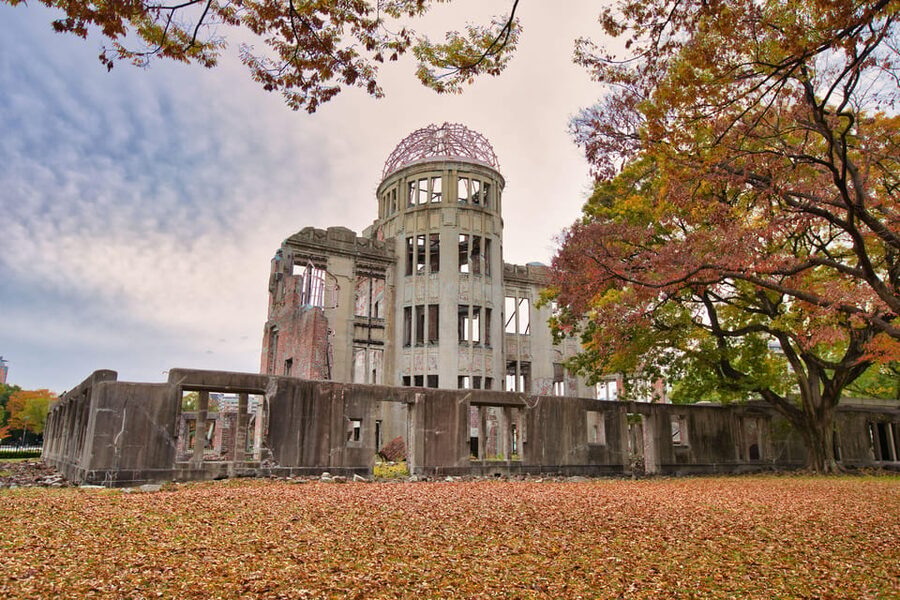
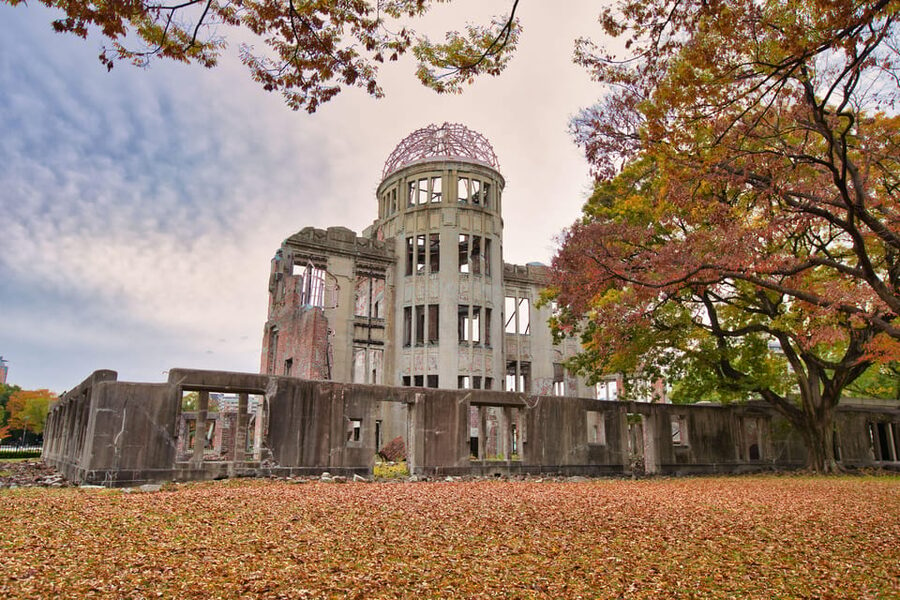
The first major stop is the Atomic Bomb Dome, within Hiroshima Peace Memorial Park. You get about 30 minutes in the area, enough to see the damaged structure, listen to the guide, and take in the setting beside the river.
Photographs do not quite prepare you for the building’s appearance. The exposed framework, empty windows, and remaining dome make the effects of the 1945 atomic bombing visible in a way that a textbook cannot. The site is not presented as a dramatic attraction. It is a place for silence, questions, and a careful look at what remains.
A good guide gives the Dome context without turning the moment into a lecture. Several guides used on this tour, including Joe, Hiro, Kane, and Azusa, are praised for mixing historical facts with personal stories and plain explanations. That approach helps you understand both the event and its lasting effect on Hiroshima.
Give yourself permission to slow down here. The schedule keeps moving, but you do not need to fill every second with photographs. I find that the strongest part of the visit is often the simple act of standing near the building and looking closely.
The Peace Memorial Museum is moving, but the hour goes fast
The tour includes entry to the Hiroshima Peace Memorial Museum, with about one hour inside. This is an important inclusion because the exhibits provide the human detail that the Dome alone cannot.
You will see displays about the bombing, its victims, the physical effects of radiation, and the city’s recovery. The museum is emotionally heavy. It is also frequently crowded, which can make it difficult to stop at every display or read every explanation at your own speed.
That time limit is the clearest weakness of the tour. Several people who enjoyed the day wished they could have spent longer in the museum. If you are deeply interested in wartime history, peace studies, or the personal stories behind the bombing, an independent overnight visit would give you a more complete experience.
Still, one hour is enough to make the visit meaningful, particularly if you have limited time in Japan. I recommend entering with a plan: move through the main galleries first, then return to any exhibit that especially affects you if time allows. Do not expect to absorb every room in detail.
If the museum is closed, the tour substitutes the Hiroshima National Peace Memorial Hall for the Atomic Bomb Victims. The museum’s stated closure period includes December 30 to 31 and February 16 to 21.
More Bus Tours in Hiroshima:
- Peaceful Hiroshima & Miyajima UNESCO 1 Day Bus Tour
★ 5.0 · 5,309 reviews - Full Day Hiroshima and Miyajima Bus Tour from Hiroshima
★ 4.5 · 371 reviews - Hiroshima and Miyajima 1 Day Bus Tour
★ 4.5 · 145 reviews - 1-Day Tokyo Bus Tour
★ 5.0 · 14,250 reviews
Hiroshima okonomiyaki gives the day a welcome pause
After the peace sites, you sit down for Hiroshima-style okonomiyaki. The meal includes pork, cabbage, bean sprouts, fish powder, eggs, and noodles. Unlike the more mixed Osaka style, Hiroshima okonomiyaki is built in layers, with noodles adding extra weight and texture.
This is a useful lunch on a full-day outing. It is hot, filling, and tied to the city you are visiting. Some restaurants prepare the food in front of you, which adds a little theatre without taking over the meal.
Three food choices are listed:
- Regular okonomiyaki
- Okonomiyaki without pork, with eggs
- Okonomiyaki without pork, fish powder, or eggs
Tell the operator about allergies or dietary restrictions when you book. Menu changes cannot be made on the day, and you should not bring your own food or drinks into the restaurant. One particularly helpful detail is that separate mixtures, grills, sauces, and utensils have been arranged for some allergy needs when advance notice was given. Even so, explain your requirements clearly before departure.
The lunch stop lasts about 45 minutes. That is long enough to eat, but not long enough for a leisurely meal. Come hungry, and do not plan on wandering far from the restaurant.
The ferry to Miyajima changes the mood
After lunch, the bus takes you toward the ferry. The crossing to Miyajima lasts about 10 minutes, but it feels like a proper change of scene. Hiroshima’s heavy historical focus gives way to open water, island views, and the approach to one of Japan’s most recognizable shrines.
The ferry ride is short, so stay alert rather than settling in for a long cruise. If the weather is clear, the crossing gives you a good visual pause before the next walking section.
The tour includes the return ferry ticket, so you do not need to buy anything at the terminal. The bus and ferry combination also removes much of the route-finding that can eat up time on a self-guided day.
Itsukushima Shrine is the island’s main prize
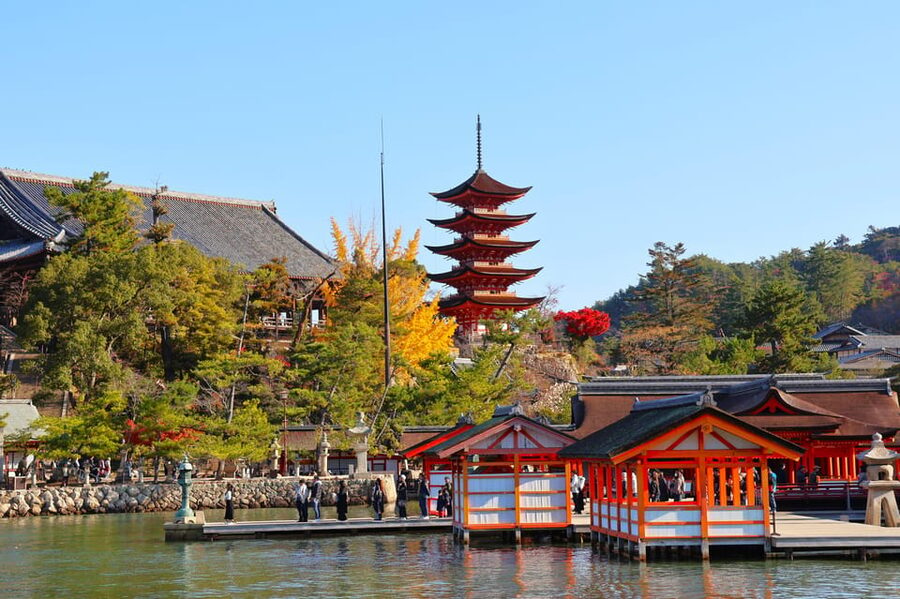
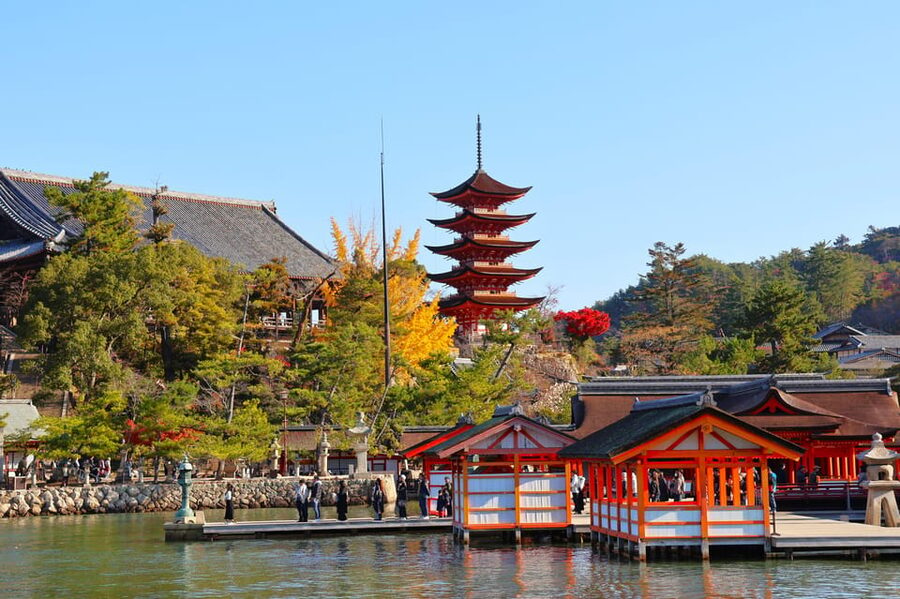
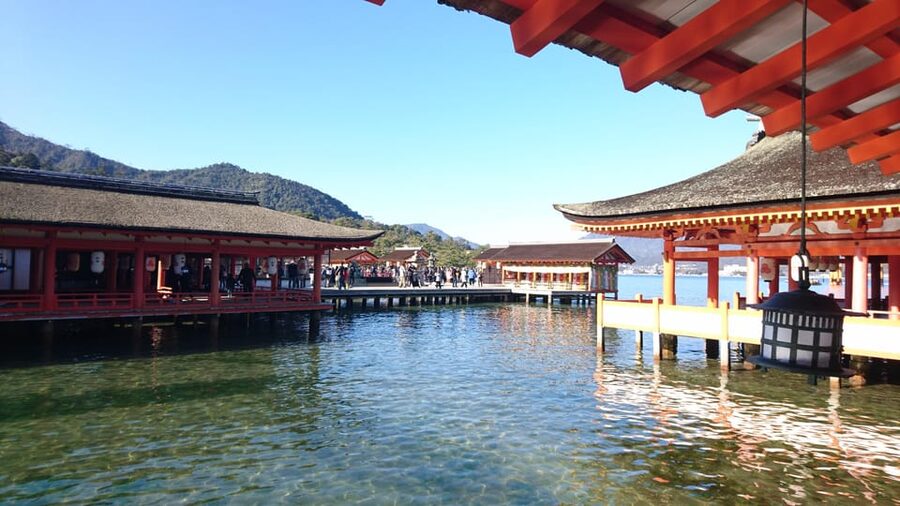
On Miyajima, you visit Itsukushima Shrine, a UNESCO World Heritage Site famous for its torii gate associated with the sea. The tour includes entry, and the guided sightseeing portion lasts about an hour.
The shrine is known as a historic Shinto site, and the setting gives it much of its power. Wooden buildings, water, mountains, and the broad shoreline come together in one view. Conditions at the coast can change the appearance of the shrine and torii, so do not expect the same scene in every season or at every point in the tide.
The guide helps you understand how the shrine fits into Shinto practice and the island’s identity. This is where the tour benefits from having someone explain what you are seeing rather than treating the shrine as a quick photograph stop.
Miyajima can be crowded, especially around the shrine and central shopping streets. The guides are responsible for keeping the group together, and the earphones help during the walking explanation. Wear comfortable shoes and keep an eye on the meeting instructions. A delayed return to the bus can affect the entire group’s train connection.
Your free hour on Miyajima is short but useful
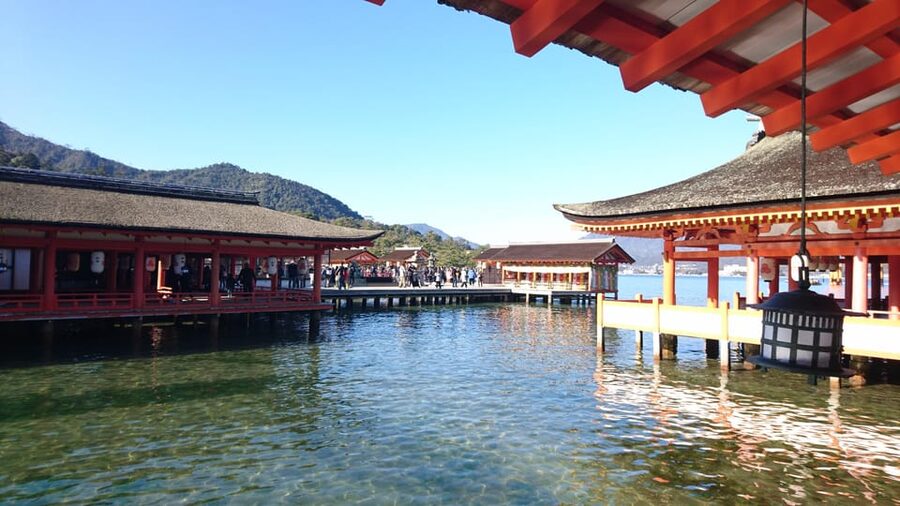
After the guided shrine visit, you get about an hour of free time on Miyajima. This is one of the better-balanced parts of the day because you can choose how to use it.
You might browse the food street, try fried oysters, lemon beer, or maple cakes, or look for a quiet corner away from the main path. You might also walk toward pagodas and temples, as some people have done, though a serious mountain hike will not fit comfortably into the schedule.
The island has enough to fill a full day, so an hour can feel frustrating. Some people prefer more time here, while others find the allotted period just right after the museum. I would treat it as a sampler. Use the hour to enjoy the shrine area and island atmosphere, then return another time if Miyajima becomes a highlight of your Japan trip.
The order of the day works well emotionally. Hiroshima comes first, with its difficult subject matter. Miyajima follows as a calmer and more scenic ending. Finishing with the shrine and ferry gives you room to think without ending the tour on the most painful exhibits.
Guides, headsets, and group size affect the day
The strongest part of this experience is the guiding. Names vary by departure, but guides including Joe, Kane, Hiro, Azusa, Chikako, Miyuki, Masako, and Takane have been praised for warmth, humor, local knowledge, and clear historical explanations.
Joe is especially noted for personal stories and a lively style. Hiro has been described as funny and easy to follow, while Azusa is praised for balancing humor with serious history. Kane has helped with practical matters such as train changes, and some guides use quizzes or cultural explanations on the return journey.
Of course, guide quality can vary from one departure to another. What you can count on is an English-speaking guide, an organized route, and a support person or assistant on some departures.
The headsets are more than a small convenience. At the Dome, museum grounds, and shrine, you can hear the explanation while standing at a sensible distance from the guide. On a group tour, that can make the difference between following the story and missing half of it.
What $277 buys you
At $277 per person, this is not a cheap day trip. The price includes round-trip Shinkansen tickets from Osaka or Kyoto, an air-conditioned bus, both ferry rides, Itsukushima Shrine admission, Peace Memorial Museum admission, a local guide, and lunch.
Add those pieces separately and the cost begins to make more sense. The train alone is a major part of the value, particularly if you are not comfortable buying Japanese rail tickets or managing a tight connection. The bus also saves time between the station, Peace Park, restaurant, and ferry terminal.
You are paying for convenience as much as admission. The tour reduces the chance of losing time between Hiroshima and Miyajima, and the guide gives structure to places that deserve context.
The trade-off is independence. You cannot linger as long as you might like at the museum, Dome, or shrine. If you already know Japanese rail travel well and want to spend several hours at each site, book an overnight stay instead. If you have only one open day and want the main sights handled for you, the cost is easier to justify.
Who should book this Hiroshima day trip
I would choose this tour if you are staying in Osaka or Kyoto and want Hiroshima included without changing hotels. It suits first-time visitors who value clear transport instructions, guided historical context, and a full itinerary.
It also works well for people who want both the solemnity of Hiroshima and the beauty of Miyajima. The contrast is the point. You leave with more than a checklist of landmarks.
You should think twice if you dislike early starts, long transport days, or group schedules. The tour lasts 12 hours, includes several transfers, and involves a lot of walking. It is not suitable for wheelchair users, and anyone with limited mobility should take that warning seriously.
Families with older children and teenagers may find the day educational, but the museum can be difficult viewing. Parents should decide in advance how they want to discuss the exhibits.
Cancellation is free up to 7 days and 21 hours before departure for a full refund. Hotel pickup and drop-off are not included, so you must reach Shin-Osaka or Kyoto Station yourself.
Should you book it?
Book this tour if you want a well-organized first look at Hiroshima and Miyajima and prefer to spend your energy listening, looking, and eating rather than navigating. The Shinkansen, bus, ferry, admissions, lunch, and guide are all brought into one long day.
Do not book it if the Peace Memorial Museum is your main reason for going and you want several quiet hours inside. In that case, stay overnight in Hiroshima. For everyone else, this is a practical and emotionally honest introduction, with enough Miyajima beauty to keep the day from feeling relentlessly heavy.
FAQ
Where does the tour start?
You can start at either Shin-Osaka Station or Kyoto Station, depending on the option you book. The meeting point may vary by selected option.
Is the Shinkansen included?
Yes. The tour includes round-trip Shinkansen tickets from Osaka or Kyoto, with staff providing the tickets and directing you to the train.
How long is the tour?
The full experience lasts about 12 hours, including the train journeys, bus transfers, ferry crossings, sightseeing, lunch, and free time on Miyajima.
Is lunch included?
Yes. Hiroshima-style okonomiyaki is included. The listed ingredients include pork, cabbage, bean sprouts, fish powder, eggs, and noodles.
Can dietary restrictions be accommodated?
Three menu choices are available, including options without pork and options without pork, fish powder, and eggs. You must report allergies or dietary restrictions when booking, since changes cannot be made on the day.
What happens if the Peace Memorial Museum is closed?
The tour visits Hiroshima National Peace Memorial Hall for the Atomic Bomb Victims instead. The museum is listed as closed December 30 to 31 and February 16 to 21.
Is the tour suitable for wheelchair users?
No. The tour involves a lot of walking and is not suitable for wheelchair users.
Just added around Hiroshima
- Full Day Hiroshima and Miyajima Tour by Bullet Train from Kyoto★ 4.5 · 120 reviews
- Hiroshima Saijo Sake Tasting Tour with visit to 7 Breweries★ 5.0 · 104 reviews
- The Peace Memorial to Miyajima : Icons of Peace and Beauty★ 4.5 · 31 reviews
- Shore Excursion from Hiroshima Port : Private Tour in Hiroshima★ 5.0 · 17 reviews
- Okunoshima Rabbit Island Cycling Tour with Local Guide★ 4.5 · 17 reviews
- Hiroshima & Miyajima All-Inclusive Tour w/Licensed guide Pancho★ 5.0 · 54 reviews
- Private Full Day Hiroshima Tour★ 4.5 · 29 reviews
- Hiroshima Country Cycling: Explore Rural Life 1 HR from City★ 5.0 · 22 reviews
Bus Tours, compared.

Mt Fuji and Hakone 1-Day Bus Tour Return by Bullet Train
Our verdict →
Peaceful Hiroshima & Miyajima UNESCO 1 Day Bus Tour
Our verdict →
Meiji Shrine, Asakusa, Skytree Bus Tour and Cruise
Our verdict →
Kyoto/Osaka: Nara, Fushimi Inari Taisha, Arashiyama Bus Tour
Our verdict →
Mt.Fuji & Lake Kawaguchiko 1-Day Bus Tour w/Optional Lunch
Our verdict →
Open Top Panoramic Sightseeing Bus with Audio Guide
Our verdict →
[One-day bus tour departing from Kanazawa Station] Shirakawa-go and Gokayama – Two World Heritage Villages Enjoyable Bus Tour
Our verdict →Browse the lists this tour appears in