
Reviewed · TAIKO & MUSIC EXPERIENCES IN OSAKA
Osaka: UTAGE Japanese Taiko Live Show
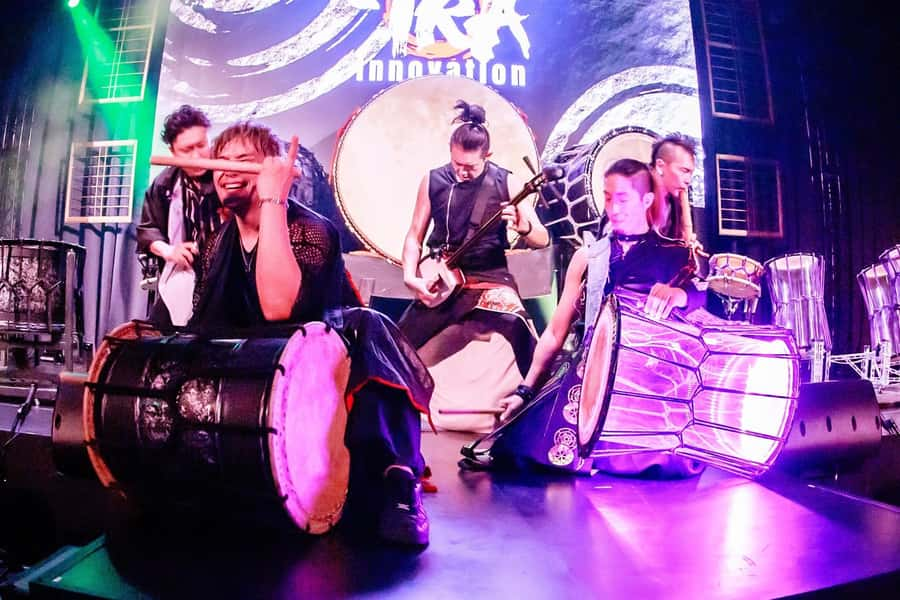
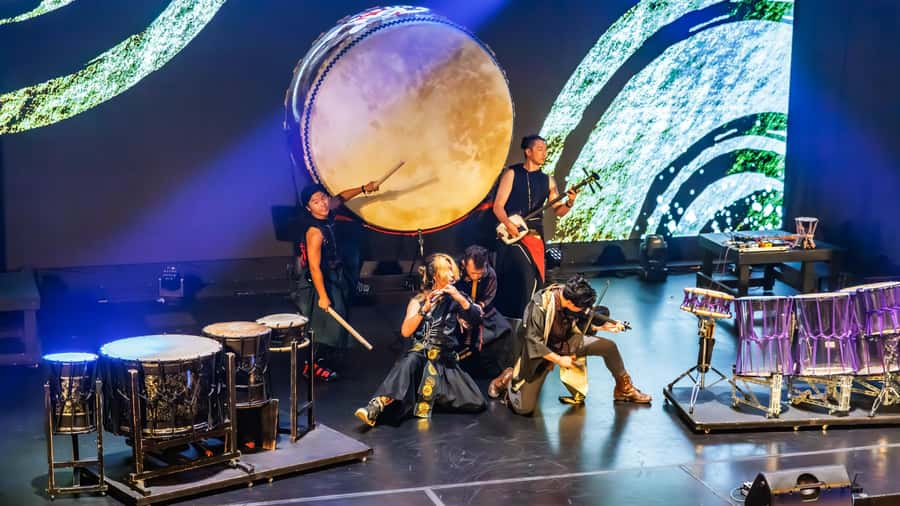
The first strike of a 180-centimeter taiko drum is the reason to come. UTAGE combines thunderous Japanese drums with shamisen, shakuhachi, shinobue, computer music, and visual effects. It is not a quiet museum-style look at traditional music. It is a lively stage show, with performers close enough for you to see every movement.
I like two things right away: the small theater setting keeps you close to the musicians, and the chance to play along turns you from a watcher into part of the show. The blend of old instruments and modern sound gives the performance a fresh edge without losing its Japanese character.
The main consideration is that the show is conducted in Japanese. That matters less during the music, but some spoken jokes or instructions may pass you by. Also, arrive at least five minutes early. Once the performance begins, late entry is not allowed.
Key points to know before you book
- The largest drum: A 180-centimeter drum is featured as one of Kansai’s biggest.
- Traditional instruments: Expect taiko, shamisen, shakuhachi, and shinobue alongside electronic music.
- Audience participation: You may be invited onstage to play Japanese instruments for one song.
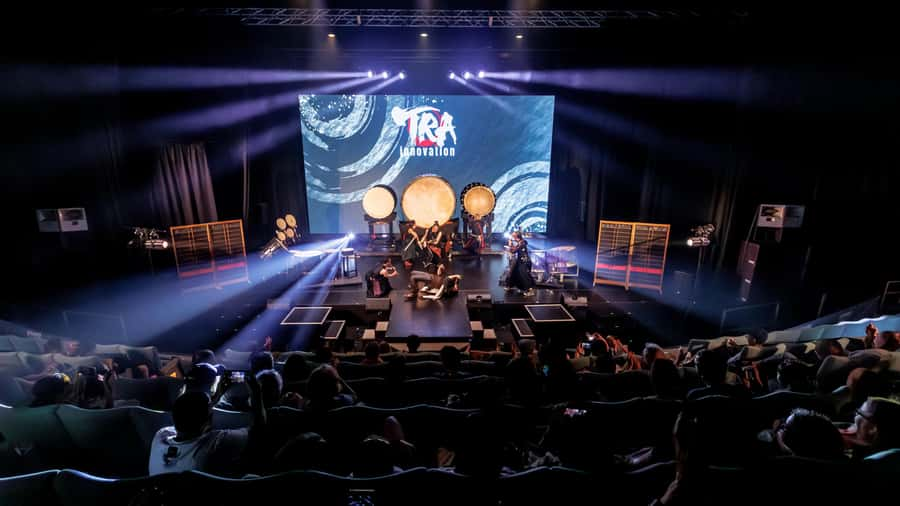
- Close-up theater feel: One reported setup placed about 30 people in three rows, with the band only a few meters away.
- Japanese-language show: The musical action needs little translation, but spoken parts are in Japanese.
- Price and flexibility: At $40 per person, the experience includes the entire show, with reserve-now, pay-later booking and free cancellation up to 24 hours before the start.
A close-up taiko show at Osaka Cultural Center
UTAGE begins at Osaka Cultural Center, where the setting helps shape the whole experience. This is not a giant concert hall where musicians disappear into the distance. The audience sits close to the performers, and one account describes roughly 30 people seated in three rows with the band just a few meters away.
That kind of layout changes how you watch a drum performance. You can see the players’ arms, posture, timing, and expressions. The power of taiko comes from sound, but also from the physical work behind it. A large drum does not feel like a background instrument when it is being played directly in front of you.
The compact room also helps the performers interact with the audience. They do not simply play a set and leave. The show uses humor, visual moments, and direct engagement to keep the room involved. If you prefer formal concert etiquette and long stretches of quiet listening, this may feel more like entertainment than a traditional recital. If you want a lively introduction to Japanese music, that is exactly the point.
You should arrive at least five minutes before the scheduled start. The production does not permit entry after the show begins, so do not cut this close while finishing a meal or making your way across Osaka.
More Taiko & Music Experiences in Osaka
- OSAKA NIGHT FUSION Japanese Taiko Kabuki Samurai Dance Show
★ 4.8 · 155 reviews - Osaka: UTAGE Modern Japanese Taiko Live Show
★ 5.0 · 81 reviews - Osaka: A Modern Samurai, Kabuki, Taiko, & Dance Show
★ 4.5 · 66 reviews
Why the 180-centimeter drum matters
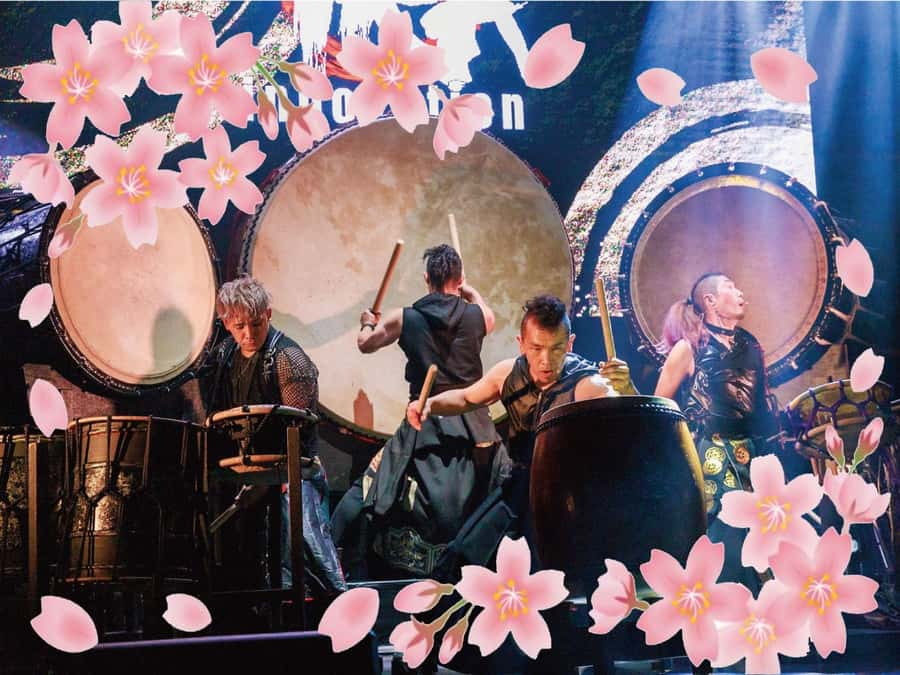
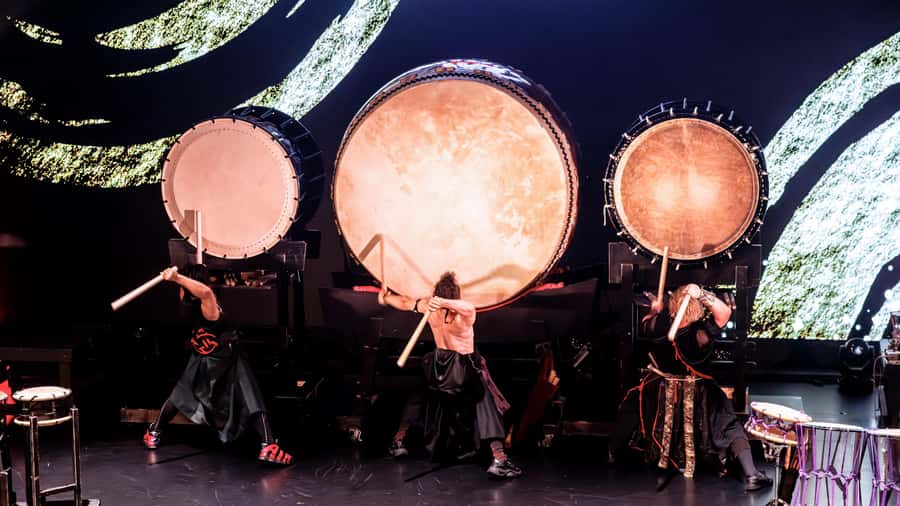
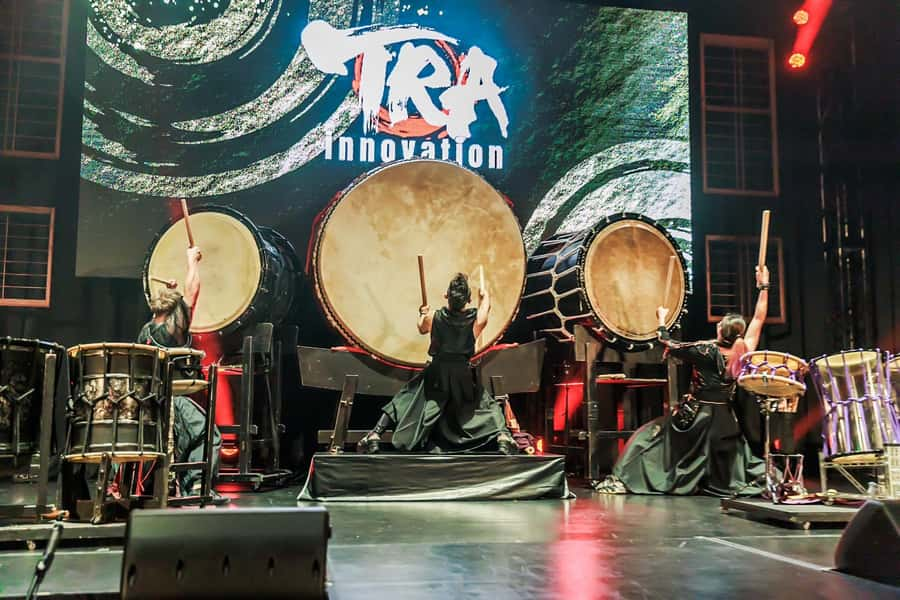
Taiko drums come in many sizes, and the largest ones can create a physical sense of sound that ordinary concert instruments cannot match. UTAGE features a drum measuring 180 centimeters in diameter, described as one of the largest in Kansai.
The number is impressive, but the useful detail for you is what that size does to the performance. The drum supplies weight and drama. It gives the show a clear visual center, especially when the performers use broad movements and strong rhythmic patterns.
You may also get the chance to play one of the large drums yourself. That opportunity is limited to one song and depends on how the show handles audience participation, so you should not treat it as a private lesson or guaranteed solo performance. Still, it adds a personal touch that a standard concert cannot offer.
The audience interaction is handled as part of the entertainment. You do not need to arrive as a musician, and you do not need to understand Japanese musical notation. The experience is built for ordinary visitors, including people seeing these instruments for the first time.
Traditional instruments with a modern pulse

The traditional lineup includes Japanese drums, shamisen, shakuhachi, and shinobue. Each brings a different sound and visual style.
The shamisen is a three-stringed Japanese instrument with a sharp, distinctive tone. The shakuhachi, a bamboo flute, offers a breathier and more spacious sound. The shinobue, another Japanese flute, adds a lighter, brighter color. Taiko supplies the deep rhythmic force.
UTAGE then places these instruments beside computer music. That combination is central to the show. You are not watching a strict historical reconstruction of a traditional ensemble. You are seeing Japanese instruments used within a current stage-production format.
That mix should appeal to you if you want cultural context without sitting through a formal lecture. You hear instruments with long Japanese traditions, but the pacing and presentation are aimed at modern entertainment. The show also uses visual elements to keep your attention, so the experience is not carried by music alone.
The modern additions may not suit someone searching for an entirely traditional performance. For that person, a smaller classical concert or cultural demonstration might be a better match. UTAGE is more adventurous. It asks what happens when traditional instruments meet electronic sound, stage energy, and audience participation.
What the band brings to the stage
The performers are associated with TRAinnovation, a band that won a world number one indie band title. The supplied information does not name individual musicians, so you should not expect a named guide or presenter to greet you personally.
What you can expect is an ensemble built around forceful playing, theatrical movement, and direct communication with the room. The performers are not hidden behind a curtain or treated as background accompaniment. Their expressions and physical effort are part of the show.
The performance has a high-energy character from beginning to end. It is designed to keep the audience alert, with visual effects, humor, and musical changes adding variety. One account describes not wanting the show to end, while another highlights the band’s ability to perform with the same commitment even for a very small audience.
That last point matters. A small crowd can sometimes make a performance feel underpowered. Here, the format is close and personal, and the musicians are expected to engage whoever is in front of them. If you are visiting Osaka in a quieter travel period, the room may not be full, but the setup still allows the show to work.
Same trip, a completely different kind of day:
- Osaka Go Karting Tour with Funny Costume
★ 5.0 · 2,658 reviews - Osaka Castle: Museum and Tower Entry Ticket
★ 4.5 · 2,380 reviews - Osaka: Shinsekai Food Tour with 13-15 Dishes at 5 Eateries
★ 4.8 · 2,204 reviews - Osaka Food Tour: 13 Dishes at 5 Local Eateries
★ 5.0 · 2,149 reviews
Audience participation without pressure
Audience involvement is one of UTAGE’s clearest differences from a normal concert. You may be invited onto the stage to experience a Japanese instrument, and there is an opportunity to participate in one song.
The exact instrument and number of participants are not specified, so book this for the performance first and the participation second. You might play a large drum, as one person did, or take part in another musical moment. The information does not promise that every person will receive a turn.
This feature is especially useful for families and groups with different interests. Someone who knows little about Japanese music can still connect with the show through rhythm and movement. A child may focus on the enormous drum, while an adult pays closer attention to the shamisen or flute.
Solo visitors can also fit in comfortably. The audience format is intimate, but the interaction is part of the program rather than an invitation to socialize with strangers. One solo attendee joined in the dancing and felt at ease. You can take part as much or as little as you like, within the limits set by the performers.
If you strongly dislike being called onstage, sit toward the back if seating allows and tell staff if you have a concern. The supplied information does not promise a way to opt out, so keep that in mind before booking.
A show for families, couples, and older children
UTAGE has broad appeal because it relies on rhythm, spectacle, and physical performance. You do not need background knowledge of Japanese music to follow the main event. The audience interaction also gives the show a playful side that can work well for families.
Parents should remember that the room is close and the drums are loud. That is part of the attraction, but it may be intense for very young children or anyone sensitive to strong sound. The available information does not list a recommended minimum age or hearing protection policy, so you should judge your group accordingly.
Couples and adult friends may prefer the show as a lively evening activity rather than a formal cultural stop. The music has enough force to feel special, but the one-hour format described by one attendee is manageable alongside dinner or another Osaka plan.
It also works for solo visitors. The performers create the social energy, and the audience does not need to arrive as a large group. If you enjoy live music but are traveling alone, this is an easy activity to add without needing a full evening commitment.
How much value do you get for $40?
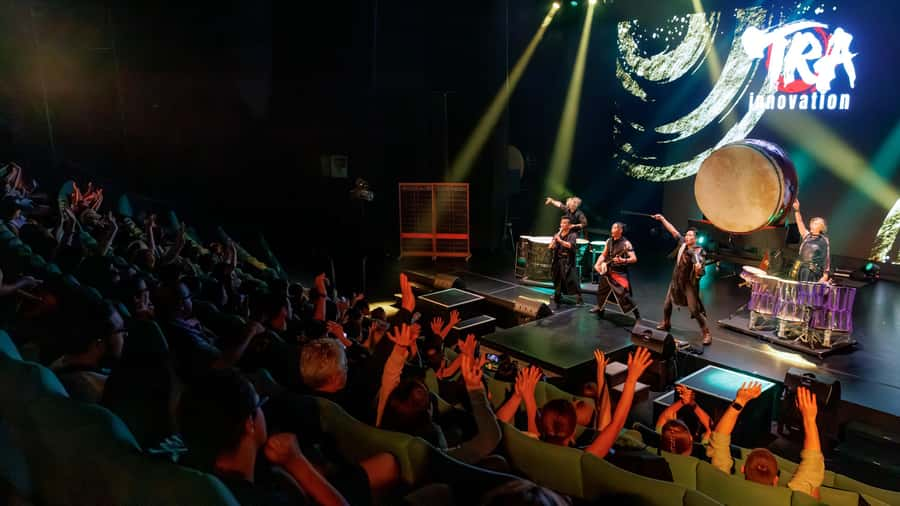
At $40 per person, UTAGE sits in the range of a paid evening attraction rather than a quick street performance. The price includes the full activity, and the experience combines a live ensemble, a large taiko drum, modern sound, visual production, and possible audience participation.
I think the value depends on what you want from Japanese culture. If you want a detailed history lesson, a museum visit may offer more explanation for less money. If you want to see and hear instruments performed at close range, with a strong entertainment element, $40 is easier to justify.
The intimate room also helps. You are not paying for a distant view of a stage. The musicians are only a few meters away in the described seating arrangement, and the chance to take part gives the evening a personal quality.
One account also describes photographs with the band after the performance. Another describes a shop downstairs where visitors can pose with samurai swords and traditional Japanese umbrellas. These details are useful extras, but they should not be treated as guaranteed parts of every booking unless confirmed at the venue. The core value is the live show itself.
You can reserve now and pay later, which helps if your Osaka schedule is still changing. Free cancellation is available up to 24 hours before the start, according to the booking terms provided. That is useful when you are fitting the performance around weather, meals, or other fixed reservations.
Pairing UTAGE with a day in the area
The show begins and ends at Osaka Cultural Center, so it is easy to treat it as one part of a larger outing. The provided information does not give a precise travel route or show schedule, so you should check the meeting details and start time when booking.
One attendee noted that an aquarium and Ferris wheel are also nearby, making the area suitable for a full day. Those attractions are not included in the $40 experience, but the combination can help you build a simple plan: daytime sightseeing, a meal, then the performance.
Do not leave the show for the final minute of your day if you are catching a train or flight. Late entry is not permitted, and the supplied details do not state the exact running time. Plan with enough room to reach Osaka Cultural Center and be seated five minutes before the start.
The venue experience may continue after the music if the photo opportunities and downstairs shop are operating. Since these details are not described as guaranteed inclusions, ask on arrival rather than planning your schedule around them.
What you should know about language
The listed language is Japanese. That means you should expect announcements, humor, and stage directions to be delivered in Japanese.
Still, the musical content crosses the language gap well. Rhythm, movement, drum power, and visual cues do much of the work. You can follow the broad shape of the performance even if you understand no Japanese.
The main limitation is not the music but the spoken connection. If a performer explains an instrument or makes a joke, you may miss the detail. The experience is best for you if you are comfortable enjoying a show through sound and action rather than needing every sentence translated.
The performers also use audience interaction, so simple gestures may guide you. For the one-song participation segment, pay attention to what the staff and musicians demonstrate. No special musical training is listed as necessary.
Who should book UTAGE?
I would point you toward UTAGE if you want a compact, energetic introduction to Japanese instruments. It is especially suitable for:
- First-time visitors who want culture presented as live entertainment
- Families with older children who enjoy drums and audience participation
- Couples looking for a memorable evening activity
- Solo visitors who want a welcoming event without joining a tour group
- Music fans curious about shamisen, shakuhachi, and taiko
- Visitors who enjoy modern productions as much as traditional arts
I would think twice if you want a quiet, scholarly performance with detailed English explanations. I would also check the sound level in advance if anyone in your group is sensitive to loud drums.
The best reason to book is the combination of closeness and energy. You see the musicians working at short range, hear a huge drum in a small room, and may get a chance to join the performance. That is more personal than simply watching a stage from far away.
Should you book the UTAGE Japanese Taiko Live Show?
Yes, if you want a lively Osaka night built around Japanese sound, movement, and audience contact. The 180-centimeter drum gives the show a strong visual and musical center, while shamisen, shakuhachi, shinobue, computer music, and visual effects keep it from feeling like a single-note drum display.
At $40, it is a fair choice for an approximately hour-long live experience, particularly when you value close seating and the chance to participate. The Japanese-only format and possible loud volume are the main points to consider.
Arrive early, keep an open mind about the modern musical blend, and book it as a show rather than a formal lesson. If that matches your Osaka plans, UTAGE offers a memorable way to hear Japanese instruments up close and, possibly, make a little noise yourself.
FAQ
Where does the UTAGE Japanese Taiko Live Show take place?
The show starts and ends at Osaka Cultural Center.
How much does the experience cost?
The listed price is $40 per person.
What instruments are used during the show?
The performance features Japanese drums, shamisen, shakuhachi, and shinobue, along with computer music and visual elements.
How large is the featured drum?
The largest featured drum has a diameter of 180 centimeters. It is described as one of the largest drums in Kansai.
Can I participate in the performance?
Audience members may be invited to the stage to experience Japanese instruments, and there is an opportunity to participate in one song. Individual participation is not stated as guaranteed.
What language is the show in?
The listed language is Japanese.
How early should I arrive?
You should arrive at least five minutes before the show begins. Entry is not allowed once the performance has started.
Can I cancel or pay later?
You can reserve and pay later, and cancellation is available up to 24 hours in advance for a full refund.
More Shows & Performances in Osaka
- Osaka: Sumo Show & Experience w/ Optional Kimono & Hot Pot
★ 4.5 · 609 reviews - Osaka: Sumo Stage Show with Bento or Snack + Fight & Photo
★ 4.3 · 364 reviews - Osaka: English Stand Up Comedy Show at Osaka Comedy Club
★ 4.7 · 203 reviews - Osaka Umeda: PICCADILLY DINNER SHOW & NIGHTCLUB with Tasting
★ 4.8 · 49 reviews
Just added around Osaka
- Exclusive Sushi Making Experience with a Master Chef – Osaka Area★ 5.0 · 25 reviews
- Private Home-Style Cooking Class in Osaka with Local Mom Yoshiko★ 5.0 · 46 reviews
- Hidden Osaka – Yukaku Red Light Tour & Culinary Adventure★ 4.8 · 96 reviews
- Osaka: Walking Tour and Top Highlights★ 4.8 · 104 reviews
- Osaka: Private Ceramic Painting Workshop★ 5.0 · 13 reviews
- Pickleball in Osaka, Kobe & Kyoto with Locals!★ 4.7 · 80 reviews
- Eat Like a Local in Osaka – Private Custom Street Food Tour★ 4.3 · 33 reviews
- Osaka:SUMO BEATS SHOWCASE: Taiko Drum and Wagyu burger!★ 4.2 · 37 reviews
Taiko & Music Experiences in Osaka, compared.
OSAKA NIGHT FUSION Japanese Taiko Kabuki Samurai Dance Show
Our verdict →
Browse the lists this tour appears in