

Reviewed · TAIKO & MUSIC EXPERIENCES IN OSAKA
Osaka: UTAGE Modern Japanese Taiko Live Show
Osaka’s UTAGE show takes traditional Japanese music and turns up the volume. The centerpiece is a 180-centimeter taiko drum, one of the largest in the Kansai region, but the performance also brings in shamisen, shakuhachi, shinobue, dance, and modern arrangements. It is made to be watched, heard, and joined.
I like the short 45-minute format, which fits neatly into an evening around Osaka Bay. I also like the audience participation: you may be invited onstage to try a drum, and the performers leave time for photos afterward. The main drawback is its location in Minato Ward, away from central Osaka, and the experience is clearly designed for an international audience rather than as a quiet, formal concert.
Key points
- A huge 180-centimeter taiko drum gives the performance its biggest burst of sound.
- Traditional and modern music meet, with taiko, shamisen, shakuhachi, shinobue, dance, and visual effects.
- Audience participation is central, including a chance for selected people to play onstage.
- The small theater creates close-up energy, with comfortable, raised seating and a direct view of the performers.
- The 45-minute show costs about $19.82, making it an easy addition to an Osaka evening.
- Tempo Harbor Theater is near major bay attractions, including Legoland Japan, the giant Ferris wheel, and a shopping mall.
Why UTAGE is more than a taiko recital
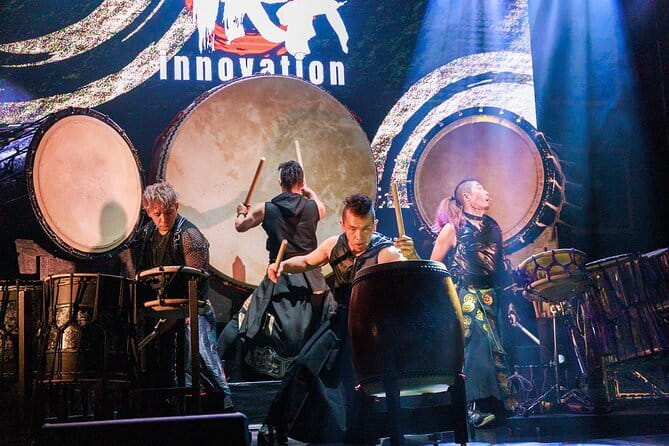
If you picture a solemn concert with musicians seated in a row, UTAGE will surprise you. This is a lively stage production built around Japanese instruments, physical movement, comedy, lighting, and crowd involvement.
The taiko is the obvious hook. A drum with a diameter of 180 centimeters creates the kind of low, physical sound you feel in your chest. But the show does not depend on one spectacular instrument. The shamisen adds a sharp, stringed attack, while the shakuhachi and shinobue bring breathy flute sounds that change the mood.
The result is closer to a compact theater show than a museum-style presentation of traditional music. The performers use older forms as a starting point, then reshape them with modern arrangements and visual touches. One part includes an original version of a lion dance associated with Kabuki, giving the program a theatrical edge without requiring you to know much about Japanese culture beforehand.
I would choose this show if you want cultural entertainment that gets moving quickly. It does not ask you to sit quietly and study each instrument. It aims to create a shared burst of energy, and it uses the audience as part of that plan.
More Taiko & Music Experiences in Osaka
- Osaka: UTAGE Japanese Taiko Live Show
★ 4.9 · 167 reviews - OSAKA NIGHT FUSION Japanese Taiko Kabuki Samurai Dance Show
★ 4.8 · 155 reviews - Osaka: A Modern Samurai, Kabuki, Taiko, & Dance Show
★ 4.5 · 66 reviews
The 45-minute format works well
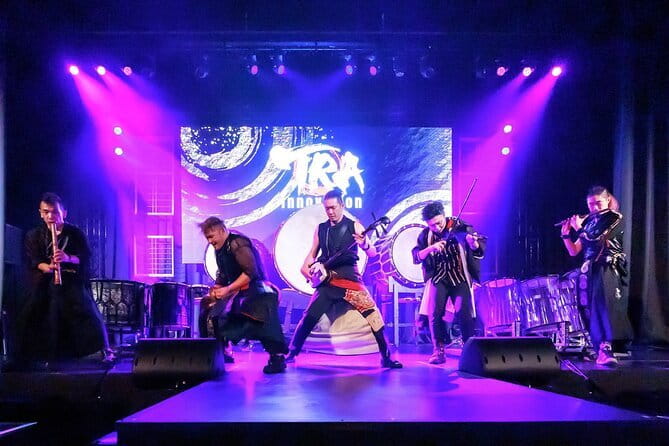
At about 45 minutes, UTAGE is long enough to feel like a proper performance but short enough to fit around dinner, sightseeing, or an evening at Osaka Bay. You do not need to give up half a day, which is a real advantage in a city with a packed schedule.
The short running time also suits families. Younger children may not want a long concert, but the drumming, movement, visual effects, and chance to see someone from the audience brought onstage can hold their attention. Several families found the show so memorable that their children reenacted it afterward.
The format is also useful if you are uncertain about traditional performance arts. You get a concentrated sample of several instruments and performance styles without committing to a long formal program. The tradeoff is that the show cannot explain everything in depth. You will get energy and variety more than a detailed lesson in Japanese musical history.
Entering Tempo Harbor Theater in Osaka’s bay district
The venue is Tempo Harbor Theater, at 1-5-10 Kaigandori in Osaka’s Minato Ward. It is near public transportation, but it is not in the central sightseeing core around Namba, Umeda, or Osaka Castle.
That distance is worth planning around. I would not treat UTAGE as a show you casually squeeze in between two central Osaka attractions without checking your route. Instead, pair it with the bay district, where you can also find Legoland Japan, a giant Ferris wheel, and a shopping mall. The area offers more to do than you might first expect, so arriving a few hours early can make the outing feel more complete.
Inside, the theater is described as small and intimate, with comfortable raised seating. That setup matters. A compact room puts you close to the musicians, and the performers can address the audience directly rather than playing to a distant crowd.
One practical point: attendance can vary. The performers are expected to give the same full-energy show even when the room is not full. That can be good news for you, since a smaller audience may make the interaction feel more personal. It can also mean the atmosphere depends partly on how willing the audience is to respond.
The sound of the giant taiko
The 180-centimeter drum is the show’s main visual and musical punch. Large Japanese drums are not subtle instruments. Their deep strokes give the performance a physical force that smaller drums cannot match.
I like that the drum is used as part of a broader program rather than treated as the only attraction. The taiko sections provide the loud, driving moments, while the string and wind instruments add contrast. That variety keeps the performance from becoming one long wall of percussion.
You should also expect the musicians to play with visible enthusiasm. The tone is energetic and outgoing, not restrained. The performers encourage the audience to react, clap, and take part, so the room becomes part of the sound.
This is why the show works for people who may not normally attend a traditional Japanese concert. You do not need to understand every musical style to appreciate the force of the drums or the skill needed to coordinate the instruments. The program communicates through rhythm, movement, and stage presence.
Same trip, a completely different kind of day:
- Osaka Go Karting Tour with Funny Costume
★ 5.0 · 2,658 reviews - Osaka Castle: Museum and Tower Entry Ticket
★ 4.5 · 2,380 reviews - Osaka: Shinsekai Food Tour with 13-15 Dishes at 5 Eateries
★ 4.8 · 2,204 reviews - Osaka Food Tour: 13 Dishes at 5 Local Eateries
★ 5.0 · 2,149 reviews
Shamisen, shakuhachi, and shinobue add range

The show includes three instruments that help explain the breadth of Japanese music.
The shamisen is a three-stringed instrument with a bright, percussive tone. Its sound can cut through the drums and give the music a quick, rhythmic edge. The shakuhachi is a bamboo flute with a breathy, expressive quality. The shinobue, another Japanese flute, brings a lighter and more agile sound.
Hearing these instruments in one modern performance gives you more than a single-note introduction to Japanese culture. You can compare the hard attack of the taiko and shamisen with the softer breath of the flutes. The changes in sound also help the show keep its pace.
The musicians are not simply demonstrating instruments one by one. The arrangements place them in a modern stage setting, with visual elements and theatrical movement. That approach is useful if you want to see traditional instruments in a form that feels accessible and current.
Still, this is not the right choice if your main goal is a quiet, scholarly presentation. The show favors excitement, interaction, and spectacle. For a deeper look at one instrument or one historical tradition, you would need a different kind of cultural program.
Audience participation is part of the plan

Audience involvement is not a minor extra. It is built into the performance. Selected people may be invited onstage to play drums, and one song gives the audience a chance to participate directly.
That creates memorable moments, especially for families. Children may enjoy seeing an ordinary audience member become part of the show, and adults who volunteer can expect good-natured encouragement from the performers.
You should know that participation is optional in spirit, but the atmosphere is active. The show is aimed at an audience willing to clap, respond, and enjoy some direct attention. If you prefer to watch without being noticed, choose your seat with that in mind and avoid volunteering.
After the performance, there may be time for photographs with the musicians. This adds value because it gives you a simple way to remember the evening, especially if someone in your group takes part onstage.
The interactive style also helps bridge language differences. The presentation is designed for an international crowd, including English-speaking visitors, and the action is easy to follow even if you do not catch every spoken instruction.
A practical look at the $19.82 price

At about $19.82 per person, UTAGE is priced as an affordable evening activity rather than a major theater expense. Admission is included, along with a soda or other soft drink listed as part of the package.
The value comes from the combination of live musicians, a specialized theater setting, audience participation, and the large taiko production. A 45-minute show will not fill an entire evening, but that is also why the cost feels manageable. You can add dinner or another bay-area activity without building your whole day around it.
Some audience accounts also describe a complimentary alcoholic drink. Because the stated package lists soda or pop, I would treat the soft drink as the dependable inclusion and confirm drink details if that matters to you.
The price is especially reasonable for families or small groups who want a planned activity without paying for a long theater production. It is less compelling if you are already seeking a full night of entertainment and expect dinner, extended performances, or a large-scale production to be included. Dinner is not part of the experience.
Who will enjoy UTAGE most

I would recommend UTAGE to several kinds of visitors:
- Families looking for a lively cultural activity with a manageable running time.
- First-time visitors who want to hear Japanese instruments without attending a formal concert.
- Music fans interested in taiko, shamisen, and Japanese flutes.
- Couples or friends who enjoy audience participation and high-energy stage shows.
- Anyone already visiting Osaka Bay and looking for a nearby evening activity.
The show may be less suitable for you if you want a long, quiet, traditional concert with detailed explanations. It is also not the easiest choice if your schedule is fixed around central Osaka and you do not want to travel to Minato Ward.
The atmosphere is intentionally tourist-friendly. That is not a flaw, but it is worth stating clearly. UTAGE presents Japanese culture in a polished, accessible form for an international audience. If you want a performance that explains how traditional music is taught or performed in a formal setting, look elsewhere. If you want to have fun with those instruments in a modern show, this is a better fit.
Planning your visit around Osaka Bay

Because the show lasts only about 45 minutes, I would plan the surrounding hours carefully. The bay district has Legoland Japan, the Ferris wheel, and a shopping mall, so you can arrive early rather than making a special trip for only three quarters of an hour.
The location is near public transportation, which keeps the journey practical. Still, check your route from your hotel and allow enough time to find the theater. The address is in Osaka City’s Minato Ward, not in the main downtown shopping zones.
A mobile ticket makes entry simple. Your confirmation is provided at booking, and free cancellation is available if you cancel at least 24 hours before the start time. Changes or cancellations within 24 hours are not refunded, so keep that deadline in mind when your Osaka plans are still shifting.
The experience is suitable for most people. The available information indicates that most participants can take part, but the audience participation itself may involve going onstage. If that sounds uncomfortable, you can enjoy the show from your seat.
The main strengths and the fair warning
UTAGE’s strongest quality is its energy. The musicians perform with obvious commitment, and the big drum gives the program an impact that a recorded soundtrack cannot match. The performers also make a clear effort to connect with the audience, which keeps the room from feeling like a distant stage show.
The second strength is variety. Taiko alone can be powerful, but the addition of shamisen, shakuhachi, shinobue, dance, Kabuki-inspired lion dance elements, and visual effects gives the 45 minutes a changing rhythm.
The fair warning is that the experience is deliberately tourist-oriented. You are not attending a private village festival or a strictly traditional recital. You are attending a modern entertainment show built around Japanese instruments, with direct audience involvement and a welcoming approach for international visitors.
For many people, that is exactly the point. You get a cultural experience that does not require advance knowledge, and you leave with a sense of the instruments, the physical skill involved, and the excitement of live performance.
Should you book UTAGE?
Book it if you want a lively, affordable introduction to Japanese music and you enjoy the idea of being part of the show. The 180-centimeter taiko, compact running time, small theater, and possible onstage participation give UTAGE more personality than a standard concert.
I would especially consider it for families, music lovers, and anyone planning time around Osaka Bay. At about $19.82, it is a low-risk way to add something distinctly Japanese to your itinerary.
Skip it if you want a quiet, formal concert, or if the trip to Minato Ward does not fit your schedule. For everyone else, the mix of traditional instruments and modern stage energy makes this a sensible evening choice, with enough audience interaction to keep the experience memorable.
FAQ
How long is the UTAGE Modern Japanese Taiko Live Show?
The performance lasts approximately 45 minutes.
Where does the show take place?
It takes place at Tempo Harbor Theater, 1-5-10 Kaigandori, Minato Ward, Osaka City, Osaka Prefecture.
What instruments are used in the show?
The performance includes taiko drums, shamisen, shakuhachi, and shinobue. It also features a giant Japanese drum measuring 180 centimeters in diameter.
Can the audience participate?
Yes. The audience may be invited onstage to experience the instruments, and some people may have the chance to play drums during the show.
Is anything included with admission?
Admission is included, along with a soda or pop.
Can I cancel for a full refund?
Yes. You can receive a full refund if you cancel at least 24 hours before the experience starts. Cancellations within 24 hours are not refunded.
More Shows & Performances in Osaka
- Osaka: Sumo Show & Experience w/ Optional Kimono & Hot Pot
★ 4.5 · 609 reviews - Osaka: Sumo Stage Show with Bento or Snack + Fight & Photo
★ 4.3 · 364 reviews - Osaka: English Stand Up Comedy Show at Osaka Comedy Club
★ 4.7 · 203 reviews - Osaka Umeda: PICCADILLY DINNER SHOW & NIGHTCLUB with Tasting
★ 4.8 · 49 reviews
Just added around Osaka
- Exclusive Sushi Making Experience with a Master Chef – Osaka Area★ 5.0 · 25 reviews
- Private Home-Style Cooking Class in Osaka with Local Mom Yoshiko★ 5.0 · 46 reviews
- Hidden Osaka – Yukaku Red Light Tour & Culinary Adventure★ 4.8 · 96 reviews
- Osaka: Walking Tour and Top Highlights★ 4.8 · 104 reviews
- Osaka: Private Ceramic Painting Workshop★ 5.0 · 13 reviews
- Pickleball in Osaka, Kobe & Kyoto with Locals!★ 4.7 · 80 reviews
- Eat Like a Local in Osaka – Private Custom Street Food Tour★ 4.3 · 33 reviews
- Osaka:SUMO BEATS SHOWCASE: Taiko Drum and Wagyu burger!★ 4.2 · 37 reviews
Taiko & Music Experiences in Osaka, compared.


Browse the lists this tour appears in