
Reviewed · RAMEN & NOODLE TOURS
Osaka: Cooking Class Ramen & Gyoza Course in Nanba
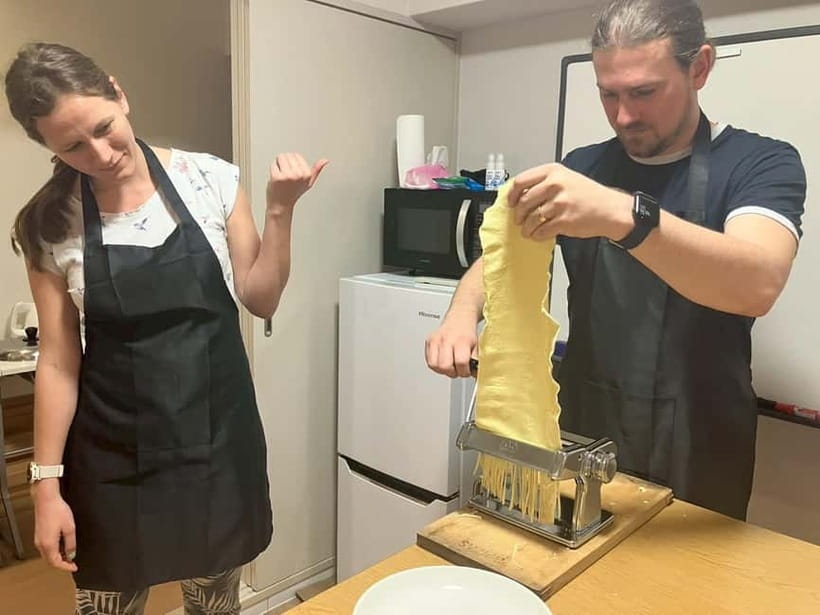
Making ramen from scratch is the main event here. You do not simply watch a chef stir a pot. You help prepare the noodles, chop vegetables, mix the filling, and learn the careful folds that turn gyoza wrappers into neat dumplings. Fresh noodle-making gives this two-hour Osaka activity more substance than a standard food tasting.
I especially like the small group of up to eight, which gives you room to ask questions and get help with tricky steps. I also like the relaxed meal afterward, with sake, beer, and soft drinks included. The main point to check is the timing: the published schedule adds up to three hours, with 30 minutes of orientation, 1.5 hours of cooking, and a one-hour tasting, even though the activity is also described as lasting two hours.
Key points
- Make ramen noodles from scratch, not just instant noodles or a prepared kit.
- Learn gyoza folding by hand, with patient guidance from English-speaking instructors.
- Cook in a small group of up to eight, useful for families, solo visitors, and first-time cooks.
- Eat the meal you prepare, with sake, beer, and soft drinks included in the tasting session.
- Take home the recipes, though some Japanese ingredients may be difficult to find outside Japan.
- Meet at Dear Court Semba 303 in Osaka’s Chuo Ward, in an apartment building near Chuo-dori.
What you actually cook in Osaka
This is a focused Japanese cooking lesson built around two familiar comfort foods: ramen and gyoza. You prepare ramen noodles and a Japanese noodle soup, then make dumplings filled with vegetables and pork. The class is designed for beginners, so you do not need special cooking experience.
The appeal is in the hands-on work. You chop vegetables, prepare the noodle dough, and practice the fine details of gyoza assembly. The folding step is more exact than it looks. A gyoza that seems simple on a restaurant plate takes a bit of patience to seal neatly, and the instructors guide you through the process rather than leaving you to guess.
This also gives you a better sense of how much work sits behind an everyday Japanese meal. Ramen is often treated as a quick bowl of food, but making the noodles yourself changes the experience. You see how preparation, texture, and timing affect the finished dish.
More Cooking Classes in Osaka
- Osaka: Ramen and Gyoza Cooking Class in Dotonbori
★ 5.0 · 378 reviews - Osaka Cooking Class: Okonomiyaki &Japanese cuisines experience
★ 5.0 · 261 reviews - Ramen and Gyoza Cooking Class in Osaka
★ 5.0 · 202 reviews
The 30-minute welcome and preparation
The class begins with a 30-minute orientation and preparation period. This is when you get your bearings, meet the instructors, and prepare for the cooking portion. Ingredients and tools are supplied, so you can arrive without shopping for specialty items or carrying cooking equipment across Osaka.
English and Japanese instruction is available. That matters during small technical steps, especially when mixing ingredients, handling the noodle dough, or learning the gyoza folds. Instructors named in the experience include Ryota, Mimi, Keiichi, Nana, Yuriko, Kiho, Yuma, Kyota, Saya, and Keichi. The teaching team can vary, but the consistent point is that you have English-speaking help throughout the class.
The setting is a cooking space in Dear Court Semba 303, at 4-chōme-3-1 Bakurōmachi, Chuo Ward. It is inside an apartment building, not a large street-front cooking school. At the entrance, press 303 on the doorbell panel, then press the button marked Call 呼. Once inside, take the stairs or elevator to Room 303 on the third floor.
Give yourself a little extra time to locate the building. The entrance can be easy to miss, and one useful landmark is the Ferrari dealership nearby. The building is tucked about a block behind it, close to a large stairway leading to a gym and an outdoor lounge area with couches. If you have trouble, the provider asks you to call or send a message.
Making ramen noodles by hand
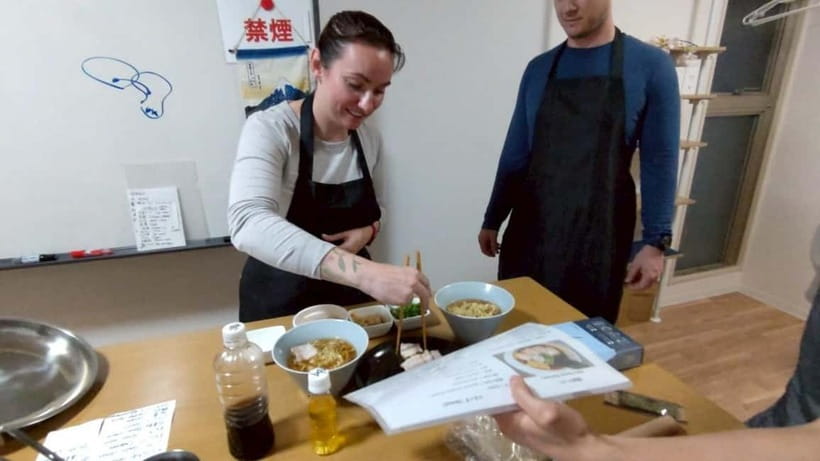
The noodle portion is one of the strongest reasons to book this class. You work with flour and learn how ramen noodles are prepared, rather than simply receiving noodles that are ready to boil. That extra step makes the meal feel more like something you made, not something assembled for you.
The cooking period lasts 1.5 hours according to the supplied schedule. That gives the group time to move through the preparation without turning the class into a rushed demonstration. You can expect to spend part of this time on the dough and noodle process, while the rest goes toward the soup and gyoza preparation.
The instructors explain the steps and the reasons behind them. That is useful if you want to repeat the meal at home, since a recipe alone cannot always tell you what the mixture should look or feel like. The class is still a social activity, but it has enough instruction to teach real techniques.
A practical note: ramen at home may require some planning. One participant liked the recipes but noted that certain ingredients used in class can be hard to find in their home country. The recipes are useful, but do not assume every item will be sitting in a standard supermarket after you return.
Folding gyoza with the group
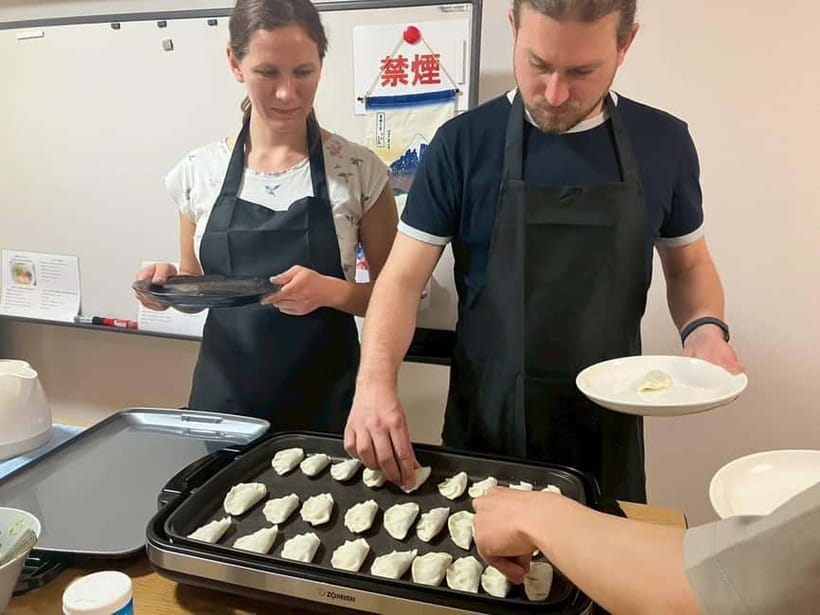
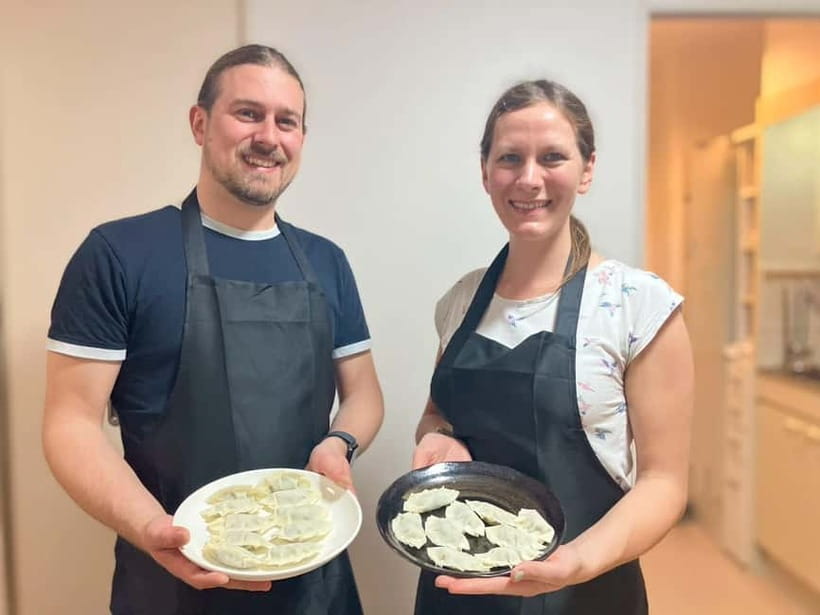
Gyoza are the other half of the lesson, and the folding technique is a highlight. You fill the wrappers with a vegetable and pork mixture, then learn how to pleat and seal them. The instructors demonstrate the process and help you correct your folds.
This is a good activity for families and mixed-ability groups because each person can work at their own pace. A family of five found the class suitable for parents and teenagers, and the instructors were praised for being patient with younger participants. Solo visitors also have a natural way to join the group, since everyone is working toward the same meal.
You should expect a few imperfect dumplings. That is part of the fun, not a problem. The instructors focus on helping you understand the technique, and the small class size means you are less likely to get lost during the demonstration.
The gyoza also give the class a satisfying balance. Ramen involves dough, broth, and noodles, while gyoza add chopping, filling, folding, and cooking. You are doing several different kinds of kitchen work in one session instead of repeating one simple task.
More Ramen Tours in Osaka
- Osaka: Five Must-See Highlights Walking Tour & Ramen Lunch
★ 4.7 · 411 reviews - 90 min Shared Handmade Udon Experience
★ 5.0 · 70 reviews - Osaka: Gluten-Free Ramen and Gyoza Cooking Class
★ 5.0 · 42 reviews
The meal and drinks afterward
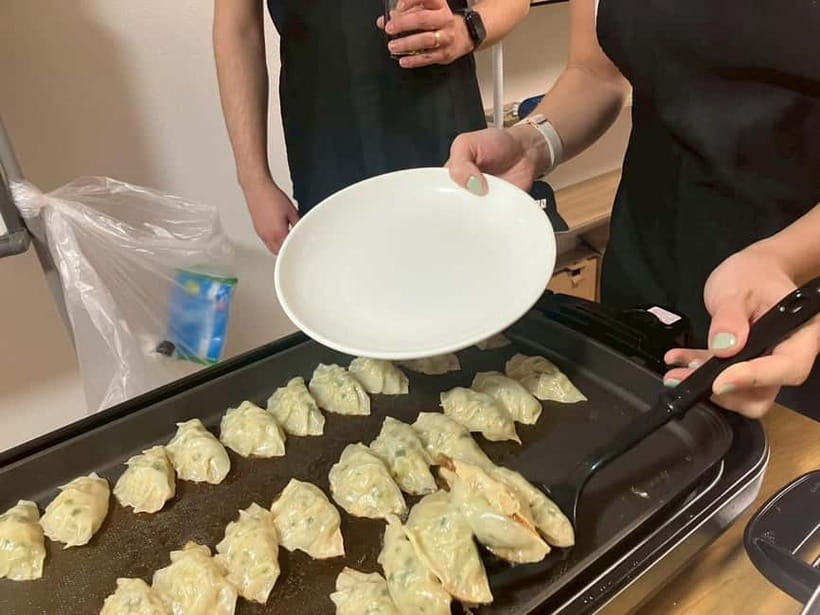
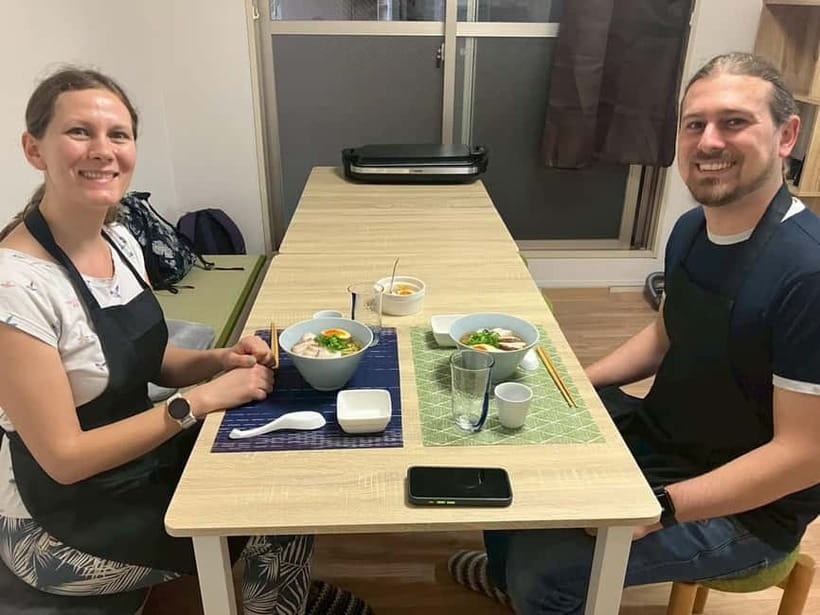
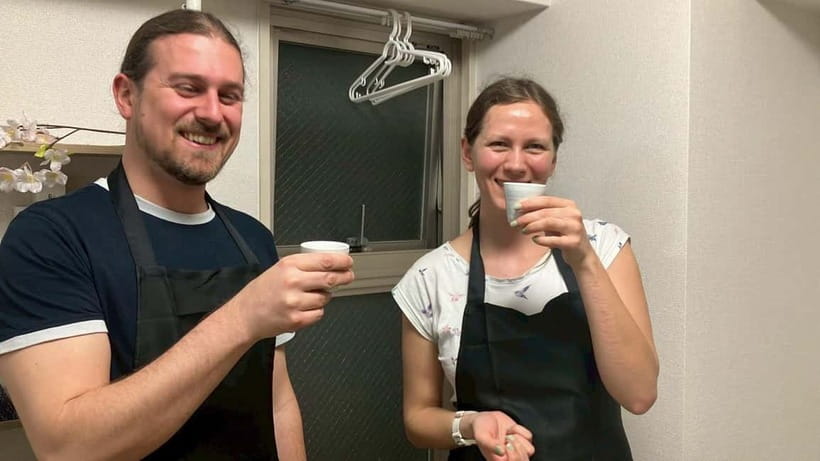
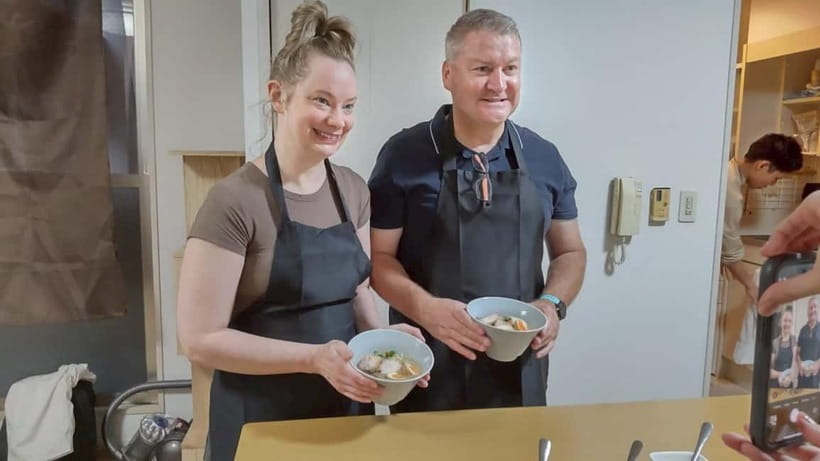
After the cooking, you sit down and eat the ramen and gyoza you prepared. The tasting session includes sake, beer, and soft drinks. This is not just a quick sample at the end. The published schedule allows one hour for tasting, which gives you time to enjoy the food and talk with the instructors and other people in the class.
I like this part because it turns a lesson into a complete evening activity. You finish with a meal rather than leaving with a container of food or a recipe card alone. The social side is also important. The format brings together people from different countries, and the cooking gives you an easy subject to talk about.
The food quality depends partly on your own cooking, which is exactly the point. You can see the result of the work you have just done and compare techniques with the rest of the group. Several participants found the finished ramen and gyoza especially satisfying, while one person felt the experience would have been even better if the staff had eaten alongside the class. That is a fair consideration if you prefer a meal shared directly with your hosts.
The included drinks add value to the $70 price, particularly if you would otherwise pay separately for a meal and a drink in Osaka. Additional food and drinks are not included, so this is not an unlimited dinner. Still, the portion you prepare and eat is the main product, not a side benefit.
Is $70 a fair price?
At $70 per person, this is not the cheapest way to eat ramen in Osaka. A restaurant bowl costs far less, and you can find gyoza throughout the city without booking an activity. You are paying for instruction, ingredients, equipment, a small group setting, drinks, and the chance to prepare the meal yourself.
I think the value is solid if you want an activity rather than just dinner. The recipes add lasting value, and the class teaches skills you can try again at home. The price also makes more sense for families and friends who want a shared experience, since everyone takes part in the preparation.
For a food-focused visitor, this can replace one evening meal while adding several hours of activity. For someone who only wants to taste ramen, it is probably too expensive. You should book this for the cooking, not simply for the food.
Who will enjoy this class most?
This class suits first-time cooks, food enthusiasts, families, couples, friends, and solo visitors. You do not need prior experience, and the instructors are prepared to guide beginners through the process. The group size is capped at eight, which helps keep the instruction personal without making the activity feel private or formal.
It is also a good option for visitors who want contact with local cooking traditions but do not have time for a long food tour. In a compact session, you learn two widely loved Japanese dishes and then eat them.
Vegetarian and vegan requests can be accommodated. One participant received a vegetarian version, and another had vegan requirements met. You should communicate dietary needs before the class rather than assume substitutions will be automatic.
This may be less suitable if you want a quiet, private meal or a highly advanced culinary course. You cook in a group setting, and the experience is built around conversation and shared work. It is friendly and practical rather than formal.
Timing, access, and booking details
The activity requires advance booking, with reservations requested at least one day ahead. You can cancel for a full refund up to 24 hours before the start time, and a reserve-now-pay-later option is available.
The activity is listed as wheelchair accessible. Since the meeting point is in an apartment building with stairs and an elevator, contact the provider ahead of time if you need specific access arrangements.
Pay close attention to the duration shown when you select a time. The supplied details describe a 30-minute orientation, 1.5 hours of cooking, and a one-hour tasting, which totals three hours. Elsewhere, the activity is labeled as two hours. Confirm the actual start and end time before booking, especially if you have a dinner reservation, train, or evening show.
What to bring and what to expect
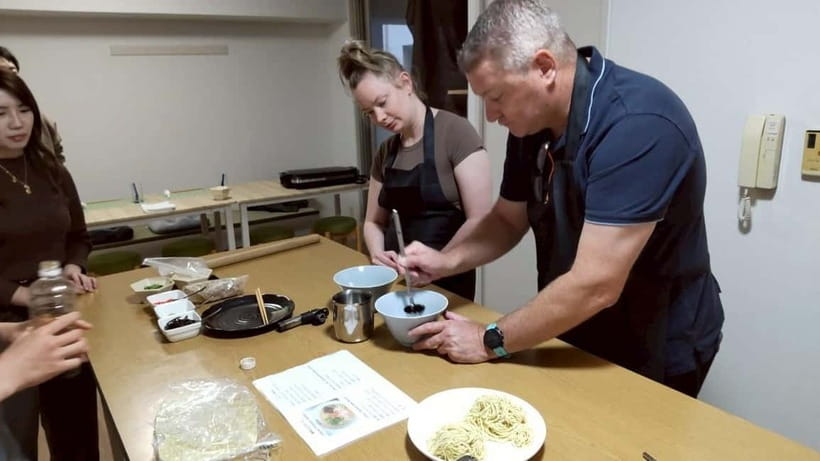
You are told to bring just yourself. The ingredients and tools are provided, so there is no need to carry a knife, apron, groceries, or cooking equipment.
Wear clothes you can move comfortably in and expect to spend much of the cooking portion standing or working at a shared station, though specific clothing requirements are not provided. The important preparation is practical: allow time to find Room 303 and arrive ready to take part.
You leave with the recipes, which is one of the most useful extras. They give you a path to recreate the dishes, though you may need to find substitutes for some Japanese ingredients at home.
Should you book the ramen and gyoza class?
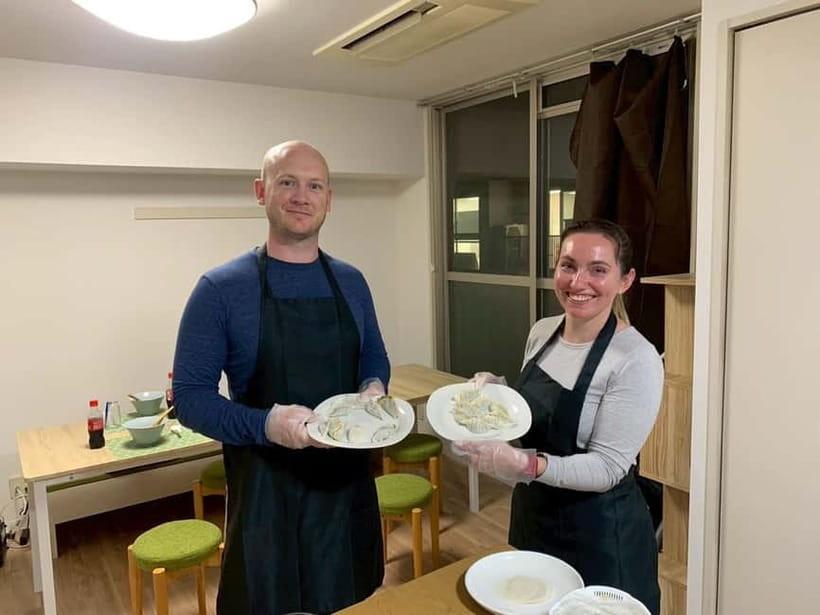
Book it if you want to learn by doing. The strongest parts are the handmade noodles, the careful gyoza folding, the small class size, and the meal at the end. English-speaking instructors such as Ryota, Mimi, Keiichi, Nana, and Yuriko make the process approachable, and the recipes help the experience continue after your Osaka visit.
The $70 price is reasonable for a lesson, meal, drinks, and supplies, but not for a simple food tasting. Check the actual duration, confirm dietary needs in advance, and leave enough time to find the apartment building.
If you want an easygoing evening that combines cooking, Japanese food, and meeting other people, this is a strong choice. If you prefer a private dining experience or only want to eat excellent ramen with no kitchen work, spend the money at a restaurant instead.
FAQ
Where does the cooking class meet?
The meeting point is Dear Court Semba 303, 4-chōme-3-1 Bakurōmachi, Chuo Ward, Osaka 541-0059, Japan.
How do I enter the building?
Press 303 on the entrance doorbell panel, then press the button marked Call 呼. After the door opens, go to Room 303 on the third floor by stairs or elevator.
How long does the activity last?
The activity is listed as two hours, but the detailed schedule describes 30 minutes of orientation, 1.5 hours of cooking, and a one-hour tasting session. Confirm the exact duration and end time when booking.
What dishes will I make?
You will make ramen, including noodles prepared from scratch, and gyoza filled with vegetables and pork.
Are ingredients and cooking tools provided?
Yes. All ingredients and tools needed for the cooking class are included.
Are drinks included?
The tasting session includes sake, beer, and soft drinks. Additional food and drinks beyond the provided tasting session are not included.
Is the class suitable for beginners?
Yes. The class is designed for beginners and food enthusiasts, with guidance from Washoku instructors throughout the cooking process.
Is the class taught in English?
Yes. Instruction is available in English and Japanese.
Can vegetarian or vegan participants join?
Vegetarian and vegan accommodations are available. Contact the provider in advance to explain your dietary requirements.
How many people are in the group?
The class is a small-group activity with a maximum of eight participants.
Can I cancel my booking?
You can cancel up to 24 hours in advance for a full refund. A reserve-now-pay-later option is also available.
Just added around Osaka
- Exclusive Sushi Making Experience with a Master Chef – Osaka Area★ 5.0 · 25 reviews
- Private Home-Style Cooking Class in Osaka with Local Mom Yoshiko★ 5.0 · 46 reviews
- Hidden Osaka – Yukaku Red Light Tour & Culinary Adventure★ 4.8 · 96 reviews
- Osaka: Walking Tour and Top Highlights★ 4.8 · 104 reviews
- Osaka: Private Ceramic Painting Workshop★ 5.0 · 13 reviews
- Pickleball in Osaka, Kobe & Kyoto with Locals!★ 4.7 · 80 reviews
- Eat Like a Local in Osaka – Private Custom Street Food Tour★ 4.3 · 33 reviews
- Osaka:SUMO BEATS SHOWCASE: Taiko Drum and Wagyu burger!★ 4.2 · 37 reviews
Ramen & Noodle Tours, compared.

Eat and Drink Like a Local: Tokyo Ueno Food Tour-Taverns&Ramen
Our verdict →

Five Must-See Highlights Walking Tour & Ramen Lunch
Our verdict →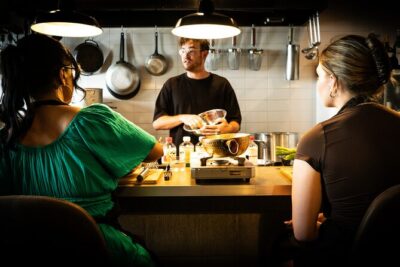
Professional Ramen & Gyoza with Ramen Chef in a restaurant!
Our verdict →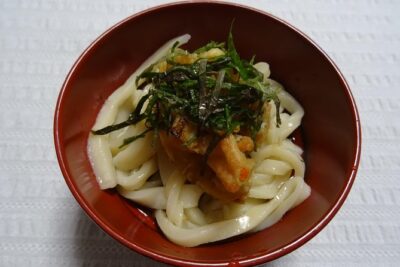
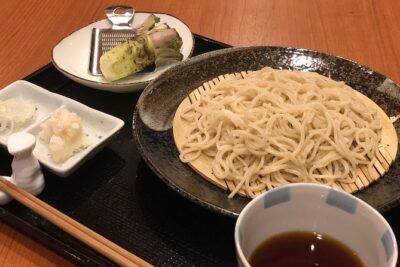
Popular in SapporoExperience authentic hand-made soba at a real soba shop!
Our verdict →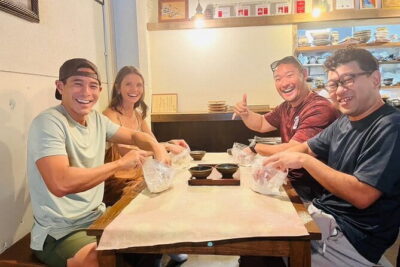
Browse the lists this tour appears in