
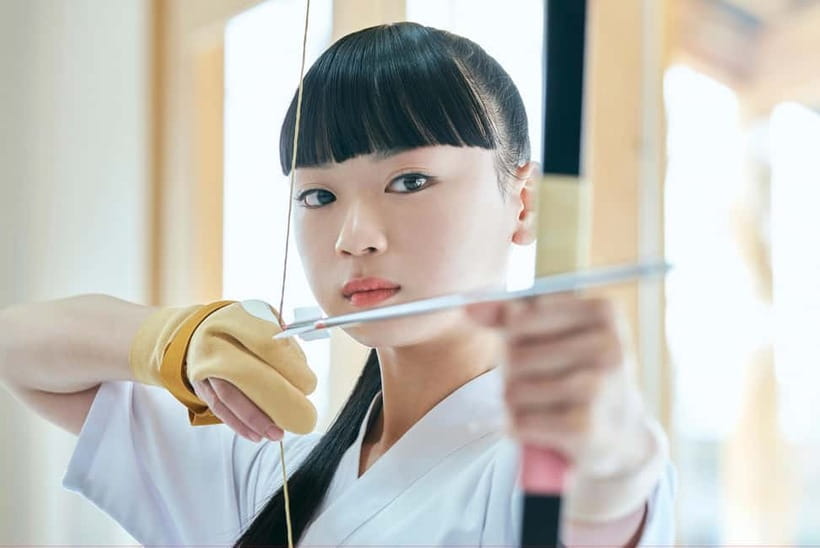
Reviewed · MARTIAL ARTS EXPERIENCES
Hiroshima: Traditional Japanese Archery Experience
Kyudo is not simply Japanese archery with a different bow. Every movement has a purpose, from handling the equipment to drawing the string. I like the traditional uniform and armor, which make even a short lesson feel connected to Japanese culture. I also like the small groups and patient teaching, especially for first-time archers.
The main drawback is the one-hour limit. You get a good introduction and plenty of arrows, but you will only begin to understand the technique when the session ends. The range is also not a good choice if you have limited mobility, and you should wear trousers rather than a skirt or shorts.
What makes this Hiroshima kyudo lesson worth your time
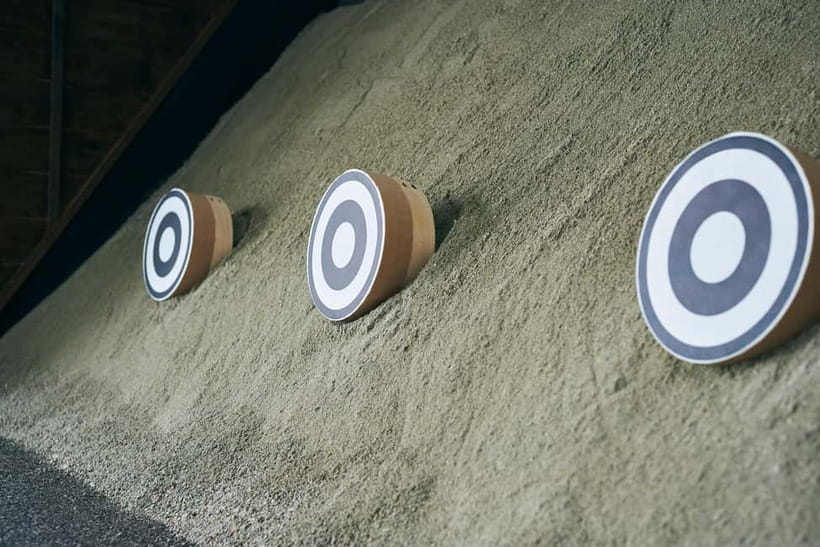
- A real beginner-friendly introduction: You can shoot arrows during this session, even though formal kyudo training usually requires mastering the basics first.
- Traditional clothing included: You wear dogi upper-wear, hakama lower-wear, and armor before taking your turn at the target.
- Close to Hiroshima’s major sights: The meeting point is about a 15-minute walk from the Atomic Bomb Dome.
- Plenty of personal instruction: Groups are limited to four, and some sessions have two instructors helping a very small number of participants.
- A friendly challenge at the end: Some groups finish with a small contest to see who can place the most arrows on target.
- Good value at $41: The price includes the equipment, costume, instruction, practice, target shooting, changing time, and photos.
Kyudo is about control before power
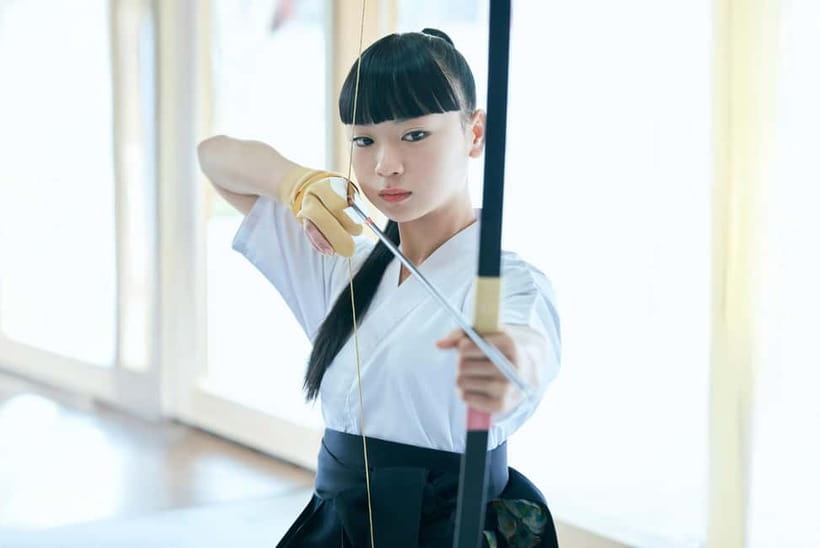
The first surprise is how different kyudo feels from Western archery. You are not simply shown how to pull a string, aim, and release. The activity teaches a set order of movements, with attention paid to your stance, hands, arms, posture, and the way you handle the bow and arrows.
That careful routine is part of the appeal. Kyudo is a martial art built around focus in both body and mind. You are expected to respect the equipment and the other people using the range. Even during a short visitor session, the process matters as much as the arrow hitting the target.
I like this because it gives the activity a calm rhythm. You are not rushing through a row of bows trying to fire as many arrows as possible. You are learning why each movement comes in a certain order.
It can also feel demanding at first. Several participants describe the method as technical, with many rules and exact steps. That is not a flaw, but you should know what you are booking. This is a taste of a traditional discipline, not a casual amusement-park shooting game.
More Martial Arts Experiences in Hiroshima:
- Japanesel Archery Experience HIROSHIMA CASTLE SHARAKU
★ 5.0 · 387 reviews - Kyoto: Kendo and Samurai Experience with Uniform and Gear
★ 4.9 · 815 reviews - Tokyo: Samurai Sword & Archery Class from Samurai Descendant
★ 5.0 · 603 reviews
Finding Hiroshima Castle SHARAKU
The activity takes place at Hiroshima Castle SHARAKU, with the meeting point listed as Hiroshima Castle Sannomaru. The shop is inside a shopping mall, so allow a little time to find the correct entrance and store rather than arriving at the last second.
From the Atomic Bomb Dome, the walk takes about 15 minutes. That makes this easy to pair with a morning at the Peace Memorial Park or a visit to Hiroshima Castle. You do not need hotel pickup, and none is provided, so plan your own way to the meeting point.
The central location is a useful part of the experience. You can fit kyudo between major Hiroshima sights without giving up half a day. At the same time, this is an indoor range rather than a scenic countryside activity, so do not book it expecting an outdoor view or a large traditional dojo.
Changing into dogi, hakama, and armor
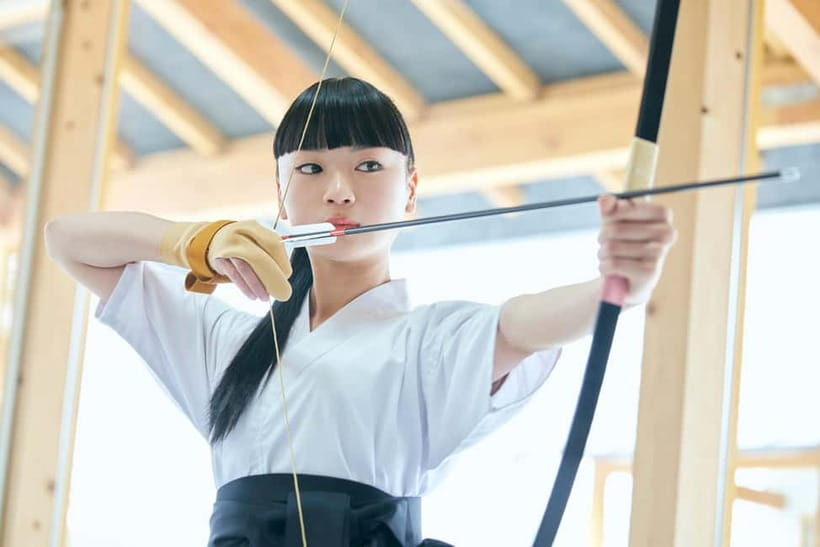
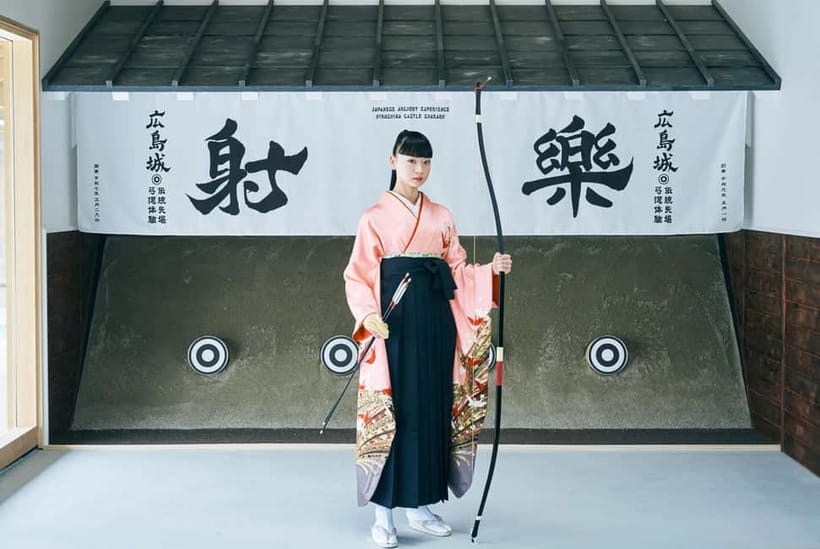
Your first task is getting dressed. The activity provides the traditional tools and costumes, including dogi upper-wear and hakama lower-wear. Armor is also part of the experience.
This is more than a photo opportunity. The hakama changes how you move, and the clothing makes simple actions feel less familiar. You may need to pay closer attention to your footing and posture. That adds a useful lesson: kyudo technique is shaped by the whole body, not just the bow arm.
Wear trousers underneath or instead of anything restrictive. Pants are specifically recommended, while skirts and shorts are poor choices. The activity includes about 15 minutes for changing, closing, and taking photos, leaving roughly 45 minutes for practice and shooting.
The costume is one of the strongest reasons to choose this over an ordinary archery lesson. You get a clearer sense of how traditional equipment affects the sport. Just remember that the clothing takes time, so the shooting portion is not a full hour.
The first lesson: exact movements and careful handling
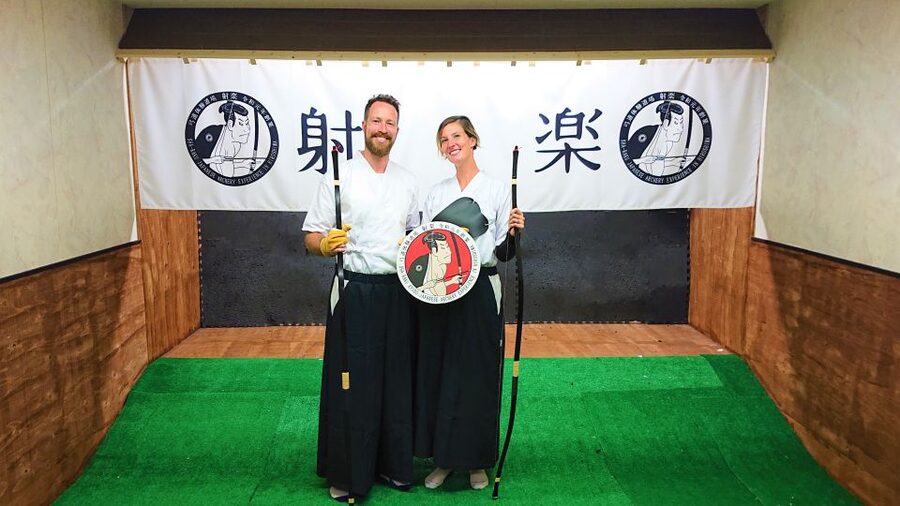
After changing, you receive an explanation of kyudo and a demonstration of the basic process. The instructors then guide you through loading and firing the arrows.
The teaching is practical and repetitive. You learn the fine details of how to hold the bow, place the arrow, draw, and release. The movement needs to be repeated before it begins to feel natural. At first, you may think about every part of your arms and hands separately. After several rounds, the sequence starts to settle.
English is listed as the activity language, but the actual amount of spoken English can vary. Several sessions have used a phone or translation app to bridge the gap. That has generally been enough for the physical instructions, especially because the instructors demonstrate each step.
If you want a long spoken explanation of Japanese martial arts, ask early. Some instructors include background about samurai and the use of different bows, while other sessions focus more on technique. One participant especially wished for more information about archers on Japanese battlefields. The activity gives you a strong practical lesson, but the historical portion may be brief.
A few more Hiroshima half-days worth comparing
- Peaceful Hiroshima & Miyajima UNESCO 1 Day Bus Tour
★ 5.0 · 5,309 reviews - Hiroshima: Hiroshima and Miyajima UNESCO Sites 1-Day Tour
★ 4.9 · 2,330 reviews - Hiroshima / Miyajima Full-day Private Tour with Government Licensed Guide
★ 5.0 · 1,298 reviews - Osaka/Kyoto: Hiroshima Miyajima Bus Tour & Shinkansen Ticket
★ 4.7 · 919 reviews
Shooting at the target takes patience
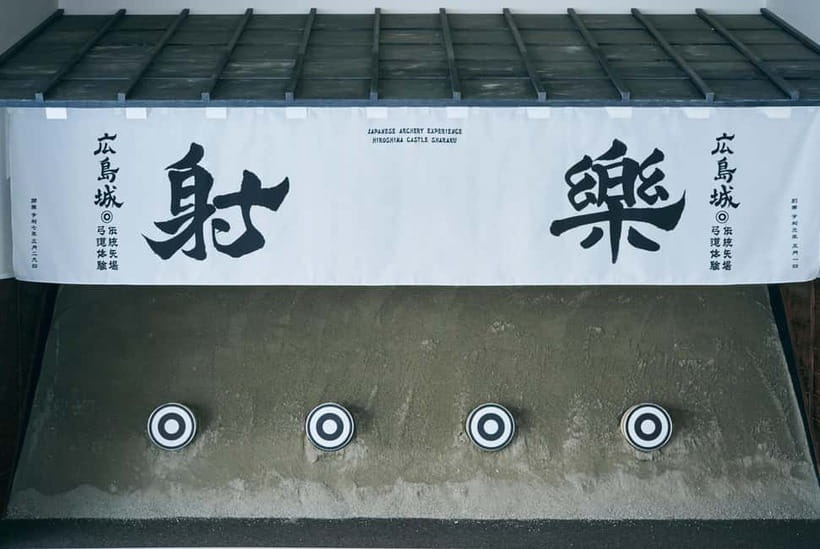
Once you understand the basic sequence, you begin shooting at a mini-sized target. The target is closer than one used in professional kyudo, but that does not make the activity easy. You still need the right posture, draw, release, and timing.
The instructors give you repeated chances to try. That matters because the first arrows may go wide, drop short, or miss for reasons that are hard to identify. A small correction in your grip or stance can change the result.
Hitting the target feels satisfying because the success comes after a string of precise actions. The activity also connects the target with a traditional belief that a successful hit brings good luck and helps wishes come true. You can take that as a cultural touch, but it also gives the final shots a playful sense of purpose.
The best part is the visible improvement. People with no archery background have reported moving from uncertainty to target hits within about 30 minutes. Families and mixed-age groups can take part together, although children still need to follow the instructions closely and handle the equipment with care.
Why the small group matters
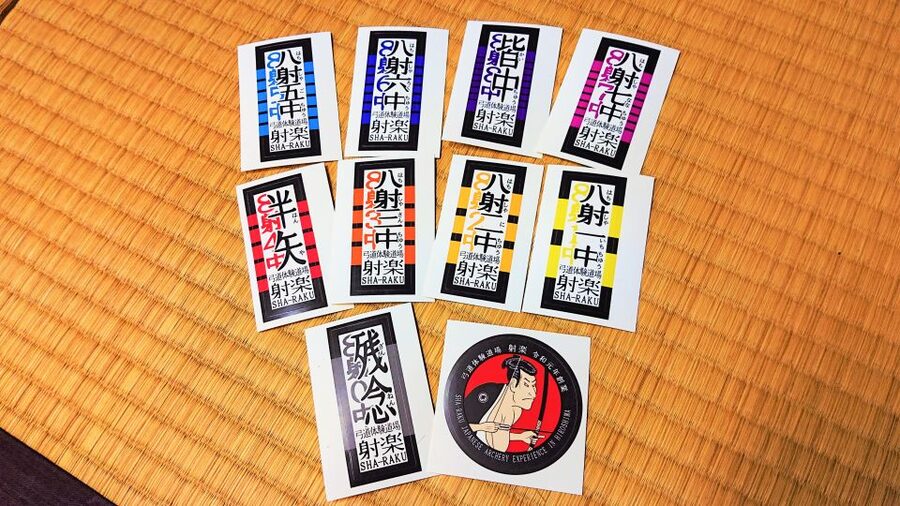
The maximum group size is four. That is a major advantage for an activity built around careful body positioning.
You are not left waiting through long turns while a large crowd shoots. The instructors can watch your stance and correct the details that are difficult to notice on your own. Some sessions have had two instructors for only a few participants, creating an almost private-lesson feel.
Solo bookings may sometimes have no other participants, though you should not assume that will happen every time. A private-feeling session is useful if you want focused help. A full small group can be more lively, especially when the instructors organize a friendly contest.
This format also suits families. Parents and teenagers can work through the same routine, then compare target results at the end. The competition is not the heart of kyudo, but it adds energy after the quieter practice period.
The final contest and photo time
Some groups finish with a simple contest based on target hits. This gives you a clear reason to concentrate during the practice rounds. It also lets you see how quickly the basic method can improve your shooting.
Do not expect a formal tournament. The contest is a light activity for the people in your session, not a serious measure of kyudo skill. That balance works well for a first introduction. You can enjoy the competitive moment without losing the respectful tone of the lesson.
The remaining time is used for changing, closing the session, and taking photos. The costume makes these pictures more memorable than ordinary snapshots, especially if you are visiting Hiroshima as a family or marking a special day.
What $41 includes, and what it does not
At $41 per person, this is fairly priced for a one-hour cultural activity. Your fee covers the traditional clothing, equipment, instruction, practice, target shooting, and photos. You do not need to rent a bow or arrange costume hire separately.
The value comes from the access and personal attention. A standard archery lesson may teach you to shoot, but this session adds the clothing, formal routine, Japanese context, and the chance to try a martial art that is not normally open to complete beginners in this way.
The limitation is time. Forty-five minutes of practice and shooting passes quickly once you include demonstrations, corrections, and waiting for safe turns. If you already practice archery, you may wish for a longer session. Several people who enjoyed it most said they could have continued all afternoon.
Food, drinks, and transport are not included. Plan to eat before or after, and treat the activity as one stop in a day around Hiroshima Castle, the Atomic Bomb Dome, and the Peace Memorial Park.
Safety, clothing, and mobility
The activity is marked as wheelchair accessible, but it is not recommended for people with limited mobility. Those two details may seem at odds, so contact the provider before booking if you need physical accommodations. The traditional clothing, floor-level movements, or range setup may make participation difficult.
There is also a small physical risk from the bowstring. In rare cases, it can strike the arms or wrists and cause swelling. Listen closely when the instructor adjusts your arm position, and do not force a movement that feels unsafe.
Wear comfortable trousers and a top that allows your shoulders and arms to move. Avoid shorts and skirts. You will be changing into traditional clothing, but practical underclothes still make the process easier.
The activity is suitable for beginners. You do not need previous archery experience, and the instructors demonstrate the steps before asking you to shoot.
Who will enjoy this most
I would choose this for anyone who wants a hands-on cultural activity near Hiroshima’s main sights. It suits first-time archers, families with older children, couples, solo visitors, and people who like learning a physical skill rather than only looking at exhibits.
It is particularly good for:
- People curious about Japanese martial arts
- Families with teenagers
- Visitors who want a short activity between sightseeing stops
- Beginners who appreciate patient, direct instruction
- Anyone who likes traditional clothing and photos
- Archery fans looking for a different style of shooting
I would be more cautious if you want a long history lecture, professional-distance shooting, or a relaxed activity with almost no physical demands. The history content can be limited, the target is mini-sized, and the method requires concentration.
Booking details to keep in mind
The session lasts one hour, with starting times based on availability. Groups are limited to four, which helps keep the instruction personal.
You can cancel up to 24 hours before the activity for a full refund, and you can reserve now while paying later. That is useful if you are still arranging your Hiroshima schedule.
The provider is Hiroshima Castle SHARAKU. English is listed, and translation apps may be used to assist communication. Do not let a phone translation tool put you off if you are comfortable learning by watching demonstrations. The physical instruction is clear enough to follow when the teacher shows each movement.
Should you book this Hiroshima kyudo experience?
Yes, if you want a short, unusual, and affordable way to connect with Japanese culture. The strongest features are the traditional clothing, the small group size, the chance to shoot as a complete beginner, and the patient correction during practice.
Book it with realistic expectations. You are not becoming a kyudo practitioner in one hour, and you may not hear a long account of Japanese archery history. You are getting a carefully guided introduction, a few rounds at the target, and a better sense of why kyudo values control and ritual.
At $41, I think it earns its place in a Hiroshima itinerary, especially for families and first-time visitors. Wear trousers, arrive ready to follow exact instructions, and treat the target hit as a bonus rather than the only measure of success.
FAQ
Where does the kyudo experience meet?
The meeting point is Hiroshima Castle Sannomaru, at the Hiroshima Castle SHARAKU shop inside a shopping mall.
How far is the activity from the Atomic Bomb Dome?
The archery location is about a 15-minute walk from the Atomic Bomb Dome.
How long does the experience last?
The full activity lasts one hour. About 45 minutes are used for practice and target shooting, while 15 minutes cover changing, closing, and photos.
How much does the experience cost?
The listed price is $41 per person.
Is this activity suitable for complete beginners?
Yes. You can take part without previous kyudo or archery experience and shoot arrows during the session.
What clothing will I wear?
You will wear traditional kyudo clothing, including dogi upper-wear and hakama lower-wear. Armor is also included as part of the experience.
Should I wear trousers?
Yes. Pants are recommended instead of skirts or shorts.
Is English instruction available?
English is listed as the activity language. Translation apps may also be used to help with communication.
How many people can join a session?
The group is limited to four participants.
Is the activity wheelchair accessible?
The activity is listed as wheelchair accessible, but it is not recommended for people with limited mobility. Contact the provider before booking if you need specific physical accommodations.
Just added around Hiroshima
- Full Day Hiroshima and Miyajima Tour by Bullet Train from Kyoto★ 4.5 · 120 reviews
- Hiroshima Saijo Sake Tasting Tour with visit to 7 Breweries★ 5.0 · 104 reviews
- The Peace Memorial to Miyajima : Icons of Peace and Beauty★ 4.5 · 31 reviews
- Shore Excursion from Hiroshima Port : Private Tour in Hiroshima★ 5.0 · 17 reviews
- Okunoshima Rabbit Island Cycling Tour with Local Guide★ 4.5 · 17 reviews
- Hiroshima & Miyajima All-Inclusive Tour w/Licensed guide Pancho★ 5.0 · 54 reviews
- Private Full Day Hiroshima Tour★ 4.5 · 29 reviews
- Hiroshima Private Tour with a Local – Highlights & Hidden Gems★ 4.5 · 24 reviews
Martial Arts Experiences, compared.
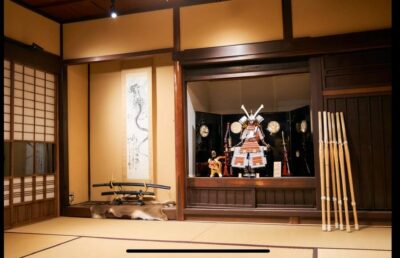
Kendo and Samurai Experience with Uniform and Gear
Our verdict →
Samurai Sword & Archery Class from Samurai Descendant
Our verdict →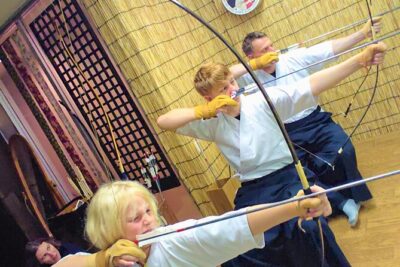
Japanesel Archery Experience HIROSHIMA CASTLE SHARAKU
Our verdict →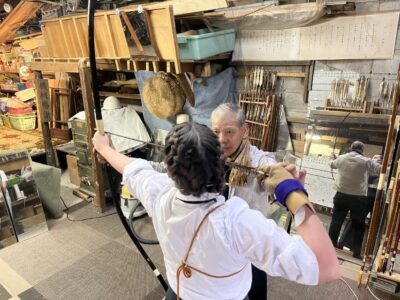
Japanese Archery Workshop with Experienced Instructor
Our verdict →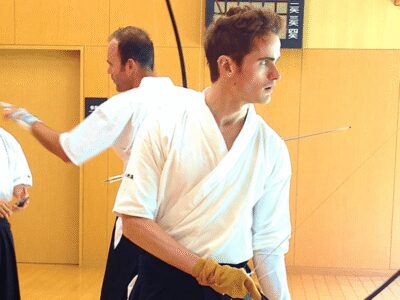
Browse the lists this tour appears in