
Reviewed · DAY TRIPS IN OSAKA
Kyoto 1 Day Tour from Osaka
Kyoto packs centuries of temples, shrines, palaces, and gardens into a city that can be awkward to cross in a single day. This tour solves the transport puzzle by moving you from Osaka to Kyoto by JR train, then using a coach for the far-flung sights. You get six major stops, including Nijo Castle, the Golden Pavilion, Fushimi Inari, and Kiyomizu Temple.
I like the efficient route and the helpful station guidance, especially if Kyoto is your only free day. I also like the range of sights: grand Tokugawa architecture in the morning, bright torii gates and Buddhist sculpture later, and a high terrace view at the end. The catch is the pace. Eleven hours and up to 40 people can feel tiring, and traffic or a soft-spoken guide may make some commentary hard to catch.
Key points to know before booking
- Six headline sights in one day: Nijo Castle, Kinkakuji, Kyoto Imperial Palace, Fushimi Inari, Sanjusangendo, and Kiyomizu Temple.
- A useful Osaka to Kyoto setup: Meet at Hotel Granvia Osaka at 7:15 am, ride the JR rapid service, and return to Osaka Station around 6:30 pm.
- A full, active schedule: Expect walking from the coach parking area to Fushimi Inari, plus temple grounds, steps, and shopping lanes.
- Lunch depends on your booking: Choose no lunch, a Western-style set meal, or an Indian thali meal. Vegetarian requests must be made in advance.
- Strongest for first-time Kyoto visitors: You see many famous places quickly, but you will not have much time for slow wandering or lesser-known corners.
- Plan around closure days: Nijo Castle and the Imperial Palace have specific closures, with alternative temples or shrines substituted without a refund.
Why this Kyoto day trip works from Osaka
The tour begins at Hotel Granvia Osaka beside Osaka Station, a sensible meeting point if you are staying near Umeda. The start time is 7:15 am, so you need to be ready early. An English-speaking assistant helps with the outbound train to the Sunrise Tours desk at Kyoto Avanti, then a Kyoto guide takes over for the sightseeing portion.
The JR rapid train is a practical choice. Kyoto’s main sights sit across the city, and reaching them independently can mean juggling local trains, buses, and walking routes. Here, you make the Osaka to Kyoto connection with the group, then board an air-conditioned and heated coach for the day’s circuit.
The train uses non-reserved seating, so a seat is not guaranteed. In busy periods, you may stand. That is not a major hardship for a roughly 30-minute ride, but it is worth knowing if you are traveling with young children, older relatives, or luggage.
The group can reach 40 people. That size keeps the price lower than a private tour, but it also affects the guiding. Some guides have been praised for clear history, humor, and practical help. Others have been difficult to hear while walking, particularly when the group spreads out. Stay close to the guide when commentary matters.
More Day Trips in Osaka
- From Kyoto/Osaka: Kyoto Top Highlights 1-Day Guided Bus Tour
★ 4.5 · 714 reviews - Osaka Private Tour with a Local Guide (Must See Places in 1 Day)
★ 5.0 · 57 reviews - Osaka Private Day Trip – Enjoy Your First-Time Visit to Osaka!
★ 5.0 · 39 reviews
Nijo Castle shows the power behind the palace
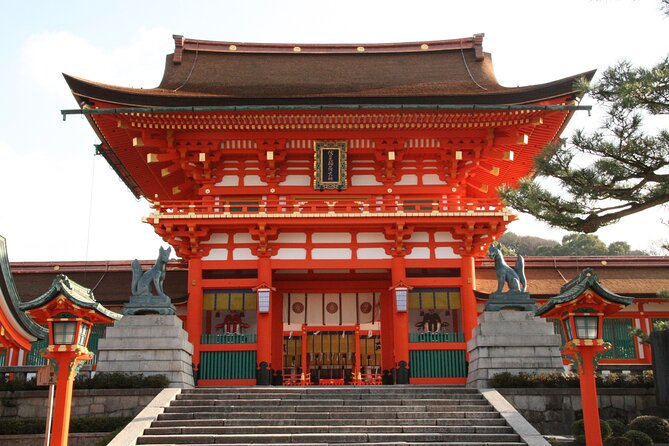
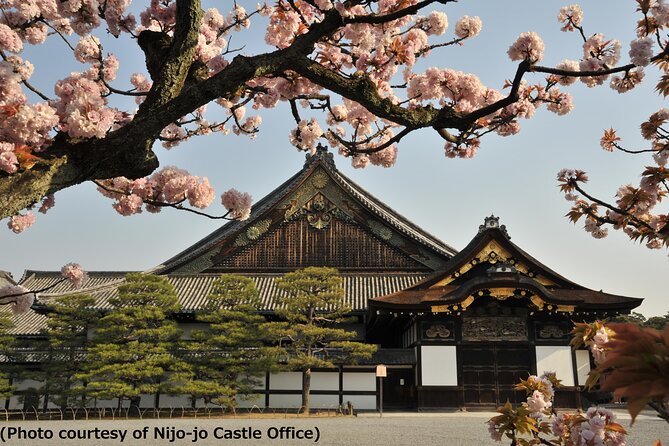
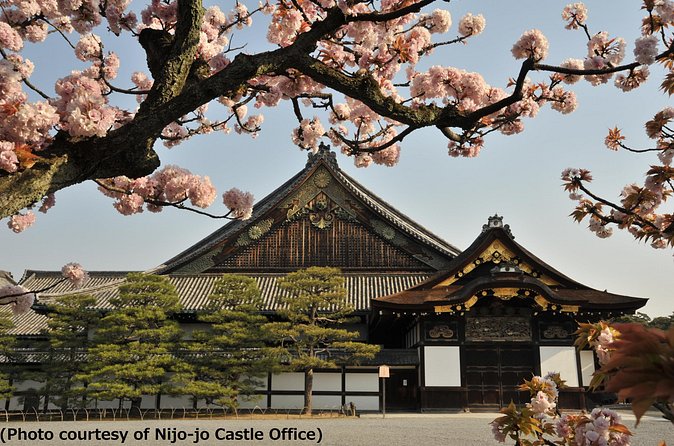
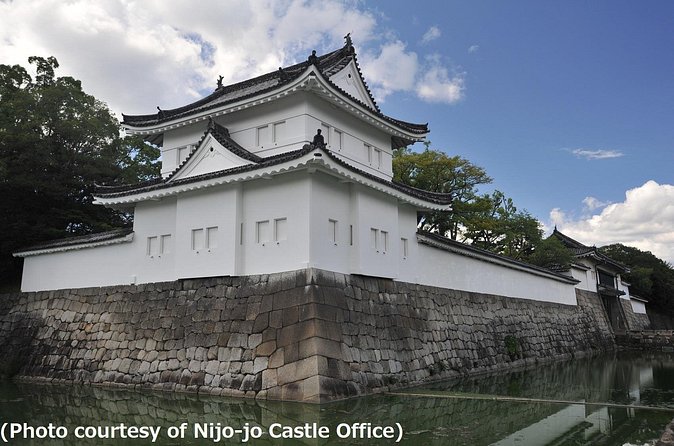
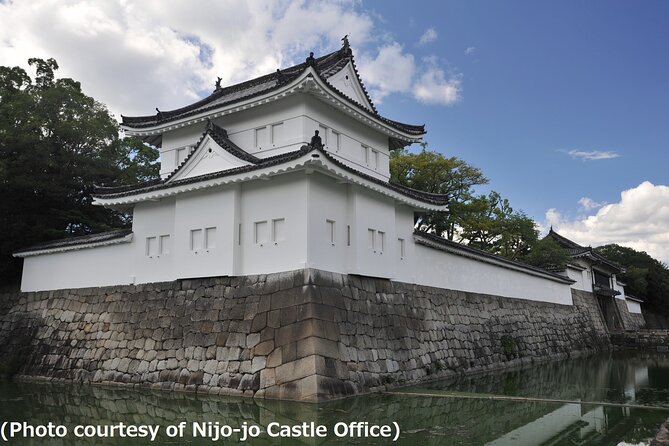
Your first major stop is Nijo Castle, built in 1626 for the Tokugawa shogun and designed to protect the nearby Imperial Palace. The outside looks defensive, with thick stone walls, gates, and a broad moat. Inside, the mood changes. Gold leaf, elaborate carvings, and formal rooms display the wealth of Japan’s military rulers.
You get about 50 minutes here, including admission. That is enough to see the main sections and gardens, but not enough for a slow study of every room and detail. Listen for the famous nightingale floors, if your guide discusses them, and pay attention to the contrast between the fortress-like exterior and the ornate interiors.
Nijo Castle has a practical scheduling issue. It closes on Tuesdays in January, July, August, and December, with the following day used as the closure if Tuesday is a holiday. On those dates, the tour visits Ryoanji Temple instead. The change is made for operational reasons, and the tour price is not refunded if an alternative is used.
Kinkakuji gives you Kyoto’s classic photograph
Kinkakuji, better known as the Golden Pavilion, is the visual star of the day for many people. The upper structure is covered in thin layers of gold and reflected in a pond surrounded by carefully arranged gardens. You have about 45 minutes, including admission.
The pavilion is a viewing experience rather than a building you enter. Your route takes you around the pond and through the grounds, with several strong photo points. The gold looks especially striking under clear light, though the site can feel crowded during holiday periods and peak seasons.
This stop shows why a coach is useful. Kinkakuji is not close to Nijo Castle, and fitting both into a morning by local transport would take planning. The tradeoff is that you follow the group’s timetable. If you want to linger until the light changes or browse every path, you will probably want a separate visit.
The Imperial Palace adds royal context
Kyoto Imperial Palace was the Emperor’s residence until about 150 years ago. The grounds offer a different kind of Kyoto experience from the temples: broad paths, formal buildings, courtyards, and carefully maintained gardens tied to the old imperial court.
The scheduled visit lasts about 40 minutes. The guide can help explain differences in room design, seating, paintings, and court use, details that are easy to miss when you simply walk past the buildings. This is one part of the tour where a good guide adds real value.
The palace closes to visitors on Mondays, the following day when Monday is a holiday, and on dates affected by an Imperial Household Agency event. The replacement is normally Kitano Tenmangu Shrine. If the closure falls on the 25th, the alternative is Nishi Honganji Temple. The tour does not offer a refund for the substitution, so check the calendar before you book if the palace is a must-see.
Same trip, a completely different kind of day:
- Osaka Go Karting Tour with Funny Costume
★ 5.0 · 2,658 reviews - Osaka Castle: Museum and Tower Entry Ticket
★ 4.5 · 2,380 reviews - Osaka: Shinsekai Food Tour with 13-15 Dishes at 5 Eateries
★ 4.8 · 2,204 reviews - Osaka Food Tour: 13 Dishes at 5 Local Eateries
★ 5.0 · 2,149 reviews
Lunch is a useful break, but read the meal details

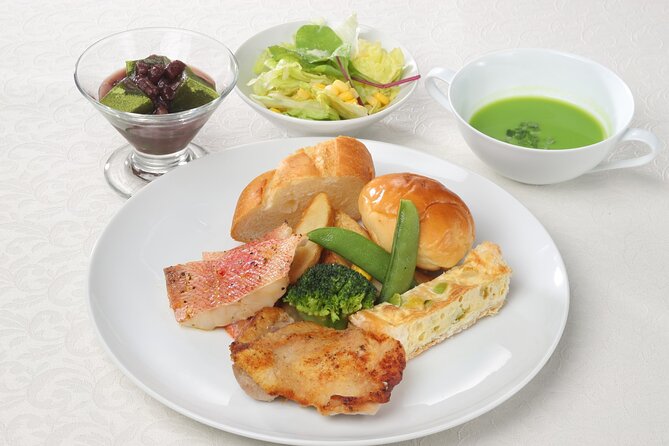
Lunch divides the morning and afternoon portions. The supplied tour information describes a Western-style set menu for the standard lunch option, despite the general tour description referring to a Japanese-style lunch. An Indian thali option is also available and is suitable for vegetarians.
The Indian meal includes three curries, vegetable pakora, yogurt, naan or roti, rice, salad, and a non-alcoholic drink. Indian thali and Western-style diners eat in separate areas, and you cannot change between the two meal types on the day.
Vegetarian requests for the Western-style meal must be made when you reserve. Halal, gluten-free, and other special meals are not available. If you prefer to choose your own food, select the no-lunch option. You then have free time to eat around Kyoto Station, though that means arranging and paying for lunch yourself.
A meal stop can be a relief on a long day, but it is not the main reason to book this tour. Think of it as a scheduled pause that keeps the day moving.
Fushimi Inari requires more walking than the photographs suggest
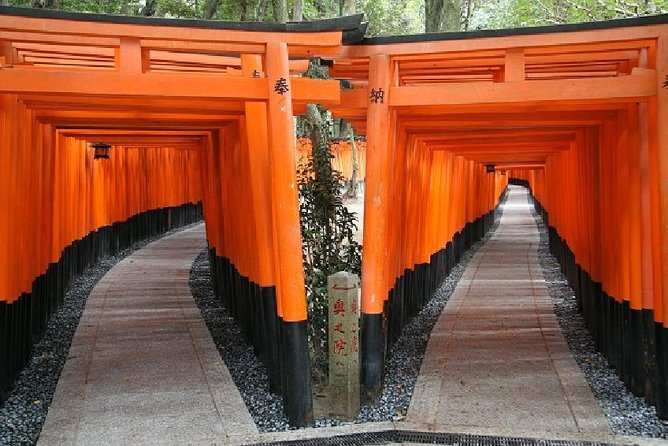
Fushimi Inari Taisha is famous for its rows of red-orange Senbon Torii gates. The shrine is the head shrine of roughly 40,000 Inari shrines across Japan, and its fox imagery connects it with Inari, the Shinto deity associated with rice and prosperity.
The planned visit is about 30 minutes. That gives you time to enter the shrine area and walk through part of the gates, but not to climb the entire mountain route. The coach cannot drop you right at the entrance, so you walk about 15 minutes each way from the parking area.
This is a key point for anyone with limited mobility or a tight energy budget. The walk is manageable for most people, but it comes after a morning of castle and temple grounds. Wear shoes that can handle uneven paths and keep track of time, since the group must return to the coach.
Fushimi Inari is also one of the places where the group may stretch out. Stay aware of the meeting point and follow the guide’s instructions. The gates make excellent photographs, but the first section can be crowded, especially on holidays.
Sanjusangendo is quiet, focused, and memorable
Sanjusangendo offers a sharp change of mood. This long wooden hall contains 1,001 life-size statues of Kannon, the Buddhist deity of compassion. The rows of figures create a powerful interior sight, even if you know little about Buddhist art.
You have about 30 minutes, with admission included. That is enough to take in the hall and hear the basic cultural explanation, but you will need to move at the group’s pace. Photography rules inside religious buildings can vary, so follow the site’s instructions.
This stop is less flashy than the Golden Pavilion or Fushimi Inari, yet it may be the most affecting for visitors who value art and religious history. The long timber structure also gives the tour a useful architectural contrast after the open shrine grounds and palace courtyards.
Kiyomizu Temple ends the day with a city view
Kiyomizu Temple is the final major stop and receives about 1 hour and 10 minutes. Built on a hillside, the UNESCO-listed temple is known for its broad wooden terrace and sweeping views over Kyoto. Cherry trees add color in spring, while maple leaves can frame the view in autumn.
The approach to the temple runs through a historic shopping lane. You can browse for snacks, souvenirs, and traditional goods, but remember that this is also one of the busiest parts of the route. The uphill walk, steps, and crowds can feel demanding late in the day.
This is the best place to leave room for your own interest. You may prefer the terrace, the shops, or the surrounding lanes. The time is generous compared with some earlier stops, but it still is not enough to explore the entire Higashiyama area or spend a quiet evening in Gion.
The Kyoto Handicraft Center is also listed among the tour’s shopping opportunities. The overall schedule combines cultural sights with chances to browse Japanese goods, but do not expect a long independent shopping session.
The guide can make or break a large group
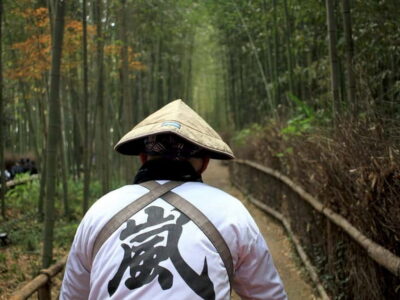
The tour includes a National Government Licensed English Guide Interpreter for the Kyoto sightseeing portion, while an English-speaking assistant handles the train transfers to and from Osaka. That distinction matters. The assistant’s job is mainly to get the group through the rail connection, while the licensed guide provides the main explanations at the sites.
Guiding quality can vary from one departure to another. Some guides have brought strong historical knowledge, humor, and patient help with trains and meeting points. One guide named Hiro-san was singled out for his history, humor, and willingness to help. At the other end, a low speaking voice or too much commentary while walking can make it hard to follow.
If you want the best chance of hearing, walk near the guide and use the stops to ask questions. A group of 40 is not ideal for subtle commentary across a wide garden. The tour is strongest as a structured introduction, not as a small seminar.
Price and pace: is $183.93 a fair deal?
At $183.93 per person, this is not a budget sightseeing day. The price includes transportation, admission fees, the air-conditioned coach, the guide service, and lunch only if you choose a lunch option. You are paying for saved planning time as much as for the individual tickets.
I see the value if you have only one day for Kyoto and do not want to work out the city’s spread-out transport system. The route covers six major places, and the coach removes much of the backtracking. For a first visit, that broad coverage can be worth more than a cheaper day spent losing time at stations.
The value is weaker if you prefer slow travel. You will spend time waiting for the group, loading and unloading, and sitting in traffic. One full-day schedule combines a morning tour and an afternoon tour, so the day can feel long. Kyoto traffic can also cut into sightseeing time.
Some people choose to leave the organized return and continue exploring Kyoto, including the Gion area, then make their own way back. The tour’s stated end is Osaka Station around 6:30 pm, and no hotel drop-off is provided. Do this only if you are comfortable managing your own return and understand that the group cannot wait.
Who should book this Kyoto tour?
I would choose this tour if you are based in Osaka, have only one day for Kyoto, and want to see the major symbols without handling every train and bus connection yourself. It also suits first-time visitors who appreciate context and do not mind a firm schedule.
Families can join, but the day is long. Children up to age five may participate free without a bus seat or lunch. If you need a seat or lunch for a child, book the child rate. Anyone under 18 needs written parental permission, and anyone under 15 or not yet in middle school must be accompanied by a parent or guardian.
You should think twice if you want quiet temple time, extended photography, or a relaxed meal. Independent visitors can spend an entire day around one or two Kyoto districts and come away with a deeper feel for the city. This tour gives you breadth instead.
The tour is generally suitable for most people, but expect substantial walking, including the route to Fushimi Inari. Weather matters, too. Heavy rain or a typhoon can shorten or disrupt the day, and poor weather will affect the outdoor stops.
Final verdict: book it for coverage, not leisurely Kyoto
Book this tour if your priority is seeing Kyoto’s famous sights in one organized day from Osaka. The route is smart, the admissions and major transfers are handled, and the combination of castle, palace, shrines, sculpture, and temple views gives you a useful first look at the city.
Skip it if you want to linger, avoid crowds, or spend your day in one neighborhood. At nearly $184, the tour earns its price through convenience and coverage, not through a slow or intimate experience. Check closure dates, choose your lunch carefully, wear good walking shoes, and keep your expectations fixed on a brisk introduction to Kyoto.
FAQ
Where does the tour start in Osaka?
The meeting point is Hotel Granvia Osaka at 3-chōme-1-1 Umeda, Kita Ward. The start time is 7:15 am.
Where does the tour end?
The tour ends at Osaka Station around 6:30 pm. Hotel drop-off is not provided, so you return to your hotel on your own.
How do I travel from Osaka to Kyoto?
The group uses a JR rapid service train between Osaka and Kyoto. The train uses non-reserved seating, so a seat is not guaranteed. In Kyoto, the sightseeing route uses an air-conditioned and heated tour bus.
How many people can join the tour?
The maximum group size is 40 people.
What sights are included?
The route includes Nijo Castle, Kinkakuji Temple and the Golden Pavilion, Kyoto Imperial Palace, Fushimi Inari Taisha Shrine, Sanjusangendo Temple, and Kiyomizu Temple.
Is lunch included?
Lunch is included only if you choose a lunch option when booking. Available choices include a Western-style set meal, an Indian thali meal, or no lunch. Those choosing no lunch have free time to eat near Kyoto Station.
Can I request a special meal?
Vegetarian requests for the Western-style meal must be made when you reserve. Halal, gluten-free, and other meal requests are not available. The Indian thali option is suitable for vegetarians.
What happens if a site is closed?
If Nijo Castle is closed, the tour visits Ryoanji Temple. If Kyoto Imperial Palace is closed, the tour normally visits Kitano Tenmangu Shrine, or Nishi Honganji Temple if the closure falls on the 25th. No refund is issued for these substitutions.
Just added around Osaka
- Exclusive Sushi Making Experience with a Master Chef – Osaka Area★ 5.0 · 25 reviews
- Private Home-Style Cooking Class in Osaka with Local Mom Yoshiko★ 5.0 · 46 reviews
- Hidden Osaka – Yukaku Red Light Tour & Culinary Adventure★ 4.8 · 96 reviews
- Osaka: Walking Tour and Top Highlights★ 4.8 · 104 reviews
- Osaka: Private Ceramic Painting Workshop★ 5.0 · 13 reviews
- Pickleball in Osaka, Kobe & Kyoto with Locals!★ 4.7 · 80 reviews
- Eat Like a Local in Osaka – Private Custom Street Food Tour★ 4.3 · 33 reviews
- Osaka:SUMO BEATS SHOWCASE: Taiko Drum and Wagyu burger!★ 4.2 · 37 reviews
Day Trips in Osaka, compared.
From Kyoto/Osaka: Kyoto Top Highlights 1-Day Guided Bus Tour
Our verdict →
Osaka Private Tour with a Local Guide (Must See Places in 1 Day)
Our verdict →
Osaka Private Day Trip – Enjoy Your First-Time Visit to Osaka!
Our verdict →
Himeji Castle, Arima Onsen & Mt. Rokko: 1-Day Bus Tour from Osaka
Our verdict →Browse the lists this tour appears in